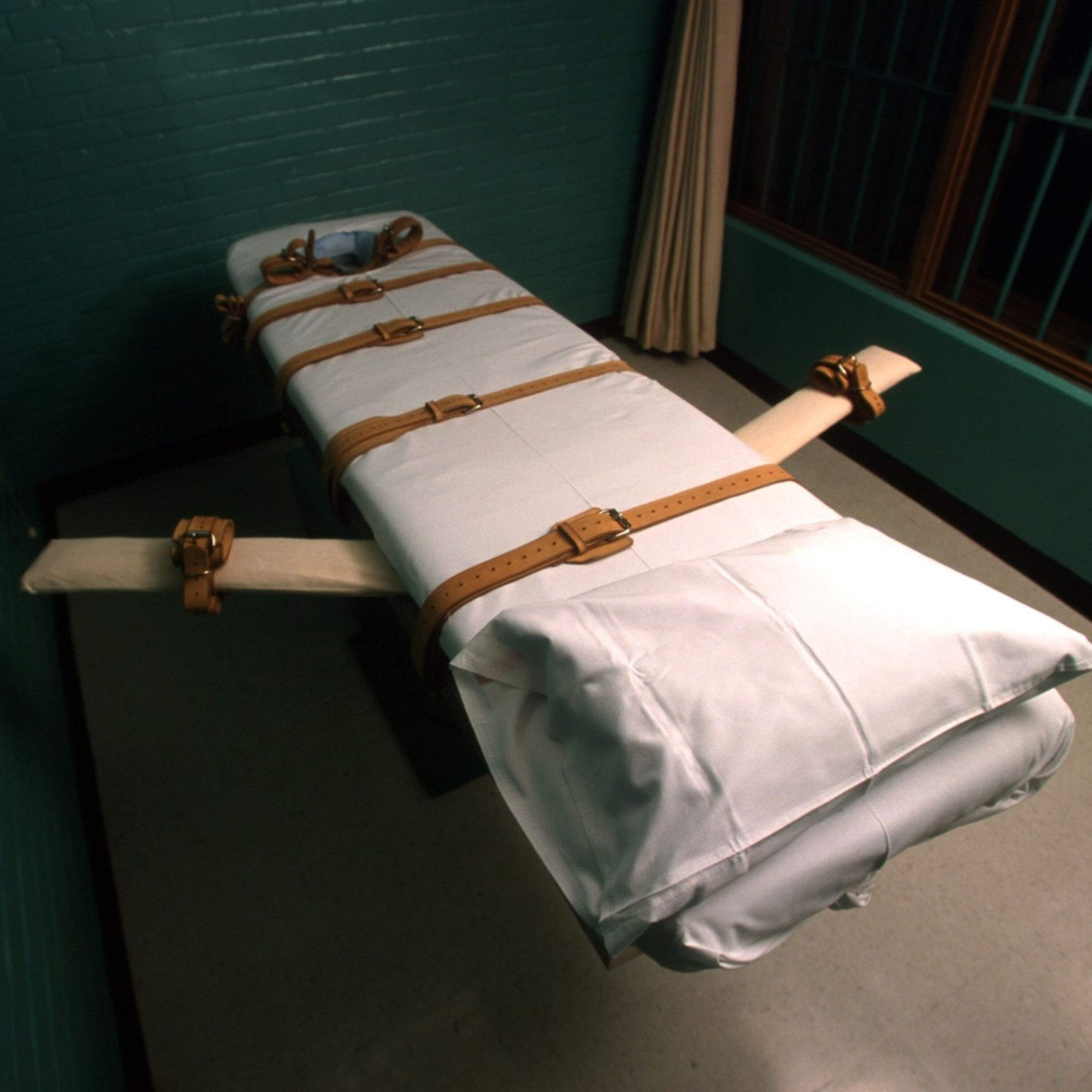
A botched execution raises questions about death penalty protocols
Get every episode summarized
Each time Consider This from NPR publishes, we email you a written briefing from the transcript — the topics, who appeared, and any specific claims, with the ad reads skipped.
Email me new episodesFree for 3 shows. No card needed.
About this episode
Consider This from NPR is made possible by:
“Hi, it's Sasha Fifer with a quick note before we start the show. Consider this is committed to helping you navigate a complicated world story by story. Today marks one year since federal funding for public media ended, and your support keeps us going.”From the transcript
This episode was produced by Alejandra Marquez Janse, with audio engineering by Ted Mebane. Our director is Jonas Adams.
It was edited by Susanna Capelouto, Gigi Douban, Sarah Handel and Tinbete Ermyas.
Our interim executive producer is Courtney Dorning.
Support public media with NPR+ and enjoy perks for over 25 podcasts like this one. This show’s perks include bonus episodes and sponsor-free listening. Learn more at plus.npr.org.
See pcm.adswizz.com for information about our collection and use of personal data for sponsorship and to manage your podcast sponsorship preferences.
NPR Privacy Policy
Get every episode summarized
Each time Consider This from NPR publishes, we email you a written briefing from the transcript — the topics, who appeared, and any specific claims, with the ad reads skipped.
Email me new episodesFree for 3 shows. No card needed.
Hosts & guests

Transcript ready
204 searchable segments. Every word is indexed and playable.
Full transcript
Consider This from NPR — A botched execution raises questions about death penalty protocols. Machine-transcribed; use the interactive transcript above to jump the player to any line.
Hi, it's Sasha Fifer with a quick note before we start the show. Consider this is committed to helping you navigate a complicated world story by story. Today marks one year since federal funding for public media ended, and your support keeps us going. NPR is proud to continue working for you with you. It takes all of us to protect the future of public media. Please join the community that makes this work possible at donate.npr.org and thank you. Let's consider this where every day we look deeply at one big new story. Today, the aftermath of a botched execution. Krista Pike is on death row in Tennessee for the 1995 murder of 19-year-old Colleen Slimmer. Pike was scheduled to be executed on Wednesday night. I will say I've witnessed, I believe, five executions in Tennessee. Nothing about today was normal, typical, at all. It's WKRN reporter Tori Guessner speaking at a press conference Wednesday night. She was covering the execution, and she says things seemed odd after Pike was given two
doses of lethal injection. The curtains close at first at 746, and she was clearly still alive. She was clearly still breathing and snoring. We could audibly hear that. Krista Pike was very concerned that this execution would go exactly the way it ended up coming out. That's Stephen Farrell, one of Pike's attorneys speaking during a press conference Thursday. She was not seeking to delay her execution. She was seeking to have that execution performed humanely and as quickly and as painlessly as possible. Consider this. Krista Pike survived two doses of lethal injection. What do we know about what happened and what comes next? From NPR, I'm Sasha Fiverr. Stay tuned for the following announcements and messages from our sponsors. This message comes from Total Wine and More. It's football season.
Let Total Wine and More become part of your game day routine. Grab some of your cooler, ready-favorite beers and ready-to-drink cocktails. Pick up enough for everybody, always scoring the lowest prices. This season make Total Wine and More part of your game day tradition. This are not sold in Virginia and North Carolina. Drink responsibly. B-21. This message comes from Betterment. Dan Egan, VP of Behavioral Finance and Investing, explains why Betterment was designed to take the time-consuming work out of smart investing. I was doing all of these things that were pretty straightforward to implement. I just needed to spend my time doing them. Betterment automates the same practices so that I know I'm doing portfolio management and goal-based planning without me having to spend hours of my life doing it. Learn more at Betterment.com, investing involves risk. Performance not guaranteed. This message comes from BetterHelp. BetterHelp is in network with more than 125 health plans with an average copay for eligible members of just $23 per session.
Don't have eligible insurance? You can still get 10% off your first month. Visit BetterHelp.com slash NPR to explore your payment options. It's BetterHELP.com slash NPR. It's consider this from NPR. Christa Pike would have been Tennessee's first woman to be executed in 200 years. Now she's in critical condition after a botched execution Wednesday. Catherine Swini with WPLN in Nashville was a media witness and she joins us now to tell us what she witnessed. And please note, this could be a tough conversation to listen to because it's likely to include a detailed description of what happened yesterday. Hi Catherine. Hi Sasha. What did you see in here at the prison last night? Well, it started before last night. So I was there as one of the seven media witnesses. We get there at 8.30 in the morning. Usually it's over some time around 11, but we were there for 13 hours while the Supreme
Court went back and forth on whether they would block this execution or not. We found out around 6 p.m. that we would be viewing this execution. So we went into the witness bay. That's a center block room with a window into the death chamber. We got in there around 6.45. So there's a curtain over that window and that's so that we can't see the medical workers placing the IV lines. Their identities are shielded by state law. Usually that takes 10, 15 minutes. It took 45 because they had such a hard time getting needles into her. So eventually the curtains did open and she was really lively and talking and singing for a long time, even longer. After getting an injection. That's right. She should have started to look sedated, but didn't. They close the curtain and usually that's when the doctor comes out and calls time of death, but he didn't. So they tried again. They opened the curtains. They did it all again.
And that didn't go really any better. So as this is going on, what is the mood in the room you're in? What are people talking about? Yeah. So I mean, first of all, everyone's shocked. The protocol does say they can do this twice, but that seems like this absurd reality. And then it did happen twice and they closed the curtains and never opened them again. And I think that is what led to things getting pretty heated between the media witnesses, including me and the communications director. We didn't know why the curtain was closed. We know the doctor's not in there assessing her for 30 minutes to 45 minutes, which is how long we were sitting there hearing her over the loudspeakers snoring and breathing raggedly, but we couldn't see her. And I was asking, are you going to try again? Are you going to resuscitate her? We're just sitting here for so long. What is happening? And we didn't get any answers to this question. No explanation at all from prison officials. No. So how did this resolve for you at least?
For us at least, the warden came over the loudspeaker after, I mean, you know, two hours of trying. The warden came over the loudspeaker and said, you need to leave. So we did. We got outside to do the press conference that's part of the witness process. And ambulances come to pick her up. There's this wave of emergency vehicles. And they carted her away with sirens on. So we guessed she was still alive. That is Catherine Sweeney with WPLN and Nashville. Thank you for your reporting. Thanks, Sasha. This woman, Christophe Pike, remains in the hospital after the state of Tennessee tried and failed to execute her yesterday. That execution attempt is the latest in a string of botched executions in that state and across the country. And one of our investigative correspondence here at NPR, Kira Eisner, has been covering executions for years. She's with me now in the studio to talk about more. Kira, when I heard this this morning, my first thought was what kind of medical condition is a woman in who has survived two doses of a lethal injection? Do we know how she's doing? What we know is that in a call to reporters today, her attorney said they haven't been
allowed much contact with her. But they did say there's blistering and burning on her arm and she's receiving medical care. This is again after the state administered one dose of the lethal injection drug, Pento Barbato, and she was still talking and breathing. Then the state gave her the second dose an hour later, and Pike was still alive. And as we just heard, reporters could hear her snoring after that second dose. How unusual is it that someone survives an execution? Well, this is the first time that we know of that someone survives two doses of Pento Barbato, but it's hardly the first time an execution doesn't go according to plan. This is part of a much larger pattern. Something similar happened in Tennessee just this past May, when the state tried to execute prisoner Tony Carruthers. Maria Delaborato, his lawyer, was behind the curtain with her client as execution workers repeatedly tried and failed again to place needles in his arms, feet and chest. Tony was an agony, moaning and gutter all pain. There was blood. It took close to an hour and eventually they called off the execution.
Just like Pike, Carruthers is also still alive today. Back in 2022, Tennessee Governor Billy ordered an investigation that showed that his state repeatedly failed to follow its own protocols again and again and temporarily paused executions. He paused executions again last night too. And it's not just Tennessee. States across the country have investigated their own lethal injection protocols. And so has the federal government. After former president Biden paused executions during his presidency, the Department of Justice released a report that said executions should not be performed by lethal injection anymore because there was just too much risk of the procedure causing pain and suffering. There was too much room for error. So, Carruth, based on your reporting, why did these mistakes keep happening? Well, one reason is the drugs themselves. All major pharmaceutical companies in the US have refused to make their drugs available to prison's four executions. That means prisoners have a hard time sourcing the drugs. Some have turned to smaller pharmacies that don't always have the highest standards.
I reported two years ago that Texas obtained some of their pentoparbital from a compounding pharmacy with a history of more than a dozen safety and cleanliness violations. Then you have the question of the quality of the drug after it's been made. States have been shown to have used drugs past their expiration date and they've even used the wrong drug on someone. You mentioned in the previous case some workers had trouble inserting the needles. So are these staff medically qualified? Is the staffing partly an issue? States like to keep that kind of information secret. They say that's to protect the privacy of their staff, but multiple lawsuits have been filed across the country, including in Tennessee, that say the state's owe more information about the execution team's qualifications to the person being executed and to the public. But we know from previous botched executions that staff often fail to correctly administer the drugs. Pikes lawyers said in a briefing today that unqualified personnel stuck her multiple times. And that should be considered cruel and unusual punishment and torture. That is NPR's Kara Eisner.
Thanks for covering this. Thanks Sasha. This episode was produced by Alejandra Marquez Hansé with audio engineering by Ted Mibain. Our director is Jonas Adams. It was edited by Susanna Capeludo, Gigi Dubon, Sarah Handel and Tim Beat Hermes. Our interim executive producer is Courtney Dorning. It's considered this from NPR. I'm Sasha Favre. Stay tuned for the following announcements and messages from our sponsors. This message comes from Angie. When it comes to home projects, it matters who you hire. Angie has been helping homeowners find skilled pros to get their home projects done well for over 30 years. Angie's nationwide network has experts in everything from landscaping to roofing and more. Read verified reviews, see photos of past work and request and compare quotes to find your best price all in one place. Download the free Angie app today or visit Angie.com.
That's ANGi.com.
More episodes
More from Consider This from NPR

Reporting on the science of saunas
Consider This from NPR

The story unfolding at Cornell is dismayingly familiar
Consider This from NPR

Meta just launched an AI agent and others are following. Is the internet ready?
Consider This from NPR

Sexual assault on campus is a problem. Can laws help address it?
Consider This from NPR