Get every episode summarized
Each time Consider This from NPR publishes, we email you a written briefing from the transcript — the topics, who appeared, and any specific claims, with the ad reads skipped.
Email me new episodesFree for 3 shows. No card needed.
About this episode
Consider This from NPR is made possible by:
“Before we begin, a reminder that everything we do here at Consider This and NPR is thanks to you. Yesterday marked one year without federal funding for public media. We're still reporting because people like you continue to step up to support this work.”From the transcript
The story feels depressingly familiar to many women across the country. How are they living through this moment?
This episode was produced by Sophia Paliza-Carre, Mia Venkat and Connor Donevan with audio engineering by Ted Mebane. Our director is Jonas Adams.
It was edited by Sarah Handel, Patrick Jarenwattananon and Tinbete Ermyas.
Our interim executive producer is Courtney Dorning.
Support public media with NPR+ and enjoy perks for over 25 podcasts like this one. This show’s perks include bonus episodes and sponsor-free listening. Learn more at plus.npr.org.
See pcm.adswizz.com for information about our collection and use of personal data for sponsorship and to manage your podcast sponsorship preferences.
NPR Privacy Policy
Get every episode summarized
Each time Consider This from NPR publishes, we email you a written briefing from the transcript — the topics, who appeared, and any specific claims, with the ad reads skipped.
Email me new episodesFree for 3 shows. No card needed.
Hosts & guests

Transcript ready
113 searchable segments. Every word is indexed and playable.
Full transcript
Consider This from NPR — The story unfolding at Cornell is dismayingly familiar. Machine-transcribed; use the interactive transcript above to jump the player to any line.
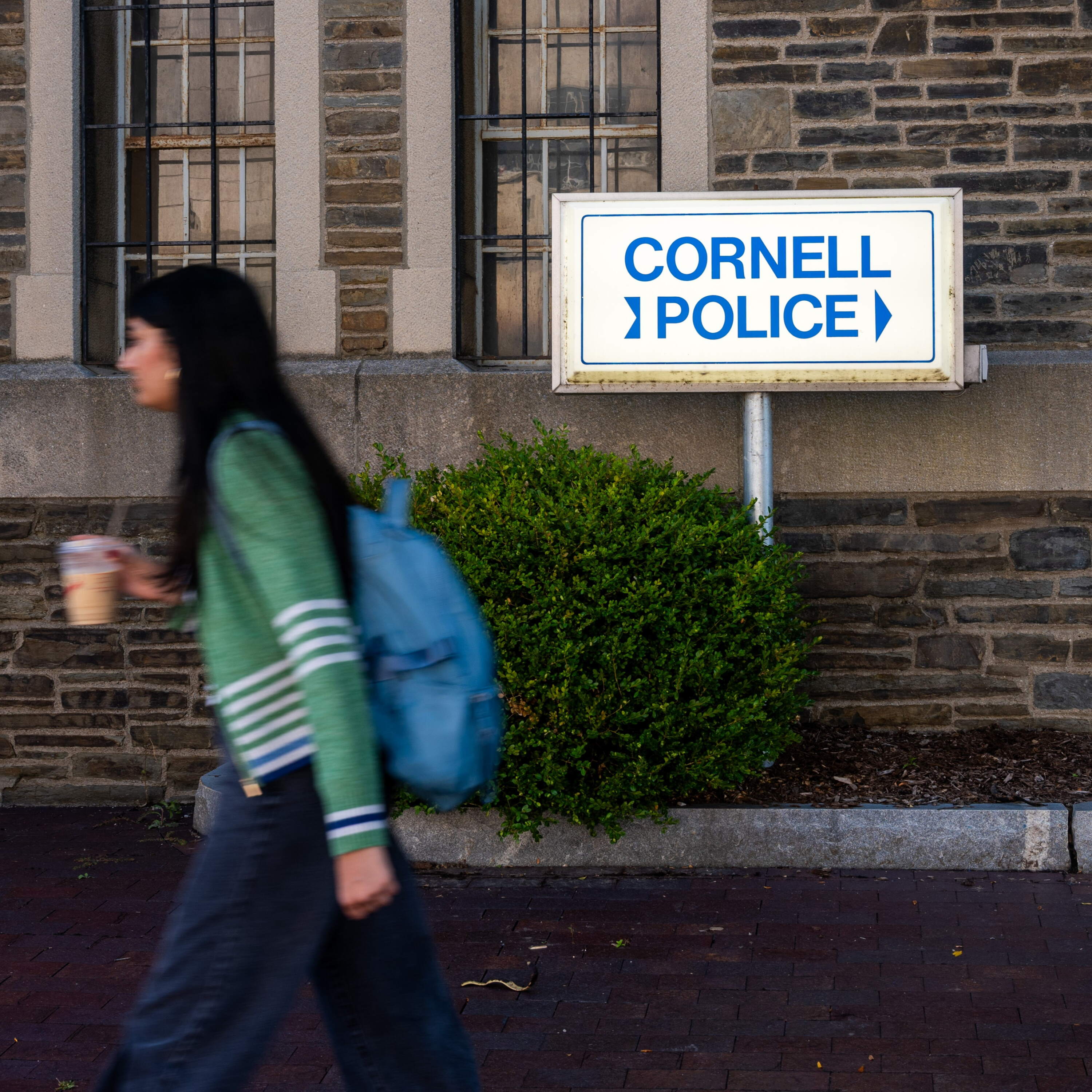
Before we begin, a reminder that everything we do here at Consider This and NPR is thanks to you. Yesterday marked one year without federal funding for public media. We're still reporting because people like you continue to step up to support this work. Consider this doesn't happen without you. Give today at Donate.NPR.org. It's Consider This where every day we look deeply at one big news story. Today, new details about how Cornell police handled in alleged rape are causing growing anger in Ithaca and across the country. When this week began, we knew that a woman had filed a civil lawsuit against the university and seven male students she says assaulted her. A note here, that lawsuit, and this episode include descriptions of sexual violence. Initially, the local prosecutor, Matthew Van Halten, said the woman gave a sworn statement to police that the sexual conduct was, quote, voluntary, conscious, and consensual.
And he questioned details in the lawsuit in which the woman alleged that she was drugged and gang raped. The lawsuit leaves out any reference that Jane Doe made in her sworn statement to consenting to what happened. The news broke later in the week and NPR confirmed that the woman had told Cornell campus police she was raped. Her statement during the initial investigation in 2024 includes this quote, I can say with 100% confidence I was raped. Van Halten has since suggested that police didn't give him complete information from their interviews. Many Cornell students are outraged. Savita Sastry was one of hundreds who gathered on campus Thursday night to demand change. There was rage. It was really, really nice to see people be emotional about this. We are her. We experienced that. And this entire week, we had to think about the fact that we were raped. Consider this. The story of what one woman says happened to her at Cornell feels depressingly familiar to many women across the country. How are they living through this moment?
From NPR, I'm Sasha Fiverr. Stay tuned for the following announcements and messages from our sponsors. This message comes from IXL. With IXL, you get personalized online learning and teaching solutions that help improve achievement, empower teachers and track progress. This one platform for K-12 helps teachers accomplish what normally would require dozens of other tools. Educators can see how their school is performing in real time to make better instructional decisions. IXL is used in 96 of the top 100 school districts. Learn more at IXL.com slash NPR. This message comes from the Nature Conservancy. For 75 years, the Nature Conservancy is helped protect remarkable natural places, places that do more than take your breath away. Places that sustain livelihoods, places that anchor memories and traditions, places that are an undeniable part of who you are. Together, the Nature Conservancy and supporters ensure these natural places and the people and wildlife that depend on them thrive for generations to come. Learn more at nature.org slash 75.
Support for NPR and the following message come from Washington Wise. Decisions made in Washington can affect your portfolio every day. Washington Wise from Charles Schwab is an original podcast that unpacks the stories making news in Washington. Listen at Schwab.com slash Washington Wise. It's consider this from NPR. At a press conference this morning, New York Governor Kathy Hokel said she lacked faith in the Cornell University Police Department and the District Attorney. If somebody knew more than they were letting people know. Hokel has appointed New York Attorney General Latisha James as a special prosecutor to take over the case. Aurora Berry from Member Station WSKG joins us now. What did Hokel say made her feel like she doesn't have trust in local enforcement to handle this? Well, it came out this week and NPR confirmed that the woman told University Police back in 2024 she was raped by a group of fraternity members.
The governor pointed to that revelation and to a statement by Tom Kinsk County District Attorney Matthew Van Houten that he never saw a transcript of her 2024 interview with police. Instead, he relied on a six-page report from campus police and did not charge anyone with a crime. At the press conference, Hokel said that the woman was failed by institutions that were supposed to protect her. Here she is. In what world would the police learn from a victim that she'd been literally gang raped while in talks created by five men in a fraternity house and not elevate those allegations to the District Attorney? Hokel also criticized the District Attorney for not interviewing her or requesting a full transcript of her police interview. Now that the governor has asked the State Attorney General to take over as special prosecutor, do we know what steps happen next? It's hard to say. James even acknowledged that people want answers about what happened in 2024, but it will take some time. She says her office will review the facts, gather evidence, interview witnesses, and if necessary, pursue prosecutions.
And I should add that we reached out to the University. A spokesperson said in a statement that they support the appointment of a special prosecutor and, quote, are committed to an independent external review of all aspects of how Cornell has handled this case. Van Houten, the District Attorney, released a statement saying he supports James' appointment and that it has, quote, become clear that we were not provided the full picture by the University. Aurora, assuming you've been able to talk to some Cornell students, what kind of things have you heard from them? I spoke to Hannah Schfetz, who is both a senior at Cornell and an elected official. She serves on the City of Ithaca's Common Council. Schfetz says she heard about this when she was a sophomore. She says she and other students assumed the University was seeking justice. Two years ago, we knew that this happened and a lot of the emotional, like, horror stuff. We've already felt it. We felt it two years ago, but now it's turned into mostly anger because nothing was done. Is what it feels like? Schfetz is also looking at this from the perspective of a local lawmaker.
Cornell University is in Ithaca, but the Cornell University Police Department is part of the University, and they don't report to local government officials. So since campus police and city police are different, what are the rules if any about what kind of information they have to share? It really varies by state, but I can tell you in New York that education law gives campus police jurisdiction over Cornell's campus. In most ways, Cornell police are just like any other police officers, but there's a key difference. I spoke to John Sloan at the University of Alabama at Birmingham, an expert in University Police Department. Sloan says if constituents are frustrated with their local law enforcement, they can put pressure on their representatives to hold them accountable. Private University police are more likely to be accountable to university administrators and boards of trustees. Cornell has also denied my station's public records requests for information from the University Police Department. We've been told the department's records are private because Cornell is...
That is Aurora Berry from Member Station WSKG, Aurora. Thank you. Thank you. This story can feel so heavy because it's such a common one, an alleged assault, a woman harmed, questions about systems and institutions, and questions about justice. We're going to hear from several women who write and think about feminism. We ask them how this moment feels. They are Saraya Shamali, activist and author of All We Want Is Everything. Jessica Valenti, her landmark anthology is called Yes Means Yes. Carmen Maria Machado, who wrote the best-selling memoir in the Dreamhouse, and Jennifer Weiner, author most recently of the Griffin Sisters Creatus Tits. Oh, boy. How am I feeling in this moment right now? I am sad and I am angry and I am tired. It just feels so overwhelming. I'm now getting... like people are sharing their own stories, and I've also been feeling my own... my own history of sexual violence, sort of like bubbling up. And so I do feel like I've been getting just this like really intense, but like necessary sort of...
avalanche of like sensation and feeling and pain. That's like coming from everybody. I feel scared and distressed. I find this really terrifying. I find it terrifying that we've had the tools and the language and the resources we need to talk about this issue and to stop sexual assaults and to... to help victims for decades. And yet, very little seems to have changed. What you're seeing online in the torrent of content that is being produced is woman after woman after woman after woman in... effects saying no more. The fact that we're still having these conversations that really are about victim blaming or what consent means, you know, like we were talking about this years ago. I just am thinking a lot about how many people like got those texts and sort of knew what was going on and like didn't say anything.
And so I'm thinking not just about the men who did this, but also the men who didn't say anything. I remember writing about the fact that one of the most common punishments for campus rapists was writing a research paper or a letter of apology to their victim. And I wrote that, you know, like maybe 15 years ago. So these are conversations that we've been having for a tremendously long time. Four weeks ago, I dropped my daughter off to start college and you don't want to scare her. You don't want to make your kid feel like she's heading into like a house of horrors. But on the other hand, you want her to be careful and aware and watching out for her friends. But boy, like I would so much rather have been, you know, picking out posters for her dorm room and talking about like how many towels she actually needed. You know, I have a 16 year old daughter. And so it definitely has sparked conversations with her.
I think I've been struck by how unsurprised she and her friends are by this. I think that that is part of what is driving a lot of the anger to. I'm having conversations with friends and family. I also have a lot of conversations with other writers, other activists, advocates, women are living with a double triple consciousness. They're going through their daily lives with the awareness of this case and other cases. And the people around them often are men and maybe men that they like and trust or are in relationships with. And unfortunately too many of those men don't want to know. You know, like we're in a moment when women's rights are being rolled back across the board. I think sexual assault has always been something that people are angry about and are interested in. But in a moment when half the country doesn't have the right to abortion, it takes on new meaning.
I try to be fatalistic about misogyny because I want to believe in a better world for not just me, but the people coming after me. I have nephews and nieces and I have people in my life with kids and I want this world to be better for them. I'm not the resident optimist in any circle. However, I say that because in fact, I truly believe this. I think we have a refusal generation. We have a generation of women who are going about the business of quietly systematically refusing these terms. I do try to focus on how glad I am that young women aren't just accepting this as a given. They see it as outrageous, that they see it as unacceptable, and that they're not willing to just sort of shut up about it.
That was Jessica Valenti, Saraya Shamali, Carmen Maria Machado, and Jennifer Weiner. And please keep in mind that there is a national sexual assault hotline to reach it, text the word hope to 64673. You heard reporting in the beginning of this episode from NPR's Brian Mann. This episode was produced by Sophia Polizacar, Mia Venkat, and Conor Donovan with audio engineering by Ted Meebane. Our director is Jonas Adams. It was edited by Sarah Handel, Patrick Jaron Watananan, and Tim B. Ermyes. Our interim executive producer is Courtney Dorning. It's considered this from NPR. I'm Sasha Fiverr. Stay tuned for the following announcements and messages from our sponsors. Support for NPR and the following message come from Washington Wise. Decisions made in Washington can affect your portfolio every day. Washington Wise from Charles Schwab is an original podcast that unpacks the stories making news in Washington.
Listen at Schwab.com slash Washington Wise.
More episodes
More from Consider This from NPR

Reporting on the science of saunas
Consider This from NPR

A botched execution raises questions about death penalty protocols
Consider This from NPR

Meta just launched an AI agent and others are following. Is the internet ready?
Consider This from NPR

Sexual assault on campus is a problem. Can laws help address it?
Consider This from NPR