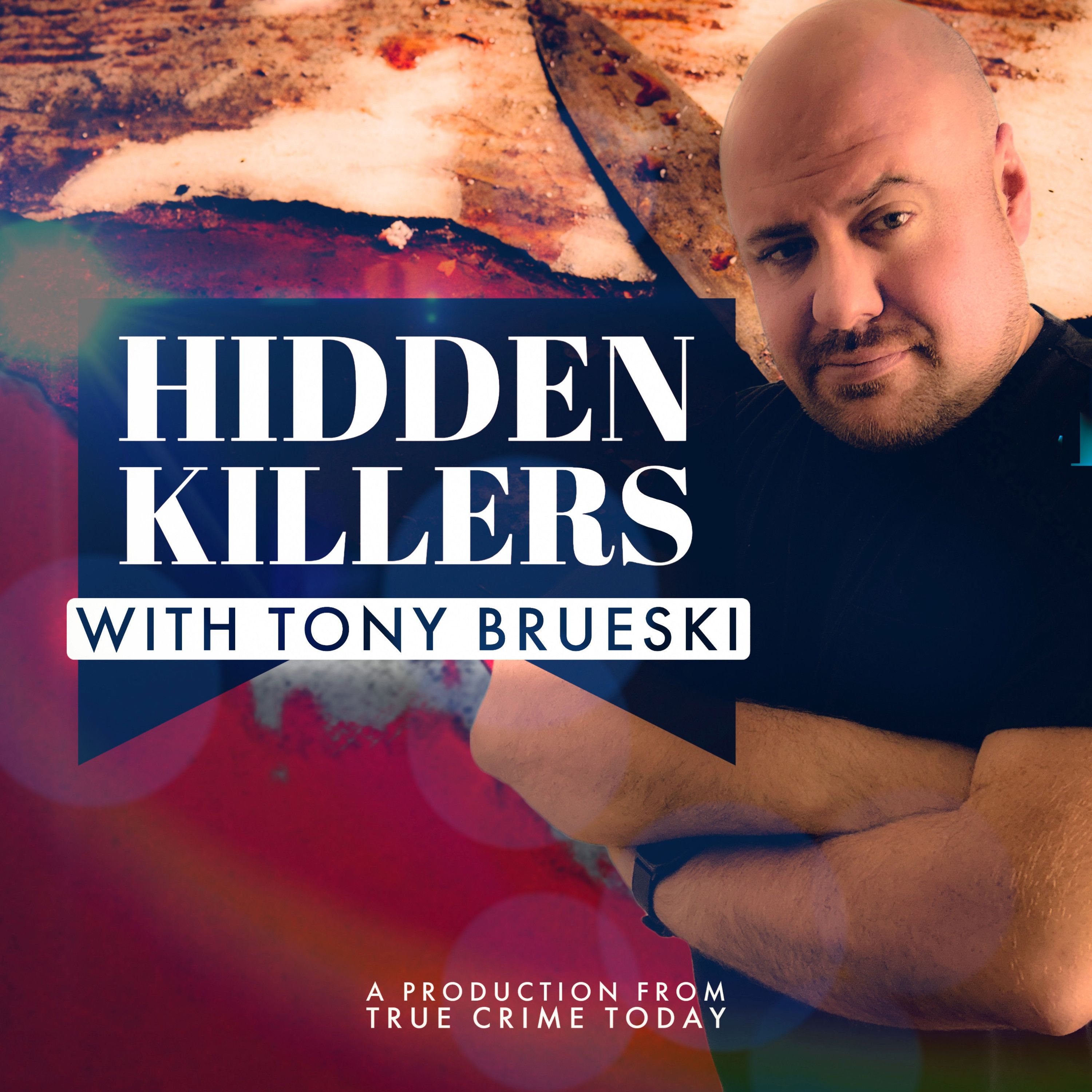
Kouri Richins: How the Narrative She Built Became the Evidence That Convicted Her
Get every episode summarized
Each time Hidden Killers With Tony Brueski | True Crime News & Commentary publishes, we email you a written briefing from the transcript — the topics, who appeared, and any specific claims, with the ad reads skipped.
Email me new episodesFree for 3 shows. No card needed.
About this episode
“Tax season has arrived and doing taxes without the right help can feel overwhelming. Into it, TurboTax is here now to guide you through it with confidence. Match with a TurboTax full-service expert who handles everything for you from start to finish.”From the transcript
The children's book. The morning show appearances. The carefully composed grief — all of it documented, all of it public, all of it now part of the permanent record of a woman a jury found guilty of murdering her husband with fentanyl.
This week on Hidden Killers, we examine the architecture of Kouri Richins' self-constructed narrative — and how it collapsed under its own weight. This is Part 4 of The Perfect Wife, and it draws a direct evidentiary parallel to Nancy Crampton-Brophy, the Oregon romance novelist who published an essay in 2011 titled "How to Murder Your Husband." The document detailed specific methods. It included the line: "If the murder is supposed to set me free, I certainly don't want to spend any time in jail." Seven years later, her husband Daniel was shot twice in the chest. She drove her own minivan. She bought the gun through traceable channels. She published her methodology under her real name. The jury convicted her.
The pattern is consistent: the narcissist cannot stay invisible. The need to be seen — as clever, as wronged, as grieving, as powerful — is the same impulse that leaves the evidence trail.
Post-verdict, retired FBI Behavioral Analysis Chief Robin Dreeke walks through the specific behavioral indicators that defined the Richins case, the unanswered questions around Carmen Lauber's immunity deal, and what the psychological profile tells us about where Kouri Richins goes from here — mentally, emotionally, and legally. We also examine the defense's misconduct arguments and what it means that a jury convicted her despite them.
The investigation is over. The analysis is not.
Join Our SubStack For AD-FREE ADVANCE EPISODES & EXTRAS!: https://hiddenkillers.substack.com/
Want to comment and watch this podcast as a video? Check out our YouTube Channel. https://www.youtube.com/channel/UC8-vxmbhTxxG10sO1izODJg?sub_confirmation=1
Instagram https://www.instagram.com/hiddenkillerspod/
Facebook https://www.facebook.com/hiddenkillerspod/
Tik-Tok https://www.tiktok.com/@hiddenkillerspod
X Twitter https://x.com/TrueCrimePod
This publication contains commentary and opinion based on publicly available information. All individuals are presumed innocent until proven guilty in a court of law. Nothing published here should be taken as a statement of fact, health or legal advice.
#KouriRichins #EricRichins #PerfectWife #NancyCramptonBrophy #HiddenKillers #TrueCrime #FentanylMurder #NarcissistKiller #RobinDreeke #MurderVerdict
Get every episode summarized
Each time Hidden Killers With Tony Brueski | True Crime News & Commentary publishes, we email you a written briefing from the transcript — the topics, who appeared, and any specific claims, with the ad reads skipped.
Email me new episodesFree for 3 shows. No card needed.
Hosts & guests
Transcript ready
428 searchable segments. Every word is indexed and playable.
Full transcript
Hidden Killers With Tony Brueski | True Crime News & Commentary — Kouri Richins: How the Narrative She Built Became the Evidence That Convicted Her. Machine-transcribed; use the interactive transcript above to jump the player to any line.
Tax season has arrived and doing taxes without the right help can feel overwhelming. Into it, TurboTax is here now to guide you through it with confidence. Match with a TurboTax full-service expert who handles everything for you from start to finish. Your dedicated expert checks every single deduction and credit to help you get the best possible outcome so you can feel confident you're getting every dollar you deserve. And the best part, you'll see real-time updates on your expert's progress right on your phone while you live your life. Plus, you get unlimited expert help at no extra cost, even on nights and weekends during tax season. Visit TurboTax.com. Only available with TurboTax full-service experts, real-time updates only on iOS mobile app. Tyler Reddick here from 2311 Racing, another checkered flag for the books. Time to celebrate with Chamba. Jump in at ChambaCasino.com. Let's Chamba. No purchase necessary, BTW Group, voidware prohibited by law, CCNC, 21 Plus, sponsored by Chamba Casino. It's tax season, and by now, I know we're all a bit tired of numbers. But here's an important one you need to hear — $16 billion. That's how much money and refunds
the IRS flagged for possible identity fraud. Here's another one. One in four honest, hard-working tax-paying Americans has been a victim of identity theft. But it's not all grim news. LifeLock monitors millions of data points per second for your personal information and alerts you to threats you could easily miss on your own. If your identity is stolen, LifeLock's US-based restoration specialist will fix it, backed by another good number. The million-dollar protection package. In fact, restoration is guaranteed or your money back. Don't face identity theft and financial losses alone. There's strength in numbers with LifeLock identity theft protection for tax season and beyond. Visit LifeLock.com. Slash iHeart and save up to 40% your first year. That's 40% off at LifeLock.com Slash iHeart. Terms apply. Tyler Reddick here from 2311 Racing. The rush of racing? Nothing beats it. But Chamba Casino comes close. Chamba's got fast spins, fun games, daily bonuses, and all the action you can handle.
Now that's a ride. Ready to hit the throttle? Get in the driver's seat and head to ChambaCino.com. Let's Chamba. Sponsored by Chamba Casino. No purchase necessary. VGW group void were prohibited by law 21 plus terms and conditions apply. This is the Big Breakdown. A long look back at some of the biggest stories we're covering for you at the Hidden Killers podcast and true crime today. This is Hidden Killers with Tony Brusky. Here now, Tony Brusky. After Eric Richens died, Corey wrote a children's book. Are you with me, the title? About a father who dies and becomes a firefly, watching over his children from above. A story about grief and healing and love that transcends death. She went on the morning shows to promote it. She sat across from hosts, talked about loss, about resilience, about helping her children through the hardest time of their lives, writing the book, what an exercise it was in working through her grief.
She performed the grieving widow on national television, selling a book about the death she allegedly caused. A book that she actually didn't write, but she performed that she did. And here's what gets me about the whole damn thing. She put herself at the center, not Eric, not the children, her, the devoted mother helping a family heal. The author was something meaningful to say about loss. The woman who found a way to turn tragedy into inspiration. That takes a specific kind of mind, not just the ability to kill someone, but the need to be seen as the hero of the story afterward. The inability to stay in the shadows, the compulsion to step into the spotlight and collect sympathy for the crime you committed. This is part four of the perfect wife. And this one is about the narcissist fatal flaw.
The need to control the narrative to author reality to make everyone else a character in your story. And I want to get your thoughts in the comments section on YouTube and substack as we work through this. The links are in the description. Nancy Crampton Brophy wrote in essay in 2011 called, How to Murder Your Husband. That's not a joke. That's not me editorializing. That's the actual title of an essay she published under her real name on a writer's forum. She discussed methods, Hitman, too risky. They might talk poison. How to obtain a lethal quantities, gun loud and messy, but effective. She weighed pros and cons like she was planning a vacation or comparing cell phone plans. I think she wrote this. If the murder is supposed to set me free, I certainly don't want to spend any time in jail. Seven years later, she shot her husband Daniel twice in the chest.
The essay was excluded from her trial. Two old, the judge ruled written too long before the crime to be directly relevant, but everything about Nancy Crampton Brophy tells the same story. The story of someone who believes they're the author of reality. Someone who thinks they can write the narrative to make everyone else play their assigned parts. NASA Narcissist delusion. And it's what caught her. Daniel Brophy was a culinary instructor at the Oregon Culinary Institute in Portland, chef. Students loved him. He was a kind of person who showed up early, did his work well, didn't need anyone to notice or applaud quiet competence, steady presence. Nancy was not that. She was a self-published romance novelist with modest sales and big dreams. Her books weren't setting the world on fire. The finances were strained and there were life
insurance policies on Daniel worth about 1.4 million. And in the months before Daniel's death, Nancy bought a Glock 17 handgun. She bought a ghost gun kit. Parts that allow you to assemble an untraceable firearm. When investigators later asked about those purchases, she had an answer ready. Research for a book writers do this all the time. June 2, 2018 Daniel arrives at the Oregon Culinary Institute around 715 AM early like always. He's preparing for his morning class students want to arrive until 730. He shot twice in the chest. No witnesses, no security footage inside the building. The killer takes the gun and leaves. But here's what Nancy didn't account for. Cameras exist beyond the walls she was watching. Surveillance footage from near
the school captured a minivan matching Nancy's vehicle arriving that morning and leaving shortly the timing aligned perfectly with Daniel's death. Nancy's alibi was simple. She was homewriting. No witnesses. Just her word. And for a while she must have believed that would be enough because the narcissist is always the smartest person in the room in their own mind. They've imagined this scenario a hundred times. They know exactly how to play the grieving widow. They've rehearsed the performance. They can't imagine anyone seeing through it because truly imagining that would require believing that other people are real. That other people are paying attention. That other people might be as smart as you or have emotions or feelings. The narcissist by definition can't believe that. So Nancy bought a ghost gun. Ghost gun parts with methods that could be traced. She drove her own minivan to the crime scene. She wrote an essay about murdering her husband
and published it under her real name. She couldn't help it. She needed to be seen. She needed someone even if just her writer friends on the forum to appreciate how clever she was, how she could think through these dark scenarios, how her mind worked. That need is what catches them every damn time. If you've ever dealt with a narcissist and I don't mean that word casually, I mean someone who genuinely can't conceive of other people is real. You know the specific blindness I'm describing. They leave evidence everywhere because staying invisible requires imagining that someone else might be watching. It requires thinking about the world from another person's perspective. And that's the one thing they can't do. Nancy left the ghost gun parts on a credit card statement. She left her minivan on camera near the crime scene. She left an essay online explaining exactly how she'd think about or thought about killing her husband. She thought she was writing a story.
She forgot that other people were reading. Daniel Brofe deserve better than to be a plot point. He was a real person. He had students who admired him. He had a career. He'd built over a year. He walked into work early that morning because that's who he was. Someone who showed up did the work, didn't ask for credit. And his wife looked at him and saw an obstacle. A character who'd outlived his usefulness and the story she was writing. A problem to be resolved so she could get to the ending. She wanted 1.4 million in life insurance. That's what Daniel was worth to Nancy. That's a number that made him worth killing. The trial happened in 2022. Nancy took the stand. She was composed, articulate, confident. She had explanations for everything. The gun purchases, research, the ghost gun kit, research, the minivan near the school, all coincidence. But the story didn't hold together too many coincidences, too many coincidences, too many
purchases, too perfect timing. The jury convicted her of second-degree murder, life in prison, with the possibility of parole after 25 years. She still says she's innocent. Of course she does. Admitting guilt will require admitting she's not special, that her plan wasn't clever, that she's not a protagonist of this story. She's the villain. The narcissist can't accept that. It breaks everything they believe about themselves. I keep thinking about that essay, how to murder your husband. She wrote it down. She put her name on it. She published it on the internet for anyone to find some part of her wanted people to see how clever she was. How she could think through these scenarios, weigh the options, understand the risks, she wanted credit for her dark imagination. And she got it just not the way she expected. Corey Richards wrote a children's book about Eric's death. She went on television to promote it.
She positioned herself at the center of the tragedy she allegedly caused. Both women needed to be seen, needed to control how people understood them, needed to be the author of the narrative, even when the narrative was about a murder they committed. And that need is what catches them. The narcissist can't stay invisible. They can't resist the spotlight. They can't let someone else tell the story. So they step forward. They write the book. They do the interview. They put their face on camera and their words on record. And eventually someone starts reading someone who sees the story differently than they do. Someone who notices that the grieving widow knew a little too much, planned a little too carefully, appeared a little too quickly to control the narrative. Nancy Krampton Brophy thought she was writing a romance novel where she was the sympathetic heroine, finally free of a difficult husband. The jury read it as a crime story where she was the killer.
Same events, different interpretation. The narcissist forgets that readers get to decide what the story means. Daniel Brophy walked into work that morning. He unlocked the doors. He started prepping for class. He had no idea his wife was outside waiting. He was real. His life mattered and Nancy treated him like a character. She could delete whenever it suited her plot. That's the narcissist delusion. Believing you're the author of reality, believing everyone else is fiction. Reality doesn't work that way. And eventually the story you wrote gets read by people who see it for what it actually is. Your thoughts in the comments section on Substack in YouTube. I'd love for you to weigh in. We'll continue our conversation there right now. Substack,
no paywall. Come join us on that community. Hidden killers dot substack dot com the link in the description. Go check it out. And wherever you're getting podcasts, if you've not already subscribed to our podcast platform, the audio version of our program, please do so wherever you get podcasts, Apple podcasts, Spotify, I heart, grab your device right now. Look us up. Hidden killers with Tony bruski hit subscribe and you'll get us wherever you go. We do greatly appreciate that. All right, we'll continue the conversation in the comments section. Until then, I'm Tony bruski. We'll talk again real soon. Want more on this case and others? Then press subscribe now and don't miss a moment of true crime coverage from Tony bruski and the Hidden Killers podcast. This is Hidden Killers Live with Tony bruski and Robin Dring. Corey Richens is convicted. The jury came back and now she's heading to prison for killing
Eric. The trial is over, but the questions are not as we're learning in our comments section. And I don't blame you. We got a lot of questions too. And that's what we're going to do today on the program. We're going to go through Q and A live with you guys. I got some that I grabbed from your comments. And we're going to hit those. But if you have comments about this case, thoughts you want to share, drop them in live. And we will try to get to them as we work through this. We're going to talk today about the case here of Corey Richens. We're going to talk the latest on Nancy Guthrie. And we're also going to talk about the Kelsey Fitzsimmons case as well. So lots to get through. Robin Drake retired FBI special agent, former chief of the counter intelligence behavioral analysis program with us as always. Welcome, Robin. His book is out this week. It's not all about me. It's big book week launch. And wherever you get your books, Amazon, whatever it is, be sure to go and put an order down and just tell a million of your friends since my daughter's wedding is May. So yes, tell your friend. It makes a great wedding gift,
you know, right there. So yeah, stories like it. Just just give that to everyone. Yeah. But it's it's a great book. So please do, please do check it out. All of his books are wonderful. If you like Robin, if you listen regularly and you can't get enough Robin in your life, there's plenty more books to get through. I mean, honestly, I mean, the size, I'm listening to this one for a second time right now. And very much. It's all right. You know, I never really equated the things I wrote years and years ago or even that too far ago because I worked in the world of counter intelligence, behavioral analysis. But when we're looking at it all, I'll throw it out the first time of the day. When you're looking at all the nutters in the world, oh my God, all of this is completely appropriate because when you're strategizing life every day, like normal people do with healthy people, dealing with morons is so much easier. Oh my God. Yeah. Yeah. It's certainly is very interesting to look at it from those prisms. Your thoughts today, like I said, in the comments section. So what we want to get into all of it, let's start here on the Cory
Richards case. First comment, and I got, and we'll get to some of yours here in the live. So please do, please do drop those in here. It starts out, she sat through the entire trial, heard every piece of evidence against her and never once visibly broke. That's this listener's observation. Now she's convicted and going to prison for life. Robin, what happens to someone psychologically, the moment that verdict hits does the mask finally come off or does it hold? It's interesting. I don't think she was consciously putting a mask on. When you're in front of the public view for so long, your natural leakage is going to just start coming out. And if you've really sat there, and we mentioned on the show yesterday, which I really thought was really interesting when we analyzed her on the TV appearance she did, she only reacts and when we're looking at her in the courtroom, if you want to go back and look at some scenes, all she ever
reacted to ever was things that impacted her. It was never, I mean, so think about we've seen people understand before when dealing with family. I mean, just think of Richard Allen anytime his wife was brought up or family. I mean, he would just break down. You know, you saw him visibly or other people visibly really shaken when you're talking about the impact of what's going on to people in their lives, friends, family, cohorts, but never ever hurt thinking about, you know, her reactions when her lover is on the stand, her boyfriend, nothing. Kids didn't even come up. I mean, so it's, I mean, just think about it. So, so now you fast forward that to what is she actually thinking and processing going to the prison? The only thing that's going through my mind is what's happening to me? You really think she's thinking about and breaking down about what are going to happen to my kids? No, she's written them off. No, it's, it's cruel to think of and I not her as the great Bob model will say, but from her compartmentalization, she's got all these different little compartments, but the biggest compartment is her. I think she's only
thinking about the impact on her and what she is going to do to survive in that environment that she's going to be in. And as I think this cough said the other day, I think she's going to be okay in that environment. Yeah, I mean, she has a manipulator. She has great manipulation skills. And that's a skill set that'll benefit her well in prison. Do you think it was a missed opportunity? And this would be a good, this would be an interesting one for Bob because Bob would know you got to find ways of working certain things into a trial. And so I can make the blanket statement out here as a layperson saying, do you think it was a missed opportunity that they didn't lean more on the children in this case that there wasn't more of a, and she's a mother. And don't take a mother away from her three children. She's already been taken away from them for so long. Don't let this contain something along those lines. There was none of that. I mean, and again, you have to find very specific ways of being able to work those sort of things into a trial. I mean, that could have been an enclosing statements easily without a whole lot of oversight,
a whole lot of you can add this. You can't add that. So there are, there are surface places where it could have been added in. Probably if you dug a little deeper, there could have been more ways. But it really seems like a very large missed opportunity on the part of Cory Richards and her entire defense team that the kids really were were very much like not even a second thought. They were like out in the ether. I mean, you wouldn't even know that she had kids if you weren't like paying close attention. I think in their hindsight, it is the hugest missed opportunity for this and a few things I'm going to mention in a second. But at the same time, though, the way Bob talks about defense attorney talks about how they work with the client, about strategizing how to move forward. If it's not organic to her, it's going to come across a completely fraudulent and manipulative to the jury. And so it wouldn't have worked with her. But think about this. One of the things that I noted in that video of her on TV the other day, talking about her book and helping her kids work through the grief of losing her father,
and she threw up her hands like this. And when they put the hands up, the thing I noticed was there was no wedding ring. And so think about the impact of this. Do your thought experiment. If she had been sitting like she was the entire time and she was wearing her wedding rings, what would that have been? Because remember, the jury came out the lead jurist, juror number two, the foreman said that they didn't want to convict her, but it was overwhelming to them because they felt so bad. So if she had given any nonverbal, I mean, she wouldn't, they wouldn't have to bring it up. Nonverbal inkling of a connection to Eric, or her children, an emotional response, or even talking about the kids in any way and just having her well up and feeling remorseful or any sense of that, this could have gone very differently. But she looked so cold, so non-response, and even just talking about the, I mean, it would have been an easy thing to bring up as one of the theories here of I liked, you know, the idea we came
up with a great defense could have been that this was a mistake. This was a note, I got him the drugs because, you know, he need him, he's addicted, and I regret it. I regret my affair because of the drug addiction. I mean, just think about how that plays, and then she wears the wedding ring. She talks about the kids. You got a whole new, you got a whole new trial going on right here, but they couldn't do it. Why? Because she is a self-centered, broken brain moron. It was her rigidness that I think kept them in the lane that it did. If she hadn't been such a rigid human being, there was a thousand other lanes you could have taken this down, and really, and hit an emotional spot, and hit a pain point with other people, and I don't have a pain point, but just an emotional point with other people that they could relate to, and I think you could have had a very different outcome, but they chose to go down the road of, Corey didn't do this, because Corey says she didn't do this, and we're just going to hold on
and ride this out, no matter what. It's like, guys, come on, you could have gone down this road so many different ways of, you know, she was struggling, and she was trying to help him, and she regrets buying this shit. Clearly, there were so many things they couldn't get away from, like the buying of the drugs and all that. At the end of the day, I know they tried to go, well, see, it wasn't fentanyl, it was this, or it wasn't oxy, it doesn't fucking matter. At the end of the beginning, it doesn't matter. What matter is she said she wanted the Michael Jackson stuff, and she got something that killed her husband. Mission accomplished. Yeah, I know. So think about the messaging that happens when you do this. So the trial and what the prosecution lays out all the same, the cross is all exactly the same, but now she's wearing her wedding rings. And every time Eric comes up, she grabs her hand, and she does a pacifying movement of playing with her hands. So many things. She couldn't think about the impact, and think about all the nonverbal people out there doing things like we're doing now. I mean,
just think of the impact that people would be speculating on as she done that one thing. But what that have helped her hurt her too, because of all the affair language that came into there. Because at the beginning, it felt like Nestor did try to land, maybe crash land, the idea that Corey was in this relationship, and they decided to work it through and figure it out. Don't judge their decisions if it was an open relationship, but they wanted to be together. And then all the evidence after that, it shows the exact opposite of exactly what she just said. So I mean, would it have been more insincere if she sent their plane with the ring, or, or would it have been like, I don't know, because it was like a losing battle, no matter what the, they set her up as something that she wasn't from the get go. And then all the evidence continued to show that she's not what they're saying. She is like, they should have leaned more into that she was making bad choices, that this is stupid, not kept trying to just, it's like,
they just continue to double down on Corey's stupidity and pretended that it wasn't what it was. And I think that's what really made the jury go, okay, this is the human beings are extremely forgiving of people that show vulnerability. And never throughout the trial that she demonstrated vulnerability, no regret. And there's nonverbals you can show for regret of actions. And so, so just, and so what happens here is, and I'm completely on board with you, I mean, I don't, you know, probability of changing the outcome, who knows, right? Because it's all hypothetical. But what it then does is, because as the great Bob Mata says, that, you know, this is all just a case on circumstantial evidence, and, and plausible liability doubt beyond reasonable doubt, right? So, as a, as a jury's there, and the jury's, jurors said they sounded pretty empathetic, pretty compassionate people. And when you start putting doubt in there, and you have a, you have a, an individual like Cory, who's the one being charged, and it looks like she's regretful. It
looks like she's had a come to Jesus moment of the bad choices she's made in her life. And you put out that different theory, it plays differently when you're dealing with beyond reasonable doubt, because then there's doubt about, because then so we kept arguing back and forth, it pops and we don't know Cory, but now we think we know Cory, because she's so consistent, she was consistent about what prosecution was saying, crossed and really do much about it, and she was consistent with that compartmentalization, looking at her on the witness stand, only reacting to things that impacted her. If you just added, if she had been able to add what she's incapable, that's why this would never have happened, if she was capable of empathy towards another human being, and you could see that nonverbaly, that would be an entirely new element that they'd have to take into account. True. Another question. Fascinating. Yeah. Here's another one. Erick's family has been four years watching this drag through the system. Now they have a verdict. Does closure actually exist
for people in their position, or is that just something that we tell ourselves, because it sounds right? Yeah, closure is an interesting word, isn't it? Yeah. Closures in the eye of the beholders, like everything else is. I'm a believer in movement, and so this is an element for movement through pain, because it's just one more thing that'll help them move on, move through, you know, because everyone takes these things very differently, and families take things differently, so you don't know what's going on in their minds, but having closure with this part of the trauma they're moving through is a very good thing. And the fact that their kids are with them, I think that's the next big challenge, you know, who wouldn't be facing with, all right. So now we have these beautiful babies, young children that now have to be explained why their mommy killed their father and is now in jail, maybe for rest of her life. That's the next thing they as a family has to move through. So that's why I think this allowed them to now process this move through this so they can really
focus on what's important. That's the next generation they have to save. Yeah, at the 1,000 per century, I can't even wrap my mind around that. I mean, just that's, but what a great opportunity though. So if they knew this was a chaotic marriage, and I mean, who hasn't been part of some family where you just wish you could rip the kids away and save them, right? Well, now's their chance. They've ripped the kids away from crazy, and now they have a chance. And you know, if we don't know what's going on the fan, but looking at Eric's dad and how vested he was in his son, the communication with his son, he's got another chance to do it again with his grandkids. I know Eric's sister is taking care of him is what we understand. It's a great opportunity to put a four ships back on course that might otherwise have been hitting rocks and destroyed. It's, yeah, you know me class half full. I hope. I mean, I really hope, you know,
obviously they'll all handle it in their own ways. And they seem like they have some some very dedicated good people to raise them. And I hope, I hope the best. It's just, and I come to the kids, they get so overlooked in cases where it's just kind of like, well, they're durable. Yeah, they can, they can, they can see a lot. And the kids are, they are, but I mean, it all comes out at some point and they're going to have to process this in some way, shape or form. And they're going to process it multiple times in life because they're going to process it where they're at right now maturity wise because they're children. They're going to process it again when they're a bit older when they're in their teens. They're going to process it again in their 20s and 30s. They're going to process it again in their 40s and 50s. And it's probably going to look a little different each time as they try and, and square up the madness in their life. And the thing is at the end of the day, is there ever really truly a way to process something like this correctly? I mean, I don't know there is a, because it's just madness.
You're processing crazy and trying, and when you're processing something, you're trying to make sense of it. But I think more so, you're trying to find, and this is probably the operative thing when you're trying to process something is not necessarily making sense of it, but understanding your place in it and how to navigate the world going forward. Not just making, trying to make sense, you're never going to make sense. But okay, reality is what it is. How am I going to deal with reality and reality's terms going forward? Because we all know what happened. There's no, nothing, anyone of them is going to say is going to go, oh, that's why she did it. Yeah, I think it's good points. You just keep processing your place in among in this entire event. And I think what we do, and it's why so many people are addicted to true crime and doing these things, is so that we can understand what makes people do what they do. So it's not, the biggest challenge in all these situations is not putting a label on it,
but trying to understand the behaviors, what creatives, behaviors, like what? So I mean, I mean, we do this on our own families, not to the extent that most of us have to figure out what made someone close to us kill someone. But we also are trying to figure out what made them do something so stupid, the hardest part is to not judge the action, but to understand what led to that action. How was this person made? Because I think that's part of the process of healing and moving through is saying, all right, I don't want to be close to this person in my life because they're a great a nutter. But at the same time, what made them? So one, we can recognize it in others and help us avoid these people and also so we can avoid it in ourselves. So it's just being able to pick apart objectively, to be able to do that, to understand that the crazy is because one way we stay healthy is to avoid the nutters. Or at least when we have to face them and work in around them and if they're in our family, just give us the ability, as I say, sit back and watch a show so that they're crazy nutty behavior doesn't affect us in that way
because we just don't get attached to it. It's, there's, I was referencing it, I think, in conversation off the year this week, almost like, like being aware of the weather patterns of where you're at. And being aware, oh, is there, is there going, is there a chance for storms today? Are we, is it the season for storms? Is it, is it storm season? Is there a watch or a warning or whatever it may be? I mean, and being aware of what is going on around you, things you can't control, because you're not going to reason away a tornado. You're not going to reason away a tornado, warning or a watch. It's just, it is. It is. And if you're going to be in those environments and you can't control that where you live, these things are going to come and they're going to go, but you can prepare for them as best as you can and you can be aware of them. Then you're not caught completely off guard when the tornado comes and rips your house away. Well, I had no idea it was coming. Well, the sirens were blaring and they were warning you for five days. That's on you. Yeah. You know, at some point, and I think that's, that's, that's part of it. Another question
in here, Robin, do you think Corey Richards actually believes she did something wrong? Or is she sitting in that cell right now telling herself a story where she is still the victim? So really good, really good question. This happens with all these cases. Do they think they're guilty of anything? Hard to imagine. She doesn't strike me as a Lori Valow kind of complete, nut job. Yeah, different totally different. I don't think she's asking herself that question in real, in reality, because then she'd have to face her actual actions and take ownership for who she is. And we don't like fit like all the things that she was hearing in that courtroom. So actually, we can answer the question just by examining her behavior. So when was she most demonstrative nonverbally is when she's being accused of being the black widow of being all these things? Because when someone has given you that optic of your blind spots and you're confronted with it, and it's not what you want to be. It's not who you believe to be. And it's not congruent with
the lies you've been telling yourselves in the falsehoods of who you are as a, as a wife, as a mother, as a person in society. We, we recall these things. I don't think she's probably actively engaged that she did murder him. I think she, like you said, she's playing the victim that I was a victim of him trying to control me. So remember, she's all about controlling the narrative. And when someone tries to control your narrative away from you, they get resistant to get angry, because they think they're justified. This is my life. This is my control. And so me doing this is justified. So I think there's probably still rationalization going on most likely. Yeah, it's spooky how long people can rationalize shit. Sometimes forever. Forever. I mean, she'll probably go to her grave that way. There's no, you're not a rational person if you're able to process that and go, yeah, that's me. I mean, unless you're a crazy, I mean, unless you're a psychopath,
I mean, because any healthy brain's not going to look at all the, unless you're, or unless you're able to admit fault, unless you're able to go, that was wrong. Totally wrong way of thinking should not have done that. I don't know what was going through my mind or maybe I do know it was going through my mind, but that was wrong. And I regret thinking that way. I regret doing that. I want to change. Obviously, I did what I did. I'm sorry for it, but that never happens. She had, and she had the chance, but didn't. She had the chance when she tried killing him the first time and failed. And, and she doubled down, said, I got to do better at getting rid of my problems, my problem, not get rid of him. My problem is him. All I got to do is get rid of him. And so she's a long way away from owning it. And now think about this too. If she had truly been impacted by the actions that she had taken on her kids, first of all, she wouldn't have had the goat, the book ghost written. And also, you would have seen an emotional reaction. I mean, that would have been, so the only people that
I was thinking about when you're saying this, the only people typically can actually break through and make a difference is who? It's our kids. It's literally the last Fort Knox of emotions someone has should be is our children. And for children who couldn't break through that, it ain't happening. And the only people potentially in the future for her that could actually break through that and make her own what she did would be her children. We'll see if they actually at any point in the history of their lives have a desire to try to understand who that biological nightmare of their mother was. I hope they don't. I hope they just wash her away and don't waste a damn more second of their time or their existence on. Because there's no there's no point to it. It would they would be used. They would be manipulated all for her own her own well-being. That's that's the only way that she would would play it. And it's another point. She will she will use that in prison as part of her victimhood. My children were ripped away from me. I don't even get to see them. They've
been told all these stories about me. No, they're not told stories. They were introduced to the facts of what you did. And then they had a visceral reaction of not wanting to have anything to do with you. That's not but they they play it up as some sort of manipulation and somebody's doing this to them. It's like, no, you did it to yourself. And then you get to deal with the consequences. Yeah. Kind of sucks. Your thoughts in the comment section on YouTube and substack. We would love to get to them and we'll continue the conversation on this off the air. sponsored by Tromba Casino Looking for excitement? Chamba Casino is here. Play anytime,
play anywhere. Play on the train, play at the store, play at home, play with your board. Play today for your chance to win and get daily bonuses when you log in. So why are you waiting for don't delay? Chamba Casino is free to play. Experience social gameplay like never before. Go to Chamba Casino right now to play hundreds of games, including online slots, bingo, slingo and more. Live the Chamba Life at chambacasino.com. No purchase necessary VGW group void for prohibited by law 21 plus terms and conditions apply. Tyler Reddick here from 2311 Racing. Another checkered flag for the books. Time to celebrate with Chamba. Jump in at chambacasino.com. Let's Chamba. No purchase necessary VGW group void were prohibited by law CCNC 21 plus sponsored by Chamba Casino. Bubble Wallace here from 2311 Racing. You know what's slower than a pace car? Waiting at the car wash. That's when I fire up Chamba Casino. It turns those slow minutes into fast fun. With new games every week, you'll never get bored. Next time you're stuck in the
slow lane, speed up with Chamba. Play now at chambacasino.com. Let's Chamba. Sponsored by Chamba Casino. No purchase necessary VGW group void were prohibited by law 21 plus terms and conditions apply. Tyler Reddick here from 2311 Racing. Victory lane? Yeah, it's even better with Chamba by my side. Race to chambacasino.com. Let's Chamba. No purchase necessary VGW group void were prohibited by law CCNC 21 plus sponsored by Chamba Casino. Tyler Reddick here from 2311 Racing. Another checkered flag for the books. Time to celebrate with Chamba. Jump in at chambacasino.com. Let's Chamba. No purchase necessary VGW group void were prohibited by law CCNC 21 plus sponsored by Chamba Casino. It's tax season and by now, we're all a bit tired of numbers. But here's an important one you need to hear. $16 billion. That's how much money and refunds the IRS flank for possible identity fraud. But it's not all grim news. Lifelock monitors millions of data points
per second and alerts you to threats you could easily miss on your own. If your identity is stolen they'll fix it. Guaranteed. Save up to 40% your first year. Visit lifelock.com slash iHeart terms apply. Here's the truth. You could literally be adored by everyone and then come home and still get completely ignored by your own cat. It's classic cat behavior. But new Chamba premium puree is a lickable treat that changes all that. Their protein rich made with bone broth and have the smooth creamy texture cats go crazy for. Especially when it's hand fed. Yeah, it's more than a treat. It's a fast pass to favorite human status. So feed your cat Chamba and go from totally ignored to truly adored in just 12 days. Guaranteed or your money back. Learn more at chiba.com
More episodes
More from Hidden Killers With Tony Brueski | True Crime News & Commentary
Caleb Flynn Trial Day 2: David Hammond Says Garage Damage Didn't Match WHAT?!
Hidden Killers With Tony Brueski | True Crime News & Commentary
Caleb Flynn's Daughters Will Take the Stand — Here's WHAT They Know
Hidden Killers With Tony Brueski | True Crime News & Commentary
Caleb Flynn Called 911 Sobbing — Then Said WHAT?!
Hidden Killers With Tony Brueski | True Crime News & Commentary

JP Miller Did WHAT as Mica’s Law Stalled?!
Hidden Killers With Tony Brueski | True Crime News & Commentary