Get every episode summarized
Each time Slate News publishes, we email you a written briefing from the transcript — the topics, who appeared, and any specific claims, with the ad reads skipped.
Email me new episodesFree for 3 shows. No card needed.
About this episode
Slate News is made possible by:
“If you like YouTube, you'll love YouTube Premium. Hi, I'm Sean Evans from Hot Ones and I want to tell you about YouTube Premium. It has offline downloads so you can watch without Wi-Fi. So you can lock your phone and it still plays baby.”From the transcript
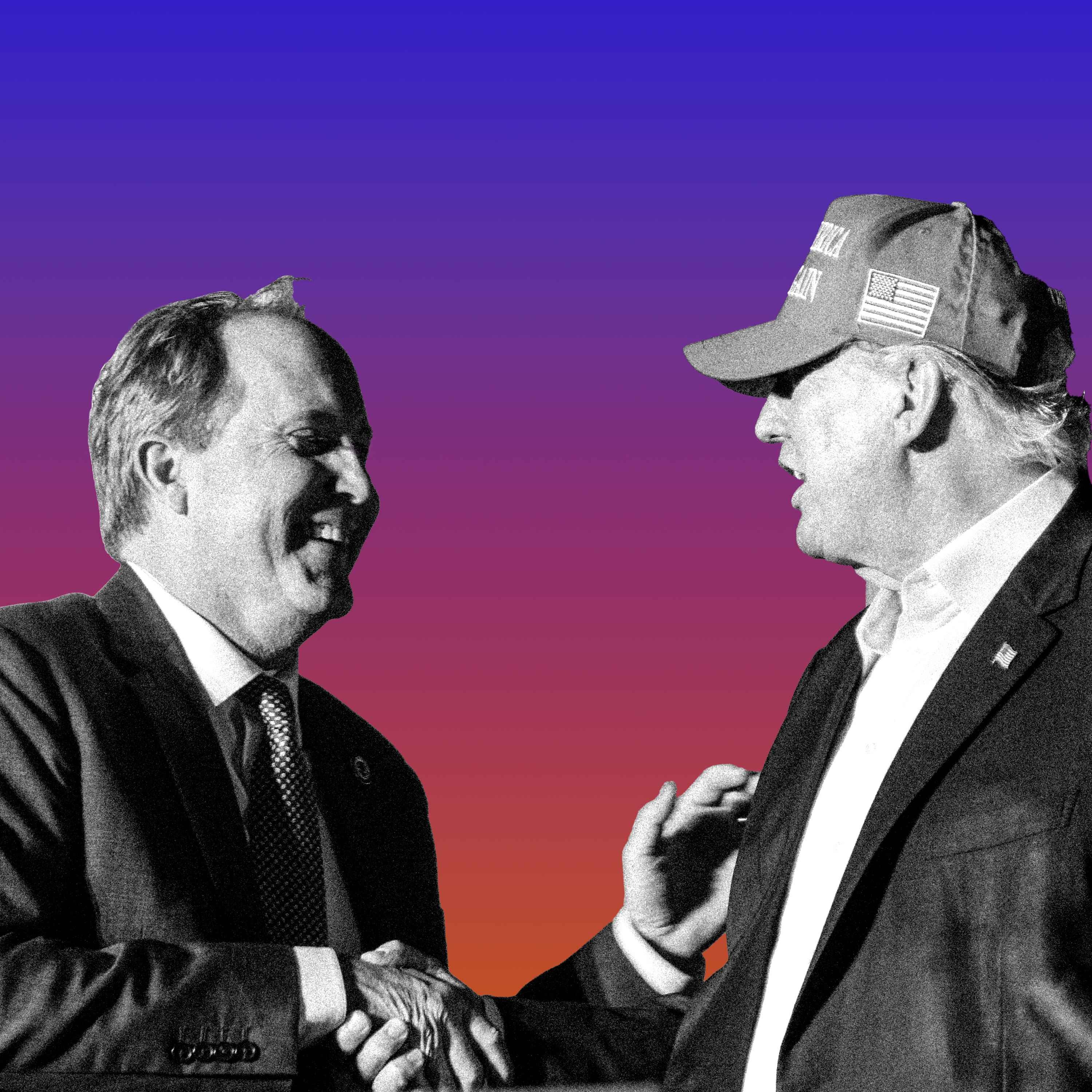
The GOP just held a midterm convention that was centered around the one thing their base seems to really like: Donald Trump.
The only problem is that pretty much everyone outside the GOP is blaming Trump for rising inflation, a foreign war, and a stagnating economy—and, oh yeah, Trump won’t be on the ballot.
Guest: Greg Sargent, host of “The Daily Blast” podcast and a staff writer at The New Republic.
Want more What Next? Subscribe to Slate Plus to access ad-free listening to the whole What Next family and across all your favorite Slate podcasts. Subscribe today on Apple Podcasts by clicking “Try Free” at the top of our show page. Sign up now at slate.com/whatnextplus to get access wherever you listen.
Podcast production by Evan Campbell, Madeline Thames-Ducharme and Patrick Fort.
Paige Osburn is the senior supervising producer of What Next and What Next TBD.
Hosted on Acast. See acast.com/privacy for more information.
Get every episode summarized
Each time Slate News publishes, we email you a written briefing from the transcript — the topics, who appeared, and any specific claims, with the ad reads skipped.
Email me new episodesFree for 3 shows. No card needed.
Hosts & guests
Transcript ready
575 searchable segments. Every word is indexed and playable.
Full transcript
Slate News — What Next - Is Trump Losing His Touch?. Machine-transcribed; use the interactive transcript above to jump the player to any line.
If you like YouTube, you'll love YouTube Premium. Hi, I'm Sean Evans from Hot Ones and I want to tell you about YouTube Premium. It has offline downloads so you can watch without Wi-Fi. Background Play. So you can lock your phone and it still plays baby. Oh, and it is completely ad free. Yes, I said it ad free. Try YouTube Premium for two months free at youtube.com slash premium. How eligibility varies? Terms apply? Cancel anytime. Support comes from WISE. The smart way to manage the currencies you need around the globe. Fed up with losing out to hidden fees when you send money abroad with your everyday bank, choose the smart way. WISE. You can count on the exchange rate you'd usually find on Google. No unwelcome surprises. Plus, ditch that where's my money feeling? Most transfers arrive in under 20 seconds. 10 millions saving billions on hidden fees. Be smart, get wise, download the WISE app today. Tease and seize apply.
When I got ready to interview Greg Sgt, I did not think we'd be starting with AI. I think of Greg as a politics and policy guy. He writes for the new republic. He hosts the Daily Blast podcast. Then this weekend, the big AI CEOs called for an industry-wide slowdown. And as he is want to do, Donald Trump posted through it. On Monday, before I came into talk to you, the president posted, the only control or guard rails that AI needs is a strong and smart, high IQ president. And the USA has that in spades. Well, it's interesting because Trump has been sort of sneeringly dismissive of community concerns about AI data centers. And the fact he said something along the lines of communities that resist data centers will end up poor and backwards. Whatever you think of Silicon Valley, it is clear that Americans are wary of AI.
And so the public outpouring against data centers in particular, and I think data centers are a proxy for AI for a lot of people in these communities. That public outpouring shows how out of touch with everything on this particular debate, Donald Trump is. And so it would be good to have a president who's smart, but we don't have one now. The thing about his position that I find so baffling is that he's actually using the federal government in many ways to facilitate the development of data centers for AI in many communities. And this has sort of eluded the discussion like he's using the environmental protection agency to weaken oversight and is just as department is even getting involved. And so, you know, I think what the public really wants is a president who's going to use presidential power and work with Congress to make sure that the development of these
things and the development of AI more broadly is done in keeping with the public interest. I'm not in keeping with his oligarchic pals, basically. If you look at this in a political lens, it does seem a bit tone deaf, right? If you have like 40% of American adults saying AI has a negative effect on society and you are correct in thinking of data centers as some sort of proxy for a lot of that nervousness, it just seems like Trump is fundamentally misreading some political moment. Donald Trump hasn't thought for two seconds about either the dangers that AI poses or why communities might not like the data centers, the power of them. And so that failure to think through any of this bleeds right into the political tone deafness. In other words, he essentially isn't willing to speak to the concerns of communities, let alone act in accordance with those concerns precisely because he can't even understand
what they're thinking in the first place. He's not able to think much about anything. And so, you know, his inability to say to himself, well, are people worried about AI and data centers for a reason? Maybe I should figure out why they're worried about it. I mean, I'm president. I have a responsibility to sort of think through how the American public is processing big events like this one, but he's not willing to think about that stuff. Well, that's really the reason that we wanted to talk to you is what seems to be some increasing daylight, if you want to call it that, between where the president is and where Americans are on a whole range of issues. Obviously, it's not just AI. There is a lot of fear of his ballroom surveillance in general. And we are barreling toward a very significant election. And it makes me wonder how long he can get away with ignoring what voters want. Well, what I've been saying lately, and I've said this in a number of pieces at TNR.com,
is that in many ways, like the main pillars of Trump's whole world view are being widely repudiated by the public. America first, nasty partations, protectionism be a tariffs, all of those are deeply unpopular. And that's really striking. I don't know that we would have been able to predict that just a year and a half or a year and three quarters ago. In fact, I was dreading something very different from that happening. But he, I think, is incapable of imagining that his world view is toxic and failing. And so there's a drift on not just on issues, but on the core pillars of his whole world view. Today on the show, has Trump lost his political touch. I'm Lizzie O'Leary, in from Mary Harris, and you're listening to What Next. Stick around.
Today's episode of Slates What Next is brought to you by Olympic hospitality. The Olympic Games are coming to Los Angeles in 2028. This is a once in a generation event that you're not going to want to miss. It's more than a ticket. It's a story you share with your family and friends, and the ultimate way to get closer to the action is within Olympic hospitality package. Ticket-inclusive packages offer a range of prime seating and lounge access options, then you depended priority entry, food and beverage selections from LA's diverse dining scene, and elevated service and continuous support, making your day at the Olympic Games one to remember for a lifetime. At the head of the curve with an LA-28 hospitality package, discover more at hospitality.la28.org. Slash What Next. This episode is brought to you by Built. So here's a question. Are you getting rewarded when you pay your rent or mortgage right now?
If the answer is no, you really might want to check out Built. Becoming a Built member means earning points on every housing payment, no matter where you live. The points can be redeemed for all kinds of things, flights, hotels, lifterides, Amazon.com purchases, also future housing payments. Personally, I kind of love the idea of using built points to pay for future housing costs. There's a kind of justice in that, right? Another thing is that an unexpected benefit built gives every member is access to its agentic neighborhood concierge in the built app. The concierge doesn't just give you information about your home or your neighborhood, it executes. It's connected to where you live after all, and 50,000 merchant partners. So you can simply ask it to pay your rent, make a dinner reservation, book a fitness class, schedule a lift, and more. It makes things happen while automatically applying your member benefits along the way. The way it works is you download the built app, and then you link a credit or debit card to that app so it purchases your local spots become even more rewarding. Third, you ask the neighborhood concierge in the app pretty much anything.
It'll tell you about exclusive member benefits at restaurants or fitness studios. Find your list on your lift rides and more. For the homeowners out there, keep in mind, built works for mortgages too. Your housing payment is one of your biggest monthly expenses, so why wouldn't you want it to work for you? Download the built app and join the membership for where you live. At joinbuild.com slash whatnext. That's j-o-i-n-b-i-l-t.com slash whatnext. Use our link so they know we sent you. Hi, this is Brooke DeVard from Naked Beauty. I am always looking for ways to elevate our daily rituals, and the colder smart toilet is proof that design changes everything. It's the stunning sculptural piece that feels like quiet luxury for your bathroom. It totally transforms your daily ritual into something elevated, with customizable cleansing and touch screen controls. It's functional art that makes your space feel cleaner and more intentional. A modern home deserves a modern toilet.
Use the difference of Kohler smart toilets. Find more at Kohler.com. I want to back up a little bit and take this piece by piece. Let's go back to last week to this Trumpa Paloza, people like to call it, the GOP's midterm convention, which is not really a thing, but okay. Did you watch any of this? I did. What part would you say was for the GOP and what was for Trump? At the center of that entire event, and sort of at the center of Maga psychology right now, is this enormous contradiction. The festival is designed to push the storyline that Trump has been this smashing world historical success on every front. Yet, as every person who's at that thing knows and every reporter covering it knows and anyone, the few people who watch them on TV know, the very reason that they put the
damn thing on is because he hasn't been a success. The very reason they put it on is to come up with some way anyway at all of motivating voters who picked Donald Trump in the last election. Because they face a major problem in the midterms, which is that it's not just that in midterms turn off, falls off for the president's party because the president isn't on the ballot, though that's important. It's also that in unique ways, Donald Trump's agenda has directly hurt his own base in any number of ways. And so they're absolutely desperate to come up with some way to get these people to come out in the midterms. And this Trump polluza is all about that, but you wouldn't need to be doing this if he had been a success. That's the core point of it all. And if you know, like there's no acknowledgement of what we all know, which is that the tariffs have absolutely really hurt.
Farm country have hurt rural America. Tariffs are attacks on consumers. Yes, tariffs are attacks on consumers. They're not $50 billion trillion coming into this country from other countries. They were paid by working in middle class consumers. That's who put that money into that kitty, right? Basically, the costs were passed onto them. There's no acknowledgement of any of that. There's no acknowledgement of the fact that even in some red parts of the country, there's serious opposition to his deportation agenda. And there's no real acknowledgement that the Iran war is driving up global costs in ways that are hurting his own people. And so the core contradiction of the center of MAGO, which is that every Republicans required to pretend he's been a world historical success, even as they all are going through a whole exercise designed to compensate for the fact that it's been a utter failure, is I think the story. Well, I want to talk about some of those policy things because you highlighted the tariffs
and you also highlight the war, which has never been popular. The sort of latest timeline estimate on when it might end was Trump promising reporters that the war would end immediately after the midterms. But the Wall Street Journal is reporting that, you know, some of his advisors, Marco Rubio, JD Vance, are warning him that it could go on. And do you think Trump thinks it's almost over? Is he just saying stuff? Like how do you piece that out? So that's a tough question because it requires getting in his head, which is a hard thing to do for obvious reasons. But as far as I can tell, he is very, very susceptible to advisors who are telling him that he has basically won this conflict. That's what all the reporting seems to indicate. I don't think he actually listens to or potentially might not even hear people who are saying the contrary. I mean, remember going into this thing, he was getting all kinds of warnings from the
joint chiefs and some very senior significant people that what happened in Iran actually could happen. They were telling him, sir, you know, there's the straight-of-arms. There's a reason that people hesitate before doing what you're about to do. They're going to close it down. It's going to hurt the global economy. It's going to drive a price. He was told all those things. And this I think is the essence of the Trump mentality, really. He doesn't hear that because he's absolutely convinced on some level that his power is limitless. He thinks of American power as being the same thing as his power, right? Like the state is him and so forth. Right. The Department of Justice is my lawyers. Yeah. And even sort of almost more fundamentally and more psychologically, when he talks about American power, he's talking about his own omnipotence, right? And so I don't, I think right now what he tells himself in essence is Iran is on the server. I've destroyed them. I've won, as he keeps saying.
Iran is on the verge of economic collapse, which, you know, I don't really know how much we do know about that. There may be something to that. So he's now saying that after the midterms, this thing's going to end because the story he's telling himself is that Iran is only holding on by a thread in order to get through the midterms without surrendering. There are all these data points, though, that Americans can see, right? Like they can see news about the war. They can see the consumer price index rise. They can see that gas prices are very high. And the one that I have been thinking a lot about is they will see some sort of decision from the Fed, the Federal Bill of the markets committee, meets this week. They will have some sort of announcement on the 16th. And it makes me wonder like, oh, does Trump have his captive Fed that's going to do what he wants or is the Fed looking at the bond market, at the stock market and thinking, actually, maybe we should raise rates.
So just before we get to that, I wanted to cite some polling from CBS News from over the weekend, which goes to the points we were just making and you were just saying about the Iran war. CBS News asked likely voters nationally if they would vote for a candidate who either opposes Trump on the US Iran conflict or supports Trump on the US Iran conflict. 56% of likely voters say they will vote for a candidate who opposes Trump on the conflict on the war. Only 32% say that they will vote for someone who sports that. So we now know that the American public is really directly connecting the dots between Trump's decision to go to war and hit the impact that it's having on prices, which by the way, we should stress is an unusual thing. It's not typical for voters to really see a very clear link between actual presidential policy and what happens with the economy.
Generally, the political science tells us that voters will just hold the present responsible weather or not. And this is the ray fair hypothesis. Right. Exactly. For my darks listing, they'll vote against the president if the economy is bad and they'll vote for the president if the economy is good, regardless of whether there's a connection. What's unusual about this situation is that, you know, and presidents are often unfairly blamed or unfairly credited for the state of the economy. But here's a situation where the link is clear. Trump was essentially left an economy, which wasn't perfect, but the economist called it the, you know, the envy of the world, right, after the post-COVID shock. And he said about wrecking what he had been bequeathed, right? Like so, tariffs, see the Iran and ICE, all those things are, you know, inflationary. And I find it just very striking that you've got this large, large majority that just wants
members of Congress who will stand up and stop the war, basically. It's unusual that it's that crystal clear, I think. Well, this also brings me to the Federal Reserve, though, because if they are looking at all these inflationary pressures, classically, in that moment, a Fed should raise rates. And yet you have Trump's kind of a hand-picked Fed chair. And we certainly know that the president is a low interest rate guy. What does he do if they do raise rates? So, freak out. Yes, he is absolutely going to freak out. I think it's interesting to think about the psychology of this as well. I think Trump sort of thinks to himself, like, you know, basically a certain direction on a graph is good, and another direction on a graph is bad, right? Like so, he looks at something that shows the stock market going up, and he just says, he touts it because it's a line going up on a graph under his presidency, right? And he just sort of thinks of it as strength and power.
And, you know, we're booming, we're rolling. And so, I think the same thing is true with interest rates, but sort of in reverse. He sort of says to himself, you know, people don't like paying interest. If interest rates are low, everybody feels, you know, better, this is in his head, right? And, you know, I'm winning. I don't know that it's more complicated than that, because he doesn't seem to connect interest rates with what actually happens in the real world, right? I mean, which is fascinating. You'd think that someone who has dealt with kind of buildings would, but fair. Yeah. I mean, that's the thing that's really a puzzler about Trump, right? Because he has acted in the world, right? And so if you think about like the reasons low information voters picked him in 2024, right? It's basically, you know, that's the guy on TV who fires people. He builds big things in Manhattan, which is, you know, the real estate capital of the world or whatever.
I'm not sure that's true, but when I, but people, a lot of people, I think in the United States, think it's true, right? And so there is a genuine perception that has reached very deep into the culture of Donald Trump as somebody who gets, who gets big things done in the world. And it becomes very puzzling when you run up against his inability to understand some of the most basic things about trade, about interest rates. I don't know how to account for that, really. I think maybe he's very subject to manipulation. And what we're seeing now, like the people who thrive and there are people like Stephen Miller who really know how to press his buttons in very kind of mysterious ways. And so that, I think, is the only way to understand his failure to kind of piece together basic cause and effect with his undeniable acting in the world. So let's take all these things and put them together.
The Trump of Poulouse, the polling, does Trump still have the juice? So I just want to go back to that original point I made, which is about the three pillars of Trumpism, because I don't think about it as juice in some kind of holistic sense. There's one thing called juice. When he won in 2024, there was a certain pundit interpretation which held that his right-wing nationalism tapped some sort of authentic sentiment in the country. On some level, I mean, remember when pundits were essentially talking about how people were doing the Trump dance in the end zone, athletes were doing it, pop stars were saying nice things about him. It looked right after the 2024 election as if the whole culture had moved toward Trumpism in some sense, that there was this kind of right-wing populist nationalist spirit in the
country that he had brought to the surface. I think that was always wrong. There was never that thing. In a sense, there was never actually juice. You see what I mean? It all collapsed very fast. As soon as the emperor was revealed to have no clothes right at the outset, as soon as ICE people started shooting people and pulling grandmas out of buildings, as soon as the tariffs started driving up prices, his approval really sunk very fast. What I take from that is that the election of Trump wasn't actually a cultural moment in his favor. It was just a reflection of inflation and post-COVID shock, basically. I don't know that he ever had the juice. A lot of things had to line up for him to get elected a second time. It was a remarkable comeback, no question. A lot of luck was there, I think. The perception of Trump having juice was a creation, I think, of the punditry, really,
of the political classes. I don't think he ever had it. We'll be right back after a quick break. I'm Jake Stauk, co-founder and CEO of Serval. We built Serval to automate the IT work that slows companies down. I'm bored, password resets, access to applications, my laptop stopped working, while employees wait for help their real work is put on hold. IT desperately wants to automate this work, and that's why they need Serval. You just tell Serval what you want to automate in plain English, and it's built. No drag and drop workflows, no expensive consultants. Employees get unblocked, and IT teams go from drowning in tickets to building what actually matters. With Serval IT becomes the AI engine powering the entire company. This is a new way to run IT. We guarantee you'll automate 50% of all tickets, and we'll prove it to you in a free four-week
pilot. Go to Serval.com slash tickets. That's S-E-R-V-A-L dot com slash tickets. Hi, it's Brooke DeVard, host of Naked Beauty, and I want to talk about how I upgrade my hosting experience. There's a moment just before guests arrive when my home stops feeling like a series of rooms and it becomes an atmosphere. The light settles, the air shifts, and then the beautiful scent of Jasmine rose and fig fill the air. It feels warm and considered. That's what Pura does. It turns fragrance into environment. A collection of beautiful, clean fragrances, all controlled from your phone. Choose your sense of place at Pura.com. So I think an important question here then is what that means for the Republican party. Even if we set aside the national electorate over somewhere else, you still have a Republican party that is trying to figure out what to do with their president, their figurehead,
the person who, frankly, the party has been shaped around for the last decade in many ways. I think it's important to break out how Republicans are going to deal with Trump basically going forward. I guess one question I have for you is how many Republicans are still putting their weight behind Trump? Candidates, folks in elected office, how do they look at this situation? So it seems to me that they're caught in a bit of attention. Don't you think Lizzie? On the one hand, they have to show up at Trump Paloza and they have to say that Trump was this dependent success and that he's completely owned his enemies and he's defeated everybody and he's the greatest leader in world history and so forth. But then that runs into the problem, which is that Trump's collapse among independence has been extraordinary. By the way, I really think that's an undercover story in this country. Trump's collapse among independence.
It's just amazing. If you start to look at the polls on a regular basis and look at his numbers among independence, including in places like Texas and Iowa, it's shocking. I mean, you know, as Trump himself would say, you've never seen anything like him. Each Republicans trying to figure out their own way of managing these tensions, right? Like, they've really, Susan Collins, since she's in Maine, which is a very tough state for Republicans, except for her historically. You know, she's been kind of permitting herself to go a little further than other Republicans will. But you'll note that a lot of candidates in some of these Midwestern states that are directly impacted by Trump's trade war with Canada are coming up with ways to say that they're- Right. ...witchataws, the home of bombardier. Yeah. Yeah. Witchataws the home of bombardier, which Trump threatened to completely cut off sales in the US from, but also places like Michigan and Iowa. And, you know, where there are competitive house races and competitive Senate races as well.
You've got Republicans figuring out a way to somehow support the trade war with Canada, even though there's no way the voters in those states are for that. Okay. So this is what I want to talk about. A piece you wrote that I found really interesting that talks about the money behind all of this, where you have something called MAGA ink. And I feel like you should explain that because it- I think it's really important to show where the small dollar contributions are going, whether they are going to the president or whether they are going to Republican candidates. Yes. Well, James Comer, who is, you know, a senior house Republican, had a very interesting aside about this the other day. He basically said, we hope that Trump is going to spend from his Super PAC MAGA ink on our races because at this juncture he hadn't yet. This was a couple of weeks ago and there was- it was a little unclear what he was going to do. And James Comer actually said, I don't think he meant to say this, but he said that a lot
of the small donor base of the Republican Party is giving to MAGA ink Trump Super PAC instead of to Republican candidates. And like the fact that the small donor base is giving to Trump Super PAC and not to Republican candidates, at the expense of Republican candidates, is a really key tell and gets at the dynamics we were talking at her about earlier, right? Like, you know, the small donor base of the Republican Party doesn't really like Republicans that much. They like Trump. And by the way, we should add here that Donald Trump has encouraged that. Like he has said over and over in every which way that Republicans have failed him. So he's basically telling the small donor base of the Republican Party to give him money and not give it to Republicans, which is quite striking. Well, so I think then the natural question is like, okay, well, why haven't they turned on him? Is it because they can look at MAGA ink? What is it that's got some astonishing amount of cash on him?
A $400 million war chest and say, oh, well, we're hoping he might give us some money or we're scared that his diehard voters are going to reject us. Like, I'm in some ways, I don't know how they, how they square that circle. So it goes back to that tension we talked about earlier. Doesn't it? Like in the sense that, you know, if there are problems, basically that Trump voters aren't going to turn out without him on the ballot, the last thing they can do is actively separate themselves from Trump, given that they need these people. Here's the thing that I think maybe a lot of people don't get about the Republican Party's field to Trump. It's actually understandable, right? Because Donald Trump was, you know, he cracked a code that Republicans were unable to crack. And this goes back to the sort of larger context for all of this. But you'll recall that Barack Obama, after he won in 2012, right, there was a fair amount
of dismay among Republicans who thought that they were on the losing end of demographic evolution. There was calls for serious moderation on immigration because they were losing the non-white vote, especially the Latino vote. And you know, even Mitt Romney, a fairly strong candidate, you know, a solid guy in certain ways was unable to beat Barack Obama. So Donald Trump came along in that milieu and said, no, the way to, you know, to win elections, the way to beat the Obama machine is to turn against immigrants. And as a result, he did. I don't think it's actually that so much, but his unique charisma, that his power as a kind of political figure and cultural figure, especially galvanized Republican voters in a way that no Republican was able to since Reagan, right? And so, you know, Republicans look at Donald Trump and say, you know, he figured something out.
He knows how to reach these people. We don't. Right? And so you can understand why they've tied themselves to him. He solved the problem that they couldn't solve themselves. So I guess I want to also challenge our own assumptions, right? Like there's a way to look at the conversation you and I have been having to look at some of this data and say, this is hope. This is people who, you know, have been foiled by Trump at every turn, kind of spinning a midterm narrative. Is this, is this hope? Or do you think the numbers will bear this out in November? So I would contest the premise that he's foiled us at every turn. Do you think so? Yeah. Because, and I think that's actually part of the error that I accord some juice in a way. If you think about it, like Donald Trump, a lot of contingent events had to line up for
2016 to happen. I mean, there were two terms of a Democratic president. There was a somewhat weak Democratic nominee, right? Who had weaknesses that, you know, I think we weren't able to see. Right. And then it's sort of historic shuffle around. Yeah, yeah, yeah. And he didn't win the popular vote, right? It was like, and, you know, I did not expect Trump to win that election. I got that wrong. A lot of people got that wrong. But it wasn't that, it wasn't a decisive win by any, any means. In 2018, conventional midterm parents assert themselves Democrats win 40 seats in the house. 2020 Donald Trump goes down. He loses by a significant margin, like an actual big victory, as opposed to the one in 2024, which wasn't big, right? 2022 actually largely has Republicans under performing. So for three straight elections there, Trump could not, you know, get his way. His juice was nonexistent, right?
And then in 2024, a lot of contingent events lined up again for him to win. Now, I'm not trying to take away from his ability. I think he's like the second most charismatic, the second best politician of our time behind Barack Obama, right? Especially in his parts of the country. I would definitely give him that, you know? But even with that, a lot of things had to go as way that were unlikely events. And so, you know, we've had what, two, three dozen special elections that have swung 10, 12, 14 points against Republicans, you know, relative to 2024. So that's real. Those are real findings. Now, special elections are a different electorate from the midterms, but the midterms are also going to be a pretty engaged and pretty educated electorate compared to presently years. So, you know, are the polls wrong? Like the NAZELVER has Democrats up by over eight points in the generic ballot matchup
among like lead voters. That's getting into wave territory. You've got Talarico leading in a number of polls in Texas, which is unusual. Now, I think the Senate's really hard. Okay. I don't want to give anyone any false illusions like it could easily go the other way. Like every one of those Senate races on the knife said Republicans could hold the Senate. The House could be a lot closer than we expect. All of that's possible. But most of the actual electoral outcomes we're seeing and most of the data we're seeing does suggest the Democratic, a sizable Democratic win. And that would be in keeping with not just conventional political patterns in American politics, but also with what we've seen under Trump himself. He has lost. He doesn't always win. Greg Sgt. Thank you so much for coming on. It was great to talk to you. Yeah. Thanks so much, Lizzie. Greg Sgt. is a staff writer at the New Republic and host of the Daily Blast podcast.
And that is it for the show. What Next is produced by Evan Campbell, Madeline Tems to Charm and Patrick Ford. Paige Osborne is the senior supervising producer of What Next and What Next TVD. Mia Lobelle is the executive producer of podcasts here at Slate. Ben Richmond is the senior director of podcast operations. I'm Lizzie O'Leary. You can find me on Blue Sky where I'm at Lizzie O'Reilly. Thanks so much for listening. Talk to you soon. Hi, this is Mark Bitman from the podcast, Food with Mark Bitman. I've been writing about food and restaurants for almost 50 years. My whole career really, and what I know is that the good restaurants all have something in common. They're busy, genuinely, chaotically busy. And somehow in the last few years, the best of them have begun to make it look easy.
And do you know why? Because they're running on Toast's technology. Toast is built for restaurant owners who understand that Toast's tools keep the line moving and keep their customers happy with fewer mistakes and hiccups in ordering and paying. For owners, that turns busy into business. To learn more, head to ToastTab.com. That's T-O-A-S-T-T-A-B ToastTab.com. Toast. Built for busy. Hi, it's Brooke DeVar. I'd host of Naked Beauty and I want to talk about how I upgrade my hosting experience. There's a moment just before guests arrive when my home stops feeling like a series of rooms and it becomes an atmosphere. The light settles, the air shifts, and then the beautiful scent of Jasmine, Rose and Fig fill the air. It feels warm and considered. That's what Pira does. It turns fragrance into environment. A collection of beautiful, clean fragrances all controlled from your phone. Choose your sense of place at Pira.com.
More episodes
More from Slate News

What Next - The Knockdown Dragout Fight for Max Miller's House Seat
Slate News

Amicus With Dahlia Lithwick | Law, justice, and the courts - Everybody Out of th...
Slate News

Slate Money - Fabulous, Beautiful Debt
Slate News

What Next: TBD | Tech, power, and the future - Is the A.I. Race Real?
Slate News