Get every episode summarized
Each time Own Your Health publishes, we email you a written briefing from the transcript — the topics, who appeared, and any specific claims, with the ad reads skipped.
Email me new episodesFree for 3 shows. No card needed.
About this episode
“If you're listening on Apple or Spotify, please hit follow so that you never miss an episode. When there's less sunlight, you're supposed to have more sleep.”From the transcript
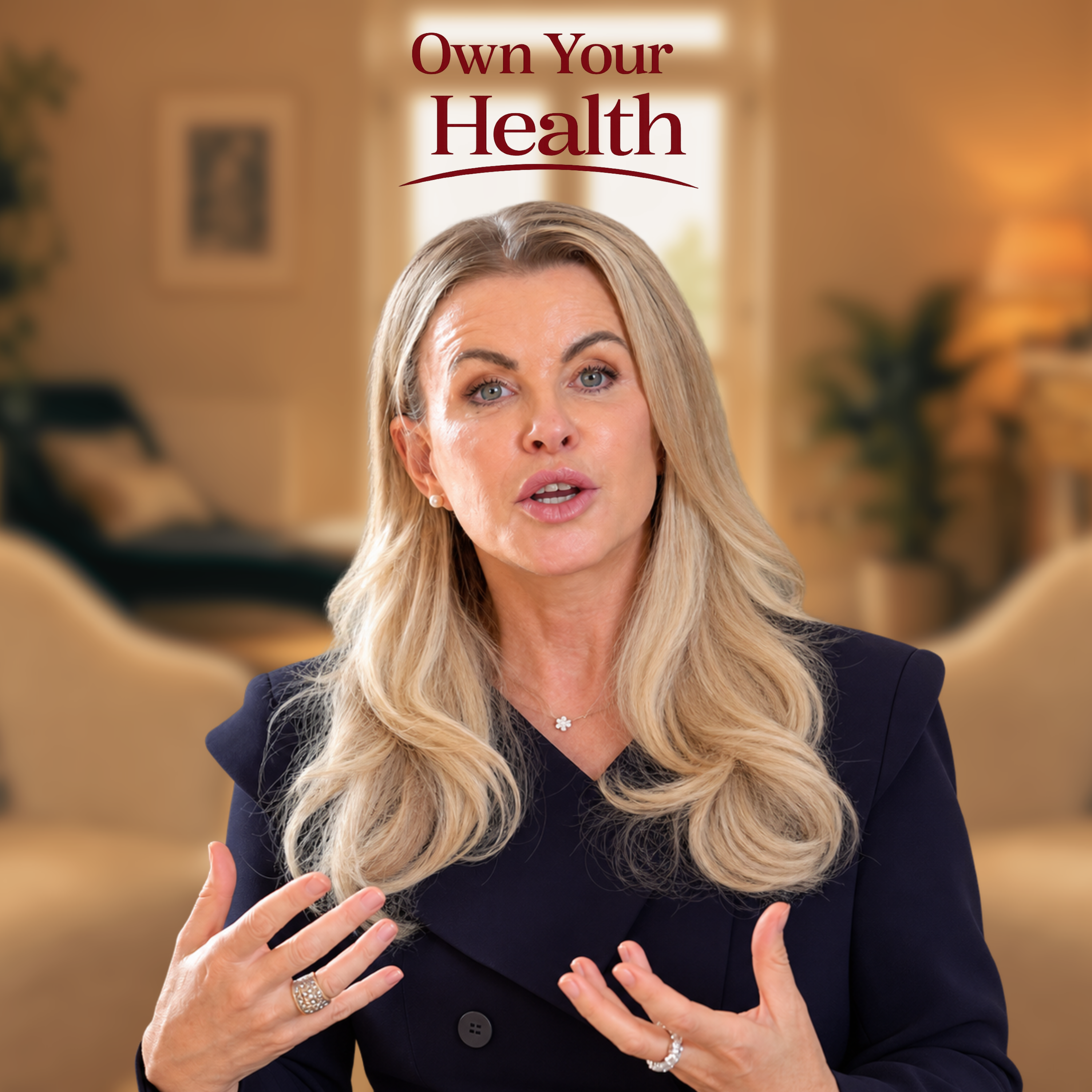
Feeling tired, low or out of sorts as the nights draw in?
Katie Brindle explores autumn through the lens of Chinese medicine, sharing gentle morning practices, a simple gratitude exercise and her ABC method for letting go of emotional baggage.
Discover small ways to slow down, make space and feel lighter this autumn.
--------------------------------------------
More information here: https://katiebrindle.com/
Subscribe to my newsletter: https://katiebrindle.com/newsletter-signup/
Buy 'Yang Sheng: The Art of Chinese Self-Healing' at
https://www.hayoumethod.com/product/yang-sheng-the-art-of-chinese-self-healing/
Buy the Hayo'u tools at https://www.hayoumethod.com/products/
Hayo'uFit at https://hayoufit.com
--------------------------------------------
Join my channel and leave a comment about what you want to see next!
Love, Katie Brindle.
Get every episode summarized
Each time Own Your Health publishes, we email you a written briefing from the transcript — the topics, who appeared, and any specific claims, with the ad reads skipped.
Email me new episodesFree for 3 shows. No card needed.
Hosts & guests
Transcript ready
202 searchable segments. Every word is indexed and playable.
Full transcript
Own Your Health — Tired All the Time? Try This Simple ABC Method. Machine-transcribed; use the interactive transcript above to jump the player to any line.
Hello and welcome to own your health with me Katie Brindle. If you're watching on YouTube, hit subscribe. If you're listening on Apple or Spotify, please hit follow so that you never miss an episode. Why am I so tired and sad in autumn? When there's less sunlight, you're supposed to have more sleep. If we're not emptying these rocksacks as we go along each year, then what happens is it starts to get heavier and heavier and heavier and we start to feel burdened. Letting go is incredibly hard, but letting go is something that all of us are going to have to do at some point or other. A is easy stuff, C is the stuff we don't want to go anywhere near and B is everything else. Get yourself a blank piece of paper and a pen and start writing. Hello and welcome to own your health with me Katie Brindle and today we are going to talk about why am I so tired and sad in autumn as the nights are starting to draw in and the weather is definitely getting chillier. We're all starting to feel a little bit of the autumn blues and Chinese medicine has a lot to say about this and a lot that we can help you with as well. The most important thing that we need to understand about this is that Chinese medicine really understands
that our energies align with the energies of the season and the season that we are now in is deep autumn and autumn is attributed to the energy of the lungs. It's also attributed to the other organ of the body which is the large intestine which in Chinese medicine is connected to the lung. It's called the Yin Yang pair and both of those organs have a real responsibility with what it is that we keep and what we let go of. Now if we then expand this out to what we're observing in nature right now is that you'll notice the same thing going on with the trees around us. Right now those trees which are very much the lungs of the environment are making a similar decision. Right now they are pushing into the leaves anything which they want to let go of and slowly but surely as we go through the season and deepen to winter those leaves come off the trees. Now what that creates is a kind of weeping sensation, a kind of who who who feeling. I notice when I do my morning walk with Don Swan every morning that I'll notice my beloved trees in the park
just literally looking like they're weeping as they're shedding those leaves. So we need to look at that and think actually what's going on here is that it's not that the autumn is actually trying to be depressive. It's just that we are being invited by the environment from which we have come to go on a more introspective journey where we start to address what it is that needs to be let go of. Now this is a really really important aspect of being human. One of the things that I've noticed as I've gone through my own aging process and continued to do so is that as human beings we start to carry along with us a sort of rock sack of remorse and rock sacks of regrets and these are things that we need to be aware of because if we're not emptying these rock sacks as we go along each year then what happens is it starts to get heavier and heavier and heavier and we start to feel burdened. So actually the way to look at the autumn season is it actually is nature's invitation to unburden yourself to allow yourself to feel lighter and freer and to invoke the other aspect that this
season offers us which is space. So the art of this season and the art of wondering why we're so tired and sad is actually the art of letting go. Now before I go more into the art of letting go because this is an art form in itself letting go is not easy letting go is actually a spiritual practice letting go is incredibly hard but letting go is something that all of us are going to have to do at some point or other. Before we go into the letting go exercises and all the wonderful things we can do let me just talk about being tired because we're not just sad we're feeling tired as well our energy started to bleed and we often find that we don't quite have enough energy in the tank to do all the things that's required. Now why? Well one of the main reasons is that according to the natural cycle from which we came you're not supposed to do as much when there's less sunlight you're supposed to have more sleep and we are supposed to go to bed we're supposed to very much in autumn go to bed earlier so that we can still start getting up relatively early but then as we go into deep winter we start to go to bed early and start to wake up late. It is a simple navigational
shift whilst it sounds easy in practice it is something that you need to get the hang off in order to make sure that you're doing it on an ongoing basis. If you pay attention to it it makes it a lot easier than if you're not. As a result I'm still waking up early and therefore what happens is when I wake up the next morning at about 6am I'm still on track for an early morning walk before my day starts. Now that early morning walk is paramount to our health. Getting outside into nature first thing in the morning as the sun rises is literally one of the best health tricks you can do. If you can do it I really really advise you to start working towards doing it. I feel better all day as a result. Now if you can't do that and many people can't there was many years in my life where I couldn't add small children I had to get them to school to get them up I had to be in the house if you have elderly parents or you have people living with you which means that you need to be physically in the house or for whatever reason then the next best thing to do is to open a window put on a piece of music and start invoking movement into your early day. Do some simple breathing
techniques it will make you feel better and more energized immediately. Simple open the window a deep breath in with a big line breath out. Then the next thing to do is to shake the body. Okay well do a little demonstration of that for those watching you but basically you want to shake the body from head to toe. If you're feeling drowsy then start gently. The trick to these techniques is always matching your body where it feels. The other thing about autumn and feeling sad and low and less energy is that we don't want to force ourselves. We want to go into that pleasure zone. We want to make sure that the body is feeling really enticing by what it's doing. It wants to do it. Having done some simple breathing exercises and a simple shake then the next thing is to just simply if you wish and ideally you should add a couple of extra exercises to just really get the body moving in that precious first thing in the morning moment. So what's that? Well the first thing to do is the shake. If you're feeling a bit tired as I said first to start not with a full
blown shape but just with a gentle sway with a gentle sort of shimmy you can put a piece of music on so then we want to increase the sway to something a little bit more vigorous but always always working within what is capable within what your body decides within the pleasure zone. If it feels good we want to do it. Obviously if you have contraintications please always check any advice that I'm giving you on this podcast with your health consultant. I do not know your individual symptoms. I'm giving you good Yang Sheng advice that we have used for thousands of years in China. So the next exercise once we've shaken the body is to tap the body. Now this is the Hei U Tapper which I brought into the product range specifically for this reason. All you do with this Tapper is you literally tap yourself all over the body it only takes a minute and it will feel massively invigorating and really energy enhancing. It's getting everything moving. It's a bit like a snow globe in the body. You're just releasing anything that's got stuck in the circulatory systems or in the muscles or joints or in the fascia and just starting to awaken it so that the body has got the capacity to
eliminate it effortlessly. Again you can just do it for a minute or you can put on a piece of music and do it for about three minutes as part of your kind of morning routine exercises. What do we need to do now? This is the season to be grateful. It really is the season to be grateful to count our blessings and be grateful for all that it is that we have. It's also if we want to take it a step further to be grateful for all of the things that we don't have. This is the season of the journal. If you're not used to journaling or you don't really like journaling, don't worry too much about the whole journaling idea. Let's just say a piece of paper. Okay, get out a piece of paper. It can be in your journal or not. It's up to you. Sometimes I find that the minute I get the journal out I feel it's a bit formal. I feel, oh I'm journaling and then I feel a bit of a block. Often I find just getting a piece of paper out just feels really like it feels like I'm back at school and also autumn is the season of back to school. So getting out of fresh piece of paper with a pen and going right. I'm going to write down all the good things going on in my life right now. I'm going to write down every single thing that I'm grateful for and I'm going to fill this piece of paper with everything I can think of. It is such a good exercise. It's
called the gratitude list. The next step everybody, those advanced people, is being grateful for the hard things. That's the next step and it's what I call the healing pivot because if in earth school and if in this metal season you can turn darkness into light and you can look for the good in absolutely every single thing no matter what, no matter how brutal, then you have really mastered earth school and that is the master lesson of what we're here to do. That's the advanced program for those of you ready and wanting to go to that extra level. We can circle back to that in a little bonus episode afterwards. But in the meantime the introduction to this is to come into it and write down everything that goes you're, everything that you're grateful for in the first place. But the thing with this sort of ABC of gratitude is start with the A list, start with the easy stuff. Don't start worrying about the really difficult things going well I'm not grateful for some awful bereavement that happened to be Katie. I'm in such despair over that. That is sea list stuff. We leave that until we're ready. So that is the gratitude list. That is filling
this new or terminal space with gratitude. I promise you if you try that as an exercise, that autumn energy and sadness will immediately elevate. You will feel energized and more content. If anyone has any questions on this, ask me and if you join the Facebook community, that is now going to be the virtual clinic. Okay, that Facebook group which is alive and kicking over there is going in the minute you start asking me a health related question over there. I will start recording it and sending it back in. So everyone can benefit from these questions and the clinic sits over in that Facebook community. Let's now talk about the Letting Go list. Because we've done the gratitude, we started with the easy stuff first and the positive and I've given you the advanced bit about okay to be grateful for the hard bits. That's the ultimate currency and not to fret that too much. We're going to come on and talk about the sea list stuff in a separate kind of addition. Because it's advanced practice only. Okay, now the thing about Letting Go is the first thing that we need to do with this is what I call it's the ABC list
again. It's ABC of Letting Go. Okay, so what do we need to do here? Well, the first thing is knowledge's power. So the understanding that the autumn season is asking us to lean into this Letting Go like the leaves on the trees and like the leaves, you don't let go of everything all at once. So what is it? Well, it's about facilitating the art of Letting Go because it is an art. Okay, it's an art of Letting Go and in turn that Letting Go creates space and in turn gratitude fills the space and then from which all of the new season energy that emerges in the spring time will come through and you will feel bigger and better and brighter for it. Okay, now what do we do? The first thing is back to the piece of paper we go. All these practices start with a fresh piece of paper. If you're a journal person, it's a new page. If you're not a journal person, you think all the journal puts me off. Don't worry about it. Get yourself a blank piece of paper and a pen and start writing. And the first thing to do is just write down everything that's upset you. Just flow it out. This is about helping you navigate the season of autumn. The best you can,
yourself, for free at home in the comfort of your own kitchen. Okay, also for all bed or wherever you happen to be. So the first thing is write everything down. Now that could be a bit of a bit of an eye watering. You could sense the energy even on this podcast was starting to go, oh, okay, we get it back. Okay, what do we do when we do that? Make the environment nice, light a candle, have a cup of tea. Do it in a safe space. Do it in a beautiful place, have some flowers out. Just make it lovely. Okay, and recognise that this is a little bit of a spiritual practice. Okay, but also recognise that what we're going to do here is which it's a bit like unburdening yourself. We're just going to get it out onto a piece of paper and we're just, it's always better out than in. And 50% of the solution is understanding what it is that you're feeling in the first place. It's articulating it. The next thing once you've written it down is to either get three colours of highlighters or simply write down next to each thing A, B, C, or red, blue, green, or whatever colour code you want to do it depending on who you are. So the idea is that A is easy stuff. C is the stuff we don't want to go anywhere near and B is everything else. And for the purposes of today's episode and for the foreseeable future,
please do not worry about C. So now let's tackle A. Just get yourself another clean piece of paper and write down everything on the A list because you've just defined it as easy stuff to let go of. So we start with the easy stuff. We start with the art of letting go. Start simple like A, B, C. Okay, and then what we can do is we can do the FR breath with it. We can just look at it and go, I let it go. And you go, and you can imagine it just blowing into the into the wind and then you can just cross it off. And then what we do is we sit for a second and we notice the space. And we breathe into that space and we smile into that space and we look straight to the gratitude list and think of three gorgeous things that you're grateful for. And we just sit with the gratitude. Okay, and you can keep it really simple. You can just literally keep it simple. I'm grateful for Don Simone. It's such an easy win. Okay, I mean it's so easy because he sat right there being so cute. And it's dogs are so great like that. Pets are wonderful because they just fill your heart with unconditional love. So in it goes. And just get used to that. And when you start the exercise,
perhaps only just do one and get used to the lightness that you feel as a result of letting go. And then go to the next thing on the list and the next thing and the next thing and you keep going. If you want to do a little further exercise to help letting go, then the copper guache are tool, which is this one I'm holding, which is the one from the Hayu method and it's the copper body tool with the body oil. These are very, very useful practices in the letting go experience. You just put the oil over the chest at the front and you use the serrated part of the tool and you press stroke away from the heart towards the shoulders. Okay, and you'll do that at bedtime before you go to sleep at night. This is a super easy way to help the lungs let go because what happens is we store this stuff in the physical body and guache is absolutely brilliant at allowing things to come out through the excretory function of the skin and connecting into the fascia. So it's got this really amazing ability to just kind of draw out what you want to let go of. So you can also do a simple practice in your bathroom where you take your list upstairs and you just say, I allowed
I let go of I release and then you say whatever it is and you guache are. Now what happens at this point is that this rucksack of remorse, what you've really done is you've let the simple stuff rise up to the top of your rucksack and you've taken it out. And what you need to do is use the autumn season to feel that and to notice how that feels. You will feel lighter, you will feel more grateful because you've got more space for the gratitude to come in. You will be leaning into the energy frequency of the season because it's all about letting go and you let go of the easy stuff first and you start to notice the upside of what that feels like. Now at this stage now the be list will probably look a little bit different to when you first wrote it because you've spent all this time however fast or slowly it's taken you to get through A and you now feel different and because you feel different B will now feel different. So the first thing to do is look at the be list and have a quick evaluation of it and go right how much of this do I still feel is really like sitting in B which is neither easy nor incredibly difficult. What you would then do is I would
re look at your be list and just go ABC within the be list so be easy, be medium be hard and just stop with easy stuff first get used to doing it get to the medium stuff get used to doing it and then get to the hard stuff and get used to doing it and that might take a week could take five years it will take as long as you wish it to be because the success of this episode is the art of letting go so it's how prepared to let go are you and when it gets difficult to let go it's because it's unfair it's unwarranted and it wasn't deserved however deep into the dramas and the awfulness of life we can go into with that okay and I'm fully aware of the harrowing stories that people go through because they've been in my clinic with me helping them with this stuff and I've been through it myself so I personally found that I could actually tackle my be list relatively easily and I got through it within probably an entire one one year season of autumn so three months and that the slip stream
of the gratitude and the joy was so great that I felt fantastic and then what happened was my sealist is actually really short there's probably about four things on it because in fairness most things were done so let's talk about that separately we're going on to the sealist in an extra bonus episode so in the meantime that is the most important thing to do to reach the healing pivot and to get comfortable with the amazing energy frequency that it offers you the upside of this exercise is huge it will energize you it will elevate you it will really pivot into the autumn frequency and the gift the autumn gives us now with that I'm going to pause there thank you for joining me please do hit subscribe please follow please send this to anybody that you think would be helpful we can't get this information out if you don't share it with us it's so helpful thank you so much for following and listening to me and I look forward to seeing you in the sealist episode to follow
More episodes
More from Own Your Health

Why Modern Life Is Making Us So Overwhelmed | Lily Silverton
Own Your Health

You’re Not Broken: Understanding Your Nervous System with Nadia Narain and Katia...
Own Your Health
What’s Really Inside Your Supplements?
Own Your Health

How to Let Go: A 3-Step Guide to Feeling Lighter
Own Your Health