Get every episode summarized
Each time The Brian Lehrer Show publishes, we email you a written briefing from the transcript — the topics, who appeared, and any specific claims, with the ad reads skipped.
Email me new episodesFree for 3 shows. No card needed.
About this episode
“And for our last segment today, we do want to follow up on one of the things that came up in yesterday's discussion of Title IX and the Cornell case in general.”From the transcript
Listeners call in to share how they're talking to their high school and college-aged kids about the alleged gang rape at Cornell University, and all the issues it's bringing up about consent, bystanders and the role of colleges in keeping students safe.
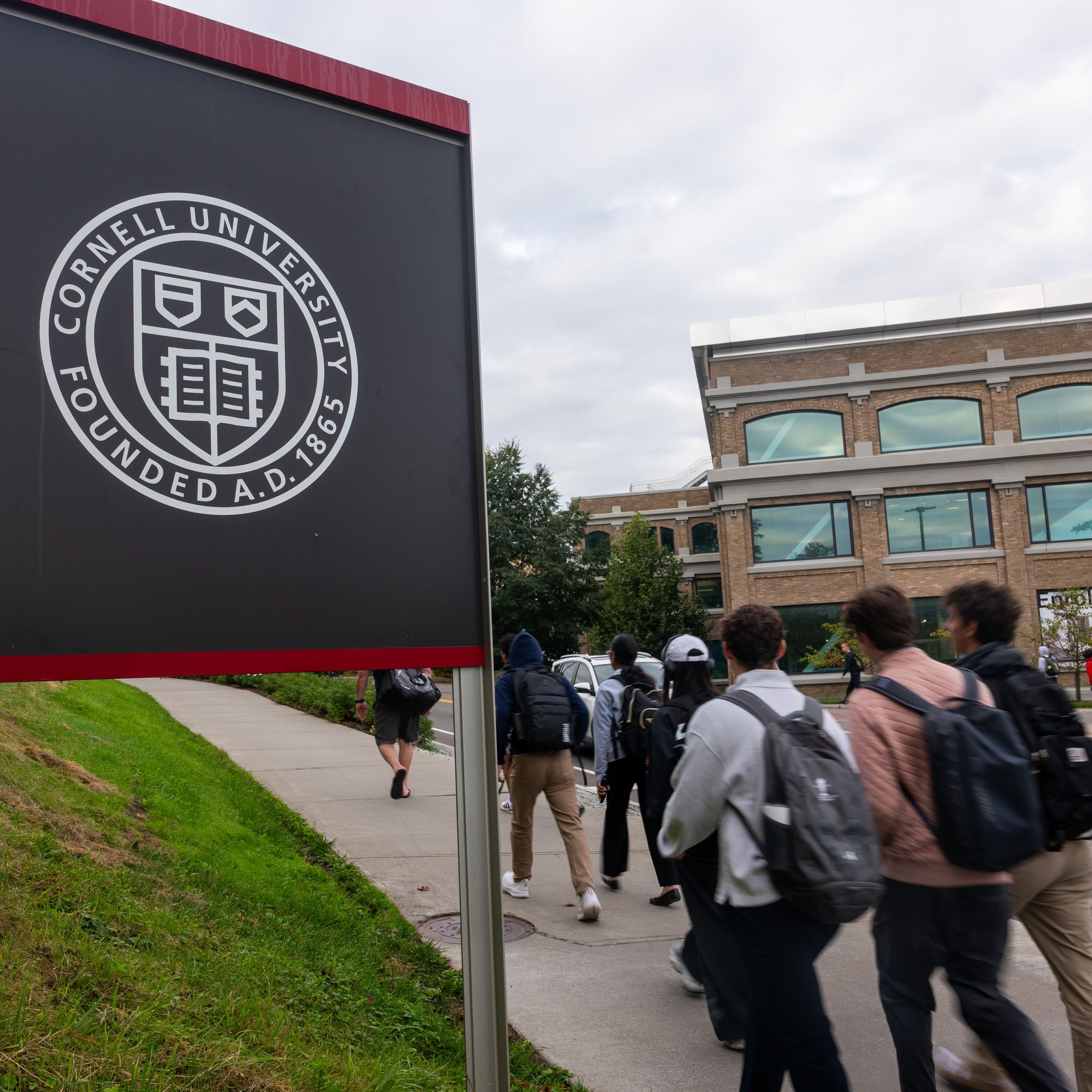
Photo: Students walk on the campus of Cornell University a day after on September 30, 2026, in Ithaca, New York. (Photo by Spencer Platt/Getty Images)
Hosted by Simplecast, an AdsWizz company. See pcm.adswizz.com for information about our collection and use of personal data for advertising.
Get every episode summarized
Each time The Brian Lehrer Show publishes, we email you a written briefing from the transcript — the topics, who appeared, and any specific claims, with the ad reads skipped.
Email me new episodesFree for 3 shows. No card needed.
Hosts & guests
Transcript ready
125 searchable segments. Every word is indexed and playable.
Full transcript
The Brian Lehrer Show — Talking to Kids About the Cornell Case. Machine-transcribed; use the interactive transcript above to jump the player to any line.
And for our last segment today, we do want to follow up on one of the things that came up in yesterday's discussion of Title IX and the Cornell case in general. This is going to be a call in now for parents or caregivers of high school and college age kids and young adults on how you are talking to them about the Cornell sexual assault case that's been headline news obviously for the past week or so. In particular, how you, if you have a son or if you have a daughter who's a high school senior or has ever been a high school senior, how have you talked to them about campus sexual assault before they went to school? That's really the core question. How have you ever talked to your high school senior boys or girls about sexual assault,
frat culture, any of that to prepare them before they went off to school? You know, there are the conversation topics that parents have with their kids about various things at various times, right? How about this one? Tell us your stories and how you've handled it. One, two, four, three, three, WNYC, two, one, two, four, three, nine, six, nine, two. And this follows up on this one moment from yesterday's segment that will replay. It was a parent who called into the show. Her son is a current student at Cornell. And I thought we had that clip. The quote was, it's extremely stressful as a mom. She said to have to hear this absolutely awful story. Of course, before my son went to college, we had many, many conversations with him about girls and women and drinking and what's appropriate and what's not. So with the inspiration of that Cornell mom who had the courage to call in, did you have those conversations with your kids? Are you maybe having them again in light of Cornell, which if you have a current college student,
boy, girl or otherwise, they're probably hearing about it, right? Two, one, two, four, three, three, WNYC. For parents and boys and young men, how do you talk to them about consent, fraternity culture, et cetera? And how do you talk to your young women? Two, one, two, four, three, three, WNYC, four, three, three, nine, six, nine, two. We'll take your calls and text right after this. Brian Lair on WNYC text to the question we asked. I tell my daughter maybe never step inside of fraternity. It seems like nothing ever good comes of it. If she must drink, watch her drink and don't let anyone else pour you a drink. All this said, I worry that I'm sending a message that men are inherently evil and I worry that I'm enforcing that with all this fear to that end. I usually end up saying, most men are good, but you have to watch out for the others. Gary in summit, you're on WNYC. Hi, Gary. Hey, Brian, my advice for young men, right, I've been part of the play party in King
Seen in New York City and I've learned more about consent there than pretty much anywhere else. And I would say the three parts would be one, ask before you enter to keep checking in for continuous enthusiasm consent and three is consent can be removed anytime. That's where I would start. Very clear and very specific. Thank you. Dave and Westchester, you're on WNYC. Hi, Dave. Hi, Brian, and thanks a lot of Georgia Show Feast. The I raised two girls and a boy, all of whom went through college and I've always told them, you could do whatever you want. No one, we're not watching you, we're not able to take care of you. However, whatever you do, make sure you're in charge and keep the strength. Don't be afraid to say no. And just like that, other callers said consent is a momentary thing.
When things get to the point that it doesn't match what was on their mind, not just walk away, beat them up and get away. And they've done quite well through their lives with that sort of mandate that children are their own and have a liberal standpoint but with caution and be very careful. Your reputation trails you right up through adulthood. Dave, thank you, adding some self-interest to that for the males and the equation. Gender texts, I'm also curious what conversations parents have with themselves. Should their sons be accused of or convicted of rape? Do these parents have a plan for how they will respond if that very real possibility happens? Do they have conversations with themselves about how they will protect their daughters if they have been raped? So maybe that's a part two call in very specific to those issues for another day.
The call in West Orange or on WNYC, I want to call thank you for calling it. Yes, thank you so much for this very important conversation. I have a son who's a freshman in college and so of course these conversations were happening even before I went to college, just really important topics. And the things I told him was that he needs to make sure that these always make sure that women are safe around them, no matter what. These the one that they can walk the walk them home, whatever it is, he needs to be safe person. He is in a frat and I will say that I'm not naive and I know things can happen but one thing I was impressed by were reviews about the frat online by women saying that this is a frat that they felt safe in, that they felt safe to be at. Of course after what's happened recently I've had more conversations with both of my boys about the fact of course of consent but also of being a witness and not protecting your brothers no matter what obviously and making sure that you even though you might
be drunk or high or whatever you are that you have to wake up and stop whatever is happening. Nicole thank you for that very clear Florence and Stone Ridge, you're on WNYC, hi Florence. Hi, yes. I was just saying that I think that there has to be a lot more accountability for male students and one of the things I had suggested was, you do just for context, do you tell our screener that your daughter is a new college freshman right now? Yes, yes, yes. My daughter is a college freshman and I'm petrified and I'm very worried about the climate on college campuses as a whole and I think that a lot is put on the young women. And let's onus is put on the men in the situation and I think that's particularly a course of the culture that we live in and unfortunately in the case of Cornell there seemed to me to
be a lot of the group mentality that really affected what happened and now one of the men in the group stood up or said anything and that's really troublesome and I tell my daughter just be safe, look who's around you, always go somewhere with someone and unfortunately the words of advice that we have to audit and I'm sure that there are parents of men out there who do tell their children to respect women and to think about what you're doing and to take control and that you have the right to say no in a situation. Speak up. Florence, thank you so much for speaking up yourself. We're going to end on a couple of maybe bigger picture thoughts from listeners. I think this is about more than isolated conversations when listener writes, what is the model
that parents set for how they treat other people, men, women and children, the natural world, what is acceptable behavior and Caitlin and Rye I think building on that point or having another aspect of it is going to get our last 30 seconds or so. Caitlin thank you for calling in you're on WNYC. Hi, thank you so much for having me Brian. I just wanted to say that I think consent education actually begins at birth and we need to radically rethink how we conceptualize touch, contact, permission and agency in baby's children and as your previous caller or speaker wrote about the natural world and that starts for me when I had my baby people would say, oh can I hold your baby and I'm like, well ask her and they would look at me like you weirdo. And I would say well if she leans away from you that's her answer. And so no starts, no means no starts at birth and I have to have that as the last thought.
Caitlin thank you very much we appreciate it. And that is the brain layer show for today. Produced by Mary Croke, Lisa Allison, Amina Sernac called Boys Rond. Esperons, a Rosenberg Rosenthalman, Sasha Linden Kohn are interns this term are Jake Martin and Janet Post. We usually have note noise, think fair child, have the audio controls. Megan Ryan is the head of live radio, stay control of it.
More episodes
More from The Brian Lehrer Show

Who's Running This Place: Agita over AI in NY
The Brian Lehrer Show

30 Issues in 30 Days: NYS Utility Costs
The Brian Lehrer Show

On AI, Trump Calls for 'Self-Regulation'
The Brian Lehrer Show

Title IX Discrimination and Women's Sports
The Brian Lehrer Show