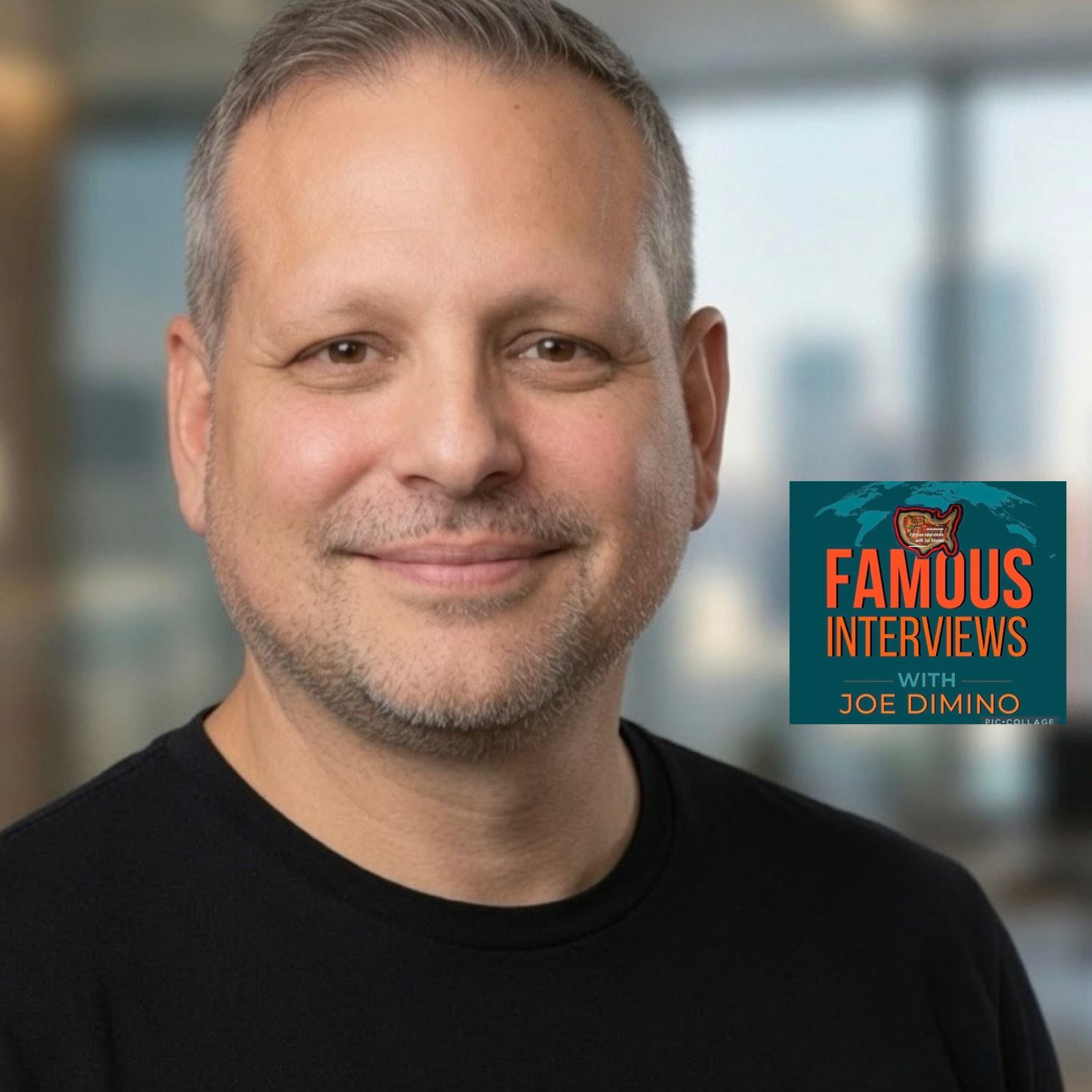
Speaker & Executive Rob Nickester on ADHD, Leadership & Overcoming Self-Doubt
Get every episode summarized
Each time Famous Interviews with Joe Dimino publishes, we email you a written briefing from the transcript — the topics, who appeared, and any specific claims, with the ad reads skipped.
Email me new episodesFree for 3 shows. No card needed.
About this episode
Famous Interviews with Joe Dimino is made possible by:
“7 million Californians depend on community health clinics for their care, but Proposition 44 cuts billions from clinics. Under 44, hundreds of clinics will close and health services will be eliminated.”From the transcript
Welcome to a new edition of the Famous Interviews with Joe Dimino series. On this episode, we talk with Speaker, Executive, Entrepreneur & ADHD Leadership Expert Rob Nickester. For 35 years, Rob built the technology infrastructure that runs other companies. He also built a real estate investment business, and before any of that, he served in the Marine Corps and worked as a police officer.
But behind all of those accomplishments was a story he carried for much of his life: Rob believed he was the dumbest person in every room he walked into.
Then, in his 40s, Rob was diagnosed with ADHD. Not as a child sitting in a classroom, but as an adult with companies to lead, responsibilities to manage and a family depending on him. That diagnosis helped him begin understanding his experiences, strengths and challenges through a very different lens.
Today, Rob uses his experiences in technology, entrepreneurship, leadership and life to help others better understand ADHD and leadership. From his base in Dallas, we get into his remarkable journey — from the Marine Corps and law enforcement to technology, business, executive leadership, ADHD and personal growth.
This is a conversation about ADHD in adults, ADHD leadership, executive leadership, entrepreneurship, self-doubt, career transformation, resilience and discovering that the way your brain works can become part of your strength.
More Rob Nickester:
InspireX – Rob Nickester
For More Famous Interviews: Subscribe via Youtube - https://www.youtube.com/channel/UCgi6GpDDDrc_PgOzaERGbLQ Subscribe via iTunes/Apple - https://podcasts.apple.com/us/podcast/famous-interviews-with-joe-dimino/id1660256991
Subscribe via Spotify - https://open.spotify.com/show/7j92QDS13LXgajPt80X2dh
The Home of Famous Interviews: http://famousinterviewswithjoedimino.blogspot.com/
Contribute to Famous Interviews via PayPal:
https://www.paypal.com/donate?hosted_b
Hosted by Simplecast, an AdsWizz company. See pcm.adswizz.com for information about our collection and use of personal data for advertising.
Get every episode summarized
Each time Famous Interviews with Joe Dimino publishes, we email you a written briefing from the transcript — the topics, who appeared, and any specific claims, with the ad reads skipped.
Email me new episodesFree for 3 shows. No card needed.
Hosts & guests
Transcript ready
432 searchable segments. Every word is indexed and playable.
Full transcript
Famous Interviews with Joe Dimino — Speaker & Executive Rob Nickester on ADHD, Leadership & Overcoming Self-Doubt. Machine-transcribed; use the interactive transcript above to jump the player to any line.
7 million Californians depend on community health clinics for their care, but Proposition 44 cuts billions from clinics. Under 44, hundreds of clinics will close and health services will be eliminated. That's why Prop 44 is opposed by nurses, doctors, and patients. Vote no on the clinic shutdown proposition. No, on 44. Add paid for by no on Prop 44. Stop the attack on patients and community health clinics, sponsored by California Primary Care Association Advocates. Add Committee's top funders ultimate health services in California Primary Care Association Advocates. When you've got a job to do, Lowes knows how to help you keep it moving. Milo's pro-rewards members save more with member-volume discounts on eligible orders through a quote of $2,000 or more. Plus, save time with job-side delivery on select purchases. Not a member? Join for free today. Exclusions, more terms, and restrictions apply. Can't be combined with any other discount, including but not limited to contract and or special price. Loyalty programs subject to terms and conditions, details at Lowes.com slash terms subject to change.
Welcome to a new edition of the famous interviews with Joe Domingo. On this episode, we talk with Speaker, Executive, Entrepreneur, and ADHD leadership expert, Rob Nekaster. For 35 years, he built the technology infrastructure that runs other companies. He also built a real estate investment business. And before any of that, he served in the Marine Corps and worked as a police officer. And for most of it, he believed he was the dumbest person in every room he walked into. He was diagnosed with ADHD in his 40s, not as a kid in a classroom, but as a man with companies and his family, depending on him. To try and put story from his base in Dallas, we get into it all and enjoy this interview. We're good. Perfect. Golden. All right. You ready to roll? Are you good to hop in? I am ready to roll. OK, excellent. Well, Rob, it's wonderful to meet you, sir. Thank you so much for taking a minute after the program today. I appreciate it. No problem. Thank you very much for having me. It's great to meet you as well. Absolutely. Well, I'm looking forward to getting into this.
This is a fascinating topic to me with just the way the world is and our attention spans. I want to begin with, you know, I don't think we ever could have imagined that we would live through something like the pandemic had changed so much about our lives. How much of living through that era has changed the way that you approach work in life today? Oh, man. It drastically changed me. And it changed me in a way where I felt like it woke me up. I had been in corporate. I had been in the corporate world for, you know, 35-plus years. And when I started working from home, I wasn't, I would say, I wasn't really disciplined enough to kind of work from home. I think a lot of people ran into that where they, you know, they found themselves at home. And in the beginning, they were doing a lot of different things outside of what they were supposed to be doing. It took me a few weeks, maybe a month to kind of get used to, I'm at home, but I still have work I've got to do. So I had to learn to lock myself in my office and shut the door
so that I would stay in there. And once I, once I started doing that, I really began to see how much I could accomplish in one day with no interruptions because I was working for my company at the time. And I had multiple investments go in and a bunch of other things. Suddenly, I found myself sitting by myself with five computers around me. And I'm going, hmm, I'm trading in the stock market. I'm running this company. I'm working for this company. And suddenly, I'm like, man, I am doing way more work than I ever have. But not for some company. I was doing their work that was expected of me, but I was just doing so much more. And it got to a point where it just was so freeing in a way, not going into a big corporate office every single day, that once the pandemic started coming to an end and they started calling people back to work,
I was one of those people where I'm like, I'm not coming back. Yeah. I'm not coming back. And I did stay with my company for a while, actually, finally quit a couple of months ago. I finally pulled the trigger on that. And I wrote a new book that's coming out and it's in the book. I kind of timed it along with the book and said, you know, I'm out. But it was one of those things where I just, it was such a different life for me. And the discipline had to be developed. So the good news is I was able to develop the discipline on somebody else's dime. I was getting paid to learn to focus and work at home. And then once I developed that discipline, I was able to just cut the cord and go, you know what, I got my own stuff I'm doing and it was just so freeing. So let's talk about this new, freer version of you. I'm going to put you in front of 12-year-olds at career day. And one of the kids wants to know what you do for a living today. How do you answer that?
Wow. So what I do for a living today is I talk to people. I help people. I'm a transformational coach. I speak on stages. I'm also an investor. I have several companies. My wife and I have a T herbal T company. We have an RV park. We're partners in car washes and apartment buildings. And so I do a lot of things. But what I really enjoy and my passion is helping people. And that is, so I work for myself. And that requires discipline and requires sitting down every single day and planning. Planning your week out, planning your month out, scheduling things, booking things. But it's very freeing for me. I would have thought when I was younger, having ADHD that entrepreneurship wasn't right for me because I felt like I needed the structure. I needed the rules to help me focus.
But once I had learned to develop those skills on my own, man, I'm like, I wish I had been an entrepreneur my whole life. Who knows where I'd be or what I'd be doing. But that's what I do. So take me back to your roots where you were born and raised. And what were you seeing around you that gave you all these skills that eventually led to you being an entrepreneur? How did all of this kind of evolve and take place? Wow. Good question. So I actually was born and raised in Sandust, Kiohio. Some people know where that is. Some people don't. It's the roller coaster capital of the world. Same point as a big amusement park there, not the highest, steepest, fastest roller coasters of every kind. But my journey started out where I thought I was the dumbest guy in the room for a very long time because my parents got divorced when I was 14. If I went to high school, that is. It was because I wanted to out of some sense of obligation or to see a girl.
Things like that. But my parents, you know, them getting divorced when I was 14 and they were kind of both working and never home. I got myself up, got myself to school most of the time. I skipped a lot of school. And I almost didn't graduate because I missed so much school. It had completely affected my grades. I actually got to a point where they're like, you miss another day, you're just expelled. You're going to, you know, we're here coming back next year for the same grade. And I'm like, okay. But I earned a reputation of being a loser, being a bomb. I'm going to go nowhere in life. And so I let a lot of other people tell me my story for a while. People had already determined who I was going to be in life before I even knew who I was going to be. And I worked in that town for a little while with a lot of different entrepreneurs. And I learned some skills there. But what really got me going down this path was, you know, I'll fast forward a little bit in the Marines right out of high school.
When I got out of the Marines, I moved back to Ohio, married with two kids. And I got a job. I very quickly got into IT because I was really good at it. I didn't have a college degree, but I had kind of talked my way into a job. And I was able to prove myself after a week as a temp employee. And, you know, they said, okay, this guy knows a little bit what he's doing. And so they offered me a job. Started working in IT, working my way up to the ranks. I also became a police officer at the same time. So I worked both jobs full time for five years. And eventually I quit being a police officer. And the IT thing I started, you know, moving through the ranks pretty quickly, moving up the corporate ladder. But what really began to happen is, you know, throughout that whole process, throughout all those years of building my IT career, I didn't know where I was going to go. I didn't know what I was good at. I had this idea that I wasn't smart enough, that I had nothing to offer.
That college wasn't an option. And I found a book called Waken the Giant Within by Tony Robbins in the 90s. And I read that book and the book changed my life. And what I really began doing, that was shortly after I got out of the Marines. What I began doing was personal development. Like, I began working harder on myself than I did anything else every single day. A snarle and they're upon him. An ancient forest spirit at his heels. The only escape is in the Toyota Beasy Woodland. John Cho stars in Camping. Test drive Toyota's new all-electric family today. Toyota, let's go places. And that became my mantra was, you know, how can I be better today than I was yesterday. And as time went on, I continued to develop myself. And I really came to a place in my career in life where I felt like this can't be it. I am so much more than I'm doing.
Going to work, working for a steady paycheck, fixing stuff that's not even a challenge for me. Like, it was just, like, I mean, I loved technology. I love computers. And so I was really into it. But it got to a point where it was just like, there's got to be more than this. Right? And so I was always raising the bar. Like, okay, what's next? What's next? What's next? In around 2014 is when I really felt like I hit the ceiling. I became an architect for GM, GM Financial. And I was working in their data centers, helping develop the technology and installing and approving projects and doing projects in their data centers. And I felt like, all right, I'm at the top. I've been through the ranks in IT. What's next? Management? No. That's, you know what I mean? Yeah. And so I began to go, there's more than this. And that's when I began, that's actually 2014.
I read Rich Dad Poor Dad by Robert Kisaki. Yeah. And when I read Rich Dad Poor Dad, I really began to think of things differently. And I ended up six years later. And this is part of, you know, my story is being an, being an, being an ADHD guy, being an analytical guy. I was always never prepared. I never felt prepared. And when people don't feel prepared, they tend to procrastinate. They tend to learn in research. I'm not ready. And I did that for, you know, five, six years. And then finally I realized, what am I doing? And I managed to close on my first 60 unit apartment building in end of 2019 for $4.3 million with partners. And so that was my first real like, taste of entrepreneurship. I had a couple rental homes that I had bought and I was renting out. And I had been trading heavily in the stock market on the side.
You know, while I'm working and doing my day job, I'm trading in the stock market. But all that stuff eventually came together. And just like, what are you doing working for a company? Not that there's anything wrong with it. I just felt like for me, there's got to be so much more than this. There's got to be more to life. I am smarter than this. I feel like I can contribute more to this. There are people, you know, you go through life and you meet people and they're doing so incredibly well. And they're so incredibly wealthy. And then you have a few conversations with them and you realize, I am so much smarter than you. What is going on here? And I don't mean that to put anybody down. But you know what I mean? You can meet people who are so much more successful. And I'm like, why are they so much more successful than I am? And so you begin to dig down even deeper and try to figure things like that out. But so that's kind of the journey that got me into entrepreneurial ship. It wasn't so much my upbringing as it was just this journey of
not knowing who I was, going through self-discovery, personal development and always feeling like I meant for more and trying to break out of that struggle of my mindset. And really what it came down to is my story. The story I told myself based on the story I heard growing up, right? I'm this guy that's not that smart. I'm a loser. I'm this. I'm that. And you live this life with, you know, you're parts of your story. You're written by other people. And then one day you realize I can write my own story and I can rewrite my own story. I'm not that guy. So who was that inspirational force that gave you that courage and that comtion to say, I can rewrite my story. I'm worth more than that. Was there a central figure in your life? Yeah, you know, it was, I'm going to, I'm going to have to throw back the Tony Robbins. Yeah. I've been reading his books and following him for more than 30 years. And if there was any one person who had an influence on my life
and I'm in his community, I've been to date with destiny and his unleashed the power with ends. And I've been to his resort at life and wealth mastery and Fiji now. And if there was any one person for at least the first 20 years that kept me going when I felt at my lowest, when I just, I didn't feel like I had anybody to talk to. I didn't feel like anybody understood me. I didn't feel like anybody knew who I really was or what I had to offer. I would always fall back to rereading weight, uh, awaken the giant within. And that would always give me a boost of confidence. To do better because I can be better because I can rewrite my own story. Is there an entrepreneur that's alive today that you admire that does it right? As far as like delivering a product, taking care of their people, their company, their image? Is there anyone you would love to meet and sit down to talk to that inspires you? Oh, yeah. There's, there's, well, I can tell you're straight up Elon Musk.
Yeah. Yeah, I know he's a little bit different than a lot of a lot of the other entrepreneurs out there. But everything he touches is just brilliant. And I just love the way he thinks I have been an Elon Musk fan for a very long time. As well as like Dean Grazio, C and Tony Robbins. And I was a Jim Rohn fan and, and, and they, you know, but I've got, I've got partners too who are partners with me in apartment complexes. And, um, I have one partner in the RV park that I own. I'm 50% owner in that and he's an entrepreneur. And, you know, so even people around me, I admire the way they, they work in their work ethic and their family life. And that's become really important to me is not only how good they are at work, but actually more important to me who they are as a person, who they are with their family, who they are in their private life and how they treat people. So what is the energy for you every day to do all of this? No, entrepreneurs are kind of like really good baseball teams. It's all really hard, but they make it look easy.
And you got a lot of Mary and at Strings, you got to pull a lot of things going on. So when that alarm clock either does or doesn't go off in the morning, what is that energy burst that adrenaline for you to get out and to do it? You have a soul and a family collectively. What makes you do all of this at a high solid level? So my wife is my wife and my family. So I have two grown kids. I have grandkids. And, you know, so we're empty nesters, but really wanting to create generational wealth for my family, wanting to create something and leave some type of impact when I'm gone. When I say leave an impact, you know, for me, legacy means having an impact and changing people's lives for the better. And I don't even need to be recognized for it, right? If I can do something to have an impact to make people's lives better, you know, that's what gets me up in the morning is,
can I do something today that's going to benefit others? Honestly, you know, I try to sometimes I sit down and I think, well, what do I want? In really in life, that's what I've really learned, what makes me happiest to see and other people happy. So that's what drives me is getting up, trying to find new opportunities, trying to grow my wealth, trying to help other people grow their wealth. But my why is my family and God, right? So that's my why and I have absolute clarity why I'm doing that. And that's what a lot of people are missing in their life is, they're going through life, they're doing a lot of things that they don't really know why, because they don't have absolute clarity on why they're doing it. And until you get absolute clarity on why people are going to feel lost or be going in the wrong direction a lot of the time. So let's say you have a dream tonight, you run into that young version of you that, you know, had a hard time going through school, you were misperceived,
trying to figure your way out and you walk into a room at right now present day, and there's a film projector and you go up and click play, 60-second highlight reel of the life you've lived comes up on a screen. Is that young version of you going to believe that your life turned out this way? No, no, probably not because that younger version of me, you know, felt like a loser, felt like he was nobody felt like nobody wanted to hear what he had to say, felt like an imposter and everything he did, and that were people, people were judging him at every turn. And I would certainly look at that younger version of myself and say, you know, a couple things, one, you can write your own story. What people's opinions of you are do not determine yourself worth. So on that highlight reel of your life, what do you the proudest of? What stands out? You know what stands out the most for me right now is my own personal development,
who I've become in life. You know, when I was younger, I was in the Marines, I was a police officer, I was all about proving myself to everybody. I had to prove and I had set out not realizing exactly what I was doing, right? Because of the story you tell yourself a lot of people their mission and light becomes to prove others wrong. I'm going to prove to you that I'm not a loser. I'm going to be more successful than you so you know that I'm not a loser. And I've accomplished all those things, but really for me, what has changed in the past five, six years more than any other time in my life is I've developed, I've really let the guard my guard down. You know, when I was younger, I felt like I always proved that I was this tough guy. I always proved that I was a man. I had to prove that I could take care of people. I had to prove that I had money. But now where I'm at in life is I don't have to prove anything to anyone. What I really want is to be gentle and kind to people and help them
in any way that I can. And you know, the most important things to me are God and my family. And I developed into that. I was called into that and to have that realization and open the doors and open my mind and accept what I felt was happening to me and let my guard down and be vulnerable and talk about it. I feel like that's my biggest accomplishment is having that change where I was this guy who had to be the toughest guy in the room and don't look at me cross side to this guy now who will look at you and understand things that you're going through and I'll be vulnerable and I will help you because I care. So when the big word retirement flash is up in your mind, what do you think? How does that work for you? It means nothing to me anymore. When I was younger retirement meant that, oh, you know, you don't work anymore, you collect a check and you lay
around and you'll be lazy. However you want to be, I can't see myself ever doing that. I have to stay busy. My mind has to keep going. I want to continue to help people and as long as I'm doing what I love, I don't see any reason I would never continue to do this the rest of my life and I can do it. I set my own hours, which is a lot. I do work a lot, but I set my own hours. I set my own schedule. I work with the people I choose to work with because I just do short to work with people that you don't want to be around. You don't like or they don't like you. So retirement, for me, just looks like maybe working part time, still helping people out and then maybe a little bit of traveling with my wife and visiting with family. I don't really see a retirement in my future. So everyone has a perception of you, family, friends, everyone that gets your book, everyone that's a client, everyone in different bubbles of your life that you run the show that we see.
Who do you think you are? What's your perception of you? Well, I've never been asked that question. What's my perception of me? My perception of me is just somebody who has lost for a very long time trying to prove himself, not just trying to prove myself to others, but trying to prove myself to me that I wasn't an imposter that I did belong. And I see myself as somebody who's just trying to do their best and be the best person I can every single day. Every single day, I'm trying to be better and I'm always trying to set a good example and help anybody I can. You know, as you said, creating generational wealth for your family is a big deal. And generational wealth can be monetary and emotional. There's so many parts of that. So my question to you is if you could go back in the lineage of your family of someone that you never met that maybe heard about and you could talk to them and meet them and get a better idea
of the generational ripple that's happened in your timeline. Who would you love to have met and talk to? Wow. That is a good question. I honestly don't even know. You know, I would love to have had more time with my grandfather. I only had one grandfather. And he passed away when I was, I want to say 10, maybe a little younger. You know what I mean? I have some good memories of him, but not a lot and not and certainly no meaningful conversations because I was a kid. I was I was all worried about playing. But I would love to sit down with my grandfather's name was Forest and have that conversation because Forest, he fought in World War II. Yeah. And you know, I've heard some stories from my mother. I've got I've got a few things from him. I've got a few medals from when he was in the army. But he was he was a twin. And I know
it was like one of six kids and they were super poor. I would just love to get their take on everything we just talked about in generational wealth and what that actually means. Yeah. So if anybody wants to reach out, they want to get your book. They want to hire you. They have questions. They want to delve into all the good work you're doing. Where do they go? Where's the best place? So I'm on and every social media platform as Rob Nikesner. So my handles Rob Nikesner and as a November ICK East ER. So at Rob Nikesner and you know, YouTube or Instagram or TikTok. But also, my company website is InspireX.co. And you can find a lot about my coaching programs there and what I'm working on. And then you can also go to robnikesner.com, which is kind of a opposite of my coaching. It talks about me speaking and how to get me on stage and a little bit about my book. And there's a place there to sign up for when my book gets released because it shouldn't be out for
probably about another six weeks. Okay, excellent. Rob, what a joy. Thank you so much for your story. Thank you for your time. Best of luck with everything. Keep changing the world. I appreciate it. Thank you. Thanks for having me on. I appreciate you. Thanks for tuning into another famous interview with Joe Domingo. We're becoming the World of Art, literature, business, spirituality, music and more from around the globe. Our esteemed theme music was composed and produced by the great E.E. Pointer of Kansas City's River Cow War. If you want to hear more interviews, visit the famous interviews with Joe Domingo channel on YouTube. You can also find us on Spotify and Apple podcasts. Thanks again for listening and until next time.
More episodes
More from Famous Interviews with Joe Dimino

CEO, Author & Speaker Judy Gaman on Longevity, Healthy Aging & Living a Longer L...
Famous Interviews with Joe Dimino

Owner & Musician Chris Whittington on Christian Business, Rock Music & Faith at...
Famous Interviews with Joe Dimino

Creative Director & Author Patrick Buchanan on The W.O.L.F. Mindset, Day Trading...
Famous Interviews with Joe Dimino

Accomplished Poet & Author Lucille Lang Day on Poetry, Memoir & a Life in Writin...
Famous Interviews with Joe Dimino