Get every episode summarized
Each time Dentistry Made Simple publishes, we email you a written briefing from the transcript — the topics, who appeared, and any specific claims, with the ad reads skipped.
Email me new episodesFree for 3 shows. No card needed.
About this episode
“Kitchen and bathroom professionals know what goes behind the tile matters. That's why TradePros trust FiberSement Party Backer Board to keep tile firmly in place, resist cracking, and help block moisture.”From the transcript
Get the Book now from Amazon:
https://www.amazon.com/dp/0199543585?lv=shuf&channelId=500&plpRedirect=mhFallback&linkCode=ll2&tag=cvthunderx-20&linkId=dee917646872ebb182407e64e122fb7c&language=en_US&gaOptInStatus=true&ref_=as_li_ss_tl
You can listen and download our episodes for free on more than 10 different platforms:
https://linktr.ee/dentistry_made_simple
Produced by:
https://www.podcaistudio.com/
Get every episode summarized
Each time Dentistry Made Simple publishes, we email you a written briefing from the transcript — the topics, who appeared, and any specific claims, with the ad reads skipped.
Email me new episodesFree for 3 shows. No card needed.
Hosts & guests
Transcript ready
331 searchable segments. Every word is indexed and playable.
Full transcript
Dentistry Made Simple — Oral Complications of Cancer and its Management. Machine-transcribed; use the interactive transcript above to jump the player to any line.
Kitchen and bathroom professionals know what goes behind the tile matters. That's why TradePros trust FiberSement Party Backer Board to keep tile firmly in place, resist cracking, and help block moisture. Chosen over 40 million kitchen's and bathrooms, Party Backer Board, what the best build on. Shop now at participating Home Depot, Lowe's, and floor into core stores. For more information, visit JamesHearty.com slash HeartyBacker. If a patient goes through head and neck radiotherapy, their chances of developing severe oral toxicity aren't 50%, they're not 80%. No, it's 100%. Literally every single patient. Every single one, which is just a staggering reality to face. He really is a sobering reality. I mean, every single person in that treatment category is going to face a breakdown of their oral cavity to some degree. And you know, that is exactly why we are dedicating today's deep dive to you. The dental professionals, the students, and the young clinicians out there
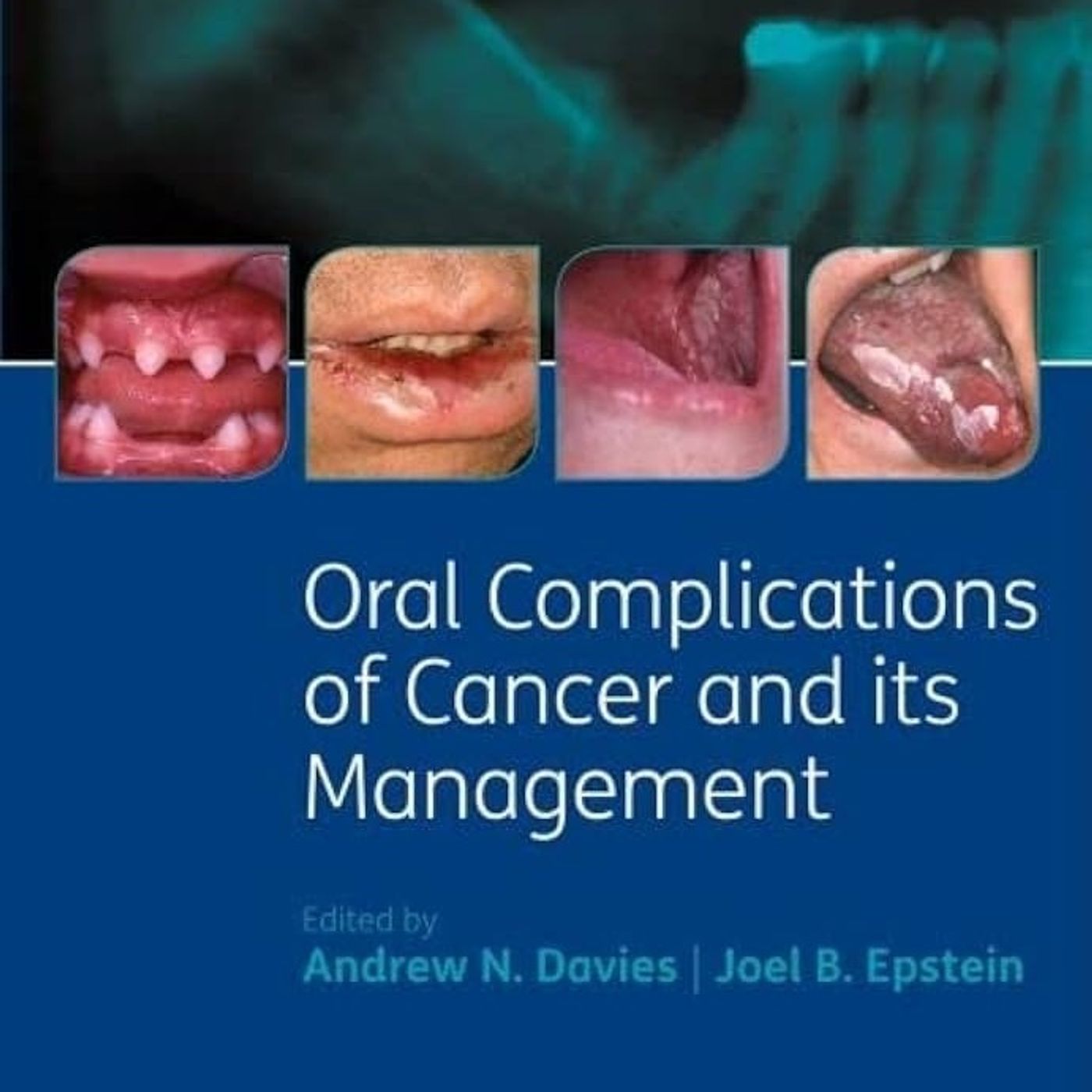
who are managing these cases every single day. Because the oncology landscape is just shifting so rapidly right now. Yeah, exactly. Cancer treatments are becoming far more aggressive, mostly to drive up survival rates, which I think currently hover around 59% for oral and fair and geol cancers over a five-year period. But that survival comes at a steep cost to the very tissues you work with in the chair. It does. And the really unpacked this, we're pulling from an incredibly dense, comprehensive textbook today. It's called oral complications of cancer and its management, edited by Andrew and Davies and Jolby Epstein. Right. And our mission today is to distill this massive resource into a high yield, purely scientific, but highly practical clinical roadmap. Because we have to understand the stakes here. And the text lays out some stark numbers to give us that baseline. Like, let's just look at chemotherapy alone. If a patient is undergoing adjuvant chemotherapy, which is essentially the cleanup phase after surgical tumor removal to catch stray cells, right?
Exactly. For those patients, about 10% will suffer oral complications. Which honestly sounds somewhat manageable from a clinical workflow perspective. It does, yeah. But then you look at a different protocol. If a patient is receiving myelope-uplative chemotherapy, that number just skyrockets to 80%. Wow. And just to clarify for the listener, myelope-uplative chemo is that incredibly high-dose systemic treatment used to basically wipe out the patient's bone marrow, usually right before a stem cell transplant. It is a massive biological hit. Oh, absolutely massive. The systemic toxicity is profound. And then, as you mentioned at the very beginning, we have a head and neck radiotherapy, which guarantees a 100% complication rate. Because the radiation beam is physically passing right through the oral tissues. Right. And these complications, you know, they aren't just a matter of temporary discomfort. We are talking about severe mucosal breakdown that causes intense pain. Yeah. Which leads to clinical malnutrition. Exactly. Malnutrition and profound psychological distress.
Tragically, these oral toxicities can actually become so debilitating that they force the medical oncology team to pause, lower the dose, or completely abandon life-saving cancer treatments. So as a dental clinician, your chair might literally be the place where a patient's ability to survive their cancer is decided. It's an immense responsibility. It really is. And to handle it, we can't just jump straight into treating the complications. The text makes it incredibly clear that before you can diagnose the devastation caused by the therapy, you have to master the baseline physiology. You cannot diagnose the abnormal without mastering the normal. Right. So we need to look closely at the salivary gland system, because this is where a lot of clinical assessments just completely go off the rails. It really is one of the most misunderstood physiological systems in general practice. Mostly because it's so dynamic, you know, we have three major pairs of glands, the parodid, the submendibular, and the sublingual. Along with hundreds of minor glands scattered all throughout the mucosa. Exactly. But the critical distinction the textbook makes
is between the composition and the origin of unstimulated resting saliva versus stimulated saliva. Right. Because they are fundamentally different fluids performing totally different jobs. So when a patient is just sitting in your waiting room doing nothing, about 60% of their unstimulated saliva is actively being produced by the submendibular glands. Yeah. And that fluid is this complex mix of musinous and serious fluid, which is designed to constantly lubricate and protect the tissues while at rest. Okay, but the moment that patient starts eating or even smelling food or chewing on something, the physiological demand completely shifts. It shifts entirely. The parodid glands suddenly kick into overdrive and take over. During active stimulation, the parodid produce 50% of the total salivary volume. And it's a very different type of fluid, right? Highly different. It's mostly serious, highly watery, specifically designed for breaking down food and assisting in swallowing. Okay, let's unpack this for a second. I want to think about the clinical implication here.
If resting saliva is primarily submendibular, but stimulated saliva is parodid, does that mean we can isolate glandular damage just by taking a careful history? What's fascinating here is yes, absolutely. That is the exact clinical deduction that text wants you to make. So if a patient complains like my mouth feels completely fine when I'm watching TV, I don't wake up feeling dry, but the second I try to swallow a dry cracker at lunch, I choke. We should immediately suspect parodid gland damage rather than a general salivary shutdown. Precisely. If they can't handle the functional demand of eating, the parodid pathway is compromised. But if they're waking up with their tongue stuck to the roof of their mouth, yet they can chew gum just fine. Then the submendibular system is failing. Exactly. Yeah. This anatomical nuance allows you to reverse engineer which specific glands were caught in the radiation field or which specific neural pathways have been disrupted. And those neural pathways are notoriously complex. I mean, the tongue alone requires this massive
symphony of cranial nerves just to function. You've got nerves 5, 7, 9, 10, 12 handling, general sensation, taste, and motor movement. Right. So when radiation scatters through the head and neck, it's not just frying the glands, it's physically disrupting this incredibly dense neural architecture. Which is why a systematic objective assessment is just non-negotiable. You can't just casually ask a patient, hey, does your mouth hurt? No, you really can't. The text heavily emphasizes the chloride mnemonic for evaluating pain systematically. C-H-L-O-R-I-D-E. Let's see. Character, location, onset, radiation, intensity, duration, and exacerbating factors. It sounds basic, right? But in an oncology setting, pain can be referred, it can be neuropathic, or it can be local. So if you systematically walk through those specific questions, you filter out the noise. Exactly. You pinpoint the actual mechanism of the pain. And alongside that, for the physical tissues, the standard is the oral
assessment guide or the OAG. It forces the clinician to evaluate eight specific variables, including the voice, swallowing, lips, tongue, and the mucus membranes. But there is a huge caveat when evaluating one of those variables, saliva. The text warns us that a patient's self-reported dry mouth is actually incredibly unreliable. It is notoriously unreliable. Why is that? I mean, why wouldn't a patient know if their own mouth is dry? Because the human body is remarkably adaptable to slow decline. If a patient's salivary flow decreases gradually over months of therapy, they just acclimate to that new baseline. Oh, so they might tell you their saliva is totally fine because they just don't remember what normal feels like anymore. Precisely. As clinicians, we have to rely on objective metrics. We actually measure the unstimulated whole salivary flow. And the text provides the exact clinical threshold for true physiological hypofunction. And that threshold is anything less than 0.12 to 0.16 milliliters per minute. Less than 0.12 to 0.16. Yes. So if they fall below that metric, regardless of how they say they feel,
you have an objective physiological deficit that must be managed. You have the diagnostic proof. Okay, so once we have that baseline established, we realize there's a ticking clock. The medical oncologist has a start date for the chemo or the radiation. And as the dental professional, your most vital work actually happens before that start date. The pre-treatment window is everything. Because waiting until the cancer treatment starts is just too late. Once the immune system is compromised or the bone vascularity is altered, your options absolutely plummet. They dropped in your zero. The primary mission during this pre-creatment phase is absolute stabilization. You have to aggressively eliminate any potential foci of infection. So resolving all gingerable periodontal or puri-apical disease. Exactly. You extract any unrestorable or even questionable tea. You smooth out rough or fractured restorations that could traumatize the tissue. I want to focus on those extractions for a moment. Because in a normal, healthy patient, you might try to heroically save a borderline tooth, right, with an complex root canal or a
massive core buildup. But in an oncology pre-treatment plan, the text suggests we need to be far more ruthless. Why the shift in philosophy? It completely comes down to the biology of your radiated bone. The text notes a critical radiation threshold, a dosage greater than 4,500 centigrade or CGH. 4,500. Okay. Once a patient's jaw bone receives a dose above that 4,500 CGH mark, the actual blood vessels inside the bone undergo irreversible changes. It causes this condition called endardoritis obliterance, which is unnarrowing and scarring of the blood vessels. So the bone literally loses its blood supply? Exactly. It becomes essentially a schematic. And as we know, bone relies on a robust blood supply to heal. So imagine you leave a questionable tooth in the mouth. The patient finishes their radiation, and then six months later, that tooth becomes infected and requires an extraction. Oh, wow. You are now pulling a tooth out of bone that has absolutely no blood supply and no ability to remodel or heal. Which leads directly to post-redeation osteunicrosis? P-R-O-N. Yeah, P-R-O-N. Where the bone simply dies and remains
exposed in the oral cavity. It is one of the most devastating, painful, and difficult to treat complications in all of dentistry. So the clinical calculus completely changes. You extract questionable teeth before treatment because the bone can still heal. You are trading a minor loss today to prevent a catastrophic failure tomorrow. It essentially like winterizing your house before a massive blizzard hits. You know, you don't try to fix the roof while the snow is already falling. If we connect this to the bigger picture, aggressive pre-treatment reduces the need for extractions after therapy. Extracting a tooth from your radiated bone is just a massive risk. Right. And for the teeth that are healthy enough to save, how are we protecting them? Because the radiation will inevitably destroy the salivary glands, meaning the teeth will lose their natural, constant, remineralizing bath. We implement aggressive prophlactic measures. Specifically, the use of custom-made, flexible, thermoplastic gel carriers. These are basically highly specialized trays used by the patient every single day to deliver neutral sodium fluoride directly to the teeth.
But the text is very specific about the design of these carriers, right? They can't just be standard, rigid bleaching trays or sports mouth guards. No, they must be flexible, and they have to be designed to overlap the gingival margins to create a tight seal. But without putting any unnecessary pressure on the soft tissues. Because once the therapy starts, those soft tissues are going to become incredibly friable and ulcerated. A rigid, poorly fitting tray will physically traumatize the jingiva, creating entirely new rooms. Exactly. Every single appliance going into the mouth must be meticulously evaluated for its potential to cause friction. And that definitely includes dentures. The text puts a massive spotlight on a dentulus patients in denture hygiene. Because the acrylic of a denture is naturally porous. It acts as a massive reservoir for microorganisms. It really does. If a patient is going into an immunocompromised state and they aren't maintaining absolute pristine denture hygiene, that acrylic turns into a breeding ground. Which leads directly to denture stomatitis,
which is most frequently an overgrowth of candida, a fungal infection, setting up a colony right on the palate and the alveolar ridge. Entering a grueling cancer regimen with an existing flourishing fungal colony pressed against your mucosa is a clinically dangerous scenario. It will spread the second the immune system drops. Okay, so let's say the clinician has done everything right. You've winterized the house, you've established the salivary baseline, cleared the infections, extracted the borderline teeth before the 4500 CG threshold, issued the soft fluoride carriers and insured perfect denture hygiene. You've batten down the hatches. But the blizzard still hits. Right, the systemic therapy still happens. The radiation beam still fires and the tissues are inevitably going to take collateral damage. This is where we encounter the acute debilitating complications. Let's start with the big hitter oral mucocytus. Mucocytus is the severe breakdown and ulceration of the mucosal lining. It is raw, it's agonizing, and it's almost inevitable. But the timeline really depends on the therapy.
Okay, so how does it differ? Well, for patients receiving systemic chemotherapy, the mucosal breakdown typically begins five to seven days post-infusion, mirroring the drop in their white blood cell count. Got it. But for radiotherapy patients, the damage is cumulative. It slowly builds up as the radiation doses accumulate, typically peaking into massive confluent ulcers around five weeks into the treatment cycle. Five weeks. The pain management for this must be intense. The text references the M-A-S-C-C clinical practice guidelines. That's the multinational association for supportive care and cancer. And for the most severe cases, like patients undergoing stem cell transplants, standard over-the-counter pain relief just does not cut it. Not even close. The gold standard there is patient controlled analgesia, or PCA, usually with intravenous morphine. The pain can be so severe that patients literally cannot swallow their own saliva, let alone food or oral med patients. But what's really interesting in the M-A-S-C-C guidelines is their focus on preventative
strategies tailored to specific drugs. For example, if a patient is receiving a specific chemotherapy called Bullis-5FU, which is a rapid high dose infusion, the guidelines strongly recommend 20 to 30 minutes of oral cryotherapy. Which literally just means having the patient hold ice chips in their mouths. Yeah, but I want to show the mechanism here. How does sucking on ice prevent a systemic hemotherapy drug from destroying the mouth? It's actually a brilliant manipulation of basic physiology. The intense cold from the ice chips causes rapid localized vasoconstriction in the oral mucosa. It essentially shrinks the blood vessels in the mouth. Okay. And because 5FU is delivered as a rapid bullis, meaning the drug surges through the bloodstream very quickly and then clears out, if you clamp down the blood vessels in the mouth during that specific 20 to 30 minute window, the toxic drug simply bypasses the oral tissues. Can't get in. That is wild. It's like freezing the pipes in your house so the toxic water can't flow into the sinks. That is such an incredibly elegant low-cost intervention. You really is. But okay, here's where it gets really
interesting and this completely shattered my expectations regarding treatment. When reading the guidelines for managing established mucositis, so once the ulcers have already formed, the text explicitly brings up corehexidine. Yes, the corehexidine paradox. In regular dentistry, corehexidine mouthwash is the holy grail. It's the absolute gold standard for treating gingivitis, controlling plaque, and post-surgical healing. Why are the guidelines strictly, unequivocally, telling us not to use it for established mucositis? If the mouth is full of open wounds, wouldn't you want the strongest antimicrobial rinse available? I know. It seems completely counterintuitive until you look at the cellular reality of mucositis. Corehexidine is indeed a phenomenal antibacterial agent. It physically ruptures bacterial cell walls. But an established mucositis lesion isn't just a bacterial infection. It is an area of active tissue, deathopoptosis, and decrosis caused directly by the cancer therapy. The tissue is raw, exposed, and desperately trying to migrate new epithelial cells across the ulcerated surface to heal.
And corehexidine interrupts that. Severely. Most corehexidine formulations contain alcohol, which is highly astringent and irritating. But even the alcohol-free variants are chemically harsh. Yeah, when you rinse a raw, dying ulcer with chlorhexidine, you are essentially chemically burning the delicate cellular margins that are trying to heal. It causes extreme pain and provides zero biological benefit to the actual healing of the mucositis itself. That is a massive paradigm shift. It's a fantastic example of why we cannot blindly apply standard dental rules to oncology patients. What cures a healthy patient's gingivitis will actively torture an oncology patient's mucositis? Exactly. You have to treat the tissue according to its biological state, not just its location in the mouth. Now, while we are avoiding corehexidine for the ulcers, we obviously still have to manage infections. Because the immune system is completely suppressed, the normal oral flora is wiped out, and opportunistic pathogens take over. And the most aggressive opportunist in these cases is fungal. Over 90% of patients undergoing
head and neck radiation will experience mucosal colonization of candida. Fungal inflections are just rampant, and the clinician must be hyper-vigilant because it doesn't always look the same. Right, everyone knows the classic presentation. Soto-membranus candidosis. Those are the thick, white, wipeable plaques that leave a red bleeding surface underneath. But you also have to actively look for airy-themedis candidosis. This one doesn't have white plaques. It presents as raw, intensely red, burning patches, very commonly found under a denture base, or on the dorsum of the tongue. Which could be easily misdiagnosed simply as general irritation from the chemo. Exactly. But it is a raging fungal infection that requires targeted antifungal therapy. And right alongside the pain and the infection is a third major complication that doesn't hurt physically, but completely dismantles a patient's quality of life. And that's taste disturbance? Yes. A gojizia, which is the total absence of taste, or dysjusia, which is a severe distortion of taste.
Patients often describe it as a persistent metallic, rancid, or cardboard-like flavor in their mouth. What's actually causing that is the radiation physically burning the taste buds off the tongue. It can be direct physical damage to the taste but architecture from the radiation. Yes. But it can also be systemic neurotoxicity from the chemotherapy drugs damaging the cranial nerves we discussed earlier. Makes sense. Interestingly, the text also points out it can be an indirect secondary consequence. The metabolic stress of cancer and its treatment can cause a rapid depletion of vital trace minerals. A sudden secondary zinc deficiency, for example, is a known and potent driver of severe dysjusia. Wow. Just zinc. So we have the big hitters, the salivary shutdown, the bone vascularity death leading to p-arone, the agony of mucositis, opportunistic fungal takeovers, and the loss of taste. But a crucial theme in this textbook is that these complications manifest radically differently depending on the age and physical state of the patient in your chair. Yeah, absolutely do. I mean, treating a 10-year-old with leukemia requires a
completely different biological perspective than treating a 70-year-old with laryngeal cancer. It is perhaps the most intellectually demanding part of oral oncology. You have to tailor your entire clinical philosophy across the human lifespan. Let's look at the pediatric population first. The defining characteristic of a child is that their tissues are actively developing. Their embryological clock is ticking, their jaws are expanding, and adult teeth are actively forming inside the alveolar bone. And when you introduce high-dose systemic chemotherapy or direct radiation, you violently interrupt that embryological clock. The cellular division required to form a tooth is just halted. The text catalogs several profound developmental abnormalities. You see microdontia, where the teeth successfully erupt but are abnormally small and structurally weak. You see tooth agenesis, where the tooth buds are utterly destroyed, and the permanent teeth simply never form at all. And even if the crown forms, the roots can be severely compromised. The text mentions shortened roots or V-shaped root malformations, meaning even if the child
beats the cancer, the mechanical lifespan of their adult teeth is permanently stunted. Furthermore, pediatric patients who undergo stem cell transplants face a chronic, smoldering threat. Graphed versus host disease, or GVHD. This is where the donor's immune cells actively attack the patient's tissues. GVHD frequently manifests first in the oral cavity as lachenoid-like lesions and severe chronic inflammation. And the text notes a chilling reality. This prolonged chronic inflammation in the mouth places these children at a significantly higher risk of developing secondary oral malignancies, like squamous cell carcinomas decades later. Completely unrelated to their original childhood cancer. Their survivorship requires lifelong, hyper-vigilant screening. Now, if we look at the opposite end of the spectrum, the geriatric patient. The defining clinical concept for our older patients is physiologic reserve. The natural aging process has already thinned their mucosal lining, their salivary flow is nationally decreased, and their cellular turnover is
luggish. So they basically starting the race to lat behind? Exactly. They have very little duffer. When you introduce the profound toxicities of cancer treatment to an already depleted physiologic reserve, and then you compare that with the polypharmacy of medications they're likely taking for, say hypertension, diabetes or heart disease, their oral tissues simply collapse. They are prone to rapid cascading multi-system failures in the oral cavity. And finally, we must discuss patients transitioning into advanced or palliative care. This is where the entire goal post of dentistry move. The focus completely shifts away from long-term anatomical preservation. You are no longer thinking about five-year, restorative lifespans. You are entirely focused on symptom management and preserving human dignity. Right. The textbook provides a statistic that is hard to ignore. 62% of all hospice patients experience severe debilitating dry milk. It is an incredibly isolating symptom. There is the specific clinical anecdote in the text that beautifully illustrates how profound this is.
A palliative patient is quoted saying, I used to participate in choir singing. Nowadays, I can't sing at all because my voice is so weak. My vocal cords are so dry. So I won't participate at all. I avoid all these things and prefer staying at home. I feel sorry and depressed. So what does this all mean? It seems like in pediatric patients, you are fighting as an architect to protect their future anatomy. While in palliative care, you are fighting to protect their dignity and comfort today. It perfectly captures how something a clinician might dismiss as a mundane side effect. Just a lack of saliva can completely strip away a patient's identity and quality of life in their final months. This raises an important question for clinicians. How do we shift our definition of success based on the patient's life stage? If you're treating a healthy 30-year-old, success is executing a biologically flawless, aesthetically perfect, composite restoration. Yeah, of course. But if you are in a palliative care setting, prescribing a simple saliva substitute might be a greater clinical victory than a perfect restoration.
It allows that patient to lubricate their vocal cords and sing in their choir one last time. That intervention is every bit as clinically significant. It is a profound shift in perspective, and that is exactly what this text demands of the clinician. We've covered an immense amount of ground today. We started by mapping the physiological baseline, realizing that when a patient struggles to eat dry food, we are looking at the parodid glands failure to produce stimulated saliva. We explored the absolute necessity of the pre-treatment window extracting questionable teeth early to avoid the catastrophe of osteunicrosis once that bones are passed as 3,500 cc of radiation and loses its blood supply. We examined the biology of the acute toxicities. Utilizing cryotherapy to vasoconstrict blood vessels against bolus chemotherapy, the revelation that chlorhexidine physically harms the healing margins of established mucositis and the ever-present threat of opportunistic candida infections. And we traced the impact across the lifespan from the interrupted embryological development of pediatric patients to the vital preservation of dignity in palliative care.
Now, to truly cement this knowledge before you walk into your next clinic session, we have a quick clinical review question for you to lock in the learning. Ask yourself, what is the exact clinical threshold for abnormal, unstimulated salivary flow, and which specific gland produces the majority of it? Take a moment to recall the specific metrics we discussed. The answer is, anything less than 0.12 to 0.16 milliliters per minute is clinical hypofunction, and that crucial resting saliva is produced primarily by the sub-indibular gland. If you carry those metrics into your clinic, your diagnostic accuracy will immediately improve. It takes the guesswork out of the assessment. Absolutely. And as we wrap up this deep dive, we want to leave you with one final provocative thought. Throughout this entire discussion, we have viewed the oral cavity primarily as a victim. It is the collateral damage of the systemic cancer fight. But what if we flip that perspective? What if the oral cavity is actually a potential diagnostic mirror? It's an incredibly compelling idea. The oral mucosa has one of the
highest cellular turnover rates in the entire human body. Because of that rapid biology, it reacts to systemic whole body changes faster than almost any other tissue. Consider the pediatric stem cell patient we discussed earlier. If that patient suddenly presents in your chair with a massive acute flare-up of oral graft versus host disease, could there mouth be acting as an early warning system? Is the oral cavity telling the broader oncology team that a systemic whole body immune rejection is beginning, potentially days, or even weeks before the standard blood panels confirm it? By identifying those inter-oral changes early, the dental professional transcends simply managing side effects. You become a proactive indispensable diagnostic partner in the patient's survival. You aren't just looking at teeth and gums. You are reading the physiological dashboard of the entire human body. Thank you so much for joining us for this deep dive. Take this perspective, carry it straight to your clinic, and continue navigating those diagnostic waters with precision.
More episodes
More from Dentistry Made Simple

Periodontal Disease and Overall Health: A Clinician's Guide
Dentistry Made Simple

Perio-Quest: MCQS and Self-assessment Pictorial Tests in Periodontics
Dentistry Made Simple

Oral Cancer: Diagnosis, Management, and Rehabilitation
Dentistry Made Simple

Mineral Trioxide Aggregate: Properties and Clinical Applications
Dentistry Made Simple