Get every episode summarized
Each time Totally Booked with Zibby publishes, we email you a written briefing from the transcript — the topics, who appeared, and any specific claims, with the ad reads skipped.
Email me new episodesFree for 3 shows. No card needed.
About this episode
“I've interviewed more than 2,000 authors on this show and learned endless amounts about storytelling, reinvention, and life itself. Because when you talk about books, you're really talking about life.”From the transcript
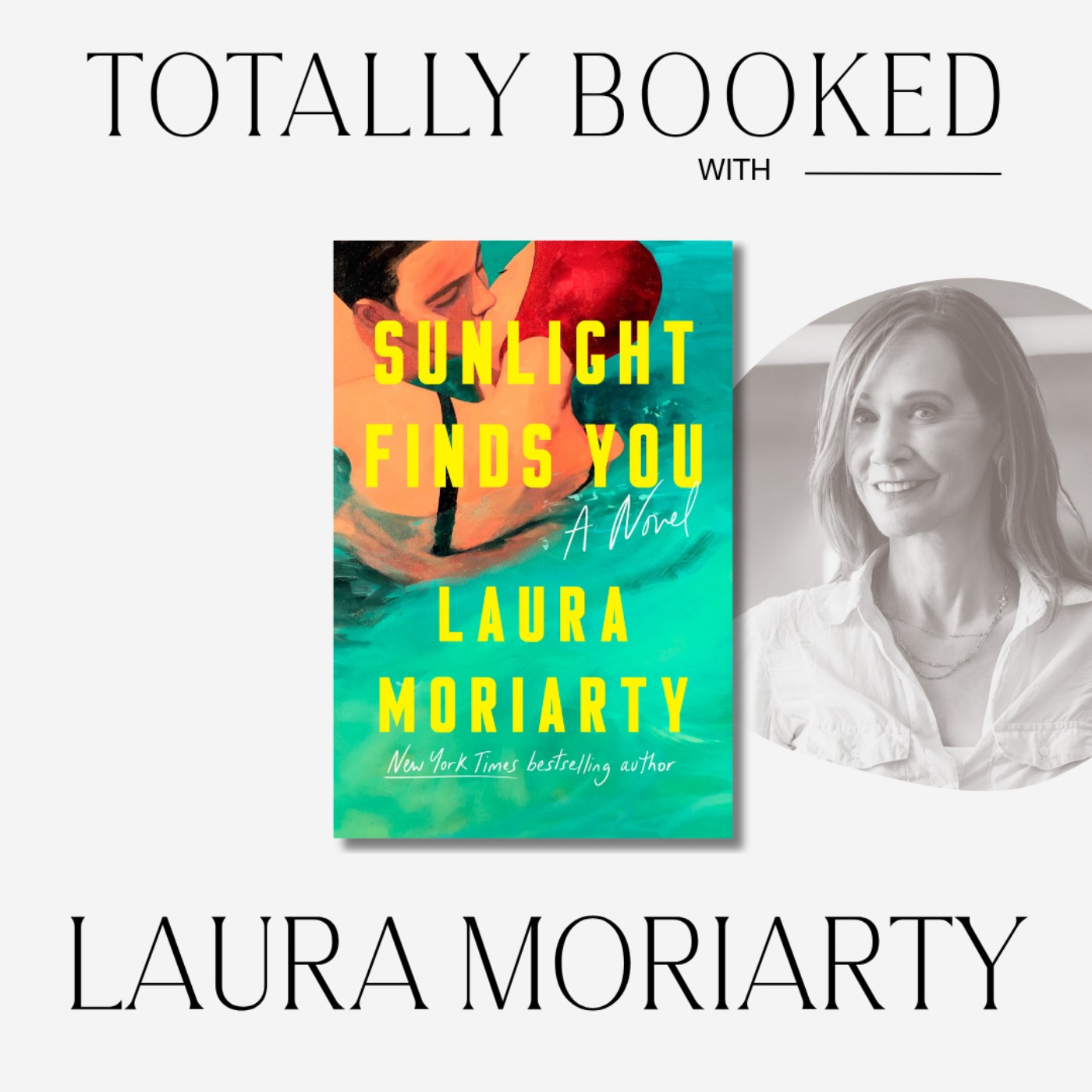
Laura Moriarty sits down with Zibby Owens to discuss her new novel and August 2026 Read With Jenna Pick Sunlight Finds You, a deeply felt love story set in 1949 that ends in heartbreak and shame, and changes the course of seventeen-year-old Nora’s life forever.
Laura talks about the book’s look into dealing with uncertainty, her extensive research into the time period, and the conversations with her mother that shed light on both the joys and challenges of being a woman during that time.
She also shares the hardship of being diagnosed with oral cancer while writing this book, letting go of writing expectations to free the story, and her gratitude for the perspective into life that reading gives us.
Hosted on Acast. See acast.com/privacy for more information.
Get every episode summarized
Each time Totally Booked with Zibby publishes, we email you a written briefing from the transcript — the topics, who appeared, and any specific claims, with the ad reads skipped.
Email me new episodesFree for 3 shows. No card needed.
Hosts & guests
Transcript ready
232 searchable segments. Every word is indexed and playable.
Full transcript
Totally Booked with Zibby — Laura Moriarty on Writing Amid Her Cancer Diagnosis. Machine-transcribed; use the interactive transcript above to jump the player to any line.
Welcome to Totally Booked. I'm Zibi Owens. I've interviewed more than 2,000 authors on this show and learned endless amounts about storytelling, reinvention, and life itself. Because when you talk about books, you're really talking about life. So get ready to hear from today's best authors, the best selling, and the not yet discovered. Come find your next great read and the story behind it. Enjoy! I was so excited when Laura Moriarty's book, Sunlight, finds you, was chosen as the read with Jenna Pick. So exciting. I had just interviewed her, I don't know a couple weeks before, the announcement and was so excited I emailed her right away couldn't have happened to a nicer person. Here's a little more about Laura. Laura Moriarty is the author of the National Best Seller, The Shapron, as well as the center of everything, the rest of her life, and while I'm falling in addition to her new book, Sunlight finds you, the read with Jenna Pick. She received her master's degree from the University of Kansas and was awarded the George Bennett Fellowship
for Creative Writing at Felix Exter Academy. Moriarty lives in Lawrence, Kansas. Welcome Laura. Thank you so much for coming on Totally Booked to talk about. Sunlight finds you a novel. Congratulations. Thank you. Thank you so much. It's wonderful to be here. Yeah. Can you please tell listeners what your book is about? Well, I wanted to write a love story and not exactly a romance, but a story about how a deeply felt love can change a person and alter the course of her life. Nora is a teenager in 1947 when her family moves to St. Petersburg, Florida. On the first day of high school, she meets Leonard Lifton. He's a few years ahead of her and he's from a wealthier family, but they form a connection that is intellectual as well as physical and the feelings are so powerful between them. Within a few years, they're engaged, but plants change and she ends up not just heartbroken and alone, but pregnant.
And in this era, of course, being unmarried and pregnant isn't especially isolating and humiliating circumstance. She has to make hard decisions quickly and even decades later. She's still thinking about the decisions she made. She's still thinking about Leonard, who he really was, and why she can't forget him. Well, I have to say some parts of the ending I was hoping for and others that I was hoping for didn't happen. And I guess that's just like life, right? Exactly. Exactly. You get some partial victories. Yes, yes, it's a bit of sweet. Yeah, bit of sweet. That's a good way to say it. I feel like you totally captured this world the time. First of all, even in the beginning, you referred to sort of the racial dynamics of St. Pete back then. And there was an expression I've literally never heard before about walking on the street. What was that called? Giving whites the
wall. Yeah, I've never heard that before. Yeah, I had neither. I found it in my research. Oh my gosh, so terrible. It's so terrible from the Jim Pro era. So white people would get to walk close to the wall. Yeah. And it was just so rigidly enforced, you know, even in a town like St. Pete, which is coastal and had a lot of tourists from the north. It was still in the south. Yeah. Oh, okay. Well, anyway, from the beginning, you set the scene up for us. And you show the huge influence of Leonard's parents, which is a huge piece of the book of her parents, of her losing her mother young and what that does and her stepmom may who becomes such a great character in her life. And what it feels like when you just want to throw everything to the wind and be with the one that you are so into, honestly, and then life and war and everything comes in the way. And how do you how do you handle that? Right? I actually understand the way the decisions that they
made at that time, because like what do you do in the face of the unknown like that? Yeah, so much that is about dealing with uncertainty, right? Yeah. How we live with uncertainty and not knowing what's going to happen and not knowing where someone you love is. It's so much of it is about that. She really has to grow as a person. I mean, that is something I think we all have to wrestle with all the time is uncertainty and not knowing how things will turn out, not knowing what things will be okay, especially when the feeling, the caring is so strong. Yes. And deception and longing, there's so much here. The shame of coming back to a town after you know, can I say that I don't want to give you a way, but just how she yet how she had to come back to the town and was like just so it was like the scarlet letter, right? There was so much shame in having a child at that age and going back to school and then how she ends up in like another situation that is not the
best. Oh my gosh, I just I feel like I'm just such a journey. I mean, it's just amazing. Nora is a true warrior and has to deal with so much and yet comes out through with her head up at the end. I feel like I think she does too. I think she does too. You know, she is full of regret, right? Yes, of course. Well, we're full of it, right? But she has, she wishes she could go back and do some things differently. And one thing I really like about her is she looks back on her mistakes or her regrets with compassion. I think she does understand why she made them, you know, she was in love or she was under immense pressure. And so she has to she gives herself a little bit of grace. And I think that that self compassion, she feels is why she's able to extend it to other people because that is really, I mean, her strength, I think, by the end. But you're right.
She goes through so much. The betrayal is horrible. You know, I appreciate you not wanting to give so much away because there is so much, you know, I think readers, early readers have said that they have appreciated, you know, what happens? Like sort of the surprises. And so thank you all the twists and turns that make me so. But I think it's I think it's it's early enough in the novel, you know, to say, yeah, she these maternity homes, you know, the baby scoop era was so millions of women and girls. If you got pregnant between 1945 and 1973, they would send you to these homes, you know, when you were supposed to give birth and come back and say that nothing had happened. Hearts of the leaves. So it was just so hard on these women. Like reading their testimonies, you really saw that for most of them, the or the women that I read about, they didn't just pick back up, they never got over it. It was devastating for their lives.
Some of them do the find a way to take this immense trauma and this uncertainty and go ahead and live and and and try to find a way to find their way back to a full life. And that is just one part of Nora's story, but it's a huge, huge part. And yeah, a story I wanted to tell. I'll try to reference this obliquely, but they're one of my favorite scenes is when Nora is speaking to another woman who says, oh, you can't possibly imagine what it's like to, you know, not know. And she's like, oh, yes, I can. Yes, I can. Yes, I can know that. Oh my God. Goosebumps. You also weave in, particularly towards the sort of the last third of the book, a lot of research about the war and what is going on in the times and different countries and like what happened and what the experience might be like for someone during those times. Tell me about the research that you did and your interest in this time. Wow. You know, so my mom grew up in Orlando around this time
and the novel isn't about her. She she fast away while I was writing this book and I know and as her health declined, she and I talked a lot, you know, it was me. I think it was nice for her to know. I was working on a book set in Florida in this era, but she wasn't nostalgic for it. I mean, she was always nostalgic for Florida. She married my dad and moved north as soon as, you know, almost spent most of her adulthood in the northern states, but she always spoke with Florida about Florida was so much affection and love. But in the years when her health was declining and I was working on this book, we also talked about, you know, how hard it was to be a woman at this time when women had fewer options socially and legally and to come of age at this time, you know, and it talking with her and then reading about the experiences of other women from that generation, it really made me see how so many girls and women they had to navigate this narrow path and they had the same
dreams of autonomy and desires that we do now. And it made it makes me grateful for the increased options we have now. It makes me want to protect those options because you really see, I mean, reading those testimonies, it makes you not nostalgic at all. And at the same time, I wanted to include all that was so wonderful about the era, you know, the music, the dancing, the homemade poodle skirts, the, you know, the fun and optimism of the era because there was so much that was great about it. But you know, like you mentioned the segregation and the south, you know, there was a lot that wasn't great at all and I didn't want to sugarcoat it at all. I don't want to live in that time period, but there was some parts that it's beautiful about it. Yeah. You know those pieces in your closet that you find yourself reaching for over and over again,
the sweater that somehow works with everything, the jeans you know will always fit just right, or the bag you carry everywhere. Those are the pieces that are in a permanent place in your wardrobe and that is exactly what Quince does so well. Quince makes elevated everyday essentials using premium materials like Mongolian cashmere, organic cotton, and washable silk. The designs are timeless, thoughtfully crafted and made to be worn again and again. Their 100% Mongolian cashmere sweaters start at just $50 giving you the softness and quality you would expect from a luxury brand without the luxury price tag. Quince also has premium stretch denim, leather bags, and footwear and beautiful 14K gold jewelry that can be the finishing touch that pulls an entire look together. I just invested in four different colors of the Mongolian cashmere sweater to go with all the outfits I'll be wearing on my upcoming book tour for between chapters. I am going for more of an olive green maroon look this season. And so I wanted to get those color sweaters. Tell me
what you think when you see me wearing them on Instagram. I hope they look good. But anyway, I love Quince's sweaters and have probably way too many of them. Everything at Quince is priced 50 to 80% less than similar brands, by the way. They work directly with ethical factories and cut out the middlemen so you are paying for quality, not brand markup. And it's not just a peril. Quince brings that same approach to everything they make from hotel quality bedding and bath to kitchen essentials and thoughtfully designed furniture. They make well designed pieces for everyday living. Find the fall pieces you will reach for most at Quince. Download the Quince app for app exclusive offers or go to quince.com slash zibby. Get free shipping on your order and 365 day returns. Now available in Canada and the UK too. That's qu. I n c e dot com slash zibby. Did it take you a long time to write the book? Like how long were you living in this world?
Oh, it took me so long. It took me so long for a variety of reasons. So one reason was, is that I got it wrong at first. You know, this is, this is my sixth novel. And you think like, oh, I'm going to get better and better at knowing exactly how to do it. But I didn't. Because I kept thinking I needed to write it in third person and I kept thinking I needed to write it in multiple points of view for the story to work. I was convinced that this was true. And it just kind of wasn't working like I knew the story and going into these other characters heads and it was sort of this distant remove, which has worked fine in other novels. I wrote the chaperone in third person and that worked fine. It wasn't until I finally realized I needed to just write it in Nora's voice and let her tell the story. And it was like, it was like a balloon that was tied to something heavy and I cut the balloon and it just, you know, and I, oh, it managed to sail because
I knew all the other characters so well. So that was one reason is I was like, I think of myself as like a room bus stuck in the corner, you know, I was like backing up and backing up and I just, I couldn't see it until I saw it. And that's just the way it goes with writing, I think, sometimes. I tried to tell myself that all that time wasn't lost because that's when I was really starting to understand my characters. The other reason is, you know, not halfway through at some point during this novel, I was diagnosed with oral cancer and it became a big deal. You know, I'm so grateful to be here. I am so grateful, but you know, I had a trache, a feeding tube, I had to have my jaw completely reconstructed radiation. Oh gosh. Yeah, yeah, it, well, it was a lot. You know, a lot of people, a lot of people go through it. I'm so glad to be here. It did get me, it slowed me down for sure, right? Like, you know, because I teach at University of Kansas, I teach creative writing and I would
take time off to work on the book, you know, like I'd get a semester off or I'd get a fellowship and then something would happen, you know, and I couldn't write. So that did slow me down, but it also, you know, really got me thinking about how going through something painful and isolating can make you more vulnerable at first, more fragile, less sure of yourself, but in the end, you can come out stronger and more sure of what you value, more sure of who you can rely on, and in the end, you come out stronger. I didn't give Nora cancer. I'm okay, she's got it off going on, but I think the way that she is, you know, the fallout from this relationship and the way she is betrayed, really knocks her down before she gets back up again. How did you realize you had oral cancer? Oh my gosh, it was so bananas. I thought, you know, I was so busy and I thought, oh, it hurts here, and I don't smoke, you know, and I went to the dentist, they got me into the periodontist,
because they're like, let's just have the periodontist look. And he said, oh, I think that's a kinkersaur. And so he said, give it some time and it'll go away. So I waited a couple weeks, and it seemed worse. I went back in, and he's like, well, you know, you can get kinkersaur from stress. Are you under any stress? And I was like, well, you know, my mother was, you know, dying, I had a teenager at home, we just gotten through the pandemic, and I thought, well, sure, you know, okay, it's stress kinkersaur. And then it got, it got even worse, but I was so wedded to this idea that it was a stress kinkersaur. And so I waited, I waited, you know, I was busy, I was trying to get a lot of things done. And I was like researching ways to get a kinkersaur like lasered off, and finally, my friend's wife, who is a nurse, we're at a dinner party, and she's listening to me, and she said, let me look at it. And I said, right now, you know, she said, yeah, right now. And she looked at it, and she said, no one's going to laser that off. You need to, you need to see a period on to. So
and I said, I just did it. She said, see another one. And I did. And right away, he was like, oh, he did a biopsy. And that's when it began. Yeah. Oh my gosh. Did you ever go back and tell that first period, don't you? You know, I told, I should have, right? I should have, just so he knew. I did call the office, and I told, I told the receptionist. And I think I, and I told the, I know that I told the current period on just so he would know. And he said, okay, okay, I will, I will talk to him. So I, yeah, I was so rattled. And you know, I kind of put it on myself. Yeah, it was a, it was a strange time. Yeah. But you know, the good thing is, is I got excellent care after that. It was, it was a long journey. It was a long journey. I am so so glad. Because you know, it was strange. Have you, I have you read radium girls or no? Okay. Well, one thing that's good
about being a reader is it really opens you up to how, you know, life isn't fair. And I remember some of the nurses, like everyone asks you when you get oral cancer, everyone says, are you a smoker? And that is one thing, the first period on just asked me. And I think when I said, no, he just sort of blocked out the idea that I might cancer. And the nurses, after I was diagnosed, they would say, oh, did you have, did you, did you smoke her? And if I said, no, they'd go, oh, you must be so mad. And I think, oh, well, you know, no, I'm not mad. I mean, if you read nonfiction, or fiction, you know, anything can happen anyone. And I had read radium girls. And I actually got complications from the radiation, which might have saved my life, but that's why I lost my jawbone. But that's what happened to the young women in real life and radium girls. And they didn't have the medical technology or the knowledge to rescue them. And I did, you know, and so I
think reading can give you a perspective, you know, what a past generations have dealt with and give you a lot of gratitude for what you have today, even when you're going through something hard. Oh my gosh. What a journey. I'm so. What a bizarre question. Like as if you should have gone and smoked, you know, I mean, like it's just bizarre, bizarre response. It's really funny, because it was like, why? Because of all those cigarettes, like, kind of had like, it was so strange. And it is. And you know, and people come up with these sort of rules, I think, to keep them safe. Like they say, like, I honestly had one woman say to me, she said, um, well, she said, oh, so strange. So this friend of mine had like set me up with like a healing practitioner, you know, and it was like a free thing. And I thought, okay, good, I'll go, because I was really rattled. And so this healing person, she texted me the next day. She said,
is it, I got a really strong feeling? Is it okay if I share it with you? And I thought, sure, and I thought she was going to say something like, like something kind of fortune cookie, like, yeah, yeah. But she said, you know, a lot of people get oral cancer because they don't speak their truth. And I thought, oh my gosh, you know, like, you idiot, you know, and I was so, I was so mad. I mean, because, you know, babies get cancer. Are they not speaking their truth? You know, like, come on, life is not fair. Like, yeah, I think it's just can happen. Yes. You know, there's a lot of fortune and misfortune. And you've got to take it as you come, but I think she and all of us, to an extent, we try to say, okay, if I do X, why won't happen? It's not always true. Yeah. I think that's, it's an uncomfortable truth that people would prefer not to think. Because if we all wake up every day and understand truly the randomness of life, I think it would be hard to just like make breakfast and get on with it, you know.
Is that right? Exactly. No. Like a defense mechanism of sorts. But anyway, oh my goodness, are you going to write another book? What are you up to now? Oh, boy. Right now, I've been so busy like getting ready for this one, you know, which is more super exciting. I always, I kind of have an idea for one, right? And I'm like, that's sort of the biggest step is checking it, you know, like really thinking, okay, is this really, is this really what I, what I should be doing, you know, like, that's, if you mess up on the big step, because I've done that, right? Or like, if you make a bad decision early on in the tree branch of writing a novel, but earlier you make the bad decision, maybe I shouldn't call it that, the harder it is to remedy or the more time it's going to take, although sometimes it just takes time and that's how it goes. So I try to be really thoughtful about, you know, in my passionate enough about this idea, like am I just looking for an idea? It's a lot like, it's a lot like falling
in love, you know, because you can kind of see like a beautiful idea. Oh, or maybe you're just really ready for a beautiful idea. So you decide an idea is beautiful. But you really like maybe introduce that idea to some of your friends. I know I have an idea for a novel and I'm like, I would like to read this, but do I really want to write that like, should I do like a survey and ask people if they want to read it? And then I'm like, if I have to ask other people, then I shouldn't write it. Oh, okay. So you feel that's kind of the opposite. It's like, if I have to ask other people. Right. Like, you have to want to do it yourself. You can't want to do it because other people, you know, I don't know. Yeah. You have to be something that you cannot do. Yeah. Yeah. Yeah. That's a good way to put it. I think that is a good, that's a good list, yes, for sure. Yeah. So I guess we'll see what you come up with next. Well, Laura, thank you so much. Thanks for sharing your your health journey. Thanks for sharing
these characters. Thanks for introducing me to a time and place in history that I did not know about. I've never been to St. Pete and I certainly haven't been there at that time and beyond. So thanks for for the escapist moment and for giving hope in a very confusing and predictable time. Thank you and it is so nice to meet you, Zippy. Thank you so much. So nice to meet you too. Okay. All right. Take care, Laura. Thank you. Thank you. Thank you, bye-bye. Thank you for listening to Totally Booked with Zippy, formerly Mom's Don't Have Time to Read Books. If you loved the show, tell a friend, leave a review, follow me on Instagram at ZippyOans, and spread the word. Thanks so much. Oh, and buy the books.
More episodes
More from Totally Booked with Zibby

Hank Phillippi Ryan on What Happens After the Happy Ending
Totally Booked with Zibby

Rebekah Lowin on Impossible Jewish Joy
Totally Booked with Zibby

Elizabeth Wellington Rollins on Writing Her Way Home
Totally Booked with Zibby

Meg Mason: The New Reese's Book Club pick!
Totally Booked with Zibby