Get every episode summarized
Each time Here & Now Anytime publishes, we email you a written briefing from the transcript — the topics, who appeared, and any specific claims, with the ad reads skipped.
Email me new episodesFree for 3 shows. No card needed.
About this episode
Here & Now Anytime is made possible by:
“This message comes from Cure Alzheimer's Fund. From family to community, connections and the memories they make are everything. The hugs, the strolls, the laughs, songs and dreams.”From the transcript
And, newly obtained documents by The New York Times reveal the timeline between the alleged assault and when Jane Doe filed a report with Cornell University campus police. Times reporter Sharon Otterman explains what the documents show.
See pcm.adswizz.com for information about our collection and use of personal data for sponsorship and to manage your podcast sponsorship preferences.
NPR Privacy Policy
Get every episode summarized
Each time Here & Now Anytime publishes, we email you a written briefing from the transcript — the topics, who appeared, and any specific claims, with the ad reads skipped.
Email me new episodesFree for 3 shows. No card needed.
Hosts & guests

Transcript ready
178 searchable segments. Every word is indexed and playable.
Full transcript
Here & Now Anytime — Inside Tennessee's botched execution. Machine-transcribed; use the interactive transcript above to jump the player to any line.
This message comes from Cure Alzheimer's Fund. From family to community, connections and the memories they make are everything. The hugs, the strolls, the laughs, songs and dreams. Cure Alzheimer's Fund empowers the scientists who dedicate their lives to curing Alzheimer's disease. Great progress has been made and the momentum is building. There is more to do. Learn more at curealz.org. Let's keep our memories together. WBWR Podcasts. Boston. A group of state lawmakers said, Hey, if you guys keep messing up these executions, you're handing ammunition to people who hate the death penalty. A botched execution in Tennessee has shocked even supporters of the death penalty. It's Thursday, October 1st, and this is here and now anytime from NPR and WBWR Boston.
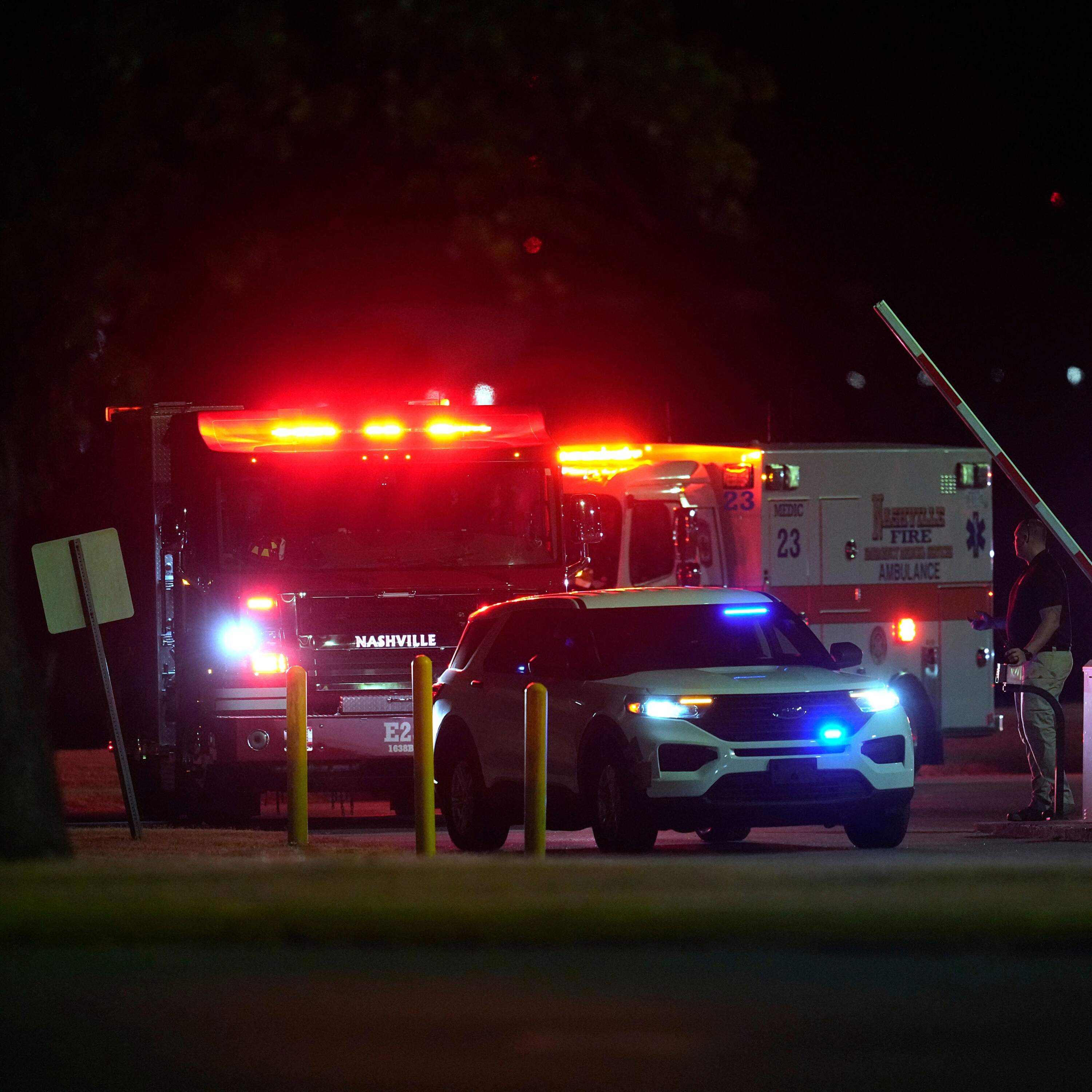
I'm Chris Bentley. A little later on the show, inside Cornell's investigation into the alleged sexual assault of Jane Doe, according to new documents from the university. Over those three weeks, she comes to terms with the fact that she lost control and that things happened to her body that she did not want to happen. But first, Tennessee Governor Bill Lee has paused executions for the rest of the year. After the state tried and failed to kill Christa Pike. Pike was sentenced to death in 1996 for murder when she was 20 years old. 30 years later, the Supreme Court stepped in to allow the state to put her to death. She was given two injections of what were supposed to be lethal doses of a sedative, but she survived. She was taken to a nearby hospital and a medical expert retained by Pike's legal team says she likely has brain damage. Catherine Sweeney witnessed the execution attempt last night.
She's a reporter with member station WPLN in Nashville. She told Indira Lachmanon that she's covered executions before, but none like this. We got to the prison at 8.30 in the morning. All of the sudden, a circuit court issued a stay, which we didn't even realize. There was a challenge before a circuit court. The Supreme Court had already said that it should move forward. So, long story short, we sat at the prison for about 10 hours. So by the time that we did get into the death chamber, it was after seven o'clock. And it took a really long time for them to establish IV access. Because there's a curtain over the window that whole time, we don't know what went wrong. They pushed this enormous amount of sedative that is designed to kill somebody by a pretty broad margin. They ended up running it twice and she was still alive. She was talking at points where she should have been appearing comatose. She was lifting her head up and looking around. They left us in the witness bay room, listening to her ragged, snoring breathing,
for over half an hour in the dark for a lot of it and then with the lights on. And we didn't know when they were going to let us out or if they were going to try to resuscitate her or what was going to happen and nobody would answer our questions. All right. Well, she would have been the first woman executed in the state in more than 200 years. There were several attempts to block her execution. Her advocate said she had endured severe physical and sexual abuse since she was a toddler and suffered from untreated mental illness and PTSD. So explain briefly why did the governor and the US Supreme Court allow this execution to go forward? That's a great question. There was a slew of hearings about that exact issue in August and they spent hours and hours discussing the effects of her PTSD from a lifetime of sexual trauma. They also talked about some of her physical health conditions. Essentially, with hearings like this, they're not really assessing whether that seems like a reasonable concern.
They are assessing whether it seems on a technicality like an 8th Amendment constitutional right violation. So remind us what the 8th Amendment is? Yeah, it means cruel and unusual punishment. But there have been hundreds of lethal injection lawsuits and it's gotten to be so granular, what counts? What counts as a rights violation? Well, Christophe Hikes lawyers, when they were fighting the execution, warned that it might not even work for her because she has small veins and other medical conditions. What do we know about her condition and why the injections failed to kill her and how she's doing now? It's really complicated to know what went wrong. She did have a platelet disorder that could have made all of this more difficult. She had small veins. A lot of doctors here say, basically, only unethical doctors would sign up to be involved in this, only unethical healthcare workers would, because every ethics code says they're not supposed to participate in executions.
And so all we know is it was catastrophically wrong. It was an enormous dose of a sedative and she was still breathing. But we don't know much about her condition now either. They're being very secretive about it. We do know that she is still alive, but that's about it. So as you reference the American Medical Association bars its own members from participating in executions, which might leave these injections to workers who don't know how to oversee them. There was a case earlier this year where Tennessee tried and failed to lethally inject another inmate. What do we know about how these failures might be changing public opinion about the death penalty or about lethal injection? I think there's a lot of confusion about how popular the death penalty is in Tennessee. Some polling by Vanderbilt University here found that people are pretty split on it. It's about 50-50. And then when you throw in some of these complications, it's even lower than that.
After the earlier failed execution you mentioned of Tony Corothers, a group of state lawmakers said, Hey, if you guys keep messing up these executions, you're handing ammunition to people who hate the death penalty. So even people who love the death penalty say we can't be having these kind of violent mistakes happening. It's not good for anyone. That's Catherine Sweeney. She's a reporter with Member Station WPLN in Nashville who witnessed the attempted execution last night of Christopheike. Catherine, thank you so much for joining us. Thanks. Coming up next. What former Cornell student Jane Doe said to campus investigators that was apparently never relayed to the district attorney. And why the system for reporting sexual assaults on campus is rarely straightforward. Indira has that after the break.
Stay tuned for the following announcements and messages from our sponsors. This message comes from Granger. This is the story of the one. As a maintenance supervisor at a manufacturing facility, he knows keeping the line up and running as a top priority. That's why he chooses Granger. Because when a drive belt gets damaged, Granger makes it easy to find the exact specs for the replacement product he needs. And next day delivery helps ensure he'll have everything in place and running like clockwork. Granger. Click Granger.com or just stop by. Granger for the ones who get it done. This message comes from total wine and more. Footfall season is here. Stop by for cold beer, craft bourbon and ready to drink cocktails and know you're getting the lowest prices. Spirits are not sold in Virginia and North Carolina. Drink responsibly, be 21. Now to an update from Cornell University where New York prosecutors have reopened a criminal investigation that is raising questions about sexual assaults.
The New York Times has obtained more than a thousand pages from Cornell's internal investigation related to an alleged gang rape at a fraternity house two years ago. Text, emails and interviews reveal crucial details of what happened in the three weeks between a party at the Chi-Fi fraternity and a report made to campus police. A female student who's being referred to as Jane Doe alleged that she was drugged and raped by seven members of the frat. Sharon Otterman is one of the reporters who broke this story for the times and she joins us now Sharon. Welcome. Thank you so much. So the documents you reviewed paint a picture of a woman who seems to be processing over these three weeks what has happened to her. She's just 20 years old. She's only a sophomore. She has just dormant, a sorority. Tell us about your takeaway from these documents overall.
I think the documents provide us with this crucial window to see how a potential victim of sexual assault will process this information in real time. When she first talks to her roommates, she doesn't use words like rape, but she's also very sort of defensive and being strange weird, you know, from their point of view about how she's describing it so they know that something more went on. And I think over those three weeks, she comes to terms with the fact that she lost control and that things happened to her body that she did not want to happen. I was struck that in her interview with campus police that happened three weeks after the party, she said, quote, I can say with 100% confidence I was raped. And yet the original six page summary report that was filed at the time by Cornell campus police did not include that quote didn't even use the word rape.
What is the reason for that and could that be why the district attorney at the time did not move forward with a criminal case? If you read police reports, they're not gripping narratives. And this police officer decided to omit anything that he did not think was a sort of who, what, where, when why statement of fact. But in doing so, he left out crucial context about why a woman in this situation would take a drug or why she would not verbally stand up and say no. These are the kinds of consent based moments that most, you know, modern women have experienced and they know how difficult in these situations this can be. The DA never gets to see the full breath of what she actually says to the police investigator because he receives a very abbreviated report that is just a recitation and kind of like a flattening of some of the descriptions that she gives of the moments that disturbed her the most.
And so that might not fully explain why he decided not to prosecute because there are very high bars to proving rape in New York state. But it definitely seems to make it more understandable why he might not have. I want to talk about the text messages you reviewed between the alleged victim, her friends and the men involved. The text show a lot of confusion even for the alleged victim herself about what happened at the party. But then some of the young men involved apologize to her by text after the event talk about that. I think after the party, the men got together and realized like, oh wow, that got out of hand and everybody went into kind of damage control mode. Some of her texts she later says are her trying to get information about what happened that night from them to try to fill in some of the gaps of her memory. So she did have kind of a strategic goal in some of the communications with the men and the men I think had a strategic goal in apologizing to her and trying to say, hey, let's not worry about this. Let's let bygones be good bygones.
How did the university's interviews with six of the seven accused men square with the text between Jane Doe and these men that you reviewed? I mean none of the men admit doing anything beyond the drug use. Some do say that they engaged in consensual sex. One of the men actually accuses her of being the aggressor and set of counter claims against her. There's a sort of a diversity of responses from them, but you could put it put them all in the category of denial. I'm wondering what universities can do better because you know this is a young woman who was only 20 years old. She was confused by what happened. She went and saw a medical doctor and the report seems to indicate that the doctor kind of dismissed her concerns and said maybe you should go get therapy. So how can universities and the authorities there be doing better? There is enormous room for improvement. I know universities have tried training, but it's really a culture shift and there's been a lot of research done on the trying to how do we improve these sorts of cultural situations to make this completely unacceptable.
And so this is a work in progress that not just Cornell, but you know all universities are working on. Sharon Ottoman covers higher education for the New York Times. She was part of the team that broke the story about the 1000 pages of internal documents related to this investigation. Sharon, thank you so much. Thank you. Stay tuned for the following announcements and messages from our sponsors. This message comes from Angie. When it comes to home projects, it matters who you hire. Angie has been helping homeowners find skilled pros to get their home projects done well for over 30 years. Angie's nationwide network has experts in everything from landscaping to roofing and more. Read verified reviews, see photos of past work and request and compare quotes to find your best price all in one place. Download the free Angie app today or visit Angie.com. That's ANGI.com.
Some other news we're following today at here and now dot org with just over a month until election day. We wanted to talk to someone who knows how to actually run an election. Tammy Patrick is chief programs officer at the election center, also known as the National Association of Election Officials. She served on president Obama's commission on election administration. Despite the Trump administration suing states for their voter rolls and attempting to restrict mail in voting. She told Robin Young the election is secure. Before every federal election for the last couple of decades that I've been doing this work, there has been a posture of increased observation increased, you know, either the political parties or others who are going to be at the polls in droves and that usually doesn't play out in quite that way. So in this moment, I'm not sure if we're really going to see that manifest because it's been postulated numerous times before and has not come to fruition.
But in this moment, we are seeing changes in the way the federal government has been involving itself in elections. And it's really important for listeners to realize that our elections are run by professionals at the state and local level. It has been that way for, you know, since the beginning of our country. Well, there is, you know, fear of outside interference and generals have told members of Congress, like Michigan Senator Alyssa Slokkin, that there are no plans for troops to be deployed at polling places. But Homeland Security Secretary Mark Wayne Mullins says immigration agents will be there if there are specific threats that is vague to some state officials. How have we been here before where we're talking about troops or federal agents at polls? We have not. The most important piece here for listeners and voters to realize is that it's really easy to say things. It's more difficult to actually make them come to pass.
And what I mean by that is that if you say, I'm going to rig an election, I'm going to hack voting equipment. It's very easy to say that and to spread that message. It's much harder to do all of these things and it's much harder to do all these things everywhere. So even if it's the case that we have observers and we always have federal observers and party observers at the polls in every election. But the federal observers are usually, you know, a few of them across the country. It's not going to be the case that this is something that every voter is going to encounter if they choose to vote in person. Well, what about the effect of saying things? You know, just the saying as, you know, President Trump has done, well, there's there's fraud with ballots or does that have an impact on the vote? It remains to be seen if it will have an impact because what we know from some research is that when there are policies and practices that are put in place that are seemingly obstacles to voters, it actually increases turnout because voters realize that voting is their superpower.
And it's important for them to not let someone take it away easily or lightly or to be dissuaded. There is more to that conversation about the election and voting, including what poll monitors can do and cannot do when they're observing elections. You can listen to that at herenow.org. Here now anytime comes from NPR and WBR. Today's stories were produced by Jessica Carissa, James Master Moreno and Lynn Menagon. Our editors were Todd Montnika Ayala Rodriguez and Michael Scado, technical direction from Caleb Green and Andre Peralta. Our theme music is Ben Mike Miscato, Max Liebben and me, Chris Bentley. Our digital producers are Allison Hagen and Grace Griffin and here and now is executive producer as a Helen Price. Thanks for listening. We'll be back with you tomorrow. Stay tuned for the following announcements and messages from our sponsors.
This message comes from Angie. Angie has been helping homeowners find skilled pros to get their home projects done well for over 30 years. For everything from minor repairs to major remodels, find reviews, pricing and booking at Angie.com or on the Angie app.
More episodes
More from Here & Now Anytime

Is universal child care working in New Mexico?
Here & Now Anytime

Data centers are making noise in American politics
Here & Now Anytime

Facebook whistleblower says it's time for AI whistleblowers to speak up
Here & Now Anytime

What we know about the death of a Russian plague lab worker
Here & Now Anytime