Get every episode summarized
Each time Here & Now Anytime publishes, we email you a written briefing from the transcript — the topics, who appeared, and any specific claims, with the ad reads skipped.
Email me new episodesFree for 3 shows. No card needed.
About this episode
Here & Now Anytime is made possible by:
“Support for here and now anytime comes from MathWorks, creator of MATLAB and Simulink Software, to design and develop engineered systems, accelerating the pace of discovery in engineering and science.”From the transcript
Then, three years since Israel’s war in Gaza began, more than 80% of the region’s infrastructure has been damaged, according to the United Nations Agency for Palestinian Refugees. The Middle East Institute’s Jaser AbuMousa explains what it would take to rebuild the region.
And, journalist and Here & Now guest host Celeste Headlee shares more about her book, “Freedom’s Daughters.” In it, she tells the story of her great grandmother, Carrie Still Shepperson, a Black woman who educated and organized former enslaved people and their families following the Civil War.
See pcm.adswizz.com for information about our collection and use of personal data for sponsorship and to manage your podcast sponsorship preferences.
NPR Privacy Policy
Get every episode summarized
Each time Here & Now Anytime publishes, we email you a written briefing from the transcript — the topics, who appeared, and any specific claims, with the ad reads skipped.
Email me new episodesFree for 3 shows. No card needed.
Hosts & guests

Transcript ready
381 searchable segments. Every word is indexed and playable.
Full transcript
Here & Now Anytime — Is universal child care working in New Mexico?. Machine-transcribed; use the interactive transcript above to jump the player to any line.
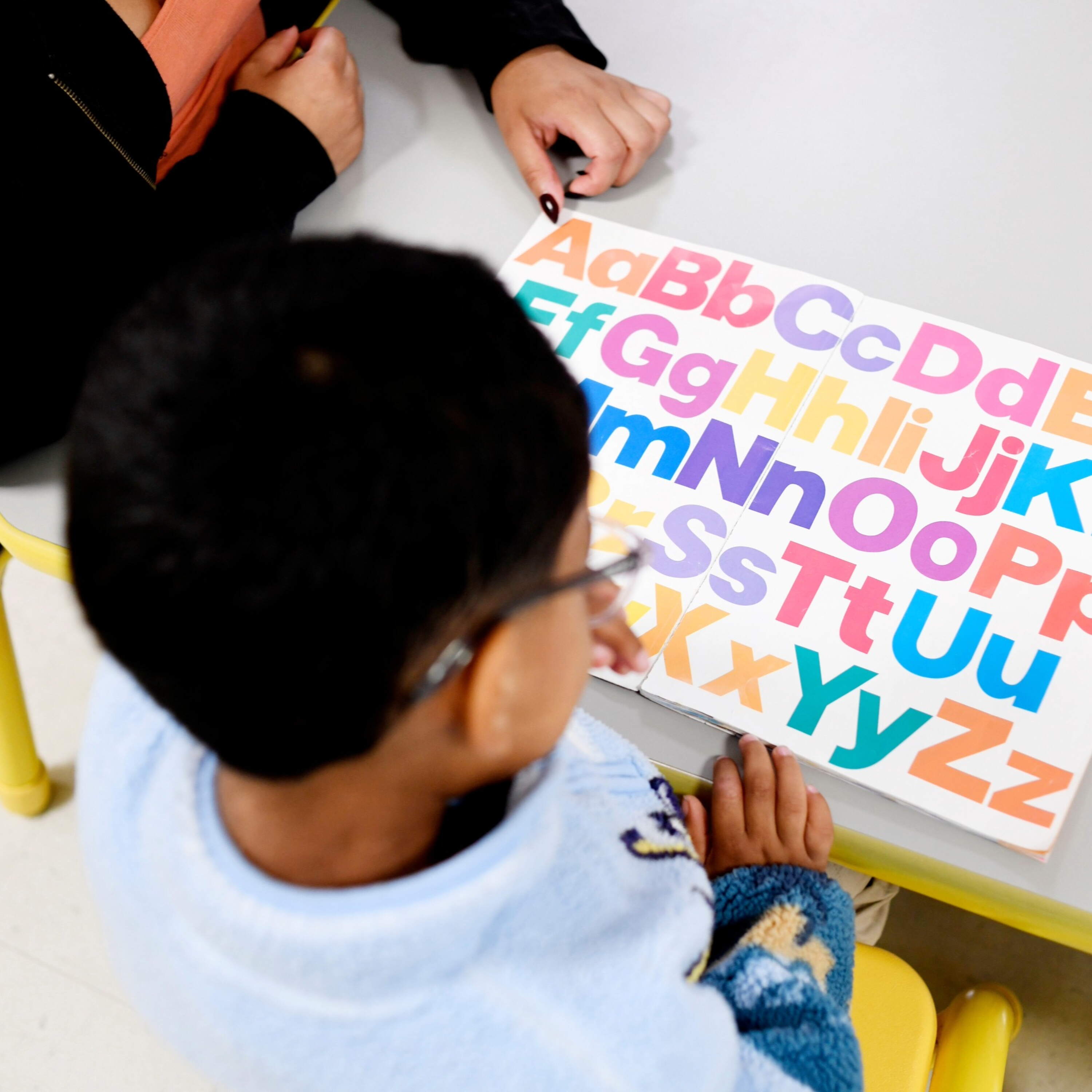
Support for here and now anytime comes from MathWorks, creator of MATLAB and Simulink Software, to design and develop engineered systems, accelerating the pace of discovery in engineering and science. Learn more at mathworks.com. WVUR Podcasts. Boston. So that's where the city is using an abundance mindset and we're saying, look, we have tons of extra space. How about we give it to you for free, as long as you use it for childcare because we need to fill in these gaps throughout our city? New Mexico is testing new solutions for the childcare crisis. Will they work? It's Friday, October 9th, and this is here and now anytime, from NPR and WBUR Boston. I'm Kaleani Succea. Today on the show, we'll hear about what it might take to rebuild a shattered Gaza.
Before reconstruction, we need to focus on recovery. And we'll learn about a group of extraordinary black women who educated former enslaved people and their families following the Civil War. These are women who wrote Latin and Greek and studied physics and yet they also learned how to repair a combiner or a tractor because they needed to teach their students. They learned how to grow crops because they needed to feed their students. But first, childcare. It's one of the most important decisions a parent might make for their kid. And one of the most expensive. In Albuquerque, New Mexico, the mayor says he has a solution to help reduce pressure on families. Mayor Tim Kelly is opening up underused city-owned buildings and public facilities to childcare providers. It's a pretty big experiment in the first state in the country with universal childcare. Peter O'Dowd spoke with Mayor Tim Kelly about the details of the plan and how it might serve the state's families.
No other state has done this. What grade would you give New Mexico about a year now into this free childcare program? Well, in terms of innovation and saying, look, we should have universal childcare access. You know, we can't get a higher grade. However, the implementation has been very difficult. Despite the fact that technically it's free for everyone, a lot of folks don't know about it. They can access it. We have a shortage of childcare providers. So now we're trying to make sure that we can actually like deliver on that. We thought removing the cost component would be the hardest part. And I think it is in general. But once we removed it, we found out there are a ton of other barriers in the way. And that's where folks don't know. I'm sure people are wondering, New Mexico is the number two oil producing state in the country. That's how you get the revenue for this program. I see that as of August, the city albuquerque is opening up public office space for childcare providers to use.
I mean, is space an issue? Is that one of the challenges you're facing? Yeah. So if you think about, put yourself in the mindset of either a parent of a young child or someone who is already in early childhood development as a teacher or a caregiver. Basically, there's two flavors. There are, you know, childcare centers and we see these throughout any town. But there's also home-based childcare. And that's something that's really important because it's often close to people. And it's much more a smaller group and so forth. And so we've essentially legalized those through zoning and permitting. So they can exist everywhere. However, the issue is in people's lives, right? They're commuting to work or they're commuting to continued education or they're at home. And so they have to find a place for their kids in sort of one place or the other or on the route to one or the other. And so if you map out all the access to childcare programs, it's actually totally uneven throughout the city.
And if you ask the providers, you know, why aren't you expanding or why aren't you hiring more people, they'll say, well, I'm a childcare provider. I'm not a business. I have no access to capital and, you know, limited savings because they're not making money off it. And so they have no way to pay a lease like at all or to do even capital expenditures to outfit an office. So that's where the city is using an abundance mindset and we're saying, look, we have tons of extra space. How about we give it to you for free as long as you use it for childcare because we need to fill in these gaps throughout our city? Inflation, as you know, is a major problem around the country. And I see that it's triggering a provision in this law that means wealthier families might have to have a copay to get this childcare. Now, the program already costs something like $500 million a year. Can the government really afford universal childcare in New Mexico? Well, in New Mexico, we can. And I think it comes back to historically, you know, we're a very low-income state.
We've had challenges with poverty addiction. I mean, we have all sorts of issues. But we do have a consensus that the highest return on investment we can do for our society, for our community, for our families is early childhood education. That is our path out of those issues. So we're committed to it, but also we have the financing, thanks to windfalls of oil and gas revenue. Well, that money is available now. Oil is a commodity. We don't know what the future looks like. Now, the election is around the corner. You have a big governor's race in New Mexico. Is the future of the program tied up in the results of the election at all? You know, I don't think so. I know both candidates very well. And certainly, Candidate Holland would fight for and protect this program. Deb Holland? Yes. The Democrat. Former Secretary. Right. And the former Rio Rancho mayor is a city next to Albuquerque. He also, I think, would keep it because, number one, it is wildly popular, as you can imagine.
But two, it's actually protected by law and by constitution or state constitution. The voters voted this mechanism in. And it's very hard to change that. So there's a number of barriers if you wanted to undo it. So I think we have it for the foreseeable future. Greg Holm is the Republican nominee running for governor there in New Mexico. Albuquerque's mayor, Tim Keller. He's a Democrat mayor. Thank you so much for your time. Hey, thank you so much for covering this. Really appreciate your work too. Thank you. Coming up next, Gaza is unrecognizable. Three years after Israel's war in the city began, more than 80% of infrastructure has been damaged or destroyed. That's according to the United Nations Agency for Palestinian refugees. So what would rebuilding from the rubble look like? After the break, Robin Young puts that question to Jasser Abu Musa,
a senior fellow at the Middle East Institute. Stick around. Stay tuned for the following announcements and messages from our sponsors. I am a bonafide boomer. We just hit it at the right time. The right time to accumulate power, voter influence, and wealth. Boomers were born into a time where there was greater economic prosperity and a greater chance of upward mobility. It's an odd feeling that my grandkids are not going to have that situation for them. I'm Magna Chakrabardi, host of OnPoint from WBUR. Look out for our special series. It's called Senior Class, Gerentocracy in America. So be sure to follow OnPoint wherever you get your podcasts. This message comes from cure Alzheimer's fund. From family to community, connections, and the memories they make are everything.
The hugs, the strolls, the laughs, songs, and dreams. Cure Alzheimer's fund empowers the scientists who dedicate their lives to curing Alzheimer's disease. Great progress has been made and the momentum is building. There is more to do. Learn more at curealz.org. Let's keep our memories together. This message comes from Rinse. With Rinse, your laundry will come back fresh, folded, and ready to wear right on schedule. One tap or text is all it takes. No calling, no reminders. Same as always. Rinse, it's time to be great. More at rinse.com. So what happens now in the Middle East? Yesterday, Israelis gathered to mourn the over 1,000 people Israeli officials say were killed on October 7, 2023 by Hamas militants. Since then, Gaza Health Ministry records show nearly 75,000 Palestinians killed in Israel's subsequent war in Gaza. The past year of ceasefire slowed down the rising death toll but didn't stop it. More than 1,400 Palestinians have been killed in near daily Israeli attacks.
The war also destroyed nearly the entire territory and left 2 million Palestinians squeezed into just a third of the land without adequate shelter and reliant on the little aid Israel allows in for survival. So again, what happens now? Can Gaza's think of rebuilding when new Google Maps satellite images show a devastating scale of destruction? Jasser Abumusa is a senior fellow at the Middle East Institute and a non-resident policy advisor at the International Peace Institute. Jasser, we want to talk to you about rebuilding but this is very personal for you. Worn and raised in Gaza, I'm wondering what it's like for you to see those pictures. Thank you, Robon Farrah, for having me. Yeah, on the personal level, I think it's devastating. I built a life there. I was born and raised and bred in the Gaza Strip all my life. I lived three years ago, only after two months of the war. So for me, it's a personal devastation.
Not only this, I mean, as you said, we are talking about a massive number of people that were killed, including my own family, my wife and my kids. So it's a very personal, of course, and I'm not a unique case here. I'm we are talking about, as I said, 75,000 people. Yeah, well, and so that's why I asked. I mean, if anyone's lost family in a war zone, I mean, that is a sacred site to those who lost people there. So we want to note that. But, you know, what is your sense? You know, there's unsteady, bombed out buildings that people are still seeking shelter. And these buildings are collapsing. Your sense of how safe people are there right now? No, the people are not safe. And we had a very recent example in September 16th. Sad building has collapsed. It was a house for 100 people. And it killed 21 people, including 10 children and four women.
Unfortunately, we have more than 2,000 buildings, like sad and the case of the sad. I mean, on the verge of collapsing. The people, because they are squeezed in 30% of the space of the Gaza Strip, they have only two options, either to live in tents or in their ones of their houses, including my own brothers, that they are still living in their ones of our house, which was struck twice. And people prefer actually to live in their ones of their houses rather than to go to tents, because of many things that are happening in the tents. And the Google images also show the crowdness of the tents along the seashore and along in the western part of the Gaza Strip where the people behind the yellow line. So where does this have to begin, do you think? Doesn't all that rubble have to be taken out? What is your thoughts of what has to happen? Yeah, we have to find a way to remove the rubble because the rubble is filled with unexploded
ordinances. We have at least 10% of the ammunition is not explored. So it has to have experienced teams and people with different expertise to remove the rubble. It's not only builddozers or loaders or trucks. And I think reconstruction is a very big opportunity actually to give the people some ownership of the process. But before reconstruction, we need to focus on recovery. Firstly, and mostly it's fixing the removing the rubble, fixing the water networks. Because you know, the water networks are totally damaged. Also the sewage networks. So these kind of stuff needs to be given the priorities. Of course, we have hospitals that are destroyed. We have eclenics. And we have schools. The schools 80% at least are damaged or destroyed. So there's a big envelope actually to unfold when we are talking about recovery and about reconstruction.
Yeah. Well, it is three years on. What reflections do you want to share? Yeah, actually, my work is totally on Gaza. I mean, either in the Middle Eastern Institute or in the International Peace Institute, I'm actually working around the clock about Gaza. And I'm in contact with people of Gaza. I still have family in Gaza. I still have friends in Gaza. And it's devastating actually. I mean, whatever help I can provide is not meeting any kind of needs there. So the feeling of helpless and feeling of totally unable to do anything that is meaningful is painful. And there is also something that I've seen from my encounters with policymakers and with the high-level officials. Gaza is one of the most documented catastrophes on Earth. But still the person, the human being there is not seen. I mean, they are classified like
displaced people. They are classified like people in need or people that are, they want reconstruction. But the human being that had the family ones or had the dreams ones or had the future ones, they are not seen. I mean, the definition of a human being is not there. Well, thank you for bringing them to the fore today. Jasser Abu Musa with Middle East Institute. Thank you. Thank you, Rubin. Thank you. Coming up, we're going to spend a little bit of time with Celeste Headley, journalist and frequent guest host of here and now. Celeste has some giants in her family. Her grandfather, William Grant Stil, is known to many as the Dean of African American composers. And his mother, well, she was a legend too. Carrie Stilcheperson was one of a group of black women who educated and organized former enslaved people after the Civil War. Now, that's a family history to be proud of.
After the break, Robin speaks with Celeste about her new book, sharing her great-grandmother's story. That's coming right up. Stay tuned for the following announcements and messages from our sponsors. Support for this podcast comes from Is Business Broken, a podcast from the Meirotra Institute at Boston University. On the show, host Kurt Nickish asks the thorny questions necessary for this moment about the role business place in society. Questions like, why are executives paid so much? Why is innovation and healthcare so hard? Is ESG just greenwashing? And of course, Is Business Broken. Follow Is Business Broken wherever you get your podcasts. This message comes from SOTFA. Have a big day coming up. Remember, tomorrow starts tonight, with the restorative sleep you need to perform at your best. The kind every SOTFA mattress is
designed for. So whether it's the first day of school, a new job, or an important presentation, SOTFA helps you be the best version of you. And now, say 15% off purchases of $1000 or more at SOTFA.com slash NPR. That's SWA-TVA.com slash NPR. Support for this podcast and the following message come from Fisher Investments, who once you to know, they take a personalized approach to retirement planning. Fisher starts by getting to know your finances, family, health, lifestyle, and more, so they can tailor your portfolio to your unique goals. Then they check in regularly to help make sure you stay on track. And with a transparent fee structure, they do better when you do better. Now that's clearly different money management. Learn more at Fisherinvestments.com. Investing in securities involves the risk of loss. Many of you know Celeste Hedley is sometimes host of here and now, but maybe Celeste Hedley didn't feel she knew herself or her African American heritage. She knew her grandfather, William Grant
still known as the Dean of African American Composers. She knew his mother, her great-grandmother, Carrie Still Shepherdson, was one of many African American women who ferociously brought education to black children after emancipation. Celeste thought that Carrie's mother, her great-great-grandmother Anne, had a relationship after emancipation with a Spanish planter, which would explain Celeste's lighter skin. But she discovered that Anne was actually raped by a slave owner. In Celeste's years long attempt to tell her family stories, she found other things that weren't true, just like myths about reconstruction. But as she writes in her new book, I hope to tell the whole truth of my family, the murders, violences, suffering, adultery, joy, devotion, and victory. Celeste's new book is Freedom's Daughters. Celeste, so this is what you've been doing. Yes, yes. Yes, this is it occupied quite a bit of my time. Wow, I mean, you know, this is a book, yes, a wonderful book of American history. The time that you focus on mostly is end of the Civil
War beginning of reconstruction, a moment of great hope. This moment that Carrie walks into this young woman armed with her brain, and she's going to help kids. Can you just give us a sense of that moment? We're talking about a period of time in which the United States was forced to define freedom. What does it mean to be freed? What does that mean? You're able to do or not able to do? Are there limitations on freedom? African Americans had been thinking about that very set. It may have come as a surprise to many white Americans. This philosophical discussion, but African Americans had been thinking about it for a very long time, centuries. And so when this emancipation came to them, when they were suddenly free, they just went ahead and decided to define freedom for themselves and for people like my great grandmother, Carrie, that meant we get access to books, we get access to knowledge and education, and we're going to make damn sure that every black child going forward
is educated and can read and can write their own name. Well, and there was also, I mean, part of your book is separating mythology from truth and part of the mythology, even today, but certainly then is that, oh, well, but black people were incapable of taking advantage of education. They just, it wasn't in them. They weren't smart enough. When, in fact, the opposite was true. You give so many examples, but here's a Virginia man. He writes, we were literally astonished at the display of intelligence by the black children, again, taught by black women. Abstrues, questions, and arithmetic properly answered difficult problem solved. And he wanted to say he warned the city council that they better take steps to prevent white children from being outstripped in the race for intelligence by their sabre competition. Yeah. And in fact, they risked dismemberment, whippings, in some cases, death in order to teach themselves how to read. There are so many stories of African Americans doing whatever they could, selling their possessions to get their hands on books, especially Webster's
spelling book, The Blue Black Speller. You remind us, and many children still aren't taught this, that a reconstruction was kind of a farce. It was designed to fail and carry pushed her way through, starting to lead people and doing things like raising money to outfit the schools that she was starting. Tell us more about that. She ended up teaching in Little Rock, and she found out that they didn't have the resources they needed. They didn't have a library, so she put on Shakespeare plays and other performances to raise the money to open a library. They didn't have gym equipment, so she raised the money to supply the gym to buy a piano, just over and over and over. She just kept going. And when the government did not provide them with what they were providing to white families, she did it herself, and she did it through collective action. It was just understood at that time that working together was much more effective than working alone, and she and all of her sisters
of reconstruction were just brilliant at community action. You mentioned these other women, and this is one of your discoveries, like, wow, look at them all. I mean, you'd known about Carrie, but can you just take off some of the women and what they were doing? Yeah, let me just name a few. There was Lucy Laney. She taught in schools for 10 years. She then opened her own school in Augusta, Georgia. It was the first school for black kids in that city. She expanded to build a kindergarten, a junior college where she trained in nurses. It became one of the best secondary schools in the South. There was Fanny Barrier Williams. She taught school to newly freed African Americans in DC, studied at the School of Fine Arts, became a great painter. When she went to Chicago, she became the first African American and first woman to serve on the Chicago Public Library's board. There was Charlotte Hawkins Brown. She went to North Carolina. She found what she could afford, which was a really ramshackle blacksmith cabin, started raising the money and building herself as a construction worker, her own school, and she ended up with about 200 acres of land
for her school and brand new buildings. It was the Palmer Memorial Institute. It was one of the only schools for any race in North Carolina that had a college prep course. I mean, these are women who wrote Latin and Greek and studied physics and high level mathematics, and yet they also learned how to repair a combiner or a tractor because they needed to teach their students. They learned how to grow crops because they needed to feed their students. They were just, I mean, you talk about Renaissance men because it's always a Renaissance man, right? These were reconstruction women and they were phenomenal. Well, and they were facing incredible resistance. Black people, newly freed, there was this expectation. They would not be able to do any of this. And this was adding to a rage that was already being felt by those who were losing side of the Civil War. And it became dangerous to be not just these women, but children and men who were rising up after the Civil War. Your book traces that violence, massacres, lynchings. This is all going on at the same time,
sometimes within sight of where Carrie was. Yeah. And Arkansas in particular was along with Florida, one of the worst for lynchings. They just had massacre after massacre that none of us have ever heard of. And as you say, they were in places carried traveled through places where she could see just across the river, the violence and the smoke rising. And more than that, she fled to Arkansas after her husband was murdered by the KKK. And that's what makes it so incredible to me. This is a woman who upgraded a white streetcar conductor when he called her by her first name. This is a woman who stood up at state level meetings. And she was the one that put her face and her name on all of these NAACP letters and protests and appearances. You know, I try to place myself in that situation. I would love to be able to say I would make the same decisions and be just as brave, but I fear that's not true. I mean, the amount of sheer courage it would have taken to be Carrie, to be any
of these women is just remarkable. Yeah. Well, talk though about the discoveries you made about what you thought you knew and then discovered it wasn't true. Yeah. I mean, I have grown up learning a story about Carrie and about her father, my great, great grandfather. And it was just none of it was true. In a way, it's not surprising because with the horrors and the sexual abuse and the humiliation and violence that these women endured, it makes perfect sense to me that they would create a better story. Well, we could just say that this is the part of the mythology about how enslaved people, women in particular were like in Gone with the Wind, beloved by the family. And no, they were raped repeatedly and as children by the end. Yeah, my great, great grandmother and fan bro had her first child, as far as we know, when she was 12 or 14 years old. Yeah. And then had six, at least six different children all by white men, rapists and only ended up with a handful
of them. I think two or three at the end of the Civil War, the rest of them, we have no idea what happened to them. We were probably sold. Yeah. Well, many of the stories of your family, you heard at the knee of your beloved grandpa still carries son. And you tell us some of your ancestral history, you know, felt the familiar later to you. Your grandpa's dad died when he was very young. Your dad died when you were very young. But all of it, haunts, I don't know if that, how would you say it? How has this history? How does it stay with you now? I didn't find parallels in my history, but I found so many resonances. As you said, my father died. He was one of the first men to pilot many submarine. He drowned when the many submarine failed off the coast of Catalina in California. I was nine months old in the eighties when my grandmother's biography of William Grant still came out. I started to read the book. I didn't get very far before she started talking about how painful the loss of his father had been. And as you said, murdered by the Ku Klux K. He was a KKK. And he was
poisoned. Poisoned. Yeah. And I couldn't go any further. I didn't pick that biography up again until I had to research for this book because it was just the echo was too loud for me. I have to say, as you mentioned, there's so much in here that is joyful to me, that is about persistence and determination and victory, but it comes with pain. Humans are messy, Robin. Aren't they messy? So. And this chapter in our history and in your family history, particularly so. Yeah, journalist and author Celeste Headley, her new book is Freedom's Daughters, how a generation of black women resisted oppression through literacy and education. Thank you so much. My pleasure. Thanks for having me. Here and now anytime comes from NPR and WB, you are Boston. Today's stories were produced by Ashley Locke, Hubsa Kareishi and Emiko Tamagawa. Today's editors were Todd Munt, Mikaela Rodriguez, Mark Naven, Julia Corcoran and Michael Scado. Technical direction from Andrei
Peralta and Matt Reed. Our theme music is by Mike Miscetto, Max Lieben and Chris Bentley. Our digital producers are Alison Hagen and Grace Griffin. Here and now's executive producer is Alan Price. Thanks for listening. Back with you Monday. Stay tuned for the following announcements and messages from our sponsors. This message comes from Capella University. That spark you feel? That's your drive for more. Capella University's Flex Path Learning format lets you earn your degree at your pace without putting life on pause. Learn more at capella.edu. This message comes from Wise, the smart way to manage your money around the world. With Wise, you can send, spend and receive money in over 40 currencies at the mid-market rate. Learn more at Wise.com, TZNC's Apply.
More episodes
More from Here & Now Anytime

Data centers are making noise in American politics
Here & Now Anytime

Facebook whistleblower says it's time for AI whistleblowers to speak up
Here & Now Anytime

What we know about the death of a Russian plague lab worker
Here & Now Anytime

The case that could make big oil pay for climate change
Here & Now Anytime