Get every episode summarized
Each time Marketplace publishes, we email you a written briefing from the transcript — the topics, who appeared, and any specific claims, with the ad reads skipped.
Email me new episodesFree for 3 shows. No card needed.
About this episode
“Running a business is hard enough, so why make it harder with a dozen different apps that don't talk to each other? The only business software you'll ever need. It's an all-to-one, fully integrated platform that makes your work easier.”From the transcript
The PCE price index (that's the Fed's preferred measure of inflation) held steady year-over-year in the latest report. Economists expected it to move up. So, why didn't it budge -- and why aren't we all celebrating? Also in this episode: Seasonal work is hard to find so far this fall, Trump's immigration crackdown weakens construction productivity in South Texas, and Kai explains the long-term implications of rising borrowing costs.
Every story has an economic angle. Want some in your inbox? Subscribe to our daily or weekly newsletter.
Marketplace is more than a radio show. Check out our original reporting and financial literacy content at marketplace.org — and consider making an investment in our future.
Read the stories in today’s episode:
- The Fed's preferred inflation measure was lower than expected in August. Is that a good thing?
- Can the U.S. just grow its way out of debt?
- Immigration crackdown adds delays, costs to South Texas construction
- More people are looking for seasonal work this year. So far, it's hard to find
- There are more private security guards than police. How much are they paid?
Get every episode summarized
Each time Marketplace publishes, we email you a written briefing from the transcript — the topics, who appeared, and any specific claims, with the ad reads skipped.
Email me new episodesFree for 3 shows. No card needed.
Hosts & guests

Transcript ready
281 searchable segments. Every word is indexed and playable.
Full transcript
Marketplace — Inflation held steady in August. Yay?. Machine-transcribed; use the interactive transcript above to jump the player to any line.
Running a business is hard enough, so why make it harder with a dozen different apps that don't talk to each other? Introducing ODO. The only business software you'll ever need. It's an all-to-one, fully integrated platform that makes your work easier. From CRM, accounting, inventory, e-commerce, and more. And the best part, ODO replaces multiple expensive platforms for a fraction of the cost. This is why over thousands of businesses have made the switch. So why not you? Try ODO for free at odu.com. That's odu.com. Hey everybody, if you're looking to upgrade your home and don't want to tear down walls or build additions, reach out to the design consultants at 3-day blinds. Their team can show you how your home will look with updated window treatments. See real spaces on 3-dayblinds.com and learn about the benefits of motorized treatments with smart integration. Schedule a free consultation with a design expert and see shudders, blinds, drapes, and more at 3-dayblinds.com. On the program today, money, and how much it costs, and debt, and how much is too much.
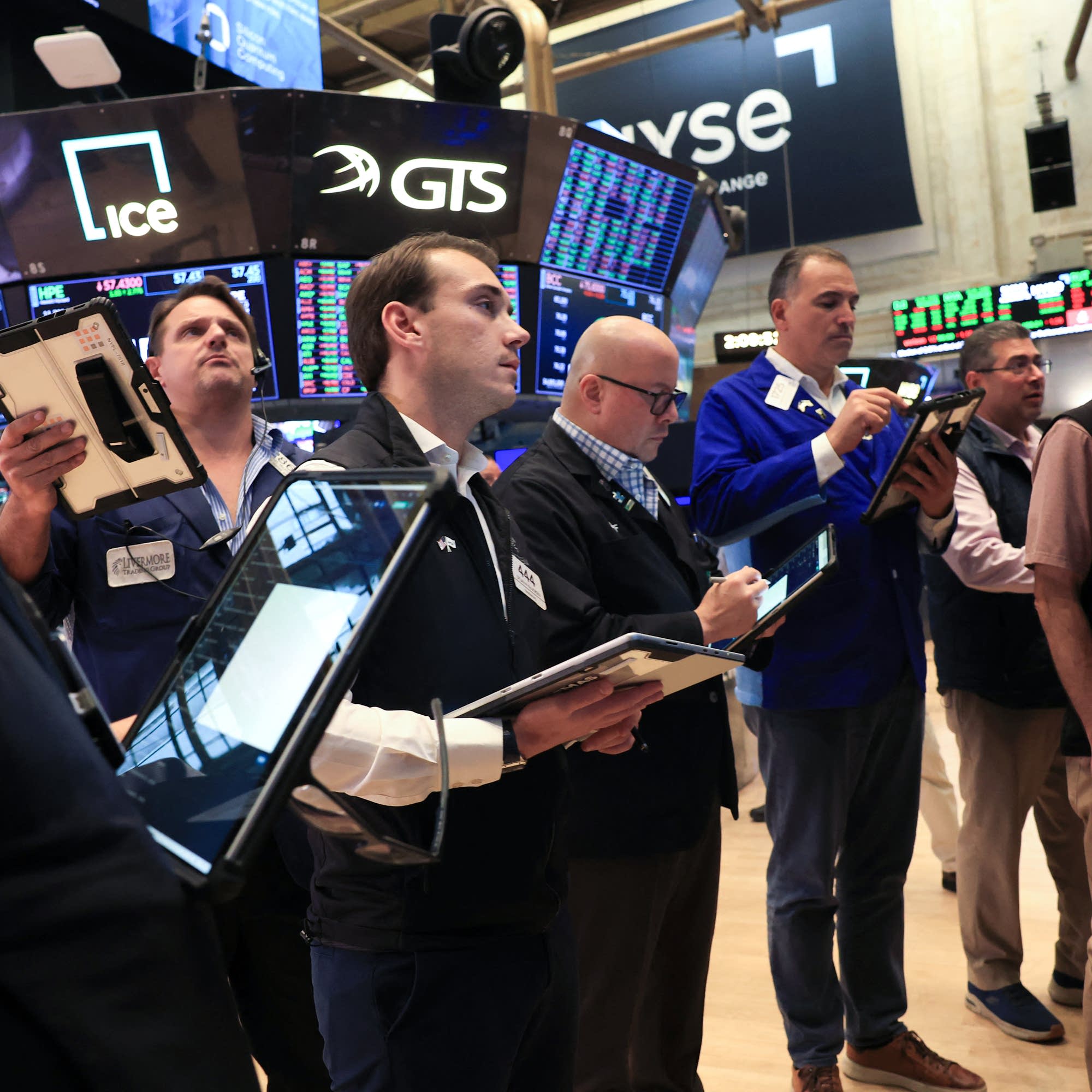
From American public media, this is Marketplace. In Los Angeles, I'm Kai Rizdal. It is Thursday. Today, this one is the first of October and you can believe it. Good as always, to have you along, everybody. You know, there's a developing truth in this economy that money is going to be much more expensive than we have been used to for much longer than we are ready for. As evidence, I refer you to, and yes, I know, the bond market, yet again, yields on long-term government debt while a hair softer today have been high and rising for weeks now with no real relief in sight. We call Tarrison Claire. She's the chair of the economics department at George Washington University out on the road. I'm in Nashville, which means that the hotel lobby is incredibly loud, and so we are very happy we got a room.
As are we. Those higher yields mean money is more expensive, not just for the government, but for anybody trying to borrow. Which means that if you want to get a mortgage, it's going to be more expensive. If you want to have credit card debt, it's going to be more expensive. If you're a business and you want to have a business loan, it's going to be more expensive. The way it works, we all know this when something gets more expensive. You don't have to be an economist to understand that people are going to use less of it. So if your purchases are going to be made from buying a house, swiping your credit card, and that is going to slow economic growth. Now, as bond yields and interest rates go higher, there isn't some specific number that's going to immediately destroy the economy. All right, that's good. There are these moments, like hitting 5%, where the markets look around and say, is this a good use of our money? Or should we be looking for higher returns elsewhere and stop being so interested in buying government debt? Well, that sounds bad. And that's the really scary point, because if people start looking at government debt and don't think of it any longer,
as something that's risk-free, then the cost will go up even more. The 10-year treasure note today, the yield on it, 5.23%, slightly, as I said, lower at the close, did hit a quarter-century high at one point during the session. Equities just kind of tread and water. We will have the details when we do the numbers. One of the things we do around here, so you all don't have to, is dig deep into the data to try to get a sense of the bigger picture. The data in question today is the personal consumption expenditures index that we got yesterday,
3% year on year. That's the core inflation number. And as it turns out, it was a bit of a surprise, lower than people had been guessing. Marketplace is crisp and Schwab has more. This inflation report kind of feels like when you're on a flight that lands early, but you sit on the runway for forever because there's no gate. So your arrival time ends up being the same anyways, like, yay? You can look at these numbers from a lot of different angles, and sometimes they look prettier than they do from other angles. But in the end, it's all a wash. Says Stephanie Keltin, an economist at Stony Brook University. Either way, you got a three on the other side of a decimal point. 3.4% and Gary Schlossberg, global strategist at Wells Fargo Investment Institute, says that number was lower than it would have been otherwise. Because in August, the Bureau of Labor Statistics changed the way some categories, like computer software and investment services, are calculated. Now, that was going to have the effect of lowering inflation by a couple of tens of a percent.
It means by previous standards, inflation would have measured higher around 3.6 or 3.7%. Omer Sharif, president of inflation insights, says, really, it's not the big number that worries him most. It's the little ones that make up PCE from housing to health care. So more than half the basket is rising at inflation rate of 3% or higher. Numbers that he says aren't likely to fall, even if the war with Iran ends tomorrow. We've had this set of rolling shocks for six years at a boosted inflation to well above target. There's nothing to say there won't be another shock coming in the next six months. The economists I talked to today and the markets are betting the fed will pause rates this month and hike rates in December. And Sharif, I personally think that they are maybe going to hike one more time in Q1. Inflation tends to go up at the beginning of the year because companies usually raise prices
after the holidays. I'm Kristen Schwab for Marketplace. A couple of weeks back, the secretary of the Treasury has got peasant. Did an event at Southern Methodist University where he got a question about the national debt, which as you have almost certainly heard, now tops $40 trillion. We don't have a revenue problem, we have a spending problem. So we've tried to contain the spending and then with 3% growth, we grow away out of this. Bessent has said a version of that before but is it true? I mean, how much growth would it take when you are talking $40 trillion? Ben Steele is the senior fellow at the Council on Foreign Relations where he took up exactly
that question in a recent article. Ben, welcome to the program. Thank you for having me, Kai. For the late person, what was the Treasury Secretary talking about when he said we could grow our way out of this? Well, the Treasury Secretary was responding to all the turmoil in the bond markets. And of course, there's been growing concern that the bond market volatility has been driven by concerns about rising US debt. And the Treasury Secretary's point was that debt doesn't need to be a problem. If we could achieve consistent 3% growth domestic product GDP growth, we can afford to support more debt. All right, so let's dig in a little bit to sort of the math behind this at again, a very sort of lay person's level. First of all, consistently growing at 3% is not something the federal government and the US economy has done in the recent past. That's problem number one. No, that is indeed problem number one. If you go back to the year 2000, we only hit the 3%
growth mark in five calendar years. So that's one fifth of the years. So it would be a pretty impressive thing if the United States were able consistently going forward to achieve 3% growth. A word here about the elephant in the room, which is fiscal policy. We talk about monetary policy interest rates on this program all the time. Fiscal policy gets less attention, I suppose, because Congress and the president never do anything about it. And I guess the question to you is, that's the solution here, right? Fiscal policy? Yeah, well, the United States unfortunately doesn't really have a fiscal policy. It just has fiscal outcomes. We spend money. We raise money in the form of taxes. And at the end of each year, we tabulate up how far short we fell in terms of raising the revenue we need to cover our spending. And so we just mechanically issue debt, that is
treasury bonds to fund the growing federal debt. I imagine you spend a decent amount of time on the Asella going back and forth between New York and Washington. And I guess the question is, when you go down to Washington and wander the halls of Congress or the think tanks or whatever, I mean, is anybody thinking about this or are they just fingers in their ear going, la la la la? No, they are. I speak to, for example, congressional staffers, Democrats, Republicans. And you can put those folks in a room together and have a pretty rational discussion about these issues. When you get into the higher ranks of government, that is the White House, the House and Senate leadership, then politics really does take over. All right, so look, you're a trained observer of this. What do you think happens? I mean, give me like the 10 year outlook here. You know the old joke guy about asking the old Irishman
for the road to Dublin. He says, if I were you, I wouldn't start from here. I didn't know that. That's a good one. Anyway, go ahead. I wouldn't start from here. I mean, we had opportunities in the past to do something about this. You may remember the old Simpson-Bolls commission under President Obama. I do really think we dropped the ball there with bond prices falling now. That is the price of that we Americans have to pay to issue debt, rising, it's becoming more urgent. Growth is indeed a very important component in a package of measures we need in order to lower our debt burden. But we're also going to need spending cuts and we're going to need revenue increases. So we should start having a rational debate about what the composition of those spending cuts and revenue
raising measures should be. Ben Steele is at the Council on Foreign Relations, whereas the senior fellow also director of International Economics. Ben, thanks for your time. I appreciate it. Thanks for having me, Kai. Business in the Rio Grande Valley, way down to South Texas, is booming. SpaceX has a huge base there and two big liquefied natural gas plants are drawing people from far and wide. People, though, need housing and residential construction. The workforce for which in Texas is about 25 percent undocumented workers is being throttled because of the Trump administration's immigration crackdown. Marketplaces Elizabeth Trouville has that story. Brand new modular duplexes line this growing neighborhood with pristine lawns here in the
Harling, Jn area near the southern tip of Texas. Though there's still plenty of work to do and not enough workers. You'll see that the framing crew that's there now is very slim. But normally it's about 8 to 10 guys. That's Ronnie Cavasos, who is building this neighborhood with his firm, the structure team. He shows me a cement slab. We're just a few framers are working today. They'll make a skeleton for the home out of lumber. It requires a lot of math, a lot of measuring. It's a tough job, especially in the in the type of the weather that we're in. You know, the valley will see a hundred and eight hundred and ten degree weather. Cavasos has struggled to find qualified labor to do the job in Texas undocumented workers represent roughly a quarter of the construction labor force. Now ice raids have been out the workforce. Some people have been deported. Others, including some who may have legal status, aren't working because they fear immigration
enforcement. We go down a list of 30 framers that I'm not joking you like 30 framers just to find one. And he's probably charging more than what we originally had budgeted. He says construction on this phase will likely take 18 months instead of 12. He's also built $15,000 worth of fences around the construction sites to make it harder for ice to arrest workers. We've had to file extensions on the loans that we have for the project in order to be able to continue getting that project funded. At this point, I'll venture to say that in 2026, we probably are not going to make any money. Work site raids and immigrant arrests are happening while the construction industry continues to face a major worker deficit. Ed Brady is with the Home Builders Institute. Department of Labor would tell you on a monthly basis anywhere from in the last three years 250,000 to 450,000 empty jobs, vacant jobs in the building construction industry.
So however you look at that at the low level, it's still a crisis. According to one industry estimate, some 19,000 fewer houses were built in 2024 in the US because of the ongoing labor deficit. But now he says immigration policy is working against the industry. With immigrants being 30% of our of our trades, we're losing many more than we're bringing into the industry right now. And those workers have families that depend on that income. Like Brianna, who I meet at her small apartment in South Texas. She tells me how her husband was arrested and deported by immigration on his way to work at a construction site the summer. Brianna is a US citizen but because of her husband's ongoing immigration case, we're using a different name. Since her husband was deported to Mexico, her household is bringing in $2,000 fewer dollars each month.
Even though she works seven days a week, it's hard to make ends meet. It's been very difficult emotionally and economically for her and her three kids, she says. Her husband, who she was sponsoring for Avisa, has worked in construction his whole life. He learned it from his dad, just like Ronnie Cavasis. His dad was a framer from Mexico. That's who got him into construction. And now he wonders about the future of the industry. We got rid of all the knowledge and we got rid of all the workers and now what? Without the experienced framers and other workers, how do you build homes, businesses and an economy? In the Rio Grande Valley, I'm Elizabeth Crovall from Marketplace.
Coming up. Four hours to 48 hours of training. That's either not enough or, yeah, no, it's not enough. First though, let's do the numbers. Down industrial is up 20 points today, not even a 10th percent, 50,926. Nasdaq at 10 points also, not even a 10th percent, 26,871. S&P 500 picked up 14 points. That is 2.10th percent there. And it thinks at 76,66. Constellation energy assigned to 20-year deal with Amazon, to supply electricity. Deal is going to help the power company expand a nuclear plant in Maryland and spend around $3 billion on infrastructure, constellation powered up 1.9.10 percent on the day. Amazon take down a little bit over a third of 1 percent. Seasonings maker, McCormick and Calvary beat estimates for the quarter. People's budgets may be stretched, I guess, but they still want their sauces and their spices.
McCormick dipped. Get it dipped. Four and 9.10th of 1 percent. You're listening to Marketplace. This is Marketplace. I'm Kai Rizdal. Data about the American labor market comes in many different flavors. We have gotten a variety so far this week. The September jobs report will be upon us tomorrow morning. Today, though, it's employment of the seasonal variety. Challenger, Greg Christmas, said in its regular update this morning that the hiring outlook for the rest of the year is cautious. Marketplace to Samantha Fields is on the holiday jobs beat. If it seems early to be thinking about holiday hiring, Cory Staley, and indeed hiring labs, says it's really not. We do start seeing employers ramping up seasonal hiring in August and in September. According to Postings on Indeed, he says August was a strong month for seasonal jobs. But what's interesting is we moved into September and it kind of came down more in line with what we
saw in 2025. And he says the number of people who are looking for seasonal work is rising. We're seeing that very clearly over the last two or three years, the number of job seekers looking for these types of jobs have continued to grow. But the job posting is the best to remain within a range around the previous year. It's still early to know how this holiday season will go. But David Swartz at Morningstar says there are some early indications that hiring in retail might be slower. Retailers are operating more efficiently than the used to and using more technology. And so they are operating their stores on a full-time basis with fewer people. And that would also include the holiday period when they'd hire fewer temporary workers than they had in past years too. This year, they're also acutely aware of the financial stress so many people are feeling. I think there's a lot of concern about gas prices affecting consumer spending and how that may affect the holiday season as well as general inflation. And Swartz says that's likely part of why fewer retailers have announced big holiday hiring
plans so far. Their expectations are low for this year. But that's also been the case for the last couple of years and the holiday sales turn out to be stronger than expected. He says some retailers may be holding off on hiring for now and waiting to see if it looks like that's happening again. I'm Samantha Fields from Marketplace. If you were to count the number of private security guards that you see as you're just going to buy your business every day at mall entrances, churches and synagogues, even schools may be, it would almost certainly be more than you would have guessed because there is more private security in this country than there are police and sheriff's deputies. And it is a very randomly regulated and very loosely trained workforce. Curtis Lee wrote about it in the New York Times
walking to the program. Good to have you on. Thanks for having me. How did we get to a place where there are more security guards than our police officers and sheriff's deputies in this country? That's a good question. Private security guards are outside. We see them all over outside of strip malls, construction sites, the lobbies of office buildings. These are workers that really don't earn that much money. A recent report from the UC Berkeley Labor Center found that on average security guards normally earn a little less than $19 an hour. So yeah, I mean, it is a striking number to see that there are more security guards in this country than there are police and sheriff's patrol officers. It does sort of seem like it's a demand thing, right? There is an event for these services. Police and sheriff's departments simply aren't funded or equipped to do it, but people want it. Absolutely. I mean, this is an necessity and this is an necessity and more and more for houses of worship, you know, synagogues and mosques and a lot of people feel the need to have
security guards as that for my protection. Let's run down the sort of the labor market demographics of this thing. These private securities guards are you right overwhelmingly male. They are majority people of color and most of them, almost all of them I think you say, don't have a backseater's degree. That's correct. I mean, that's a big part of what this UC Berkeley report found. These are individuals that don't necessarily get into police forces, but want to serve and protect and that's where they find these jobs as security officers. And more and more in recent years, we've seen unions jumping into unionized security guards and also basically supporting security guards and looking to help boost pay and training. Can we talk about that training for just a second? There are no federal standards for private security guards? Correct. Yeah, there are no federal standards. It's mostly realized it's given to the states to set those
standards. Some states don't have any training really for security guards and other states have between four hours to 48 hours of training. It really is a patchwork effect in terms of the training that security officers have, security guards have. It is you write a $50 billion industry and growing. And yet, as you said a minute ago, most of these guys, because they are mostly guys, as we talked about, they're making like $19 an hour. Of course. Yeah, they're making less than $19 an hour. And recently, we've seen local jurisdictions jump into the fray and look to pay minimums for security guards in New York City earlier this year. Local elected officials passed an ordinance that set pay minimums for security guards. And then here in California, where I'm based on based in Los Angeles, the state legislature looks to possibly pass a bill this year that would have set pay minimums for security guards. But at the last minute, in Sacramento,
the legislature will strip to pay standards because there was strong pushback from the business community in terms of costs. So that was stripped out of the bill at the last minute. One of the magicians, just given, I mean, you know, read the headlines, one of the magicians that the demand about which we spoke at the beginning of this interview is only going to increase. Yeah, absolutely. The demand is definitely going to increase as, you know, more and more, threats of violence happen in public life. I mean, whether these are at schools, at churches, you know, more and more, there's going to be a need for security and security guards to be on the front lines of protection in public places. Curtis Lee writes for The New York Times. Curtis, thanks a bunch. I appreciate it. Thanks for having me, guy. The final note on the way out today in which yes, bond yields now are high. But as Tarrison
Claire reminded us from that hotel in Nashville, we've been here before. Well, I mean, it's actually the old normal. We used to have much higher bond yields in the past. And so that is one perspective on this is that we are just returning back to the previous world and that actually, particularly the period from 2007 to 2020 or a little bit beyond that because of the pandemic was really the weird time. And now we're returning to a longer run pattern. Of course, that was before we were 40 trillion dollars in the whole right? Our daily production team includes Andy Corbin, Mick Allison, Maria Hollenhorst, Sarah Leeson, Sean McHenry, and Sophia Torensio. Well, story is the supervising senior producer and I'm Kai Rizdal Wee-Wills. See you tomorrow, everybody.
This is APM. I'm Lee Hawkins, host of Must Be the Money, a podcast for Marketplace. Each week, I speak with inspiring entrepreneurs and business leaders about their lived experiences and they share tangible insights to help guide your path to success. Here from icons like Angelica Nwandu, Van Lathan, Angel Ayee, Matt Barnes, and more about how to seize opportunity, manage money, and meet challenges with resilience. Listen to Must Be the Money wherever you get your podcasts.
More episodes
More from Marketplace

OpenAI is staying private (for now)
Marketplace

Consumer confidence slides to 12-year low
Marketplace

Nvidia's record-breaking stock buyback
Marketplace

High interest rates could balloon the national debt
Marketplace