Get every episode summarized
Each time Marketplace publishes, we email you a written briefing from the transcript — the topics, who appeared, and any specific claims, with the ad reads skipped.
Email me new episodesFree for 3 shows. No card needed.
About this episode
“Running a business is hard enough, so why make it harder with a dozen different apps that don't talk to each other? The only business software you'll ever need. It's an all-to-one, fully integrated platform that makes your work easier.”From the transcript
Consumer confidence fell to a 12-year low in September, according to The Conference Board. The index has been trending down for a couple years, but this latest decline was steep. One reason? Upper-middle class respondents are starting to feel the pressure, too. Also in this episode: The economic forces behind GDP growth might run out of steam soon, the low-hire low-fire labor market marches on, and high diesel prices keep some Gulf shrimpers on dry land.
Every story has an economic angle. Want some in your inbox? Subscribe to our daily or weekly newsletter.
Marketplace is more than a radio show. Check out our original reporting and financial literacy content at marketplace.org — and consider making an investment in our future.
Read the stories in today’s episode:
- How long can the economy keep growing?
- The latest JOLTS survey shows more of the same low-hire, low-fire economy
- Consumer confidence falls to its lowest level in 12 years, survey shows
- The price tag might be an endangered species
- High diesel prices force some Gulf shrimpers to stay docked
- New career path, new baby, no problem
Get every episode summarized
Each time Marketplace publishes, we email you a written briefing from the transcript — the topics, who appeared, and any specific claims, with the ad reads skipped.
Email me new episodesFree for 3 shows. No card needed.
Hosts & guests

Transcript ready
290 searchable segments. Every word is indexed and playable.
Full transcript
Marketplace — Consumer confidence slides to 12-year low. Machine-transcribed; use the interactive transcript above to jump the player to any line.
Running a business is hard enough, so why make it harder with a dozen different apps that don't talk to each other? Introducing ODO. The only business software you'll ever need. It's an all-to-one, fully integrated platform that makes your work easier. From CRM, accounting, inventory, e-commerce, and more. And the best part, ODO replaces multiple expensive platforms for a fraction of the cost. This is why over thousands of businesses have made the switch. So why not you? Try ODO for free at odu.com. That's odu.com. If not jobs, and if not bonds, then what? From American public media. This is Marketplace. In Los Angeles, I'm Kyle Rizdal. It is Tuesday, today, 29 September. Good as it always is. To have you along, everybody.
I know, I know, I said yesterday, the big through line this week was the labor market. Well, that and bonds, but we are going to give bonds a break today. And we are going to get to the labor market, but we are going to start instead with a different a-list economic indicator, gross domestic product. Tomorrow morning, the Bureau of Economic Analysis is going to tell us how much the economy grew in the second quarter. This will be the Bureau's third and final estimate of that number. It already reported the economy grew at an annualized rate of 1.5 percent April through June. So we are just going to get ahead of the news and have a look at what we know about how much the economy is growing right now. Marketplace adjustment, how it gets is going. GDP is a measure of how much output the economy is producing, and the BEA tallies it by looking at who's buying all that output. So is it consumers? You got consumer spending? Is it businesses doing investments? That's investment spending. That's David Kelly with JP Morgan asset management. GDP also includes government spending and net exports.
But Kelly says the first part of that list, consumer spending has been resilient lately. Partly because of the bigger tax refunds people got this year. And then there's also just this wealth effect. We're just coming up in the fourth year anniversary of a massive bull market in stocks. And that has generated a lot of wealth making for a very resilient consumer. Then there's investment spending. Bernard Yero with Oxford Economics says businesses have been investing a lot in inventories. When you look at a lot of the survey data, businesses are saying that their inventories are quite low, which means that they need to restock. Yero says there's also been plenty of investment in AI, spending on data centers and all of the equipment that goes into them. But he says a lot of that spending is boosting GDP more in Taiwan and Korea and other countries that make that equipment. I just think we have to be careful not to overstate the benefits to growth in the economy because a lot of the AI spending by businesses is imported from abroad.
A lot of the factors that are powering growth right now also might not last. Matthew Miskin with Manu Life John Hancock investment says consumers might not keep spending the way they have been. The tax cuts are going to be hard to replicate. Consumers are dealing with higher oil prices and higher mortgage rates at the same time. And consumer spending depends on a strong labor market. Miskin says for GDP to keep growing at a steady pace. I think you need to see broadening the job gains. I think you need people that are moving up the job corporate ladder. I think that's really hard right now still. Miskin says he expects GDP to pick up in the third quarter and slow down in the fourth. I'm Justin Howe from Marketplace. Okay, as promised and as the end of Justin's piece they're sort of alluded to, the labor market about which we got the first of the week's big reports this morning. The job openings and labor turnover survey say with me now, Joltz, it was pretty steady, low higher, low fire if you will. The number of people hired last month was up just to touch.
The number of people who quit their jobs or were laid off was pretty much flat. Marketplace's Stephanie Hughes has more. There are optimistic words to describe hiring right now, like stable and more pessimistic ones like stock. Economist Leah Brooks' description is somewhere in the middle. I characterise it as meh. Brooks, who's with George Washington University, says the reason hiring isn't budging is that businesses are afraid to budge. I think if I'm a business, I want to hire somebody new if somebody leaves or if I have the expectation of being able to sell more. But people aren't really leaving their jobs right now. And before businesses amp up to sell more, they want to be certain there's going to be demand. And I don't think there's a lot of certainty in the US market right now. You can blame the usual suspects for that. tariffs, geopolitical uncertainty, whatever happens with AI. Now there's a new factor. The Fed just raised interest rates for the first time in three years. Zippercrooter Labor Economist Nicole Bischo points out more are expected.
As we see these employers facing these higher rates, that makes it more difficult to borrow capital to expand their business and to hire more people. Which is leaving job seekers in the lurch. Unemployment is becoming a lot more of a sticky issue in this market, meaning if you find yourself unemployed, it might take six plus months to find something. Another complicating factor says George Washington's Lear Brooks. Interest rates on government debt are pretty high right now. So investors might be more inclined to put their money into low risk government bonds than lend it to a higher risk new business. And it just sucks money out of the productive private investment part of the economy. Which means less money for businesses who are then more likely to feel MEEE about hiring. I'm Stephanie Hughes for Aicaplace. Wall Street on this Tuesday, I know I said we were given bonds of break, but do not sleep on those rising yields. Equity traders were kind of blot day, we will have the details when we do the numbers.
Here's one from the marketplace desk of Lather Rinse repeat. We got fresh data today on how consumers are feeling. And as we have been telling you all summer, we ain't feeling great. The conference board shows consumers who are the best in the world. And we have the most important thing to do. We've got a lot of money to pay off. We're going to have to pay off the debt. We're going to have to pay off the debt. As we have been telling you all summer, we ain't feeling great. The conference board shows consumer confidence fell in September. Fell again, I should say, to the lowest level in more than 12 years. Consumers are less optimistic across the board about the current economy and the future economy and household finances and the labor market. Marketplace E. Kelly Wells has more on how all those worsening vibes could affect actual behavior. As any economist will tell you, Yelena Shuletyevo with the conference board says one month of data could be an anomaly and should be taken with a grain of salt.
But the problem is that it's not just one month of data. Confidence has been trending downward for years. This month it just fell more sharply. Consumers are really worried that they are planning to spend less, particularly on discretionary items. Consumers have been saying they plan to spend less for a while. And yet, spending remains defiantly resilient. Jonathan Ernest is an economics professor at Case Western Reserve University. He says that continued spending is less good than it sounds. We've seen savings rates drop where people aren't putting away as much for future rainy days. They're kind of treating this like the rainy day. Ernest says that's because the cost of necessities keeps going up. We're spending more on gas and food, not because we can, but because we have to eat and get to work. You know, I have young kids who I'm, you know, paying for schooling and care. And I'm also buying lots of groceries and chicken nuggets and things like that. Then there's the new trend that economics professor Paul Shea of Bates College says raises some eyebrows.
The upper middle class or household incomes in the $125 to $150,000 range. So the sharpest decline in confidence. So far, the deterioration and consumer confidence has been concentrated among low to middle income households. Which is why consumer spending has stayed resilient. Spending from wealthier families has masked cuts from lower income families. And so if this is a sign that the higher income households who account for more of the consumption, of course, are starting to lose a little bit of faith, that could be a real red flag going forward. Shea says he's waiting to see whether the jobs market data on Friday spells more bad news before he gets too worried. I'm Kayleigh Wells from Marketplace. Kristen Schwab did a story for us back in January about what you've domestically come to be called personalized pricing.
She and her husband stood on the same street corner, opened their Uber apps at the same time, asked for the exact same ride for which Kristen was charged a buck more than her husband was. A buck is just a buck and of course you do have to take the cheaper ride. But you extrapolate that experience across the trillions of transactions that happen across this economy and pretty soon you are talking real money. It's also a really good if disconcerting example of how companies are leveraging what they know about us to set individually specific prices. That gets me to a book out today from Lindsay Owen. She's the president and the CEO of the Groundwork Collaborative. That's a progressive think tank. And the title of her book is gouged the end of a fair price and what it means for your wallet. Lindsay, it's good to have you on. Thanks so much for having me, Kay. Can we get to the subtitle of this book first, the idea of a fair price? What does that actually mean? Because I always thought a fair price was what you were willing to pay. I think a fair price is a posted price. A fair price is a predictable price.
And a fair price is a price that is set based on the product and not you the consumer. And therein is the crux of this book, right? Because what is happening as you point out is that companies are increasingly using the data that they have on us, all kinds of data to change the prices, basically, depending on who you are. Yeah, it's very retro. Thousands of years ago, we went to the suke and the merchant set a price based on what he thought we might be willing to fork over. If we had a nice tunic on, we probably paid a little more, but about 150 years ago in this country, we dispensed with haggling. It was the Quakers who said, the Puritans are kind of greedy. I don't really like what they're up to. And then it was John Wattemaker and Philadelphia, Pennsylvania, who said, you know, I'm going to stick a price tag on my items in my store, but both because he was inspired by this. But he was a businessman and it's a little time consuming to haggle for every item in your cart.
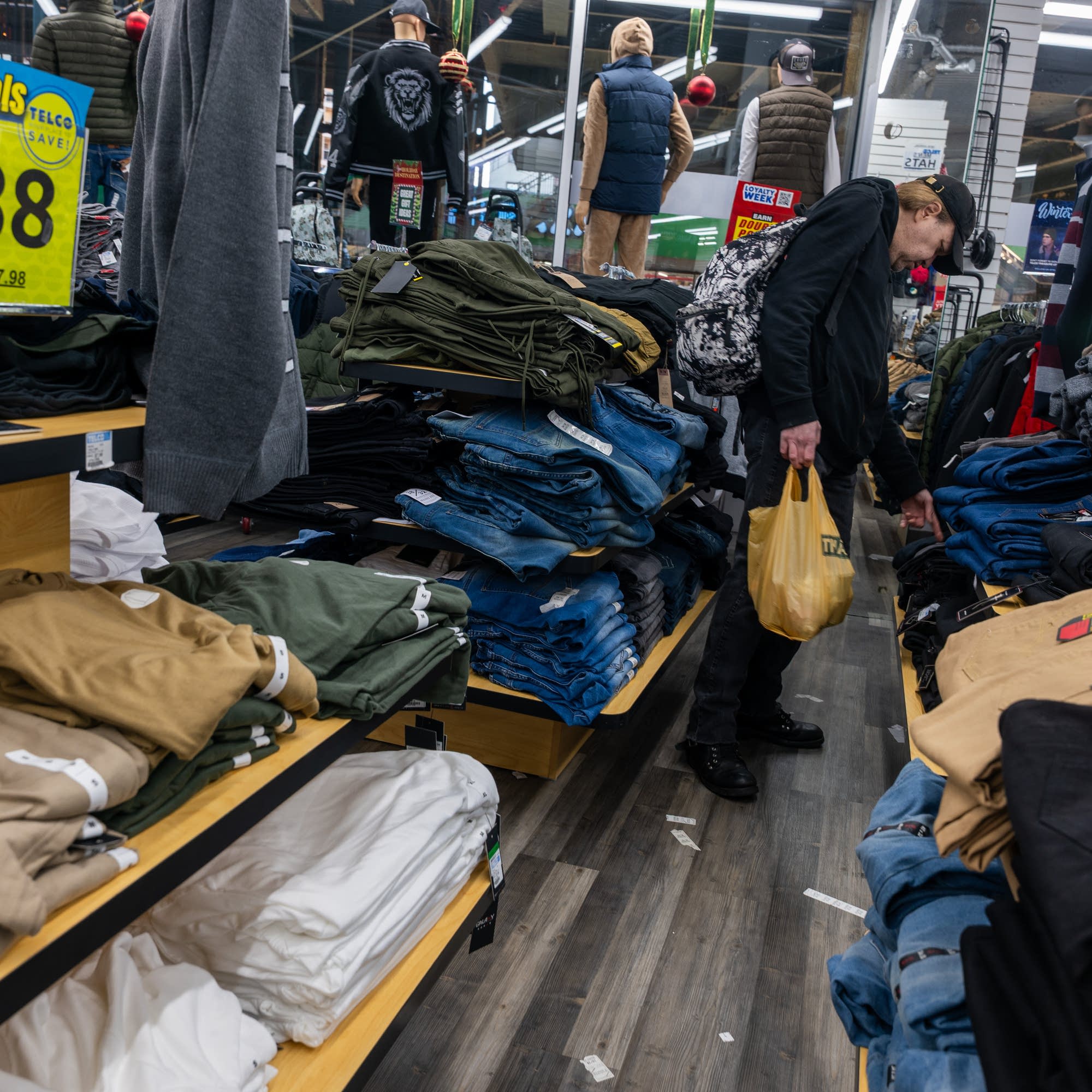
But right now, I think the price tag is a bit of an endangered species. And companies are now increasingly collecting data on us to get a better sense of how much they think they can get away with charging us as individuals. You all did an experiment. You and consumer reports, I guess, did an experiment involving Instacart. Tell us about that. Yeah, groundwork teamed up with more perfect union and consumer reports. And we ran an experiment that exposed a massive experiment that Instacart was running on millions of Americans while they shopped for groceries. We recruited 400 secret shoppers, pick the same pickup location, a Safeway grocery store in Seattle, Washington, pick up the same basket of groceries for about 75% of items in that basket of groceries. Different people in the experiment were offering different prices across all of the baskets in the study, about a 7% variation.
So we took Instacart's own estimate of how much a household of four spends on groceries in a year and calculated that it could be as much as $1200. The result of this sort of Instacart experiment tax for shoppers. Okay, so look, on the face of it and speaking as a consumer, that's outrageous. But speaking as a person who runs a business or a large company, why is that bad? Yeah, there were definitely critics of the study who said, look, there's nothing to see here. This is classic AB testing. But I don't think most Americans when they shopped for groceries realize that they are guinea pigs so that the company can calibrate exactly how much they can get away with charging you. I think this is ultimately why within two weeks of releasing our study, Instacart reversed course, effectively promising to shut down the lab.
But this was a big part of Instacart's business model. They acquired the AI pricing giant ever site in 2021 and ever site promise to help companies run these pricing experiments without consumers knowledge. This was a big part of what they sold retailers. When you lensiones are out in this economy as a consumer, what do you do to keep yourself on guard as it were? Because it's got to be exhausting. Yeah, I mean, I run a think tank, but I'm also a shopper. I'm also a consumer. I'm the mom of a toddler. I'm tired. I don't want to spend my evenings comparison shopping online. The truth is, from the bottom of my heart, I do not believe it should be every consumer's job to duck and dodge and bob and weave. The budget shopper is the mechanism by which prices are disciplined and this economy. And when the budget shopper can't do their work because they can't comparison shop or because they're being picked off by a company who knows they need a good deal.
That undermines healthy competition in the market writ large. It's a book called Gouged by Lindy Owens. She runs the Groundwork Collaborative in Washington. Lindsay, thanks a bunch. I appreciate your time. Thanks so much for having me. Upbeat music Coming up. everything hit us at once. When it rains it does kind of pour you know first though let's do the numbers. Down dust goes down 131 points that's a quarter percent 51,349. The Nasdaq down 22 points that's about a 10th percent 26,0797 S&P 500 gave back 12 points about 210s percent 76 and 70. Whether in consumer
confidence has not stopped some of us from spending money on travel. Cruise operator Carnival raised its annual forecast today saying 2020-27 is already half booked. 2028 bookings off to a quote excellent start shares in Carnival Corporation up 13 and 410s percent on the day. Royal Caribbean up 7 and 410s percent on the front page of the New York Times 110 years ago John D. Rockefeller Standard Oil. It's crowned billionaire the world's first in fact five years after the government took part his monopoly. Parts of Standard Oil eventually became Exxon Mobile and Chevron Exxon Mobile down 7-10s percent on the day Chevron gave up 9-10s of 1 percent. Bond prices went down when that happens the yield goes up the yield on the 10-year treasury note rose to 5.24 percent the 30 year at 5.566 percent. You listening to Marketplace. When you're at work you never know when you'll be interrupted but with the Dell Pro powered by Intel Core Ultra with V Pro no matter what distracts you
your laptop won't. It's battery optimized for the way you work with built-in intelligence that quiets distractions when you need to focus your laptop will help keep you locked in even when it's bring your dog to work day. Built for those who stand the flow the Dell Pro built for you Dell.com slash Dell dash pro. This is Marketplace I'm Kaer Rizdal. It's more likely than not that when you head toward the back of your local Piggly Wiggly toward the freezers and you're reaching to grab a bag of shrimp it's odds on that you're not thinking A about where that shrimp comes from and B and related what that says about the state of the Gulf Coast stripping industry. Oh also and not for nothing. Throw the price of a gallon of diesel into your considerations too. Marketplace's Elizabeth Treval has our story. A large white and blue fishing boat is docked here at the Brownsville fishing harbor on the Gulf where Texas meets Mexico.
But local fishermen aren't preparing to go fish they're just sitting around. I ask one of them. Juan Mendez. Why? Shroom prices are low he says while diesel prices are high. It's just not profitable to take the boat out to fish shrimp that are only going for four dollars or so a pound he tells me. So I ask how many times he's been out fishing so far this season. Just one time he says Mendez lives in Nicaragua but trims here on Avisa he's done it for nearly a decade but now he says Shroompers like him are thinking about going back home there's no money here. Near the docks is Texas Gulf trawling a trimming company here in Brownsville with 14 boats. Most are just sitting around says manager Greg Laundry and the
boats that are out to see. They're working on old fuel because we just can't afford the diesel price. The current diesel price coinciding with the current price of Shroom. He says diesel is the single largest expense to the boat. Filling up once could cost around $85,000 but conditions were tough even before diesel prices went up roughly 70% because of the war in Iran and attacks on Russian refineries. It's a longstanding problem and it's just getting worse. That's Christopher Leese and an economist with the National Oceanic and Atmospheric Administration. He says even though Americans eat a ton of Shroomp, most of it is imported for cheap from abroad. 95% of the Shroomp consumed is imported and the other is you know 5% is local caught. It's a bad year for an industry that's been shrinking. When a crisis hits and fuel prices go up or the Shroomprices collapses then that's when
people actually have to leave the industry right they just can't go in. But third generation Shroompric Hylkimble is still bringing home some catches the season. He's based in Port Arthur where Texas meets Louisiana. I work with my grandfather when I was like five and I can remember picking and driving and everything. He loves it out on the water. He's had his own vessel for about 45 years. He's been able to shrimp some this season because his boat uses less diesel per hour than a lot of other Shroompers. I'm one of the cheapest boats to operate at 11 gallons an hour. But that's still $65 an hour or so for just fuel. High diesel prices only add to his worries about the future of the Gulf Shroomp industry that's shrinking and aging. Young man don't have a chance. His wife, Trisha Kimble with the Port Arthur Area Shroompers Association says it's hard to recruit young people into an industry and decline.
They're just not going to do that if you're making negative money. You know that's not a real enticement. But for now Kyle who's in his 60s is hanging on. For wearing care from 63 home up is really bad. But I don't know it gets in your blood. It's hard to explain that you can't use quick. He loves this job he says diesel and shrimp prices be damned. He's just not ready to give it up. I'm Elizabeth Trollball for Marketplace. Here's a labor market term we haven't heard in a little while. The great resignation back five years ago just after the peak of the pandemic when people were quitting their jobs right and left
confident that there would be something else out there for them. That brings me to today's installment of our series Clockdown. I'm Samantha Rafferty based in Lake Charles, Louisiana at 32 years old. I left my career and decided to go back to school for architecture. You know I worked in project management and with creatives for 10 years and had a pretty good career. I would say I was good at what I did but I wasn't super excited about going to work every day. I was kind of jealous of the creatives that I was managing their projects. There was a six-week period where everything hit us at once. I got accepted to graduate school for architecture. I found out I was pregnant and then I quit the job I had been at for six years.
My husband makes enough to support our household so we're very lucky to be in that situation but adding a baby, daycare and just like the general increase in the cost of living, cost of groceries and everything else. It has made the fact that I'm not earning an income feel a lot more tangible. I do get frustrated sometimes. I want to go out to dinner. I want to take the vacation. I want to feel like we have disposable income again but I have to remind myself that this is all a short-term sacrifice for my future self. I'm also trying to figure out if I want to get a part-time job and go to school. It means it would probably take me longer to finish my degree but I am trying to weigh the pros and cons of that decision.
I am really enjoying school. I'm really enjoying what I'm learning. It's been really validating. I feel like I'm on the right path and that I'm making the right choice right now. Honestly becoming a mom to has made this even more meaningful. I hope it's something she learns from watching me and you don't have to have everything figured out. You don't have to take the easiest path. Sometimes you have to be resilient, make sacrifices and be willing to change direction even if that's scary to build the life that you want. You definitely do not need to have everything figured out. Not at all. Samantha Rafferty, Lake Charles, Louisiana. If you've got a story being out of the labor force or maybe about trying to get back in, tell us about it, would you? Marketplace.org slash clocked out.
This final note on the way out today in which sometimes it really does pay to read the fine print in those corporate regulatory filings. Thropache is planning to go public later this year. I think you knew that. It will be the first of the pure play artificial intelligence companies to do so. It's looking for evaluation somewhere around $2 trillion. I am bearing the lead. Reuters reported this morning that anthropics IPO prospectus, which Reuters says it has seen, warns that it's AI models pose. This is a quote, catastrophic or existential risks to humanity. As always, consult your own financial advisor. I don't know. I think that's quite a thing to say about the technology that you want people to invest in. No? Right? I mean, what do you even say? Anyway, gotta go. Jordan Manjee's an MRRaj, Janet Win, Olga Oksman and Virginia K Smith are the
digital team. I'm Kai Rizdal, we will see you tomorrow, everybody. This is APA. We have a few weeks left in 2026, which means you still have time to lock in and get your finances in order for a better start to 2027. I'm Alice Wilder, a producer on This Is Uncomfortable, and each week this October, we'll tackle one task that will help improve your finances. We'll budget, we'll check credit scores, we'll even do a whole financial audit, and along the way, we'll check in, share our wins, and troubleshoot the tough stuff. That sounds like just what you need. You can join us over on Instagram at This Is Uncomfortable Pod.
More episodes
More from Marketplace

Inflation held steady in August. Yay?
Marketplace

OpenAI is staying private (for now)
Marketplace

Nvidia's record-breaking stock buyback
Marketplace

High interest rates could balloon the national debt
Marketplace