Get every episode summarized
Each time Moncrieff publishes, we email you a written briefing from the transcript — the topics, who appeared, and any specific claims, with the ad reads skipped.
Email me new episodesFree for 3 shows. No card needed.
About this episode
“Monk Reef on News Talk In her latest movie, it's my time, Michelle Yo. Plays a 70 year old woman, Yo was only 64, by the way, who strives to become a Rubik's Cube champion in preparation for the role. Yo apparently spent nearly two years trying to master it.”From the transcript
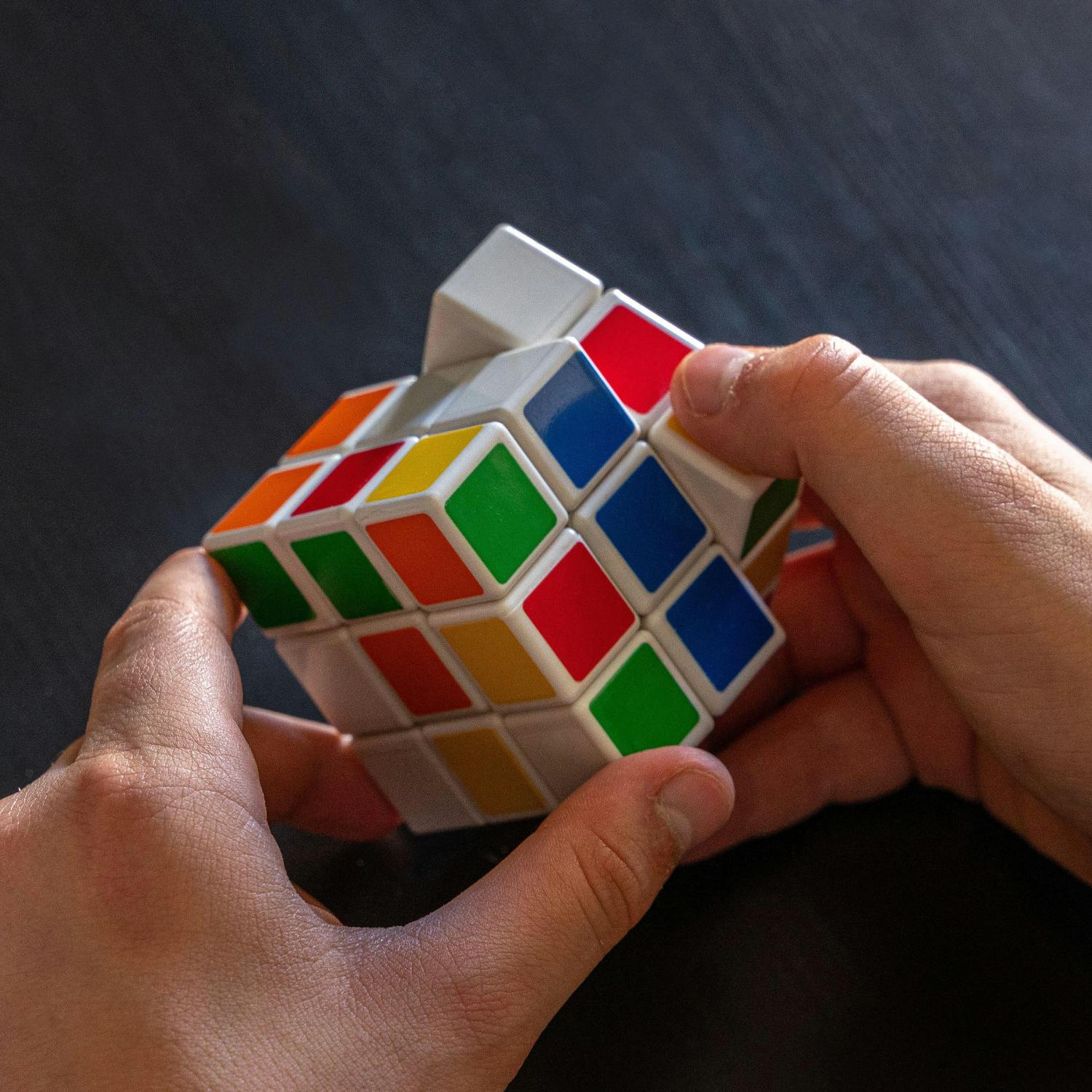
Michelle Yeoh has reportedly spent two years learning the Rubik’s Cube to prepare for a new movie ‘It’s My Time’, where she plays a real-life former maths teacher who became a champion in retirement.
Kevin Timmons, member of Speedcubing Ireland, joins Seán to discuss this, and the world of competitive cubing.
Get every episode summarized
Each time Moncrieff publishes, we email you a written briefing from the transcript — the topics, who appeared, and any specific claims, with the ad reads skipped.
Email me new episodesFree for 3 shows. No card needed.
Hosts & guests
Transcript ready
198 searchable segments. Every word is indexed and playable.
Full transcript
Moncrieff — How does ‘Speedcubing’ work?. Machine-transcribed; use the interactive transcript above to jump the player to any line.
Monk Reef on News Talk In her latest movie, it's my time, Michelle Yo. Plays a 70 year old woman, Yo was only 64, by the way, who strives to become a Rubik's Cube champion in preparation for the role. Yo apparently spent nearly two years trying to master it. So how do you go about doing that? Kevin Timmons is a member of Speedcubing Ireland. Good afternoon, Kevin. Good afternoon, Sean. How are you? Not too bad. So for somebody who maybe has never played or has never tried to master a Rubik's Cube before, how much should you practice in the course of a day to get reasonably proficient at us? I reckon Sean, if you give it a half an hour a day, maybe a half an hour to an hour a day, you'll be able to solve a Rubik's Cube in less than a month. Right. Okay. And is it a thing because can you get the impression some people are naturally gifted at us?
Well, well, you have that in every sport, don't you? Like some people are naturally gifted at football where others have to work hard at it. And it's exactly the same in Cubans. Some people really take to it and they find it easier to learn the different algorithms that you need and the different sets of moves. Whereas other people maybe have to have to work a bit harder. Like I myself have to work a bit harder and maybe I'm not as quick at learning anymore as the younger kids, you know? Yeah. And so when you say algorithms or moves, are there kind of standard things you should do? Yeah, well, there's a few different methods of solving a Rubik's Cube. You have like really advanced methods where the world champions and the elites are at. And then you have a beginner level where I'm not too far from. But the beginner level is the beginner method. It's straightforward enough. There's different different steps you go through and each step will kind of have different sets of moves that will allow you to move different
easts on the Cube. So if I needed to put a corner into place, I know moves that will do that. You know? Okay, so is it best to start to get a corner lined up first? Is there a way? Well, I suppose the most popular method is a C-Fop method. So that's C-F-O-P. So C is for cross. So you'll do a cross on one side of the Cube. Most people will generally do it on the white side when they start off. So you'll do a cross on that side and then you'll get your corners in on the bottom. Say you'll put that cross on the bottom of the Cube. And when you're solving a Cube, think of it in layers rather than sides. So you'll do that bottom layer first. You'll put the cross in place and you'll put all the corners in place. Then you'll move to the middle layer. You'll put the edge pieces in place on the middle layer. After that, you'll move up to the top layer. So you'll do cross and then the first two layers. So that's the bottom layer and the middle layer. Then you move on to the last layer. So O is for you orientate the last layer.
So you get all the pieces turned the same way the same way. And then you permitate the pieces on the top layer. So you'll put them into the right positions then after that. And each step will have a certain algorithm. So an algorithm is a set of moves that will allow you to move certain pieces on the Cube while keeping orders in place. Yeah, that's all it's done. It's taught me is the hard dish. I keep them when you want them. Yeah, look, there's lots of algorithms. In the beginner method, there's quite a small number. But as you get more advanced standards, more algorithms, algorithms to learn. And yeah, faster ways of doing it. But like a totally beginner can after a month, easily solve a rubric cube in two to three minutes. Right. Now, and this Michelle Yo movie is apparently based on a true story. There was a real live 70 year old woman who became a champion at this.
It's being kind of dexterous, you know, having been able to move your fingers freely on your wrists. Is that an important factor in the speed element of it? Well, if you want to be really fast, absolutely. It's an important factor. I even see the difference between my hands and my son's hands. But my hands are working for a long time now. And some of my fingers are a bit bent the wrong way. But I can't do things on the cube that he can do with his fingers. So it's, yeah, if you want to go really fast, yes, you need to be able to move your fingers off, starts the way. If you just want to solve the cube, you don't need to be at the special. You can just turn it whichever way you want. Yeah. And is it a thing then, Kevin, where people are, you know, starting at this when they're still children? Or are do people join as any age? I, well, we speak to you in Ireland, in room competitions all over Ireland. And we have, I'd say up to 90% of our competitors would be under the age of 20.
I'm not excited. There's a small number then, like myself, who are a little bit north of 20. And we, we are competing in the same competition. There's no age groups or anything, but I'd be forwarded out the list now, and so am I a kid? Yeah. But so I bet like some of them can do us in five or six seconds. So it's extraordinary. Even less drunk. Just last again, we had a competition in, where were we last again? We were in Ashburn and County Mead last again. We had a competition up there and DJ Fury broke the national record. He's own national record. So he said a new national record of 4.17 seconds. You can do it. You can do this, though. When I say, well, I have the really top flight ones can do it. You can do it blindfold. Explain how that works. Well, have you guys explained to us? Well, it gives the headlines. So if you imagine every piece on the cube has a letter on it,
and you want to swap two pieces, you'll swap one letter to the other. And just certain, again, that the algorithms, there's certain sets of moves that allow you to move different pieces of the cube. That would be it in a nutshell. Yeah. It's difficult. It's quite difficult, but it's very rewarding when you do it. And imagine. So before you put the blindfold on, are you allowed to look at the cube to memorize where all the different colors are? Yes. So the way it runs in a competition is the cube will be in front of you covered, for the cube cover. And you'll start your timer and uncover the cube. So you have then you get time to inspect the cube as much time as you want. And then you'll put your blindfold on and follow the cube. So the timer starts when you start looking at the cube and finishes then when you put the cube down and stop the timer again yourself. All right. If the Irish record is, you know, four and a bit seconds, what's the word record? Right now it's two point five, one.
And who holds that? Oh, that's a Chinese kid. I'm not sure of his name. There's quite a few Chinese kids now that are absolutely unreal. They're so fast. And I imagine it won't be too much longer. I'm a thief broken again by one of them. And so like internationally, who would be the big Rubik's cube powers? And well, it will start at home. You've got Kieran Bean has been going for years now at the top of the game. And big cube master. And definitely Rose Martin, one gold as the European Championships this past summer. So we brought a European champion back home. We have Jack Kor who is also European silver medalist in the clock event. And internationally then, you have Max Park, I guess, is one of the big ones. Tim and Kononensky is from Poland. Is kind of the top one at the moment.
Yeah. Well, there's lots, there's lots all over the world. And it's, it's, it's such a big community all over the world, but it's so small as well with the way the internet is now. The kids can Ireland can talk to the kids in the UK or talk to the kids in America. Both Cuban. And there's so many like just this card servers there where it can all chat together. And it's a good safe environment. Yeah. The speak human community as a whole is so welcoming and friendly. You know, it's it's in Kevin for a let you go. Couple of people texted in saying, is it a sport? Defend, defend your sport there, Kevin. Why is it sport? I call it a sport. I call it sport. These kids put massive time and into practice. It's maybe you might want to call it a mental sport, but would you call chess sports? Yeah, I don't know. Actually, I think they do call chess sports. I think they do as well. Yeah. Yeah, they learn that it's, they have to put so many hours in practice.
And one of the competes, the competes, like just competitions in Ireland every two weeks. In order, on average, it might be, I think we've a break of three weeks between the next competition. We're in Tarlis and in the middle of Tarlis there. In the presentation sports complex in Tarlis in a few weeks time. You might want to drop in money to one of our competitions yourself. So I'm going to open mid-December for our Christmas competition. That's what you'll be making in appearance. And your morning welcomes come down and see what it's all about. Well, thanks Kevin for the invitation. And thanks for talking to us today. That was Kevin Timman's there, a member of Speedcubing Ireland. Monk Reef, weekdays at two on News Talk. Conversation that counts.
More episodes


