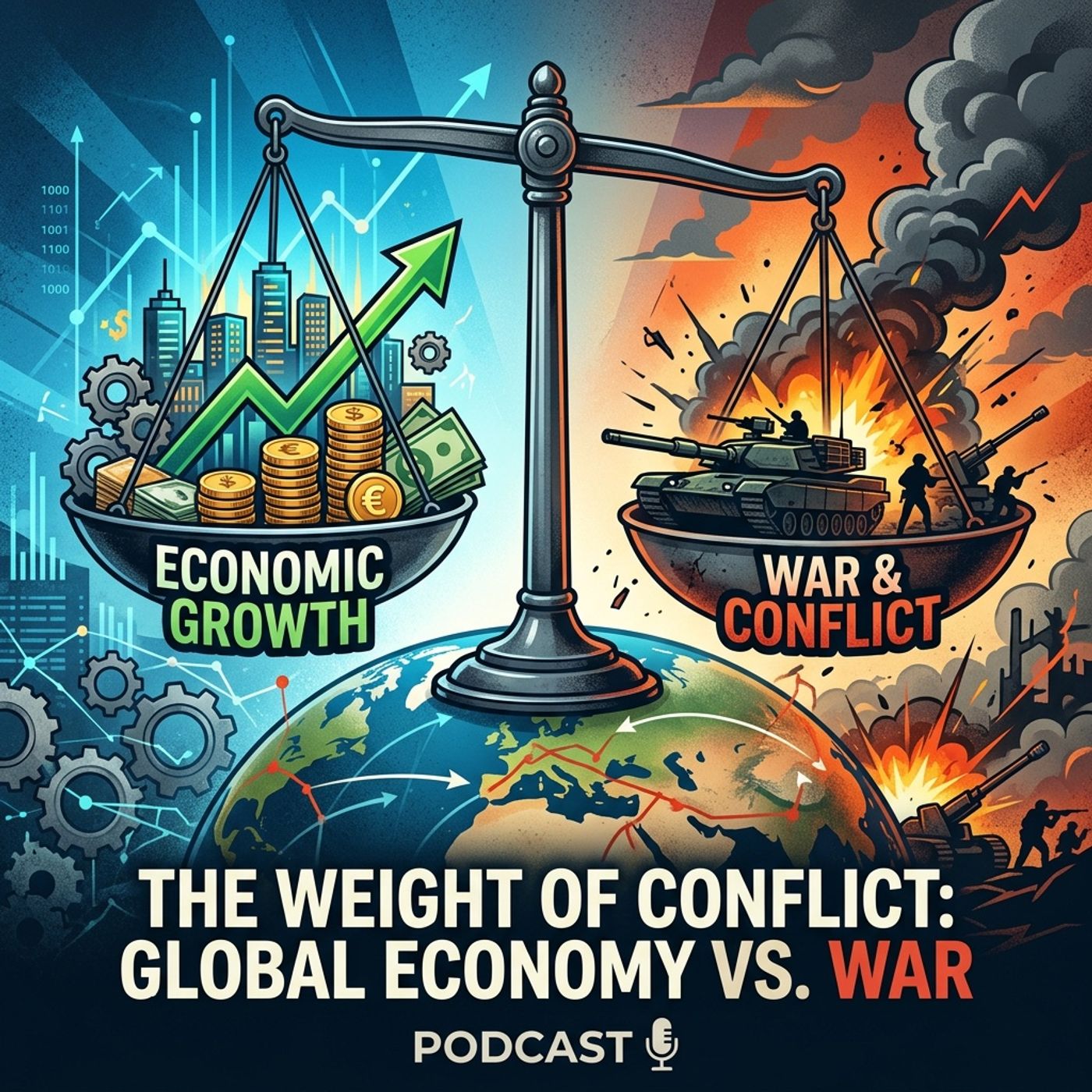
Escalation on the Horizon_ The Iran Conflict and Global Economic Consequences
Get every episode summarized
Each time Conspiracy Theories Exploring The Unseen publishes, we email you a written briefing from the transcript — the topics, who appeared, and any specific claims, with the ad reads skipped.
Email me new episodesFree for 3 shows. No card needed.
About this episode
“Yeah, it's even better with Chamba by my side. The Iran conflict has been simmering for years. But how close are we to a regional escalation that could shake the entire globe?”From the transcript
Become a supporter of this podcast: https://www.spreaker.com/podcast/conspiracy-theories-exploring-the-unseen--5194379/support.
Get every episode summarized
Each time Conspiracy Theories Exploring The Unseen publishes, we email you a written briefing from the transcript — the topics, who appeared, and any specific claims, with the ad reads skipped.
Email me new episodesFree for 3 shows. No card needed.
Hosts & guests
Transcript ready
106 searchable segments. Every word is indexed and playable.
Full transcript
Conspiracy Theories Exploring The Unseen — Escalation on the Horizon_ The Iran Conflict and Global Economic Consequences. Machine-transcribed; use the interactive transcript above to jump the player to any line.
Tyler Reddick here from 2311 Racing. Victory Lane? Yeah, it's even better with Chamba by my side. Race to chumpacaceno.com. Let's Chamba. No purchase necessary, VTW Group. Void work prohibited by law. CTNCs, 21 plus sponsored by Chamba Casino. The Iran conflict has been simmering for years. But how close are we to a regional escalation that could shake the entire globe? With Iran's deep involvement in various regional conflicts from Syria to Yemen and the heat of US-imposed sanctions tightening around its economy, the landscape is fraught with tensions that could spill over dramatically. Let's first dig into Iran's influence across the region. Iran has not just been a passive player. Rather, it has actively engaged in supporting proxy groups and directly intervening in conflicts. Whether it's in Syria or Iraq, Iran's military backing has helped allies but fueled fears among its adversaries. This has put the nation at loggerheads with not only the US, but also nations like Israel and Saudi Arabia,
all of whom view Iran's expansion as a significant threat to their own security. Digging deeper into the economy, sanctions have hit Iran hard. Since 2018, the country's oil production has plummeted by 50%, shrinking from 3.8 million barrels per day down to around 1.9 million. With oil being the cornerstone of Iran's economy, this drop isn't just about local markets. It's a wake-up call for the global oil industry. If the tensions escalate further, historical trends suggest we could see oil prices spike by as much as 30%. Imagine the ramifications for economies worldwide, particularly in regions heavily reliant on oil imports. In January, 2026, the situation grew even more concerning when Iranian forces executed missile strikes on US military bases in Iraq. This act of aggression raised alarms across the globe and led to retaliatory measures, amplifying fears of a broader military conflict that could draw in multiple nations.
And let's not overlook the longstanding worries regarding Iran's nuclear ambitions. With various factors at play, the potential collapse of agreements like the Joint Comprehensive Plan of Action, also known as the JCPOA, could send shockwaves through international relations and the economy. Speaking of perspectives, it's interesting to see how different players view this complex scenario. From the Iranian government standpoint, their regional presence is a necessary defensive measure against external threats. On the flip side, the US sees these actions as a dangerous attempt to spread influence and destabilize the region. Countries like Saudi Arabia and Israel are on high alert, ramping up their military spending in response to what they perceive as a heightened threat from Iran's aggressive posture. To put this all into context, let's reflect on history. The Iran-Arak war during the 1980s resulted in devastating losses and instability
while the sanctions of the 1990s can find Iran economically. The US invasion of Iraq in 2003 created a power vacuum that Iran eagerly exploited forever altering the dynamics of Middle Eastern politics. As we peel back the layers of this complex issue, it's vital to recognize the larger picture. A possible escalation of the Iran conflict into a regional war could reverberate through the global economy, impacting oil prices, supply chains, and geopolitical alliances in ways we can hardly predict. There's much to unravel in this terrain as countries grapple with the fallout. An understanding of these developments and the various perspectives offers insight not just into Iran's actions, but also into the evolving nature of international stability. Stay tuned for the next episode where we will further explore the broader implications of these tensions on global trade and security. Thanks for joining the Fortune Factor podcast.
Hey, it's Cole Swindel. And when I spend 200 days a year rolling down the highway, the bus can start to feel smaller than a guitar case. Everyone wonders how I stay chill while the hours crawl by. Truth is, one good luck spent on Chamba and suddenly the trip does a whole lot shorter. Found in your space, even when there isn't much to spare. Need some chill? Let's Chamba. No purchase necessary. BGW Group voidware prohibited by law. 21 plus TNC supply. Sponsored by Chamba Casino.
More episodes
More from Conspiracy Theories Exploring The Unseen

Silicon Cold War_ Decoding the US-China AI Rivalry (1)
Conspiracy Theories Exploring The Unseen

The Perception Paradox_ Is America Becoming More or Less Racist_ (Part 5)
Conspiracy Theories Exploring The Unseen

The Racial Paradox_ Progress or Polarization_ Part 4
Conspiracy Theories Exploring The Unseen

The Racial Paradox_ Progress, Backlash, and the Divided Reality (Part 3)
Conspiracy Theories Exploring The Unseen