Silicon Cold War_ Decoding the US-China AI Rivalry (1)
Get every episode summarized
Each time Conspiracy Theories Exploring The Unseen publishes, we email you a written briefing from the transcript — the topics, who appeared, and any specific claims, with the ad reads skipped.
Email me new episodesFree for 3 shows. No card needed.
About this episode
“Imagine a race where the finish line is invisible. The stakes are existential, and the runners don't even speak the same language. This is the current reality of the artificial intelligence arms race between the United States and China.”From the transcript
Become a supporter of this podcast: https://www.spreaker.com/podcast/conspiracy-theories-exploring-the-unseen--5194379/support.
Get every episode summarized
Each time Conspiracy Theories Exploring The Unseen publishes, we email you a written briefing from the transcript — the topics, who appeared, and any specific claims, with the ad reads skipped.
Email me new episodesFree for 3 shows. No card needed.
Hosts & guests
Transcript ready
39 searchable segments. Every word is indexed and playable.
Full transcript
Conspiracy Theories Exploring The Unseen — Silicon Cold War_ Decoding the US-China AI Rivalry (1). Machine-transcribed; use the interactive transcript above to jump the player to any line.
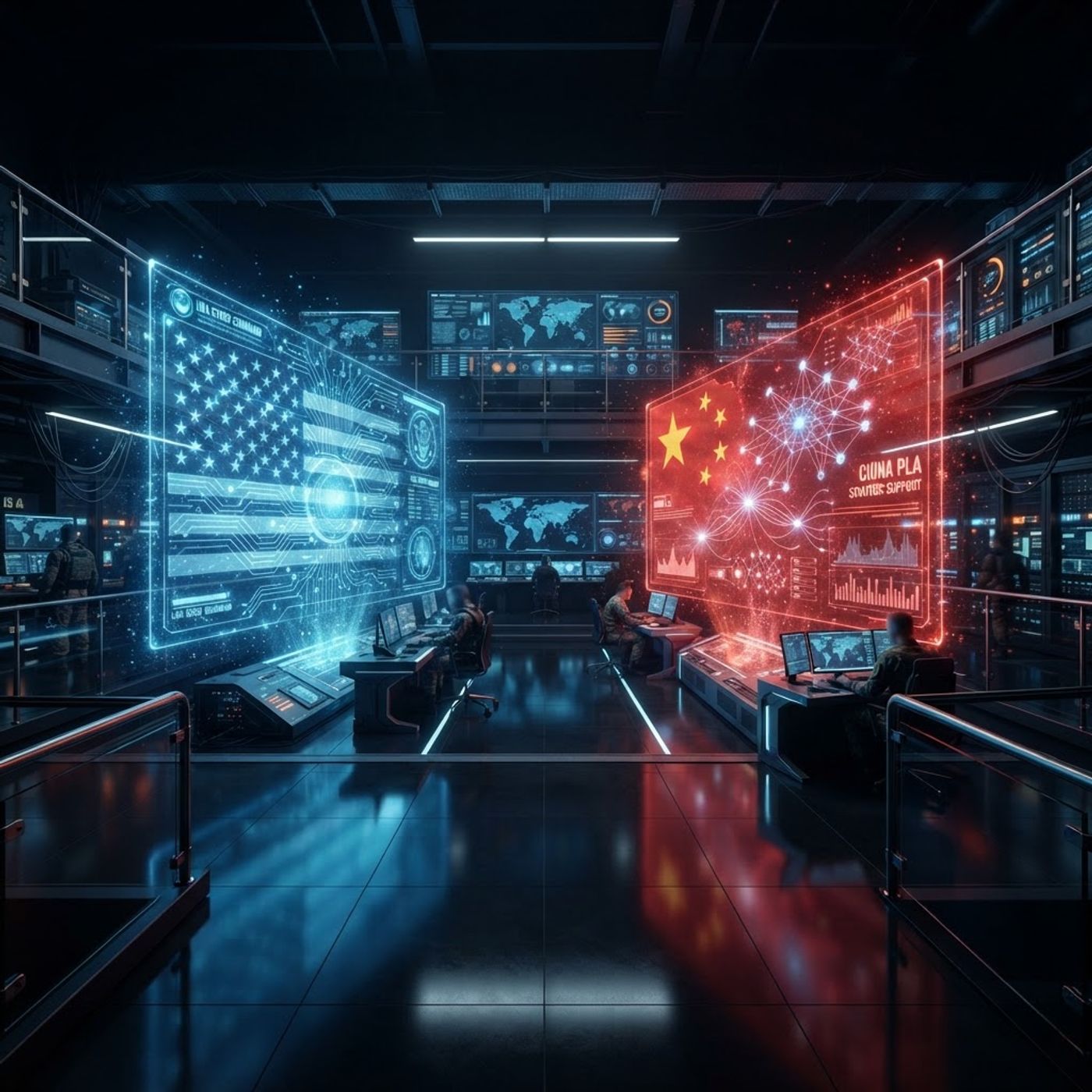
Imagine a race where the finish line is invisible. The stakes are existential, and the runners don't even speak the same language. This is the current reality of the artificial intelligence arms race between the United States and China. Much like the nuclear standoff of the 20th century, this isn't just about who has the better technology. It is about national security, global influence, and the fundamental fear that if the other side reaches a breakthrough first, the balance of power will shift forever. Even after the September 2026 summit between President Donald Trump and President Xi Jinping, where the focus was on building personal rapport, the actual hard work of regulating AI remains stalled. The diplomatic channels currently being used are simply not designed for this. They are often staffed by career diplomats who lack the deep technical expertise required to translate abstract AI risks into actionable policy, leaving us with a deadlock fueled by mutual suspicion.
The United States currently holds a lead in frontier models, with tools like Anthropics Mythos setting the industry standard. Predictably, the US keeps this technology under tight wraps, essentially cutting off access to ensure a competitive advantage. China, meanwhile, is pivoting toward open-weight models and characterizes American concerns as mere fear-mongering. This technological decoupling is dangerous because it creates a zero-sum mentality where every gain for one side is perceived as a direct loss for the other. The most pressing danger lies in the lack of a formal no-blame hotline. If an AI-driven system malfunctions or creates an unforeseen incident, there is no established bridge for the two superpowers to talk through it, which drastically increases the risk of an accidental rapid escalation. We are currently stuck in a debate. Can a top-down, leader-driven diplomatic push actually override the narrative of a winner takes all race, or is the rivalry too deeply entrenched to change?
What is clear is that the current status quo is fragile. Without specialized expertise influencing these high-level summits, we are essentially navigating the future of global security in the dark. The takeaway here is that while the tech is changing at light speed, our diplomatic tools are stuck in the analog age. Moving forward, the focus must shift from political posturing to building verifiable safety protocols that can survive the pressures of geopolitical competition. Whether this competition leads to a new era of innovation or a catastrophic misunderstanding remains the defining question of our time. Thanks for joining the Fortune Factor podcast.
More episodes
More from Conspiracy Theories Exploring The Unseen

The Perception Paradox_ Is America Becoming More or Less Racist_ (Part 5)
Conspiracy Theories Exploring The Unseen

The Racial Paradox_ Progress or Polarization_ Part 4
Conspiracy Theories Exploring The Unseen

The Racial Paradox_ Progress, Backlash, and the Divided Reality (Part 3)
Conspiracy Theories Exploring The Unseen

The Paradox of Progress_ Is America Getting Less Racist_ (Part 2)
Conspiracy Theories Exploring The Unseen