Get every episode summarized
Each time The Inside Story Podcast publishes, we email you a written briefing from the transcript — the topics, who appeared, and any specific claims, with the ad reads skipped.
Email me new episodesFree for 3 shows. No card needed.
About this episode
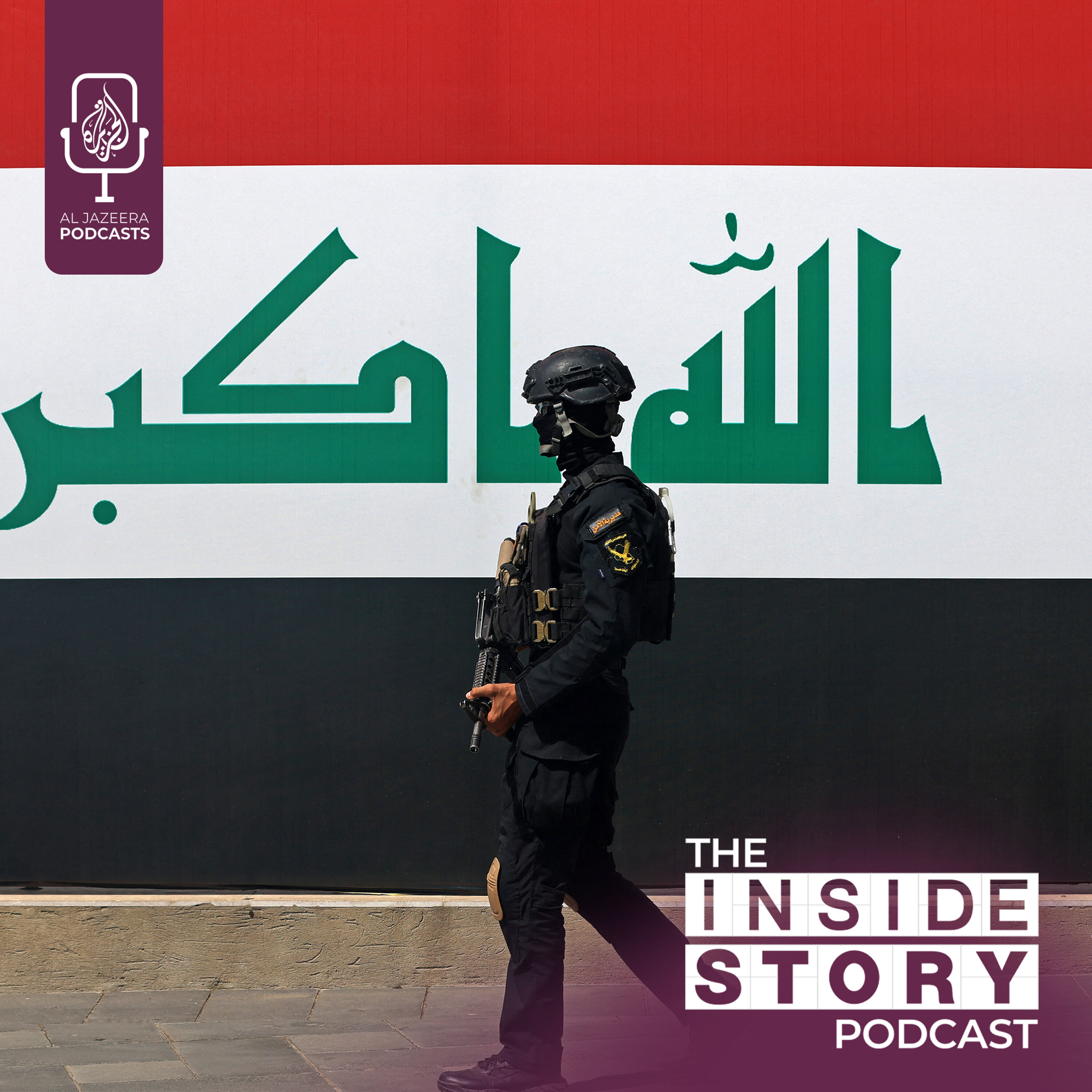
“Al Jazeera Podcasts More than two decades of US military presence in Iraq comes to an end. Washington completes its troop withdrawal after years of chaos and sectarian violence. What are the implications of the pull-out?”From the transcript
The last remaining US troops have left Iraq, ending a military presence that began with the 2003 invasion to oust Saddam Hussein. After years of conflict and instability, Iraq is entering a new phase without US forces on the ground. Is the Iraqi government ready? And who stands to gain from the US withdrawal?
In this episode:
- Ahmed Rushdi, President of the House of Iraqi Expertise Foundation
- Kenneth Katzman, Senior Fellow at The Soufan Center
- Abdullah AlShayji, Professor at Kuwait University
Host: Dareen Abughaida
Connect with us:
Get every episode summarized
Each time The Inside Story Podcast publishes, we email you a written briefing from the transcript — the topics, who appeared, and any specific claims, with the ad reads skipped.
Email me new episodesFree for 3 shows. No card needed.
Know when Ahmed Rushdi turns up
Follow Ahmed Rushdi and once a week we email you every new episode they appeared on — including guest spots the show notes never mention, because we read the transcript.
Follow Ahmed RushdiFree. Pick your own day and time.
Hosts & guests

Transcript ready
340 searchable segments. Every word is indexed and playable.
Full transcript
The Inside Story Podcast — Can Iraq handle future security challenges alone?. Machine-transcribed; use the interactive transcript above to jump the player to any line.
Al Jazeera Podcasts More than two decades of US military presence in Iraq comes to an end. Washington completes its troop withdrawal after years of chaos and sectarian violence. What are the implications of the pull-out? Can Iraq face future security challenges alone? I'm Daddy in Abu Ghada. You're listening to the Inside Story Podcast where we dissect, analyze, and help define major global stories. Let's now bring in our guests. Joining us is Ahma Duraştih, who's the president of the House of Iraq Expertise Foundation and a foreign policy advisor to the Secretary-General of Iraq's Parliament. He's joining us from Baghdad. Kenneth Katzman is in Washington, DC. He's a senior fellow at the Sufon Center who specializes in Middle East geopolitics and US foreign policy. We have Abdullah Al-Sheij in Kuwait, City. He's a professor at Kuwait University who specializes in US politics and Gulf security.
Welcome to you all. Thanks so much for your time. And we'll start in Baghdad, Ahma Duraştih, so for more than two decades, the US has had troops on the ground in Iraq. Is this genuinely the moment that Iraq takes responsibility for its own security or does this potentially mean that there could be a new struggle for influence inside Iraq? Well, definitely the withdrawal will cause some sort of an emptiness. And this emptiness should be filled and should be filled by any power that presented not the ground. So that means I think it's my personal opinion. It's too early to talk about withdrawal of the coalition forces or the American forces from Iraq. We have so many security challenges. No one knows what's going to happen after that. We have ISIS. We have militia, fascine, and also, that is not forget is that we already have some sort of involvement in the war between Iran and the United States.
So how it is possible that the Iraqi government can control all those challenges? And honestly, I don't know. What are the roadmap that Zadi has to start some sort of a controlling the whole of those challenges and try to manage to have a secure environment, especially here talking about the economy? Honestly, also, I don't know how he can call all those things. I think he should announce a roadmap and it should announce and to be told to the Iraqi people to try to help their country to try to manage all those security challenges. We're going to drill down into all these challenges you mentioned in a moment. But first, let me get the view from Washington. Kenneth Katzman, Washington is describing this as a transition from a military relationship to a broader strategic relationship. What does that mean? Where does the U.S. Iraq relationship go from here? Well, thank you for having me on.
The relationship is going to broaden out. It's going to not focus solely on security issues, not focus completely. It's been very focused on the Iranian threat. The U.S. has even imposed sanctions on Iraq to prevent U.S. dollars from reaching Iran and the U.S. has tried to have Iraq not by weaned off supplies of Iran in electricity and gas, natural gas. It's going to broaden out to investment, maybe even information technology, artificial intelligence, investment, Iraq diversify away from hydrocarbons exports like the Gulf States are doing. But still there's going to be a big focus obviously on strategic issues. Iran certainly is welcoming this U.S. departure as an evacuation, as perhaps sign the Iranian
strategy to move the U.S. away from its borders is succeeding. And that's what most worries me is the signals that this departure sends to Iran, particularly when Mr. Trump did not prevail decisively in the war against Iran. He's making concessions to Iran. He did not use enough U.S. national power to prevail. And he's struggling to extricate the U.S. from the Iran War. And this withdrawal sends a signal that Mr. Trump's mission on Iran did not was not decisive. I'm done and I'll show you from the Gulf perspective, how do Iraq's neighbors see this withdrawal? Is it an assertion of Iraqi sovereignty, finally, once and for all, or is it potentially a significant shift in the regional balance of power towards Iran, like Kenneth was saying? Well we take it as a full package.
I mean, the United States has been retrenching with lesser footprint from the region. And this is worrying for the United States allies in the region. As we have seen, even with the meeting with President Trump on the sidelines of the United Nation General Assembly last week, there wasn't much to convince or to comfort the – or alleviate the worries of the GCC countries. There was no commitment whatsoever. And we see that the ongoing war with Iran is a major, major destabilizing factor in the region. We look at this withdrawal tomorrow. Iraq will gain symbolic sovereignty. The challenge is how Iraq will deal with this host of challenges. Will Iran have the upper hand? How Iran will spin it? How its allies in Iraq will spin it? The United States will draw from – starting to withdraw from the region back in August
2021 with Drup from Afghanistan in a very, very precarious and chaotic withdrawal under President Biden administration. The – then we drew last April from the few hundred troops from Syria. And now it's withdrawing a few hundred troops, the remaining troops in Northern Iraq with the Kurdistan region. So if we take this as a whole, we see that the United States continues to have a lesser footprint. How will ISIS read that? How will the Kurds, Bashmur, get read that? How will Iran spin that? And what kind of consequences will result from this move? It will – will it embelden ISIS to come back? Will it embelden the Iranian to spin it? I mean, I'm going to be very interested to see how Iran's revolutionary guard will read this, will translate this, will convey it to its people. It's – is it a victory by Iran?
And it's allies, how Iraq will deal with these – with these new challenges, these Iraqi militias who have now been delayed that they will draw this arm from this month, I think, until next June. Right. 2027. How will they deal with us? Especially they keep bombarding the Saudis, they're guarding us in Kuwait. So it's going to be a very challenging and wait and see attitude, but I don't think Iraq is out of the woods yet. Okay, hang on. Let's talk about Kurdistan. Ahmad Justid, look, the U.S. withdrawal, as we've been hearing leaves Iraq's Kurdistan region without American air defenses, Baghdad is saying that it's now responsible for protecting the entire country – the entire country, but Kurdish leaders, they are concerned about this withdrawal. Are they right? Definitely they are right. And most of the Balazani have been interviewed by an Iraqi TV television and said we have
been betrayed by the Iran to form this government and now the Americans are withdraw. We are naked in front of Iranian and front of ISIS and let us be honest, ISIS is already there. Yes, they cannot invade cities, correct? But they can do security breaches. This is heard secondly, for talking about façade, if the Iranian-American war blust again, does the American actually end up to that façade will not join the Iranian against the Americans or against the American bases in the Gulf and Jordan and so on? And no, it will happen definitely because it's something ideological. But okay, if it is happen that the American withdrawal will go for strategic things to the relationship between Iraq and the U.S. But actually what's going to happen is that the Iranian influence, it is now political,
economical, it will be also security in a way or another. That means the fullness of the empty that it is happened by the withdrawal will be by the Iranian. Eventually, if we're going to talk about geostrategic changes in the region with the withdrawal of the American forces from Iraq, that means the façade will have a player role even in changing the whole game in the region. They can do all things that the Iranian want with the neighbors of Iraq, Syria for example, Gulf countries and so on. So you can't imagine, we don't know as Iraqis, can the Iraqi government make some sort of a balance to have solution to all those challenges? Honestly speaking, what this AD have been proposed in the U.N.
Something called spring of Iraq. Can we reach those spring months in Iraq? I don't know. Now, we have another date, it will happen on the end of next June. It will happen on that way. So those six months will actually, more than six months, will actually make some sort of disarming the militia, rejoining them to the Iraqi army and so on. Honestly, no one knows. But the most important fact that Masrod Barazani said in his interview is that there will be some sort of real dispute inside the political process of Iraq if all those challenges happen to be against Kurdistan. Okay. Kenneth, look, we're mentioning ISIL as well. The U.S. of course says that ISIL has been weakened sufficiently. But I mean, according to the latest reports, and this is by the U.N., it says that ISIL is weakened, but that there are sleeper cells and those do remain a concern.
So what does the American troop pull out mean for the fight against ISIL? Do you think it's going to lead to a resurgence, not only in Iraq, but in Syria as well? To me, it's very hard to say Syria is gaining strength, Baghdad is gaining strength. ISIL's ideology never really gained traction. They had an offensive in 2014 based on Sunni Arab unrest against Shia domination of the Iraqi government. They had traction obviously in Syria against Assad. But now Assad's gone, Iraq is stabilized. I don't know that ISIL gains any traction. They have some sleeper cells. Yes, it's going to depend on a lot of intelligence coordination with Washington, with neighbors.
I still say that the big message is what this means for Iran and the U.S. Iran conflict. And the fact that Mr. Trump has not prevailed decisively against Iran opens up Iraq to even more Iranian influence. And it's going to make it harder, as the guest in Baghdad said. It's going to make it harder to disarm these militias. Iran is going to rely, I think, even more on the militias. Now, hisbalah is weakened in Lebanon. Ambas is pretty much destroyed. And so Iran is going to rely even more on the militias in Iraq that are still loyal, still active. Qatayb, hisbalah, for example. And my question is whether the Baghdad government can implement its plan, it delayed, as we said, till June 30, 2027. Any experts, I guess myself included, believe even that deadline is going to slip. These militias are resistant to disarming and it's going to be very difficult to disarm
them. Abdullah, how do you think the U.S. withdrawal will impact Baghdad's efforts to disarm the armed groups? Now, that that deadline has been pushed forward. I think I agree with my friend Kenneth Katzman. I mean, this date is not like etched in stone. Already they have delayed it for nine months now and probably they will delay it more. But our fear is that, who's going to fill the vacuum? The strategic vacuum, even though the United States had very few troops down from the 2500 that were in Iraq, the highest number, but still Iraq is really in the shambles regarding in economic wise, the income from oil now with the Iranian U.S. Iran war with the state of hormones almost shut down as your report stated, $84 billion was the income from the petrol dollar energy sales last year.
How much Iraq is losing? How could Iraq fend off all these challenges from ISIS? Although it's weakened, it doesn't control one third of Iraq as it used to back in 2014, but still could really be a menacing threat, could be emboldened to try to really sabotage and undermine the fragile Iraqi security. How would the Bashmurga behave now with their major ally has left? They say we cannot really defend against ISIL without United States presence, intelligence support. How would Iran really capitalize and seize the opportunity to also arm, guide and play a role in not disarming its allies? All Iranians have been really completely weakened, as Balla and Hamas. The hoothies are the only power that could really derail the stability, but this withdrawal
I believe the timing is opportune for the militias for Iran, but not for Iraq, safety and security. And we are fearful in the Inquate and Saudi, Bailey and the Gulf in general that this could escalate their attacks on us on behalf of Iran. This is really the crucial point that we really are worried about in our neck of the world. Ahmad Rushdieh, look, speaking of the finances that my guest from Kuwait was mentioning a moment ago, Iraq is saying that the departure of foreign troops restores its sovereignty, right? But sovereignty also means that a country needs to control its own finances. And we know that Iraq still relies heavily on the U.S. financial system for access to its own oil revenues. So can Baghdad really claim complete strategic independence from Washington? I think what's happening in the end of September is it is more about political support to the
Zaidid government. It is not a real thing going to happen anywhere another, because I don't think the Americans will go forward to put the finance of Iraq in the hands of the Iraqis, because we all know that there is influence, political influence, economical influence of the Iranian on Iraq. So how the Americans will try to manage those things with the Zaidid government, I'm not sure about it, but also it shows you that the Zaidid try hard to have something not only to make it for the sake of Iraq, but also for the sake of his political ambitions, because on that way, leaving of the American forces in the front of cameras will give him the support inside the Iraqi parliament, to try to make a block inside the Iraqi parliament, and to have the political support for him, to try to manage things until the end of June
of 2027. Now, this is probably the second thing who said until the end of nine months, we will not see ISIS breaches and maybe major attacks would maybe the help of the Iranian, which will make the government go forward and ask the Iranian to help them against Daesh. Then the Iranian and the Iraqi government will ask the American forces to come back and try to help them against Daesh and the good relationship, the spring relationship between the Iranian and the Americans will happen again. Maybe this is one of the ambitious political actions that it will happen on those nine months, no one knows, but it happened before. So you can imagine how much Iraq in the name of sovereignty will have so many political, economical and security impacts that needs a professional, not only prime minister.
But a professional government and also a real willing of the Iraqis to try to help the government, to help the political process to actually stop those challenges. Okay, we're just coming up. Iraqis anymore will have something like that because they are fed up from corruption, they are fed up from people who are politicians who are saying things and don't say things other than what's it's all about. Allow me to jump in there because we're coming up to the end of the program and I just want to hear from Ken in Washington as well as Abdullah and Kuwait on their final thoughts. Ken, I mean, the U.S. withdrawals really coming at an extraordinary time, right? Unstable time in the Middle East. What do you think the implications are of the withdrawal of, for U.S. national security interests in the region? Well, Daneen, it's really a bad time, terrible time. The Gulf States is my good friend, Abdullah Shaji from Kuwait notes. The Gulf States are extremely upset.
They've been hit with really a worst-case scenario. This is exactly what they did not want is for the U.S. to attack Iran, but then not finish the job. Lee, the regime still in power and now it's recalcitrant and looking for revenge, looking to make the Gulf States pay a price, rebuilding its military. The Gulf States have always said, if you're going to attack Iran, you need to finish the job and get the regime finished. Finish the regime. Now the U.S. is leaving the regime in power to have backlash against the Gulf States. It's a worst-case scenario and now the U.S. is leaving Iraq, which leaves even less capability to counter Iran. So I don't envy the Gulf States. They're quite upset. They don't say it publicly. The Gulf officials do not say this publicly. They are very upset with Mr. Trump. They feel that Mr. Trump has left them high and dry facing the regime now, which is bent
on revenge. And it's going to use these proxies, these allies in Iraq, included, and the Houthis, as he was mentioned, to exact revenge and try to rebuild its influence inside the region. So it's a difficult time to be withdrawing from Iraq. Let's hear from Abdullah Chagy on your final thoughts from Kuwait City. This withdrawal, what does it signal to you about Washington's appetite for military engagement in the Middle East? I second my good friend Kenneth remarks. This is really an unfortunate time, a consequential time for us. We are still dizzying from the war on Iran that is not finished and Iran will be emboldened. I believe Iran will spin this as a major victory. Major withdrawal, you cannot trust your major ally, United States, left you high and dry and you have to fend for yourself. And we will embolden our allies to exact revenge from you guys.
And we are really in big trouble. I agree with Ken that we are furious at Trump's miscalculation. This war was not supposed to take place. Even if it wants to take place, it has to weaken Iran. Unfortunately, Iran feels that it's an emboldened. Iran is in the driver's seat as they believe. And this withdrawal will give them more impetus to try to really drive the point that we are winning. United States is losing. United States allies cannot depend. The rely on United States. We cannot export our oil. Neither Iraq. Iraq is in dire situation. And we really are, we don't know how to deal with this calamitous environment that read Iraq. Yeah. Severity of Iraq is one thing and Iraq controlling its fate and its security and face all these challenges is another thing. Embole sovereignty does not translate into the capability of really ruling the country from north to south and east to west.
Okay. On that note, I'll have to leave it there. Thanks to my guests for joining us. Ahmad Roshni Kenneth Katzman and Abdel Al-Shayjee. Thanks so much for your time. This episode was produced by Muhammad Laihi, Imajin Kimber, Michael Harwood and Gemma Harries. Studio sound was by Sasha Andreyevich. The program was edited by George Joseph, Catherine Nohan and Joseph Freias. You can catch every episode on the Inside Story podcast. Don't forget to subscribe and review us on your favorite podcast app. Share the episode and leave a comment too. We'd love to hear from you. Have you ever had the strange feeling we've been here before? I've always resisted this idea that history repeats itself, but the problem is it does. I think history is like a map. If you don't understand history, you're like someone stuck on a mountain without knowing which way to go. And history allows you to understand where you are and who you are. That's the way we should look at the past. What is the aim, the past that we can pluck out and plant again?
I'm Ahmad Hassan and this is Deja Vu, a podcast that connects our turbulent times to history's most pivotal moments. It's a kind of an interesting dance that happens of all of these different figures. This is only a fraction of the great history that we lost, but we did not lose anything. Join me for real conversations with historians and public thinkers who unravel the past and challenge what we think we know about today. There is so much from the past that has still the capacity to tell us how to make our way through the modern world and we must not project that knowledge anymore.
More episodes
More from The Inside Story Podcast

Why is Malaysia sending back Rohingya refugees to Myanmar?
The Inside Story Podcast

Why has Trump rejected Iran's peace proposal?
The Inside Story Podcast

How will Saudi Arabia deal with the Houthis?
The Inside Story Podcast

Can a warming Arctic become an important commercial highway?
The Inside Story Podcast