Get every episode summarized
Each time The Brian Lehrer Show publishes, we email you a written briefing from the transcript — the topics, who appeared, and any specific claims, with the ad reads skipped.
Email me new episodesFree for 3 shows. No card needed.
About this episode
“Beginning today, we'll be looking at an issue a day as they relate to the midterm elections, specifically to control of Congress and also the New York State Governor's Race. Issue number one today, how to make affordable healthcare an American right.”From the transcript
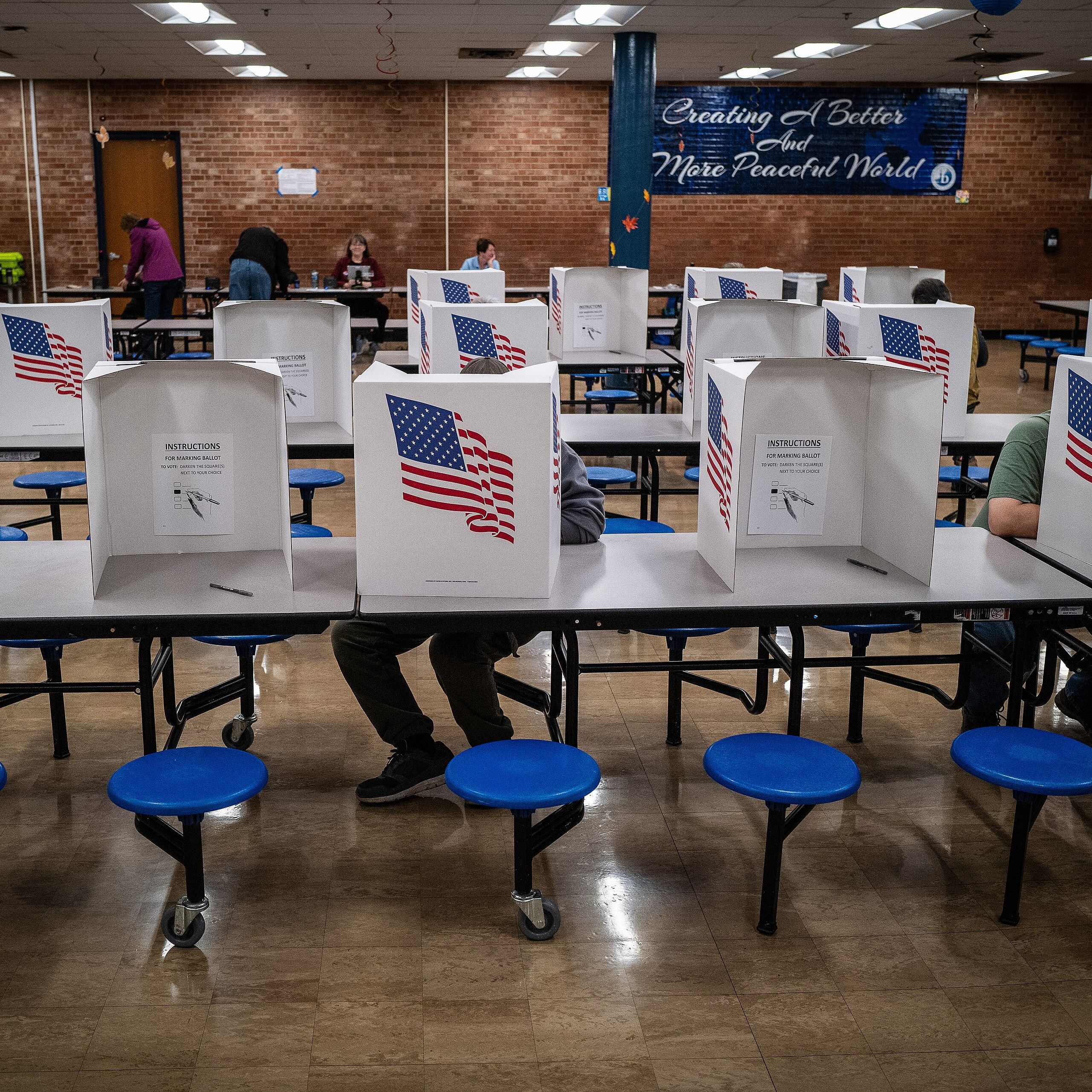
Zachary Roth, managing editor at Democracy Docket, talks about the rules that govern elections: the state of mail-in ballots, laws around voter intimidation, and other issues that are becoming more prominent in election governance across the country.
Photo: A polling station in Des Moines, IA on November 8, 2022. (Phil Roeder [Creative Commons Attribution 2.0 Generic] via Wikimedia Commons)
Hosted by Simplecast, an AdsWizz company. See pcm.adswizz.com for information about our collection and use of personal data for advertising.
Get every episode summarized
Each time The Brian Lehrer Show publishes, we email you a written briefing from the transcript — the topics, who appeared, and any specific claims, with the ad reads skipped.
Email me new episodesFree for 3 shows. No card needed.
Hosts & guests
Transcript ready
85 searchable segments. Every word is indexed and playable.
Full transcript
The Brian Lehrer Show — 30 Issues in 30 Days: How Elections Work. Machine-transcribed; use the interactive transcript above to jump the player to any line.
From WNYC, I'm Brian Lehrer. This is my Daily Politics Podcast. It's Tuesday, September 22. Beginning today, we'll be looking at an issue a day as they relate to the midterm elections, specifically to control of Congress and also the New York State Governor's Race. Issue number one today, how to make affordable healthcare an American right. We'll see how some democratic and Republican candidates are running on the issue from Medicare for All to very different approaches among Democrat and Republican candidates alike, with Julie Ravner from KFF Health News to set this up. Here is Michigan Democratic Senate candidate Abdul El-Sayed, who is running on Medicare for All. This is from a campaign video on the topic that he released in May. He explained how private insurance includes premiums, copays, and deductibles, and said his version of Medicare for All would have none of those.
No premium, no copay, no deductible, and unlike your current insurance card where there's an in-network and an out-of-network with different fees, there is no network because it's good everywhere. Imagine the freedom that that would offer you. Now, I want to talk about some benefits to the overall system beyond the security it would offer you without having to take money out of your paycheck. Right now, our healthcare system isn't just the most expensive, but it's also getting more expensive because of the role that insurance fails to play. Right now, we have about 700 insurers in the entire healthcare system. No one of those insurers, aside from actual Medicare, has the power to really negotiate with any of the providers of healthcare. That's everyone from clinics and hospitals and doctors to pharmaceuticals and medical device manufacturers. Medicare for All would be the de facto insurer for everybody. What does that mean? That means that it is in a position to negotiate on all our behalfs. Everybody knows about the term monopoly, but there's this other thing called a monopsy.
A monopoly is when there's only one seller of a good. A monopsy is when there's one buyer of a good, and Medicare would be the buyer on all of our behalfs. So if there's only one buyer or seller of a good, guess what? That buyer gets to dictate the price. Monopsy. There's your vocabulary word for today about a minute of Abdul Al Sayed, the Democratic candidate for U.S. Senate in Michigan for Medicare for All. By contrast, here's about a minute of Republican candidate Mike Rogers, who gave these reasons as some of why he's against it, this aired on C-SPAN, over the weekend. When you look at something like Medicare for All, the seniors who have paid in since they've been 18 years old, remember they pay in at 18 all the way to 65 before they get it. So they don't get an ounce of Medicare between 18 and 65. They're fundamentally thrown the system up, and now you get, when you pay in at 18, you get at 18.
You can only imagine what that does to your quality of care. So you're losing all of that revenue for all of those years to pay for a... Disl... with people. It's about 2.5 million people here in Michigan. So they're going to get less health care, less choice of their doctor. It's going to be more rationed. So in the same system that is just across the river in Michigan, if you get a health care or a cancer diagnosis, it's 27 weeks on average before you get treatment. If you're a breast cancer survivor, that could be a death sentence. Here in America is less than a month, and if it has some kind of urgency to it, you can actually even get it sooner. So it doesn't really do what they're saying it's going to do it. So my grudgers, they are in one correction, I think he made a slip of the tongue there. So just so you're clear on what he was talking about when he said, just across the river in Michigan, I think he really meant just across in Canada.
If you get a health care or a cancer diagnosis, it's 27 weeks on average before you get treatment, we will fact check that claim. He said, here in America, it's less than a month. So he was making contrast with Canada there, I believe. But my grudgers there, Abdul El Sayed, before that, to launch 30 issues in 30 days, issue number one, how to make affordable health care in American right, will explore other approaches, then Medicare for all as well. And with me for this is Julie Ravner, Chief Washington correspondent for KFF Health News and host of their weekly podcast, what the health previously, as some of you know she was an NPR health policy correspondent. She is also author of the reference book, Health Care Politics and Policy A to Z. Now in its third edition. Julie, always great to have you. Thank you for helping with this launch. Welcome back to WNYC. Thanks always a pleasure to be here. And listeners, what would you like to see to make health insurance or health care itself universally affordable in this country?
Medicare for all public option, we'll get to that. Some of the Republican market based reforms, we'll get to those. Anything else or as Julie Ravner, a question about any candidate or affordable health care health insurance position in the midterms, 212, 433, WNYC 212, 433, 9692, as always you can call or you can text. So Julie, I'll ask you to get into the weeds on the argument for and against Medicare for all that we heard some of in those clips. But first help us get the national lay of the land here on many Democrats and competitive House and Senate races running on Medicare for all per se like I'll say it is. Yes and no many Democrats are running on what they call Medicare for all but of course they some many many of the mean different things when they use that phrase because there's no sort of set definition of Medicare for all I think a lot of them are using it as shorthand for universal coverage.
But there's a lot of ways to get to universal coverage even Abdul Al-Sahead who I think has originally was pushing for sort of the traditional Medicare for all single payer federal government has now said well if you know maybe we could keep some private insurance but you'd probably want the federal insurance. So it's but definitely we are seeing Democrats running much more strongly on health care than they have in a while and Republicans very much on the defensive I think it's fair to say on this issue. What are some other democratic plans for addressing health insurance or health care affordability you just started to indicate it a little bit but but go even further give us the lay of the land like if you're a Democrat but you're not saying Medicare for all. For all I've got a clip of one Democrat like that I'll play in a minute but you want to expand affordability you want to expand insurance access you want to expand health care access but they're saying no no no not Medicare for all what are they saying precisely well there's sort of gradations of Medicare for all if you will you know in the last time we went through this in 2019 and 2020 there was something called Medicare for more which meant you could sign up for Medicare if you wanted to this was sort of a lot of the way to get the money.
So I wanted to this was sort of a phrase to talk about the public option which of course is what President Biden ultimately supported and Congress couldn't quite pass so there would be a sort of competing public option on the affordable care act exchanges to go with the the private insurance you could have something like what senator Kim is talking about which is let's get to universal coverage gradually let's enroll kids who are pretty cheap so it's a good way to start if you want you know if you're worried about the budget. So we get kids and this is how Medicaid got expanded in the 1980s and 1990s is they gradually started covering you know cohort of kids as they were born and as they got older they stayed on so when you had you know everybody from zero to two then zero to three and zero to four so that group of children were covered all the way up that's one idea. So at the same time there's a lot of people talking about expanding the existing Medicare coverage the existing Medicare program which isn't all that generous it has not really kept up with insurance coverage in general so it doesn't cover things like vision and dental and hearing care so there's a lot of push to expand that and then of course as we know Medicare has lots of premiums and deductibles and copays and there is and many of them have gotten just too expensive for most people to be able to afford.
So making some of those go away and then layer on top of all of that putting back the cuts that the Republicans made last year in their you know so called one big beautiful bill which takes about a trillion dollars out of the Medicaid program or for the next 10 years so there's a lot to talk about. Here's an example of a Democrat running against Medicare for all but for a public option it's Tom Swazzy the Democratic incumbent from the swing district the covers part of Queens and a lot of Northern Nassau County in New York here's about a minute of Tom Swazzy. As far as Medicare for all right now there are many people especially in New York state that have really great health insurance through their union there are a lot of people that will never want to give up their existing health insurance that they have and New York state has done a better job than most states in the United States of America with the lowest rate of uninsured children and the lowest rates of uninsured adults whereas places that were losing population in the relative fight for population like Florida and Texas have the highest
rates of uninsured children and the highest rates of uninsured adults so we there are things that we can do under our existing system and we've been doing them in New York state and must continue to do more for example the Trump administration just eliminated the premium tax credits so that people who make a mic district for example 130 thousand dollars a year would only have to pay up to 8% of their income on for their health insurance under the premium tax credit. So you don't have to pay 10 or 11 thousand dollars a year for your health insurance for your family of four if you're making 130 thousand dollars a year by getting rid of the premium tax credits those people's health insurance went up to 30 thousand dollars a year. So Tom Swazzy there and there was a lot in that clip but one of the things which does get us into the weeds on Bernie Sanders up to LCI ad Medicare for all the way they describe it no premium tax credit. So premiums no copays no deductibles Swazzy says what about people I have union members in my district who like their union plans we would force them off could they do Medicare for all that doesn't force people off private insurance that they like or is that just the public option.
That's mostly the public option but I mean that certainly guys I said that's what I'll say that is talking about now was not what he was talking about originally because this whole question of you know we have a lot of union members they have the reason that they have such good insurance is that they've bargained for it they've given up pay increases to get this really generous health insurance because it's something that's been important to them there's a lot of people like that particularly many of them are democratic voters and so Democrats are very sensitive to it that was one of the things that tripped up the Clinton health care plan in the 90s it was something that slowed up the Affordable Care Act you know in 2009 and 2010 is that you know what do you do about the people who are happy with their current health insurance do you want to rip it away from them do you want to get rid entirely of the private health insurance industry which is a fairly large industry so that's one of the issues that's always been there with you know Medicare for all and I think that's why we're seeing so many of these sort of gradual you know ideas like
adding benefits to existing Medicare there's also I we didn't talk about it before sort of a Medicare buy-in for people who are younger than 65 so you could let people over age 50 buy-in to Medicare so they could get in basically early which would improve both risk pools it makes Medicare overall cheaper because the younger people are healthier it makes private insurance cheaper because they're the older people in private insurance and they're less healthy so that's another there's a whole lot of ideas of sort of how to do this but it's all a balance and I mean you have to get into the weeds because health care policy is really really weedy Here's an interesting question from from a listener Julie you know I had brought up the objection that people raise to universal Medicare for all style health care that it would remove remove some of the burden from the private sector and place it on the taxpayers right if all the employer and union plans went away well a
listener asks why aren't companies and corporations in favor of Medicare for all it would save them so much money. Some of them are but a lot of companies want to continue to offer health insurance coverage because they want to tailor it to their own workforce and because they see it as a you know recruiting advantage if you know we offer really good health care coverage maybe you want to go to work for us instead of one of our competitors but there are also a lot of employers who are you know for whom this is just getting so expensive it is such a big piece of their you know their revenues frankly I mean not to mention their profits that that some of them would actually like to be able to get rid of offering health insurance to their workers so you know it varies by employer but in general the very large employers what we call the jumbo employers with more than 5,000 workers tend to see it as at least for now as something that they want to do because it helps them compete against other employers but I will you know point out that others say that this is the way to get the job done.
So I think that is the way that this is an extra cost for them that their overseas competitors mostly don't have that most other countries don't have the same type of employer health insurance system that we do and so other companies have you know lesser to lesser types of expenses to deal with. James and San Bruno California on WNYC. Hi James. Yes hi Brian thank you for the call I just want to focus on the word insurance for a moment there is really no insurance in the federal Medicare program I will be explain first of all here in California I counsel people on a Medicare council I'm registered with the California Department of Aging so I talked to people about this a lot. Member Medicare started in 65 with A and B a hospital B out of the hospital that it's single payer meaning that the government collects money pays out to the practitioners for providing services that was the program until the late 1990s when the federal government introduced Medicare
to the Medicare part C that allowed group plans the HMOs and PPO's to now get involved in the Medicare program and people could but again that's not insurance okay insurance is a state regulated business if an insurance company wants to sell up its product it has to register with the state Department of insurance and work through that system and the Department of insurance controls very closely each insurance company. So if you talk about insurance in the Medicare program the only insurance involved in the Medicare program is if you want to purchase a Medicare which is from all state state farm etc or a part D drug program so the bulk of it including these group plans they're not insurance at all and we keep on and really I think this people confused people when we use the word insurance when we're describing Medicare. Let me leave it there because we have a lot of people waiting and we don't have till four o'clock this afternoon but briefly Julie how about the terminology we know language is important and should we be calling Medicare insurance.
Well actually technically Medicare and Social Security are social insurance the idea is that everybody pays in and the people who need it get benefits I think that's sort of the technical reason that it's referred to as insurance it's the although they do you know the the caller is right to to an extent that you know that they that Medicare traditional Medicare with a medic app supplemental policy operate differently from a private Medicare advantage plan they're all various I think it's fair to say they're very different. There's a lot of different types of insurance. Here's another clip as we talk about the Republicans of Mike Rogers and Michigan saying what he's for to give access to insurance for uninsured people in the state and he actually starts this clip with the words exactly what we have now. And so that system is designed for that that's why you have Medicaid where if you know you get into some trouble and something happens you can go on to to Medicaid to get your your health care taken care of I'm a big believer in federal and you
have to be a federal qualified health centers which can be a good alternative for primary care for people who don't have good access we have some several of those in Michigan I'd like to do a little more with that and I'd like to use those by the way to recruit new doctors by having them serve in a federally qualified health center for a certain period of time to pay off their medical debt I think that might be a good way for us to get more doctors and by the way nurses as well more nurses as well in the system get them trained now get them out in the regular health care system. Remember the more nurses the more doctors that we have out there the better access that you're going to have. So Julie is that a typical Republican set of planks regarding health insurance and access. It's an interesting set they're all I mean they're already first of all federally qualified health centers also known as community health centers long standing actually bipartisanly supported program but supported more strongly generally by Democrats and they're already is a program to have people work off their student loans for various health practitioner jobs not just doctors but nurses physician assistants nurse practitioners by by serving in underserved areas also those were democratic programs mostly so I'm sort of amused that he's sort of come around to supporting a lot of these things that I've covered over many years that were mostly pushed by Democrats.
Yeah, but then it's even more explicitly a status quo answer I drew attention to the fact that that clip in answer to report his question began with the words exactly what we have now and you're kind of saying the things that he cited there almost as if they were new proposals are exactly what we have now with all the holes and coverage and access that that result from having only those things right well you could always make those things bigger and that's which is I brought up. Which is ironic because this administration has basically worked to make those things smaller but it's you know it's not it's perfectly legitimate political position to say we have this and if we made it bigger it might be better. We're just about at a time and I think we will you know conclude the interparty comparison part of the conversation here but I just want to ask you one last thing. Because it's also in the news right now that a lot of private plans premiums are about to spike for 2027 employers are getting this news unions that have plans are getting this news and so you know those are going to be passed on to the employees or the union members why this year in particular have you reported on that.
I have you know it is a bunch of things we have seen since covid ended sort of thing prices gradually going up with one of the things we haven't talked about is private equity getting into healthcare companies that are basically into healthcare to make a profit that that is their entire purpose we've seen a lot of consolidation so we can see providers that are basically setting their own prices I mean there's a whole lot of moving parts in the healthcare system but one of the things we have seen and as I mentioned earlier. I mean the reason insurance premiums are going up is that healthcare costs are going up and it's mostly the prices I mean overriding heart the late Princeton health economist you know was famous for saying it's the prices stupid and that has has been and continues to be true that prices are spiraling in healthcare and we have not really come up with a good way to get a handle on them and that's what the debate is about. Well obviously we could not have that entire debate today there are so many moving parts but there is a pretty deep dive for issue number one in our 30 issues and 30 days election series how to make healthcare universally affordable and American right through direct purchase of healthcare or through health insurance with Julie Robner Washington correspondent or bureau chief for KFF health news.
issue number one in 30 issues and 30 days Julie thank you so much for being so informative as always thank you Brian. Brian Lairr a daily politics podcast is an excerpt from my live daily radio show the Brian Lairr show on WNYC radio 10 a.m. to noon Eastern time if you want to listen live at WNYC dot org thanks for listening today talk to you next time. WNYC journalism and storytelling is heard by millions of passionate listeners sponsors of our programming gain our listeners attention and their respect learn about how your organization can support WNYC and WNYC studios at sponsorship.wNYC dot org.
More episodes
More from The Brian Lehrer Show

Mayor Mamdani's 'Broken Windows' Promise
The Brian Lehrer Show

Anti-MAGA Insights
The Brian Lehrer Show

A Rancher Takes on Wildfire Management
The Brian Lehrer Show

Call Your Senator: Sen. Andy Kim
The Brian Lehrer Show