Get every episode summarized
Each time The Brian Lehrer Show publishes, we email you a written briefing from the transcript — the topics, who appeared, and any specific claims, with the ad reads skipped.
Email me new episodesFree for 3 shows. No card needed.
About this episode
“I'm Brian Lerr on WNYC and to close out the show today we're going to hear from our former colleague here at New York Public Radio Anna Sale.”From the transcript
Anna Sale, creator and host of the podcast Death, Sex & Money and the new video series People Trying, made in partnership with The National Geographic Society, talks about her new series, about how people who work directly with land and water approach climate-related dilemmas, and Shelly Kelly, rancher who runs the Sandhills Task Force in rural Nebraska, discusses her work to manage wildfire risk in a changing landscape in Nebraska.
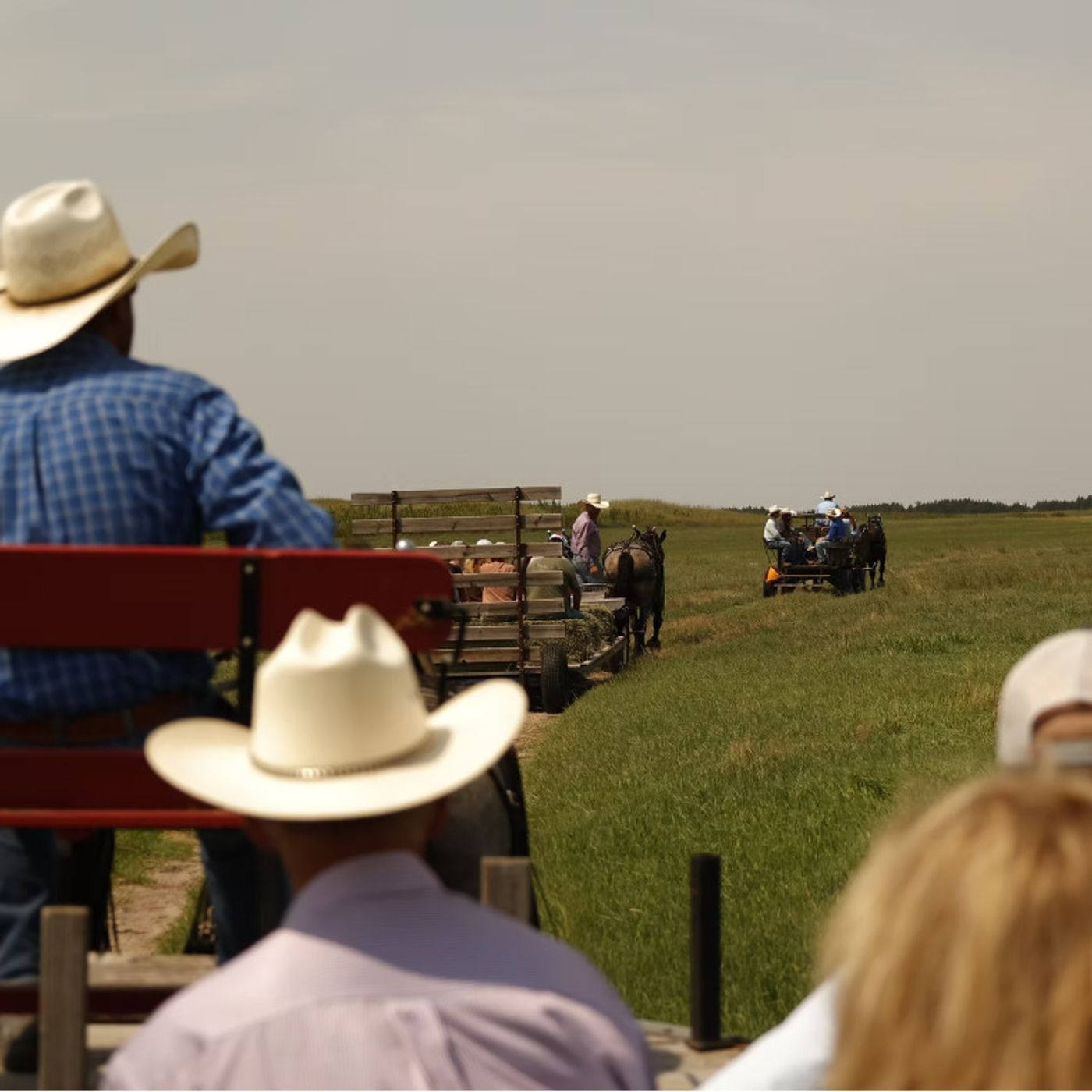
Photo credit: KyLee Kime, STF
Hosted by Simplecast, an AdsWizz company. See pcm.adswizz.com for information about our collection and use of personal data for advertising.
Get every episode summarized
Each time The Brian Lehrer Show publishes, we email you a written briefing from the transcript — the topics, who appeared, and any specific claims, with the ad reads skipped.
Email me new episodesFree for 3 shows. No card needed.
Hosts & guests
Transcript ready
216 searchable segments. Every word is indexed and playable.
Full transcript
The Brian Lehrer Show — A Rancher Takes on Wildfire Management. Machine-transcribed; use the interactive transcript above to jump the player to any line.
I'm Brian Lerr on WNYC and to close out the show today we're going to hear from our former colleague here at New York Public Radio Anna Sale. You may know her as the host of the podcast, Death, Sex and Money, which used to be a WNYC production and has now housed at Slate. She's not here today to talk about Death, Sex and Money though. She's actually back in New York because it's climate week and she's launching a new interview series that she made in collaboration with the National Geographic Society called People Trying, where she follows the stories of several Americans who work with land and water and how they're adapting to changing climate conditions across the country. And she has brought with us, with her, to us, the subject of one of Anna's episodes, Kelly Kelly. She's a rancher from rural Nebraska who started the Sand Hills Task Force, which is a network
of ranchers focused on wildfire and drought resiliency. She's joining Anna here in New York for climate week to talk about her work and about the new series. And we thought it would be really interesting to let most of you in the New York metropolis here from a rural Midwest rancher about how climate change is changing things out there. You know how it's changing things here. You know always great to have you back and Shelley, so great to have you on the show. Welcome to WNYC. Thank you, Brian. Do we have both of you? Yeah, Shelley is right here with me. Just making sure. And tell me a little bit about the premise of your new show. Who qualifies as People Trying? Well, all of us are trying, of course. But for the purposes of this series, what we are looking at is, I was really interested in doing more journalism and hearing directly from people who work close to land, water, and nature about what their challenges they're facing, what interventions they're trying,
as we're all adapting to change. Because I think sometimes when we talk about climate change, it can become a very abstract conversation very quickly. We hear a lot from scientists and policymakers and investors and technologists as we should. But I also want to think we should hear a little bit more from people who are working close to the ground about how the things that are suggested to them to manage their land differently or think about water differently, how that fits into the ecosystem of all of the decisions and things they're trying to manage, whether they're a natural resource manager or trying to run a business in agriculture. So Shelley, before we get to the meat of the matter, I heard it's your first time in New York, which has been like so far. What an experience. This has been an awesome cultural experience so far. Anna has been wonderful at showing me a lot of new aspects that I, you don't think about every day when you're out in the sand hills of Nebraska, just how communication and commuting
is very different here than it is at home. We're all this way for the first time last night, Brian, who's an adventure. You know, you know, Anna, that this is a question we'll occasionally ask listeners just to have some fun on the phones. What do you show an out of town guest in New York? So now I have to throw that question of you to you, because Shelley said you're showing her around. Oh, that's such a good question. What did I want to show her? I mean, I was showing her radio, radio city music call. I was showing her how the subway works. I was showing her, you know, we were walking kind of towards. We went to the ear end last night and met with some other people who work in regenerative agriculture. So showing her where the Hudson River is and just orienting her to the natural landscape that surrounds New York City. That was that was sort of the tour. You went to the ear end, local watering hole right near the station. So Shelley, you're a rancher. You come from a ranching family. I wonder if you can do a little ranching 101 for our mostly urban or suburban audience. Like what kind of rancher are you?
And what does that mean you do mostly in your work day to day? Oh, what a great question. Yeah, I'm blessed with the opportunity to lease land. I grew up on a ranch. We raised cattle. Mostly a cow calf operation, which means we have momma cows. We help them have their babies. We raise their babies. And then once they get so big about the time you think about they go off to college. And so we wean them and they go to another operation where they continue their journey. My operation is separate from my families. I started out on my own. And I buy bread cows. And so they are pregnant. I help them calf and have their babies. And then sell them to other other ranchers for their operations. So tell our listeners about the challenges that you faced in your work because of climate change. Like, how has the basic work that you just described changed between generations or however you want to frame it because of the climate change?
Yeah. And it's a really interesting conversation. We don't talk about climate change the same way that I hear it discussed in some of these circles, like especially during climate week. Climate adaptability is something that farmers and ranchers have had to deal with ever since farming and ranching started. There's so many swings in the seasons. There's so many swings year to year. And in my part of the world, it's pretty arid. We don't get a lot of moisture and water is our most limiting resource. And so we have to manage drought. And drought is a really hard thing to manage through and some climate adaptability. That's just another way of saying successful ranching. And so climate and managing the extremes is something that's just a part of what we do. I want to play a little clip from the trailer for your show. This is another farmer and I'm just going to play it and then I'm going to ask you about it. For a long time, I wanted to make a bumper sticker that said, I heart farmers so long
as they're imaginary. I heart farmers as long as they're imaginary. Shelley, you want to take that? Does that resonate with you? Oh, boy, that's fun. Yeah. I haven't picked up on that piece yet. But yeah, that's what's really neat about what Anna's trying to do in my perspective is because we need to have a face. We need to be in the rooms where people are talking about policy. When they're talking about changes, when they're talking about what they want to see out there. Because I think it's really easy to just sit at a table or in a meeting room and try to solve all the world's problems. But if you don't include the people that know and understand the land and know and understand the process, you're missing a really key piece of the puzzle. Note doesn't come from cows. It comes from the dairy section. Anna, why did you include that? That clip in your trial. That's Kyle Farmer. He's a rancher in Northern California. Something he goes on to say, a lot of people talk about they're willing to pay 10% more
for something that's a thousand percent better, a product that's a thousand percent better for the earth and for the planet. But nobody's willing to help me do a 10% better job to manage the land as I'm producing agricultural products. I think what Kyle's saying there is, we are people who are running businesses who are also trying to take care of the land that we're in charge of stewarding. I want you to see the trade-offs that I'm constantly navigating, the uncertainties that I'm constantly navigating and see me and not just talk about what people ought to be doing out there as a way to be a part of climate solutions. So Anna, who's your audience for Shelley this week? You came here for Climate Week, which is also UN General Assembly Week. Is it world leaders? Is it activists? What match are you making? It's really fun. I mean, last night we were with people who work in agriculture, who are working in different parts of the country than Shelley is. So they're comparing notes about how you manage for forest timber products in the Northeast
compared to what she's doing in Nebraska. It's very different. Tonight we're in conversation with a bunch of big funders who think about where to deploy resources and how to measure outcomes. I think those are really critical conversations between practitioners on the ground and then people who are thinking at very high levels because what a person trying will tell you is, you know, it's difficult to come up with, you know, in three years' time I'm going to have these outcomes that you can measure in these ways. It's more like how do we create a relationship where you understand what my problems are, what's going to enable me to manage this land and this water and these resources more effectively. We partner and collaborate. So that's the conversation we're attempting. We're trying to have with people trying here at Climate Week and then in an ongoing way with both our YouTube channel and the interviews that we're doing there. We have a newsletter on Substack at peopletrying.substack.com and we're thinking of that as
trying to create the people trying network. So people who are working in Nebraska or working in California or working in Alaska can kind of come together and get inspiration, feel accompanied in a way because I think when you're working on the ground, you definitely have your neighbors that you're solving problems with but kind of creating that upper level of community that's a couple levels up that can be difficult to come by. So we're trying to reach a lot of different audiences at once. And we'll see. Sheldon, can you give us a little take on the wildfire piece of what Anna was just mentioning because that's a big issue here in New York too mostly because we get these really polluted smoke days mostly from big wildfires in Canada. Believe it or not, we've also had wildfires in the last few years in Manhattan and in Brooklyn but much smaller. But what do you focus on out there in rural Nebraska for you as a rancher in ways that might try to prevent some of these bigger wildfires which are really changing people's experience
in the country? Well, I think you made an important distinction wildfire in New York and wildfire in Canada and wildfire in Nebraska are all usually fairly different. There's different things that lead up to it. And so in Nebraska, we really need to look at our invasive species. We have Eastern Red Cedar that is kind of taking over the countryside in Nebraska or a lot of the grasslands. Eastern Red Cedar was managed by fire. That's how nature managed it. But as we settled the countryside, we were able to remove, effectively remove fire from the landscape for generations for decades. And now Mother Nature is finding a way to bring fire back in. And so with the use of prescribed fire in some instances, not all, prescribed fire is a way that you can apply fire to the landscape. The landscape wants to burn every so often and you can apply it under set conditions and try to control the outcomes a little bit better so it's not as devastating.
But wildfire will come, it has come and we need to really look at the processes and how we have changed the natural ecosystem and maybe look and see if there's something that we can do to help sell the problem before it gets to be so devastating. Just 15 seconds left, but there's a critique that says environmentalists have worked against the controlled burns that you were just describing because they want everything to just take its natural course and that contributes to wildfires. Do you share that opinion? Literally 15 seconds. Wildfires are so destructive. If you are on a wildfire versus a prescribed burn, you would know why prescribed burns are a better answer than letting Mother Nature handle things with wildfire. Shelly Kelly is a rancher from Earl Nebraska, founder of the Sand Hills Task Force, which focuses on wildfire and drought resiliency in Earl Nebraska. Anna Sale, as many of you know, is the host of the podcast, Death, Sex and Money. But now her video interview series as well called People Trying, People Trying, which comes
out today on YouTube. Anna, thanks so much, great to hear your voice and Shelly Kelly. Thank you for joining her and joining us. Thanks, thank you. Brian Lerner, WNYC, thank you all for listening and participating and stay tuned for Alice. WNYC's journalism and storytelling is heard by millions of passionate listeners, sponsors of our programming gain our listeners attention and their respect. Learn about how your organization can support WNYC and WNYC studios at sponsorship.wNYC.org.
More episodes
More from The Brian Lehrer Show

30 Issues in 30 Days: How Elections Work
The Brian Lehrer Show

Mayor Mamdani's 'Broken Windows' Promise
The Brian Lehrer Show

Anti-MAGA Insights
The Brian Lehrer Show

Call Your Senator: Sen. Andy Kim
The Brian Lehrer Show