Get every episode summarized
Each time The Excerpt publishes, we email you a written briefing from the transcript — the topics, who appeared, and any specific claims, with the ad reads skipped.
Email me new episodesFree for 3 shows. No card needed.
About this episode
“In the race to reach customers, short codes always win. Because customers open text messages from short codes 98% of the time. That's why Bakes, Airlines, Hospitals, and other major businesses trust short codes.”From the transcript
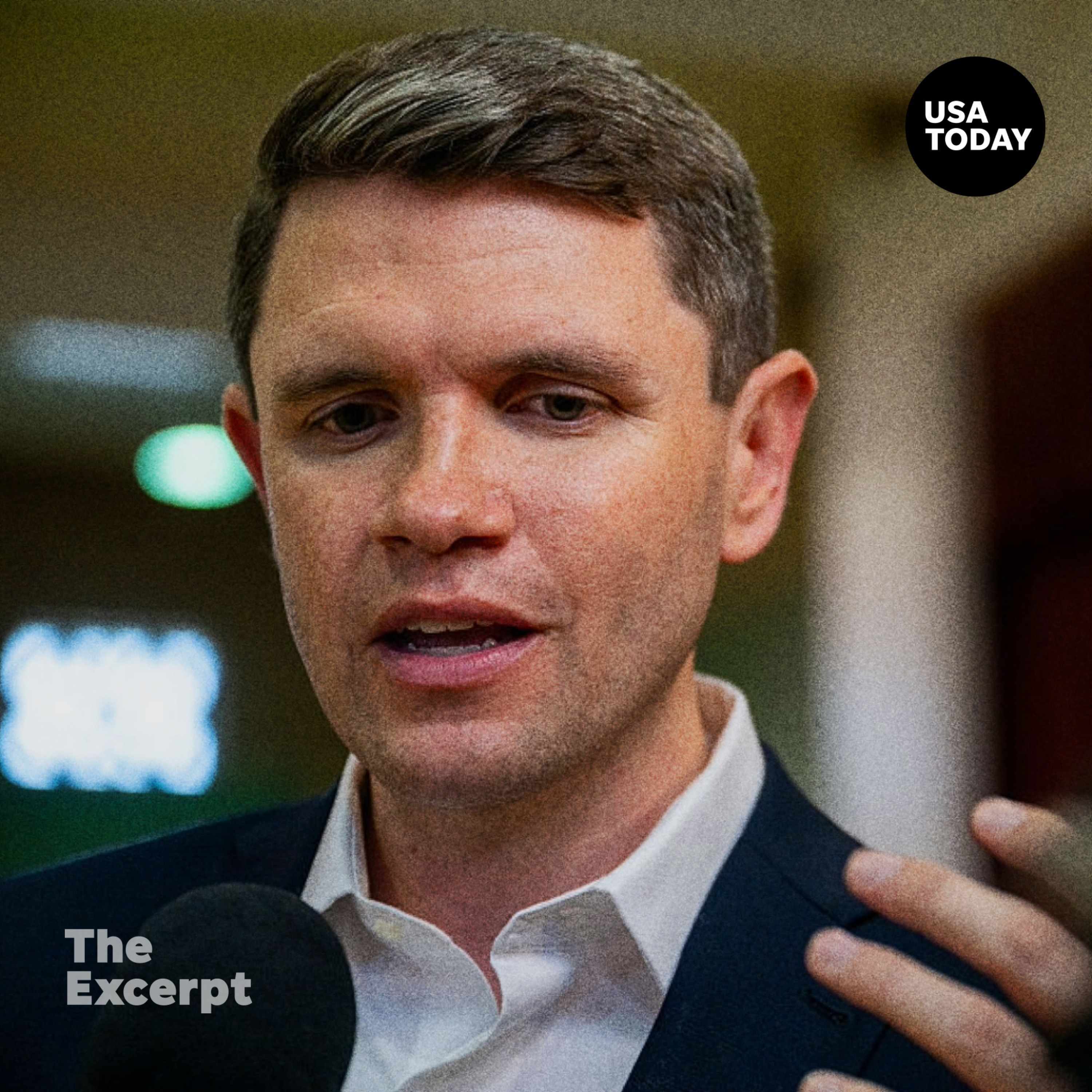
Texas is rarely considered a political battleground, so why are Republicans spending heavily to defend it? USA TODAY Chief Political Correspondent Phillip M. Bailey explains James Talarico’s rise, Ken Paxton’s vulnerabilities and why affordability, AI, data centers and frustration with Washington are reshaping the Senate race.
Let us know what you think of this episode by sending an email to [email protected].
See Privacy Policy at https://art19.com/privacy and California Privacy Notice at https://art19.com/privacy#do-not-sell-my-info.
Get every episode summarized
Each time The Excerpt publishes, we email you a written briefing from the transcript — the topics, who appeared, and any specific claims, with the ad reads skipped.
Email me new episodesFree for 3 shows. No card needed.
Hosts & guests

Transcript ready
105 searchable segments. Every word is indexed and playable.
Full transcript
The Excerpt — Why Republicans are suddenly worried about Texas. Machine-transcribed; use the interactive transcript above to jump the player to any line.
In the race to reach customers, short codes always win. Because customers open text messages from short codes 98% of the time. Go short codes! It is going to be useful. That's why Bakes, Airlines, Hospitals, and other major businesses trust short codes. And it is short codes by my own. Lease a short code today at ushortcodes.com slash podcast. Texas isn't supposed to be a battleground, but Republicans were spending heavily to defend a seat in one of the reddest states in America. So what's actually driving this race? And is it a sign for where politics is headed nationally? This is USA Today's The Excerpt. I'm Dana Taylor. USA Today Chief Political Correspondent Veldem Bailey joins me to explain why Republicans see Texas State Representative James Tallerico as a growing threat.
How are you Philip? It's good to see you. Hey, Dana. How are you? I'm doing well. So Texas has been reliably Republican for decades. Why is this U.S. Senate seat or this race so close? Well, look, you're right. I mean, look, Texas hasn't sent a Democrat to the U.S. Senate since 1988. Since Ronald Reagan was president. And we see now as forecasters, look at this gigantic blue wave, or at least forecasted blue wave. Now states like Texas are considered a toss up. And part of the reason James Tallerico, I think, has taken off, Dana, is because, look, he's a young lawmaker. He certainly represents a new generation of voters. He's only 37 years old. His religious liberalism. He's a very religious man, but he's also more of a liberal Christian. And then also I think he taps into economic populism of the times. Really, the Democrats are inheriting from Donald Trump. A lot of those voters who voted for Donald Trump, whether in 2016, 2020, or 2024, always put at the center of their decision making that Donald Trump was on our side.
But now with the economy, waning in his popularity, waning as well, we're seeing diesel prices hit record numbers due to the war with Iran. James Tallerico, really from the outset of his campaign, made it clear that he was going to dive into economic populism. He would say things like it's not right versus left. It's bottom versus top. Either the 1% of the people who we really need to be paying attention to. When you look at Texas, a very deeply conservative state that you have a backlash data centers, you have a backlash towards artificial intelligence. So there is, I think, a groundswell here that I think Republicans weren't anticipating. And Tallerico with his economic populism, again, his more liberal religiosity is a seminarian, for example. I think it's really captured something that many Democrats weren't expecting Texas to even be on the map. And he's really running ahead of the curve. I think right now polls have him at 6% ahead of Attorney General Ken Paxton, who is also very controversial himself. So look, Democrats are very eager to test out Texas in a way that I think hasn't been tested before.
As you know, Republicans are spending heavily to defend this seat. What does that tell you about what they're worried about? Republicans are having to defend across the board here. I mean, we're even seeing states like Kansas lean more in the competitive ranks. States like Georgia, North Carolina, really getting outside of Republican grasp here. Republicans have a 53-47 majority in the Senate. But you know, that means that Democrats basically have to have a perfect night. They have to defend their seats in Georgia and New Hampshire and Michigan. But they also have to flip states like Alaska or Ohio, right? States that have been deeply conservative for a number of years now. And that includes Texas. So for Republicans, the thought here is that look, and by the way, they're there were warnings. You know, Senator John Corden, the incumbent who ran against Ken Paxton in that primary warned that choosing someone like Paxton was more toxic candidate for put this race into chaos. Many thought President Trump might endorse John Corden and he did not. He ultimately went with Paxton.
And now as a result, Republicans are looking and scrambling, really spending a whole lot of money into Texas, pouring a lot of money into Texas, including the richest person in the world, Elon Musk, to prop up Paxton. So I think for Republicans, you know, having to defend all these different seats, including seats they never thought they would have to defend like Texas is really stretching their resources thin in a way they did not anticipate, I think, going into 2026. You noted a lean into cultural attacks against Tolerigo historically has that strategy worked in Texas. Isn't is there anything different this time? Look, the economic situation in Texas and across the countries, what makes it different, you know, Republicans can't really talk about the economy. They're in total control of Washington. They have the White House. They have both chambers of Congress. There's a more conservative Supreme Court. So when voters look at their wallets, look in their pocketbooks, and they're looking at their rising prices, they're going, well, if Republicans are in control, really what can Republicans talk about here? There was some emphasis on the one big beautiful bill, the cuts for taxes on tips and things of that nature, but that hasn't really pram the pump for the economy in the way that Republicans had hoped.
So they're really leaning into cultural issues. And explicitly, I think in Texas at a time, Dana, where both parties are really trying to buy for younger men, Republicans are making it very clear that they're leaning into cultural issues and explicitly talking about James Tolerigo's manhood. There are many ads and comments where they infer that while he's vegan, he is not, by the way, they refer to, oh, he has a favorite drag queen. What kind of man likes a drag queen? So it very explicitly in the Paxing campaign just this week, put out a ad about James Tolerigo saying that his favorite drag performer was Allison Edwards, a Texas native who had appeared on a war, a now performer who appeared on RuPaul's drag race, really leaning to that as another example of Tolerigo's not a real man's man, right? And we're seeing this pop up in other races as well, like in Michigan. Tolerigo, for the most part, I said, look, it's Ken Paxen, who's avoiding debates with me. It's Ken Paxen, who doesn't want to talk about the issues of affordability, of homelessness, of data centers, of banning THC, recreational marijuana in the state.
So while he wants to talk about my manhood, I want to talk about the issues that really pertain to you. And that was how James Tolerigo, Dana, debuted politically talking about, hey, it's all of us involved in this, not just these so slices of our demographics. We'll see if this is working, but it doesn't look like it is right now because Tolerigo continues to gain in the polls. And we spoke with a number of Republican voters in Texas, said the intending vote for Paxes, they don't agree with Tolerigo's social views, like he's too liberal for Texas. But at the same time, many of them told me that look, I look think of him maybe as a momless boy, but I don't think of him as a feminine or less than a man. So it's not very clear that these strategies are even working, but for Republicans, when you talk to experts, Dana, in Texas, and elsewhere, they really say, Republicans don't have a lot of leeway here. They don't have a lot of arrows in the quiver. They don't have a lot of options to talk about other than these cultural issues that have worked in the past, but may not be enough in this climate. We've touched on this, but when you look at voters across Texas, specifically what's driving their vote?
Well, look, for Republicans, I think what's driving them is the idea of wanting to keep Congress out of the hands of the Democrats. But the problem for them is that their most popular figure, President Donald Trump, is continuing to have lower and lower approval ratings pretty much every week, I believe he's hovering now between 31-32% in terms of job approval. And Dana, that's even in states that he won like in Texas where he's underwater. And Donald Trump, when he had the midterm convention, hoping that that would revive or rev up Republicans, it doesn't seem to be working thus far. There is this forecasted blue wave, but Republicans are trying to build a red wall. They try to do it last year with the Jerry Mandarin arms race, the President Trump launched across the country, getting different state legislatures to change the makeup of their congressional maps. But fortunately for President Trump, Democrats respond to it in kind so that may end up being evened out there at the House races. But in these Senate races, Dana, what you're seeing now is a lot of Republican candidates on their own stepping away from Donald Trump, scrubbing him completely from their websites. Saying things like, hey, the war on Iran is not a good idea, finally catching up with more populist maga figures like Tucker Carlson and former Congresswoman Marjorie Taylor Greene.
So President Trump is now, for the first time I think in his political career in the past 10 years that he's really taken over not just the Republican Party but American politics, he's seeing what the preview of a lame duck presidency is. So for those die hard maga people, whether it's culture or issues or their love and affinity for Donald Trump, that is their incentive to vote because if Democrats take back the Congress, Dana, it's not just the agenda that they might pass that maybe President Trump will sign some things and not sound a lot of other things. But it gives them the power of the gavall in these committees, that means investigations, that means subpoenas, that means looking into these deals that have been made with people who have been pardoned by the President and then cut deals or gotten to business with his sons. So there are many things here that look, the President does not want a Democratic Congress to have control over. He's very well aware of this because in his first term, as we recall, when Democrats got back a control of Congress, they impeached him twice. So the investigations, the possibility of impeachment and derailing remains of his presidency can turn him into a lame duck very quickly.
But unfortunately for the President, he doesn't have a lot of political backup because many of his own constituents who voted for him in 2024 because of inflation, wanted to stay out of foreign conflicts. So when you look out at the gas prices, when you look at the grocery prices, and then you look at this war with Iran, which many believe is a war of choice, then many people say, look, President Trump is doing the exact same thing, a reason I voted against President Biden or former Vice President Kamala Harris two years ago. So he's caught in a dilemma here that I think he's never had to face before, which is that he can't simply run to his usual tactics of breming up his own popularity. And that's where he's many candidates like a kinpaxed and twisted in the win. The answer here may be that it's both, but is this race ultimately about Texas changing politically or about voters everywhere being more focused on the cost of living than these culture wars? I think it's the latter. I know Democrats have always, when they don't overwork ran against Ted Cruz or anytime there's a Democrat running for, you know, Senate or governor or, you know, the presidential races, everyone says, oh, Texas might flip blue here, much in the same way they look at North Carolina.
And look, Democrats can't really break about too much. They themselves were going through some significant unpopularity up into recently because of our two party system when one party does poorly, the other party suddenly starts looking a whole lot better to voters. So I think it's the latter. I think that there is a deep sense with the rise of artificial intelligence with rising cost again with the war in Iran. There really is a sense of the country's not hit in the right direction. And that data is often the poll number more than any other, the determines the significant wins of the party out of power. The party out of power always gains seats in the midterm elections against the party that the president represents. But in this situation, I think it's slightly different because there is across the board, some very bipartisan populist sentiments out here, particularly, you know, against artificial intelligence and data centers. We saw, you know, the governor of Texas Greg Abbott, who just last year was praising companies for bringing in data centers and say this is going to be a big economic boom for Texas. We build big things here in Texas, right? Well, you have so many Texas voters across the board, Republicans, Democrats, liberals, and deeply conservative rural area folks as well saying they don't want these data centers in their backyard.
So that backlash, I think more than the Trinity demographics, more than the popular of the Democratic Party, is the real core of this. President Trump's political malpractice, Dana, in getting rid of someone like a John Corn and getting rid of some of these more popular incumbent Republicans who were safer bets. Simply because they had criticized him once or twice or loaded for his impeachment, I think it's coming back to Biden. Phil Pemberley is the chief political correspondent for USA Today. I love hearing your insights. Thank you, Philip. Dana's always thank you. Our stories come from USA Today Journalism across the country. We back with more of the excerpt. Every great company has a story. USA Today Top Workplaces wants to recognize yours. Whether it's the manager who inspires, the teammates who support, the culture that makes people want to stay. We're recognizing organizations building strong workplace cultures into 2027. Nominate your workplace for USA Today's Top Workplaces 2027 Awards.
And your team can be standing center stage next spring as we honor the nation's top companies at the National Conference in Boston. Visit topworkplaces.usa today.com to nominate your company. Nominations close September 25th. No purchase necessary to participate or win. This January, Bear Nuckle Fighting Championship takes over the ocean. The inaugural Bruce Crew sells for Miami to the Bahamas aboard the Norwegian Jewel. Three straight days with pool deck bear nuckle fights in the Caribbean, massive parties, beach events, DJs, cigars, tequila tastings and non-stop action. The lineup reveals coming soon. Cabins are disappearing fast and the prices won't stay this low. Preserve your spot with just $200 down at BKFSEA.com
More episodes
More from The Excerpt

Trump threatens Iran in fiery UN speech. What's next?
The Excerpt

What happens when the White House bans reporters?
The Excerpt

Andy Beshear talks faith and a possible 2028 run for president
The Excerpt

She asked for help. Her doctor dismissed her concerns
The Excerpt