Get every episode summarized
Each time Trumponomics publishes, we email you a written briefing from the transcript — the topics, who appeared, and any specific claims, with the ad reads skipped.
Email me new episodesFree for 3 shows. No card needed.
About this episode
Trumponomics is made possible by:
“Some people treat Chachy PT like some kind of smart search engine, and some use it to get work done.”From the transcript
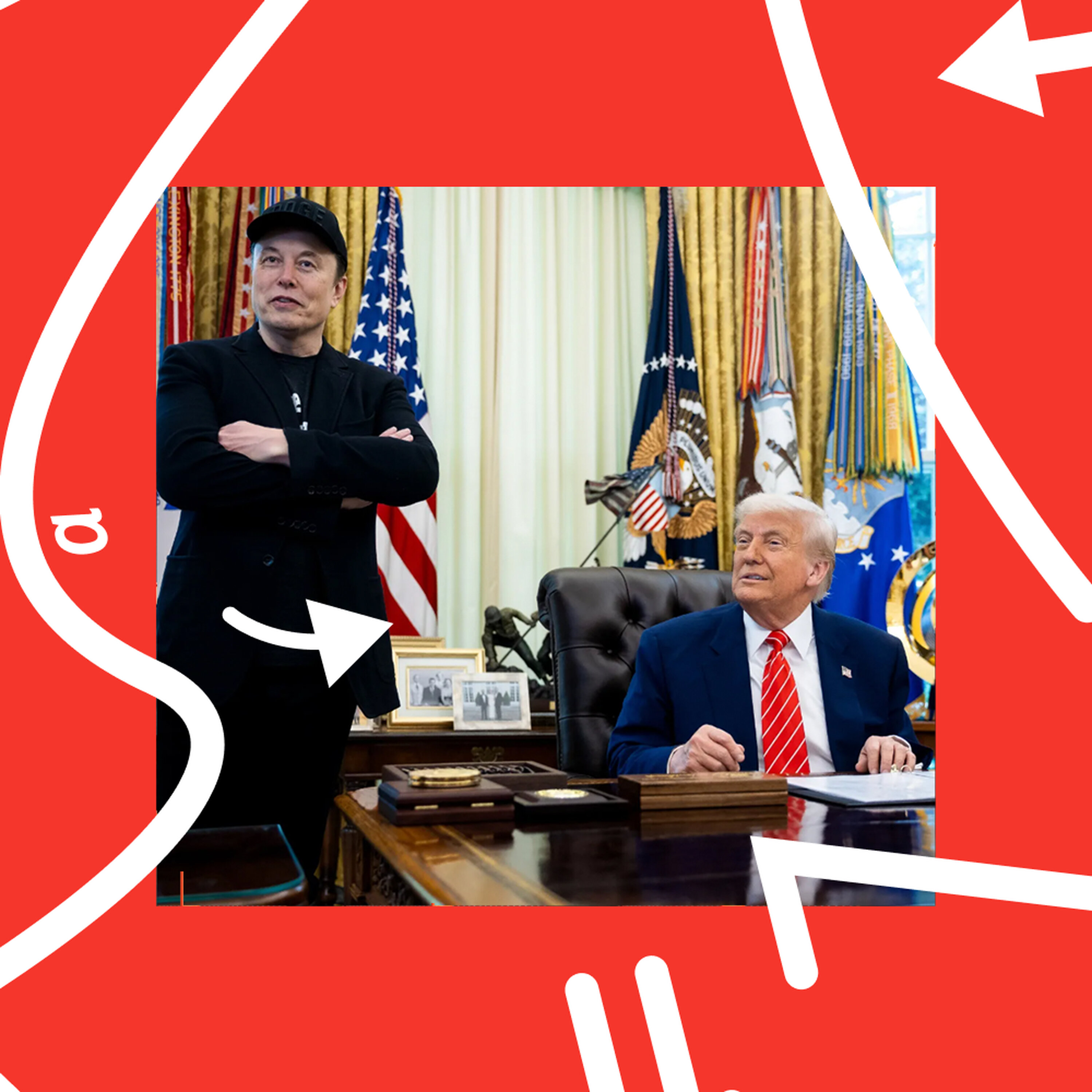
Elon Musk may be an extreme figure, but the authors of Muskism: A Guide for the Perplexed argue he represents a much bigger dynamic that's quickly taking shape, one where promises of “sovereignty through technology” may permanently embed tech figures such as himself at the center of government and society. Stephanie Flanders speaks with Ben Tarnoff and Quinn Slobodian about how Musk turned close ties with government into extraordinary power, and what his rise tells us about the changing relationship between Big Tech, the state and the global economy.
See omnystudio.com/listener for privacy information.
Get every episode summarized
Each time Trumponomics publishes, we email you a written briefing from the transcript — the topics, who appeared, and any specific claims, with the ad reads skipped.
Email me new episodesFree for 3 shows. No card needed.
Know when Ben Tarnoff turns up
Follow Ben Tarnoff and once a week we email you every new episode they appeared on — including guest spots the show notes never mention, because we read the transcript.
Follow Ben TarnoffFree. Pick your own day and time.
Hosts & guests


Transcript ready
408 searchable segments. Every word is indexed and playable.
Full transcript
Trumponomics — Why Governments Can’t Unplug From Elon Musk. Machine-transcribed; use the interactive transcript above to jump the player to any line.
Some people treat Chachy PT like some kind of smart search engine, and some use it to get work done. Chachy PT work is a new way of working in Chachy PT that can take action across your apps and files, stay with a project for hours if needed, and turn a goal into finished work. It's designed to help you move from a chaotic starting point to a reviewable first version. So all the source materials, briefs, and scattered information that you have to grind through to turn into something useful can just become something useful. Put Chachy PT to work on your most ambitious ideas and projects. Get started at chachypt.com by selecting Work Mode, available on plus and pro plans. This is Robert Smith from Business History. If you're listening to this, there's a good chance you're a small business owner. And like every small business owner, you started with a dream to do what you love and watch it grow. What you probably didn't dream about, keeping up with cyber threats. That's where MasterCard can help, with access to tools that help identify cyber threats to better protect your business.
Building a dream business? Priceless. For cybersecurity in a changing world, there's MasterCard. Learn more at mastercard.com slash small business. If you listen to financial news, you know a lot of time to spend thinking about what's next. The next opportunity, the next investment, the next move. But sometimes what matters most is being ready for what you never saw coming. For more than 75 years, Cincinnati Insurance has worked with independent agents to help protect businesses, homes, valuables, and more. Because planning for the future isn't only about knowing what's next. It's about making sure you're ready for what you can't predict. Let Cincinnati Insurance make your bad day better. Find an independent agent at cianfian.com. Bloomberg Audio Studios. Podcasts, radio, news.
I'm Stephanie Flanders, Head of Government and Economics at Bloomberg. And this is Trump-Ownomics, the podcast that looks at pretty much everything in the economic world of Donald Trump. Today we're stepping back from the news for one of our sporadic conversations about a book that I think casts new light on some key Trump-Ownomics themes. The book is Muskism, a guide for the perplexed. It came out a few months ago and I should say it's not a traditional biography of Elon Musk, but an analysis of Muskism as a world view or as the book puts it, an operating system for the 21st century. Now we should probably also add it's not a sympathetic portrait of the man or that world view, but the authors do capture some of the big developments in 21st century capitalism and Trump-Ownomics that we're living with now that were either pioneered or greatly exploited and accelerated by Elon Musk. And those authors I'm happy to say are with me now Ben Tarnoff, technologist and co-founder of
Logic Magazine who's written for a lot of publications and also wrote in 2022 the book Internet for the People, the Fight for our Digital Future. Ben, thanks for joining Trump-Ownomics. Thanks so much for having us. And Quinn Sabodian is professor of International History at Boston University at Guggenheim Fellow for 2025-26 and author of the book High Exbastats Race, Gold, IQ and the capitalism of the far right, which won a bunch of awards including National Book Critic Circle Award. Quinn, welcome. Happy to be here. I'm going to not necessarily point particular questions at either of you and just hope that you've reached a kind of symbiosis having written this book together. One question, the obvious one is, is why write muskism? What was the point of doing it? Well, I think we'd both been in the same position which is being overwhelmed by the presence of Musk and in many ways wanting to mute him from our stream both metaphorically and literally.
But especially at the height of Doge and after having respectively reviewed the Isaacs and biography, we felt like there was a story about Musk that wasn't really being told. There was really a more structural story, story about political economy, less about his psyche and his drug habits and more about the world that made him possible. So we really wanted to explain this gap between his absurdity, groteseness and almost visibility and then the fact that he has been rewarded more generously and opulently by the global economy than any person in history. How can you account for this gap between a kind of a mockery of a man and the rewards of the system? That was the motivating question. I think we set out to answer. That was what was striking to me. Some of it was illuminated by his life story or you were using bits of his life story to show how he had come to exemplify these kind of key features of a certain model of capitalism and as you say in the book an operating system for the 21st
century. Also very prominent feature of Elon Musk is his political worldview but for this conversation I'm particularly focused on these sort of elements of his approach to capitalism that you draw out. One of them is this key theme and his approach to business that doesn't try to escape the state but actually using the state to build market power to build wealth and profit. So maybe take us through that and a little bit of where we've seen that in his life story. Well this is one of the misconceptions that a company is quite a bit of the commentary on Musk which is to present him as a libertarian as a figure who's interested in shrinking the state or escaping the state. But what one finds when you look at the entire arc of Musk's career since his early beginnings in Silicon Valley during the 1990s.com boom is that he has consistently sought to instrumentalize the state
as a source of power and profit that far from trying to exit the state. He has tried to achieve what we describe as state symbiosis. So to find a profitable integration with government power in ways that help him build his businesses and the really clarifying case here is that of SpaceX which more than any of his other ventures has managed to really achieve this this extraordinary level of state integration. I mean it's funny because I was talking to someone in Europe about you know they were doing a sort of classic economic study of public private partnerships and how the Europeans had worked with various rocket manufacturers and others and which ones were successful and which weren't. And I was asking him sort of okay but is it a success if you've got a lot of rockets but you're completely dependent on this one private sector company that you've
worked with. I mean that is that that is one of the key things that you bring out these sort of public private partnerships today not partnerships of equals especially when you see things like Starlink. Yeah I mean if one of the canards we were hoping to dispel with the book was this idea that Silicon Valley ideology can be easily summarized as libertarianism. I think another one of the easy dismissals of Musk that we wanted to unsettle was the idea that he's simply a crony capitalist and a kind of a parasite on the system. If you follow the stages of his career as Ben suggested with the example of SpaceX he's been extraordinarily adapt at making himself useful to the government at different moments when he rolls out SpaceX in 2002 that's to aid in the expansion of the global war on terror and the new model of network centric warfare that Rumsfeld imagines it to be conducted but then just a handful of years later he is making himself useful to Obama in the green industrial policy that's designed to electrify the auto sectors to make America less dependent on fossil fuel
and less required to enter in quiet Myers like the Iraq war. So he is actually as you're saying managed to offer an expansion of state capacity in certain ways. We talk about this as sovereignty as a service which in very concrete ways allows governments and clients to do things that they couldn't do before right. It's very important even as critics to point out that he through SpaceX has reduced the cost of putting mass into orbit by over 90% across 20 years of business. So that seems on its face like a kind of positive thing you could say a successful public private partnership, good industrial policy but it comes with this catch of course which is that he holds veto power ultimately over that feature of state capacity you've just gained through your contract with him and this is made extremely clear of course through the discretionary and arbitrary and unexplained and actually disavowed decisions to turn off internet connectivity in the battlefield
for the Ukrainian armed forces on at least one occasion in Harrison and probably in Crimea as well. So this is the promise of sovereignty through technology that caches out as deep dependency on private ultimately unaccountable individuals and musk is in some ways only the most extreme and exaggerated version of that phenomenon across the digital capitalist space. The Ukraine case was very striking and you remind us the Polish forum minister has suggested after one of these incidents that they might be forced to look for other suppliers if Starlink was an unreliable provider and musk just said be quiet small man which I think in bodies obviously the way he approaches things. Peter Teal famously thinks you should just build monopoly businesses you don't want to actually have competition you want to have you want to be in that the only one in your space. He is quite suspicious of government and wants to replace government and and Elon has had this different approach of colonizing the state but the monopoly control
is is a big piece of it. Teal is a funny case because of course among his best known ventures is Palantir which is founded shortly after SpaceX and benefits from I would say many of the same political economic developments rides this contracting wave of the war on terror and successfully implants itself deeply in the American state just as deeply as SpaceX. So while Teal as you point out has fashioned himself as a libertarian ideologue of sorts his actual business practices do bear some resemblance to this muskish to state symbiosis dynamic that we're describing but I think that does point to a deeper dissimilarity between the two men which is that Teal has always been interested in presenting himself as an intellectual of sorts of someone who has intellectual and ideological motivations for his actions whether or not those entirely justify or align with
the outcomes whereas musk and this is something that I think made writing about him a bit challenging but also quite interesting one finds musk's ideology if you like in the everyday operations of his businesses particularly before he turns to the far right he's generally disinclined to make the kind of grand pronouncements that that a Peter Teal might but if you want to learn what is the operating system of muskism you actually have to look at how does he practice capitalism every day. Some people treat Chachy-P-T like some kind of smart search engine and some use it to get work done. Chachy-P-T work is a new way of working in Chachy-P-T that can take action across your apps and files stay with a project for hours if needed and turn a goal into finished work. It's designed to help you move from a chaotic starting point to a reviewable first version
so all the source materials briefs and scattered information that you have to grind through to turn into something useful can just become something useful. Put Chachy-P-T to work on your most ambitious ideas and projects get started at chachy-P-T dot com by selecting work mode available on plus and pro plans. The world of business is constantly evolving every day new challenges new opportunities new ways of working Comcast business keeps you totally in step with secure AI back networking built to power the way modern business gets things done today in more than 100 countries around the world that's some serious muscle and get this Comcast business powers over 90 percent of the fortune 500 and millions of small businesses behind it all network engineers cybersecurity specialists support teams thousands of experts answering your call at 2 a.m. like its 2 p.m. always on always ready that's a lot of coffee one partner powering how business
gets done for companies of every size all around the globe when you add it all up no one does business like Comcast business a business gift is never just a gift it's a thank you a milestone a moment of appreciation it's a message about how much someone matters and what your brand stands for at 4 imprint you'll find thousands of customizable options like premium apparel branded drinkware tech totes and more each chosen not just for function but for meaning you can tell every detail your logo your message your presentation so your gift feels personal and on brand and with expert support dependable service and thousands without a setup fee creating something thoughtful doesn't mean making it complicated every order is backed by 4 imprints 360 degree guarantee so you can be 4 imprints certain it'll arrive exactly as expected on time and with the care your brand deserves because when the moment matters the right gift speaks volumes and the right partner makes it easy explore gifting with purpose and certainty at 4 imprint dot com 4
imprint for certain for big business AI opened up a world of promise but that world of promise turned into a world of pain cost spiraling data scattered across disconnected systems security and governance increasingly complex AI initiatives struggling to scale and ROI that remains frustratingly out of reach the challenges in AI itself it's having the infrastructure AI needs to succeed which is right where boomy says we got you tens of thousands of enterprises trust boomy to connect data applications processes and AI with boomy businesses can eliminate silos automate workflows strengthen governance and create the foundation AI needs to perform at scale the result faster innovation more efficiency better business outcomes boomy turns a world of AI pain into a world of AI gain as boomy says we got you head to boomy dot com to learn more that's B-O-O-M-I dot com one of the other themes that you're sort of pulling out from his version of
capitalism is that he was kind of ahead of his time before de globalization he was into a sort of fortress economy approach to building things a very vertically integrated production at the time where actually most other big businesses around the world were actually building their very globally integrated supply chains now that something that comes through and in the end is a great advantage for him I guess absolutely and that's I mean following what Ben said our analog really here is Fordism right and Fordism is not a system that people understood purely by reading the life and work of Henry Ford but it's something they understood by seeing how he organized manufacturing and then the world outside the factory but this feature of musk that is often related to Ford namely vertical integration this desire to bring as much as possible of the production under the the roof of one firm has often been remarked on as a unique feature of musk he was doing it before it was cool so to speak right already in the 2000s at the high point of kind of supply chain capitalism
and high globalization he was already trying to make as many of the components himself reduced dependency on contractors and so on that's always been remarked on but very rarely or if ever explained where did the inspiration for this come from and I think this is one of the interventions of our book actually is to draw on his South African upbringing not only or merely to explain his later turn to ethno nationalist and exclusionary racism but to explain some of his political economic inclinations so later partite South Africa where of course he was raised and left as in his late teens was in a third way in contradiction to US like globalization already at the time and Soviet style search for self-sufficiency in a block model so South Africa was creating what we call fortress futurism they were using IBM mainframes to practice apartheid they developed their own nuclear bomb they build out their own auto industry through licenses from the major companies
and musk seem to have brought this mentality with him he sells and has been successful in marketing to both households and nations the idea that you can harden the walls of your own security in a time increasing threats whether those are climate-related social related political related immigration related so this seem to have sort of prepared him in advance for what we now think of as a more recent trend towards reshoring reterritorialization and deglobalization he was already on that train and when covid hit in 2020 he was especially well suited to pivot to a more domestically anchored production model because he was already doing it and furthermore he'd already sold that model abroad so the giga factory in Shanghai had opened in 2019 it would open a few years later in Brandon Burke so he's interestingly you know globally franchising a model that is at least partially premised on deglobalization and that's one feature of musk that I think is often overlooked
what you've just talked about for a for for an individual business or for his business as you suggest he's also kind of selling it to individuals implicitly that they can you know be there's almost like a kind of prepper field to it as you say they so he sells the fantasy that it states and individuals in an increasingly unstable world can fortify their self-reliance by plugging into his infrastructures but of course the paradox is that they become reliant on him in the process no I think that's absolutely right that this sovereignty through technology can be scaled either up or down I can be scaled up to the level of the nation state so he can sell satellite service or launch service to militaries and intelligence agencies around the world who are attempting to protect their countries in a world that feels increasingly unstable but that he can make that same promise at the individual level we quote from a presentation he gave where he
described a integrated Tesla dome where the various technologies that are provided by musk could help you achieve total self-sufficiency in a storm so for instance you would have solar panels on your roof you would have a Tesla battery in your basement you would have a starlink receiver up top so you're able to continue to get electricity you're continued to get internet service and you have a cyber truck in the garage and when we try to explain this concept of the prepper side of muskism we often use the cyber truck as a perfect visual illustration of that because it really is the car that is designed for the end of the world I mean not practically speaking as various researchers have discovered certainly not designed with aesthetics in mind no and I think it's actual resilience is somewhat debated but in terms of the cyber punk look what it's telegraphing is
the notion of a world that is breaking down a world of social and political and infrastructural and even ecological chaos that you'll be fine driving through the hordes of protesters or the flood zone in your cyber truck and that I think it also helps explain how he has pivoted politically because if you think about musk purely as the Obama era bright green future guy as we call it then it can be a bit bewildering to now see his current political and ideological incarnation the cyber truck I think helps provide that missing link of the future getting darker and the response being more about adaptation and hardening rather than trying to actually solve the deeper problems one of the things we also wanted to push back at in the book is the idea that at some point in the relatively recent past quote unquote musk went crazy in fact we think that if you follow certain
guiding principles he's actually been quite consistent and the shift from the sort of cherry red roadster to the cyber truck may look like a kind of u-turn but if you think about even awareness of climate change and its consequences and how that's sharpened and radicalized from 2008 when he rolls out the roadster to the 2020s when he rolls out the cyber truck well the way we understand the future under conditions of climate change has also darkened right there's no longer this vision of the possibility of an energy transition in which middle class consumer lifestyle would remain relatively untouched there's no prospect of that now right radical weather events or a matter of fact extreme transformations of landscapes and territories whether through forest fires or flooding are now a matter of seasonal occurrence so you actually are still the green mask it's just that the world has changed around you yeah i think people in that conversation for many years didn't want to sound like it was too late or paint only a negative
vision they wanted to suggest that you could still do these because they didn't want to instill a sort of apathy but i think given the direction that things have gone they've sort of they've given up on that there's a fatalism yeah even in the ecological community some people treat chachi PT like some kind of smart search engine and some use it to get work done chachi PT work is a new way of working in chachi PT that can take action across your apps and files stay with a project for hours if needed and turn a goal into finished work it's designed to help you move from a chaotic starting point to a reviewable first version so all the source materials briefs and scattered information that you have to grind through to turn into something useful can just become something useful put chachi PT to work on your most ambitious ideas and projects get started at chachi PT dot com by selecting work mode available on plus and pro plans the world of business is constantly evolving every day new challenges new opportunities new ways of working comcast business keeps you
totally in step with secure AI back networking built to power the way modern business gets things done today in more than 100 countries around the world that's some serious muscle and get this comcast business powers over 90% of the fortune 500 and millions of small businesses behind it all network engineers cyber security specialists support teams thousands of experts answering your call at 2 a.m. like it's 2 p.m. always on always ready that's a lot of coffee one partner powering how business gets done for companies of every size all around the globe when you add it all up no one does business like comcast business a business gift is never just a gift it's a thank you a milestone a moment of appreciation it's a message about how much someone matters and what your brand stands for at 4 imprent you'll find thousands of customizable options like premium apparel branded drinkware tech totes and more each chose and not just for function but for meaning you
can tailor every detail your logo your message your presentation so your gift feels personal and on brand and with expert support dependable service and thousands without a setup fee creating something thoughtful doesn't mean making it complicated every order is backed by 4 imprints 360 degree guarantee so you can be 4 imprints certain it'll arrive exactly as expected on time and with the care your brand deserves because when the moment matters the right gift speaks volumes and the right partner makes it easy explore gifting with purpose and certainty at 4 imprent dot com 4 imprent for certain for big business AI opened up a world of promise but that world of promise turned into a world of pain costs spiraling data scattered across disconnected systems security and governance increasingly complex AI initiatives struggling to scale and ROI that remains frustratingly out of each the challenges in AI itself it's having the infrastructure AI needs to succeed which is right
where boomy says we got you tens of thousands of enterprises trust boomy to connect data applications processes and AI with boomy businesses can eliminate silos automate workflows strengthen governance and create the foundation AI needs to perform at scale the result faster innovation more efficiency better business outcomes boomy turns a world of AI pain into a world of AI gain as boomy says we got you had to boomy dot com to learn more that's B O O M I dot com with the prepper point and the sort of self-reliance I had a sort of ludicrous example when I interviewed him down the line in a kind of remote interview for a big conference I shoot in London and just as we were about to start and his was obviously one of the highlights of the program was to talk to him there had been these big storms in Texas where he was he was in his house near
quite near the factory the SpaceX factory and there'd been these big power outages so we lost all contact and then he came back on about 15 minutes later and it transpired that his whatsapp video interview was being powered by one of the batteries of his Tesla car right about after about 50 minutes he switched to the other battery of the other car but this is obviously what you know everyone should be should be tried to do but you you made the point that on the other side of these kind of monopoly sort of you know very dependent relationships that that pentagon and other parts of government have got into that you know their service was being provided that they were actually he was doing something more cheaply and better than any other government contractor had been able to do where that failed was in the case of doge I mean how do you when you think about the themes in your book what you like does that cast on the doge experience yeah I think doge really represents a inflection point in the arc that were tracing because if you think about states symbiosis as you suggested symbiosis in ecology is a relationship of mutual benefit
between two organisms whereas in the doge experience it seems to tip over into something perhaps closer to parasitism where musk actually directly enters the state doesn't just provision the state with services of sovereignty but begins to exercise a degree of sovereignty himself personally which is quite unprecedented in his history and does so not very clearly to his own financial benefit the chapter we have about doge is called state acts and our our working assumption is that he thinks reformatting and restructuring the government will be very similar to the way he restructured and reformat at his own businesses he thought like Twitter it would not only be easy but it might also be fun he gamified the practice of doge quite literally by naming it after a meme coin but it was also continuous with things that came before like the other Obama examples we've already
cited doge was created inside the shell of the US digital services office which was created under Obama in the effort to upgrade modernize and bring online the government's databases so there is a continuity there that we think is under remarked on that in his case was radicalized to such a point that gutting the parts of the government that were seen as inefficient did create a kind of blank slate into which could be plugged the next generation of you know government provisioners as a kind of radical way of displacing the old primes and contractors and database providers that used to do that job so grok for government right which is now something and is not only getting big contracts at high levels of security clearance for the United States defense wing but it's something that probably wouldn't have happened without doge so looking at in terms of dollars and cents and saying he didn't save the money he said he was going to we think is the wrong lens if you look at it as a
kind of internal reformatting then it may not have succeeded to the extent he hoped but it has certainly made the government now much more dependent on his generation of service providers. Interesting we've obviously talked in different ways on this show and in general when you think about the way the global economy has gone we have these companies that have now often seen much more powerful much bigger than than governments and sometimes in the case of the sort of symbiosis that we're talking there's a sort of mutual dependency there to some degree but obviously the government can't exercise the kind of regulation over SpaceX that it would exercise in relation to a more distance business we're talking in the week where Donald Trump has infacically emphasized the idea of self-regulation for the AI companies which may end up at least by their own account their own AI models may end up being more powerful than any tool that has ever been created by a technology company reading your book does that help understand
that process that we're seeing with AI does it provide any clues for how governments could handle that relationship with the tech companies well I think part of the lack of accountability just described is by design right I mean the way that the military brought down costs for these services was often by not doing procurement along models of a spec contract which they had direct oversight over but just saying listen here's what we want you do it however you need to do it we don't need to know how you do it and we don't need to have any kind of IP rights or kind of further you know purchase on the things that you're selling to us you can sell it to the market and to us and elsewhere and that's been the 21st century digital capitalist service model the fact that it's become so oriented to government has been clarified by Alexander Carp's recent co-authored book the technological republic which came out when Ben and I were writing this book and which we found very clarifying because it's basically delivering a muskist manifesto it's saying Silicon
Valley needs to come home to the state re-recognize its role in public purpose and digital capitalism is actually not about making people's lives more pleasant or expanding out possibilities of direct democracy or connecting you with friends and people in the world the way it had been sold in the web 2.0 era but it's actually about securing national sovereignty against external and internal threats and that transformation of the rhetoric of what Silicon Valley is and what it does has not coincidentally accompanied the shift from the web 2.0 platform era to the gen AI LLM era which requires as we describe it a much different relationship to the government right it's not capital light which the users create all the information in the product it's capital intensive and it requires access to federal lands cheap access to energy water credit markets so since
November 2022 in the rollout of chatch ept a shift has happened which musk is very much accompanied which requires a deeper and more mutually coordinated relationship between big tech and the united states government and that will not change from one administration to the next unless the political economy of the united states somehow diversifies away from what's now a kind of one way that on the drive towards a g i through scaling so we think that you know the united states is in a tough spot that isn't isolated to individuals it's not a trump musk thing it's not even a altman amade white house or a wang thing it is a structural relationship between Silicon Valley and the united states economy that needs to be addressed at a deeper level and that right now no one is really charting a way out of right now there's a kind of cry of pain you could say in the
data center revolt but there isn't something like a real road map to how there could be a different version of american capitalism what's interesting i'll just add one thing and then Ben can jump in on AI is if you look globally how have other parts of the world confronted the same conundrum the EU and the UK is interesting because they're partially due to the wake up call of musk doing their best now to accelerate drives towards something like digital sovereignty to use what's now the big watch word which means replace musk's companies replace sucker bergs companies with clones that are home grown that takes political will deep capital markets and engineering know how perhaps only one of those three is actually been achieved so far but if you look further afield if you look at china for example they provide the best example of how you deal with this conundrum they welcomed in parts of musk's technology they give him a red carpet to Shanghai but they added an asterisk
that catl needed to be making the batteries for the test luck cars and that's now allowed them to use it as a springboard towards global dominance of lithium ion battery production and actual global dominance of ev production brazil and india are other countries that have shown more backbone you could say sathaprika to visa visa this problem of muskist dependency so that spectrum of responses policy responses will probably also apply in the AI era as well you say someone your book i think you say you're not sort of assuming necessarily that muskism will succeed but if you're a policy maker who kind of doesn't see the massive voters as non-player characters where do you start or what's the mentality that you talk about in muskism is pretty widespread now and is a challenge to governments that are trying to approach things in a more traditional way or at least think about people well this comparison to fortism was really helpful for us to help answer
the question that you're posing because for all of its to merits the fortest model did have a kind of social contract built into it right there was a version of consent both implied and realized through things like collective bargaining agreements mass consumption upward generational economic mobility our motivation writing this book was to ask whether or not in fact there was the equivalent for musk and his confrairs in the digital capitalist leadership class how did they think they would secure consent in a time of extraordinary disruption how do you anchor society when people's lives are being upended in that way and what has been so surprising for us to see is how thin their responses right musk has a very you could say cybernetic and we call it a kind of cyborg conservative response which is to take for granted that people are so plugged into their network technologies that you can effectively reprogram their brains or in his terminology inject
a mind virus that will beat the mind virus of your opponents and thereby jump them into your kind of apocalyptic hysteria about racialized immigration fears and thus they will cling to you and the contract will be secured through their fear really of what he's protecting you against alternatively the trickle down effect of the profits made in his businesses through things like the integration of the SpaceX stock into people's index funds is also seen as a way to secure people's sense of obligation really to musk as the engine of economic growth and this goes for the tech class as such but this we think is an inadequate way of securing legitimacy and consent and in fact the last few months of the data center revolts as they've been described the level of popular objection to the effects of
AI and tech on their lives reaches a level of cross party consensus that one would think normally is unreachable in American life right there's there's actually nothing that 75% of Americans agree on except for now that AI will make their lives worse that data centers are things to be rejected in their immediate neighborhoods so that is an enormous political challenge from the point of view of the tech class and the question me and Ben keep asking ourselves is is that actually a flaw or will that be a dismissable bug will the next generation of politicians be able to articulate a version of the future that puts them in harness that decreases their centrality to American economic life or will these data center uprisings be you know symbolically registered at the campaign trail but then dismissed as soon as the politicians come back into power that is a tantalizing question to leave in people's minds and maybe we'll get you back in a couple
of years see if anybody has answered the call in the US or anywhere else but Ben Tarnoff and Quinn Slovodian thank you so much thanks for listening to Trump andomics from Bloomberg it was hosted by me Stephanie Flanders and I was joined by the authors Ben Tarnoff and Quinn Slovodian. Trump andomics was produced by Sam Asadi and Moses Andam with editorial guidance from Megan O'Neal from Bloomberg Economics. Sound Design was by Blake Maples and Kelly Gary. Amy Keane is the executive producer of talk podcast and Cheryl Bromley is the head of podcast at Bloomberg and to help others find us please rate and review us highly wherever you listen. AI is entering its most consequential phase where scale safety and sovereignty will determine who leads and who lags. Join Bloomberg Tech in London on November 2nd and 3rd as global leaders
across business finance and policy examine the defining trade-offs shaping the future of AI. Thank you to our presenting sponsor Sarah's Force and Supporting Sponsors IDA Ireland and Schneider Electric. Learn more at bloomberglive.com slash tech London.
More episodes
More from Trumponomics

Is Trump About to Lose America’s Farmers?
Trumponomics

The Tough AI Questions Looming Over the Xi-Trump Summit
Trumponomics

Why 5% Treasury Yields May Be Just the Beginning
Trumponomics

Cory Doctorow Says Be Skeptical of the AI Sales Pitch
Trumponomics