Get every episode summarized
Each time Sidebean publishes, we email you a written briefing from the transcript — the topics, who appeared, and any specific claims, with the ad reads skipped.
Email me new episodesFree for 3 shows. No card needed.
About this episode
Sidebean is made possible by:
“So, Hilton called to me the superstition concierge to make your fan rituals a reality. Want to make sure our team doesn't wash your lucky jersey? Hilton's unmatched hospitality can keep up with any superstition.”From the transcript
Get every episode summarized
Each time Sidebean publishes, we email you a written briefing from the transcript — the topics, who appeared, and any specific claims, with the ad reads skipped.
Email me new episodesFree for 3 shows. No card needed.
Transcript ready
174 searchable segments. Every word is indexed and playable.
Full transcript
Sidebean — Why Blockbuster passed on acquiring Netflix | Sidebean. Machine-transcribed; use the interactive transcript above to jump the player to any line.
College football is back. So, Hilton called to me the superstition concierge to make your fan rituals a reality. Need a room to match your lucky number? We got you. Want to make sure our team doesn't wash your lucky jersey? Oho, that smells lucky. Hilton's unmatched hospitality can keep up with any superstition. Even a marching bandwink up call it 555 and 55 seconds. Hit it! When you need a team that will do whatever it takes on game day, it matters where you stay. Hilton, for this day. This episode is brought to you by PayPal. You know how a mom's bag has everything? Sunscreen? Snacks? A stapler? The new PayPal app is like that, but for your money. Shop, pay, manage your account, and earn rewards all in one place. And with purchase protection on eligible items, biometric security, and pass keys, you're protected at every step. Download the new PayPal app to get started. See PayPal.com slash protection terms. Hey, Bose here. On your next track, listen for the decisions. Distortion on the base. The vocal right-of-front. Every choice. Deliberate. With Bose, you'll hear it all. Your music deserves Bose.
This video was brought to you by Slypea, a platform for startups and small businesses to create professional investor decks and sales presentations. Get one free month by signing up at Slypean.com slash YouTube. You may have heard the argument that this company was meant to be what Netflix is today, but it may not be at all that simple. So let's talk about Blockbuster, the movie rental giant that dominated the market and delivered home entertainment to virtually everybody in the US during a couple of decades, reaching its pinnacle in the late 1990s, and then succumbed to the changes that the new millennium brought. So yeah, let's remember these old days of physically going to a video store walking around endless shelves loaded with VHS or DVD movie titles and video games that you would rent to take home, enjoy, and then head back to the store to return them. The younger ones may find all of that to be ridiculous, but for those in your mid-late 20s or more, it certainly brings a few memories. That's right, what is now just Netflix and chill, whatever that means to you, back in the 80s and 90s was the whole thrill of a family trip to Blockbuster to pick up the weekend movies and luckily some popcorn and goodies.
In this episode, we will go over what happened to Blockbuster, how it managed to become the most significant movie rental service in the world, then we'll review the business model and what happened to it when on the man video and online streaming emerged. This is company for N6 Blockbuster. You may think of Blockbuster as the perfect example of a business that got left behind by technology and new consumer behavior, but at the end of the day, the truth is that by 2004, they had more than 9000 stores in the US and around the globe, employing more than 80,000 people. Those would sound like good numbers for any business, if only the internet wasn't just about to take over and revolutionize the market entirely, leaving all those thousands of stores pretty much obsolete. So let's go back to the golden age of video rentals to review how this company rose to what it became.
The first Blockbuster store was opened in 1985 in Dallas, Texas by a local entrepreneur named David Cook, who worked as a software developer for oil and gas companies mainly writing computer programs to run inventories. Along with his wife, they got interested in the video rental business and thanks to his background, they realized that most video stores were mainly small, family businesses with a reduced inventory of their movie titles and therefore a limited offer to the public. All of this gave Cook the idea to create the first super brand for video rentals. His background proved very useful when they finally opened the first Blockbuster store with an inventory of 8000 tapes and a brand new computer system to manage it, making the rest of the local stores look very modest. The store was a hit and they realized there was a bigger appetite for video rental than they first expected, defeating the idea that rentals were mostly exclusive to movie hits and new releases. The Cooks set out to raise money for further expansion with an initial stock offering. They started franchising the brand and built a $6 million warehouse to help sustain and support future growth.
Interestingly enough, Blockbuster stores reportedly had a custom made inventory to their neighborhood based on local demographics. In other things, the efficiency and inventory management allowed Blockbuster to be the only video rental to have the actual tapes and discs displayed on the shelves. With this, the public could just go and pick them up, check out in the counter and leave as opposed to the traditional procedure where stores would showcase empty boxes and then they'd have to go to the back and get the actual movie for the customer. That kind of reminded us how Toys of Russ changed the concept of toy stores by merely stacking up toys on shelves and hallways for the first time. We made a video about that, check it out. But after the initial investment, the Cooks had a hard time raising money for more expansion and soon Blockbuster was facing dead. Cook was also starting to worry about the rise of cable TV and the threats that it could pose to video rentals. So less than two years later, he sold the majority of the company to a group of three investors who already owned some of the franchises. One of these investors was Wayne Huzingga, an accomplished American businessman that ended up becoming the head of the company. By 1987, Blockbuster was operating 133 stores and had become one of the country's largest video chains in terms of revenue.
Sales went from 7 million in 1986 to 43 million that year. By the end of next year, there were 400 Blockbuster stores. However, at that crazy growth and pace, soon in the early 90s, video rental markets started looking saturated. Entering the new decade, the company's earnings came from an impressive 114% growth in 1988, to a still-great 93% growth in 1989 down to a good 48% growth in 1990, starting to look like a concerning trend. Besides this, the threats of cable TV companies were getting real. The 91, Time Warner announced it would upgrade its cable system and only three days after Blockbuster's shares dropped more than 10%. So the company soon started looking for expansion abroad and continued its strategy of acquiring more of the leading video chain stores in countries like Japan or the United Kingdom, where they bought the largest one at the moment, City Vision PLC for $135 million. Finally reaching a presence in 24 countries in the coming years. In 92, Blockbuster went on a series of agreements to diversify the company operations beyond the core of the movie rental business.
Soon came other inclusions like Blockbuster Music, a merger of some music companies, and things like an agreement with the British conglomerate Virgin Group to set up mega stores in the US, Europe, and Australia. Already in December that year, the first such store opened in LA, who Zenga envisioned these stores not only renting videos but also selling and renting music, computer programs, games, and other in-store attractions like arcades and even live performances. They even dreamed of a full blown amusement park, but as you know, that never happened. By 1993, the blue and yellow Blockbuster logo wasn't more than 3,400. Callers Football is back, so Hilton called to me the superstition congeirs to make your fan rituals a reality. Need a room to match your lucky number? We got you. Want to make sure our team doesn't wash your lucky jersey? Oho, that smells lucky. Hilton's unmatched hospitality can keep up with any superstition. Even a marching bandwinkup call at 555 and 55 seconds. Hit it! When you need a team that will do whatever it takes on game day, it matters where you stay. Hilton, for this day.
This episode is brought to you by PayPal. You know how a mom's bag has everything? Sunscreen? Snacks? A stapler? The new PayPal app is like that, but for your money. Shop, pay, manage your account, and earn rewards all in one place. And with purchase protection on eligible items, biometric security, and pass keys, you're protected at every step. Download the new PayPal app to get started. See PayPal.com slash protection terms. Hey, Bose here. On your next track, listen for the decisions. Distortion on the base. The vocal right-of-front. Every choice. Deliberate. With Bose, you'll hear it all. Your music deserves Bose. Video stores worldwide. With its ever-growing corporate activities, Bloodbusters was committed to diversification as a means of ensuring its future. And it's response to facing the advance of new formats like video and demand and satellite TV. This strategy reached a peak when the company went for a $4.7 billion dollars value-aided merger with the Media Giant Viacom Inc.
It was also who's in a sign off from the company, as he would leave just shortly after. That merge deal was controversial, as it reportedly was an unprecedented move from Viacom in its plan to take paramount out of QVC network's hands. In the epic bid war, they held to own paramount. Viacom and Bloodbusters valued their stock swap merger at $8.4 billion. In Viacom said it would raise its bid to $105 per share, totaling $6.5 billion for 50.1% of paramounts stock. But back to Bloodbusters, this can be considered the beginning of the end. And we haven't even talked about Netflix yet, but we'll get there soon enough. So, under Viacom's tutelage, the company pretty much stopped growing and started the downhill turn. During the early years of the new millennium, Bloodbusters' competition included cable and satellite companies offering video on demand, online movie rentals offering mail orders, and large retailers like Walmart stores that sold inexpensive movies and games. All this left Bloodbusters' shorter, besieged for the years to come, but there was also a series of questionable decisions they made.
For example, they turned down deals that would later prove very successful at rejecting an exclusivity deal from Warner Brothers to rent DVD releases for some time before they went on sale to the general public. Walmart seized the opportunity and a few years later surpassed Bloodbusters as the studio's single largest source of revenue. They also turned down not one, but two deals from Netflix. First in 2000, they decided not to acquire the platform for $50 million. Later, they also turned down Netflix offers to buy Bloodbusters online video service. In 1999, Bloodbusters went public and released an IPO at $15 a share, below the range analysts who followed the industry had anticipated. Making the total raise around $465 million. In July 2010, Bloodbusters was delisted from the New York Stock Exchange. Back to the 2000s, they were after other salvation type operations like partnering with N-RON in 2004 to develop their late video on demand platform in response to what Netflix had been successfully doing for years.
Doing most of the work, N-RON built a robust video on demand platform that was developed and tested even with customers. But soon, they realized that Bloodbusters was so focused on keeping the ones-looker to video stores at bay and doubted that they wouldn't supply enough titles and supports for the video on demand business. As a result, the whole thing was just canceled and N-RON stock plummeted afterwards. Within a few years, Netflix and other competitors began to eat into Bloodbusters' profits, not by undercutting it but by reinventing the Durantle in the digital age. So let's take a quick look at business models and what Netflix was doing to innovate while Bloodbusters moved through the new millennium with all the clumps in as of an old giant. You may have heard a cheesy story that Netflix was created after its founder Reed Hastings was upset for having to pay $40 on late fees for returning a movie to, you guessed it, Bloodbusters. Allegedly, Apollo 13. Yeah, late fees, we all hated them, but they were kind of a necessary evil to the rental business model. The profits from those late fees were fat, accounting for an essential percentage of the company's earnings, reportedly around $800 million a year at some point.
That sounds greedy, and even when they tried to get rid of them, they didn't. In 2005, they implemented a new policy that charged you the full price of the movie or game after eight days which you could cancel by returning the products in question and paying the restocking fee. To move backfired, there's more than 40 states filed suites against the company for falls advertising. On the other hand, already in the late 90s, Netflix was experimenting with new ways to rent movies, non-dependent, unbreak and mortars stores, and started their DVD mailing system. Let's make a quick comparison on those two models. You already know the traditional Bloodbusters way. It had physical stores where you would go pick up movies, take them home, three days later, and then head back to the store to return them. With time, this concept was enriched with in-store attractions and related sales, making it an enjoyable experience. Remember, the excitement of going after the new movie release or picking up the latest video game after having walked around the store, laying your eyes and all these titles. It was undoubtedly a weakened plan for families and friends. But then of course, was the pain of going back to return them after only three days, or assuming the punishment of paying those hatred late fees.
There was certainly a lot of mobilization there and the collateral pains of it. On the other hand, Netflix was looking for ways to simplify the process and even get rid of late fees, despite they also had them at the very beginning. So they came up with a DVD mailing system where you would sign up for a membership and be able to choose movie titles to be directly mailed to your home. Once you were done, just send them back with prepaid return envelopes that were also provided. This felt new and fresh at the time, but they only had around 300,000 members, as opposed to the millions in Blockbuster. Later on, with this system, you would only get new movies after you had returned the ones you got, allowing you to get rid of the late fees. But this mailing system relied on the postal service and implied waiting one day or more to get your movies when in Blockbuster you could just go and pick it up. Also, the movie catalog Netflix offered at first was just ridiculously smaller than Blockbusters. However, this placed Netflix as a fresh face in the market and made manifest their will to innovate and provide different better solutions to movie rentals.
But in this process, they realized Blockbusters competition was still just smashing in terms of magnitude and it was then when they proposed to sell them the company. For Blockbuster, turning down the offer ended up being better, very bitter, but for Netflix, it ended up being a good thing as it probably urged them to push harder towards innovation and competition. For some time, Netflix had a... This episode is brought to you by PayPal. You know how a mom's bag has everything? Sunscreen? Snacks? A stapler?
The new PayPal app is like that, but for your money. Shop, pay, manage your account, and earn rewards all in one place. And with purchase protection on eligible items, biometric security, and pass keys, you're protected at every step. Download the new PayPal app to get started. See PayPal.com slash protection terms. Hey, Bose here. On your next track, listen for the decisions. Distortion on the base, the vocal right-of-front, every choice, deliberate. With Bose, you'll hear it all. Your music deserves Bose. Considered offering movies online, but it was only in the mid-2000s that data, speeds, and bandwidth costs had improved sufficiently to allow customers to download their films. The original idea was a Netflix box that you could download videos overnight and be ready to watch them the next day. By February 2007, they had delivered 1 billion DVDs and began to move away from what their original core business originally was. By introducing video on demand via the internet. And, well, the rest, you know, was history.
In January 2013, Netflix reported that they'd had added 2 million US customers during the fourth quarter of 2012, reaching 27 million streaming customers in that country, and a total of 29 million customers globally. Already in September, that same year, Netflix reported its total global streaming subscribers at 40.4 million. Four years later, in October 2018, Netflix customer base tripled to 137 million worldwide and confirmed its rank as by far the world's largest online subscription video service. So, yeah, at the end of the day, maybe Blockbuster was meant to be what Netflix is today. Considering they were the single most prominent brand in movie rentals, and they had the business muscle to lead an industry revolution. And, yeah, they were stubborn about sticking to brick and mortar stores and those lucrative late fees from the old business model. Clearly, they failed to evolve the business alongside technology and new consumer behavior. It's arguable, and maybe a bit unfair to say that the biggest mistake was to turn down on Netflix. In hindsight, we know that closing that deal would have provided them with the new blood required to innovate their already large business.
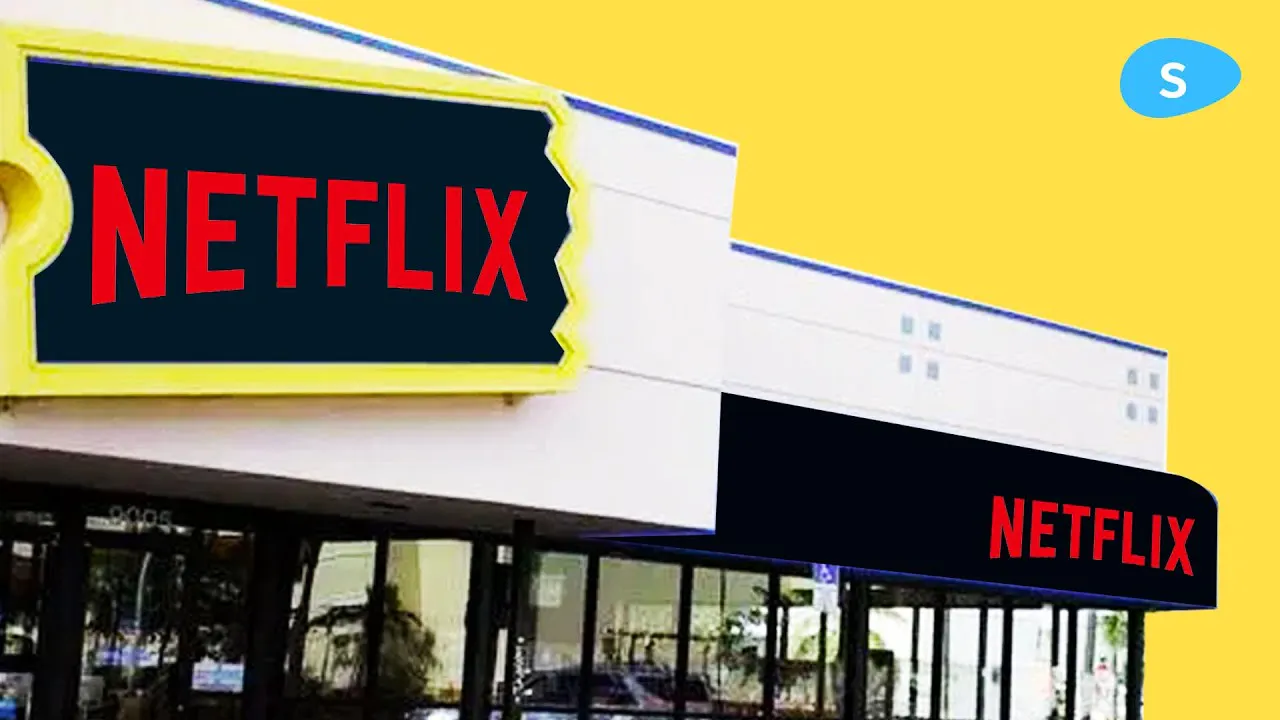
And if that had happened, maybe the color of online streaming wouldn't be red as it is today, but blue and yellow. Now, if you're stuck at home and get really tired of Netflix, what I would recommend checking out is our starter cafe. This is a channel in our Discord server where entrepreneurs can just interact and have a chat, and I hang out in there sometimes. I also do a live Q&A after we publish each video. So, if you want to hang out on that event, make sure to subscribe to be notified when the next video comes up. That's all for today, and see you next week. This episode is brought to you by Born in Roma fragrances by Valentino Beauty, the iconic fragrance duo. Donna Born in Roma Ode to Parfume is a feminine fragrance featuring juicy black current, central jasmine, woody cashmurin, and warm vanilla.
Its masculine counterpart, Womow Born in Roma Ode toilette, has notes of fresh violet leaf, aromatic sage, green vetiver, spicy ginger, and mineral salt. Shop at macy's.com Fall has never looked or tasted this good. Sweet Greens Fall Harvest Menu is back with seasonal favorites dressed to impress and made to be devoured. Warm roasted sweet potatoes, crisp apples, maple glazed brussels, and crave worthy flavors in the autumn harvest bowl, maple glazed salmon plate, and roasted bacon brussels side. The season's most desirable menu has returned to sweet green, featuring Fall's best dressed. Make your move, order on the sweet green app. They're running a cover 2D fans. But you're running to get game day deals on Uber Eats. Keep everyone at tonight's watch party fed with deals from your go-to restaurants, or stock up with deals on your favorite snacks and groceries.
Whatever the occasion, get game day deals on Uber Eats all season long. It's not football, without food. Uber Eats, order now. Terms apply, product availability varies by region, see app for details. Afternoon glare totally ruined my watch party for the big game. That's when my buddy recommended Blinds.com. With custom window treatments made to fit your style, space, and budget, customers who shop at Blinds.com experienced overwhelming satisfaction. Side effects may include a fuller, deeper night sleep and a sudden urge to host the watch party again. Blinds.com isn't a medication, but it can improve how you feel about your home. Visit Blinds.com to order your free samples today. At ZockDock, we know you care about your health. You wouldn't do that early morning cardio if you didn't. So the fact that your annual physical is overdue just shows how hard it can be to get seen by a doctor. Sorry, that doctor's not a network. Press one for more options. You've reached us outside normal business hours.
The next availability is in three months. But ZockDock makes finding the right doctor easy. Download the app and search by specialty, insurance, and availability. Read real patient reviews. Then book instantly. ZockDock, ready to be seen. Did you know that mosquitoes have killed almost half of all people who have ever lived? Today, people are fighting back. With support from the Gates Foundation, American scientists and partners around the world have developed a new generation of bed nets that can kill up to 90% of mosquitoes exposed to them, helping cut malaria rates in half. The result? A safer, healthier future for everyone. The Gates Foundation, partners of human potential. Search gatesfoundation.org slash mosquito to learn more.
More episodes
More from Sidebean

How to build an Investor Data Room | Sidebean
Sidebean

Will AI Make You Rich or Jobless? | Sidebean
Sidebean

Slidebean Pitch at DreamIt Ventures Demo Day | Sidebean
Sidebean
The Fatal Flaw in Apple's $500 Headphones | Sidebean
Sidebean