Get every episode summarized
Each time Radio Islam publishes, we email you a written briefing from the transcript — the topics, who appeared, and any specific claims, with the ad reads skipped.
Email me new episodesFree for 3 shows. No card needed.
About this episode
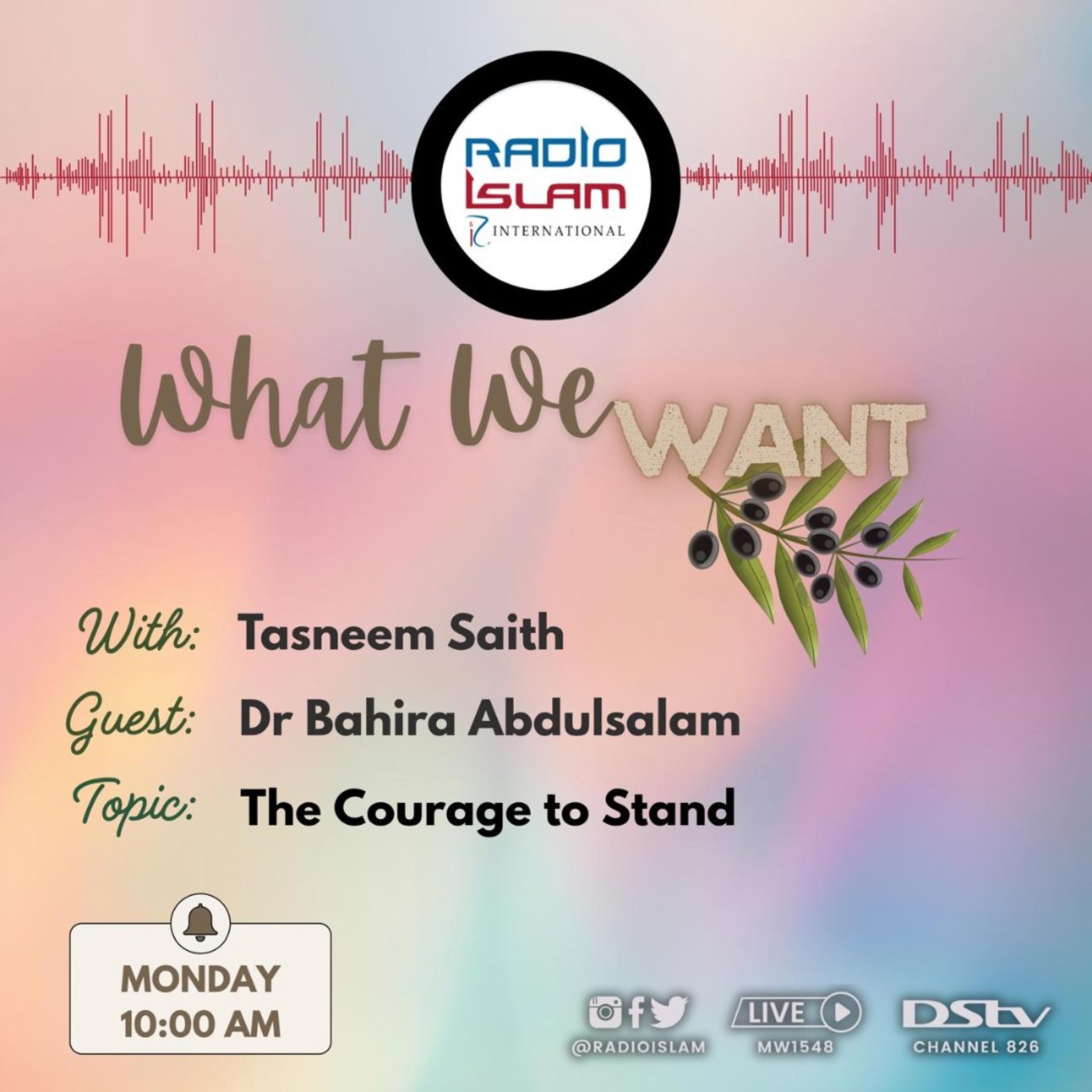
“The what we want program with sister's name, safe on Radio Islam, explores journaling and reflections inspired by the wisdom. Manarafa Nefsahu Fakatarafa Rabbahu, one who truly understands themselves, gains a deeper understanding of their Lord.”From the transcript
Get every episode summarized
Each time Radio Islam publishes, we email you a written briefing from the transcript — the topics, who appeared, and any specific claims, with the ad reads skipped.
Email me new episodesFree for 3 shows. No card needed.
Hosts & guests
Transcript ready
314 searchable segments. Every word is indexed and playable.
Full transcript
Radio Islam — What We Want - The Courage to Stand. Machine-transcribed; use the interactive transcript above to jump the player to any line.
The what we want program with sister's name, safe on Radio Islam, explores journaling and reflections inspired by the wisdom. Manarafa Nefsahu Fakatarafa Rabbahu, one who truly understands themselves, gains a deeper understanding of their Lord. Tune in every Monday morning from 10 to 11 a.m. on Radio Islam International. Bismillah yurrahman yurrahim. All praise belongs to Allah, the Creator of the Nefs, the Ten of the Hads, the One who sins, reminders when we drift and mercy, when we return. Salat insalamu ala wa bilab, wa minabhi Muhammad, Allah wa salamu ala wa salamu ala Umahat, and Muminini's family, and his friends, his companions, and all those who walk the path of truth, what sincerity. As-salamu alaikum warahmatullahi wabarakatuh,
and welcome to what we want with new hosts to seem safe. Yes, indeed this is Chef Deer's Aiklet food, for your soul, on your favorite learning session, Radio Islam International. Alhamdulillah, dear listeners, today I'm super, super excited because the topic of today is courage to stand. And today we speak into a woman whose journey has taken her from engineering to academia into the community of activism. And now into one of the biggest political races, races in Toronto. She's an engineer, she's a researcher, educator, mother, community advocate, and an independent candidate for mayor of Toronto to all our listeners of Radio Islam. Today we are crossing borders all the way to Canada. This is Dr. Bahira Abdu Salam. As-salamu alaikum warahmatullahi wabarakatuh, Dr. Bahira, and welcome to what we want. Ma'alaikum salamu alaikum warahmatullahi wabarakatuh.
Thank you so much, Mr. Stair, for the great introduction. I'm also very excited to be with you today. Alhamdulillah, JazakAllah so much for making the time and I know the time difference in Canada and we've got a little bit delayed, but JazakAllah so much, Dr. I do want to start, before we get into the whole politics and just let's go right back. Who was Dr. Bahira before the PhD, before Canada, and definitely before politics? Well, I am a woman who has a passion to challenge the system. As far as I, like as a little girl, I was raised in a middle class family, born and raised in Cairo, Egypt, and my family was very kind
and they are encouraging me for education and kindness and being a compassion. And of course, Alhamdulillah, born and raised as a Muslim with the commitment to the religion. So I started by being and like stepping in engineering which is an area of a male dominated field. And this is what I started with in my early life as an engineering student and graduated from Cairo University in Egypt. Alhamdulillah, I'm a barricade. And I'm trying to imagine now a little girl, right, deciding when they're always something in you that you enjoy solving problems. I mean, why, what made you go into choosing engineering? Well, I, so one of the things that I had the passion
for imagination and problem solving and also to challenge the stereotypes. The stereotype of that a woman may not be very successful as an engineer, which is not very common. So I wanted to prove that it is possible that I can be a successful engineer and because I have the talent and I have the perseverance to work on in this area. So that's, that's what motivated me to go into this field. Absolutely inspiring. And Dr. Wind all the way into, to do the PhD. And we know PhD sounds very impressive until you actually have to do one. So what is like the journey, I think,
teach you about yourself getting a PhD? So I originally, after graduation from Taylor University as an engineer, civil engineer. I got, I started like working in my field. And then I got married and I had my first two kids. I traveled to Saudi Arabia and I stayed at home for around seven years. I was not, I was just raising my children. I didn't work or study, but I still had the passion to go back to the education and to the, my area. So I went back to Cairo and I went back to my work and to the university to, to go back to the,
like the innovation and the technology because it was always a passion for me to, to learn about innovation and technology and new things in my field. And after finishing my master's degree in Cairo, I realized that I, this is not enough for me because there are lots of, lots of, like the world, you know, the knowledge when you start learning, it never ends, right? So I said, I want to, I want to continue because it's kind of a passion. It was a passion for me. So I was trying to explore the area of composite materials, which is the field that was mainly inspired from the aerospace industry and then the applications
for the civil engineering industry. So I got, I had to search for a scholarship and I searched everywhere around the world and it ended up that I received a scholarship from the University of Sherbrook in Quebec and then I came here with my family. What a journey, so Hanela. And Dr. Minshans moving from now Cairo to Canada, right? Now what was the transition? I know I'm really, really unpacking a lot of your journey, but I'm so curious to know what was the transition like and in building a career, having a family, raising children, establishing yourself and now finding also to be in a place that's completely a different environment. What was it like, Ben? Well, so the transition was not directly from Cairo to Canada.
I stayed in Saudi Arabia for seven years. And Hamdolai made Amra and Hajj and I was just at the end of this time there in Jidda, Riyadh and Makkah. And then I went back to Egypt. So definitely the transition from Cairo to Canada to Sherbrook, especially I went to Quebec, which is a French province and French is my third language. And the University that I had to go to is a French University. So I had the language barrier. I had some cultural barriers. And I had the cultural shock. Of course, but under the weather, of course, the change of weather was the severe harsh winter,
unbelievable. But when you have a mission and you have an objective, you are trying to help your children to get better education, better life and to learn something that can serve your community and the people. So all those barriers have to disappear. But definitely any new environment, when you step outside of your comfort zone, you learn new things. And I always have this positive try, as much as possible, to be positive and learn from others. And every human being, every culture, every community, they have something beautiful to learn from.
So of course, there are some negative things, some things that are not aligned with my values. So I just look at the positive things and learn from it. And just try to be an active member in any community. I step in. So that's what I did when I first came to Canada to live in Cherubok, Quebec. And I have to choose the positive, but I know I have to ask the negative questions. And it's a Muslim woman in the immigrant side. Did you experience any discrimination or Islamophobia along the way now from moving? Was it obvious or was it sometimes that kind of much harder to prove because it was hidden maybe in assumptions or attitudes? Well, it's definitely this was one of the major reasons of me,
like switching from engineering to politics. And also moving from Quebec to the United States and back to Toronto because there are laws that were underway in Quebec that restricts the Muslim women from wearing hijab and participating in like organizations, public organizations or public life. So those discussions were very active when I was completing my PhD. So my opportunity to work in Quebec was very low to find a job in my field. So this is what motivated me to start looking into other options
and move to the United States for a couple of years. I had a post-doctoral fellowship with Western University and University of Arizona. It was always the Islamophobia and the hijab that created the shift in my career. So one of the things that was and sometimes it was very clear and very confrontational and very shocking to know that because of my hijab and because of my identity, I will not be able to proceed in this specific job or proceed in this specific city. So I'm the larblamin. I believe that any door that closes, Allah SWT opens a better avenues and doors for us
if we are stick to our principles indeed. So sometimes when I got this kind of shock, I go back to my principles and then I look at it in a positive way. I say, okay, but in many circumstances, I reached a level that I have to get my rights. I need to go to the court and to get a legal support so I can get my rights because when you are working toward a certain objective and suddenly you are dismissed for reasons that you have nothing like to contribute to. So always the other side or the judgment because of your appearance or your religion.
So I actually, I didn't take legal actions in many cases, but I think I reached a stage that I think that we need to take action. So this is what I said, okay, let me take a political initiative. So no one else will feel the same pain or the same discrimination that I have to go through. So I'm having a lot of that so powerful. And I want to sit with that for a little bit. But Dr, it's time for quick break. Please don't go away. Dear listeners, we will go back. We will go deep into the conversation after the break. Welcome back and we are joined over with Dr. Plahira of the Salam all the way from Toronto, our independent candidate for media of Toronto.
Dr. Plahira, we were talking so much about a deep conversation and I think you are just the epitome of the courage to stand. And this is where I think our story now gets, oh, your story actually gets particularly important because your advocacy, right, didn't just create a political debate. And eventually it became a professional disciplinary matter. And this is what was scheduled currently in the list of proceedings involving you. And Dr. Hes said the complaints arose from a public statement, including your advocacy around Palestine, around what you stand for and what you believe in, and you've rejected all those other allegations. So take us back. When did you realize your political and humanitarian expression had become a professional issue? Well, so after running for mayor in 2023 for the first time, so that was like, that was my first time to run for public office.
I started using my platform to advocate for issues of interest of the people who I'm standing for. So because also I represented parents in TDSB, I started the speaking up again as the educational policies that are in our public school system that parents do not agree with and the religious communities. So I started speaking publicly about it before October 7th. And I had the huge, like positive comments and people were very inspired by me speaking up about issues that very few people there to speak about and related to the safety of our children and to some extreme
books that are in our libraries and public education system that are sexually explicit and so on. So at that time there was there was an attempt to silence me and to threaten me and and I was that it reached that threats at the certain point. And I was requested to stay silent by some anonymous accounts and some threats were targeting my professional license. So I publicly announced that this was like I will never responded to hate with silence and the truth has to prevail and the safety of our children will not be a reason for being
covered or silence and I will not trade my professional license with my political and moral stands. So those threats they escalated and continued after October 7th after I started speaking for the Palestinian people and the genocide that is taking place in Gaza. And then I see there was complaints that were made against me at professional engineers Ontario. This was around three years ago and since then I have been through this disciplinary proceeding which is collated and during my moral campaign. And it is definitely distracting me taking a lot of time and effort and my attention. So especially that I am self represented and I'm preparing all the documents and my defense myself and I have blessed also to have some of my friends helping me out.
And I'm especially I have a friend who stepped in to be joining my team. So yeah, so this is how it went through some kind of anonymous messages that were sent to me. And something that I am going through and it's very difficult for me right now. And because it's not just I mean debating someone online it's your professional license and you could hear that it's big and it's part of the conversation. But how, why does it actually feel like to go through something this stressful, this difficult in your life? So I will be honest with you what we have seen in the genocide and the all the horrors that the Palestinians are going through.
It will it is as a message and a test for everyone of us. So we are tested about what we are going to do about saying the word of truth, saying doing something to change evil and corruption on earth. And so I think that's why we are going to be in this situation because if we as Muslims or as people of faith as human beings do not take action. What is going to happen because this is the this is why we are created because if if we leave the corruption without confrontation without the least we can do is speaking up. I felt that this is a duty and no matter the consequences are definitely like attempting to take away my engineering license or to defame me publicly showing me as if I'm violating any engineering principles.
It is it is definitely heartable because this is my whole future. I have been building my reputation and my professional career. However, I as a believer I believe that anything that will be taking away from me God will compensate me with much more rewards and the the thing is that I refused to back up because my advocacy or fighting for keeping the truth. I am not a fighting and protecting my professional license is not a fight for me personally. It is a fight for every other engineer and professional in Canada that they will not be harassed or intimidated for speaking up the truth for saying the word of truth for practicing their freedom of expression and freedom of
I believe that continuing until the end for this this journey it concerns every engineer and professional and even every Canadian because we have as Canadians we need to be standing for truth and justice and this is what our country is supposed to be. What a good answer to the doctor and you also argued that this isn't about engineering right you believe it raises questions about freedom of expression freedom of conscience the ability of professionals to participate in public life do you see this disciplinary process is connected to your political candidacy. Yes, definitely I see that this has been a plan through an Israeli think tank because because it was publicly like announced that there is an Israeli think tank and they published four articles against me after October 7th.
And based on those articles the complaints use the same content of those articles to go through this process and the organization that took charge of that is mainly promoting and advocating for the Israeli safety and rights and for Netanyahu and for things that it's very clear that and mentioning also my mayoral campaign and mayoral status so they said that the mayoral candidate at the city of Toronto said so and so. And the synchronization between the disciplinary hearing and my mayoral campaign is cannot be like mistaken it's very clear that it is mainly designed to be within my mayoral campaign and using those proceeding to write articles in different places against me.
Within my mayoral campaign so this is obviously this is the target and it's kind of negative advertisement or trying to the character attempt for character assassination so yeah so I believe that this is something mainly designed for political reasons and trying to push away a Muslim woman who is advocating for Palestine and for children education and safety from public life and from being elected as in one of the most important or mainly the most important public office in the city of Toronto. So an in favor of their own candidates.
Doctor you said you oppose anti-Semitism because I think this distinction incredibly is important because criticism of a government isn't actually automatically hatred of a people right but at the same time political criticism cannot become an excuse for hatred against people. How do you personally make sure you do not cross that line. Okay so I honestly I'm very clear about my position very clear about my situation about criticizing the Israeli government killing the people of Palestine and the children those horrific atrocities so what I said is that. There is no religion in the world that advocates and or allows killing human beings or like especially when they are children or innocent people that are not participating in any kind of wars so I said that this is not against Jewish people.
And the thing is that what is going on right now is conflating anti-Semitism with Zionism and anti-Israel even so it's very it's getting very difficult here in Canada because the Canadian government very recently they also announced that Zionism is a protected category so this is the this is one of the most recent decisions that took place. However we will continue like speaking up for truth and justice like no matter what the repression is because no human being can accept killing of innocent people and genocide ongoing war crimes crimes against humanity.
So there is no law in the world will be put to to say that those are legal actions and there is no law in the world that can push us to be silent or not to take action against those crimes. Let me note on Islamophobia anti-Palestinian racism on Zionism what Islamophobia now paint the picture for our listeners actually look like right now in Canada because people sometimes think Islamophobia has to look like something openly saying I hate Muslims but what have you experienced? Well actually I think that Islamophobia has been used in Canada as a political game to favor some players and to show them as the protectors of the Muslims with respect to other political parties.
And I noticed I think we all we are all noticing this happening in Canada that the rise of Islamophobia it is escalates during an election period so during the election you will find a lot of Islamophobic hateful incidents that are amplified by the media which happened very recently like four schools Islamic schools received the threat. It is a threat to kill older kids and it is a horrific like letter that were sent. I received similar letters personally. So the thing is that Islamophobia it is a reality but obviously it is an industry as well.
So those who spread this hate or those messages mainly and originally they have a certain strategy and a certain plan to it's not just random and this is one thing and the second thing that this of course this sentiment it affects a lot of other people who are already have the in the are inclined to be racist. So they think that this is publicly available and communicated without consequences so this can encourage them to amplify their hate and their message and this is happening now like the anti-immigrant sentiment the anti-Muslim, the anti-Black so all those sentiments are increasing those days in Canada and it is getting very dangerous because I believe that we are reaching a very critical situation that we need to have
like a limit for this polarization at the end it doesn't help the people it only helps the political players who are mainly using it to divide people Muslims and non-Muslims Christians and Muslims Jews and Muslims at the end we don't take care of the issues that are currently concerned every citizen in the in the country we we don't we are distracted about the corruption about people who are not able to put food on the table or transportation problems and traffic jam that you spend hours in the streets instead of taking your journey in one or two hours so always waste of effort and energy new will will be solved if people focus on real problems but if we start focusing on each other and
anything each other or fighting with each other this will allow more corruption and more control of the resources in in the city and this is what I am trying to do right now to propose some solutions to some of the major problems that we are facing all of us as working class people in the city of Toronto and business small business owners again is the billionaire class people. And I see the trend I see the trend of the Zionist regime happening as well as the other Africa between the immigrants between the xenophobic attacks trying to just unite us as a country I mean you want you want basically go principle I think is the exact same is you want protection for Muslims Jews
Palestinians Christians black communities immigrants in everybody and that's a principle that you trying to bring to your campaign but we can definitely it's evident that we can see the Zionist glory in everything but doctor I want to really ask this question because someone listening might say okay Palestine is important to you but running for me of Toronto what can that actually do and I think that's a fair question what what is actually within your authority even. Yeah so I announced that if I get elected in office as a mayor of the city of Toronto I am going to open all the contracts that are within the power of the city and measure them again is the international law. To make sure that there is no contract in the city of Toronto that is with a country that is violating the international law including Israel for sure.
So the thing is that when an entity that is creating crimes against humanity that they they they can never do this without the economic factor without the political cover without the contracts that are offered to them. So they can buy their weapons and and continue the the violations so this is one thing that I definitely as a mayor I have nothing to do with the international issues but I can control what the city can buy who we buy from also we have noticed within the city of Toronto.
So a lot of repression against the pro Palestinian protesters and trying to silence them trying to push them away creating laws like the bubble zone by law where they are pushed from majority of major infrastructure and buildings that they cannot they have to leave a bubble zone between them. So what I think that what needs to be done as a mayor of the city is to hit with the people to speak to them to that they should be heard they their pain should be valued because those people who are protesting are people who feel the pain of the Palestinian people. So the mayor of the city keeps pushing them away keeps putting police budget just to surround them with this is all a waste of money a waste of resources and will never solve the problem but the problem will be solved once we speak to the people speak.
Listen to their concerns and try to be helpful in a way or another so if there is a decision by the city to put to declare the city of Toronto as and that we will not be an apartheid city we will not discriminate against people who and and put the Palestinians in certain zones and not allow them because this is. This is getting very close to us in the city of Toronto there are areas that we cannot walk into as pro Palestinians because it's a Jewish Jewish neighborhood for example so you can you are not allowed to raise your voice or protest or raise the Palestinian flag so I think that the solution is taught from a mayor that is fair. So I think that the solution to everyone is trying to be stand up for justice and fear for humanity and to make sure that we will not support a system that is violating the international law.
There is just a very important point I want to add there is a difference between what I said and what other candidates are saying who are saying okay once I'm elected as a mayor I'm going to raise the Palestinian flag raising the Palestinian flag is a symbolic symbolic act of solidarity but this is not. Not all what a mayor can do a mayor can do much more than raising a flag and this is what I am going to do if elected as mayor of Toronto and this is not. This is when your mayor is someone who has morality who has a moral compass so they will be just with everyone in the city because this is always they they ask us about that what what are you going to do this is an international issue it's not here in Toronto no.
It is in the core of our city because if your mayor has no moral compass if they are dealing with corporations and empowering companies that are violating the international law so they will not be fair to you and your problems will will continue. We should definitely have more people like Dr. Vahira to especially come in campaign in our country we really need people like you doctor doctor I know we almost press for time but just in closing right one final question right and I'm going to strip away all the titles doctor engineer activist mayoral candidate just now. So, Vahira what do you want the next generation to inherit from the work that you do today. Well, I am mainly looking forward to be an inspiration to others to the youth and to the our children because what I am calling for is independence political independence.
We should not be voting for the same people who are the architects of the problem and try to say that it is too hard for us to succeed independently or to create or to build our own political direction. I believe that the inspiration and building a grassroots movement that inspires others and that we work together to create this change is very important and very essential and I will be very happy if others are taking the same path and stop. I will be accepting the list evil.
Despite the time difference in all of that I think this conversation was very much needed and important and yes it definitely raised awareness for all of us in our listeners. So, in Shala we will show all the best in in your campaign and when does the election start in a. The election will be October 26th however the advanced polls are opening on October 6th until October 11th. So, I am looking forward to get people to get out of their comfort zone and consider this their own campaign and start canvassing, start calling their neighbors and their friends and go out and vote. Thank you so much. I really enjoyed the conversation and very interesting.
Thank you so much for that opportunity to be just to hug you and the audience. Thank you so much Dr. Behira Meyala, I thank you from strength and make you successful in all your endeavors in the world for your intentions because I think we need more people like you in the world to stand up, and up, and to stand for courage and this is this is exactly what our topic is about. So, JazakAllah for great conversation. BarakAllah. I mean I told all our listeners of Radio Islam from myself so that this means safe and Dr. Behira of the Salam all the way from Canada to Toronto. We leave you all with peace and we leave you all with understanding. Please let's all stand up and have courage to understand what's going on in the world. And to all our listeners take care, join in next week's same time same place. This is what we want. I leave you all with peace. Assalamu alaikum warahmatullahi wabarakatuh.
More episodes

