Get every episode summarized
Each time The Watch Floor with Sarah Adams publishes, we email you a written briefing from the transcript — the topics, who appeared, and any specific claims, with the ad reads skipped.
Email me new episodesFree for 3 shows. No card needed.
About this episode
“Something happened Before and administration participated in the operations. Photos and videos that were released showed US personnel also wearing marine raider in Signia. And that is the part I want to focus on.”From the transcript
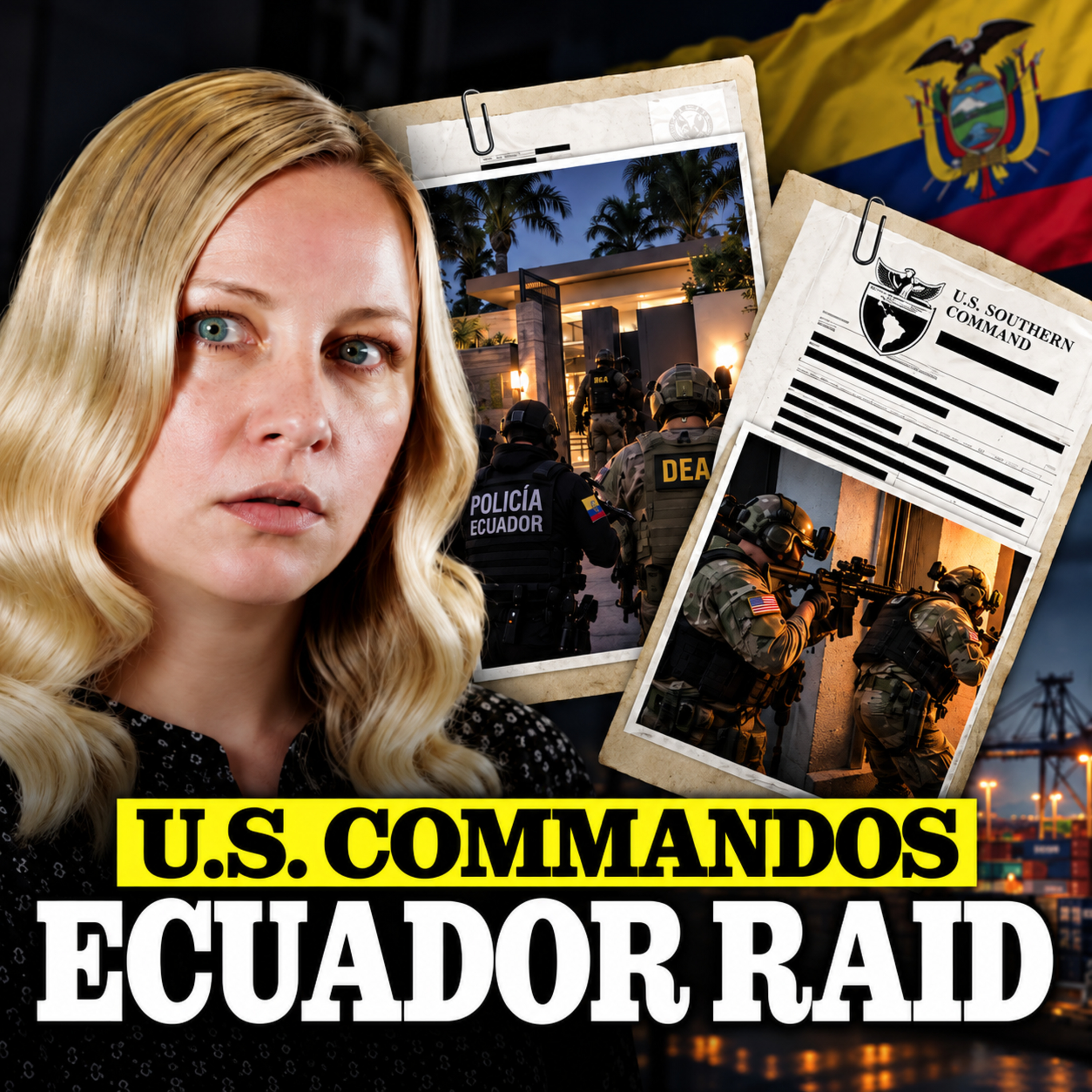
Before dawn on September 24, Ecuadorian police launched a major counter-narcotics operation against a cocaine-trafficking network. More than 320 Ecuadorian police took part, but this raid was different. About 50 personnel from U.S. Southern Command and the Drug Enforcement Administration joined the operation, with images showing U.S. personnel wearing Marine Raider insignia.
In this episode of The Watch Floor, I break down why that matters, what the U.S. brought to the operation, and how the American role in Ecuador appears to be changing. We look at the raids in Samborondón and other areas, the use of drones, night vision, communications equipment and rapid exploitation of seized devices, and the broader effort to disrupt trafficking networks moving cocaine through Ecuador’s ports.
The key question is whether this was a one-off operation or the start of a more direct U.S. role alongside Ecuadorian forces against transnational criminal organizations.
Get every episode summarized
Each time The Watch Floor with Sarah Adams publishes, we email you a written briefing from the transcript — the topics, who appeared, and any specific claims, with the ad reads skipped.
Email me new episodesFree for 3 shows. No card needed.
Hosts & guests

Transcript ready
144 searchable segments. Every word is indexed and playable.
Full transcript
The Watch Floor with Sarah Adams — U.S. Commandos Join the Raid in Ecuador. Machine-transcribed; use the interactive transcript above to jump the player to any line.
Welcome to the Watch floor. I'm Sarah Adams. Something happened Before and administration participated in the operations.
Photos and videos that were released showed US personnel also wearing marine raider in Signia. And that is the part I want to focus on. The United States has been working with Ecuador on counter-narcotics operations for some time now. US special operations forces have trained Ecuadorian forces, green berets from the seven special forces group have worked alongside them. They have been on joint exercises, maritime operations, there's been intelligence support, and they do advise and assist missions. But Ecuadorian interior minister John Reimberg said that this was the first time the US personnel directly participated in police raids like this on Ecuadorian soil. So we're not talking about US personnel sitting somewhere away from the target providing advice. They went on the raids. One of the raids took place in Porto, Maccoley. It's a gated community just outside Guayalquil.
Reporters from the Ecuadorian newspaper, L.Universo, were actually allowed to accompany part of the operation, which gives us a pretty unusual look into what happened. They describe Ecuadorian police and US personnel moving on the residents before dawn. According to their reporting, a American personnel entered the property alongside Ecuadorian officers. A US prosecutor was also there. What I found particularly interesting was what Americans brought with them. This was not simply additional manpower. The US side reportedly brought infrared drones, satellite tracking, communications equipment, night vision, and equipment capable of interfering with other drones. They were also able to work quickly with the phones and computers recovered during the raids. Obviously, they carried out site exploitation. Rhineberg said that normally Ecuadorian authorities might have to take those devices
through a forensic process that can take weeks. With the equipment available during this operation, he said information could be copied and examined so much faster. This is a significant capability when dealing with a trafficking network. You arrest someone and seize your phone. That phone may tell you who they were just talking to. Where a current shipment is moving? Who is financing it? Which port is being used? And who else needs to be picked up in this network? The value of the operation is not just getting through the door. It's what you can learn once you are inside. The raids resulted in 36 people being placed and pretrial detention on organized crime charges. Ecuadorian authorities say the investigation had been underway for about eight months and that the organization was moving cocaine coming from Colombia through Ecuador and into the international shipping system. Investigators say the cocaine moved through banana farms
and warehouses before being hidden in refrigerated containers, leaving through ports including Guayakil and Maccala. This should also tell you why Ecuador has become so important in the cocaine trade. Ecuador is not one of the major cocaine producing countries. Its importance is geography and infrastructure. It sits between Colombia and Peru, the world's two largest cocaine producing countries. And it has major commercial ports connected to markets all around the world. If you get cocaine into legitimate container traffic, leaving Ecuador, you have access to shipping routes headed towards the United States, Europe, et cetera. Ecuadorian authorities say five seizures connected to the investigation involve more than 6,000 packages of cocaine, representing roughly 322 million and losses to the trafficking organization.
They also say this network had a direct relationship with Mexico's Jalisco, New Generation Cartel, or better known as CJNG. I want to put a caveat on that. That is the Ecuadorian government's assessment. And for all we know, that comes even from within their classified channels, initial reporting, at least from the court proceedings, said prosecutors had not yet presented evidence in the case establishing the CJNG relationship. So I would keep those two things separate for now. But Ecuadorian security officials say the connection exists. And of course, there are the experts on running down some of these networks. But regardless of the CJNG connection, the US role in the operation is worth watching. There's also some history here. The United States once operated from a forward operating location at Manta, they're an Ecuador primarily supporting counter-narcotics surveillance.
That arrangement ended in 2009. Ecuador's constitution prohibits foreign military bases and Ecuadorian voters rejected a proposal in November of 2025 that would have opened the door to allowing them to come back in again. So there is still considerable political sensitivity around a permanent US military presence in Ecuador. But that does not prevent temporary US forces from operating with Ecuadorian forces under agreements between the two governments. And over the last couple of years, we have watched that cooperation grow for training, then advising, then operating alongside Ecuadorian forces. Now US personnel are accompanying police, into residences, during counter-narcotics raids, and helping exploit what is found inside. This is why September 24th matters. Not because 36 people were arrested,
Ecuador conducts counter-narcotics raids all the time. What is different is the American role? We have gone from helping Ecuador build capability to seeing US special operations personnel much closer to the actual point of action. And I would watch what happens next. Was this one operation built around one particularly important trafficking network? Or are we going to start seeing this new model used regularly against transnational criminal organizations operating through Ecuador? Because if this becomes routine, it's not simply just another drug raid. It marks another step in how directly the United States is willing to operate with partner forces against these networks in the region. Thanks for being here today on the watch. Thank you all for your copy.
More episodes
More from The Watch Floor with Sarah Adams

Protecting the Congregation: What to Do When a Threat Comes to Church
The Watch Floor with Sarah Adams

October 7th: The Enemy You Think You Know
The Watch Floor with Sarah Adams

What’s on My Reading List
The Watch Floor with Sarah Adams

The Expert Is the Target
The Watch Floor with Sarah Adams