Trust Posture Management: Building the Control Layer for Agentic AI
Get every episode summarized
Each time Top Entrepreneurs Podcast | Enterprise Podcast Network publishes, we email you a written briefing from the transcript — the topics, who appeared, and any specific claims, with the ad reads skipped.
Email me new episodesFree for 3 shows. No card needed.
About this episode
“Today in the program we're speaking with Manoage, Saxena.”From the transcript
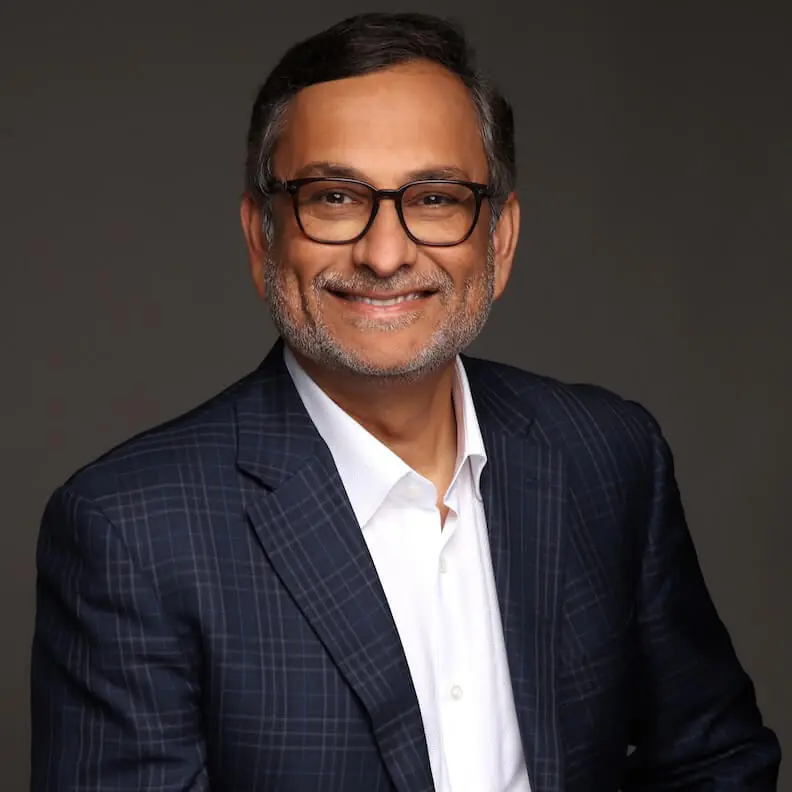
Manoj Saxena, CEO of Trustwise, which builds the AI Control Plane, runtime control infrastructure that lets enterprises put autonomous AI to work without giving it … Read more
The post Trust Posture Management: Building the Control Layer for Agentic AI appeared first on Top Entrepreneurs Podcast | Enterprise Podcast Network.
Get every episode summarized
Each time Top Entrepreneurs Podcast | Enterprise Podcast Network publishes, we email you a written briefing from the transcript — the topics, who appeared, and any specific claims, with the ad reads skipped.
Email me new episodesFree for 3 shows. No card needed.
Hosts & guests
Transcript ready
132 searchable segments. Every word is indexed and playable.
Full transcript
Top Entrepreneurs Podcast | Enterprise Podcast Network — Trust Posture Management: Building the Control Layer for Agentic AI. Machine-transcribed; use the interactive transcript above to jump the player to any line.
Welcome to Enterprise Radio, the signature show of the Enterprise Podcast Network, featuring some of the most prominent business professionals in the world today. And now your host, Eric Dye. This is Eric Dye and once again welcome to Enterprise Radio, a part of EPN, the Enterprise Podcast Network. Today in the program we're speaking with Manoage, Saxena. He is the CEO of Trust Wise, which builds the AI control plane, runtime control infrastructure that lets enterprises, but a ton of us AI to work without giving it unlimited authority and Mr. Saxena, we thank you for joining us here today on EPN. Thank you Eric, it's my pleasure. Yes sir, thanks so much for joining us, looking forward to hearing from you and appreciate your time. So tell us for starters, walk us through how the team thinks about risk, exposure, economics and sovereignty when a new customer comes on board. I think that would be a good place to start our conversation here today. Yeah, you know, so as you and the audience knows, you know, AI has moved into a very important
stage, is moved beyond generating answers now to taking actions. So when enterprises come to us, they're looking for a system that gives them visibility and control at that point of execution of these AI systems. So when they come in and talk to us, they're typically talking about visibility, they're talking about control, they're talking about evidence. And we call this whole space, trust, posture management. And we believe that that's going to be the next category where companies are going to be able to have a continuous process for determining whether their AI should be allowed to act, not just whether their AI is considered safe when someone deployed it. You know, it's like a car you want to continuously be checking the car's speed and road conditions and driver control and not just be relying on the safety inspection when the dealer gives you the car and then you kind of, you know, go with it. So we see that as a very important category and a big category that's emerging Eric.
Yeah, thanks for getting us up to speed here and certainly appreciate your feedback as well. Now across banking, healthcare and industrial customers, what patterns does the team keep seeing in terms of measurable impact? Talk to us about that. Yeah, you know, we're actually seeing five distinct patterns. The first one is typically around visibility, like I said. And then the second value is around controlling these systems, around what are seen as non-deterministic uncontrolled execution. So the first one is visibility, second one is control. The third one is lowering the operating cost without lowering the trust or the risk profile of these systems. And the fourth one is faster evidence and auditability. And then the fifth and final one is increase autonomy. So they want to be able to have these systems take on and do more things. And I can unpack each of those.
And again, we're seeing this across industries. This is my fifth startup. So I've been around the block. I also ran IBM Watson as a general manager before. So I've been used to taking these AI systems into production in the enterprise. And the five patterns are consistent. And now around number one, companies don't have on the visibility side, one coherent picture of the AI estate. They have model telemetry in one place, security somewhere else, cloud cost and model cost somewhere else. But they don't have one single control plane to be able to get full visibility on it. The second value is that they are finding out that the biggest gap when the AI moves from recommending outputs to taking actions is the one of control. What we call a chain level control, whether agent can now start teaching, teaching together multiple tools like your emails and databases and chatbots and starts taking actions on your site.
So the second pattern that we're seeing is the need for controlling and building confidence in these agent chains. And then the third value, like I said, is lowering operating cost without lowering trust. Because what happens with agent when it starts taking these steps is it could go into a silent loop. Or it could go into multiple retries and redundant tool usage that could eat up a lot of GPUs and a lot of tokens. So companies want to be able to make sure that the flight path of their agents are very efficient without lowering the trust level. What we call as an admissible flight path. And the fourth one, like I said, is evidence and auditability. So instead of reconstructing what happened after an incident, companies now want to understand and document the entire what I call as a longitudinal record of what happened. What agent decided to take what actions using what tools against what policy and against which customer.
So having the ability to have the evidence and auditability is number four parent. And the 15th and final one is autonomy, which is counterintuitive, but but important. If the company, the company is actually want to be able to bound the runtime behavior of the agent and prove what it is doing. So by doing it, they can then safely start letting these agents and these AI systems do more. So so that you can get maximum power and maximum value from AI. So I would say Eric, those are the five patterns we're seeing across customers. Certainly have appreciated the report so far. We're speaking with Manoj, Saxena, the CEO of TrustWise, which builds the AI control plane, runtime control infrastructure that lets enterprises put autonomous AI to work without giving it unlimited authority. And he's showing this here today on enterprise radio, a part of VPN, the enterprise podcast network. Now another question for you, Manoj, what existing industry category would you compare Trust, posture management to and what does that comparison tell us about where it's headed?
It's a great question. So my strongest comparison would be cyber security posture management, but with an important difference, you know, 20 plus years ago. Security was often treated as, oh, it was just a firewall or it's an annual audit and it's set up penetration testing. But eventually enterprises understood that security was a continuous posture management. Because infrastructure, identities, vulnerabilities and threats were constantly changing. And AI is now entering the same phase and AI systems trustworthiness changes continuously. You know, I like to say that AI is not an app. It's an actor because continuously the user changes the context changes the models are changing the policies are changing the agent behavior starts drifting. These agents start chaining together different actions on their own. So I expect trust posture management to evolve much in the same way as security posture management did from where it was a specialist concern to a platform capability.
And then to what I define as a standards enterprise operating layer. And this is why we provide this control plane as a front then start controlling these systems. The important part Eric is that unlike security. This trust posture management introduces something that security didn't have to deal with. It is that the thing that is being controlled is reasoning and acting autonomously. That's why the runtime control matters. The system has to make an admissibility decision. While the AI is attempting to act. So you can also look at this and say, you know, it's not just security. We also saw this in cloud computing, where in the beginning, people saw cloud applications. You know, ultimately evolved to having control plane so that you can start understanding which user, what policy, what endpoint is being used and documenting it. So I would say that, you know, as we look ahead, the trust posture management category would look very similar to the cyber security posture management or the cloud security posture management.
Except now you're dealing with the dynamic actor being managed rather than a passive applications in the past. Now a follow up question as we do look ahead here. For five years from now, what does the world look like when trust posture management has become standard practice and where do you see, trust wise at that point? And it's actually it's a good question. It's one that I've been obsessed with. So we've been working on this for three and a half years now as a company. Just, you know, working for the first two years and stealth mode with multiple banks and I call it high stakes environment. And one of the things we have learned a lot from the banks and healthcare companies and industrial companies is that almost every large enterprise, you know, five years from now will have tens of thousands and hundreds of thousands of some will have millions of AI actors running around. And these would be commercial co pilots in an internal agent coding agents autonomous workflows. I mean, we truly had a entering into an incredibly exciting area where AI will enter the enterprise as digital labor.
And five years from now, just like we have a human HR workforce management system and a finance system, we will have an agent HR management system. You would not launch a company without HR and finance. Why would you launch a company without HR and finance for agents? And that's what the trust wise control plane does. It allows companies to build their own AI control towers. And because they will have hundreds of thousands of AI actors working along with human actors. And we also think that companies won't standardize in just one model or one agent platform. They will operate what I call as a multi vendor, AI estate, just like the operator multi cloud and a multi application environment today. And increasingly enterprises, I think, will also operate private and sovereign AI stacks using open weight models and open source models because they want greater control over their intellectual property, their data, the economics.
I think this is going to be one of the biggest shifts. I think by this time next year and opus class model will be running on a MacBook and and private AI is going to be a big thing. So the differentiating AI capability five years from now, Eric won't simply be who has the best model. It will increasingly be who can safely give AI greater authority, who can choose the best AI execution chain dynamically, who can optimize its AI estate economically and who can manage massive numbers of AI as labor through a single control tower. So to me, I think those are some of the very important friends. And as this is happening, I believe AI itself will remain probabilistic enterprise control cannot be it needs to be bounded while AI will continue to be probabilistic and our goal at trust wise is to become that independent runtime control layer.
Underneath that world, where the trust wise control plane is sitting across models, agents, tools and clouds and finding and controlling the best admissible chain for every AI workload and powering what we call as the customers AI control tower. So our AI control plane will power every company is AI control tower, which will help them manage meaningful authority and get runtime control over this incredibly powerful and exciting capability that we are about to step into through agents and autonomous workflows. And sort of enclosing, I think the five years from now, the winners in the enterprise AI won't simply be the companies with the most intelligent agents. They'll be the companies that can safely give those agents the most useful authority and can prove why the agent did what it did afterwards.
A lot to look forward to and you're certainly making it happen in the space and we thank you for joining us here today for this fine report and your insight shared as well. One last question as we conclude any closing thoughts of final word or anything else you'd like to bring our attention to as we conclude here today. Yeah, I think one thing I would say that is when looking at the behavior of an agent is not enough to just look at safety. You have to look at three practical readings. We call it exposure economics and sovereignty. So like just like you look at an employee with you know different performance behavior. So for us, trust your management as three practical readings, one is exposure should this AI and this chain be allowed to act. Second is economics is this the most efficient and trustworthy chain to operate and third is sovereignty does my enterprise remain in control while it operates. So all these three readings. You have to be able to measure in a given moment across hundreds of thousands of agents. And I think that's an important design point for companies to start thinking about.
And no doubt about that. And again, we really appreciate those concluding remarks. And again, for your time spent with us here today, where can listeners get more information on trust wise online? And if they had any questions, I would assume they could contact you at that same location as well. Yeah, so you know, follow us on LinkedIn and then also on trust wise dot AI. And then I have a number of these talks. I've done a few TED talks also. So a lot of information available online. We have case studies, multiple white papers and customer case studies. We have a lot of those things. Certainly a lot of resources to tap into. And again, folks, it is trust wise dot AI. And you can also pick up that link within the show notes of this broadcast at any time for your convenience. Again, Mr. Saxena, all the best. Thanks so much for joining us here today on enterprise radio. Thank you. And you're more than welcome anytime again. We've been speaking with my nose, Saxena, the CEO of trust wise, which builds the AI control plane runtime control infrastructure that lets enterprises put autonomous AI to work without giving it unlimited authority. And again, for all the details, visit trust wise dot AI.
And that wraps up another episode of enterprise radio. We thank you for tuning in today. If you enjoyed this conversation, please take a second to follow or subscribe on your favorite podcast app under enterprise podcast network. It helps us and helps other business leaders find the show and head on over also to epodcastnetwork.com for other options to subscribe. Also tap into show notes links and other resources mentioned in today's episode. I'm your host Eric Die wishing you continued success. And until next time, take care.
More episodes
More from Top Entrepreneurs Podcast | Enterprise Podcast Network

From Burnout to Breakthrough: How Amy Perez Launched myDream and Mindful Softwar...
Top Entrepreneurs Podcast | Enterprise Podcast Network

Building a Science-Led Brand: François Vix on Innovation, Trust and Healthy Long...
Top Entrepreneurs Podcast | Enterprise Podcast Network

Stella Furlong Memoir: Why Me and other frequently asked questions
Top Entrepreneurs Podcast | Enterprise Podcast Network

Everyone Wants AI. Almost Nobody Can Say Specifically What For.
Top Entrepreneurs Podcast | Enterprise Podcast Network