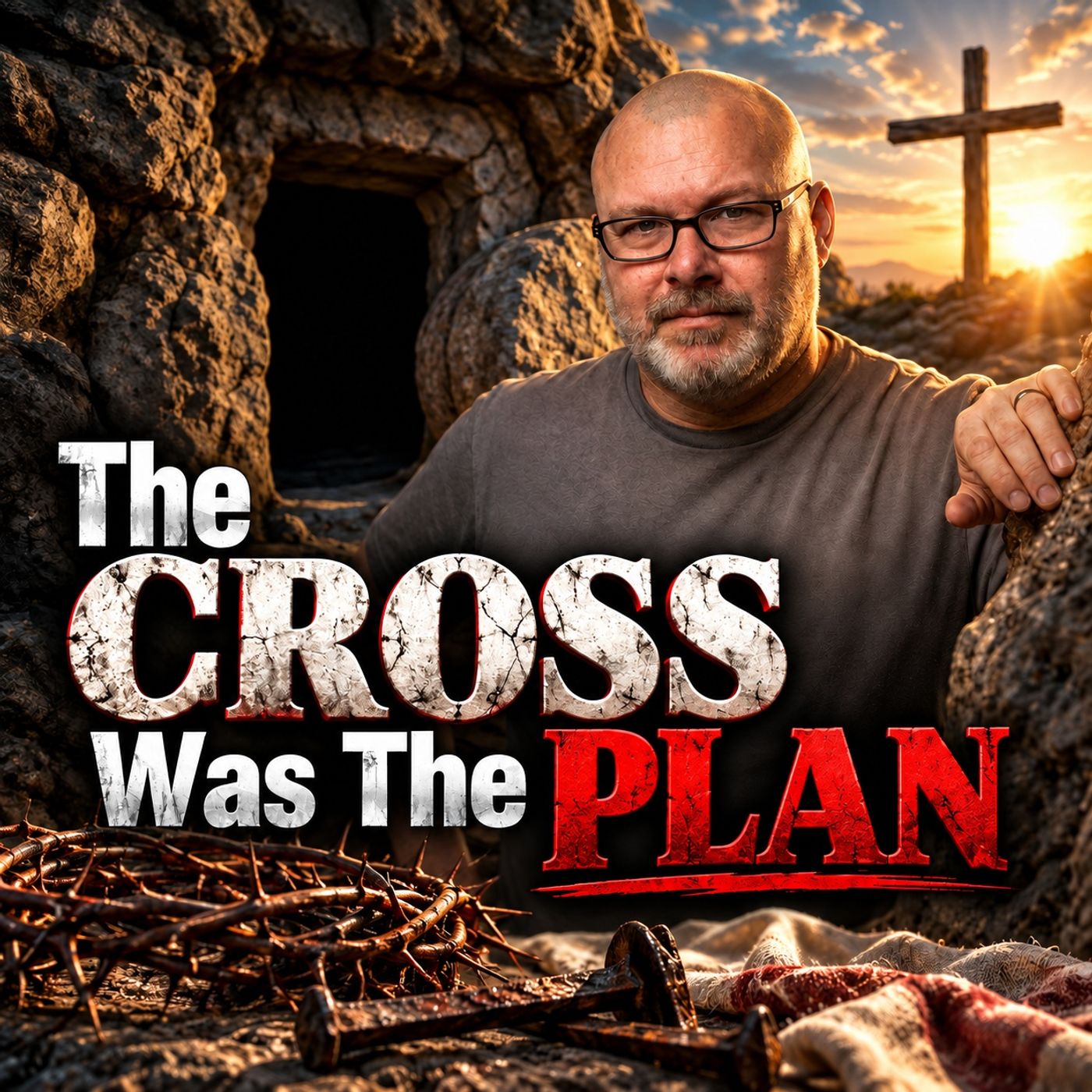
The Promised Seed vs The Serpent: The End of the Seed War
Get every episode summarized
Each time The Broadcasting Seeds Podcast publishes, we email you a written briefing from the transcript — the topics, who appeared, and any specific claims, with the ad reads skipped.
Email me new episodesFree for 3 shows. No card needed.
About this episode
The Broadcasting Seeds Podcast is made possible by:
“In 1968, a construction crew was cutting into a hillside in a neighborhood of Northeast Jerusalem called Gvat Ha Mivtar. And the bulldozers break into a set of rock cut tunes from the time of the second temple.”From the transcript
Become a supporter of this podcast: https://www.spreaker.com/podcast/the-broadcasting-seeds-podcast--6402290/support.
Patreon - https://www.patreon.com/BroadcastingSeeds. for Ad-Free audio & video content.
Books-
BennettTantonBooks.com
What We Have (Grid Collapse Series Book 1)What We Have (Grid Collapse Series Book 1)
The War You Didn’t Know You Were In: Understanding and Winning the Spiritual Battle
CREATURES AT THE EDGE: Cryptids, Archetypes, and the Human Encounter with Mystery (At the Edge Series)
The Last Witch Hunter’s Journal
Website and Merch
YouTube
Get every episode summarized
Each time The Broadcasting Seeds Podcast publishes, we email you a written briefing from the transcript — the topics, who appeared, and any specific claims, with the ad reads skipped.
Email me new episodesFree for 3 shows. No card needed.
Hosts & guests
Transcript ready
315 searchable segments. Every word is indexed and playable.
Full transcript
The Broadcasting Seeds Podcast — The Promised Seed vs The Serpent: The End of the Seed War. Machine-transcribed; use the interactive transcript above to jump the player to any line.
In 1968, a construction crew was cutting into a hillside in a neighborhood of Northeast Jerusalem called Gvat Ha Mivtar. And the bulldozers break into a set of rock cut tunes from the time of the second temple. Inside are Asuaries, limestone bone boxes, the way Jewish families in that era re-barried their dead once the flesh had gone. Archaeologists cataloged them, one box is inscribed with a man's name. Yeshu? Yeah. Oh. Yeah, Juan. When they examine his bones, they find something no one had ever found before. His right heel bone had an iron nail driven straight through it. The tip of the nail is bent, hooked over, as if it stuck a struck a knot in the wood and could not.
Be pulled back out, a small fragment of wood is still attached, pinned between the nail head and the bone. Yehohanan was a young man in his 20s and he was crucified by Rome in the first century. That heel bone is the only skeletal evidence of crucifixion ever recovered from the Roman era Holy Land. Everything else, the scholars assume, was pulled out and reused. His family simply could not get the nail out. The only bone we have from a crucified man in the land of Israel is a heel. I'm not going to build an argument on that it is an image, not proof, but it should bring a verse back to mind. The verse we started with on Monday, it shall bruise thy head and thou shalt bruise his heel.
Four episodes ago, we asked why God would announce the plan to the enemy. Today we find out what the enemy did with it. There is a sentence in Paul's first letter to the Corinthians that I want you to carry through this entire episode. Paul says, the rulers of this age crucified the Lord of glory. Then he says, had they known it, they would not have crucified the Lord of glory. Had they known, known what? What did the powers that engineered the crucifixion fail to understand so completely that if they had understood it, they would never have done it. That is the question for today and it is the last open door in the Seed War and we are going to walk through it at the end. Welcome. This is Broadcasting Seeds on Benitant and this is the final episode of the Seed War.
If you have been with us this week, you have watched one promise survived everything thrown at it. Genesis 315, a seed of the woman who would crush the serpent's head at the cost of a wound to the heel. You have watched that promise narrow from the human race to one family, to one tribe, to one royal house. You have watched it survive through barren wombs and foreign kings, a knife up on a mountain, a pit, Genesis 38, a river full of infants, a hired prophet, a queen's purge and an empire's kill order. Today the promise reaches its final address, one town, one child, and then three decades later, one hill outside Jerusalem. That is where we are going. Segment 1, the receipt.
The New Testament opens with a list of names. Most people skip it and after this week I hope you never will again. The book of the generation of Jesus Christ, the son of David, the son of Abraham, Matthew chooses those opening words carefully in the Greek Old Testament that his readers knew. The same phrase, the book of the generation opens Genesis 5, the book of the generations of Adam. That was the chapter that followed the line from Adam through Seth to Noah, the line Eve called another seed. Matthew is picking up the same thread and telling you where it ends. Then he does something ancient. Ancient genealogies almost never did. He names women, four of them, before Mary.
Tomorrow you met her on Tuesday. The widow who put on a disguise and sat by the road because the royal tribe of Judah was about to die out. Next is Rahab, the woman in Jericho, who hid Israel's spies when the city was about to fall and was spared and married into the tribe of Judah. She is the mother of Boaz. Do you remember how the spies told her to mark her house? It would be spared when Jericho fell. Joshua 2, 18. Dausha bind this line of scarlet thread on in the world. A scarlet thread. The same image as the scarlet thread, the midwife tied on the wrist of Tamar's twin. And the Hebrew word translated line there. Tickva, T-I-K-V-A-H, is the same word the Old Testament uses for hope.
Rahab hangs a scarlet hope out of her window and the line runs through her. A Moabite widow. The nation whose king hired Baalim to curse Israel. A woman from the enemy's own people who clings to her Israelite mother-in-law and says, Thigh people shall be my people and thy God, my God, and becomes the great grandmother of David. And then Matthew does not even use the fourth woman's name. He calls her her that had been the wife of Euryus, Bashiba. The woman at the center of David's worst sin, the adultery, and the murder of her husband. And yet it is through her son Solomon that the royal line continues.
The first child of that union dies and then second Samuel 12 says, Bashiba bore another son and he called him Solomon. And the Lord loved him. Even the worst failure of the royal house does not break the line. God carries it through the wreckage for women, for chalk points. Every one of them a place where the line could have ended or been disqualified or been swallowed by scandal. Matthew names them on purpose. His genealogy is not a list. It is a receipt for every close call we have walked through this week. And then Matthew reaches a name that should make you nervous. Check Onius. Check Ochin. Wednesday we heard that. We heard what Jeremiah said about him.
Right ye this man child list for no man of his seed shall prosper sitting upon the throne of David. Here he is in the royal line of Jesus. How does Matthew get past that curse? Watch how he ends the list. Every generation so far has been ABGAT B, ABGAT B, then verse 16. And Jacob BGAT Joseph the husband of Mary of whom was born Jesus. Not Joseph BGAT Jesus of whom feminine and Greek of her. Here is the explanation many interpreters give. And I think it holds. Okay. Matthew gives you Joseph's legal line, the royal line through Solomon and check Onius. Which carries the legal right to David's throne.
But Jesus is not Joseph's biological son. The curse on Jacobius's physical seed never touches him. Luke gives a different genealogy that runs through another of David's sons, Nathan. Whether Luke's line is Mary's or Joseph's by another route, it's it is still debated. But the result is the same either way. A legal claim to the throne without the curse. Isaiah 714 said it to the house of David. Behold a version, a virgin shall conceive. Paul says it in Galatians. God sent forth his son made of a woman. After the whole length of the Old Testament, the seed of the woman arrives in the most literal sense possible. A child with a human mother and no human father. One more thing before we reach Bethlehem.
Between the last prophet of the Old Testament and the birth of Jesus, there are centuries of what people call silence. They are not quiet though. In the second century before Christ, a Greek, king named Antiochus, Ephraim made the book of Macabees records what he did to families who circumcised their sons. The mothers were put to death and they hung the infants from their mothers next. Again, the children. The pattern never changed. It was waiting for a final address. Crazy. Segment 2, the King of Edom. Now, the man sitting on the throne in Jerusalem when that child is born, Herod, the Great, is one of the best documented rulers of the ancient world almost entirely through a Jewish historian named Josephus, who we have talked about and used extensively.
He was a builder on a scale Judea had never seen. He rebuilt the temple into one of the wonders of the Roman East. Think about where that temple stood. Mount Morai. The mountain where Abraham raised the knife over Isaac and God provided a substitute. The man from Edom is rebuilding the house of God on the mountain of the substitute. At the very moment, the true substitute is about to be born. He built the harbor city of Kessarai, Sassarai. Oh, man. I say Sarai, the fortress of Masada, and a palace fortress near Bethlehem called the Herodium. That you can still see on the horizon from the town today. And he was not Jewish by descent. Herod was an idiumine.
His father, Antipatter, came from Idiumea, the region south of Judea. It had once been the land of Edom. The idiumines had been forced. Forrest in Judea, Judea is invited by a Jewish ruler named John, or higher canis, a few generations earlier. Herod, court, historian, tried to claim his family came from noble Babylonian Jews. And Joseph C. Fissawaves that office flattering. I want to be careful here, though, the idiumines of Herod's day were a mixed population. And I am not claiming a clean genealogy back to Issa, okay? But the region was idome. And on Tuesday, we watched Issa swear I will slay my brother Jacob.
On Wednesday, we watched Issa's grandson, Amalek, attack Israel in the desert, and heard Hamon, the Agadai, Agite. Scheduled the death of every Jew in Persia. Now, when the son of David is born in Bethlehem, the king in Jerusalem is a man from Idom. Okay. The prophets never forgot that feud. Ezekiel 35, for announce his judgment on Mount Seer, the heartland of Idom, because thou hast had a perpetual hatred against the children of Israel. And the Hebrew word for hatred is Iba. The same word God used in the garden. I will put M-nity, the M-nity in Jesus' 315, attached by a prophet to Idom by name. Okay. Two brothers struggled in Rebecca's womb. The struggle is still going on.
And Herod's paranoia was legendary. He had his teenage brother-in-law, the high priest drowned in the swimming pool. At Cherico, he executed his wife, whom he loved, on suspicion of disloyalty, and then her mother as well. And had two of his sons strangled. And five days before he died, he had his eldest son, antipatter, executed. Josephus records one last scene that tells you everything. As Herod laid dying at Cherico, he knew the nation would celebrate his death. So he ordered the leading man from every village in Jude around it up and locked in the hippodrome. And he gave orders that the moment he died, they were all to be killed that way. He said, there would be mourning in every house in the country when Herod died, so twisted. His sister released them instead. So awesome.
That is the man the magi walk in on. Matthew 2, 1 through 2. Now, when Jesus was born in Bethlehem of Jude in the days of Herod the King behold, there came wise men from the east to Jerusalem saying, where is he that is born King of the Jews? For we have seen his star in the east and are come to worship him. His star, remember Baelum on Wednesday, a pagan seer from the east, looking at Israel from a mountain top. There shall come a star out of Jacob and a scepter shall rise out of Israel. Now, men from the east arrive in Jerusalem following a star looking for the King. The prophecy, the enemy's hired prophet could not stop himself from speaking, is the one that brings the first Gentile worshipers to the child.
Now, these are the wise men, folks, and who were these men? Matthew calls them magi, a title for the priestly scholars of Persia and Babylon, and here is a thread worth polling, though I will mark it as a reasonable guess rather than a fact. Six centuries earlier, a young Jewish exile named Daniel was made master of the magicians. Chief over exactly this class of wise men in Babylon, large Jewish communities, stayed in the east after the exaliment. It is not hard to imagine the scrolls of Moses and the prophets, including Baelum's star and Daniel's own visions of a coming kingdom, being known among the learned men of the east. So Matthew does not tell us how they knew he tells us they came. Matthew says, when Herod the King had heard these things, he was troubled, and all Jerusalem with him.
All Jerusalem was troubled because they knew what Herod did when he was troubled, and they watch how Herod works. Because this is not a panic, it is an operation. First, He gathers the chief priests and scribes, and asks them where the Christ is supposed to be born. They answer immediately Bethlehem of Judea, and quote, Micah 5,2, so now He has the location. Then He calls the Magi, prively in secret, and learns from them diligently what time the star appeared. So now He has the time frame. Then He sends them to Bethlehem with instructions. Go and search diligently for the young child, and when ye have found Him, bring me word again that I may come and worship Him also.
So now He has a spotter. Location, time frame, a spotter who will lead Him to the exact house. Anyone who has worked in security intelligence recognizes that sequence. That is a targeting package, okay? And the Magi find the child, fall down, worship Him, and give their gifts. Gold, frankincense, friends. Gold, frankincense, and mer. Gold, fricking, frankincense, the incense of the temple, and mer, which was used among other things to prepare the dead for burial. When Jesus is taken down from the cross, John 19 says, necodemus brings about a hundred pounds of mer and allows to wrap his body, burial spice, given at his birth and again at his death. Even in the house of in Bethlehem, the heal wound is already in view.
And then they are warned of God in a dream that they should not return to Herod, and they go home another way. The spotter never reports back. Okay, quick word about tomorrow. Every Saturday I sit down with Laura Baker from testing for testing the spirits. The name comes from John 4-1. Beloved believe not every spirit. But try the spirits whether they are of God. That is what we do. We take the experiences, the claims, the teachings, and the strange encounters that people bring to us, and we hold them against Scripture. Not with fear, and not with... We hold them against Scripture, not with fear, with discernment. If this week's arc has you thinking about how real the spiritual battle is, tomorrow's conversation is the next step.
Testing the spirits with Laura Baker tomorrow. Right here on Broadcasting Seed. Let's check it out. Segment 3, Bethlehem, and out of Egypt. Before Herod realizes the Magi are not coming back. An angel comes to Joseph in a dream. Arise and take the young child and his mother and flee to Egypt. And be there. Be thou there until I bring the word. From Herod, for Herod will seek the young child to destroy him. Joseph gets up that same night and goes and goes. Then Matthew 2.16, then Herod, when he saw that he was mocked of the wise men, was exceedingly angry and set forth and slew all the children that were in Bethlehem. And in all the coasts thereof, from two years old and under, according to the time which he had diligently inquired of the wise men.
According to the time, he uses the Magi's own information to set the age limit and he doubles it to be safe. Man, this guy, Herod, every boy, two years old and younger. Now the honest question, though historian, of the time names this massacre, right, skeptics point to that silence. Think about the scale, Bethlehem was a village, estimates of how many boys, two and under, would have lived there and in the surrounding area. It usually runs somewhere between about six to twenty. That is horrid. It's a horrifying crime, okay, but it also exactly the kind of event that could vanish from a record of a king who had drowned a high priest and executed his own wife. I mean, this dude strangles his own sons and planned a nationwide massacre from his deathbed.
I mean, come on. Josephus had no shortage of erudian atrocities to choose from. Trust me. There is one strange echo around the year 400, a writer named Macrobius compiled a collection of jokes attributed to the Empire Augustus. One of them goes like this, when Augustus heard that among the boys under two, two years old in Syria whom Herod had ordered killed, Herod's own son had been killed too, he said. It is better to be Herod's pig than Herod's son. In Greek, the words for pig and son sound almost alike, hus and huios and Herod living as a Jew would not eat pork. I want to flag that carefully. Macrobius is writing four centuries later. He seemed to be blending the massacre with Herod's execution of his grown sons.
And some scholars think he picked up the detail from Christian sources. So it is not independent confirmation, but it is a pagan writer repeating a joke about Herod that has the phrase boys under two years old. That is in a sitting inside. Matthew does, then does what he does all through the gospel he connects the moment to the long story. Matthew 2 17 through 18 quotes Jeremiah. In Rama, was there a voice heard lamentation and weeping and great morning, Rachel weeping for her children and would not be comforted because they are not. Rachel is the mother of Joseph and Benjamin, the wife Jacob loved. Genesis 35 says he died. She died in childbirth and was buried in the way in the way to epithelian, her tomb stood on the road to that very town and Rama in Jeremiah's time was the place where the captives of Judea were gathered in chains.
Before they were marched to Babylon, so Matthew pictures the mother of Israel weeping at her grave on the Bethlehem road for every child this war has taken. The Hebrew boys in the Nile, the princes murdered, the exiles and chains at Rama, the infants at Antiochus's persecution and now the boys of Bethlehem. But if you go back to Jeremiah 31 and read the next verse, the one Matthew's readers would have known by heart. It says this, refrain thy voice from weeping and then dine eyes from tears for thy work shall be rewarded, saith the Lord and there is hope in dine end. Matthew quotes the lament inside a chapter of hope and the Hebrew word for hope is that verse, tick va.
Tik vah the same word as Rahebs scarlet line in the window at Cherico the hope of the mothers of Bethlehem and the cord that saved Rahebs house are the same word in Hebrew. Meanwhile, the child is in Egypt of all places and there's a quiet irony in that by first by the first century. Egypt was home to one of the largest Jewish communities in the world centered around Alexandria. It was in Alexandria on Monday's episode that Jewish scholars had translated the scriptures into Greek and chosen to write he in Genesis 315 pointing to a person the promised child finds refuge in the land where his coming was first translated. Matthew 215 says that happened to fulfill Hosea 111 which is out of Egypt have I called my son in Hosea that verse is about the nation of Israel.
God's son called out of slavery at the Exodus. Matthew applies it to Jesus the one son relives the story of the whole nation and the Moses's parallels are everywhere on Wednesday. We heard Josephus's tradition that Pharaoh was warned by a sacred scribe that a child was about to be born who would bring Egypt low and ordered the boys killed and the child was hidden from those who watched to destroy him. Now a king is warned by learned men that a child has been born who will be a king orders the boys killed and the child is hidden. Then when her dies the angel returns to Joseph arise and take the young child and his mother and go into the land of Israel for they are dead which sought that young child's life.
Listen to Exodus 419 when God said to Moses in median before sending him back to Egypt go return into Egypt for all the men are dead which sought their life. Matthew is almost quoting it and even then the danger is not over. Joseph hears that her son. Archaeus now rules Judea he is afraid to go there he had reason Josephus records that early in his reign. That he sent troops into the temple courts at Passover and some 3000 people were killed so Joseph takes the family north to Galilee to an unremarkable village named Nazareth. The sea grows up in obscurity under the radar in a town nobody expected anything from Egypt once drowned the infant delivers generation and failed.
Now Egypt shelters the infant Messiah from a second infant to side old king. Same geography same pattern opposite function the land that once that was once the enemy's house becomes the child's hiding place just like every rescue on Wednesday inside the enemy's own house. Segment 4 the wound that looked like a victory 30 years later the child is a man in the campaign against him has not stopped it has changed tactics it starts in the wilderness right after his baptism Satan does not come with soldiers he comes with an offer. Luke 4 says he shows Jesus all the kingdoms of the world in a moment of time and says all this power will I give thee and the glory of them for that is delivered unto me and to whom so ever I will give it if thou therefore will worship me all shall be thine.
That is bailham strategy if you cannot destroy the line corrupt it get the promise to bow and Jesus answers the scripture thou shalt worship thou shalt worship the Lord thy God and him only shout thou serve then the other tactics come back one after another in his hometown of Nazareth the synagogue crowd drags him to the ground. He drags him to the brow of a hill to throw him off a cliff in the temple crowds pick up stones to kill him more than once on the sea of galleus storm nearly sinks the boat and Jesus stands and rebuked the wind using the same verb the gospels used when he rebukes demons even his own disciple becomes a mouthpiece when Jesus first tells them plainly that he must go. Go to Jerusalem suffer be killed and rise again Peter Paul's in the side and says be it far from the Lord this shall not be unto thee and Jesus turns to him and says get thee behind me Satan stop and notice that because it matters at that moment the voice trying to keep Jesus away from the cross is the one Jesus calls Satan.
The adversary in the gospels is not portrayed as a mastermind who understood the cross and planned it he is portrayed as the opponent of everything Jesus came to do grabbing every lever that he can reach without ever seeing the whole board. And then I'm the levers converge Luke 223 then entered Satan into Judas surname Judas goes to the chief priests and agrees to hand over Jesus for silver remember Judah on Tuesday selling his brother for silver the same name again the religious leaders conspire. A puppet king of herds family mocks him a Roman governor washes his hands and signs the order the might of the empire executes him legally publicly the way Hammond's decree was supposed to execute a whole people every strategy in the Seed war the killing of the innocent
seduction conspiracy of rulers legal death by empire lands on one man on Friday and notice where the final night begins John 181 says that after the last supper Jesus went out with his disciples over the Brooke Kidron where there was a garden the Seed war started in a garden with a man who hid among the trees it reaches its climb. Max in a garden with a man who steps forward out of the trees and says to the soldiers I am he Adam head the last Adam walked out to meet them. The soldiers weave a crown for him out of thorns Genesis 318 the ground cursed for Adam's sake thorns also and thistles shall it bring forth the king of the promised line wears the curse of the garden on his head.
And John nineteen forty one says that where he was crucified there was a garden and in the garden a new sepulcher on Sunday morning Mary Magdalen sees him standing there and John says suppose is him to be the gardener. She was more right than he then she knew the story that began in one garden is beginning again in another and from where the adversary stood that afternoon it worked the seed of the woman is dead his followers have scattered his body is sealed in a tomb with a guard at the door after every failed attempt the Baron Wombs the Kings the river. The purge the disc the decree the massacre in Bethlehem finally the blow has landed that is the heel wound real and brutal and apparently final.
Exactly what Genesis 315 said what happened that was shall bruise his heel and that heel bone from nineteen sixty eight the one with the nail still bent inside it is a reminder that the heel wound was not a metaphor to the people who suffered it was iron and wood and a young man's bones but look at what Jesus says as. Not I am finished John nineteen thirty it is finished. The last I completed paid and a few days before in John twelve thirty one speaking of the cross now is the judgment of this world now shall the prince of this world be cast out. The early church had vivid ways of describing what happened on that Friday Gregory of nice nice in the four century compared it to a fish hook the divinity of Christ hidden under his flesh in the way a hook is hidden under bait so that death swallowed what it could not hold Augustine called the cross the devil's mouth strap baited with the Lord's own death those are images.
The first time I was not doctrines and they can be pushed too far but they are trying to say something the new testament says plainly. Second five what this changes Sunday changes the reading of Friday completely Peter preaching in Jerusalem seven weeks later puts it this way in acts two twenty four God raised him up having the pains of death because it was not possible that he should be holding of it not possible death could not keep him collisions to fifteen says that on the cross God spoiled principalities and powers he made a shoe of them openly triumphant over them in it he was two fourteen goes further Jesus took on flesh and blood that through death he might destroy him that had the power of death that is the devil and deliver them who through fear of death were all their lifetime subject to bondage and first John three eight for this purpose the son of God was manifested that he might
destroy the works of the devil not survived death destroy the one who wielded it through death the resurrection is the head wound and it was delivered with a very with the very weapon the enemy thought had just won the war Jesus Jesus described it himself a few days before the cross in language this whole channel is named for okay John twelve twenty four except a corn of wheat fall into the ground and die it a bite of the loan but if it die it bring it for much bring it forth much fruit a seed falling into the ground dying and multiplying for the whole length of the old testament the enemy tried to keep the seed from being born and then tried to put it in the ground he finally succeeded and a seed in the ground is not a defeat it is a planting one seed went into a garden tomb on Friday and what came out
of it on Sunday has been multiplying across the earth for two thousand plus years which brings us to the question from the call from the opening Paul says the princes of this world would never have crucified the Lord of glory if they had known what didn't what didn't they know go back through this week and listen for one phrase it has been hiding in plain sight since Monday Genesis four Eve names her third son Seth because God hath appointed me another seed instead of able to turn down Genesis twenty two on Mount Mori a ram is caught in a thicket and Abraham offers it in the stead of his son Genesis forty four Judah the brother who sold a brother stands before Joseph and says let thy servant abide instead of the lad Exodus twelve
on the night Pharaoh's war on Hebrew sons comes back on his own house a lamb dies in the place of every firstborn son of Israel in the place of all through the seed war the line survives because something or someone takes the place of the one who should have died now here is what the enemy missed for the whole length of the Old Testament he onto the seed trying to kill it before it could strike he assumed that if he could finally kill it he would win he never understood that the seed had come to die that the promised one was not only the one who would crush the serpent said he was also the substitute the ram in the thicket the lamb in the at the door the brother who stands at the brother's place across was not the enemy stopping the plan across was the plan and death the enemy's final weapon was the instrument by which he was undone through death he might destroy him that had the power of death had they known that they would never have touched him
they would have done anything to keep him alive and that is why back on Monday the beginning of this arc God could afford to announce the war in the serpent to the serpent in the garden the announcement told the enemy that a head wound was coming it even told him he would strike the heel that it never told him was that the heel wound and the head wound would be the same event the first gospel was spoken to the enemy because the enemy's own strike was going to complete it the last book of the Bible gives you the war the whole war in one picture Revelation 12 a woman clothed with the sun crying out in labor a great red dragon standing in front of her for to devour her child as soon as it was born she gives birth to a son who was to rule all nations with a rod of iron and her child was caught up unto God and his throne
every episode of this arc is in those verses the garden the Baron wounds the river the purge Bethlehem across and the ascension garden to throne in five verses and then verse nine names the dragon so there's no doubt that old serpent called the devil and Satan the serpent from Genesis three finally named finally cast down but Revelation 12 does not end there and neither does this arc for 17 and the dragon was wroth with the woman and went to make war with the remnant of her seed which keep the commandments of God and have the testimony of Jesus Christ the remnants of her seed that is the church that is you if you belong to him the head wound has landed the outcome is not in doubt but the war against the seeds family goes on until he returns so what does that change on Monday morning
go back to Hebrews 215 Christ destroyed the one who had the power of death to deliver them who through fear of death were all their lifetime subject to bondage the oldest weapon the serpent has is fear and the deepest fear is death the weapon has been broken you are not called to cross the serpent's head that has already been done you are called to stand in a victory that has already been won and to stop living like someone still in bondage to the fear of what the enemy can do and verse 11 tells you how that war is won and they overcame him by the blood of the lamb and by the word of their testimony and they loved not their lives unto death the blood of the lamb the substitute the word of their testimony and a people who like their king are straight up not afraid to die
Paul told told the Romans the God of peace shall bruise Satan under your feet shortly under your feet Genesis 315 was never only about the king it was about everyone who would come after him in his line by faith the seed war began in a garden with a sentence spoken to the enemy it was decided at an empty tune and now it continues in the lives of ordinary people who carry his name which is exactly the question we take up next if this war is real and the outcome is settled and it is still being fought against the remnant of her seed how do you actually live inside it that is where we go next week that is the seed war for episodes one thread from a sentence in the garden to a stone rolled away if this arc has meant something to you here is how you can help to further to reach further just join us on patreon for five dollars a month you get every episode ad free and audio and for ten dollars you get ad free audio and video including this arc as an un
uninterrupted binge patreon members of the reason the show can spend a whole week tracing one verse through the whole bible that is patreon.com for slash broadcasting seeds and if patreon is not for you right now share this arc with one person who has never seen how the bible fits together start them on monday's episode youtube audio speaker apple spotify it's everywhere also the music you hear at the end of every episode was written and it is original by me and it is on spotify apple music amazon music and every major streaming platform search broadcasting seeds get some merch at broadcasting seeds dot com check it out great t-shirts great sweatshirts for now and we're building that out tomorrow is testing the spirits of lower baker sunday we gather again for sunday seeds where we pray together and set up the week ahead and next week how to live inside the war you know know you are in
thank you for walking this whole thread with me keep your bible open keep your eyes on the line and never forget who wins in the end at the great week
it's a rose to hunt the promise still the living seed was kept into blood
the pieces down it down it torches burning through the night recent rulers home and you as you guys gathered underneath the line the hard work twisted for a kingdom I am driven through skin death believe it how the savior death believe that it had a white serpent waited the blood was shed it's all the heal but mr. he struck the hill and body fell he drove the nails and open the cross looked like the end instead but the wound in he crossed the side by side the that was pain the stone was sealed the guards remain the morning came the grave broke wide death lost its claim the kings are
you know he struck the hill and 41 but death could never hold the sun the grave gave way the stone was moved what looked like death became the world the cross was not the star is it the one their soul From glory Darkness From broadcasting destroyed
seduced now all is well
More episodes
More from The Broadcasting Seeds Podcast

The Spirit of Fear: What They Don't Want You to Know
The Broadcasting Seeds Podcast

The Kingdom of Darkness - Why You Should Fear What’s Out There | Dark Waters Jam...
The Broadcasting Seeds Podcast

Why God Is Never Named in the Book of Esther | The Seed War EP 3
The Broadcasting Seeds Podcast

What They Didn't Tell You About the Patriarchal Period: Seed War Ep 2
The Broadcasting Seeds Podcast