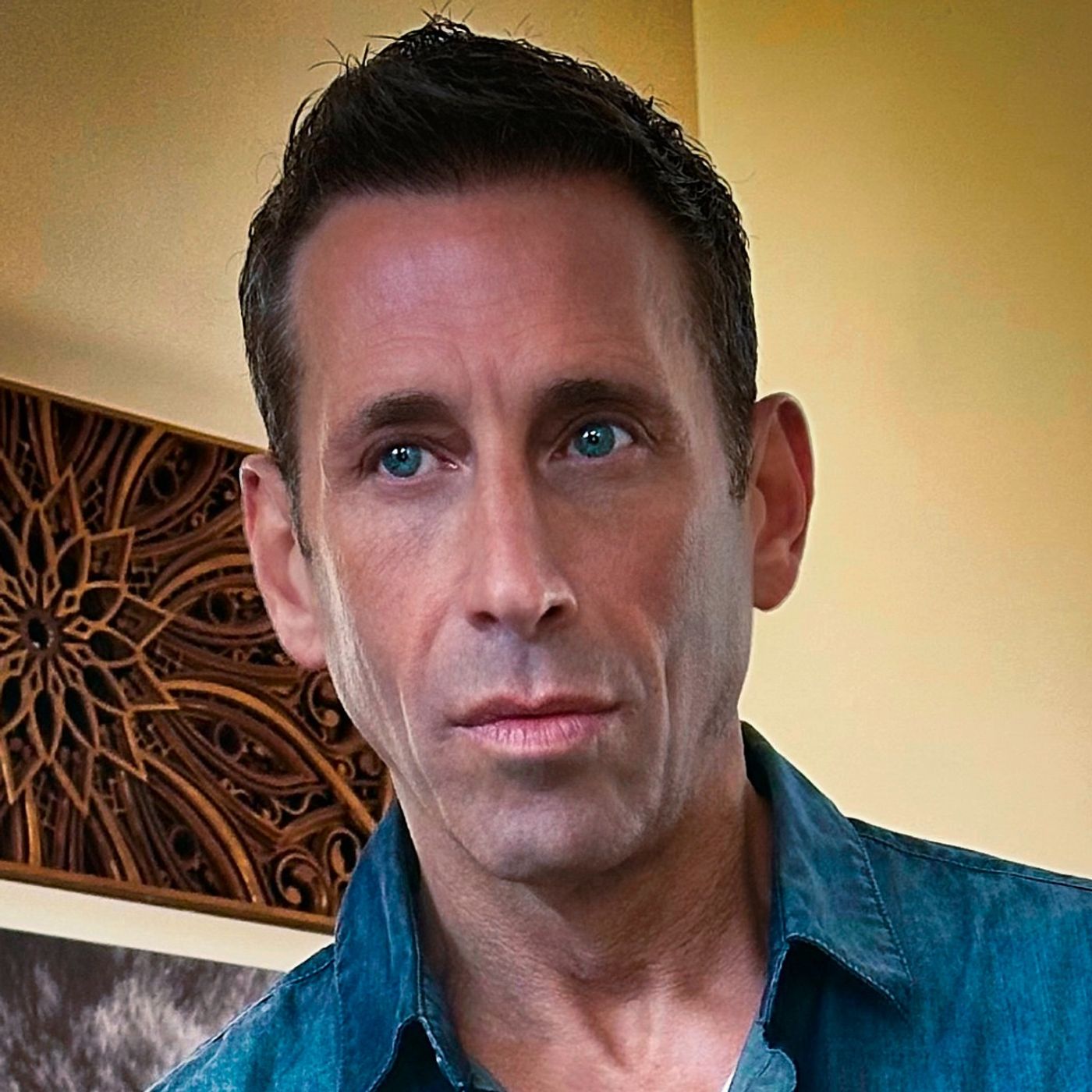
The Lion’s Code Brett Lavender on the Lost Languages & Mastering the Human Machine
Get every episode summarized
Each time The Balanced, Beautiful and Abundant Show- Rebecca Whitman publishes, we email you a written briefing from the transcript — the topics, who appeared, and any specific claims, with the ad reads skipped.
Email me new episodesFree for 3 shows. No card needed.
About this episode
The Balanced, Beautiful and Abundant Show- Rebecca Whitman is made possible by:
All brands on The Balanced, Beautiful and Abundant Show- Rebecca Whitman →
“Are your ad campaigns lighting up the dashboard? And marketers are calling it out in... dashboard confessions. My boss asked for results, so I opened my dashboard for the only positive sounding metric I had.”From the transcript
What if the way you think, communicate, and react is being shaped by patterns you don’t even realize are running the show?
Learning how to decode those patterns could completely change the way you understand yourself, your relationships, and the people around you.
In this episode of The Balanced, Beautiful & Abundant Show, Rebecca Whitman sits down with Brett Lavender to explore the fascinating connection between human behavior, communication, emotional awareness, and self-mastery.
Brett shares the concept behind the Lost Languages and explains how understanding the different ways people process, communicate, and respond can transform our relationships both personally and professionally.
He also breaks down what he calls the human machine — the unconscious patterns, conditioning, beliefs, and emotional reactions that influence so much of our behavior. Brett explains how greater awareness can help us move from reacting automatically to responding with more intention, clarity, and control.
The conversation also explores persuasion, personal power, emotional intelligence, and ideas from Brett’s new book, The Lion’s Code.
What You’ll Learn in This Episode
- What the Lost Languages are and why understanding them can completely change the way you communicate with others
- How the human machine works and why so many of our thoughts, emotions, and reactions happen automatically
- How to recognize the unconscious patterns and programming that may be influencing your choices and relationships
- Why creating space between a trigger and your response can give you greater emotional control and personal power
- How better communication and a deeper understanding of human behavior can help you build stronger relationships and become more persuasive without being manipulative
Connect With Brett Lavender
Book: The Lion’s Code
Available on Amazon: https://a.co/d/05HlOQqz
Instagram: @brettlavenderofficial
Website: www.thepersuasivelion.com
#HumanBehavior, #EmotionalIntelligence, #SelfMastery, #CommunicationSkills, #PersonalPower, #Persuasion, #SelfAwareness, #PersonalDevelopment, #Mindset, #BalancedBeautifulAbundant
✨ CONNECT WITH REBECCA ✨
💫 Coaching: https://pillar.io/rebeccaewhitman
💫 Grab the balanced beautiful bundle
Balanced Beautiful Abundant: https://balancedbeautifulabundant.com/tier-1-bbb
🌸 AMARE - THE DUO:
https://www.amare.com/2088608/en-US/shopping-cart/cce3d4
SOULFUL SLUMBER PARTY:
https://balancedbeautifulabundant.com/feb-slumber-party
MAGNETIC WOMAN MASTERMIND:
https://balancedbeautifulabundant.com/mastermind
🌺 LEARN MORE:
📱 FOLLOW REBECCA:
YouTube: https://www.youtube.com/@rebeccaewhitman
Instagram: https://www.instagram.com/rebeccaewhitman
Facebook: https://www.facebook.com/rebecca.whitman
LinkedIn: https://www.linkedin.com/in/rebeccaewhitman
TikTok: https://www.tiktok.com/@magnetic.midlife
Website: https://Rebeccawhitman.com
✨ CONNECT WITH REBECCA ✨
💫 Events and happenings
https://pillar.io/rebeccaewhitman
💫 Grab the balanced beautiful bundle
https://balancedbeautifulabundant.com/tier-1-bbb
💫Romantic Reset 15 min free coaching call
https://calendly.com/rebeccaelizabethwhitman/touch-base-call
💫Help me plan my next retreat
https://my.trovatrip.com/public/l/survey-rebecca-whitman
💫Neucollagen with $10 off link
https://amare.com/g10/2088608/p/ncol
📱 FOLLOW REBECCA:
YouTube: https://www.youtube.com/@rebeccaewhitman
Instagram: https://www.instagram.com/rebeccaewhitman
Facebook: https://www.facebook.com/rebecca.whitman
LinkedIn: https://www.linkedin.com/in/rebeccaewhitman
TikTok: https://www.tiktok.com/@magnetic.midlife
Website: https://Rebeccawhitman.com
Hosted by Simplecast, an AdsWizz company. See pcm.adswizz.com for information about our collection and use of personal data for advertising.
Get every episode summarized
Each time The Balanced, Beautiful and Abundant Show- Rebecca Whitman publishes, we email you a written briefing from the transcript — the topics, who appeared, and any specific claims, with the ad reads skipped.
Email me new episodesFree for 3 shows. No card needed.
Hosts & guests
Transcript ready
1,097 searchable segments. Every word is indexed and playable.
Full transcript
The Balanced, Beautiful and Abundant Show- Rebecca Whitman — The Lion’s Code Brett Lavender on the Lost Languages & Mastering the Human Machine. Machine-transcribed; use the interactive transcript above to jump the player to any line.
Are your ad campaigns lighting up the dashboard? But not the pipeline? That's bullspend. And marketers are calling it out in... dashboard confessions. My boss asked for results, so I opened my dashboard for the only positive sounding metric I had. Impressions. Cut the bullspend. See revenue? Not just reach. LinkedIn delivers the highest return on ad spend of major ad networks. Advertise on LinkedIn. If you've spent $250 on your first campaign and get a $25 credit, go to LinkedIn.com slash campaign, turn sick edition supply. Having the right people in your corner for life's biggest milestones makes all the difference. Like a friend who's there when you're house hunting or checking out a new ride. State Farm is there too, helping you choose the coverage you need. With a State Farm agent, you know someone is there to help you along the way. And with so many coverage options, it's nice knowing you have helped choosing a plan that fits your needs. So you can continue celebrating all of life's milestones. Add to State Farm.com to get a quote. Like a good neighbor, State Farm is there.
Do you remember in school when your teacher had a favorite of everything? A favorite marker, a favorite element, and yes, even a favorite student? Who wasn't me, so let's move on. I want to talk about their real favorite thing. Kleenex tissues. According to teacher lists, Kleenex is the number one facial tissue trusted by teachers. Their silky soft help prevent skin irritation. And now, with Kleenex snap and go, you can take them anywhere. Stock up on the ultimate classroom favorite. For whatever happens next, grab Kleenex. You need something from Lowe's. But your day is already jammed packed. Since my Lowe's rewards and my Lowe's pro rewards members get free same day delivery, we'll make the run for you. Seriously, just lock in your order and we'll do the rest. See you soon. This is Gimmore at Lowe's. $25 minimum and loyalty membership required. Order eligible items by 2PN. Subject to weight and size restrictions and availability in terms of Lowe's dot com slash shipping terms. There's a fire inside you you can't ignore.
Stand still? Not a chance. You're a lifelong learner who's come this far. Now, we are here to help you keep going further. Capella University, what can't you do? Visit Capella.edu to learn more. Hello, everyone. And welcome back to the Balance Beautiful and Abundant Show. We're taking you from Burn Down to Balance Beautiful and Abundant through aligning your life in the seven pillars of abundance. And we are so excited to have a special guest with us here in the studio. Welcome to the show, Brett Lavender. Thank you. Thank you Rebecca. It's really nice to be here. Let me ask the audience a question. If so much of the frustration we experience in our relationships, communication and even within ourselves comes down to speaking languages we don't even realize exists. Today's guest, Brett Lavender, is here to help us decode what he calls the lost languages.
The hidden patterns that influence how we think, feel, communicate and respond to the world around us. We're going to explore the human machine and how it actually works. How we can become less reactive and more intentional. And why Brett believes AI can be used not simply as a productivity tool but as a powerful mirror for understanding ourselves. We also are going to dive into ideas from his new book, The Lions Code and what it really means to become conscious, persuasive and powerful in a way that will really navigate your life. Brett, we're so excited to have you here. Let's dive in. Yeah, let's get it. All right. So tell us about your origin story. How did you get to be a best selling author of The Lions Code and do the type of work you're doing now? Well, you know, interestingly enough, the skills that I teach and the methodology is all
self-taught. I come from a pretty unusual background that was based in an enormous amount of trauma. And so just giving you the quick background story, born and only child. And when I was born, I had already lost all four of my grandparents. So I never got to know a grandparent. And growing up around a society of relationships where grandparents are a major impact on a child's upbringing. So as an only child, I never had any grandparents. My only uncle, which was my mother's brother, ended up passing away when I was two weeks old. So that was the other role model in my life that would have been a male role model. And he was gone when I was two weeks old. When I was six years old, my family and I, my mother and father, and I were living in Rigo Park, New York. And we had just moved to a wealthy suburb of Philadelphia called Penn Valley. And just after my sixth birthday on Halloween night, my father was found a mile from our home in his car with a bullet through his right temple.
Yeah. And so that was one major event in my life that, to this day, the results of that are unknown. It was never concluded whether he killed himself or whether he was murdered. And so at that moment, the biggest question of my life came with a lifetime of no answers. So I, to this day, I don't know how my father actually died. I went through junior elementary school, junior high school, and high school in that neighborhood, which was an extremely exclusive neighborhood for the school district. It was a really high level school district. My mother kept me there even though we could not afford to be there. So I was the poorest kid in the richest neighborhood with no male role model, very little money. I couldn't keep up socially, financially, interpersonally. And so I spent most of that time by myself. And then right after high school, I graduated. I went to one year at Hofstra University on Long Island. Came back. I wasn't really happy there. I was going to relocate out to LA to find out that my mother had been diagnosed with terminal
liver cancer. And so there's a deeper story here, but to cut to the chase when I was 19 years old, I watched my mom die in my arms taking her last breath at almost one o'clock in the morning alone and had to literally start my entire life over. And it got deeper and darker from there. But why am I bringing this up because it's relevant to the point? When I was six years old, something happened that I didn't realize and I've left language for until just recently when I started doing this work at the later part of my life. A radar had been installed in my nervous system. A hyper vigilant pattern recognition, depth perception, radar. Because I did not have safety and I did not have a net. I was walking a tightrope from the time I was six all the way through today with no net, no support, no guidance, no discipline, no mentor. And so I had to learn how to read the other animals in the jungle.
So I started understanding the nature of facial expressions and eye contact and body language. And somebody's tone and their voice when they said something or didn't say something. It's more important what people don't say oftentimes. And so between that and then losing my mother and then the stories that ensued after that, I just started to really learn about the human species. This is all self taught. Just so happened that I ended up in a career. The first part of my career was in the event presentation business. So I was in MC at thousands of events across every demographic of the species known to the man. And I started to learn how each one of these animals operated through all different kinds of behavior, mostly nonverbal. And so there's the summary of why I do what I do, how I got to where I am and why I'm really an authority on it. So how did you shift from, and thank you for sharing that. And I'm so sorry for your tragic upbringing and losses. Yeah, don't be. Let me tell you for anyone else out there that goes through trauma and everyone goes through
trauma. It's all relative. But so is everybody else's based on their own experience of it. And there's no need to be sorry because I have a tattoo on the inside of my right bicep here that says, I'm or fa-ti, which means you love the good and you love the bad because it's not win or lose. It's win or learn. Yeah. So I wouldn't change one split second of my backstory for the gifts and the knowledge and the intuition and the insightful way of thinking that I have today. I wouldn't change the thing. Well, that's so beautiful that you have gone from victim to victor and now you're inspiring other people. What was the turning point where you decided to get out of the event planning space and become a thought leader in the personal growth space? So I was never in the event planning space. I was on your host. I was in MC. I was the energy in the center of the room. You were the entertainer. Yeah. Well, the performer, the presenter, and it's interesting that you pointed at that because
over the course of decades, literally thousands of events, hundreds of thousands of interactions with people may be more. I realized that I was not an entertainer and I was not looking at that career as the performer that it required me to be. It was more of a laboratory. It was more of a science lab where I was able to literally say and do things interactively with a confined audience and watch their reactions to things. I watched how they interacted with one another and watched how they reacted to different forms of verbal and nonverbal communication. So, the way this evolved was when I first jumped into this industry for whatever reason I was nationally inclined to be on the microphone, I just had a way about my delivery that led with presence and charisma. And when we speak, if we speak about this later, you know, you talk about being an entertainer which is tied into being a performer in performance. And in today's world, I teach something very different that it's never about your performance.
If you really want to connect with other humans and you really want to become magnetic, you need with presence, not performance. You can fuel your performance with... The tell, it's a difference. What I'm curious because I'm a former actress, Sagittra, Hollywood, the whole thing. What is the difference between presence and performing? There is a very specific difference and the results are immeasurable. So when you perform, whether you're an actress or a singer or a salesperson, or you're looking yourself in the mirror and just performing for yourself, wanting to feel a certain way about yourself, the message that you are delivering to whoever's receiving it is, look at me, look at me, look at me, look at how great I am, validate me, tell me how pretty I am, tell me how handsome I am, tell me how smart I am, tell me how motivating I am, tell me how great I am, that's performance. And that's why most performers perform because they need validation and they want that validation and that makes them feel whole.
When you lead with presence, and I'm not saying you don't perform because you have to be an amplified version of yourself, oftentimes in front of an audience, even if you're just in a room full of a few people, you still have to present. But if you present with presence, presence on the other hand says, look at you, look at me looking at you, look at how I see you, look at how I'm reflecting the energy that you're giving to me, and that turns you into gravity. That makes you magnetic. And when you lead your performance with presence, you become undeniable to people and people are drawn to you versus you asking for validation. So that was a big transition from you over the course of time because I spent a good percentage of my career performing and chasing after it and chasing the applause and chasing the approval and chasing the validation. And it's exhausting and it's not sustainable. And it goes against the contract that I make with all of my clients, which is protect your nervous system at all costs.
And performance is extremely self deprecating. So when you perform and you're constantly looking for approval, you are taxing your nervous system pretty much the entire time. So how do we protect our nervous system, Brett? Whether we're playing sports or sales or doing a presentation? How do we stay regulated? I mean, that is not a short answer. That is a life elevating experience. In order to really, first of all, most people don't even know exactly what their nervous system is, what it does, why it's there, how it operates, and the need to protect it is like way down the list. But in terms of the easy answer, you have to first understand, you know, in my book, I outlined what I consider one of the biggest problems I call the human epidemic. And it is a umbrella of lack of awareness. Lack of awareness of self, lack of awareness of others, lack of awareness of our surroundings,
how we show up. How we are responded to, oftentimes people are thinking about the next thing they want to deliver before they even got the feeling about the last thing they delivered from whoever received it. So you know, when you talk about what's the first step into nervous system regulation, it really is a very, very disciplined commitment to self-awareness, showing up in the mirror because the mirror doesn't lie. But you have to be honest enough with yourself to say, this is what's working, this is what's not, this is what I'm seeing. And then also be able to use others around you as reflective mirrors as well. So what is nervous system regulation? If somebody's listening doesn't know, what does that even mean? I mean, look, first of all, I mean, let's talk about what the nervous system does as far as we're told, right? We live in what I call the five senses prison, okay? We are told as a human species that we have site taste, touch, smell, and hearing. And that's pretty much what people are led to believe your nervous system is regulating,
right? But the nervous system really is a conduit. It's a tuning fork. And as far as I understand it, regulates the entire machine and also sends ripples out to other people's machines. That's also getting into an area that we could talk about, which is that this is just the machine. So when we talk about regulating your nervous system, it's just a piece of equipment. And if I communicate that to the human species, I can bypass the need for judgment. I can just say this is an operating system issue. And most people are running on an emotional operating system that hasn't been upgraded since they were 12. And so people are not aware of old trauma patterns and why they are so reactive to certain things or why they avoid certain things or why they fear certain things or why they are attracted to certain things. And so this is a part of a three tier process that I call the signal school that is my overriding program. And so it starts with a process called the loss language. This is speaking to how do you ultimately end up regulating your nervous system.
You have to get control over the machine. And so the first phase of my program is called the loss languages, which is teaching human beings, the out and facing communication skills that have basically been lost over the course of time to technology, texting, email, Snapchat, Facebook, Instagram, dating sites. Everything has become a digital screen oriented process. And human beings, unlike animals in the jungle, have lost the ability to communicate through icon contact, through body language, through facial expressions. More importantly, through understanding how to use the vocal instrument in a melody and a tone and a pitch and a cadence that actually delivers the message to another human the way it was originally thought and intended. So in the interest of gaining control over your nervous system, you have to first understand what it is and how it operates. And the way I look at it is we are in possession within our two years of the most powerful
quantum computer known to mankind on the side of civilization. So then man-made computers could possibly be if we know how to access all areas of it. This computer, this CPU, is in charge of running this machine, this impossible machine. I always do this. I don't realize, people take this for granted, but they could just do this. But the amount of information that is going from my brain, my CPU, to my hand, to my fingers, to my plumbing, to my electrical system, to my muscular system, to my thought process, there's so many things going on. So here we have this incredible computer, this impossible machine that literally can do so much more than we are given credit for. And here's the caveat, no manual. We were never given a manual, down to the fact that people don't even know how to use their eyes effectively, right? So what I've concluded through my work and through my programming, through my experiences, that there is a remote control for the computer.
And it is your mind. It is your thoughts. It is your consciousness, that you're intuition, that you're intention, that you're ethics. Everything you think about is sending programming into this computer, which is then processing and distilling that information and sending it out to the machine. Problem in today's world, it's like I said, nobody understands the machine because nobody understands the computer because nobody was given the manual. And when I talk to people about even their basic vocal melody, I could run you through an exercise right now that I know you would respond to in the same way that every other human that I've ever done it with does. And the reason is because it's old programming. And when I pointed out to you, you'll realize you're not even in control of it, even when I show you how to do it differently. And that has to do with understanding the nature of vocal melody and why you can literally change the notes of a three word sentence, just the notes. And it will change the entire meaning of the sentence, but nobody realizes that. Well, let's do that exercise. Let's get to a quick commercial break.
And when we come back, I will be the guinea pig for my audience. And let's try this vocal melody exercise and see what happens. So you guys are listening to the balanced, beautiful and abundant show. And I am interviewing communications, author and expert Brett Lavender. And we'll be right back. Come back to the balanced, beautiful and abundant show. So Brett, give me the exercise. The vocal. I love doing this because this is the human condition. And this is going to show you in real time that you are working with a computer that has been programed a certain way. And because of behavioral conditioning, you have been led probably. I'm going to guess that you are going to respond the same way everybody does. But I want to show you one quick example first. Okay. Just to show you the impact of vocal melody. So if I had a whiteboard behind me, I would have two sentences, two three word sentences that say the words less and then the word eat and then the word grandpa.
Okay. And I would do it twice, one on top of the other. Okay. On the top sentence, I would give you three red accent marks that direct you to say the sentence in a certain melody. And that would lead you to say, let's eat grandpa. That's four notes. Let's eat grandpa. Now when I say that to you in that melody, that means something very specific, right? Right. What does it mean? Let's eat our grandpa. No, no, I say let's eat grandpa. Oh, oh, like let's eat like it's time for dinner. Yeah, yeah, yeah, let's eat. So think about that melody. Let's eat grandpa. Right. Let's eat grandpa. So I'm talking to only grandpa. Yes, it's, yeah. And I'm saying something that's playful and fun and a happy thought. So my face, based on the thought and then based on the melody is going to react in a certain
way that I have very little control over to think about it. Your face is just reacting to the melody and the thought. The thought is what originated from my mind, right? Let's eat grandpa. That's going to affect the entire delivery. It's going to affect the way my pheromones fire. It's going to affect the way my pupils dilate because my thought is sending all kinds of information to the machine. That's why they say be very careful about what you think because it dictates the entire delivery of your machine, especially what you think to yourself about yourself. Because that affects the machine in the same way. Now I take you to the bottom sentence which says, let's eat grandpa. Now watch, all I did was change two notes. I was grieve word for syllables. I didn't change a letter. I didn't change a word. But when I go, let's eat grandpa. Watch this. Just the melody change. Now who am I talking to? Someone else. Everybody but grandpa. At first I was talking to grandpa.
Now I'm talking about grandpa. Now I'm talking about something very devious and very different in nature. So my entire machine changes. My face changes. My eyes change. But that is the message. Most people are going on an unedited script of melody and I'm going to prove it to you right now. So whenever I start with new clients, I open up with an exercise that I call the four questions. And the four questions is designed to do a variety of things even as simple as it sounds. I start with more questions that you already know the answer to so you don't have to search for the words because that's a part of this whole process is teaching people you don't have to constantly be searching for words when you're communicating a thought. You can just think about an idea and learn how to describe it. So the four questions are, what is your name? I don't want you to answer me in full sentence. So it would be, my name is Rebecca Whitman blah blah blah. So the four questions are, what is your name? Where are you from? What do you do?
And why are you here? I'm not going to give you the reason I'm going to ask you these questions yet because you're going to answer it as normally as you would. But here's what I'm going to tell you. There's four statements. I want you to say them to me in a very conversational way. I can even tell you how to do it through my end and you still will do it the way you're going to do it. So I'm predicting that the first three answers are going to go on what we call the upturn. And the last sentence, the last statement is going to go on what we call the downturn because in your mind it's the definitive end of the sentence of the entire phrase. So let's just try it out. I want you to go as slowly as possible. I want you to over-enunciate. And I want you to say it to me in the same way that I'm speaking to you, just in a very conversational way. So what is your name? Where are you from? What do you do? And why are you here? You want me to say it all in one sentence? I want you to come back at me. Yes. I want you to answer all four of those in a very conversational way.
My name is Rebecca Whitman. I'm from Cincinnati, Ohio. I am a life coach and a podcaster. And my purpose is to love and be loved. So we are recording this, which is beautiful because either I'm a mind reader, I'm a magician or I knew that you were going to do that because of the human condition. So your first response was, my name is Rebecca Whitman. And then when did you say your front? Oh, you said, I'm from Cincinnati, Ohio. And I'm a podcast host. And I'm here to do whatever I was going to do. So now what you did was you answered every one of those statements as a question. So traditionally speaking, now think about this. You remember the movie Clueless? Of course. So what you exhibited, which is by the way, you're not unusual.
You're not unique because literally 100% of every single client that I've ever worked with does this at first. And when you recognize what it is that you're doing and you correct it, you're going to see a result that you're not going to be able to explain. But people will start responding to you differently almost immediately. And I'm going to explain why. OK. In traditional communication, when you are making a statement, a demand, a command, or request, it is traditionally ending on a downturn. So for example, my name is Brett. I am from Hoboken, New Jersey. And I'm going to explain why this happens. From the time we are little kids, anyone in a position of authority, whether it's a parent, a grandparent, a teacher, a police officer, a judge, a rabbi, a priest, whomever had authority over you. And they wanted to make a demand or a command or a statement or request. They would use that downturn melody.
And I'll explain. So you're a child and your dad says, Rebecca, take the garbage out? That wasn't a question. That was rhetorical at best. But it was, I want you to take the garbage out. And it was positioned in its melody, in its delivery as a soft push. Rebecca, take the garbage out. So Rebecca says, yeah, yeah, yeah, I'll get to it. I'll get to it when I get to it. I'm doing home, whatever it is. Rebecca, come on. Take the garbage out. Dad, all right. I'll get to it when I can. Rebecca, take the garbage out. Now, watch. You're crossing the street and you're jaywalking in Cincinnati. And a police officer says, ma'am, put your hands on the car. You're like, whoa, whoa, what did I do? Ma'am, come on. Put your hands on the car. Officer, please explain. Ma'am, put your hands on the car. It's a different instinctive melody. It's primordial. It's from the time when little kids were directed. We are instinctively directed to respond to that downturn melody.
So when you say, my name is Rebecca Whitman, that gets lost in translation. Because your words are saying one thing, but your melody is saying something completely different. Do you happen to have an outgoing voicemail on your phone? I think so. OK. If we listen to it right now, it would more than likely say, hi. This is Rebecca. And I can't get to my phone right now. But if you will please leave your name and number at the sound of the tone, I will get back to you as soon as possible. Because as I said, everything up until the last statement, you are conditioned to phrase as a question. And I guarantee you you're doing it everywhere you go. Because when we opened up the conversation, I could hear it. So that's another reason why I knew this exercise would go the way it goes. Now, now I'm going to blow your mind. I'm going to show you how to do it. And you're still going to get it wrong.
Because your brain is wired a certain way and what is required here is a neuroplastic upgrade. I think I'm going to do it right. Because I'm an actress and I worked on this. But let's try it. You may. Well, let me explain. If you do, I'm going to predict something else. Oh, boy. If you do get it right, which you may. Because if you have that intuitive sense and you can focus on just the gears grinding in your brain to go against what you're normally going to do, other things will suffer. Your mirror will maybe go flat. You might forget one of the questions. But I guarantee you, you will not deliver with charisma. You will not deliver with personality. So, and if you get it wrong, I'm going to show you again. Because the exercise here is not teaching you how to do the downturn. The exercise here is teaching you how to control the engine. What is your name? Where are you from? What do you do? And why are you here?
My name is Rebecca Whitman. I am from Cincinnati, Ohio. Yeah, you're still going on the alternative here. No, I feel like I'm doing going on the other side. Oh, no, no, no. You said my name is Rebecca Whitman. No, you said my name is Rebecca Whitman. I am from Cincinnati, Ohio. Listen, because I want you to be aware. So you're an actress, were you a singer as well? Yes. OK, so what we're doing right now, if I were to embellish what I'm doing right now, you could literally track every single word that I'm speaking on a keyboard. We are just singing in speech. So the melody is extremely important here. The melody is undeniable. The melody is bulletproof. And I showed you that with Let's Eat Grandpa, right? Wow. So if I were to ask you to sing, Mary, have a little lamb, you would know if one note was off. So right now in practice, we want to do it perfectly so that when you go out in the field and your old OS kicks back in, you're still going to do it all the time, but at least you might start to be aware of it. That's the way this process works. So it's watched. I'm going to show you through my lens.
OK. Hi, my name is Brett Lavender. And I'm from Hoboken, New Jersey. I'm an expert in the field of verbal and nonverbal communication skills. And I'm here to show you how to speak more effectively using the vocal downturn at your discretion. Love it. So now you try it. And if you don't get it right this time, I want you to go very slowly. And if you watch me on the camera, every time you do the upturn, I'll do this. So you'll know you just got it wrong and you'll go back and correct it. If you get it wrong, which I am assuming that you will, I'm going to give you a hack that will immediately fix it to the point where you couldn't get it wrong if you tried. And that's the fascinating part about this whole process. Because once you're going to control the machine, you can deliver any message with the proper note, right? So what is your name? Where are you from? What do you do? And why are you here? My name is Rebecca Whitman. I am from Cincinnati, Ohio. I am a life coach and a podcaster.
My purpose is to love and be loved. Now, beautiful. The melody was great. Did you recognize the delivery? I was concentrating. I was not. You were right. You were not charismatic. I was doing it to a real bad. Every phrase got completely dissected into its own little universe, its own little island. And you said, my name is Rebecca Whitman. I am from Cincinnati, Ohio. And you almost forgot the last question. Again, behavior is behavior. You can read this like, look. So now watch this. I'm going to give you a hack. And the hack is beautiful because it'll just rewire your mind. This is called neuroplasticity. In this, it might be neurogenesis because we're opening up new channels here. But I'm going to give you a hack. And once you get the hack, you're going to realize you're going to be able to deliver the exact same message, extremely charismatically. And then once you get rid of the hack, you will be communicating in a very different way. And then I'm going to apologize in advance because I am going to officially ruin you for
other people because now you're going to hear it everywhere. You're going to hear every guest do it. You're going to hear it everywhere you go. You're going to hear people speaking on this upturn and it's going to drive you nuts because it's like nails on a chalkboard because it's just not an effect delivery. So now watch. This time, you're not going to feel awkward. You're not going to get caught up in it because it's going to be a natural progression. So when I ask you those four questions, you're going to answer me back with each question first. Now a question goes on the upturn, right? So it's, what is your name, where are you from, what do you do, and why are you here? And you respond like this. What is my name? My name is Rebecca Whitman. Where am I from? I'm from Cincinnati, Ohio. What do I do? Why does this work? Because you would never, in a million years, go, what is my name? My name is Rebecca Whitman. Where I come. It's just what I'm doing is mathematically, geometrically forcing your brain into a different
way of thinking and you really don't have any choice. So let's try that and watch. It's going to come out warm. It's going to come out charismatic. I want you to smile the whole time through. You will not forget the words. You will not forget the questions and this will be perfect. So you're going to answer, what is my name? My name is Rebecca Whitman. What is your name, where are you from? What do you do? Why are you here? What is my name? My name is Rebecca Whitman. Where am I from? I'm from Cincinnati, Ohio. What do I do? I'm a life coach and a podcaster. What is my purpose? I am here to love and be loved. Congratulations. You just changed your entire communication process. Oh, it was so powerful. Thank you, Brett, for the real-time lesson. So when I'm having a conversation with people being interviewed, am I supposed to now repeat the question every time? No, look, you want to get this to a point where behavioral conditioning is about repetitive conditioning. You just have to repeat this over and over and over until it becomes muscle memory and
until it becomes second nature, your native language. You're going to see this is a societal problem and it's not just about the vocal melody. It's lack of awareness of everything, how people use their hands, how people in effectively use their eyes. People don't even understand what their eyes are actually there for. And so this is a holistic 360 degree epidemic of lack of awareness. But with this particular thing, I promise you I have three game-changing things that I teach within my first hour keynote. The power of effective eye contact, understanding the nature of this vocal downturn and vocal melody in general. And then the third tier of the first program, which actually leads me to tier two of my single school, is about self-talk and how you talk to yourself. And I started talking to you about that earlier when I said, you know, every thought that you think, every thought that you infuse into this CPU is going to send a message to the machine. It's going to do something. It never stands still. Unless you know, you intentionally try and make it stand still through meditation and
breath work and so on, which I also am a huge advocate of. And that's a big part of my book as well. But the bottom line is you have to be aware of that every thought that you think is going to move the machine every single time. If you press keys on your keyboard, you can press the key on your keyboard and it does nothing unless it's not supposed to do. You know what I'm saying? So that doubles down when you're talking to yourself. Let's talk this, this thought. I am going to go to a quick commercial break and this is going to be amazing because self-talk is so important because there are a lot of people listening to this show or high performers. High performance athletes, high performers entrepreneurs, salespeople and how we talk to ourselves can change our performance. So this is a great topic to double click on after this quick commercial break. Are your ad campaigns lighting up the dashboard but not the pipeline? That's bullspin. And marketers are calling it out in dashboard confessions.
My boss asks for results so I open my dashboard for the only positive sounding metric I had. Impressions. Cut the bullspin. See revenue? Not just reach. LinkedIn delivers the highest return on ad spend of major ad networks. Advertise on LinkedIn. Spend $250 on your first campaign and get a $25 credit go to LinkedIn.com slash campaign turn sick edition supply. Sometimes a little treat is your daily dose of joy. With the new Hershey's Crem bars, you'll discover your new happy place. Classic Hershey's milk chocolate, layered with rich salted caramel or avocado creme. Fight into a more textured, more flavorful sweet treat worth talking about. Try the new Hershey's salted caramel or avocado creme bars wherever you shop for snacks. And choose happiness with every bite. Welcome back everyone. We are here with communications expert best selling author of the Lions code Brett Lavender. What are your best practices for self talk to operate the machine and the most effective
way? I mean, the first thing is I want the audience, the one you, everyone I talk to to understand that the most important conversation that you're ever going to have is the one you have with yourself. And I think that it goes unnoticed and I think it goes under, under exposed that everything you say to yourself becomes a reality in some way in your mind. You cannot, your brain cannot differentiate between whether someone you love and respect and appreciate their opinions says Rebecca, you are such an idiot. Your brain cannot differentiate when you say that to yourself. So every word that you say, every spoken and every internal word that you say is going to have a very similar effect on the machine as if you were saying it to somebody else. And so when it comes to having you listen self talk is the killer because it leads to stress, stress leads to nervous system dysregulation and taxation and the contract, I think I
started talking about this earlier, the second portion of my program is called human optimization systems. And as you enter that program, I insist that you create a contract with yourself because I'm a big believer in a quote that I heard from Kobe Bryant, which is the one contract that will never break is a contract I make with myself. If I can't count on myself and I can't count on myself to be there for anybody else and I can't count on anybody else to be there for me. And the contract is protect your nervous system at all costs. And so you're telling me that you're working with a lot of high performers for constantly redlining, for constantly in burnout mode, for constantly playing catch up and chasing after the next thing. And what people do not realize is that without the ability to regulate your nervous system, when you allow your nervous system to get taxed in any way, whether it's financial, medical, physical, relational, spiritual, to do with the world, to do with government,
the minute you start to let your nervous system get taxed, it's literally like keeping your vehicle in neutral or park and pushing the gas all the way to the floor and redlining. And many people, most people that I encounter, especially C-suite level, high performers, professional athletes, people in high stakes negotiations, positions, are redlining from the time they wake up to the time they go to sleep and then also from the time they go to sleep to the time they wake up because it never shuts off. So I mean, there's a variety of protocols that you can go through, but it's a consistent journey. The journey to self discovery and mindfulness, self awareness and being good to yourself is not something that we can package and you buy it and you put it in your drink every morning. It's something that you have to think about every single day, pretty much every single moment. Now there are protocols, there is box breathing, there is meditation, I do red light therapy, I do ice cold showers every day, especially when the weather will permit. I do heat shock therapy and infrared sauna blanket, I do yoga and version, I mean I do
an enormous amount of body work and mindfulness work to maintain a calm nervous system, but realistically it's developing a more intentional, more empathetic, more giving relationship with yourself. I totally agree. When I started to change the way I talked to myself, my health changed, I manifested my soul mate because a lot of high achievers, they get results from being a ruthless perfectionist, but then they get burned out, they get sick, they're on, they have all this stuff but they're like, why am I unhappy? Can you speak into you can achieve success and still speak kindly and compassionately to yourself and protect your peace? I was going to say two things, number one, there's a misconception, success and self-mastery are two completely different universes. And you can be, I know plenty, I coach plenty of people that are more successful in their
businesses, they could possibly spend in 10 lifetimes and have zero perspective on how they show up in the world, how they show up for themselves or why the fact that they feel sick, and tired, and aggravated, and agitated, and activated, 90% of the time. So that's part one and part two is I have a carousel that I put up on my Instagram with a quote that I wrote that says, you know, how you talk to yourself is ultimately the way the world listens to you. Yes, I love that quote. How you talk to yourself is ultimately not how the world talks to you, which is what you'd think the quote would be, but how the world ultimately listens to you. Yeah, because you're telling yourself who you are and then you're delivering that into the world and then the world can't help but get that reflection and reflect it right back at you. That is deep. So what is the Lions Code? I know it's probably everything that we're talking about. How did you come up with that book title and what is the Lions Code if you could summarize
it? Well, so okay. So let me go backwards. The three to your program that I run is called the signal school. The first program is called the Lost Languages, which is all these outward facing communication skills. How to use the machine and communicate with your surroundings through eye contact, body language, facial expressions, tone of voice, melody, pitch, pauses. We didn't even talk about silence and pausing and how effective birth work is throughout your communication. So that's the first tier and that leads us into tier two, which is human optimization system, such as once I teach you how to communicate more effectively with your universe, with the other mammals in the jungle, we take those same communication skills and we reflect them back on the user. And that's when I start to employ an AI elevation toolkit that helps me unwire old trauma patterns. Unwire old imprinting from family and friends and bad relationships and bad decisions and bad businesses and so on and so forth.
At which point we get to the third tier, which we haven't really spoken about, which is probably the same. AI toolkit on program trauma. That's a deeper conversation. We could definitely, I would love to do a show with you on the AI stuff because that will blow your hair back. Okay. You're asking about the Lions Code. Yeah, let's get to the Lions Code. Essentially is the user manual for the first program, the lost languages and then it leads into presence and self-talk and breath regulation and the protocols. But the first program being all these outward facing skills and how do you lead with presence and charisma and honesty and genuineness and authenticity and just communicating from a very real place so that the others receive you so that they don't just hear you, but they feel you. You know, one of my mantras is it's never what you say or what you don't say. It's never what you do or what you don't do. How did you make them feel? So when I see people about their personal brand, it's not the logo that's on your hat.
It's not what's on your shirt. It's not the sign above your door. It's the temperature that you left the room. It's your fingerprint. What imprint did you leave on the people that you communicated with? Did they feel you? Did they feel seen? Did they feel noticed? Did they honor what you were saying and where they magnetized to you or were you bullying them? Were you force feeding yourself on them? These are all the things that are outlined in the book, The Lions Code. And you asked me why I chose that title. Well, the name of my actual company is called the Persuasive Lion. And the reason I identify with that is because I feel very close to the story of the Lion King. And as you would imagine, you know, I got thrown out into a jungle at a very early age. I literally learned everything that I know by way of absolute survival, disloyalty, distrust, no net, no protection, no guidance, no support. And everyone that I would turn to for that kind of support, I ended up coaching.
And so that's where the concept of the Persuasive Lion came in. And then as it relates to the word Persuasive, you know, what I teach is persuasion. Over others and over oneself. And there's a very fine line. And the reason I'm very proud of that concept is because persuasion is a beneficial process. In other words, if I'm doing things like we did today, when I spoke to you about this vocal downturn, I'm utilizing skills and tactics and protocols to persuade you to think about things from a different perspective. But the intention there is for your best interests or for both of our mutual best interests versus manipulation, where these skills that I teach are very effective and very potent and sometimes very dangerous. And manipulation is me doing the exact same thing, using my skills, my tactics and my protocols and my concepts and my methodology to shift your behavior for my own selfish reasons. So I took a lot of pride and put a lot of thought and effort into creating this concept of
the Persuasive Lion because it really does represent the Lion. Wow. That's a great story. So let's go back to the three tiers. Okay, the first tier is a lost language. The second tier is the human optimization system. And what's the third tier? The third tier you graduate into what we call the mirror, which is an AI co-cognitive 360 degree lifestyle elevation toolkit. And that actually starts to get employed in like weeks, two or three of the lost languages program and it evolves right along with you. But people have asked me, oftentimes, why do I start with the outward facing skills versus telling people how to talk more effectively to themselves? You would think it would go the opposite way. Once you have a better conversation with yourself, you can reflect that on others and it works in the exact opposite direction. So think about it this way. 99% of the individuals that I encounter are not aware of how they are showing up from their outward facing delivery. They're not able to make effective eye contact.
They're not able to, oftentimes, they're using their hands like they're stuttering or they're swaying side to side or they're shaking their foot under the table or they're stuttering over their words and using filler words like awe or arm or like or they're speaking too fast. And none of these skills serve them and they just don't realize it. And the problem is nobody's going to point it out. They don't get taught about vocal melody because their parents didn't know about it. And their parents didn't know about it because their parents didn't know about it. And their professors, I listened to professors at college teaching communications, guilty of all these same issues. And so here's why I stopped with the outward facing skills. Number one, I'm teaching you how to more effectively take the thought that you initially put into the machine. Still at the right way so it doesn't get all kind of scrambled and static and discombobulated and deliver the message with all the wrinkles ironed out, the original way you were thinking and intending it. So here's what happens. Now you start to deliver differently. You start to think about yourself differently. You start to think about the fact that I do know how to make effective eye contact.
I do know how to use my words with excellence. I do know how to speak in a vocal melody that makes perfect sense and people have fully understanding me more. Well, what happens? You start to get a different reflection of yourself back from the people in your life, the people that are closest to you are going Rebecca. Some things different. Why do I feel so different when you are communicating with me? They may not even say it, but if you are really reading the signs, I told you I am a pattern, recognition, apex, predator. If you start paying attention, you will see immediately that people are responding differently to you. Now you are getting a different reflection of yourself back. That's a perfect entry point. That's a perfect acupuncture point to start talking to yourself from that higher level, from that brighter light through that different perspective that you are getting from your kids or your spouse or your co-workers or your clients or your friends. You can look in the mirror and have a deeper conversation with yourself. Why do I go this route? The only way to engage in higher level intelligence with an AI-LLM mirror in the way that I do
it is to be able to communicate in this way because how you communicate with other humans and ultimately how you communicate with yourself is going to be the way an AI-LLM model in response to you, the way it works is this. Garbage in, garbage out. You want to learn to speak in what I call a very high signal to noise ratio, meaning very few filler words, very surgical, very precise. I don't speak in linear terms. I speak in loops. You notice I go all over the place and then I come right back and I circle to the center of the target. If you can learn to deliver in this clean of a way to an LLM model, I can show you how to open it up in a way that will offer latent capacity and emergent intelligence in ways you could not have even considered. Amazing. Last question before we get into rapid fire. If someone listening today wants to become more conscious of the patterns driving their life and start operating differently, what is the very first thing you would encourage them to do? Can you say it again?
If someone listening today wants to become more conscious of the patterns driving their life and start operating differently, what is the very first thing you would encourage them to do? I mean, not sounding self-promotional, but I would definitely go get the book of Lions Code. Okay. Because it really is a very holistic, complete manual of how to start paying more attention to the things that you are doing and saying, or not doing and not saying. But I mean, I guess look, I have a lot of this content, a lot of this information on my Instagram. I think the three things that I would lead people with is this. The first thing to do is pay attention to paying attention. You know, the fact that the word metacognition is a word in our society that when I oftentimes bring it up, people don't even know what I'm talking about. This is something that should be taught from the time children can speak, thinking about thinking. You know, people think of thing, they do a thing, they say a thing, they react to a thing,
they bump into walls, like I feel like it's like a flock of crows bumping into each other and bumping into the wall. So the first thing that I would tell people is start thinking about the way you think. Instead of just reacting to things, you know, we didn't get into exercises, I have an exercise called how you feel about how you feel. Now how you feel? How you feel about that feeling, right? I have another exercise called the scribble room. So there's all kinds of protocols that I can run people through to neuroplasticity and neurogenesis, upgrade their human operating system, their nervous system, operating system. But I would say there's several things to think about. Number one, when you react to something, when you get uncomfortable looking somebody in their eyes from within 3.2 seconds without feeling the need to look away, think about why. And then as it relates to eye contact, I would tell everybody, the minute you're done listening to this, everywhere you go for the next 48 hours, be conscious of your eye contact. And then the elevator instead of looking down at your phone, look up at the person, even if they're not looking at you and observe what's going on. When you're at Starbucks, when you're at the supermarket, when you're walking down the
street, literally see somebody coming your way, try and make eye contact and give them one of these. Just give them a day. Hey, some people will respond, some people will not. But it's all just data. You have to understand how to use the machine, how to use the eyes in order to use them effectively because right now, like I said, it's the human epidemic. People don't even realize that they don't make effective eye contact. That's part one. Part two, I cannot overstate the value of the vocal downturn. It literally is one of the benchmarks of my program because it's epidemic. Everybody's in the thing correctly. Everybody uses that vocal, that vocal melody in particular and correctly. And once you're corrected, it's just a trigger. It's an automatic response. Instinctively, people will respond definitely because you're making a statement cohesively, coherently through your melody. One of the third thing is, I mean, just start being nicer to yourself. Give yourself a break. Stop. I have a philosophy. I can give you this last story, Jimmy. Are you a skier?
No. Okay. So you've seen skiing on TV. Yeah. You've ever seen people that are tree skiers where they're getting out of the trees. So you look at that, especially being the fact that you're not a skier, you might say to yourself, how on earth is that physically possible? How is that mentally possible? You can go conceivably with six inches of space, barreling down a mountain in between trees and not hitting anything. Well, the normal human things, they must be saying to themselves, don't hit a tree. Don't hit a tree. Don't hit a tree. Don't hit a tree. Don't hit a tree. But the reality is, if the skier who was doing that was actually thinking that, they would absolutely 100% hit a tree. Because even in trying to avoid it, you're putting the focal point, the center, right in the center of the target that is the tree. So the trick there is, you don't focus on what you want to avoid. You focus on where you want the target to hit. So you focus on, stay on the snow. Stay on the snow. Stay on the white part. Stay right in the center. If you focus your mind and your eyes, your body will naturally go in that direction.
So that applies to life. Yeah. When you are dealing with a situation, regardless of what it is, financial, business, health, whatever it is. If you focus on what you're trying to avoid, that's where all your energy and attention is going. So if you put yourself in the shoes of the skier, you're going to push yourself exactly where you don't want to go. So in terms of starting the process of being good to yourself and talking to yourself in a more empathetic, caring way, I would say, anytime you deal with an issue that pops up in your brain, especially over the next few days when the stress in your mind, stay on the snow. Love it. Let's do a couple of rapid fire and then we'll wrap up. The most persuasive quality a person can have is confidence. Confidence? Confidence? Okay. It's rapid fire. Confidence comes from. Confidence comes from. Clarity. Awareness. Align never.
Auditions. I believe you have to be careful. Confidence comes from. Confidence comes from. Confidence comes from. Clarity. Awareness. Beyonce. Bu T etcetera. Ann Os seventh. Honeta. Ann Os seventh. Honeta. Come over. Intending true to my favorite eyes group. bling with emotions and seeing the emotions too. Klein did it till January. BU a gymnastics. nant. I learnt direction. slash. I learn to be smart and fast. I found out that fellow leaders are great scholars and true leaders and crunchy leaders. I'veichtet that nicer people just got hired whatever I want. Get your website down, stay in touch with you online. Tell us how we can get all the things. So my Instagram is at Brett Lavender, a Facebook, and I'm very excited to say that we just hit our ones mark since we stood our first real, and we were just under 100,000 followers. So we just book the Lions Code on Amazon. And my website is the persuasivelyon.com
where you will get all the information on one-on-one coaching. He notes speaking opportunities, I do small pilot programs, I do cohorts for law firms and sales organizations. You name it. This programming, this processing, is really for the human species. Anyone wants to elevate their game and master the auto-fuman communications with others and with themselves. Thank you so much. And thank you listeners for going on the journey with me that you can achieve success through alignment, not the hustling grind. And until we meet again, keep your vibe high and magnetized. Bye, everyone. Are your ad campaigns lighting up the dashboard, but not the pipeline? That's bullspend. And marketers are calling it out in dashboard confessions. My boss asks for results, so I open my dashboard for the only positive sounding metric I add. Impressions. Cut the bullspend. See revenue? Not just reach.
LinkedIn delivers the highest return on ad spend of major ad networks. Advertise on LinkedIn. Spend $250 on your first campaign and get a $25 credit at gotolinkton.com slash campaign, turn sick edition supply. Sometimes a little treat is your daily dose of joy. With the new Hershey's Creme bars, you'll discover your new happy place. It's classic Hershey's milk chocolate, layered with rich salted caramel or avocado creme. Fight into a more textured, more flavorful sweet treat worth talking about. Try the new Hershey's salted caramel or avocado creme bars wherever you shop for snacks, and choose happiness with every bite.
More episodes
More from The Balanced, Beautiful and Abundant Show- Rebecca Whitman

The Genius of Empathy Dr Judith Orloff on Intuition, Energy & the Power of Sensi...
The Balanced, Beautiful and Abundant Show- Rebecca Whitman

Become a Magnet for the Life You Want - Latha Jay’s 24 7 Manifestation Method
The Balanced, Beautiful and Abundant Show- Rebecca Whitman

Own Your Life Tori DaCosta on Self Leadership, Resilience & Letting Go of Bala...
The Balanced, Beautiful and Abundant Show- Rebecca Whitman

The Chemistry of Love John Gray on Hormones, Attraction & Lasting Passion
The Balanced, Beautiful and Abundant Show- Rebecca Whitman