Get every episode summarized
Each time BirdNote Daily publishes, we email you a written briefing from the transcript — the topics, who appeared, and any specific claims, with the ad reads skipped.
Email me new episodesFree for 3 shows. No card needed.
About this episode
“The house sparrow introduced to North America from Europe in the mid-1800s has spread across the continent and can be seen grabbing French fries off the sidewalk from coast to coast. They often compete with native species for nesting sites.”From the transcript
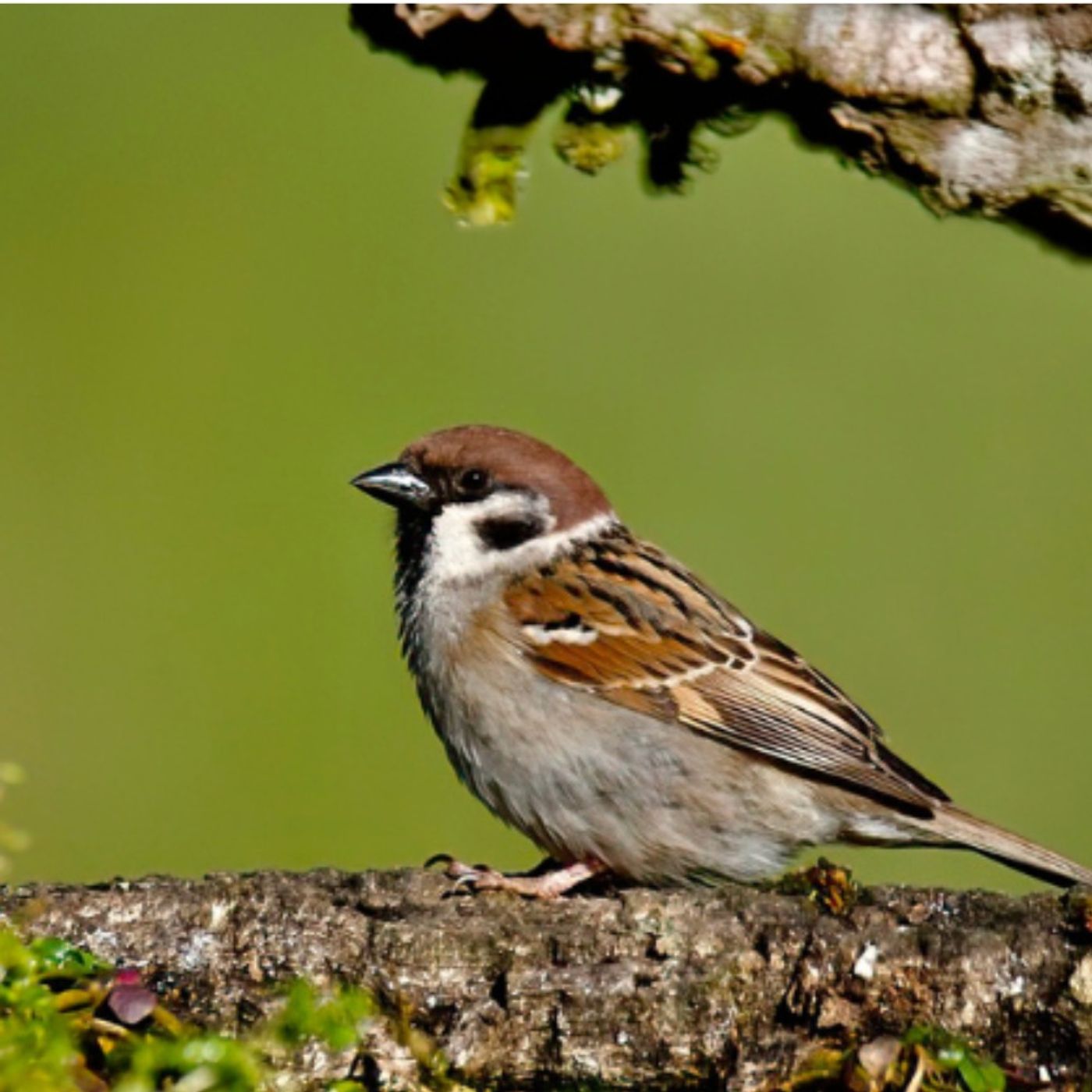
In Lafayette Park in St. Louis, Missouri, a dozen or so Eurasian Tree Sparrows from Germany were released. But unlike other introduced species such as the similar-looking House Sparrow, they did not spread very far and remained in a limited area in the Midwest. It’s not fully clear why, but it’s possible that they just behave differently. And the aggressive House Sparrow may have helped prevent the tree sparrows from spreading further by competing for the same nesting sites.
BirdNote is supported by the Bamford Foundation and by generous listeners around the world.
More info and transcript at BirdNote.org.
Want more BirdNote? Subscribe to our weekly newsletter. Sign up for BirdNote+ to get ad-free listening and other perks.
BirdNote is a nonprofit. Your tax-deductible gift makes these shows possible.
Hosted by Simplecast, an AdsWizz company. See pcm.adswizz.com for information about our collection and use of personal data for advertising.
Get every episode summarized
Each time BirdNote Daily publishes, we email you a written briefing from the transcript — the topics, who appeared, and any specific claims, with the ad reads skipped.
Email me new episodesFree for 3 shows. No card needed.
Know when Hans Peter Schmidt turns up
Follow Hans Peter Schmidt and once a week we email you every new episode they appeared on — including guest spots the show notes never mention, because we read the transcript.
Follow Hans Peter SchmidtFree. Pick your own day and time.
Hosts & guests
Transcript ready
30 searchable segments. Every word is indexed and playable.
Full transcript
BirdNote Daily — The Eurasian Tree Sparrow. Machine-transcribed; use the interactive transcript above to jump the player to any line.
This is Bird Note. The house sparrow introduced to North America from Europe in the mid-1800s has spread across the continent and can be seen grabbing French fries off the sidewalk from coast to coast. They often compete with native species for nesting sites. In the 1870s, another European sparrow came to the US but had a completely different fate. In Lafayette Park in St. Louis, Missouri, a dozen or so Eurasian tree sparrows from Germany were released. Their descendants found out across the city and at suburbs. Eventually, some moved up the Mississippi River to Illinois and southeastern Iowa. But that's about as far as they traveled. Unlike house sparrows, Eurasian tree sparrows haven't become invasive in North America.
It's not fully clear why, but it's possible that they just behave differently. And the aggressive house sparrow may have helped prevent the tree sparrows from spreading further by competing for the same nesting sites. Eurasian tree sparrows still remain in a small area of the Midwest, where they're not much of a nuisance to native birds and are a local curiosity for birders. For bird note, I'm Ariana Remmel. Bird note is supported by the Bamford Foundation and by generous listeners around the world. The problem with learning something about birds is that it only makes you want to learn more. Like, okay, but can birds smell? Okay, but can they predict the weather? Okay, but birds is a weekly podcast hosted by evolutionary biologist Dr. Scott Taylor.
Every 30 minute episode takes one big bird question and chases it down with the scientists who study it. Smart, little weird, and always fun. No binoculars required. New episodes every Thursday. Search okay, but birds wherever you get your podcast.
More episodes


