Get every episode summarized
Each time State of the World from NPR publishes, we email you a written briefing from the transcript — the topics, who appeared, and any specific claims, with the ad reads skipped.
Email me new episodesFree for 3 shows. No card needed.
About this episode
“This message comes from Total Wine and More, with the largest selection, finding a favorite Cabernet or discovering a new single barrel bourbon is simple. Shop Total Wine and More, in-store or online. Spirits not sold in Virginia and North Carolina.”From the transcript
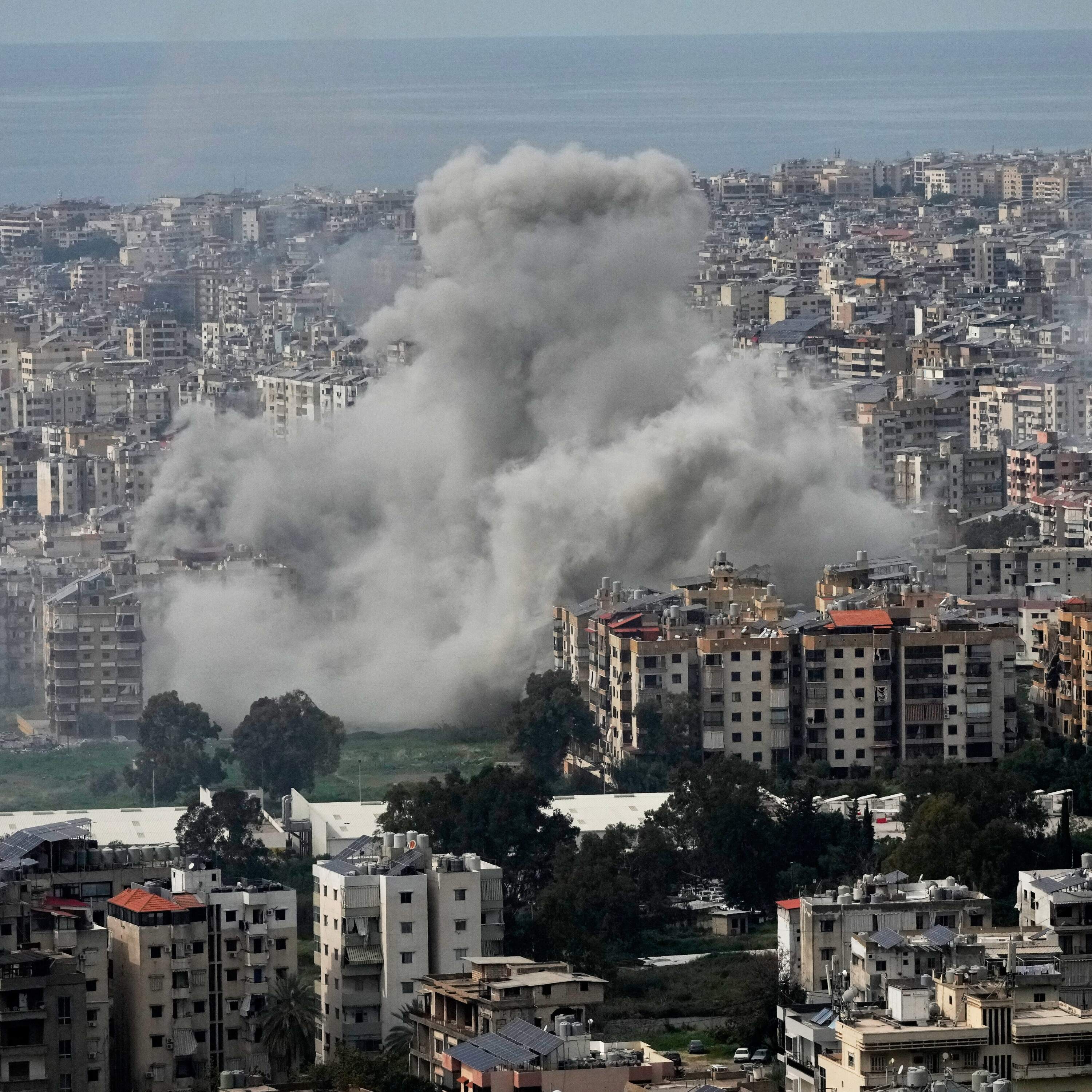
Meanwhile, Hezbollah militants in Lebanon fired rockets at Israel, and Israel has now conducted attacks in a Beirut suburb believed to be a militant stronghold. Thousands have been displaced. And the U.S. and Israel have continued and intensified their bombing campaign in Iran. We get an update from four NPR correspondents in the region in Beirut, Dubai, Tel Aviv and Eastern Turkey.
See pcm.adswizz.com for information about our collection and use of personal data for sponsorship and to manage your podcast sponsorship preferences.
NPR Privacy Policy
Get every episode summarized
Each time State of the World from NPR publishes, we email you a written briefing from the transcript — the topics, who appeared, and any specific claims, with the ad reads skipped.
Email me new episodesFree for 3 shows. No card needed.
Hosts & guests

Transcript ready
123 searchable segments. Every word is indexed and playable.
Full transcript
State of the World from NPR — The effects of a widening war in the Middle East. Machine-transcribed; use the interactive transcript above to jump the player to any line.
This message comes from Total Wine and More, with the largest selection, finding a favorite Cabernet or discovering a new single barrel bourbon is simple. Shop Total Wine and More, in-store or online. Spirits not sold in Virginia and North Carolina. Drink responsibly must be 21. Today on State of the World, the effects of a widening war in the Middle East. You're listening to State of the World from NPR. We bring you the day's most vital international stories up close where they're happening. It's Friday, March 6. I'm Greg Dixon. A week ago, the US and Israel began air strikes on Iran, killing the regime's leader and starting a war that now threatens to expand throughout the Middle East. Iran struck back firing missiles and drones at Israel, but also at US allies, including Bahrain, Saudi Arabia, and the United Arab Emirates. Meanwhile, Hezbollah militants in Lebanon fired rockets at Israel.
And Israel has now conducted attacks in a Beirut suburb, believed to be a militant stronghold. Thousands have been displaced. And the US and Israel have continued and intensified their bombing campaign in Iran. To understand what has changed in a busy week in the region, we're going to hear from four NPR correspondents. In Beirut, Dubai, Eastern Turkey, and we start with Karikhan in Tel Aviv. Israel says it has significantly damaged Iran's missile and drone capacity. The Army's chief of staff says Israel has damaged 80 percent of Iran's air defense system, and up to 60 percent of its ability to launch missiles into Israel. It's not possible to verify those claims, but what is clear is that the number of sirens and the hours that Israelis are spending in bunkers has decreased dramatically during this first week of war. Schools and most businesses remain closed. But Kenan Basel, a local event chef,
popped up this impromptu lunch for people to get out and gather. People have to be together now to remember that we have a future together, that we're strong, that we keep going this crazy thing that called Israel. Despite Israeli's weariness, there is still huge public support for Israel's military campaign against Iran. In one poll, 93 percent of Israeli Jews approve of the war, and 62 percent of all Israelis say that the war should continue until the Iranian regime is overthrown. For now sirens are still going off, and residents are still scrambling into public shelters. And now I've gone into the small bunker in the apartment complex where I am staying, and you can hear loud booms as the Israeli air defense systems intercept what's coming from Iran. And I will just wait here until we get the Al-Klear sign,
Kerry Khan and PR News to leave. And I'm Ruth Sherlock on the Turkish border with Iran. Here in this remote place with snow-capped mountains all around us, a steady stream of people are coming out of Iran, and many are looking traumatized, pale, gray-faced, for everything they've lived through this past week, who spoke with Roya Babae who's come to join her daughters who live in Turkey. People are shaking in fear, she says. At night they can't get good sleep because of the bombardments. Children scream when the air strikes land. I heard the border was closed, and so I cried when I saw that I could cross. I called my daughters, we screamed on the phone, they cried, I cried, we all laughed and we cried together. Zang Zadang, un arm as Khoj Khalid Jir Qeshi Danor, Baham Giri Akad. And this desire for reunion in this war, this is something we're also seeing. We spoke with many Iranians who are going back into the country,
with communications largely down, they need to know if their loved ones are safe, and going back is the only way to reach them. At the same time we've spoken with many people who say, the brutal attacks against protesters that took place during the nationwide demonstrations against the government that happened in Iran in January, this has really changed public opinion people are telling us. So many people know somebody who died in those protests. That has spurred anger and fury. Of course, nobody wants to see a foreign power bomb their country when man told us. But now we feel like this is the only choice. It's hearing stories like these on this border that really drive home the impossible choices that civilians are being forced to make in this time of war. Ruth Jelok and Pianyus on the Turkish Iranian border. And I'm Aya Batrawian Dubai. You can hear the sound of the motor of wooden boats in the
background. I'm looking out onto Dubai's historic creek harbor. And for centuries, these Dow wooden boats have been ferrying goods in people not just across the creek, but also between Dubai and Iran as a link. The historical trade and cultural and social ties between Iran and Gulf Arab states do run centuries old, but right now the politics are very different. Gulf Arab states have come under attack from Iran this week in retaliation for U.S. and Israeli strikes that killed Iran's top leadership. And the message is clear that Iran will disrupt the region's oil production, its tourism, its image as a safe place to park your money. But Dubai in particular has been a focal point of some of those attacks because it is a global trade hub and it is a world-class tourism destination. You know, I was walking here in the old suit near the creek and there's not a lot of tourists, but I did see a shirt that said Habibi come to Dubai. And I think it'll be a real test to see whether the Emirate of Dubai can sustain these attacks and bounce back, whether it can retain its image as a global safe haven.
But the interceptions here have been very successful. Today alone, the UAE says it intercepted 109 drones and nine ballistic missiles fired at it from Iran. Aya Batrawi and Pair News Dubai. And I'm Hadeel Al-Shalchi in Beirut. I'm on the sidewalk overlooking the beach here and it's packed with displaced families who fled Israeli bombing in South Lebanon. A new wave of displaced people flooded into Beirut last night as Israel bombed the suburb of Dahia all night yesterday and into this morning. Dahia is considered a Hezbollah stronghold. All around me are mothers huddled under blankets with their kids and makeshift tents, men sitting drinking coffee and smoking cigarettes around little fires. Children chasing each other into the street. Those with money are packing into hotels. Those without are sleeping in their cars. I talked to Samat Ahmad, who is spending the night on the sidewalk here with her husband and three children. She said they heard warning shots and then people started to shout. They need to
evacuate all of Dahia that Israel was about to bomb. One week on there's a general sense of exhaustion here and people are also suspicious of each other. Some hotels won't even take in the displaced. They're worried they may be members of Hezbollah who are wanted, making their buildings targets for Israeli strikes. Hadeel Al-Shalchi in Beirut. That's the State of the World from NPR. Thanks for listening. This message comes from Schwab. At Schwab, how you invest is your choice. Not theirs. That's why when it comes to managing your wealth. Schwab gives you more choices. You can invest and trade on your own. Plus get advice and more comprehensive wealth solutions to help meet your unique needs. With award-winning service, low costs and transparent advice, you can manage your wealth your way at Schwab. Visit Schwab.com to learn more. This message comes from NPR sponsor OnePassword.
Anyone else feel like 99% of your emails and texts are password reset codes? Trusted by millions of users and over 175,000 businesses. OnePassword lets you skip the resets and sign in securely with strong, unique passwords that auto-fill across all your devices. You can safely share logins, store cards and files, and finally stop using your pet's name as a password. Try it free for two weeks at OnePassword.com slash NPR. This message comes from Mint Mobile. If you're tired of spending hundreds on big wireless bills, bogus fees and free perks, Mint Mobile might be right for you with plans starting from 15 bucks a month. Shop plans today at MintMobile.com slash switch. Upfront payment of $45 for three month five gigabyte plan required. New customer offer for first three months only. Then full price plan options available. Taxes and fees extra. See MintMobile for details.
More episodes
More from State of the World from NPR

The romance between Canada and the European Union gets serious
State of the World from NPR

Why are people in Turkey hoarding gold?
State of the World from NPR

A Palestinian writer’s secret effort to preserve his diary
State of the World from NPR

The long tail of the 9/11 attacks for one Afghan family
State of the World from NPR