Get every episode summarized
Each time What Next | Daily News and Analysis publishes, we email you a written briefing from the transcript — the topics, who appeared, and any specific claims, with the ad reads skipped.
Email me new episodesFree for 3 shows. No card needed.
About this episode
What Next | Daily News and Analysis is made possible by:
“If you like YouTube, you'll love YouTube Premium. Hi, I'm Sean Evans from Hot Ones and I want to tell you about YouTube Premium. It has offline downloads, so you can watch without Wi-Fi. So you can lock your phone and it still plays, baby.”From the transcript
Donald Trump owes his political career to saying what no other politician would. But now that he’s standing alone in full-throated support of data centers and artificial intelligence, he looks less like a populist, and more like a liability for Republicans trying to win elections.
Guests:
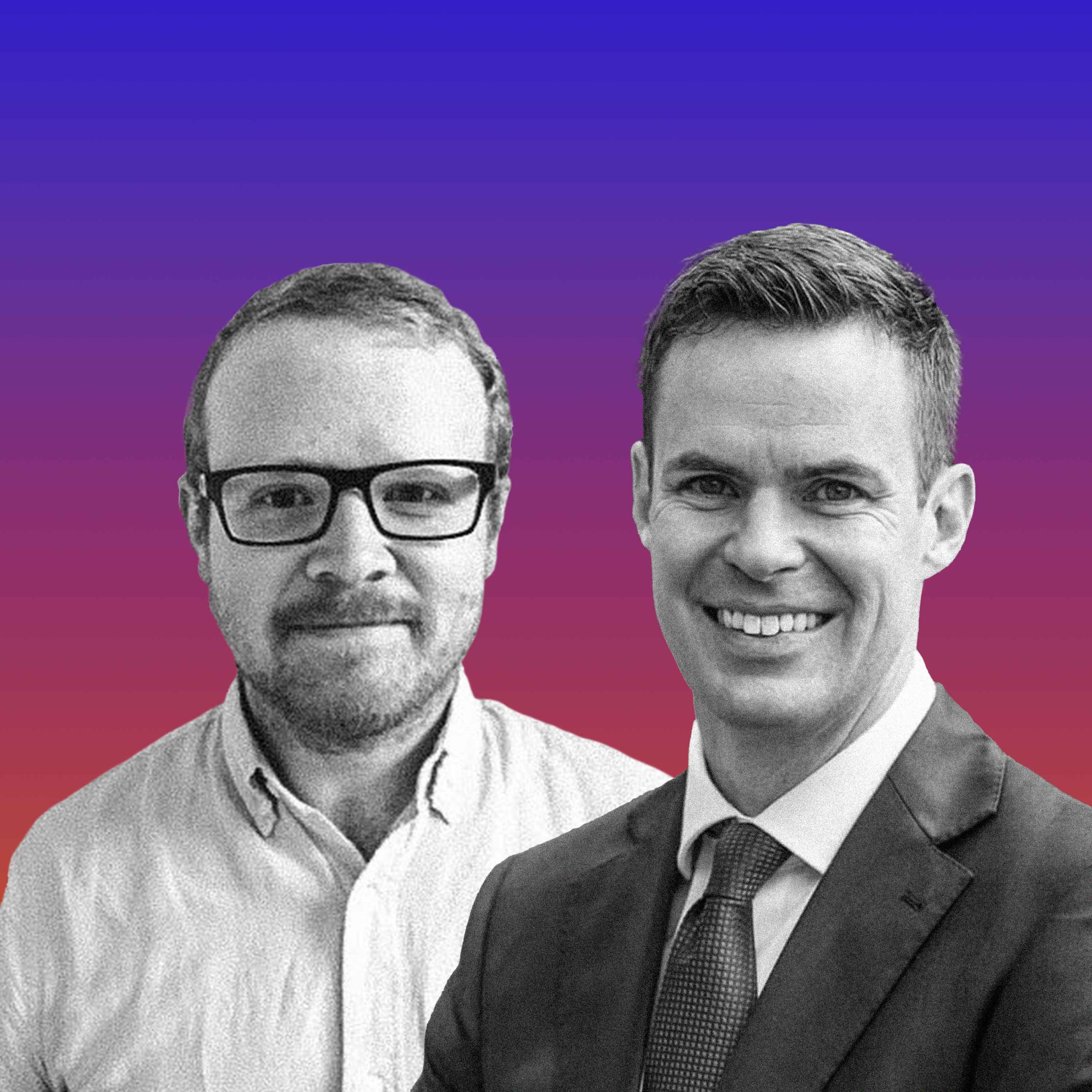
Jim Newell, Slate senior politics writer and author of The Surge.
Patrick Reis, Slate politics editor.
Want more What Next? Subscribe to Slate Plus to access ad-free listening to the whole What Next family and across all your favorite Slate podcasts. Subscribe today on Apple Podcasts by clicking “Try Free” at the top of our show page. Sign up now at slate.com/whatnextplus to get access wherever you listen.
Podcast production by Evan Campbell, Madeline Thames-Ducharme and Patrick Fort.
Paige Osburn is the senior supervising producer of What Next and What Next TBD.
Hosted on Acast. See acast.com/privacy for more information.
Get every episode summarized
Each time What Next | Daily News and Analysis publishes, we email you a written briefing from the transcript — the topics, who appeared, and any specific claims, with the ad reads skipped.
Email me new episodesFree for 3 shows. No card needed.
Hosts & guests
Transcript ready
650 searchable segments. Every word is indexed and playable.
Full transcript
What Next | Daily News and Analysis — The Data Center Will Not Hold. Machine-transcribed; use the interactive transcript above to jump the player to any line.
If you like YouTube, you'll love YouTube Premium. Hi, I'm Sean Evans from Hot Ones and I want to tell you about YouTube Premium. It has offline downloads, so you can watch without Wi-Fi. Background Play. So you can lock your phone and it still plays, baby. Oh, and it is completely ad-free. Yes, I said it ad-free. Try YouTube Premium for two months free at youtube.com slash premium. How eligibility varies? Terms apply? Cancel anytime. Decisions made in Washington can affect your portfolio every day. But what policy changes should investors be watching? Listen to Washington-wise, an original podcast for investors from Charles Schwab to hear the stories making news in Washington right now. Host Mike Townsend, Charles Schwab's managing director for legislative and regulatory affairs, takes a nonpartisan look at the stories that matter most to investors, including policy initiatives for retirement savings, taxes and trade, inflation concerns, the federal reserve, and how regulatory
developments can affect companies, sectors, and even the entire market. Mike and his guests offer their perspective on how policy changes could affect what you do with your portfolio. Download the latest episode and follow at Schwab.com slash Washington-wise or wherever you listen. We're officially less than two months away from the midterms, and that means it's the home stretch. The last leg of the midterms here have really snuck up on us. That's Jim Newell, Slate's senior politics writer. He's the man behind the surge. Slate's Saturday newsletter that breaks down the biggest stories of campaign season. Here's a link to sign up in the show notes. Go do it. We'll wait. I think we're six weeks until the midterms. It felt like the primaries were just going as of two weeks ago because they were. So it feels a bit like everything's kind of falling into place.
All the big money commitments from super PACs, if people promise, are all actually falling into place, there's advertisements everywhere. It's all happening finally. If you think of the midterms as a kind of bi-yearly, autumnal marathon, Jim is Slate's star runner. And Patrick Rice, senior editor, is like his coach. You know how there's always that adorable family member holding a sign that says you can do it go faster? That's me. Just waving that sign to Jim. He's rolling his eyes at me. I will not stop waving it. Because it's the last leg of the midterms race, what next is launching a weekly series of its own. It's called Super Tuesdays. Every Tuesday we're assembling a roundtable of experts, reporters, political thinkers, and answering your questions about the big issues dominating the conversation wherever you live. So there's Jim, there's Patrick, and there's me. I'm Emily Peck, subbing in for Mary today.
I co-write the Axios Market's newsletter every day, and as someone who covers money, when it comes to big issues dominating the conversation right now, there is basically one. One issue driving markets and politics and America. It's AI. You cannot escape AI. I don't think anyone last summer thought that kind of there'd be this enormous data center backlash over the summer, and then there'd be a related flock camera backlash, and then there'd be some discussion in Congress and on the campaign trail about whether these fancy new computers are going to kill everyone. Meet data center, David Crowley. There's an opportunity for us to really become AI and the data. From coast to coast, politicians from both parties are falling over themselves to get away from the D-word data center. I'm Grant Haaschalt, and we thought we'd show you what can happen with data centers.
First, they're really big. One building for you, Sandy. Absolutely. I'm happy to help. Data center production and energy use in Texas is skyrocketing to meet AI's needs. For your future. What? Who authorized that? Greg Abbott. Abbott took 20 million in campaign. But while Republicans on the ground are avoiding AI, Trump sending a different signal. The data centers are great, and they make people wealthy, and they make states wealthy, and it's the oil of the next 20, 25 years is bigger than the internet and the AI. That's much more so. I covered Congress. A year ago or so, members of both parties saying, this is great. This is going to cure cancer. Now it's more dividing lines falling into place where Republicans are maybe a little more positive about it, in part because they're the party in power. They don't want to say they presided over this monstrous new technology, you know, and Democrats who are kind of just using it as another lever to hammer Republicans with saying
that they've abused their power. Today on the show, the midterms and AI. I'm Emily Peck, sitting in for Mary Harris. You're listening to What Next. Stick around. Today's episode of Slates What Next is brought to you by Olympic hospitality. The Olympic Games are coming to Los Angeles in 2028. This is a once in a generation event that you're not going to want to miss. It's more than a ticket. It's a story you share with your family and friends, and the ultimate way to get closer to the action is within Olympic hospitality package. Ticket-inclusive packages offer a range of crime seating and lounge access options. Then you depended priority entry, food and beverage selections from LA's diverse dining scene, and elevated service and continuous support, making your day at the Olympic Games one to remember for a lifetime. Get ahead of the curve with an LA28 hospitality package.
Discover more at hospitality.la28.org slash what next. This episode is brought to you by FreshBooks. Whether you just launched a service business or you've been at it for years, the money side. It's got a way of pulling you from the work you actually love doing. FreshBooks can change that. FreshBooks makes the money side of your service-based business easy. You log your hours, you send a branded invoice, you get paid, and you know your numbers instead of chasing them. Money in, money out, all in one place. No more juggling one app for clients and other for billing, plus a pile of spreadsheets and emails. FreshBooks is designed for how small business owners think about money. Not how an accountant does. You don't need a financial background to use FreshBooks. It's simple on purpose. Most owners are up and running in minutes, not days. And if you need help, a real person is available on every plan. FreshBooks has been trusted by service businesses for over 20 years, helping over 500,000 owners and solo-proners run their business confidently.
Right now my listeners can get FreshBooks for less than three bucks a month, for your first four months that is 90% off. Head to FreshBooks.com slash podcast to get started. That is 90% off under $3 a month for four months at FreshBooks.com slash podcast. Decisions made in Washington can affect your portfolio every day. But what policy changes should investors be watching? Listen to Washington-wise, an original podcast for investors from Charles Schwab, to hear the stories making news in Washington right now. Host Mike Townsend, Charles Schwab's managing director for legislative and regulatory affairs, takes a nonpartisan look at the stories that matter most to investors, including policy initiatives for retirement savings, taxes and trade, inflation concerns, the federal reserve, and how regulatory developments can affect companies, sectors, and even the entire market. Mike and his guests offer their perspective on how policy changes could affect what you do with your portfolio.
Download the latest episode and follow at Schwab.com slash Washington-wise. Or wherever you listen. Entering the conversation is our president. Trump. On Saturday morning, this past weekend, he dropped one of these extra-long, truth social posts. This time was about AI. He's calling AI, quote, hoax from the radical left Democrats. Yet, at the same time, he's saying he announced he's going to establish an AI task force and a point in AI-zar. Patrick, do we know anything about either of those things, ZAR or task force? I think we know pretty well what task force means in Washington, and it means let's delay this problem for a good long time. Let's wait until people have thought about it a little less and cool down. And then let's release a report that makes big news in seven trade publications and doesn't lead to much in the way of action. If they were serious about doing something, this wouldn't be the first step.
I think Trump's made it pretty clear that he sees any AI regulation as an attack on himself because it is an attack on the Trump economy, allegedly. In Slates Newsletter, the surge on Saturday, we have more on this. You should check it out. But I don't see Trump moving meaningfully towards AI regulation so long as he sees it as any sort of threat to GDP growth. And right now, it's a tremendous piece of the GDP growth. So I think these are sort of the classic, of course I'm doing something. Just don't ask me exactly what I'm going to do kind of moves that presage in action rather than action. Reading is true social post. I had no idea what he was even setting up. I mean, he says I'm forming the AI force, but it doesn't actually say what it's going to be tasked with doing. It just says what it won't do. It says it won't, in any way, impede AI development, which he uses the greatest things
in Slice Bread right now. So I think there's a whole lot more to figure out what he means. And politically what it is is you have his advisors breaking through to him saying people are freaking out about AI. You can't just go out there and say it's a hoax or that they're silly for thinking this. You have to put out some acknowledgement of this and that there's some control over it. And he did, he did the bare minimum. Yeah, it seems like a little bit it is Trump getting a reality check. Like you have to at least show some concern or at least the concern is breaking through on all sides. But I mean, when David Sacks was the AI's our gym, what did he do in his our role? Like from looking at it from from where I was standing, it seemed like his role was just to encourage the development of AI. It wasn't about putting breaks on anything or passing regulations or anything along those lines. It seemed like he was more on the other side of that. Yeah, he was kind of AI's representative to the White House.
You know, he wasn't there to show you don't Trump where things need to be reigned in or not. He was just kind of there to help Trump in the White House make sense of things and also to show the AI industry and the crypto industry because he was also the ZAR of that. You know that they had a friend in the White House. Yeah, yeah. And now I think this notion that there's going to be a pause in in AI or at least pacing the frontiers and the tropics CEO said last week, David Sacks has already come out and said that any kind of pause wouldn't make America safer and would hand this market to China. So I guess we kind of know where he stands. Yeah, he and that's kind of the whole administration's line. You know, Todd Blanche said that from the Justice Department too. They're not pursuing anything. They're just saying, if you think you're building killer machines, well, you should stop doing that. And you know, the AI companies, if you take them at their word, they're saying we have a collective action problem here. But so in other words, there's a long way to go before this all reaches a settlement. Right. And yet in the last newsletter, I guess you're calling AI basically a layup.
You've never seen a bigger layup issue for populists heading down the stretch of an election season. How is this a layup issue for populists? Because if you're you're looking at, especially over the summer, you look at especially governor's races, just because governors have power to set, you know, more Toriums or offer tax breaks or not offer tax breaks to tech companies trying to do data centers, it just became so rapidly unpopular, whether correctly or not, it just became rapidly unpopular between both Democrats and Republicans. So you know, there's not really, there's not a great constituency out there, given how angry people are, given how much low trust there is in society right now towards these big tech companies, there's no gain in helping them. At least when you're on the campaign trail, I mean, we'll see what happens after election day, whether all these moratoriums stop, and everyone's like, okay, we're through the election now, continue building as you wish. But it just seems like, you know, acknowledging people's fears, even putting something out
there that's that's superficial, you know, some sort of pause or some sort of signal that you're you're taking this quite seriously. It's really not a difficult political calculation. Patrick, what are you seeing in the in the polling? Is this like a slam dunk issue? Like if you want to win your election in your state, just say like you're going to band data centers and your golden or what are the people actually saying in these polls? So public opinion has been consistently low and is dropping, particularly related to data centers. A big issue that you hear at town halls, it's usually the first question is what about this data center in my community? I was listening to Vivek Ramaswamy have one of his town halls and the first three questions were about it. And he was put on defense and had to lay out a new policy that he's rolled out where there's a list of criteria that any data center had to be met. It was interesting because it does seem like a roadmap to building a data center and he framed
it as instead, you know, here's an anti data center policy. So I think a lot of candidates are trying to walk a line where they're not killing this influential and big industry that still has plenty of polling in Washington while presenting themselves to constituents as someone who is staunchly opposed to this industry. That's fascinating. There's as I was coming to tape our interview, there was a note, I think from Morgan Stanley saying one of the biggest challenges to just even powering data centers in the coming year or two is opposition from people. It's not capacity or the energy. It's just literally people. Those metals and people getting in the way of the money. Speaking of, either of you can take this one. I mean, so AI is really unpopular. People hate the data centers. Trump is, he's supposed to be a populist kind of master. Yet he's coming out. He's calling AI a hoax. He has, he supports data centers. He says, you know, slowing that down, I believe would be a mistake.
So how are we, why? Why does he love something that the people don't love? And he's usually so smart about these kinds of things, right? A few reasons. I think one is that he's made up with big tech since his first administration. When he was very hostile to them, he's friendly with him. They go to Mar-a-Lago. They give him gifts. They donate to his political action committee. So he's on good terms with AI. But it's also, I think Patrick mentioned earlier. I think AI build out as responsible for what something like 50% of the growth in GDP right now, which is what he's relying on to sustain his presidency and argue that he's, you know, the greatest president or leader of any kind of world history. So he sees it and he takes things so personally, he sees an attack on trying to stop AI development as an attack on his economy or an attack on what could be a legacy item for him. You know, if he's remembered for the one who supported this great new infrastructure,
this great new technology in his second term and people try to stop that, he sees that as, you know, they're going after Trump again. You notice he compares these criticisms of AI development or doomsday warnings or data center, Hossily. He compares it to the Russia hoax, you know, which to him is the ultimate example of treason, you know, that they spent years investigating him for potential collusion with with Russian is 2016 campaign. And I mean, there is if two, if I want to, you know, this big argument coming from people who are most supportive of the AI in the government is that we have to do it because China is doing it and we can't lose a China and it's important for national security. So there's an element of that in what he's saying too, but he does seem to just see it as, he gets so unusually mad about how people criticize data centers, you know, he said like, if we kill the golden goose, we'll get what we deserve or he may have said, you'll get what you serve. Like talking about voters that way, it's just really, it's unusual.
Yeah. And I guess the other twist, Patrick is, Trump isn't wrong. I mean, AI right now, AI development and investment is really boosting GDP growth and the economy and the stock market and without it, things will look very different right now in the economy. All that said, I don't think the people who oppose data centers, the, these troublesome people getting in the way of data centers, regular people, I don't think they see the economy and say, this is going great. I think we see over and over again in the polls, people have terrible views. They think the economy is going terribly. They hate inflation, they see gas prices. I mean, is this even a winning kind of way or frame? I mean, what do you think? Does this, a winning frame for the president here? You can't even make this argument. He simultaneously slamming the break and hitting the gas. You can't have a warrant Iran that's complicated energy shipments around the world and driven
up gas prices and caused all sorts of economic dislocation. We'll at the same time be going all in on the idea that you are the economic steward of the millennium. He's at other times told people, well, it's okay that you're paying a little more for gas. This is going to stop Iran from getting a nuclear weapon. He's essentially created all sorts of economic complications, which means that it's just a really tough time for him to be making the argument that voters should keep his party in power due to an economy that purporting they don't love. It is true that the economy is uneven. There are lots of positive metrics that I think get less focus, but I think as we saw in 2024, the salient economic metric for people is prices. That's because, well, unemployment inflicts a lot of pain on a select few people, inflation inflicts some pain on almost everyone. I think as he deals with that, he's going to find himself with a lot of trouble. I think it's another reason why he's extremely reticent to see anything get in the way of
the big AI infrastructure build out. We'll be right back after a quick break. Washington's made in Washington can affect your portfolio every day. But what policy changes should investors be watching? Listen to Washington-wise, an original podcast for investors from Charles Schwab to hear the stories making news in Washington right now. Host Mike Townsend, Charles Schwab's managing director for legislative and regulatory affairs, takes a nonpartisan look at the stories that matter most to investors, including policy initiatives for retirement savings, taxes and trade, inflation concerns, the federal reserve, and how regulatory developments can affect companies, sectors, and even the entire market.
Mike and his guests offer their perspective on how policy changes could affect what you do with your portfolio. Download the latest episode and follow at Schwab.com slash Washington-wise, or wherever you listen. This episode is brought to you by Omaha Stakes. I'm going to tell you the story of what happened the night Omaha Stakes arrived at my house. This was a few weeks back. It was a Thursday. My kids were like, what's for dinner? And I was like, just wait. Then the Omaha Stakes guy arrived. Not just with stakes. There was chicken in there, pork, some burgers, all of it vacuum sealed and on dry ice. All of a sudden, we had options. My older kid invited some friends over. He was about to leave for college. It felt like the best way to celebrate was with a stake. The rest of us had burgers, and it all got on the table in a snap. In one box, we had something for a special occasion, and something for everyone else. If you've never tried them, you might want to start out with the burger perfection flight.
It is a good introduction to everything Omaha Stakes has to offer. For $79.99 you get 20 premium steak burgers. From five distinct cuts of stake, each with its own unique flavor profile and texture. The burger perfection flight includes four pure ground filet mignon burgers, New York strip burgers, ribeye burgers, brisket burgers, sirloin burgers. Yeah, all the burgers. Try the burger perfection flight at OmahaStakes.com today. That is 20 premium steak burgers for just $79.99. Plus you get $35 bucks off with promo code next. That's OmahaStakes.com. promo code next for $35 off at checkout. Terms apply. See the site for details. So is the pro AI stance that Trump has taken? Is that the whole GOP's stance? Republicans going to be the pro AI party going forward? I think we're going to have to see where the dust settles after the election.
Right now everyone's just running for cover where they can. So you've seen the GOP definitely take a... It depends on the race, but people in competitive districts definitely take a much harder line against them. Really kind of trying to outflank Democrats once they got a little surprised by this issue and realize how vulnerable they were on it. Look at the Wisconsin governor's race. You have... That's Republican Tom Tiffany versus Democrat David Crowley. And David Crowley was a little bit during the primary, a little wishy washy about whether you do a moratorium. You know, I think recognize the value of this investment that could come from AI, but he was hedging a little bit. So Tom Tiffany, the Republicans, started calling him data center David Crowley, you know, and putting money behind like these attacks on him saying he's the one who's going to expand data centers when he gets in. So you're seeing... You are seeing... I think in Westchester County, New York, Mike Lawler's district there.
He's one of the most vulnerable House Republicans. He's run ads against his opponent, his Democratic opponent, you know, talking about how much money she's taken from tech companies, things like that. So you're seeing a little bit of this repositioning and everyone just saying what they have to say to get through the midterms. I'm curious, you know, the day after the midterms, if maybe we get a better sense of what everyone's true beliefs are in this, but right now, if you're in a tight race, it's not a good position to go out there and say like, you know what? AI companies can come to our backyard and do whatever they want. It's the future. Yeah. What are you guys so scared of? In Texas, Governor Abbott just went after water users at data centers and to the, I think great relief of candidate Ken Paxson, Senate candidate Ken Paxson. And so they're trying to send a very clear signal to voters that they are on the popular side of this issue. And I think it's noteworthy that they're using the tools already at their disposal in
water policy, which of course in Texas is a big deal. And that was just last week. And I think you'll see more of that in the between now and OSE, early November. It's going to be interesting too. See where Democrat, like if Democrats win a lot of these governor's races where they campaign pretty hard against AI, well, if they actually get in the office and they have the chance to bring in these big companies and these companies say, you know, we can create X number of jobs, it'll be interesting to see the extent to which they walk back some of their own, you know, hardline stances against data centers too. Yeah, it's interesting. Everyone, well, with the exception, perhaps, of the president of the United States, it seems like candidates on both sides are very much against data centers, very much against AI. So it's like the question to ask is, why wouldn't that just continue if the people are against AI and all the candidates on both sides are against AI? What's pushing in the opposite direction? Do you think? Well, I mean, one interesting thing about how I think the AI companies kind of understand
that through this election, they're going to get hit a lot and after that, they'll figure out where things are. Yeah. But the House of Representatives in Senate came back last week and there was all this talk about AI killing everyone and they talked about whether we'd set up a task force or a select committee to look at this next time, but it really didn't go that far. You know, there weren't any, there wasn't a massive piece of legislation that would destroy the AI companies coming out. And Democratic candidates in swing districts have been warned, you know, don't go too hard in AI because we're six weeks from the election and they have unlimited money that they could put into campaigns right now. I mean, you're seeing this happen with crypto right now. So last week, the Senate blocked this big crypto bill that the crypto industry was relying on a couple days later here. Now Monday morning, crypto's big super PAC is spending $30 million against shared brown, the Democratic candidate in Ohio is kind of a payback. So there is a little bit like, you know, what's pushing against them. I mean, part of it is money like they don't want to see all this unloaded on them right
now. But I think also, you know, no one in, I think it's going to be a little more complicated how this all resolves than the election season will allow for. You mentioned Ohio and a few weeks ago, Axios, where I work, we published a memo from Senate Republican, from a Senate Republican campaign spending group, basically calling data centers, politically radioactive and calling out Ohio specifically. So you mentioned Ohio and crypto, but Patrick, why why Ohio? Why is Ohio like an important AI place? I think if you look at the history of Ohio, there have been a lot of big promises made to the state about this thing will revitalize your economy or that thing will revitalize your economy. And I think a lot of voters are saying, like, wait, we've heard this before. We've heard a little economic pain and a lot of change now, but don't worry down the line, you know, the factories will be humming and the jobs will be flowing in.
And I think for a state that understandably has a lot of skepticism of big economic promises, and other company coming in and making them is a particularly touchy issue. It sort of reminds me of when the Trans-Pacific Partnership was being debated in 2013. And then again, in the second round in 2016, candidates were tripping over themselves to run away from something that had previously been mutually supported. Because in states like Ohio and Michigan and Wisconsin, there's just a feeling that any time a big promise is made about short-term pain for long-term gain, it just brings up some really painful memories of states getting hollowed out and it taking a long, long time for them to regain their economic footing. And I think Shared Brown is well positioned to take advantage of that, given his long connections to labor and his long history with voters in that state. And so I can see why in Ohio Republicans would be particularly nervous about being seen as the AI party.
Yeah, Shared Brown is like, he was populist before Donald Trump made it cool, right? I mean, he really, this seems like a perfect issue for that guy, Jim. Yeah, absolutely. He is more than enough to work with John Vuested, his, you know, being more but traditional business side Republican who wasn't too skeptical about this until a month ago. It's also a big issue in Ohio because, you know, there's a side that they've lost $3 billion in revenue because of the some of the tax incentives they give into the big tax companies to come. So that's, you know, increasing some of the anger. And just to give another example with Patrick was referencing, I mean, Patrick is a Wisconsin night will remember, but the whole Foxconn fiasco and it was constant. Oh, yeah. This is the eighth wonder of the world. Former President Trump and former Wisconsin governor Scott Walker promised a high-tech mecca, well worth a nearly $4 billion in state and local incentives. The company promised 13,000 jobs, but almost immediately there were what Foxconn called
unanticipated market fluctuations. There was that huge, you know, factory. There was going to be 800 billion jobs coming in or whatever and just dried up in the dust. And that's why it was a huge issue in that, in that Democratic governor's primary. Yeah, all across the Midwest, you know, there's that skepticism is there. But there's a lot of, you mentioned Brown's competitor sort of like becoming a AI opponent just recently. There's a lot of like these like frantic kind of like 180s happening and a lot of these races in Florida, I guess, GOP representative Byron Daniels said he at first said no way, no data center bands coming. And then a few weeks later said he was going to, he spent, he spent money on ads promising to protect the state from data centers. Are there other places where there's some kind of fun 180s? Yeah, I think the biggest one is Texas Greg Abbott, who his whole, he's running for his
first term now as governor of Texas. His whole model has been, you know, kind of luring companies from California or their blue states with tack and send-ups in a better business environment. And so he of course brought that to AI last year. Google made this huge investment and he said we want to make Texas the epicenter of AI. And so then over this summer, you know, there's these enormous, you know, what are they? Megawatt, Gigawatt, I don't know the technical term. It's enormous. Yeah, big, very big data center products coming to Texas. And it's, you know, irritating a lot of his constituents, especially rural constituents. So he did a pretty big 180, put a halt on the approval process, a moratorium. He went out and did a big national TV interview where he said these tech companies, you know, who they think they are. Like they didn't make their case to the people. They got what they deserve. So that was kind of the big signal to everyone else, which was, you know, run and take
cover now. And so I think it's almost become the default position now that you have to at least have a, a moratorium, a temporary moratorium, you know, at least until we get through the elections. And now Greg Abbott's doing the same thing with, with flock cameras, which are another AI assisted technology that everyone's up in arms about. He had a board that was really approving all of those projects in Texas. And now he's also put a hold on that. I think post election, you'll see a lot of these moratoriums become a little bit more sort of facilitating bills where it's like, it won't surprise me if you get, you know, state wide bills for what you need to do to build a data center that include local preemption of additional regulations. Because I think if, I think these companies know that the jig is up in terms of like free rain to build data centers. But I think they would gladly take state wide rules, standardized policies over a patchwork of, you know, county or municipal regulations about who can build what. And it won't surprise me if, if I'm a big tap company and I'm, I'm looking at all the
rhetoric now, I think per Jim's point earlier, I'm really waiting to see what happens after the election. Because I do think state wide politicians, particularly ones with deep ties to industry are going to be really reticent to turn away large scale investment from some of the biggest and wealthiest companies in America. And I guess to bring it back to Trump, I mean, he has said, and it's generally people think the midterms are sort of a referendum on his presidency. Are they, what to make of this in the context of AI? Are they also referendum on his AI policy stance? I don't think that, I mean, the midterms are still a story about Trump. It is still a referendum on Trump. It's a asset to be a referendum on Trump about the cost of living, about the Iran War, about, you know, excesses of the Trump administration or, you know, I mean, those are still the big
issues. AI is kind of back there as another factor in these races that maybe wasn't seen a year ago. I think it's going to be maybe the defining issue of 2028. I think this is kind of a little preview. We probably won't be talking about data centers explicitly in 2028. We'll be talking about whatever's next, you know, but, you know, someone had the line to like, today is the day when AI is the smallest part of your life. It's only going to keep getting bigger and bigger every year. And so I think it's just going to keep rising up voters beliefs. I don't know if they'll ever surpass cost of living, but those two things will get more under twine too. To wrap it up, I was going to ask you which 2026 race is like most, most on your radar this week could be big stakes or maybe some things, small stakes, but interesting. Jim, you got something? Well, as it happens, I have a big piece out today on slate.com about the Texas Senate
race and kind of looking at the history of Democrats trying to turn Texas blue and places where that, the several times where people got their hopes up. I remember beta. Democrats, yeah, yeah. And talk to him. He's featured in the story. Of course. So, that is one I'm watching very closely. I do think it is of a different nature, this cycle. You know, when you look at those polls, he's been leading in every poll by a couple of points on average. That's James, Hillary go. James, Hillary go. Like those polls, I think at the moment are accurate. The big question is in the last two weeks or so, about $100 million or so in Republican outside spending, super PAC spending has has come to Texas to rescue Ken Paxson, his opponent. We're going to find out if that if that does a trick. If that can help Republican voters in Texas come home and feel comfortable going for Paxson and, you know, once again, Texas stays red.
So that's what I'm watching. Patrick. So, about as far from AI as you can get, the other week there was a debate in Alaska between Democrat Mary Peltola and Republican Dan S Sullivan, not to be confused with the other Ken and other balance, Dan Sullivan. And the entire debate was about who would do better by local fisheries? I learned so much listening to this. It was a great hour on C-SPAN radio. But some terms that were thrown around were lower 48ers, Seattle based trawling companies, how the Pollock Catch is undermining the salmon catch. I always say that. It's just, you know, if you've heard it once, you've heard it a million times. But it was a fascinating debate. It's going to be a great race. And it seems like it's shaping up to be close. So if anyone at Slate.com would like to send me to Alaska in the next few weeks, just let me know.
Jim Patrick, thank you so much for talking to me. Yeah, thanks for having me on. Really enjoyed it. Thanks for having me. Jim Newell is the senior politics writer at Slate. Patrick Rice is his editor. And you can check out Jim's big piece on Texas and James Telerico on the homepage at Slate.com. We'll also drop a link in the show notes. And that's the show. What Next is produced by Evan Campbell, Madeline Thames-Dusharm, and Patrick Ford. Paige Osburn is the senior supervising producer of What Next and What Next TBD. Miele Bell is the executive producer of podcasts here at Slate. Ben Richmond is the senior director of podcast operations here at Slate. And I'm Emily Peck. You can find me on Blue Sky. I'm an Emily R. Peck. And you can also find me every Saturday on Slate Money where we cover the business and finance news of the week. Thanks for listening. Talk to you soon. Hey, it's Paige Dussorbo from Gagley Squad.
Everyone is always looking for a new way to make some extra cash. But sometimes the easiest place to start is your own closet. It's a little help from Deepop. Think about how many clothes you have that you love, but you just don't wear anymore. On Deepop, it's quick and easy to list those pieces. There's no selling fees, and suddenly those clothes have a chance to find someone who actually wants them. And the best part, you're making room for whatever you're into next. Make money on Deepop with no selling fees and find what you want for less. This message is brought to you by Deepop. This episode is sponsored by Hagen. Hagen turns a script, photo, or presentation into a polished video of you. In minutes, no camera or crew required. It's how real estate agents, financial advisors, attorneys, and creators show up consistently on every feed and build a brand that brings in clients without spending their whole week making content. Rated the number one AI video platform for small businesses on G2 with the most realistic AI avatars in the industry, trusted by a community of over 30 million people and 85% of the Fortune 100, and built to work in over 175 languages.
So you can reach your audience in theirs. Here's a wild part. Make yourself for just 15 seconds and Hagen builds an AI avatar that makes professional videos for you on demand. So you can post everywhere your audience is. As yourself, without filming every time, your first three videos are free at Hagen.com slash pod. That's h-e-y-g-e-n.com slash P-o-d.
More episodes
More from What Next | Daily News and Analysis

Who the "Protect College Sports Act" Actually Protects
What Next | Daily News and Analysis

The Cheap Money Era Isn't Coming Back
What Next | Daily News and Analysis

A Hit of Democratic Hopium
What Next | Daily News and Analysis

The Knockdown Dragout Fight for Max Miller's House Seat
What Next | Daily News and Analysis