Get every episode summarized
Each time Today, Explained publishes, we email you a written briefing from the transcript — the topics, who appeared, and any specific claims, with the ad reads skipped.
Email me new episodesFree for 3 shows. No card needed.
About this episode
Today, Explained is made possible by:
“There is a time bomb lurking in the American economy. It has the potential to make almost everything even more expensive and some experts say it's about to explode. You see it every time you gas up your car, but you probably ignore it.”From the transcript
Get every episode summarized
Each time Today, Explained publishes, we email you a written briefing from the transcript — the topics, who appeared, and any specific claims, with the ad reads skipped.
Email me new episodesFree for 3 shows. No card needed.
Hosts & guests
Transcript ready
425 searchable segments. Every word is indexed and playable.
Full transcript
Today, Explained — The coming oil shock. Machine-transcribed; use the interactive transcript above to jump the player to any line.
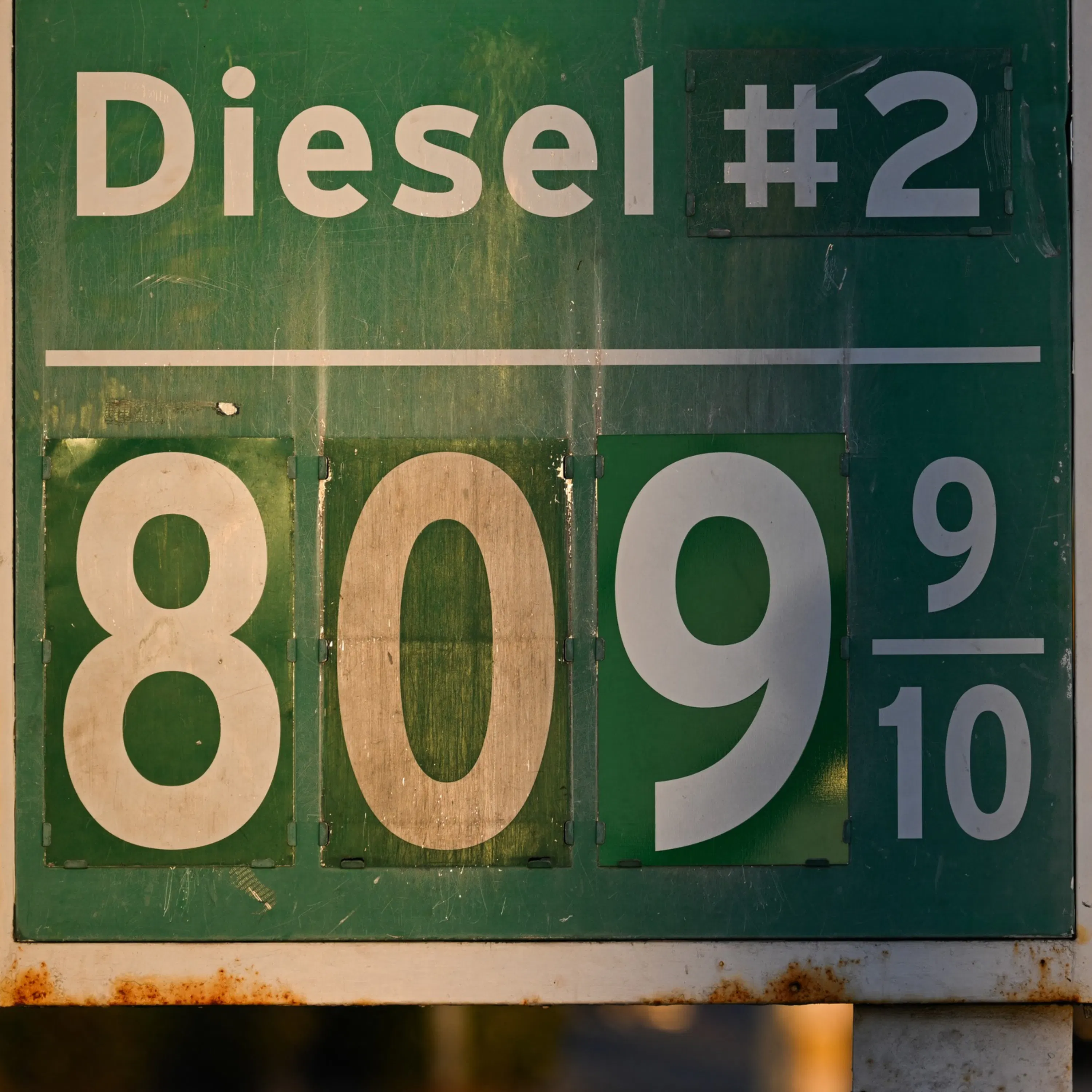
There is a time bomb lurking in the American economy. It has the potential to make almost everything even more expensive and some experts say it's about to explode. You see it every time you gas up your car, but you probably ignore it. Diesel. The price of diesel has gone up and up and up since the war with Iran started. Diesel powers the American economy and in about a month, it will almost certainly power Americans to vote in midterm elections where they say high cost of living is their biggest concern. Aware that a wipeout is possible for Republicans in November, President Trump is up to his old tricks trying to meddle in the US economy. Coming up on today, explained from box. Well, it's I ran this and I ran that. Well, I ran out of damn money. I tried to start selling pictures of my feet. I might not have money for food or to hang out with my friends, but I always have money for candles. I always have money for candles. Support for today, explain comes from Anthropic.
The team behind Claude. Anthropic is a public benefit corporation founded on a hard question that question is, how do we make sure AI goes well for people? They're working on it, publishing what they find even when it's uncomfortable. There's hope in hard questions. Your hard question at Claude.ai-slash today, explained that's c-l-a-u-d-e-dot-a-i-slash today, explained. I'm Anna Garden and each week on Happy Hour, I invite old and new friends for a drink and a fun conversation at my kitchen table in New York City. On this week's episode, I'm joined by Andy Bargani. We talk all about how he started his career as a teenager at Shephanese to becoming an internet heartthrob from his cooking videos to opening his first restaurant in New York City this fall. New episodes of Happy Hour are available every Wednesday. You can watch on YouTube or listen wherever you get your podcasts. Cheers!
This is today, explained. I'm Nathan Bohmian, a business reporter at Axios, an author of Axios Closer, a daily newsletter and all things business. What is diesel? Diesel is essentially a fuel made from another fuel. Diesel is made from crude oil and it's basically refined into a liquid that essentially powers the economy. And so diesel is primarily used in trucks and in farming equipment and in industrial machinery that essentially allows us to ship things from place A to B. Diesel is a fuel that I think a lot of people just don't pay attention to until something goes bad. And that's what we're facing now because the price of diesel has spiked and that affects trucking in particular and most products in America are shipped along the road via trucks. It seems like every single week we start the video saying the same shit, fuel prices again hit a record high. I'm like a damn auctionaire over here in my head trying to figure out how much money this
truck's going to take. Hit the high, hit the high, oh, apparently it's $175. This is getting redeemed. Okay, so we are talking about serious rises in prices here. What is actually happening with diesel? Why is this going on? Obviously there was one major geopolitical event this year that disrupted the entire energy economy, which is the US and Israel attacking Iran. Right from the beginning we projected four to five weeks. Iran is of course at the headquarters of the oil economy in some ways, but primarily the thing you have to look at is the closure of the straight-up armoules and then the jockeying over it that's happened in the month since then. At the war now passing 200 days, Iran claiming it's struck an oil tanker trying to transit the straight-up armoules. As President Trump rejects Iran's proposal for a seven-day ceasefire to reopen the critical waterway. Once they close that straight, that disrupted the entire global energy economy because
that straight handles a substantial portion of the shipping that basically where they bring the supplies out of the Middle East and ship them to other people. So that affected diesel prices, gasoline prices, jet fuel, affected effectively everything that is based on crude oil. I don't know how much more they can take, but you know, whatever it is, it doesn't matter. And I'm not affected by the election. Who are the people right now that are profoundly freaked out about the cost of diesel? Well, first off, I think certainly truckers are freaked out because their cost of doing business is going much higher. Well, nationwide, word of a possible truck driver's strike is spreading. If there's no freight, nothing move. No police ticket, no grocery store, nobody eat nothing move. No construction on the highway. Trucking is a fundamental. And I think also, farmers are freaked out because they're already facing real pressures from the trade wars that are going on that President Trump started from things that are totally out of control, like climate issues that have caused their costs to go higher.
And all of a sudden, the price of diesel affecting farmers as well so that then eventually affects the price that they charge, which ultimately gets to the consumer because it ends up costing more to pay for things like an ear of corn. We're in the middle of a harvest, the time that we use the most diesel. So it's really hit in us. I mean, we don't make any more for a bushel of corn. We pound a beach. So yeah, that comes straight out of our pocket. How stark do you think this might be? Like in a month or two months, do you think I could go down to the Walmart and I see that something I buy all the time is now a dollar more expensive or there's like a sign saying diesel is expensive. So we're adding a, you know, a 10% surcharge. Like, what do you think this actually might look like? I think that the impact is imminent. Oh, this flows through very quickly usually. Now, we're not talking about months, we're talking about weeks. If not days before people will start to notice increases, especially in the grocery aisle. I think that's the first place people will notice it because fresh food has to be shipped
on a weekly basis. And so I think diesel prices are going to have a big effect on food inflation. This is coming off of, of course, several years of food price increases that we experienced in the wake of the pandemic. And then we're also now barreling toward the holiday shopping season and holiday shopping season is going to be affected by this as well. Because if a toy, for example, is made with some sort of resin that is affected by the cost of crude oil, which also affects the cost of diesel. And then it's shipped over the road to Walmart through a truck that uses diesel. All of these things add up and ultimately are going to probably lead to higher prices. We've also got an issue with heating oil, which is a fuel that is used primarily by households in the Northeast, where essentially they're using that to heat up their home. And heating oil and diesel and all of these, you know, these oil-based products are caught up in this vortex right now. That ultimately is not something that the ordinary person can do that much about. Okay, this is super interesting because it is everything.
Powers the US economy, like you said, when something is this crucial, one wonders if there are like alternatives. Do the industries that rely on diesel have any other options? There's definitely alternatives to diesel, but in many cases, they're not alternatives that can be switched too quickly. Because if you think about the trucking industry, you know, they're invested heavily in these big rigs that are taking products from places A to places B. And so if you are invested in a truck, yes, you could theoretically switch, but you're going to be basically scrapping this huge investment you've made. So, you know, diesel trucks are not really going anywhere and immediately. Also, a lot of times, they're simply still the best way to get somewhere. Because you can switch to rail, for example. So railroads are definitely a competitor to trucking, but really only best for certain types of products. Now there are other types of trucks that you can buy.
Certainly, maybe a compressed natural gas or liquid natural gas, LNG is alternative fuel for some trucks and biodiesel in some cases can actually be good. And then, you know, maybe down the road, hydrogen or something, that's really more of a futuristic thing. Now, in the short term, there is the possibility of using electric trucks that is starting to become more realistic. In fact, just in recent days, Tesla began major production of the Tesla semi, which is an electric semi truck that we've been waiting for for years. So this is really going to be a game changer truck. And also, it's going to make a ton of sense economically, because the cost of electricity per mile is much less than the cost of diesel, especially in these crazy times. I remember covering this in 2018 when Tesla debuted the Tesla semi, we all thought this was going to be coming out soon. Production begins 2019. Well, it's taken nearly a decade for this to finally become a reality in large proportions,
but the Tesla semi is an electric truck that could be an alternative for some. And then, you know, there's other companies that are making electric trucks too. So that could be sort of viable. But the problem with electric trucks is that the battery is so heavy that ultimately, it's still tough for electric trucks to compete with diesel on shipping heavy items. But, you know, it was often joked that when the Tesla semi first debuted, the very first thing that it shipped was a bunch of bags of Cheetos because Cheetos was so light and they couldn't handle any extra weight. And so, you know, they had that deal with PepsiCo and I'm sure PepsiCo needed those trucks, but it wasn't ready at the time to ship anything expensive. It's a lot better now. But again, the issue still is with because of how heavy electric truck batteries are going to be that is still going to make them somewhat limited in their capacity. But I do think that you're seeing some demand for the Tesla semi that indicates maybe it will become more competitive with diesel because of the price of diesel now.
Okay. So when prices are high, generally, somebody somewhere is benefiting from high prices. Who is it in this case? I think that the people who are benefiting here from diesel prices being so high are these refineries, which a lot of people don't really think about that much because they're sort of the middle person, you would say, in this entire process. They're the ones who essentially take the crude oil and turn it into usable diesel for a pickup truck or for a semi truck or for a farming equipment. And when that refinery business is experiencing such high demand right now, there's limited capacity to do this. And I think because of some of these issues in Russia, where Ukrainian drone strikes are hitting critical energy facilities. Wow, look at the lid blowing off of that. And in Iran, of course, and in other places throughout the world, there's just limited diesel refining capacity right now, which means that there's just not really anywhere else to do this and therefore they can charge higher prices.
So that means higher profits for the refineries. Okay. So all of this is shaping up to potentially mean a really ugly winter. One thing I think about a lot is that American consumers will accept a lot of pain. Like we had COVID, the inflation, the shortages of literally everything. Then we had the war in Ukraine and prices go up again. People still have our keep spending money, even as we predict, like, oh God, this one's going to get bad. People still go to the store and they spend money and maybe they gripe, but it's not like we're out in the streets. Do you think that this coming diesel shock imminent your words is going to be different? Well, I will say that and I'm not an economist, but there is this interesting phenomenon emerging in the economy where consumer sentiment is rock bottom, but consumer spending is actually really strong. And so there's this gap emerging between what people say they feel and between what they're actually doing, which is in this case, they're still actually spending.
Now maybe it's sort of yolo spending, they're thinking like, well, you know, my, I really don't got much going for me. I was going to keep spending, you know, I mean, I've experienced that a little bit. So hey, I don't blame anybody. But, you know, hey, at the end of the day, I think that the numbers matter a little bit more than what people say they feel. But I do think people are going to hit a breaking point at some point because they simply can't continue this level of spending if the underlying fundamentals of the economy start to collapse. Axios' Nathan Bohmie coming up next, President Trump's wild idea to lower diesel prices. Support for the show comes from Quinn's fall is the perfect time to pull out some of
those items of clothing that just work with everything. On the sweater that's perfect for when the temperature drops to the coat that goes with everything, these are the clothes that make getting dressed easy. And that's exactly what Quinn's does best. Quinn's focuses on high quality wardrobe staples made with premium materials like 100% gold and cashmere, organic cotton and marino wool. Nisha, how was your Quinn's experience? I got the washable silk skirt from Quinn's and it's a great transitional piece. I can wear it in the summer and also into the fall. You can dress it up or down. It can really work for a casual outfit or, you know, dressing up for the office or holiday parties even. So it's a great piece that I'm really enjoying. And your next fall favorites at Quinn's. Download the Quinn's app for app exclusive offers or go to Quinn's.com slash explain get
free shipping on your order and 365 day returns now available in Canada and the UK too. That's q-i-n-c-e.com slash explain. Support for take explain comes from Shopify sitting on a great business idea can take up a lot of mental energy. Shopify can help you extract that idea and turn it into something real. Everything you need to start selling is included and ready from the moment your first customer is ready to pay you. Shopify's templates and AI tools get you a great looking site up and running fast. No coding needed. If you have questions, Shopify's built in AI assistant sidekick is there to help you build troubleshoot and keep moving. All of Shopify's tools are conveniently located in one easy to use platform. Just sign in and start managing all aspects of your business right away. You can join the millions of businesses worldwide who rely on Shopify to build successful online stores. This includes household names and small businesses just getting started.
So if you're ready to hear that. Head over to shopify.com slash explain to start your free trial today. That's right. Start your free trial at shopify.com slash explain that shopify.com slash explain. Before for to explain comes from anthropic the team behind clotted. Every big AI headline is a lot of important questions like what does this mean for my job? Should I even be using it? Anthropic is a public benefit corporation founded on asking those kinds of questions. More specifically they say how do we make sure AI goes well for people? So anthropic sat down with some people they did more than 120,000 interviews. They asked those people for their hopes and fears and they don't gloss over what they heard. Anthropic publishes that data even when it's uncomfortable. What came back they say wasn't just fear it was curiosity with questions like could this cure diseases or could my kids have a better future?
Perhaps there is hope in asking hard questions ask yours at clod.ai slash today explained and keep thinking. It seems like every single week we start the video saying the same shit today explained to get on hit a record high when is this going to stop this is absolutely crazy. Colin Eaton covers the oil and gas industry for the Wall Street Journal. Colin's been reporting on an idea that President Trump has floated a diesel export ban. So diesel export ban would basically stop shipments of diesel to overseas customers. And it's unclear at this point whether it be compulsory or voluntary. Last Tuesday Trump said he's in favor of banning American exports of diesel. I'm going for that too. I've said that's not sent out to diesel. We make a lot of diesel. Over the weekend he told reporters again they're seriously considering it. So what about an export ban on diesel? Well we think it about it very seriously. Basically yeah they think that they can inject some juice into the arm of agriculture by
lowering diesel prices ahead of the midterms and that might shore up some boats for them in the Midwestern states. And there's something to that Goldman Sachs said that they estimate banning diesel exports would bring prices down about 25 cents a gallon each week that the ban is in place. But that's really just a temporary effect. Let me get just a bit more detail on the actual logistics of what a ban would mean. The United States sells diesel where in the world? How does it get there? What would this mean if I am a consumer in one of the places where the US sells diesel too? Right so the US oil refineries they send diesel on gigantic tankers to Europe to Asia and they have a lot of global customers. The United States is actually one of the last major suppliers of diesel right now because Russia and refineries in the Middle East are unable to get supplies out.
And Russia, Ukraine has struck refineries with long range missiles and in the Middle East Iran has hit some refineries in neighboring countries and as close as the straighter form moves. So what this means is that the US imposing restrictions on diesel exports would essentially bring prices higher for overseas countries because right now we're a major supplier for the world essentially. Okay so we think of big oil companies as some of the more powerful operators in the American economy. This sounds like the president of the United States potentially saying hey I want you to sell less overseas or not sell overseas. It's like the president is telling the oil companies what to do. What are you hearing from the oil companies themselves? Oh I mean the oil companies hate the idea of banning diesel exports. I mean they've been worried since the Iran war started in late February that the Ad
Man would implement some sort of restriction on exports to help shore up prices. So yeah we were surprised because I think if anything it provides just temporary relief. An export band would actually potentially raise fuel prices for American farmers and American consumers. That's the exact opposite thing we should be doing right now. They push back on it a lot with the Ad Man. They got reassurances several times from the administration that they weren't considering it and then last week at the United Nations General Assembly Trump says he's in favor. I've called for it. I've called for it within my people. I've been talking about it. Scott, you were talking about it. They've sort of clarified their position. Energy Secretary Chris Wright spearheading the details on this and he's saying it could be a voluntary pullback in diesel exports rather than an outright ban rather than a government rule and post on these companies. But the industry has been concerned that this could look like collusion.
This could look like market manipulation to bring down prices or raise prices overseas. Some have noted that there's nothing on the books that would prevent them from colluding in a way that would harm markets overseas. I mean, I think they haven't built in. Anytime someone suggests a voluntary multi-company effort to bring prices up or down, it sounds like market manipulation to them. They're just worried about the after effects of that. So you mentioned energy secretary Chris Wright. We know that President Trump is openly saying he's considering this. What are the other people surrounding the president telling him about this? Do we know? It's unclear exactly where the support for a diesel ban is coming from, but we are hearing that it's coming from the more politics-minded folks in the administration. What we do know is that there's been sort of broad Republican support for the idea after
Senator Chuck Grassley of Iowa pushed the idea. With diesel $6.57 in Iowa, why doesn't President Trump put an embargo on diesel exports like presidents in the 70s put embargoes on ad products because food prices were inflated? High diesel prices are killing farmers' income. Hashtag corn watch. Hashtag soybean watch. All right. Let's talk about the Chuck Grassley of it all. How much of this proposal, this unusual proposal that we tell American companies when and where and to whom they can sell diesel, comes down to the fact that there are midterm elections in this country in five weeks. And Americans are quite frustrated about being able to afford the basics. Oh, yeah. I know it's all about the midterms. So lowering diesel prices in theory would make life easier for farmers in Midwestern states like Iowa. In Iowa, there's a competitive race going on for the Senate seat left open by Republican
Johnny Ernst. The Democratic nominee Josh Turck is leading in some polls and he wins. He'd be the first Iowa Democrat elected to the Senate there in almost two decades. Americans are also facing some tight races in Nebraska, in Kansas and Michigan. All of those races they think would benefit from a short term diesel ban or a decline in diesel prices. And the president has definitely shown that he's at least willing to consider market intervention when it serves his political needs or that of his party. Yes, President Trump has been willing to do these things. What is he unique? Has the US ever done something like this before? The United States has never outright banned exports of diesel as a fuel. We have done in the past in the 1970s the US banned exports of crude under Nixon and then Gerald Ford after the Arab oil embargo. We are heading toward the most acute shortages of energy since World War II.
And that export ban stuck around until the presidency of Barack Obama. They made a deal in 2015, 2016 to lift that ban. And that's one of the things that the oil industry fears is the longevity of a potential ban because it's politically very easy to, in an emergency situation, impose a ban on exports of any sort of product. And it's politically difficult to lift that ban because that would mean higher prices for consumers, higher prices for your constituents, if you're in Congress. So that's another reason that this ban on crude oil exports lasted for 40 years. It didn't need to. It outlived its usefulness technically because there wasn't a Arab oil embargo going on in the 80s, 90s or the 2000s. Some of the examples of President Trump's meddling in the kind of free market capitalism
that Americans have gotten used to over generations are really quite stark. The US government under Trump took a stake in Intel, more or less nationalized US steel. President Trump is not saying the United States is going to take a stake in the oil companies here. But he is saying, I may need to tell them what to do over and against their objections. Tell me bigger picture where this export ban fits into the kind of President Trump notion of the way the US economy should work. Yeah, so it's interesting. The Trump administration has largely left the oil industry alone in terms of direct market intervention. They've done a ton of things around the edges to cut regulations, cut environmental rules and basically make it easier for oil companies to operate. This is sort of the opposite. The oil industry has influential lobbyists, has close ties with the Trump administration.
There are a lot of oil donors who gave tens of millions of dollars to Trump's reelection campaign, the inaugural committee. And that's had some influence, but this is definitely a different approach from Trump on oil. Let me ask you, Leslie. President Trump has made energy dominance a big part of his agenda. He's becoming more and more energy dominant. I don't want to be energy free. We want to be energy dominant in terms of the world. It's called drill, baby drill. If American oil companies are selling less diesel overseas because the president tells them, hey, we need to get prices here at home. Those foreign buyers will have to get it from elsewhere, which means they will find other places to buy diesel from. And that in the long term undermine America's sort of status as an energy powerhouse? Yeah, I could. The oil companies are worried that buyers in Europe and Asia could lose trust in them if
there's an outright diesel ban driven by politics. Other countries have been doing this as well, but you're right. The administration has been pushing this line of energy dominance. And I think early on in the administration, one of the key things that some of the folks on the energy side were tasked with is navigating how to maintain energy dominance amid all of these tariffs, the trade war, how does the country keep its position as a global supplier of oil and natural gas and fuel. And it's largely done that. I mean, there's been a lot of pathways that have opened for oil and gas that, I mean, it just hasn't been on country's tariffs list. Now, if it is here, the oil industry is certainly worried that there could be retaliatory bans on products shipped to the United States, which would be another inflationary impact. So yeah, it could undermine what the US has been driving for under the Trump administration
in this sort of energy-dominanced push. Colin Eaton for the Wall Street Journal in Houston. Miles Bryan and Ovisai Artsy produced today's show. It was edited by Aminaya El-Sati, fact-checked by Gabriel Dunantov, and engineered by David Tattashran, Bridger Dunnigan. Noelle King, it's today explained.
More episodes


