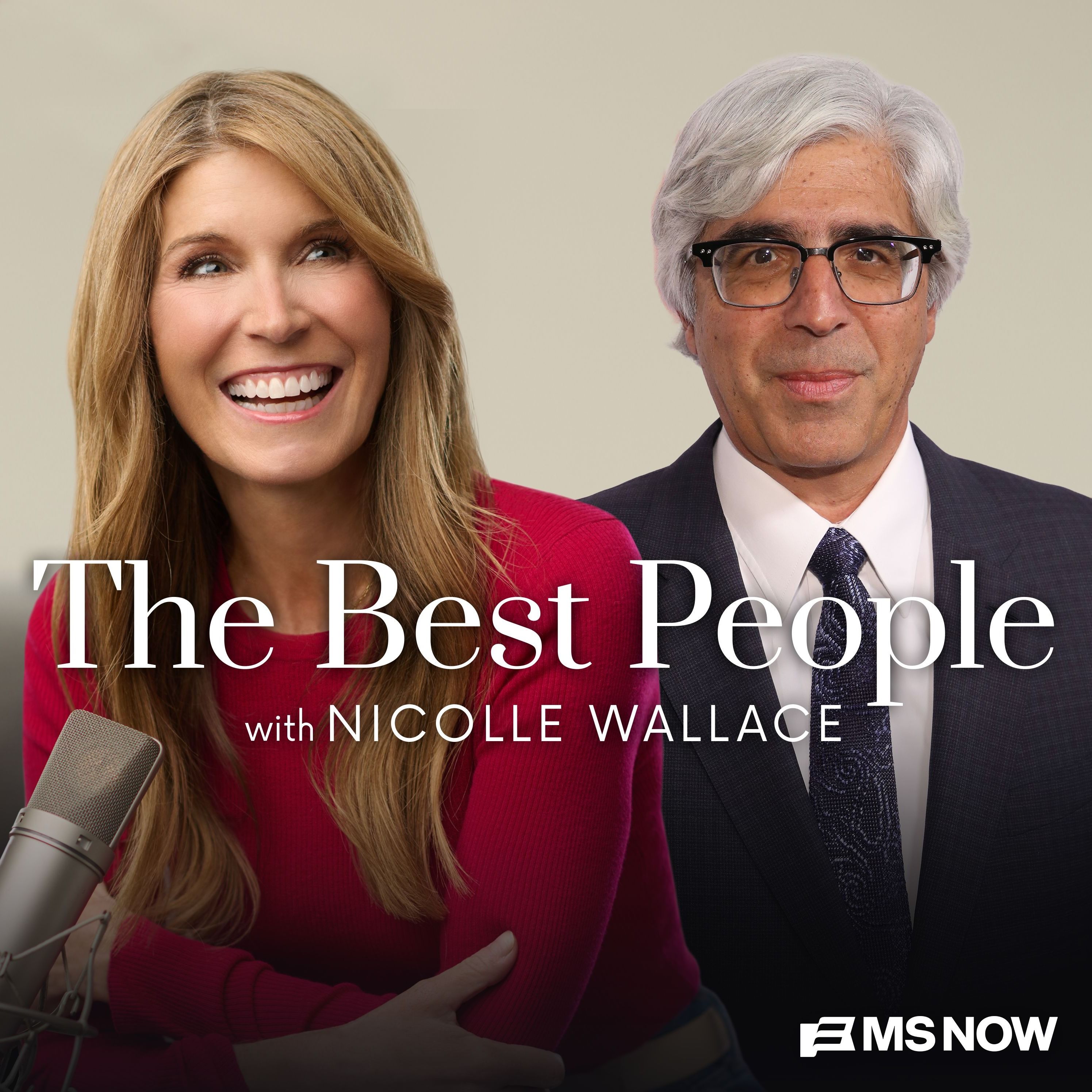
Ted Boutrous Jr.: “Today was a Feel-Good Moment for the First Amendment”
Get every episode summarized
Each time The Best People with Nicolle Wallace publishes, we email you a written briefing from the transcript — the topics, who appeared, and any specific claims, with the ad reads skipped.
Email me new episodesFree for 3 shows. No card needed.
About this episode
“Monday night football, plus pregame and postgame. Everything you need to stay on top of every game, every week. More football, more coverage, more ways to watch. All season long on ESPN and streaming on the ESPN app.”From the transcript
Meet the man who just won the first round in one of the biggest First Amendment fights in years. Ted Boutrous Jr. has been the lawyer behind some of the cases that have made history in recent years: from the fight for marriage equality to then-CNN correspondent Jim Acosta’s lawsuit to get his press badge back when the Trump White House revoked it in 2018. Now, he’s representing CNN, Politico and MS NOW after Donald Trump revoked the press credentials of their journalists over coverage he didn’t like. Nicolle spoke with Boutrous just after a judge ordered the Trump administration to restore the press access of the three outlets. Boutrous told Nicolle that revoking White House access for three news organizations is “like nothing we’ve ever seen before” — and that in this moment, it’s more important than ever to “hold the line” in the fight for press freedom.
Sign up for MS NOW Premium on Apple Podcasts to listen to this show and other MS podcasts without ads. You'll also get exclusive bonus content and early access to new episodes of "The Best People."
Hosted by Simplecast, an AdsWizz company. See pcm.adswizz.com for information about our collection and use of personal data for advertising.
Get every episode summarized
Each time The Best People with Nicolle Wallace publishes, we email you a written briefing from the transcript — the topics, who appeared, and any specific claims, with the ad reads skipped.
Email me new episodesFree for 3 shows. No card needed.
Hosts & guests

Transcript ready
386 searchable segments. Every word is indexed and playable.
Full transcript
The Best People with Nicolle Wallace — Ted Boutrous Jr.: “Today was a Feel-Good Moment for the First Amendment”. Machine-transcribed; use the interactive transcript above to jump the player to any line.
There is so much NFL on ESPN right now. Monday night football, plus pregame and postgame. NFL live, NFL prime time. Everything you need to stay on top of every game, every week. Unbelievable. And now NFL Network is on the ESPN app. More football, more coverage, more ways to watch. Football's on. All season long on ESPN and streaming on the ESPN app. This is Angus Maximus. This partner has one part of a pound of hot. Suzy cooked to water Angus speed. It's more fish than a quarter pounder. The battle is closed. And for only $5.99, even regular juice can afford it. Like that guy. You get that big old burger. Yeah. He holds Angus Maximus. Only $5.99 is cold senior. A bill for a limited time of participating restaurants. Tax not included. Not valid for use within a combo or in combination with any other offer or discount.
Hi there, everyone. In the battle of the press versus Donald Trump, the press has won round one. Reporters from CNN and Politico and our own outlet MS now are back reporting inside the White House today after a judge blocked Trump's efforts to ban them from the White House grounds. On Deadlin White House, I spoke to the attorney representing the outlets, Ted Boutro's junior. He is a lawyer who's been at the forefront of some of the biggest history-making legal battles of the last few years. We had a wide-ranging conversation on what comes next in the case and the broader fight to protect the freedom of the press. I'm gonna share it with you all on the podcast. So this is the best people and this is Ted Boutro's junior. Thank you so much for being here. Thanks for having me Nicole. And thank you for what you do. I mean, thank you for protecting our right to do this. I wonder if with your vast experience, you could tell us how this case in this battle compares to previous ones. We've had Jim Acosta on all weeks since this has happened
and that seems like the right parallel. But in a lot of ways, this was a lot more journalism at stake, a lot more journalists and a lot more outlets. It was very gratifying to represent journalists in the press because you're really representing the public too. So I'm so glad to be involved in this case. This really is the Acosta case times at least 78 because we had 78 journalists whose hard passes were taken away with no notice based on the content of their reporting, plus three major news organizations banished from the White House complex. So it's like nothing we've ever seen before. And in Jim Acosta's case, they weren't as explicit that they were doing them because the president didn't like the reporting. And here, that was the basis that Trump thought reporting was too negative, purposely negative. So it's really unprecedented. And Judge Kelly got it exactly right. So we're very pleased with that order. What is the sort of after the fact attempt to wrap this
or cloak this in national security concerns, poor tent? What does that say to you that they might do next? They're going to try to come up with some rationale. National security was their first stab. I imagine they'll keep pushing that as we go to the next stage of this litigation, the preliminary injunction stage and try to flesh it out somehow. But it'll be impossible for them to do it because the president over and over against stated that the reason for this ban was his antipathy towards the content of the reporting and the editorial viewpoints of the networks and political and the journalists. So I think it's going to be very difficult for them, but the President Trump, the administration have been invoking national security over and over again to try to justify actions. But as Judge Kelly said, there has to be evidence. There has to be proof. And this is what the courts call a classic post-hoc rationalization, a pretext. This wasn't about national security. And I mean, at the point yesterday in the hearing,
journalism about national security is really one of the most important types of journalism because it's allowing the people in the press to hold government officials accountable on one of the most important things to the country. And that's national security war and those sorts of things. So I don't think it's going to fly. I don't, it's contrary to the record. I know you are laser focused on the clients in the case. But do you ever step back and have any sort of, oh my god, moments, if this is happening in America? I do. I really can't believe it because one of the rationales in the government's brief that they filed, basically was that there shouldn't be a free press. That journalists shouldn't be able to gather information about the government, that the government doesn't want to see the light of day. They shouldn't be able to write critical stories. And it's really shocking that that's the position of the United States government.
And so it is really not something I ever expected to see. Now on the other hand, today was a feel good moment for the First Amendment and for democracy. When I saw the MSNBC reporters back in White House and on the White House grounds and CNN reporters and Politico and everybody else in the cameras, I felt really good about our country. And I think journalism, people are going to understand, again, how important journalism is to the country and to democracy because it gets people the information they need so they can decide how to govern themselves, how to vote, who to vote for. What is your council in terms of navigating a White House that won't stop here? I mean, they'll come up with something else. There may be other consequences. If they couldn't kick them out, they may treat them differently. I mean, what is your, just from sitting at this sort of intersection of the press and the law,
what is your council for anyone trying to cover Trump fairly and aggressively? Keep reporting, keep digging, keep reporting the truth. And then I think fighting these legal battles, I think that's part of it, that journalists don't want to go into court, they want to be reporting. But when something like this happens, laying down a marker, asserting the First Amendment rights to the Constitution gives to the American people. And we try to anticipate some of the things that the government might try to do to get around these First Amendment and do process protections. So we're ready to go. I'm very happy that today they ultimately did adhere and follow the order and now reporters are back there. But I think just fighting the battle and keep reporting. And reports don't like to be part of the story, but sometimes you are and when you are, you just need to sort of do two things at the same time. Assert your First Amendment rights, your due process rights,
and keep doing great journalism. What do you understand have happened this morning? Is it overstating it to say that look like they might have been ignoring the order or does it look like they may have just had a lack of urgency in restoring the past? I mean, do you have any insights into the events of the morning? I really don't. We had a very busy morning because we got the order at 1 a.m. And that was a pretty long period of time for them to comply. And so at first we thought they're going to violate the order. And so we went to the judge and we went to the Justice Department. So I don't know and I don't want to sort of try to figure it out at this point because I'm so glad that they ultimately have complied with the order. And really, it is an extraordinary thing for the judge to say, no, this due process is likely violated. I'm ordering you to allow these reporters back into the White House.
It was exactly right under the law. But every minute counts in journalism. That's one of the things that the judge held in finding a reputable harm. So that time lag did have an effect. And you saw Laura Baron Lopez trying to get in. And she was persistent. And the reporter from CNN and the same thing, political. That's kind of an example of what you were asking about. Keep going, keep going back. Keep trying to get access and keep reporting. Do you allow yourself to think about the sort of war beyond the battles? I mean, you look at the Pentagon. And they successfully barred outlets. A lot of them from the Pentagon at a time of war. You look at the five subpoenas for New York Times journalists that ultimately either fell apart in court or the government walked them back. I don't remember which happened first. What do you say to people outside of our country who ask you how on earth you could be fighting these battles in this country
when you take all their actions against suppress as a whole? It is a multi-front battle. I'm hoping this isn't anomaly. That it flows from present-trommest approach to dealing with journalists and dealing with free speech and that we're going to get through this. But holding the line is so important. I'm involved in the Pentagon case too. And there kind of goes back to the point you were making about will they try to come up with some other way to get around what the judge has ordered. And at the end of the day, it's not good for them for the government. In the Pentagon case, we had declarations from former press secretaries and communications people at the Pentagon saying that having reporters there is good for the government. It's good for the Pentagon. It's good for the White House because they can get their points out to the people too. So I feel we're going to get through this,
but we do need to keep fighting on all these fronts. When my mom got sick, she felt powerless. Insurance denied her meds. Her doctors talked over her and they couldn't agree on anything. She kept getting worse. And then you found solace for me. They gave me my own health care advocate. My advocate found better doctors, scheduled my appointments, and got my medications approved. For the first time, my whole care team was listening to each other and to me. I was going to pay for it all out of pocket. But then we learned that solace advocates are covered by Medicare and insurance nationwide. I used to feel helpless too. Now I know my mom has an advocate. Solace advocates are health care experts with an average of 16 years of experience. Studies show 92% of patients say their advocate made a positive impact on their care. That means better health outcomes, less stress, and finally feeling hurt. See if you qualify at solacehealth.com or call 888-7Solace. That's 888-7Solace. Eligibility varies by plan. Must be 18 or older. Advocates to not provide medical or legal advice or services. Don't face the health care system alone.
Find solace. Visit solacehealth.com today. You know those pieces in your closet that you find yourself reaching for over and over again? The sweater that somehow works with everything. The jeans you know will always fit just right. For the bag you carry everywhere. Those are the pieces that earn a permanent place in your wardrobe. And that is exactly what Quinn's does so well. Quinn's makes elevated everyday essentials using premium materials like Bungolian cashmere, organic cotton, and washable silk. The designs are timeless, thoughtfully crafted, and made to be worn again and again. And it's not just a peril. Quinn's brings that same approach to everything they make from hotel quality, bedding, and bath to kitchen essentials and thoughtfully designed furniture. They make well-designed pieces for everyday living. Find the fall pieces you'll reach for most at Quinn's. Download the Quinn's app for app-exclusive offers or go to Quinn's.com slash best people. Get free shipping on your order in 365-day returns.
Now available in Canada and the UK too. That's q-u-i-n-c-e.com slash best people. Pick up a pack today. Angel Saft. What fight could happen in 14 days? Like what are the, we're obviously able to exhale and do our jobs for 14 days. But what happens at that juncture? So the next step will be this expedited briefing on the preliminary injunction, which can be, there's no time limit. So here there's a 14-day limit on the temporary restraining order.
So we will put in our briefs. I think they're doing now due Monday, busy weekend coming. And potentially more declarations. The government will respond. I imagine they will somehow try to justify and shore up this face-lifts national security argument they came up with after the fact. And as I said earlier, I don't think they're going to be able to do it. And then the judge will look at all the issues in the case. We have in addition to the due process argument that the court gave us a right to a temporary restraining order, really strong first amendment arguments. That this ban is President Trump called it ban on the free press. Was meant as retaliation for speech that he and the administration doesn't like. And also that it's viewpoint discrimination, which is one of the most egregious types of first amendment violations. So those issues about come front and center in a more full-some way over the next couple of weeks. You know, I looked at all of the stories that the government put, I guess in that first
filing that was argued yesterday. And a lot of them, or I think the vast majority of them, are about the war in Iran. It is really clear that they're trying to sort of close ranks or stifle honest reporting about what's happening there. What do you think, what do you anticipate they will do on that front? It's really interesting. They've said classified information was of all the like. And the judge found in his order that these were routine stories. And some of them, there's been reporting these were government sources that were the source of the information. And so I think they're going to just keep hammering classified information, national security information. But you can't just say those words. You have to back it up. Number one, and number two, journalists are entitled to report on all information, classified national security sensitive information that they lawfully obtain.
And so it's best part of the push and pull between the press and the government for the constitution and shrines in the first amendment. It's meant to have exactly that sort of contest. You know that from your days in the White House that that is the process. It's healthy for democracy. So what they're attacking is really the essence of journalism and freedom of the press. I don't think the courts are going to agree with them on those arguments. Trump has taken some things that we just shouldn't have to white knuckle like birthright citizenship, like the idea that no one's against the law and rolled the dice on the Supreme Court. Are any nightmare scenario in your mind that he somehow gets this to the Supreme Court and we're white knuckling the outcome? We definitely think ahead. So we think ahead to the DC Circuit, which is the Court of Appeals and the Supreme Court. The arguments we're making are so fundamental for that they're just basic doctrine, due process that you have fair notice of what conduct will subject to the punishment and how
big of punishment. New point discrimination, including in what's called a non-public forum like the White House where speakers are allowed in for speech activities. The government can regulate that, but what the government can't do is viewpoint discrimination. And the Supreme Court has been very strong on those points. In this case a couple of years ago, Court held that the role of the government is not to unbiased speech that it thinks is biased. It's the market and it's the people who mimic those determinations. So I think that looking ahead to the Supreme Court, we have by far the better of the arguments on basic fundamental due process and First Amendment law. But no question, we think about all those things and we're ready for whatever comes. I mean, it strikes me as an extra public and that the arguments are usually made on the other side. But it's usually the right arguing about their First Amendment prerogatives and to see
the government under control of a Republican arguing against access to the White House feels like such a turnaround. Do you ever sort of ponder the, I don't know if hypocrisy is the right word, but the irony of this White House and these actors arguing the things they're arguing with actual people standing in court before judges, making arguments that they've argued against for decades? I do ponder that. It impacts me that what is going on here, you know, that executive order in favor of free speech and then you see what's happening. But the good news is that there have been so many really strong First Amendment cases over the last 10 or 15 years that have come from oftentimes what we would call conservative, the conservative side of the equation. And what's beautiful about the First Amendment is that those principles apply no matter what the content of the speech or the viewpoint or the content of the reporting.
So there's a really strong body of law that's been developed that should protect these journalists in MSNOW and CNN and political and all these organizations from this kind of behavior from the government. What do you see when you look at the 10 year project of Trump's to describe reporters as the enemy of the people in his earliest rallies, he would have his supporters turn around and look at the journalists in the back on the podium, extending through this case right now, this specific case and these specific facts. When people look back at this period, what is clear to you in terms of what Trump is trying to do? It's really interesting because I think because everyone talks about President Trump seems to like to be talking to journalists and to be in the public eye and the like, yet his strategy has been to bash journalism and say they're the journalists and say they're the enemy of the
people and the like, I think the lesson though that I see is it doesn't work because journalists have been continuing to do tremendous work and keep digging for the truth and not let it get in the way of honest, fact-based, independent reporting. At the end of the day, I think we're going to be where we have been all along with government officials can attack the press, they can say whatever they want, journalists can report the truth and keep digging and express their views and that's the way it's supposed to function. I think we're going to end up stronger because of this and that this tactic of just attacking the press, attacking individual journalists and like, is going to be discredited. As an outsider, but obviously a stakeholder, I find it interesting and perhaps helpful in the court of public opinion that the judge is a Trump appointee.
Does that matter to you or the facts in your view and the law is so clear? To me, it really gives you faith in the rule of law and I try not to look at judges based on who appointed them, but Judge Kelly was also the judge in the accostocase and CNN case and I handle that case and I remember when we drew him, we all just said the law is the law. We have this very strong, you see, circuit case, share over, it's night and if the judge applies the law, we will win and that's exactly what he did there. That's what he did here at the TRO stage and so I think as lawyers, my view is always just make your best arguments under the law and best arguments under the facts and the judges who are fulfilling their obligations will rule in a way that is meant to be under the law and the facts and that's what happened here. So we really, the judge acted swiftly which we really appreciated and the law is just very clearly on our side here so we're ready for the next step here.
Tebbetras, thank you for what you do for us as journalists and for the country which ultimately is the consumer of any of our reporting. Thank you so much for your time today. We're really grateful. Thanks so much for having me. This is Angus Maximus. This partner has one pound of a pound of hot, juicy cooked to water, Angus meat, it's more expensive than a quarter pounder. The burger is closed and for only $5.99 even regular juice can afford it, like that guy. Give me that big of burger. Yes. He holds Angus Maximus, only $5.99 is cold senior. A bill for a limited time of participating restaurants tax not included, not valid for use within a combo or in combination with any other offer or discount.
More episodes
More from The Best People with Nicolle Wallace

John Heilemann: Trump will Pay at the Ballot Box
The Best People with Nicolle Wallace

Dan Harris Wants Us to Stop Worrying Alone
The Best People with Nicolle Wallace

Julia Curlee: “This is my Country, Too.”
The Best People with Nicolle Wallace

Best of The Best: Chris Hayes Makes His Curiosity the Antidote to Anxiety
The Best People with Nicolle Wallace