Get every episode summarized
Each time Women in Business publishes, we email you a written briefing from the transcript — the topics, who appeared, and any specific claims, with the ad reads skipped.
Email me new episodesFree for 3 shows. No card needed.
About this episode
This is your Women in Business podcast.
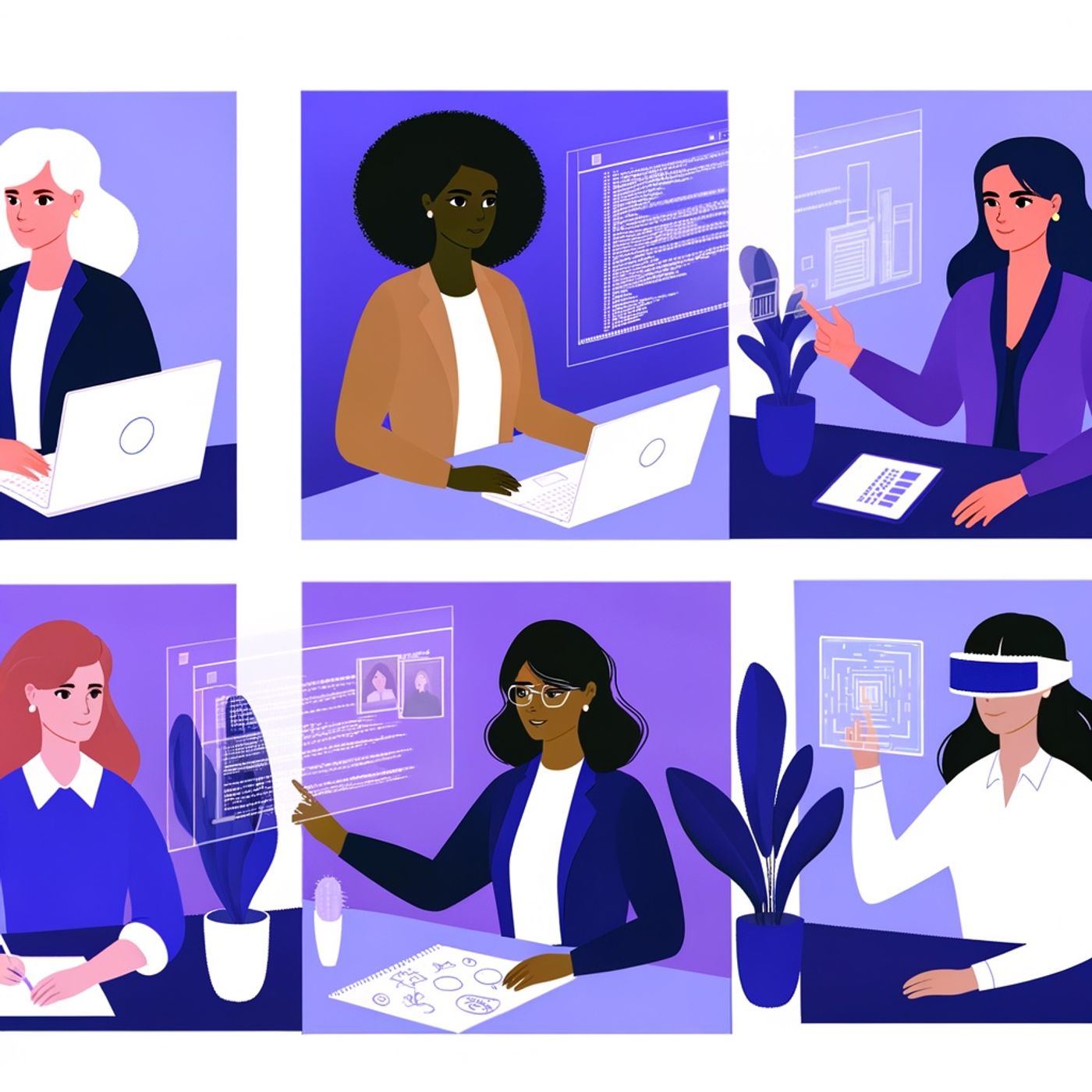
Welcome back to Women in Business. Let’s get straight into how women are navigating today’s economic rollercoaster in the tech industry.
Right now, the tech economy is in a strange mix of layoffs, hiring freezes, and explosive growth in areas like artificial intelligence and cybersecurity. According to Deloitte and CompTIA, women hold only about a quarter of tech roles in the United States, even though women are nearly half of the overall workforce. That gap means every economic shock in tech hits women harder, especially in non-technical and mid-level roles that are often first on the chopping block.
The first big question for us is: where are the opportunities in this economy, and how do women in tech claim them? Reports from CompTIA and McKinsey show growth in software, data science, cloud, and AI-related jobs, with data science being one of the tech roles where women are closest to parity. In practical terms, that means learning skills in data analytics, product management, and AI tools is not just “nice to have,” it is economic armor. When women upskill into these high-demand specialties, they gain leverage in salary negotiations and more mobility if their company restructures.
That leads into the second discussion point: pay gaps and economic security. Analysis from AIPRM using US labor data shows women in tech earning around 15 to 16 percent less than men on average, even in similar roles. In an economy of rising living costs and unstable markets, that gap is not just unfair, it is dangerous. It means fewer savings, less investment, and more vulnerability when layoffs come. Women founders and executives are responding by sharing salary bands internally, pressing for pay equity audits, and building transparent cultures in startups from day one.
Third, we need to talk about the leadership bottleneck. Research summarized by StrongDM and Nash Squared shows women hold less than a fifth of global tech leadership roles, and an even smaller share of C-suite positions like Chief Technology Officer. Yet those are the people deciding who gets hired, who gets promoted, and where budget goes in a tight economy. When women are missing from those tables, products are built without our perspective and cost-cutting decisions often ignore the realities of caregiving, remote work, and flexibility that keep women in the workforce.
The fourth point is retention in a volatile market. Spacelift and Oliver Wyman report that women are far more likely to leave tech by age 35, often citing burnout, biased cultures, and lack of advancement. In places like the United Kingdom, tens of thousands of women are leaving tech each year, representing billions in lost economic value. Flexible work, predictable hours, and genuine mentorship are not perks; they are economic infrastructure that keeps talented women earning, innovating, and leading through uncertainty.
Finally, we have to look at entrepreneurship and access to capital. Venture capital data consistently shows women-only founding teams still receive a tiny fraction of total tech funding, even though multiple studies from firms like McKinsey and Boston Consulting Group link diverse founding teams to better financial performance. In a tighter funding climate, investors often retreat to “safe” patterns that favor familiar, male-dominated networks. The counter-move for women is powerful: building visible founder communities, angel groups focused on women-led tech companies, and partnerships with accelerators that publish their diversity numbers and outcomes.
So as you navigate this economic landscape, remember: the stats may not yet be in our favor, but the trends are shifting because women are pushing them. Every skill you gain, every negotiation you initiate, every woman you mentor is part of rewiring this industry’s economic future.
Thank you for tuning in to Women in Business. Make sure you subscribe so you never miss an episode. This has been a quiet please production, for more check out quiet please dot ai.
For more http://www.quietplease.ai
Get the best deals https://amzn.to/3ODvOta
This content was created in partnership and with the help of Artificial Intelligence AI
Welcome back to Women in Business. Let’s get straight into how women are navigating today’s economic rollercoaster in the tech industry.
Right now, the tech economy is in a strange mix of layoffs, hiring freezes, and explosive growth in areas like artificial intelligence and cybersecurity. According to Deloitte and CompTIA, women hold only about a quarter of tech roles in the United States, even though women are nearly half of the overall workforce. That gap means every economic shock in tech hits women harder, especially in non-technical and mid-level roles that are often first on the chopping block.
The first big question for us is: where are the opportunities in this economy, and how do women in tech claim them? Reports from CompTIA and McKinsey show growth in software, data science, cloud, and AI-related jobs, with data science being one of the tech roles where women are closest to parity. In practical terms, that means learning skills in data analytics, product management, and AI tools is not just “nice to have,” it is economic armor. When women upskill into these high-demand specialties, they gain leverage in salary negotiations and more mobility if their company restructures.
That leads into the second discussion point: pay gaps and economic security. Analysis from AIPRM using US labor data shows women in tech earning around 15 to 16 percent less than men on average, even in similar roles. In an economy of rising living costs and unstable markets, that gap is not just unfair, it is dangerous. It means fewer savings, less investment, and more vulnerability when layoffs come. Women founders and executives are responding by sharing salary bands internally, pressing for pay equity audits, and building transparent cultures in startups from day one.
Third, we need to talk about the leadership bottleneck. Research summarized by StrongDM and Nash Squared shows women hold less than a fifth of global tech leadership roles, and an even smaller share of C-suite positions like Chief Technology Officer. Yet those are the people deciding who gets hired, who gets promoted, and where budget goes in a tight economy. When women are missing from those tables, products are built without our perspective and cost-cutting decisions often ignore the realities of caregiving, remote work, and flexibility that keep women in the workforce.
The fourth point is retention in a volatile market. Spacelift and Oliver Wyman report that women are far more likely to leave tech by age 35, often citing burnout, biased cultures, and lack of advancement. In places like the United Kingdom, tens of thousands of women are leaving tech each year, representing billions in lost economic value. Flexible work, predictable hours, and genuine mentorship are not perks; they are economic infrastructure that keeps talented women earning, innovating, and leading through uncertainty.
Finally, we have to look at entrepreneurship and access to capital. Venture capital data consistently shows women-only founding teams still receive a tiny fraction of total tech funding, even though multiple studies from firms like McKinsey and Boston Consulting Group link diverse founding teams to better financial performance. In a tighter funding climate, investors often retreat to “safe” patterns that favor familiar, male-dominated networks. The counter-move for women is powerful: building visible founder communities, angel groups focused on women-led tech companies, and partnerships with accelerators that publish their diversity numbers and outcomes.
So as you navigate this economic landscape, remember: the stats may not yet be in our favor, but the trends are shifting because women are pushing them. Every skill you gain, every negotiation you initiate, every woman you mentor is part of rewiring this industry’s economic future.
Thank you for tuning in to Women in Business. Make sure you subscribe so you never miss an episode. This has been a quiet please production, for more check out quiet please dot ai.
For more http://www.quietplease.ai
Get the best deals https://amzn.to/3ODvOta
This content was created in partnership and with the help of Artificial Intelligence AI
Get every episode summarized
Each time Women in Business publishes, we email you a written briefing from the transcript — the topics, who appeared, and any specific claims, with the ad reads skipped.
Email me new episodesFree for 3 shows. No card needed.
Hosts & guests
No transcript yet
This episode has not been transcribed. Request it and it moves to the front of the queue.
More episodes
More from Women in Business
Women in Tech: Five Power Moves for Navigating Economic Uncertainty in 2024
Women in Business
Apr 12, 20263:15failed
Women in Tech 2026: Breaking Through the Funding Gap with Purpose and Perseveran...
Women in Business
Apr 11, 20263:25failed
Women in Tech: Breaking the 2% Barrier in Silicon Valley's Boys Club
Women in Business
Apr 10, 20263:15failed
Women Reshaping Tech: Breaking the 8.2 Percent Barrier One Innovation at a Time
Women in Business
Apr 8, 20262:53failed