Get every episode summarized
Each time The Projection Booth Podcast publishes, we email you a written briefing from the transcript — the topics, who appeared, and any specific claims, with the ad reads skipped.
Email me new episodesFree for 3 shows. No card needed.
About this episode
“The People pay good money to see this movie, when they go out to a theater they will cold sodas hot popcorn and no monsters in the projection booth. This is 100,000 times more powerful than the space shuttle that flew to the moon.”From the transcript
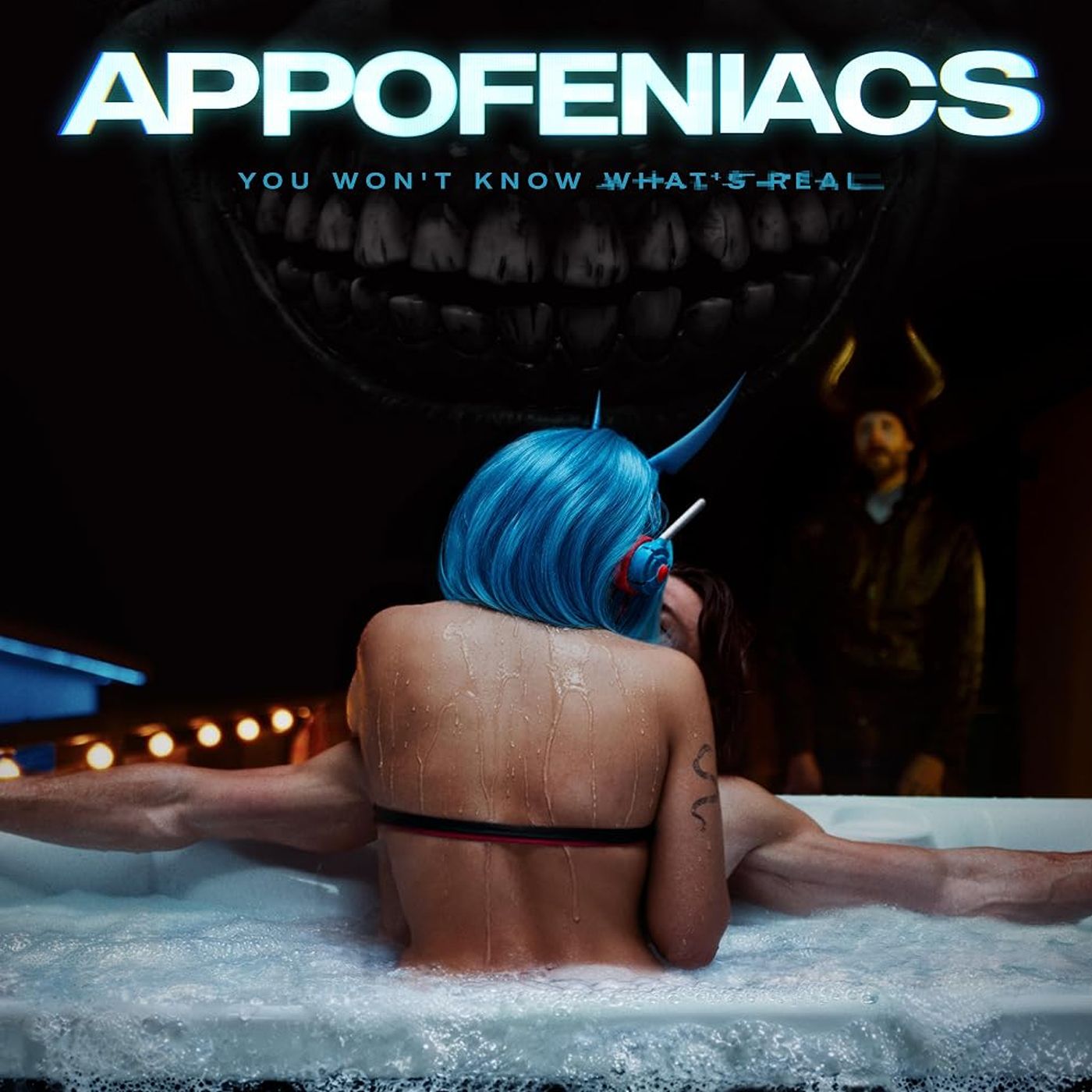
Piliero also walks through the guerrilla reality of self-financing a feature that refuses to stay in one location — rewriting scenes around which of his friends' apartments and neighborhood businesses (a coffee shop, a smoke shop) he could talk his way into — and premiering the deepfake-horror film at Fantastic Fest and FrightFest to crowds cheering the gore.
Become a supporter of this podcast: https://www.spreaker.com/podcast/the-projection-booth--5513239/support.
Become a supporter of The Projection Booth at http://www.patreon.com/projectionbooth
Get every episode summarized
Each time The Projection Booth Podcast publishes, we email you a written briefing from the transcript — the topics, who appeared, and any specific claims, with the ad reads skipped.
Email me new episodesFree for 3 shows. No card needed.
Transcript ready
148 searchable segments. Every word is indexed and playable.
Full transcript
The Projection Booth Podcast — Special Report: Appofeniacs (2026). Machine-transcribed; use the interactive transcript above to jump the player to any line.
The People pay good money to see this movie, when they go out to a theater they will cold sodas hot popcorn and no monsters in the projection booth. Everyone pretend podcasting is boring. This is 100,000 times more powerful than the space shuttle that flew to the moon. Quick or proprioSAY?
People are easy to manipulate, hurt manipulate them. It's never been more fun. Gimmie, quickly, quickly, quickly, quickly, quickly, quickly, quick. Gimmie! Gimmie, quickly, quickly, quickly, quick, quick, quick. I didn't want to kill you, but you've given me no choice. Oh, God, no, please. No! No! Give me the phone! No! Fuck yeah! That's a dog! That was... Awesome! Oh!
Aaaaaah! Hey folks, welcome to the Projection Boot Hymory host Mike White. Today I'm talking with writer-director Chris Mars Pillieiro about his feature debut, Apple Finiacs, a deep-fake-fueled horror thriller he built to be responsible with help of his friends and family. Film stars Sean Gunn, Jermaine Fowler, and Michael Abbott Jr. Apple Finiacs had a dual premiere at Fantastic Fest and Freight Fest. I had a great time talking with Chris and I hope you have a great time listening. Enjoy! Tell me a little bit about you, how did you get involved in show business? And I know you've made just a ton of music videos. Yeah, I started doing behind the scenes with musicians back in the 2000s. 2008, I was going on tour with them, I was shooting concerts, I was in the studio with them, I was on set of their music videos shooting behind the scenes, and then that kind of led me to getting the opportunities to submit my own ideas to direct music videos.
And then once I started rockin' along with that, it snowballed pretty quickly. And I got to work with a lot of rad artists early on with the Black Keys, and then a bunch of amazing pop artists like Kesha and Brittany and Avril and Ariana. And yeah, that was a ton of fun, love that. And then eventually I wanted to transition into making films. I always wanted to make movies and I stepped away from directing music videos and started writing. Wrote some scripts that didn't end up going anywhere. And then I made the kind of the determination of, okay, I'm going to write a script that I can make myself. That was my goal with the scriptwriter Epiphenyx was to be able to write a script that I could pull off, financing myself along with some help from friends and family. How did you approach that as far as like this is the thing that I can direct?
I was a little ambitious with not making it a single location. A lot of time, the number one advice that is given when you're going to do a low budget film, especially when you're going to like finance, the number one advice is write it to be basically in one location. I did not follow that advice. And while I was writing, I was kind of telling myself, maybe you shouldn't do this or maybe you shouldn't, you know, maybe you should figure out. Not to maybe you should exclude them traveling to this location or whatnot. And but then I just started thinking about where I live here in LA. And I started kind of mapping out, okay, the friends that I have that have apartments that like I could shoot at that kind of give me what I'm what I'm looking for. Do I have someone who knows someone with a place like in the desert and my good friend Jeff did. And so it's like, okay, cool. So like thinking about some of this stuff while I was writing.
And then like I shot a chunk of it at my house and I reached out to businesses in my neighborhood. And so, so I was kind of like thinking about some of that stuff as I was writing. But I would say like I finished the first draft and I didn't fully know like where I was going to shoot. And I was kind of hoping to play the card of indie filmmaker, please help me out, right. And then like as I was getting into like some of the later drafts is when I started kind of twisting and adopting it to, okay, you know what? The the pleading card isn't working. So then I kind of made a shift and I was like, okay, let's change this location to this because I think I can find this in my neighborhood. And and hopefully play I'm a I'm a neighbor indie filmmaker card, right. And unfortunately that worked. And I had like a gracious owner of a b-bri coffee that's in my neighborhood that that helped me out to shoot in there and then the smoke shop that's just like not not too far away from there.
So that kind of all that kind of all worked out in the later drafts in the early drafts. It was a little bit of just ambition and hope and then you know, then change course a little bit and adapt a little massage. Yeah, it went from going to work at a video store to work at a smoke shop and it's like, okay, let me just make a little change here and there and done. Where did the idea for the film come from? I was just blown away at the technology of deep fix. And that is definitely something that I foresaw how advanced it was going to get and how easily it was going to be able to be used to manipulate and trick people. I don't think the initial creation of it. I don't think that was like the intention of it, but I definitely foresaw like, oh, this is going to be used by some bad characters.
So that was kind of just one of those thoughts that I had of this would be cool to make a horror movie around this kind of real life based, but then I was having some fun in my head of man things could really quickly get out of hand. I'm really enthralled with our human nature to. Apathena is our it's our tendency to find connections and patterns and things that don't exist, right. This need for us to constantly inject meaning and things that are meaningless to find purpose for things that it's just no, that happened because of that happened because of that. They don't need to be tied together, but for some reason as humans, we always we want to we wanted to group these things together and figure out why this must have happened for a reason, right. So that attribute of ours, I've always found very interesting and fascinating. And so when you combine that with deep fakes tricking us, I just felt like, oh, there's definitely a story to be told here that will most likely play out in real life as well.
We live in a world that is filled with conspiracy theories now just because people can explain the unexplainable. Yeah, absolutely. It even goes beyond conspiracy theories, even just like when you think about fan theories, right. Just think about stuff even in our industry, right. When you just like, when you take a step back and observe the way that that fans of movies or TV shows will. And then you just like, I think that's the way that they're like, these are the things that are actually connected, but they're like, oh, this part of this movie, it happened because of this and oh my gosh, this and oh, they did this because of this. And a lot of times it's just not true a lot of times it's just not the case. And that's something that I experienced very early on even in my career as a music videos. And many times that a music video would come out and I would read fans like saying, oh, this happened or this visual is because of this and oh, there's this.
There's a secret message in this shot or this scene. And it was always fascinating to read that because sometimes they were like sometimes the case they were making was just like, yeah, good job like all that. It's a very thorough breakdown of the scene, but none of it's true. You're completely wrong, but you're selling it so well. And I just thought that was so fascinating, I'm amusing. Like, I remember in a Kesha video, I remember reading some comments of like how we were sneaking in like illuminati into some of the shots. And it's like, it's just one of those things where it's like, couldn't be farther from the truth. But like, I understand how someone who is so set on finding those things. I understood how like they looked at certain shots and I'm like, okay, like sure, like I get like where your brain was going with that and how you piece that together.
But it's just like, no, man, like I just wanted unicorns in the video because I thought it was a fun way to have crazy fantastical characters like shooting and killing each other. No, there's actually no more to it than that. But it's like, it's so impressive the way like our brains like we'll find these things and be like, oh, this happened because of this, this happened because of that. So that was definitely like an early thing that kind of like planted in my brain of like the idea of making a movie like this and just kind of my fascination with with that just attribute of ours. This may be me doing that exact same thing, but it's fascinating for me that you worked with Kesha, Ariana Grande, Brittany, Everlovingne, all these people. All people that have probably been victims of deepfakes or some sort of body swap, I'm sure I could type in Everlovingne naked and see a thousand pictures that are not real right now.
I think any celebrity, especially a woman that that's a fear of theirs, absolutely. And I wasn't thinking about them in particular when coming up with the film concept, but yeah, the focus of the film is on the fact that it could happen to any of us every day lives, but obviously celebrities had a way worse, way worse. But because the stories are on the news about celebrities or about like how it's being used, let's say politically or something with the government or some big business or some corporate person or some some just known entity or person or whatnot. My intention was to focus on the granular level of it of yeah, all of that has happened and there's a, there's totally a possibility that terminator two is going to happen one day.
We could be on that path that doesn't seem unbelievable at this point, which is crazy, but while all of that is happening, I wanted to just focus on yeah, but what about you, what about what about you and your friends and if someone just makes some seemingly trivial fake video of you or a friend doing something like how are you going to react? If you think that you react, then causes a chain reaction or the way that someone else's react or someone else reacts to it causes a chain reaction and something so small, menist, you could easily just blow up into something. And so that was the focus that I kind of really wanted to do with the film because I thought like that would just kind of be, I don't, I didn't think that like there's a whole lot of a spotlight on that and I just thought that would just kind of be more interesting to just take something. Just a little slice of life of every of everyone that you could be like, oh yeah, that could happen to me.
How are audiences reacting to this and have you had a chance to see it with many audiences yet? Yeah, how we played a bunch of festivals, we just had a little advanced screening at the arrow with the American cinema tech that went really well. It's been rad. There are moments, this is definitely a film that when you see it in a theater with like a crowd, there are particular moments that I think as a group, they do like a big rile you up and so it's been really cool to be able to experience that in the audience. It's always fun to hear people grossed out of something, it's always fun to hear people a little queasy, we, weeasing at certain moments, right. That's always fun. But then I feel there's hopefully a little bit of a roller coaster ride to the film where some of it is more grounded and serious and unsettling. And then sometimes we have a little more fun with it and make it a little bit absurd,
right? Have fun with the the gore or the violence and whatnot. And it's fun to hear. There's been certain moments where we've got applause. We had two amazing premieres at Fantastic Fest and in Fright Fest. There were certain moments where there was just a lot of boisterous cheering from the gore and the action that was happening. So that's always cool. Yeah, that's a fun thing to experience in the audience to be there with the audience in the theater experience. And that's really cool. The fact that we're going to be released on theaters in theaters is so awesome. Magenta light studios and magenta edge films like putting this in. We're going to be in AMCs and regals. That's so cool. So that is that is an incredible feeling and when you're making movie, that's what you want. You want people to see it in theaters and experience and whatnot. In a weird way, it's almost extra gratifying to hear that you enjoyed it streaming because
oh, cool. Great. Because I made this for people to watch in the theater and be sitting with everyone and feel the energy of the person around you and have that be this culmination of your enjoyment of the film. When you say you enjoyed it just in a secular experience, that's really cool. That's really cool to hear. So thank you. Thank you and thank you for making this movie and thanks for your time today. This was great. Thank you, Micah. I really appreciate it. I very much appreciate it.
More episodes
More from The Projection Booth Podcast

Special Report: The Deputy (2026)
The Projection Booth Podcast

Special Report: Hellbilly Hollow (2026)
The Projection Booth Podcast

Special Report: Digger (2026)
The Projection Booth Podcast

Special Report: Murder at the Movies (2026)
The Projection Booth Podcast