Get every episode summarized
Each time Round Table China publishes, we email you a written briefing from the transcript — the topics, who appeared, and any specific claims, with the ad reads skipped.
Email me new episodesFree for 3 shows. No card needed.
About this episode
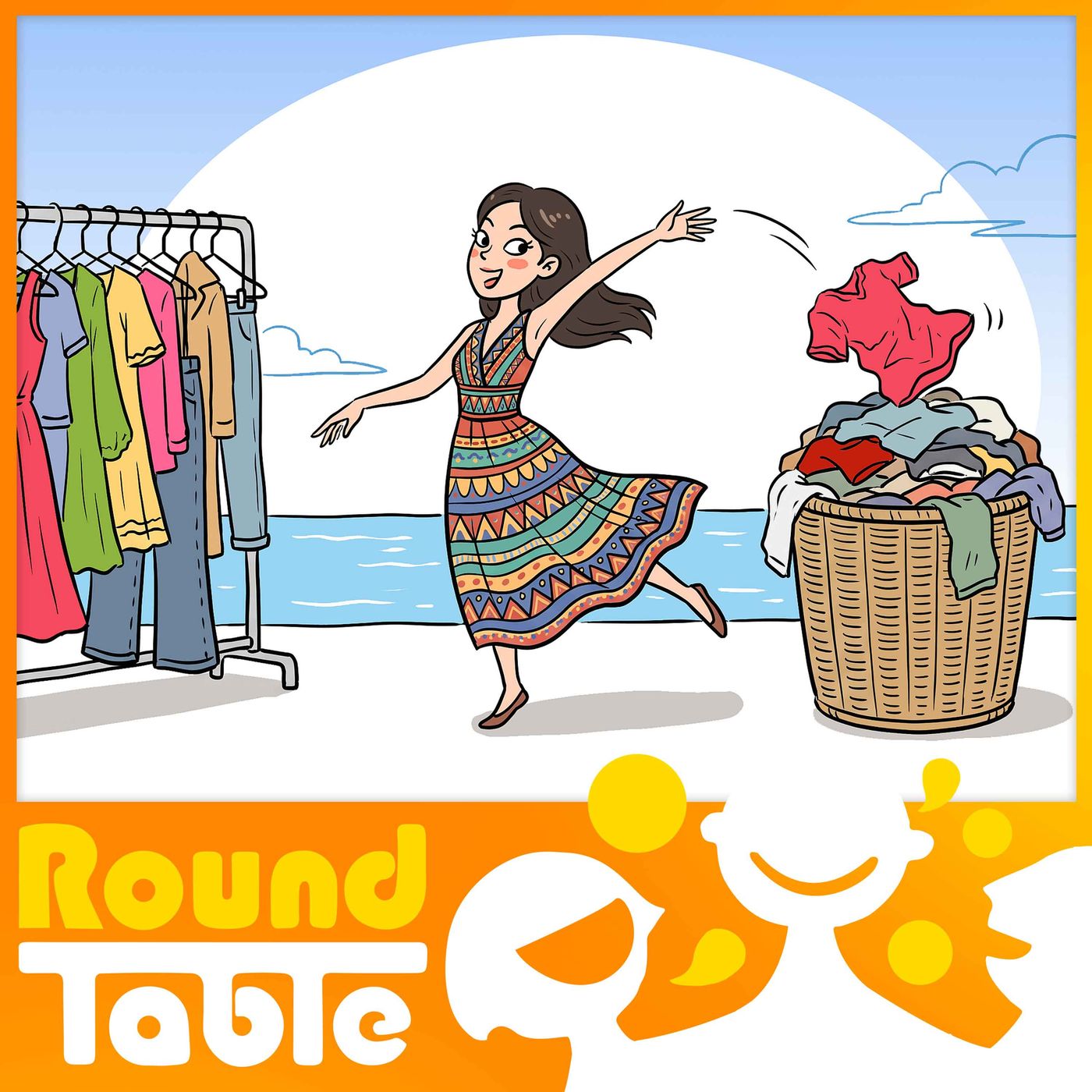
“In China, many young travelers are buying alphas for just a few dollars. Designed to shine in photos rather than stand the test of time, they are called disposable clothes.”From the transcript
Get every episode summarized
Each time Round Table China publishes, we email you a written briefing from the transcript — the topics, who appeared, and any specific claims, with the ad reads skipped.
Email me new episodesFree for 3 shows. No card needed.
Hosts & guests
Transcript ready
333 searchable segments. Every word is indexed and playable.
Full transcript
Round Table China — Soapbox: Disposable fashion. Machine-transcribed; use the interactive transcript above to jump the player to any line.
Discussion keeps the world turning. This is Round Table. You're listening to Round Table and Fei Fei together with Yushun and Yushang. Coming up on today's soapbox. In China, many young travelers are buying alphas for just a few dollars. Designed to shine in photos rather than stand the test of time, they are called disposable clothes. But why are throw away outfits gaining popularity as frustration with mainstream fashion roads? And what does it say about what we really value when we shop? Our podcast listeners can find us at Round Table China on Apple Podcast. If you have anything you want to share with us and the rest of the world, issues we discussed on the show today or you hope us to cover in the future, send us an email or better a voice note to Round Table Podcast at qqt.com and now.
What are they saying? Hear E, Hear E. Please get around. It's time for the soapbox. Yes! It is time for the soapbox. It's our segment where we bring something that's been circulating online, maybe stirring up a little bit of a controversy. And then we let loose with how we really feel about it. So for today's soapbox, I'm handing the mic over to Yushun. Well, yeah, thank you so much, Fei Fei. And today I want to highlight on something that's so astonishing to me when I first heard about it. It's called Tsilpao Yi or Disposable Clothing. And this is something that's very recently reported by Global Times just a few days ago. So during China's National Day holiday, a young woman surname Lin,
she bought three dresses online before traveling to Dali, southern China's Winnan Province, all sounding right. But actually, she paid really small amounts of money for the three dresses, only less than 80 yuan. Sounds okay too. But the thing is, she wanted to take beautiful pictures by the Arhy lake in Dali, where a white dress or brightly colored holiday outfit would look great. But since she couldn't imagine wearing those dresses to work in everyday life, she didn't want to spend much on them, which still sounds understandable. You know, the very controversy side of the story ends here. The girl says the fabrics are kind of poorly, which you can't imagine. Already by the price, usually they're thin, they're filmsy, and tend to pill and lose their shape after just one wash. And the cost of dry cleaning of any of these dresses can even come to close to its original price. So the right way, the quote unquote right way of dealing with such dresses is to put them on,
take their pictures you'd like in front of the scenery you prefer, and then dump it. Don't bring them back home, just dump it. Like a contact lens for a day or something. So that's why it's called disposable, like one single wear. That's what disposable clothes are. And you were astonishing about this? Yeah. Isn't that just, you know, how fast fashion works? We'll talk about that just a little while later. But of course, to me, clothes are close, and they're not meant for one photo shooting. Even in a lot of the photo shooting booths, or like what is it called tourism photo shooting, they keep their gowns for multiple use, for years of use, instead of every time when there's a new customer they buy new stuff, and throw away the old stuff. And this case, I just mentioned is not alone. Some online stores sell these dresses for just about 20 to 51, and they attract customers through short videos and live streams,
just boasting about how convenient this can be, with new designs appearing rapidly. According to one seller in the Global Times report, the store sells more than 10,000 items in a month, but fewer than 10% of customers make repeat purchases, meaning that people just window shop, perhaps have a big surge of sales before the holiday period, and that's it. That's also kind of a disposable business that this store is running. And most of the people that are making this kind of purchases as young people, young women aged between 18 to 30, according to this shop owner, and they range from college students in smaller cities to young professionals in major cities, and those orders tend to just like I mentioned, rise a little bit before holiday period, and then nobody kind of remember them until the next holiday comes. Don't why do you think young people are getting appealed or attracted by this kind of low price?
Maybe the design is what they're looking for for this season, for this particular time, but that quality, they can tolerate the quality is not that good. Well, I don't think they're even tolerating these kind of things. That's the choice that they're making, right? Disposable clothes for one time for the vacation. That's understandable. You don't want to spend too much money on that kind of one time thing because while all of these clothes, vacation style, silky dresses, they're not going to wear them for daily work scenarios, which means that they want to minimize the cost for the whole vacation time. And then probably it is the one time dress they're going to wear, probably specifically for that vacation. And then also talking about disposable business, I think it's been there for a while. Some of the disposable underwear, disposable socks, their shirts, even. Exactly.
They're quite popular among young travelers, even just all travelers, because, well, imagine, you're shan, if you've been traveling in some city area for a whole day, probably 20,000 steps for that different city areas, climbing up for stairs, going down for a hills, and you won't have any energy for washing your daily garment, right? And then disposable clothes just come to your mind. And then while you dispose it for one time use and care free. Yeah, yeah. That's the price, price is reason that I make a lot of these purchases for convenience. Yeah. I travel with three families. I thought you were implementing environmental friendly businesses. I am environmental flangely, but thinking about needing to clean, collect and clean, underwear socks, bat sheets, pillowcases, whatever of four people every day, during a still very tired travel seasons,
just something I cannot say no to, the single-use underwear, disposable socks, even one-time use. They're mostly made of unwoven fabrics that the bat sheets. And also the hygiene is another reason for a lot of these purchases, we're thinking, you know, the bat sheets of certain bunk beds on the trains, or in the hotels, not very clean, then of course making these purchases very affordable prices, single use. Maybe sometimes you can use them for multiple times, two or three. Yeah. It seems like a better choice. But do you, do you, do you shouldn't think this is something that the industry or the businesses should go towards with? You see, this is where I found it really interesting. You guys have raised a lot of examples, like underwear, like bed sheet, like pillowcases, but nobody wear it says about clothing. That's true.
That we still bring our own clothes, those that we feel most comfortable when traveling, and those we believe that we suit the best and look the best in. Okay, question here. Do you have a separate wardrobe for your vacation? For example, a few dresses only reserved when I plan a trip to the beaches. Actually, I do. Right? I have a few choices that I don't pull out until it's for holiday. Then why are young people these days can't keep like a few dresses for the beaches, maybe for the lakes? I guess the lake and the beaches can wear the same dress. Then a different set of garments or fashionable choices for a different setting. Why do they need to go to disposable clothing? You see, that was the question that I was so curious about too. Isn't there today's, especially for younger women, since the customer for these disposable clothes are major, mainly younger women? What's wrong with women's fashion nowadays? Why is it not enough?
I was looking in a little bit and then I came to the conclusion, no, it's not enough, apparently. According to many of the netizens that's commenting online, they say we're witnessing a fallback of women's fashion nowadays. Another report that I'm citing from Ho Long, oh, young, suggests that some customers feel that women's clothing designs have become increasingly similar in recent years. People remember a time when shopping meant discovering bold cuts, distinctive colors, and thought full little details that makes your whole life looking better, just as soon as you put those clothes on. But today, take your whole life looks better. Sometimes it's like very human-attended designs, hiding the big colors when you bend down, or the length that just about right to cover a little bit of extra fat on you, or belly stuff like that. But nowadays, it's more like we're seeing the same repeated design over and over again.
The clean fit trend, maybe. Yeah, or the practicality over fashion, boldly colorful dresses, kind of a trend that we kind of see in recent years. Then these trends is sort of the fallback of women's fashion, or pushing, maybe not using the right word, pushing or luring these young people towards disposable clothing. I mean, we don't really have an expert to decide on that, or enough data to fully support that this is a rightful claim. But here's where I think I can draw the line. Like, we don't have enough of those bold cuts, and colorful and bright clothes, dresses for especially younger girls, who perhaps are not wealthy or economically abundant enough to pay highly for better designer products. So, in order to seek a way out to not wear a hoodie or a pair of jeans,
to not look like everybody else, they have to invest in something that's both affordable and colorful and boldly designed that they don't need to wear in day-to-day life just for that trip. So, their everyday wardrobe is mostly just hoodies and jeans, mostly maybe just in the color of gray or white or beige. Yeah, for many people, that's the case, and also the more practical options that you can wear for whatever occasion you're wearing those clothes for. That's like something that's been kind of trendy among fashion design nowadays, not only for a lot of people focused on their female style, but I think it's spreading out to the male's modern fashion nowadays, too. Yeah, also, can you imagine how fast fashion can change? Exactly, because you were mentioning, while you have a wardrobe of clothes that you only pull out when it is vacation, while probably one time for every three years, and imagine after three years, your clothes will be fashionable. So, yeah, so- Maybe after 10 years, it's still good.
It's a loop. Exactly. It is a loop, but during the loop, you will have to worry about, is it still fashionable when I was wearing it three years ago? So, that's why these people would like to buy some cheap, but maybe still fashionable and chic clothes for that one-time vacation. Do you think social media also played a role in sort of amplifying this, I need to stay in this particular way if I visit a lake or a beach during vacation? I need to dress differently from everyday life, because social media said, I should look like this during a holiday, and then social media is also pushing you, you know what, you have these different other options that is cheaper, affordable, and also feeling to that both cost different color designs. I'm not sure if you have these kinds of worries. If you're posting social media posts on your page,
will you worry about the two photos for two days are wearing the same clothes? Well, that makes you feel that you will worry about other things are thinking about you only have one set of designs and photos. You're wearing the same thing every day during the holiday. You'll have to make your photos look differently on what you're wearing. So social media is playing a role in making people to feel like, I need different designs, I need different garments and clothes for different photos, for photos, for social media. I only have that concern during business trips. I want to look different every day for different videos. But if it's a personal holiday, the only reason for me to exchange outfit is because the one gets overly sweaty during the day and the one I feel uncomfortable. But I totally understand that can be a huge concern for a lot of the young people these days. You have, for example, nine pictures posted in one,
which at moment, post. And you want to look flamboyant and colorful in all nine. There's nothing wrong with that. It's just when it comes to disposable clothes, I feel like, well, yeah, this is disposable economy one step further, perhaps too much further. So I think it now is the time for you shines really so bucks and her own feelings about disposable cling clothing. Well, personally, I'm strongly against this idea of disposable clothing. I understand why people buy it. Not everyone wants to spend hundreds of yuan on a dress that will wear only once. And nobody should be blamed for wanting to look good in holiday photos without spending too much. But I don't think affordability should automatically mean that a piece of clothing is treated as disposable. Think about what goes into making a dress. The fabric dies, water, energy, manufacturing, packaging and transportation.
All these resources are used to produce something that might be worn for just a few hours before being abandoned. And if the fabric is so cheap that it loses its shape or develops bubbles after a one wash, then the product may never have been designed to last in the first place. To me, that's a deeply irresponsible way to consume resources. What's more, I find it troubling that we're becoming comfortable with the idea that a piece of clothing only needs to look good long enough for a photo. If the goal really is to enjoy fashion, where has the outfit become little more than the prop for social media? There's an irony here too. At the time when many consumers are complaining about repetitive designs and declining quality, disposable clothing takes the problem one step further. Instead of demanding better products, we accept clothes that are cheap, poorly made and meant to be discarded after a brief moment of use.
And this is not necessarily a better deal for customers. I believe we should be asking the fashion industry for more, not less. We should be encouraging designers to create clothes with character, with manufacturers to use better materials and brands to make products that are both attractive and durable. We should be able to buy an affordable dress without having to accept that it's practically disposable. There's a final point in the report that I really find particularly thought provoking, the retreat of human efforts and the proliferation of things. So that means instead of investing in the human efforts behind things, the time, the skill and creativity in making something beautiful and worth keeping, the industry nowadays can turn out cheap products made with inferior materials. Consumers are happy to tolerate that for convenience while the designers, the textile makers and manufacturers behind genuinely distinctive and durable products,
they face growing pressure to compete on price and speed. And that's what worries me. We shouldn't confuse having more things with having better things. So instead of normalizing disposable clothes, let's push for better designs, better materials, and products that deserve a place in our wardrobes for years to come. Because looking good for a moment shouldn't come at the cost of wasting resources for nothing. Oh, well, sad, Yushan. What do you think? What's your opinion on disposable clothing, apart from disposable underwear and disposable socks? To be fair, I understand why people are choosing these kind of things. And there is a reason, and there is a reason for these manufacturers are doing it. But the thing is that what we are seeing on a lot of news is that,
a lot of young people, they are also realizing that how they are actually and literally cheap these clothes can be. Because what you are buying is not only one pair of disposable trousers or that kind of silky dress. It's also the cheap manufacturing environment, the cheap dying methods maybe, and that can be really unhealthy for the close contact of your skin to the clothes. And that's how I think that the whole situation is changing towards the direction that people are realizing, the benefits, well, of course, of wearing and buying these kind of disposable clothes. And also, you need to balance the pro and con in these kind of consumption. Yeah, I'm not thinking we're blaming young people for wanting affordable and convenient functions. When they have that option on the market, it's really hard to say no.
When you see a 20-un dress that is so beautiful and serves the purpose, why not place that order? Even though it's just one time where, why does it matter? Of course, a rather gamble to try that dress. But then we are as consumers, we're sort of giving manufacturers a channel to lower their bar when it comes to different materials that they are used. I think they are also reports that consumers suffer from either rashes after wearing this disposable clothing. This is not a simple discussion about, you know, environmental friendly wasteful resources. We're talking about equality that shouldn't be acceptable on the market. I think this is a dual kind of sharp edge of some sort. On the one hand, we have moved out from the previous lifestyle of using something for years and cherish it, even inherited from previous generations, and that's like praised.
But nowadays, we are able to pay for convenience and single-use products. That's a sign of a better life, a more luxurious life, just a better performing life. But on the other hand, it's getting rougher. We're tolerating the less we're allowing, even feeling happy to just handle for the less quality, less materials. Or like Hussion said, perhaps those cheap clothes are secondhand, so it even has a health potential risk on people who is wearing them day by day. It's very arranging that. We are purchasing this disposable options for reasons like hygiene reasons. But then on the other hand, we're seeing products that are not definitely not hygiene at all. So instead of telling people to stop by disposable items, I think we need to ask the industry, the businesses, to give us better alternatives. We want affordable fashion, yes, but how to make them affordable?
Maybe look at the supply chain, maybe look at the manufacturer, maybe look at the design, there are different ways that you can work on. And that brings us to the end of today's round table on behalf of Hussion, Hussion, the whole round table team. Thank you for tuning in. Remember, you can find this on Apple Podcast by searching round table China. I'm Feifei, and I'll see you next time. Bye bye.
More episodes
More from Round Table China

All about parks
Round Table China

Bonus: Radio drama The Sound of a City
Round Table China

The little loofah that launched an industry
Round Table China

World Sight Day: China's fight against myopia
Round Table China