
이번엔 제대로|Second Tour, Second Chance: Kaitlin Barclay's Korea | Episode 8 (2026)
Get every episode summarized
Each time The More Sibyl Podcast publishes, we email you a written briefing from the transcript — the topics, who appeared, and any specific claims, with the ad reads skipped.
Email me new episodesFree for 3 shows. No card needed.
About this episode
“And today on the podcast I have someone who I think you definitely love to hear much about the story. And as you know, in this podcast we explore stories that connect us across cultures, borders and lived experiences.”From the transcript
The More Sibyl Podcast Presents:
Up next on my love-letter-to-Korea series...Kaitlin Barclay is a military veteran and a military spouse of almost fifteen years, now living in South Korea for the second time. The first time, she was in her twenties and mostly there for the nightlife. This time, she came back to do it right, and it changed her.
Kaitlin has lived both sides of military life, first as a service member and now as a spouse. She tells me about six isolating months in a suburban house with a yard, and the huge apartment complex that changed everything. We get into beauty standards, being stared at for her fair skin, the whiplash of going home, and why "you're not allowed to age" here, though that's slowly shifting. We talk about the gyopo gray area, where foreigners get a grace that Korean-Americans often don't, and about being visibly tattooed across three continents, including in a country that only recently legalized tattooing. She shares the story of a subway stranger who tapped her shoulder, not to scold her, but to help.
We also talk about what it costs a military spouse to keep a career alive while someone else's orders move her life every few years. Kaitlin holds three medical certifications, two bachelor's degrees, and a master's, and has still ended up working at Dunkin' Donuts and a pet store. She explains how volunteering became her bridge to paid work, the A3 visa rules nobody warns you about, and her non-negotiables for anyone hoping to thrive in Korea, not just survive it.
It's honest, funny in places, and it doesn't flinch from the parts of expat life nobody puts on Instagram.
“You truly need to experience everything, everywhere, as much as possible. And you need to be able to just take it in for what it is. But at the exact same time, prepare for some of the things to change you, in some of the best and worst ways possible.” Go listen to the full conversation. This one's for every military family, expat, sojourner, and anyone who's ever had to rebuild a life somewhere without instructions. Read blog: https://mosibyl.medium.com/kaitlin-barclays-korea-6409cde9ee65
Get every episode summarized
Each time The More Sibyl Podcast publishes, we email you a written briefing from the transcript — the topics, who appeared, and any specific claims, with the ad reads skipped.
Email me new episodesFree for 3 shows. No card needed.
Hosts & guests
Transcript ready
543 searchable segments. Every word is indexed and playable.
Full transcript
The More Sibyl Podcast — 이번엔 제대로|Second Tour, Second Chance: Kaitlin Barclay's Korea | Episode 8 (2026). Machine-transcribed; use the interactive transcript above to jump the player to any line.
Well, hello everyone. Welcome back to the most able podcast and I am so excited to be here today. And today on the podcast I have someone who I think you definitely love to hear much about the story. And as you know, in this podcast we explore stories that connect us across cultures, borders and lived experiences. And today we're talking about what it really means to build a life far away from home. We often see the highlight rules of living abroad, you know, the beautiful cafes, weekend adventures and picture perfect moments. But behind every possible stamp is a story starting over, of finding community of navigating change and discovering parts of yourself. You didn't even know where they are. And today's guest is someone who knows that joining very well.
She is a military veteran and military spouse who spent years embracing the unexpected, from moving across countries, she has learned how to adapt, grow and find joy. If women live, doesn't go according to plan. She's currently living in South Korea. And so it's given us an honest look at what that experience has really been like. From the challenges that tested her to the lessons that changed her and everything in between today's conversation is one to live you hopefully inspired. So everyone please join me welcoming Kit Lee back to the podcast and Caitlin, thank you so much for joining me today. I'm super excited for this conversation. That was a wonderful introduction. I appreciate it and thank you for having me. Shout out to Amy came. I met. Kit me in one of the Amy came events that I went to actually been to only one of the event, but I've been feeling on Instagram for a while. And we met at the Dongdaemun Plaza event. We had a, you know, Korean was a toner and essence class DIY.
And we took a hike across the city walls. Anyways, Kit Lee, let's start from the beginning. Tell us a little bit about yourself, what you're from and how you ended up in Korea, of all places. So I am a military veteran in spouse, but outside of that, my name is Caitlin Barclay. I originate. I originate from Southwestern Pennsylvania. I'm about 35 years old and essentially how I got my start was the fact that there's not many opportunities in Southwestern Pennsylvania unless you either go to Pittsburgh, which still is kind of a small, but large city and outside of that, it has kind of started to dwindle in the years since. And I didn't want to limit my ideas to just that. And I essentially joined the military to escape this small town world, the small town of ideology.
And that's where everything kind of grew from there, but a lot has changed mentally from where I was to where I am now. So I'm really thankful for that. Wow. What's about thank you for your service? How many years has it been since you joined the military, by the way? So I did five and a half years. I got out as a sergeant in the military and I have been a military spouse for about almost 15 years now. So I haven't just been following around my spouse at that point, just making sure that they have everything that they need. So you've had the experience of being a military and personnel and now being someone who supports the personnel. Which level of size. Which level do you say you love the most? I would say that that is a really hard question to truly answer because there is a really hard pill to swallow whenever you enter the military that you kind of have to readjust your entire life.
But whenever you find community in the military, like it becomes true family that camaraderie. But you can also find some absolute terrible people sometimes too, which just make your life living hell and you just want to get out of that unit so bad. So it literally is kind of a toss up, but I've had some people who I've been amazing and I've kept in contact with since. But I've also as a spouse love the community as well too and had that same double edged sword where I've met some amazing people and I've also been in communities where I wanted to just leave from the moment I got there. Right. Right. Right. Right. Okay. I mean, you said to things that we always talk about in this show communities is important and you have to learn the good and bad side of things because people are just people everywhere. You get also people under the best of people, but you should never do life alone. So thanks for highlighting that.
And also the importance of just being flexible as you find yourself in different stages of life. Right. So thanks for sharing that. So how and how does South Korea happen and how long have you been here for? So South Korea actually was my first city station upon leaving a IT, which is your advanced individual training. I was stationed at Camp Red Cloud, which is in Wee Shum Blue. It has since been decommissioned in 2018, I believe. So I had lived there for one year. That was many, many years ago. And I really enjoyed my time there, but it is a night and day difference between then and now. 15 years does that. And so I wanted to redo that time frame because I was young, dumb, and essentially considered my life. Consider me a party person at that point in time. If you can slap a leather jacket on me and just ask like, are you open minded? That would be me at that time. I was in the club.
I just straight up was just non-stop partying every single weekend. It was horrible. So I didn't get to experience Korea for it's true, you know, culture, understanding, everything else. And I got presented another opportunity with my family, my partner. And I was just kind of like, let's do it. But this time we'll do it right. Wow. Wow. Well, I guess express is an experience is like, you probably needed our first ones to read that particular year right now, right? And no, experiences wasted in that in that regard. So I'm curious and as a follow up question, what does your regular tutor look like? Not the not the Polish version, but what does a regular tutor look like for you out here? Like what is your actual life right now? So I end up going to a Korean cafe that hosts the language study that I go to. There is a number of people that go to this, but the reason that I particularly love this one is that it is more free flowing.
It has a lot of community members that are just Korean nationals, they own businesses, they really want to get in with the community. They don't really have as many like walls, borders or anything else. They're willing to talk about anything. And that's what I love is that there's no holds bar on what you're going to end up hearing and a lot of these conversations. Wow. So good. And it's not just 20 year olds either. I'm talking like we got 45, 60 year olds and then we also got 20 year olds, you know, that are just studying their master's degrees as well too. And we're all having free flowing conversation. And it's great in that aspect because you get to learn about true culture. People get asked questions, you get to know the real and depth bits of each other because you can ask individual questions about like we have some people who are Hispanic background. We have some people who are of course Korean or American or have different live backgrounds and that's the only thing.
Wow. Wow. I'm jealous. I'm like, wow. And is this in Pyeongtaek? Yes. Wow. But that's what I do in the morning time. Yeah. After that, then I end up going in on base. I go to the American Red Cross and I spend a number of hours over there, kind of depending upon what we have. So I work with the Red Cross. I work with my volunteer partner, Lee, who is the staff member. He is the one who oversees all of Korea. He is the regional director. He is kind of organizing everything that goes on between all of the bases. However, we have separate projects that go on. He asks me from a volunteer perspective, what I see, how I should, you know, how he should do these sort of things to help the staff members interact. I have different projects or events that I plan or coordinate or anything else like that to help with these bases to make the lives in the communities easier or just to have fun.
Right. Right. And that's what we kind of do to, you know, setup every single week or it's just kind of if there's an event going on, I just help with that as well too. Right. Right. Right. I mean, I love everything you just said. And for me, what really, another thing that stands out is just the intergeneration of this. You know, you have the wisdom of the agent and then the strength and imagination of the youth. And in a place like Korea where a lot of its history is still well preserved. I imagine this also adds to that. Continental, you know, history of culture preservation. That's that's very nice. Thanks for sharing that. So for the next bit of things, I would like to, you know, ask a little bit about your your life in Korea. So let's get into it. What's the thing that almost broke you out here? Not the first time when you were in a letter jacket and being open minded. This seems your new wave of, you know, living life here. What was that thing that almost broke you out here?
I think the biggest thing was not having community, but also looking at it in a American mindset of I'll figure it out. And that was my fault. So let me, let me preface this by saying, truthfully, I think a lot of Americans come in with this unwavering idea that we have to keep doing things exactly as we have. Yeah. That we can't just even slightly be flexible to adapt and or the discomfort in having something that is uncomfortable is so upsetting that we will basically disable ourselves in that whole aspect. So I just came from Germany while I just ended up living in an apartment for three plus years. I was this kind of like, okay, well, we're going to end up coming over here. I have a dog, by the way.
And so I was just like, oh, we need to end up getting a house because she needs to have a yard and all this other, all this other sort of stuff. And that basically took us completely away from everything. So whenever we did, we lived more towards like a subdivision area. And we have no kids. We have no real interaction besides what we do because again, in the military community, that's your breaking, you know, breaking the ice sort of thing. That's your bridge to a lot of stuff is, oh, your kids, oh, your kids. And as people who don't have kids, that becomes difficult because again, you have to either look for community activities that don't have kids or you have to end up finding other people in general that are just doing events. And I had nothing there because it was just a single house in the middle of nowhere surrounded by just families. So we essentially disabled ourselves and I was miserable for six months because it was so isolating.
And thank goodness there was a lot of problems with the house. I'm going to say that you could you could break your lease and get out of it. Exactly because you know you're in Korea. I want you to find out how you're still up in. Exactly. So we were very, very lucky in that aspect because then we broke the lease with a lot of the problems. And we found an apartment that's in one of the larger areas like huge apartment complex. And as soon as we got in over here, just from day one, huge change, even to the store, there's just there's so much going on. Like we have every single month, there's in one of the apartment complexes. There is a fair that happens in the apartment complexes. I think there's a minimum in our place here, like six or seven different playgrounds. They have a splash pad outside. They have you know senior citizen center over there. They have all of this. Everything. Yeah.
Just right here. And I'm sitting there going like, okay, this is community, but you can also outside with your dog. Yes. It doesn't speak yet. Yeah. Yeah. And people come over and just end up saying hi. And it's nice. But whenever it came to the summer was area, it was just so isolating because again, American to American mentality. Yes. I know. Everybody. I didn't know you are with a pickle. You stay there all stay here. Yeah. Yeah. Yeah. You're just in sort of thing. And that was everybody. Like, unless your kids played together, you have yours. I have mine. That's it. Yes. Yes. Yes. Yes. Yes. Yes. Yes. Wow. That's I mean, I feel like with this kind of lesson, you just learned even if someone had told you about it, it wouldn't really. You know, probably when I've, you know, passed the most so it you you had to have gone through the experience really know what you exactly wanted. I didn't know today. You know, yeah. Wow.
I think without having been in that discomfort or at least a little bit of time and learning that, I think I would have been. Yeah. I don't think I would have ended up really because now like on the weekends, I go to swing dancing and stuff like that up in soul. I end up doing events where again, I've been met you. Yeah. There's just so much stuff going on that I'm just like, ooh, I'm taking that. Yeah. Let me let me add on to this and I have no problem. Half the time my husband's just kind of like, hey, where are you? Okay. What time you going back? Yeah. Yeah. Yeah. And career is so safe that you could be out that swim in the morning and you're like, you know, I'm fine. I'll catch the last train or something like that. Okay. Yeah. Yeah. Yeah. Okay. Let's talk about the beauty standard real quick. And as a girl, the girl. What are your thoughts on the beauty standards here in Korea has living here changed how you even see yourself?
Yes and no. Okay. So I'm going to be very honest the first time that I was here. What was the culture shock as a child that basically grew up being mocked for being called Casper. I was always just absolutely tormented for being so fair skinned and white. And I mean, like right now I'm considered tan. Like this is really quite dark. That is thin. Yes. I am. Wow. So I am not a dark, complex person in any way she performed. Even if I go outside, it's always like S.V.F. 50 minimum. But I was always just ridiculed throughout my use that it was so miserable that whenever I came here of the first time, that was the weirdest experience ever that people just would walk past me.
And mind you, this is also the first time I've ever left home. I was freaked out because people would just double take and look at me. And mind you, I didn't have any tattoos at this point time either. But they would just double take and look at me. And I was just kind of like, okay, this is weird. Like what is wrong? Like why are they looking at me? And then it wasn't until people would come over and then just grab my arm and start rubbing my arm that I was starting to realize like they think my skin is fake. Why do they think my skin is fake? But like they were not understanding at all. And so it was really strange because even I think there's probably at least I'm not joking you. 40, maybe 50 family photo albums of me just like holding babies doing like because people would randomly shove their kids in my arms and I would take a photo like, it was just so random that people would do this and just hand me their babies. And I was just like, that's just real. Yeah.
Because I think they I guess thought that that was like really quite rare like the red hair green eyes. Yeah, they were just so freaked out that they thought it was cool or like they thought it was pretty and they wanted to take a picture with me. Have a have a have a reminder of that like we saw somebody different. Yeah. Oh yeah. So it was super weird. But I'm like, yeah. Oh my goodness. But that must have been uncomfortable though. I mean, I get it that they're being curious about somebody was having if you go through that many times because they're okay. I'm just think of it. You know. But that was the first time like I ever started to feel like comfortable in my skin a little bit. But then again, going back to the States and then going back to the ridicule. It then slaps you back into reality. Yeah. Where one culture has this belief, the other culture has this belief. And while you might live in one reality, you also live in another one depending upon where you are, but you can't live in both. And so that's where it did hurt emotionally to get that whiplash,
that culture culture shock to go back. But I think the big thing is for me now is the fact that age is so hard here. Like you're not allowed to age. Maybe you're explaining for those that might not really understand what you mean, but I totally understand what you mean. But if you don't mind just expanding on that a little bit from your experience, that is. So in the States, you are, I mean, you're also ridiculed, but the big thing is there's more push for acceptance for a lot of things. There was the whole fat shaming culture and there was the whole, you know, aging culture and everything like that. But because people are so very open to speaking up on how they feel and saying like, no, we're not doing this anymore. You're not going to ridicule me for something I have no, you know, control over. Yeah, yeah control over.
Yeah. And that's the only thing is like again, people would say like, oh, she didn't bounce back. You know, after having a baby and it'd be like two days later. So people are like, you can't that change. So the first thing is the baby. And I think it matters. It's passed by region. Like if you're going to the south side, like, you know, for example, Texas, like, who are you going to be talking to? Nobody cares. But I imagine that in all that parts of the US, you know, they're so image conscious. Yeah. But now it's like you are able to age now, but it still is age gracefully. And they're still trying to digest that. But there's still so many other things that we have to accept within the US culture. But here in Korea, because they're not fully having accepted certain things yet. I mean, there's a lot of westernization that's happening within Korea. But I think that certain things are going to be very, very, very slow on the uptake.
And I think this sort of acceptance within aging is going to be one of the slowest ones. Because again, beauty is your key to life. Right. I think this is going to be one of the hardest ones to kind of adjust to for most anybody. And I, and also, I don't know if this is true for you as well. I also have this awareness that Korea has certain roles for Koreans. And there's a little bit of a buffer slash grace for non-Korean. Right. So that said, you, you're buying to the protective factor of being a non-Korean way. Yes, I'm aware of the beauty standards, but I'm way cooking as a foreigner here. This doesn't apply to me, but I'm aware that they are standards. Yes. I think you made a post the other not other day. I love your response to that by the way.
I think there's so many cultures that have the understanding that there's a gray area. Right. Because you, you can obviously study and understand a culture, but you, you don't live it by growing up in it. Right. There's things that you will never understand. Never ever. I think what is it even called? Guipal? Guipal? Guipal? Guipal? Korean Americans or Korean foreigners? So that's essentially saying like, you look like us, but you are never going to be us. Like how, how terrible is that to even say that you basically are cause playing as us, but you're never going to fit into our culture? That's one thing to say essentially to foreigners is saying you, you have this look, but you're never going to fit into our culture. That's the exact same kind of gray area in that aspect that it sucks. But as a foreigner, you have that obvious, you know, flag of saying, I'm different.
Right. But I think that it's unfair to a lot of the Korean, you know, well, Korean Americans or Korean foreigners because, you know, they aren't all Korean Americans that it is they don't get the same sort of benefit of the doubt as us. So I mean, how many people were displaced during the Korean War? And they had to make survival, you know, the best benefit possible. But now you're ridiculed because survival was more important than just, you know, conquering down. And now you don't get to end up claiming your own culture, even though you still celebrated it wherever you were. That's unfortunate. So that's the only thing is like, but even if I end up coming in and go, this is, this is a very interesting in depth and really cool culture I want to learn about. You know, I still will never know the full depth of it, but I would love to learn so much that it's cool.
But that's the only thing is I, I get praised for that. Just because I don't look that way, but I'm allowed to cause play that. But that's, that's where it doesn't seem like that's fair. Right. Right. It makes sense though. It makes sense though. And I think that that gray area is unfortunate with a lot of other cultures, also not accepting of foreigners. I know I kind of deviated from your original question a little bit, but like all part of it. But your original post that you had said whenever you're in Japan, it still felt like you were being ridiculed for not knowing certain customs. That's, that's a harsh situation because in both of those cases like for us in somebody who's like a Korean national, you don't grow up here.
You can end up, you can end up doing all the right things, but at the exact same time, you might do something wrong, but it's, it's apparently the complete wrong thing. But you're never going to get, get grace for it. Why? Yeah. And that's so unfortunate. But I think everybody who is a foreigner should have that sort of grace because that is not your culture. Right. Right. It's fair for those that I really try and hard to really have an understanding of it. Right. And I've just come to the acceptance that culture, understanding curiously, whatever I want to call it on that wavelength, it should be both ways. Not just for in exploring the country, but also the people who are from that country, you know, less meaning the middle for those seeking and those for those teaching. But I feel like oftentimes we always think of it from the perspective of those seeking to understand the culture that you should come with that awareness totally like, I mean, how is it done anywhere, you know, anywhere else?
Which is why I feel like Japan was a little bit harder, at least let you say in your response like, career is a way that is an elephant is a way that it's an elephant in the room right then that that is a way of this. There's an awareness of it, but Japan was totally different. Which made it very hard for me, even as someone in the, I was just coming there to visit. I still had a hard time for the four days that I was thinking. So yeah. Anyways, thank you. Thank you for answering that for my next question. I got to ask about about this. So I have to ask about it too, because career has had a very complicated relationship with them. And it wasn't just only about last year that it passed the law, I think legalizing tattooing by non medical professionals before then. You had to almost it was a medical procedure and it was heavily regulated for about 30 years of it, you know, being essentially banned. So what can I only have a disability tattooed? What has that actually been like for you? And have you tried going to a gym gym bag yet? Because that's a whole other conversation when you have tattoos.
So I have not actually gotten any tattoos here. By the military law, it is illegal for you to have them or to get them while you're here. Just because of the Korean law that was in place for how long? So as a spouse, even other spouse, if I'm a member, well, as the spouse, it is not illegal, but as a military member, it is because you are government property. And as that's terrible to say, but yes, you kind of are. I know. But the only thing is if you do get a ailment from one of the places who are completely and totally liable for anything that kind of happens, and they will not end up really doing it. I mean, they'll treat you medically, but they will not go after anything at all or any of the stuff that happens. So let's just end up saying you get hepatitis or something. They cannot go after that place and say like, hey, you were doing things that were bad.
But like, let's say you go to a bar and you get like seriously injured or like you get drugged or something like they can go after that bar. The government can say like, you did something wrong. We're not happy with that. You need to have some legal action take place. Like we can we can do that. But like if you end up going to a place that is illegal and we tell you it is illegal. And they do it. That is your fault. But I had made a post recently about the fact that I have been in a number of situations throughout both Europe and the United States. That was difficult. I am very obviously tattooed and judgment comes very freely in that sense. Not as much as openly in Europe because many times people will think about whether or not you look like them to say I want to say something or because they're also more reserved.
But I still had people make comments regardless because whenever I was in Germany, I did dress and look and act as a German. So people did tell me often German because I do speak a little bit of German. But in the United States, especially living in the Bible belt for a number of years. Yeah, tattooed. There is a number of people who will let you know that you are going to know you are going to burn for all eternity. Your life is ruined and they hope that bad things happen to you just because you get it with tattooed. Because you need to do something with your own body that they don't agree with. So that's the only thing is whenever I came to Korea, I had carried these ideas that people are not going to be as accepting. And that is okay because it is what it is. Everybody has their own views and opinions. But the big thing is I wrote on the subway in Seoul one time going to my swing dance class.
And it was hot. So I wore a tank top dress, not dress, but a tanked heart shirt and some pants. And I was writing on the subway standing for a number of stops because I didn't feel like trying to find a seat and deal with people getting up and down whatever. So I was standing there and I see an old lady kind of look at me and then look away. And then I was just kind of like, okay, well, she's seen my tattoos. And then she kind of looks at me again. And I was just like, oh crap, she's got something she's probably going to want to say here shortly or whatever. And then I feel a tap on my shoulder. And I was just like, yep, I'm about to get told off in another language that I don't understand yet again. Right on. What did she say? So she ended up telling me essentially there's a seat over here and there's a seat over here if you want to end up taking it. But just don't sit here because this is the pregnancy seat. Yeah, yeah, no way supposed to sit here unless you have a baby.
And so I ended up telling her no, no, no, thank you, though. I get off at the next stop. And I was just like, but thank you though. And I thought it was so sweet. And then she ends up going. And then we literally pulled into the stop after and I just go and get off the train. But she is a perfectly fine. She didn't care at all. But I also thought that she maybe wanted to bridge the gap knowing that like my look might kind of set people off by looking at me. So she wanted to be nice because that wasn't the only time that that had happened. It was also with another older person that same exact thing happened. So I think that maybe it is an awareness that some older people might have now that they want to bridge the gap with the use. Don't go, yes, yes, yes, yes. And they haven't really been knowing historically to do that, you know, like, be. But it has been still a little bit where some people will see my tattoos and go.
And like, start carrying their purse a little further away from me. And I'm just kind of like, all right. Yeah, have you have you been to any of the spa yet like Jim Jim because I had okay. I heard from someone as she said that she couldn't go in there because she had like back tattoos and they wouldn't allow her enter. And I was like, I'm going to have to verify that because I've never heard that. I mean, I've caught with a vibrator was something that was like way back in the day because they usually associated tattooed people with the mafia and the Yakuza. Have you had any experience entering the gym gym bank and getting turned away because of a tattoos? I have not tried, but that's also because I've heard similar things and that's mostly the situation for me as well is that I didn't kind of want to waste my time. Okay. Okay. All right. Thanks for sharing that.
For my next question, I'm going to ask about the language. So where are you with language? Are you in the K dramas? Are you a K person or not? I really enjoy K pop. I do watch some K dramas, but it's not as in depth. But that's the only thing is like, it's mostly just K pop. Yeah. I have two groups that are my like all time. Yeah. It's straight kids and eighties. Oh, nice, nice, nice, nice, nice, nice. Yeah. That's interesting to know. I'm a big bang kind of girl. I do like big bang. I will listen to them, but they're not like somebody that I'm just going to play on repeat all the time. Yeah. I go to Gong Cha, and Felix is one of the face for Gong Cha, the bubble tea, bubble tea franchise. And he looks like one of those elves from a lot of the rings. I would say he's proportions are just so otherworldly.
Yeah. But yeah, I know, I know straight kids and I hope they live long and they don't this band because I've been here in a lot of boy bands just, you know, not properly managed these days. But yeah, those are really good, good groups. Again, how about the language? As for my language, I am not going to lie. It's not great. I have studied hard at first, and then I kind of gave up whenever I got involved in a couple of other things and that took priority. And then I lost the motivation for it. And then now that I'm able to balance and prioritize things a little more easily. I'm getting back into my language learning. But it also helps that I finally surrounded myself with a really good community as well. The way that they're about early on, right? Yeah. Yeah. That they are just kind of like, oh, hey, come on over. We'll end up doing some study time. Or also on top of that, they'll end up giving me homework as well. And or randomly, I'll just get cacao messages.
And they'll be like, they'll start sending me and they're just like, do not translate this. You need to answer this question. But they'll also be doing random things like that to help, you know, answer my questions or test me or help me learn. But it's their understanding that is also simplified too. So it's not like regular conversation. It's very much like progressive understanding. So it's like toddler speak, but they get that. I mean, I just started learning. So the way I said, I haven't learned it for the past 10 years. But I'm now in the, I've been stuck in the intermediate slash early advanced, you know, phase for the longest time. And I just told myself you have the rest of your life to figure it out. Yeah. Because I still come across some new words in English and I go, oh, I do know that I was awarding English.
It's the same way I tell myself, career is going to be like a lifelong expedition for you. Just take your time. So all that to say, you know, don't be too hard on yourself. Just keep it moving and keep it going. And, you know, and you're already here, which definitely has a lot of advantages, competitive, starting abroad. And you didn't have that close interaction and into England with the natives. So you're one up and I'm sure it's just going to get better from here. Yeah. That's why I'm excited about the fact that as I'm learning, it's just whether or not I want to test something. I just got to go outside. You have to interact. And there's something about, I think, careers are so, I mean, it took me 10 years to finally make it to this country. I'll say that my one year here has just been so positive because even the little you speak, they're so over compliment you. Oh, we can't try it, sir. You know, they're so, so, so compliment you. And of course, that boosts your ego.
Like, okay, I can do more. You know, so I'll say that's definitely a reward, you know, to keep it going. So for my next question would be so for especially Americans, because earlier you talked about how it was so difficult for you initially because you were trying to do things as anywhere as American. And then you finally adjusted and it has been very, very helpful for you for Americans or even known Koreans wanting to make their way to Korea. Perhaps, you know, short term, they turn long term gig. What are some of the non-negotiables you say they should have? Do you want it to thrive in a piece like this? I would have to say the biggest thing for me would be as somebody who very much looks at things from the outsider perspective or at least tries to. The non-negotiable is you have to do the work of looking for things. People are not going to force, you know, force feed you all the information. And you really have to get uncomfortable with being uncomfortable.
I mean, you have to get not uncomfortable. You have to get comfortable with being uncomfortable. Because I think we are just so used to having everything done a certain way, either with our culture or what we are just used to doing because we've done it in this rhythm or manner for so long that whenever it's even a slight bit different, we're just like, no, you have to understand that things are always going to be different. So people here, whenever it comes to the Camp Humphrey support page or anything, it is wild to always see the new people who come in because we have two different seasons. We have a winter season and a summer season for our rotations, like a people who really come in. So we'll have people who leave and then come in. Those are the ones that are super entertaining because they are just like, oh my gosh, I knew that you were blah blah blah. And it's this kind of like, yeah, coffee shops don't open at 6 a.m.
No, 11 a.m. They open at 10. Yeah, yeah, yeah, and it took that time. You got to want to make your stuff at home. Now going to sit there and be able to expect this made by some teenager at 6 a.m. No, you have to be able to do it yourself. So that's the only thing is you have certain things that you have to trade off on that. Or there's a lot of things of like, oh, I want to end up going and doing this, but I blah blah blah. And it's kind of like, you have to be uncomfortable to be able to make these experiences because if you don't know where this place is, you're going to have to learn to pull out your phone and put it into Google translate. You're going to have to learn how to end up being the odd person that's sitting out translating things for a while until you get, you know, into the rhythm knowing how to do things or using neighbor maps or you're learning how certain things work.
But you also have to learn how to search for stuff too because people are just going to randomly run into your house and be like, here's this event. No, no, no, and those are really great points to add that house in. My first thing would be curiosity of our certainty. Like if you come to Korea expecting it to work like home, you're probably going to be frustrated. But if you come with the mindset of teach me why this is this way, you have a completely different experience. And I'll say humility, you know, just even if it's just a little Korean, you know, you don't have to be fluent, but I know how to say hello. Thank you, excuse me. I think I will open some doors for you, that you don't know existed. And then patients for sure, because my goodness, you're going to need Udus and Udus of it. What I never get to immigration making friends because friendship here takes it slow. It's molasses. You can't just do somebody and tomorrow call them friends, you know, no, they got to know who you are and you have to appear in certain ways.
Like come correct in many, many iterations for them to find it trust you. So they might come up with us. They don't want to make friends or they're not super friendly. But Korea is a very intentional. They don't just see friends easily. And even the way they talk, their language is so embedded with many layers of honorifics. I can't just call somebody on me that just makes it so so awkward. Again, understanding those nuances, the workplace culture or just figuring out the subway, things won't always happen on your timeline. So give yourself permission to be a beginner and I'll be a viewed community intentional. I don't want for you to find you. Instagram is a great way to find communities, but be very careful. Don't go join the coach. That's very, very easy to do here with or without your permission. And Korea can feel lonely if you just stay inside your apartment. And it's so convenient to do so you can order things through coupon and just stay home. But it can also become incredibly rich if you put yourself out there. And finally, don't just come here to consume Korea. You know, come to contribute to it.
Share your culture, be curious about other people you meet here, even non-Korean. Because now we're seeing so many bubbles of expats and foreigners and immigrants coming here. And some of my favorite memories, one from checking tourist attractions or for a list, they actually turn around the dinner table, cooking together, going to places off the beaten path. Or having conversations that reminded me how much we all have to learn from one another. But I hope you, anyone listening to this trying to navigate Korea, just come here, open minded and Korea has will just changing you in the best possible ways if you let it. Yeah, absolutely. Yeah, yeah. So as we're winding down, I had some military adjacent questions. So you went from being a military spouse, sorry, from someone who was a major press adult to being a military spouse. And I imagine that even that having that conversation, right, might have been a little bit of a move. So with your military moving you and life moving you,
your career took a hit, you know, what has that been like for you just adjusting to this new season of your life? And if I remember correctly, you also got a new job recently. So I have to say you talked about humility. There's a lot of it that needs to occur when you live the life in the military. Not just whenever you come to Korea, but just in general when you live the life as a military spouse, because there are going to be some days that you are just going to have to bite the bullet and take what you can get or take nothing. Because it's going to be fumbling to accept certain things when it doesn't feel like it's fair. So what I mean by this is I have a number of medical certifications. I have about three medical certifications. And I have a associate's degree, two bachelor's degree, and a master's degree.
And I also have basically had to accept jobs of working at pet stores with all that information. Or I've had to accept jobs of working at Dunkin Donuts. And or I've had to work jobs that were, you know, lower than low. But that's not to say that no job is important. It's just you sometimes have to take what is given until there's no opportunities. Until there's more opportunities left, you either have no opportunities or you have to take what's given. That's it. There are things that can help you with springboarding into certain things like volunteering. But that's not a guarantee. So in my situation, I worked with the Red Cross. And that had led to an opportunity of me being able to take on a temporary position for right now. So that is going to be me taking on a staff position for a couple of months as a backfill to basically run the station.
In the absence of somebody and to allow the new person to come in. So even if I have to find somebody out on the economy or there's somebody who's on the base who would be interested on in working this position. I basically keep everything going or introduce them into that role. And that's what I would do. So it's interesting to kind of take that position after just going from volunteering. Not really having the prospects of getting a job yet. And then you're just kind of like, here's one that kind of happens. And you're like, oh, wow, I didn't expect this. Great. But again, volunteering can lead to opportunities because you make those bridges, you make those connections. And it's really, really helpful to just keep building a resume too. Right. But in terms of just straight up other things, it is something that you have to either learn to make your own businesses.
So some people like our bakers and they make home base businesses. And so they like run bakeries and make cakes, do all this other sort of stuff. Some people pick up photography. So then they become photographers and run their own business from there. Right. Some people have like accounting firms that they end up running. And they do work to do that sort of stuff. And they work from state side. And they're just remote workers. There's a whole bunch of different things that people can do. But it's often whether or not you want to do them. Right. Again, that's the whole thing of you can't expect things to fall into your lap. You have to look for them. Yeah. Yeah. And I think along that line is also in what kind of visa you have because you don't want to get into trouble. Korea, immigration, can be quite. You know. So don't get into trouble. Make sure you're visa covers. You know, you've been able to freelance slash. Any money slash, you know, just observe.
So be careful not to get into trouble. I just want to say, man, I kind of imagine what this isn't has been teaching you. But you have to just, you know, flow through it and accept it for what it is. I think that's very commendable. And yeah, I just want to say I wish you all the very best in this new season. And maybe everything you wish won't help for it. Actually real quick before anything else. Because we are military and we have a certain sort of setup with the government. Yeah. Just so anybody else knows the US military has its own very special visa. Like a A something right a three a three visa. And we are completely prohibited from working. Yeah. Yeah. I'm on an a three visa, which is similar to what you guys get. But mine is more like a diplomatic exchange. I cannot do a walk outside of what I'm doing right now. And yeah, I help somebody do some data analysis. I just wanted to pay me and I'm like, you know, you cannot pay me.
You know, I can't accept payment for that. Yeah. Yeah, it's just no worth it is no is no worth it. So as around if I want to just ask some travel to take questions, your Instagram page is just. Envyable like for someone who travels and the videos you make they always are killed. So I'm curious to know of what the places you've been to across the world, which seems like there's been a lot of that, which has set the most with the UI. I would end up saying the one place that has stayed with me. Truthfully, yeah, would say. Korea has stayed with me because I've enjoyed the experience. Even has it transcended time way before like social media. Right. But if I had to end up saying that there's a place I'm going back to,
I would say it would be Europe and probably somewhere in the Germanic region. Just because I I felt the most connected to like my roots within there. Like things just felt easy. Yes, it is difficult within some things because people obviously say. The lifestyle is rough with the fact that some people are very, very blunt. Right. But I think it's also kind of how people are looking at things as well too. Germans respect people's time, consideration and stuff like that. And they're not going to just sugarcoat things. They're going to be like, no, you deserve the truth. And I'm going to give you the truth. The same way as I'm not going to lie to myself either. But I think as Americans we sit there and say like, oh no, you deserve a coat. Yeah, yeah, yeah. You need to be nice about it, but nice doesn't help anything in the situation if it's not true.
Right, right, right. But also like, well, in calm there, I loved it. I've only been to Cologne in Germany and it was quite beautiful. I was very going to the chapels. Well, thanks for sharing that. It leaves a lot to desire. So as we run off, I think the last question for you will be this. What's that thing you wish somebody had told you before all of this started? And this community, this new chapter in Korea, your life for the past 10 years. So whatever this would be, I'll let you choose that time, I guess. But what do you know now that you wish someone had told you before all of this started? You truly need to experience everything everywhere as much as possible.
And you need to be able to just take it in for what it is. But at the exact same time, prepare for some of the things to change you in some of the best and worst ways possible. Because with every experience, it is going to basically change the whole fabric of who you are. But really, just take everything you possibly can from the experience. Because it's going to change your whole perspective on so much. I love that. I mean, I know it's not super deep and how it's presented. But it transcends the whole idea of, yes, sit down with somebody and ask them what,
like once you start to get to know them, like ask them some serious questions, and get to know who they are and ask about like, what is it like in school? Like what's something that you remember or what's your favorite memory in, you know, your childhood days or something like that? What's something you wish you could relive within like the past two years or something? And accept the cultural differences as well too. Right. Right. But also like ask questions, go do things, understand, really kind of look at things without the rose color glasses, but also accept things for the beauty that also is within it too. Right. Just really experience it. I don't know. I don't know. That's what I do. That's what I do.
And it's so in line with, you know, just what we talk about on this podcast, you know, the concept of cultural curiosity. Like, no, no one should be talking about tolerance when we talk about culture. Cultural tolerance sounds very cold, you know, take care of us and there's that gap between what a culture presents itself to be. And what it actually is, you know, and that gap is where you find the real humanity. And that is where curiosity leaves because the world does not need more tolerance tolerance. It's too cold. We need curiosity. Curious is actually what closes that distance. And I think you said it all, you know, we, we actually hold how to believe that on this podcast. And I also always challenge people like document everything you see, not just your data on your findings, but your observations, your feelings, your surprises, your contradictions, you know. And you'd be glad you did when you're trying to remember how it felt to be exactly where you were, whenever you experienced that culture.
And if you're able to stay longer than a tourist, be a participant, you know, I remember that you, you can also serve as a bridge between your culture and that other culture. And I feel like a career is a place that can teach you all of that and more if you are patient enough to like navigate it. And thank you so much for sharing your story with us today. I mean, the parts, it's very the parts I required for the ability to honesty. And I know that there are military families, expats, travelers, so join us. And even people who have never left their hometown, who are going to see pieces of themselves in your journey. And to everyone listening, I hope today's conversation reminded you that home is always a place. Sometimes it's something we build. Sometimes it's a community we choose. And sometimes it's just the courage to become a different person or version of yourself. And if this episode was related with you, share with someone who's thinking about moving abroad. Maybe someone navigating the system of transition was simply looking for a reminder that growth often begins on the other side of this comfort.
And be sure to subscribe to the Mostable Podcast, leave us a review and let us know what part of KITLIN stories stay with you. Until next time, keep exploring, keep listening and keep making your own stories. That's stretched the way you see the world. I'm more civil, thanks for listening. And I will see you in the next episode. And by the time I will be releasing this episode, I'll be back in the US. And KITLIN has been my very last episode in Korea, which is so meaningful. And thank you, KITLIN, for helping me relieve just some of the theories I had about Korea, which you verified. And I was looking for verification, but it's good to know that there are people who have similar cultural beliefs and ideologies. And this was really warm to do that together with you. So thank you. Thank you. Sorry if I don't vocalize how it may come out whenever I write, but I do very much enjoy having a good conversation. I know that. It's why I brought you on the podcast.
I mean, I will limit you that one time. And then we met in the last one, but I was like, oh, she's interesting and good. I need to bring on the podcast. Thanks for all you do. And I will keep following your Instagram page to catch glimpsies of Korea. And the things you are part of, but no pressure to do it on your time. But yeah, you are very interesting. And I just, I love your takes and the conversations with Hats-O-Fah. It's really been a great treat for me. The content is going to switch a little bit more instead of just entertainment or looking at things. I'm going to now talk a little bit more in depth about the true life and culture and things like that behind. So hopefully it's going to be more of an educational aspect rather than an influencer or creator sort of thing. It's going to be more informational. So that way people understand what they're kind of getting into, at least from a foreigner's perspective. Right, right. Well, I don't know what you might more information about because you shed so much information on stuff on your podcast.
But whatever people should do, we're here for it. So right on kit name. And I hope you enjoyed it rest of your week. I will let you know when the episode comes out, but it's not really great. And I think it's a much better time. Thank you. All right. Take care. Bye. Bye.
Bye. Bye.
Bye.
More episodes
More from The More Sibyl Podcast

The Relationship Room Presents: Episode 6 (2026)| The Room Conversations: Envy,...
The More Sibyl Podcast
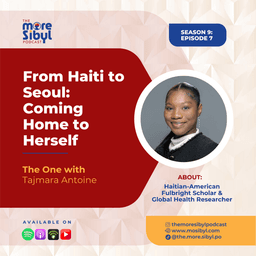
한국에서 다시 만난 우리| From Haiti to Seoul: Coming Home to Herself - The One with Tajmar...
The More Sibyl Podcast
한국 비자 | The Nigerian Passport Tax — The Stress of Getting a Korean Visa: Episode...
The More Sibyl Podcast
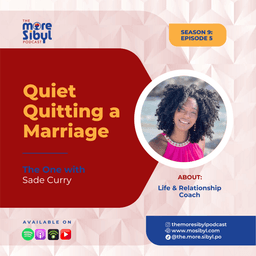
떠난다는 것의 실존적 위협| On Quiet Quitting a Marriage — The One With Sade Curry: Episode...
The More Sibyl Podcast