Get every episode summarized
Each time The Intelligence from The Economist publishes, we email you a written briefing from the transcript — the topics, who appeared, and any specific claims, with the ad reads skipped.
Email me new episodesFree for 3 shows. No card needed.
About this episode
The Intelligence from The Economist is made possible by:
“Therapy's biggest impact doesn't show up in some dramatic breakthrough. You bite your tongue instead of escalating. You put your phone down instead of firing off that text. You say what you actually mean instead of what would hurt someone else the most.”From the transcript
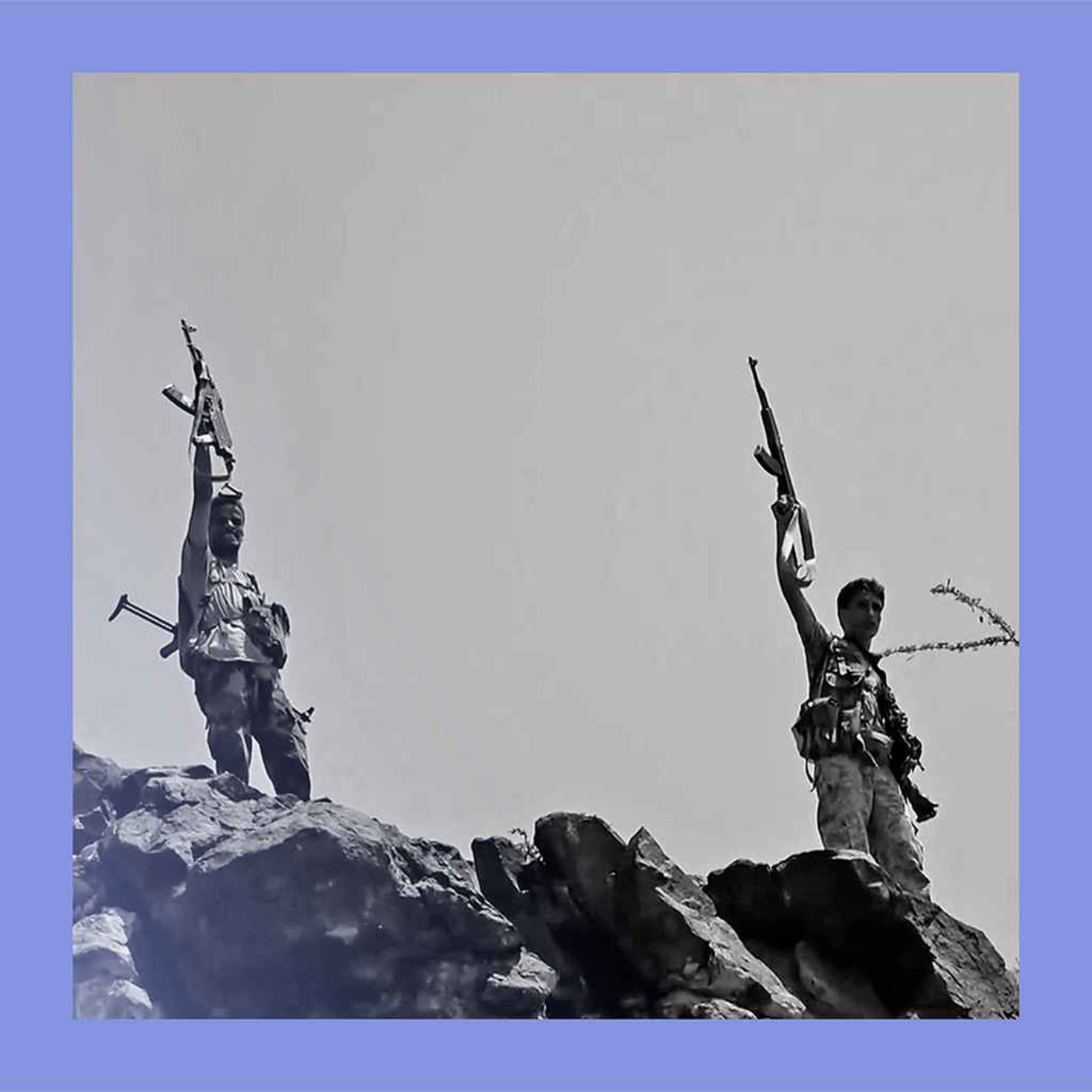
This weekend, Yemeni rebels struck Saudi Arabia’s international airport in the deadliest attack on a Gulf Arab country since the Iran war began in February. Our correspondent reports from Riyadh. How European manufacturers are adjusting to high energy prices and war. And the revival of writing by hand.
Guests and host:
- Gregg Carlstrom, Middle East correspondent
- Guy Scriven, global business writer
- Caitlin Talbot, culture correspondent
- Rosie Blau, co-host of “The Intelligence”
Topics covered:
- Saudi Arabia, Houthis, Yemen, Riyadh airport
- European carmakers, energy prices, tariffs
- Cursive, handwriting
Listen to what matters most, from global politics and business to science and technology—subscribe to The Economist.
Hosted on Acast. See acast.com/privacy for more information.
Get every episode summarized
Each time The Intelligence from The Economist publishes, we email you a written briefing from the transcript — the topics, who appeared, and any specific claims, with the ad reads skipped.
Email me new episodesFree for 3 shows. No card needed.
Hosts & guests

Transcript ready
405 searchable segments. Every word is indexed and playable.
Full transcript
The Intelligence from The Economist — Saudi under siege: Houthis attack airport. Machine-transcribed; use the interactive transcript above to jump the player to any line.
Therapy's biggest impact doesn't show up in some dramatic breakthrough. It shows up in the smallest moments. You bite your tongue instead of escalating. You put your phone down instead of firing off that text. You say what you actually mean instead of what would hurt someone else the most. Nobody applaud those moments, but they quietly change your life. That's what growing feels like, and that's exactly what growth therapy is here for. Grow is therapy that works, covered by insurance. Insurance average $21 with insurance and some pay as little as $0 depending on their plan. There are no subscriptions, no long-term commitments. You just pay per session. Grow connects you with thousands of high-quality licensed therapists across the US, offering both virtual and in-person sessions, nights and weekends. You can search by what matters, like insurance, specialty, identity, or availability, and you can book a therapy session in minutes and begin in as little as two days, not the national 48-day average.
See if you could pay as little as $0 per therapy in seconds at growtherapy.com slash acast. That's growtherapy.com slash acast. Growtherapy.com slash acast. Availability and coverage vary by state and insurance plan. This intelligence podcast is sponsored by Perk, the intelligent platform for travel and spend. The person on your team loses up to seven hours a week doing the work behind the work, submitting expenses, matching receipts and booking travel. Using AI and automation, Perk can do that work, bringing travel and spend together in one place. Enjoy three months without platform fees when you sign up at Perk.com forward slash the intelligence. That's Perk.com forward slash the intelligence. New US-based corporate customers only, terms apply. The Economist. Hello and welcome to the intelligence from the Economist and Rosie Blur.
Today on the show, how adaptable is Europe's industry and joined up handwriting makes a comeback. But first, the conflict between Saudi Arabia and Yemeni rebels has been dragging on for years. This weekend, that war came home. As an emblem and hub of Saudi international ambition came under attack. There have been at least four attacks on Riyadh's airport in the past week. The one on Saturday was the deadliest attack in more than a decade in Saudi Arabia, and then another one followed on Sunday. Greg Colstrom, our Middle East correspondent, is currently in Riyadh. It comes at a bad time for the Saudis, right as they are preparing to host a number of big events, including their flagship investment conference.
And it raises questions both about their ability to defend the country and also the future of the long-running Saudi war in Yemen. Greg just remind us of the context here. Who are the Houthis and what is the state of this conflict? The Houthis are in Iranian-backed militia in Yemen. They seized control of a big part of that country back in 2014. And the following year, the Saudis led a coalition that invaded Yemen. The goal was to push the Houthis back to reclaim the territory that they had seized. And that effort was largely unsuccessful. The war dragged down for about seven years until the ceasefire in 2022. That froze the front lines and they've remained more or less as they were. But since February when America and Israel went to war with Iran, that wider war has made the ceasefire in Yemen start to look unsustainable by the summer. It was clear that both the Houthis with Iranian support and the Saudi-backed forces were
preparing for another round of fighting. The Houthis in September launched an offensive they seized the large chunk of territory along Yemen's southwestern coast and the Saudis began a counter-offensive earlier this month. But progress has been slow. And so it seems as if we're all to talk on both sides about preparing for a major offensive, things have quickly bogged down in a stalemate on the ground. These attacks on Reya's airport then are a significant escalation of that stalemate. They are the Houthis regularly attacked Saudi Arabia during the previous round of fighting from 2015 to 2022. It's clear their capabilities have improved. They have a larger drone arsenal. They have bigger and more accurate ballistic missiles and they've acquired many of these weapons with Iranian support. And so we've seen those weapons used over the past couple of months. There have been attacks on energy infrastructure. They've fired at oil refineries and other facilities owned by Saudi Aramco, the state-run oil company. And then they have also made a particular target of airports for three weeks now.
They have been shooting at the airport in Reyaud. There was an attack on September 20th where they hit a fuel tank and attack on Thursday, killed three people, including a pilot and destroyed a plane belonging to Saudi Arabia, which is one of the state-owned carriers. They promised more attacks to come on the airport. So because of that, foreign airlines cancelled hundreds of flights and yet Saudi authorities kept the airport open, which is a decision that's come in for some criticism now. But it looks reckless to many people here in Reyaud, where I am at the moment. And so that's what led to this mass casualty attack on Saturday. And why the focus on the airports? I think partly because the Houthis realize this is a very sensitive time for the Saudis. On Sunday, the Kingdom began hosting the World Petroleum Congress, which is a major event for the oil industry. It was supposed to draw executives from big energy companies, a several of whom either cancelled or were unable to get here to Reyaud because there are simply no flights. And then in about two weeks, they're meant to go forward with the future investment initiative,
which is more commonly known as Davos in the desert. It's a flashy annual investment conference sponsored by the Crown Prince. It draws a whos who of global finance. And so the Saudis obviously are keen to go ahead with it. They want to make a show of our economic plans are going ahead, then we're attracting foreign investment and canceling that event because the airport is under missile fire would be an embarrassment. But if they do go forward, it's unclear how many executives and ministers are actually going to show up or even how they might get here. If they want to come, they can't fly into Reyaud at the moment. The airport in the MAM, which is about a four hour drive to the east, has also been targeted by the Houthis. So it's just very, very difficult. Forget safety. It's very, very difficult to get to Reyaud at the moment. The airport obviously takes a toll on the populations on both sides. How is it affecting each of them? The war for Yemen has been absolutely devastating. It's been more than a decade now. It has pushed the vast majority of the population into poverty, something like two-thirds of Yemenis
depend on international aid to survive because the economy has been wrecked. The country cannot produce enough food to feed itself. There were color outbreaks earlier in the war. It's an absolutely horrific situation in Yemen. Some of which really seems to bother the Houthis. This is a group that is not terribly interested in governance. They're in militia that really is just interested in taking control of the country. What we've seen is in areas that they do control, they impose enormous taxes and fees and essentially extort money from a desperate population to keep funding their war machine. The Saudis can continue bombing. They can continue emiserating Yemen, but I don't think it's actually going to deter the Houthis from continuing the war. Whereas for Saudi Arabia, the government feels it has a lot more to lose. They are in the middle of vision 2030. This effort to diversify their economy away from oil. It was already struggling prior to this war, prior to the war in Iran. There were parts of it that they had to scale back because they weren't going well. There's a real worry in the kingdom now that if this war with Houthis becomes a prolonged
conflict, if their airports and their energy facilities are attacked regularly, it's going to completely derail what they are trying to do with economic diversification. Even though you hear some very hawkish talk from some politicians in Saudi Arabia, certainly from state-back commentators about how they're going to go all the way in Yemen and evict the Houthis from power. When I've spoken to people who've met recently with the Saudi Crown Prince and other top Saudi leaders, they're hearing a very different message that the kingdom recognizes that a long war may not be in its interests. What happens next for Saudi Arabia? How might it respond? I think at the short term, they have two choices, neither of which from their perspective are good ones. First is you continue fighting and you try to round up international support to help you with that war. They've invoked a mutual defense pact that they have with Turkey and Pakistan. Pakistan has sent a limited number of troops to Saudi Arabia, but they've been clear that those troops are not going to be involved in Yemen itself. They're meant to defend Saudi only.
Britain has sent a bit of aerial refueling help. France has promised to help secure the key oil port on the Red Sea, and they're also talking still with the Americans about the possibility of American strikes in Yemen, although Donald Trump has several times now refused to go along with that request. But I don't think any of this help they're getting from abroad is really going to prove decisive in the war with the Houthis. Ultimately, what they need is better allies in Yemen, and their partners, the militias that work with them in Yemen, are disorganized. They work at cross-proposes. They're not very well trained in many cases. And so I think the war will be a struggle this time as it was the last time around for Saudi Arabia, which leaves them with another option, which is try to make a deal with the Houthis try to go back to the ceasefire that was in effect for much of the past four years. The problem is twofold. First, the Houthis are going to have high demands. They want economic benefits. They want the Saudis to stop blockading Yemeni airspace. And then it's also a question for some Yemenis about whether the Houthis even want to negotiate
right now, or whether they think they have the upper hand, and they're just going to keep pressing their military advantage because they know the longer this goes on, the more they can get out of the Saudis. And so that's where the kingdom finds itself, either continue a war that may be unsuccessful or try to negotiate a deal that will be very unpalatable. There's no good option here for Saudi Arabia. Greg, thank you very much. Thank you, Rosie. This episode of The Intelligence is sponsored by VantageScore. For years, credit scores have been generated with just a snapshot. And that snapshot left millions of people out of the picture. So VantageScore is modernizing the whole process. They use 400% more credit report and alternative data than legacy models, bringing more people into the credit economy. Like 5 million more mortgage eligible people. So all the banks win, but so do all the Franks, the lenders and the borrowers, the lindas
and the allavers. When you build credit scores the right way, everybody wins. That's the power of VantageScore. Get started at VantageScore.com. Okay, real talk. Every time I open up my inbox, I've got this vision of the day I'm going to have. Deep work. Big ideas. The project I keep meaning to start. Three hours of vanishing to replying to threads and hunting down a file someone sent last week. I've tried AI tools that promised to fix this. They didn't. They were just another tab I had to open. Explain myself to and abandoned by Thursday. Superhuman is different. It's at your service, not after your job. It's already where you work. So I'm never starting from a blank tab. It's from the makers of cramourly, living right inside of the tools I already use, like Gmail and Slack. When I'm drafting a message or making sense of a messy thread, it just helps. Like a thought partner that's already caught up. So we get to the hard part together. The problem was never too little time. It's that busy work, crowds out the work that actually matters.
Start streamlining your workflows with superhuman. Try today at superhuman.com. Some say the second China shock is looming, but it's already here. European Commission President Ursula Von Delayan issued a warning recently in her annual state of the Union address. Our trade deficit with China is now one billion euros a day. It has reached a tipping point. The European Union's industrial complex is under strain from high energy costs, cheap imports and geopolitical turmoil. This is unsustainable. Five European car makers have already issued profit warnings this year. All of that sounds pretty alarming, but is this anxiety really warranted? If you look across the landscape of European industry, I think there are some reasons to
be hopeful. Guy Scroven is our global business writer. There's plenty of damage, but I think that's confined to a handful of sectors. Parts of the industry are really doing just fine, and those which are under threat are kind of adapting to their new reality. Let's make this more concrete. What is it that European producers are really worrying about? There are two big issues. The first is energy prices. Energy prices in Europe have, for a long time, been structurally higher than those that you get in America and in China. That's partly because America and China have more natural resources, or increasingly in China's case, more renewable energy as well. That price difference has been exacerbated in the last five years or so by wars in Ukraine and more recently, war in Iran as well. That's pushed European energy prices even higher. This is a pain for European businesses because it makes things more expensive to produce.
That's one of the big worries. The other one is China. Explain exactly the China threat. For a long time, China's had a very well-developed industrial policy, which encourages Chinese companies to make lots of things that the government sees as strategically important. It's everything from electric vehicles to pieces of robotic arms, which put into factories or even rows of steel. This enormous supply of various goods has recently met a falling domestic demand in China. That has left the Chinese companies with their only option, which is really to export this stuff to the rest of the world. Added complication here is that Donald Trump's tariffs against importing goods from China to America, being that Europe is really the only big consumer market for Chinese businesses to export to.
That has meant that a flow of goods from China have ended up in Europe. That is part of the reason why you see the trade surplus between the EU and China has almost doubled since 2019 and is now at record highs of around $420 billion. Give me an example of the sorts of industry this is affecting. The big one is the car industry, and so for instance, you will see a lot more Chinese brands turn up in European cities. BYD is a big one. You'll probably see a lot of that. At the same time, you're actually seeing probably fewer and fewer European brands, such as Volkswagen or Citroen, turn up in Chinese cities, partly because they demand there, partly because Chinese cars are cheaper and particularly with electric vehicles, the technology is more advanced than what the Europeans can do. This is a big headache for European car producers.
China used to be a big profit pool for them, but now it's a big sort of competition. The question of cars in the EU has fallen by almost 20% against its Greek-COVID levels, and this is a massive concern because the auto industry in Europe directly and indirectly through its supply chain provides about 6% of the jobs in the EU, and so policymakers are fretting about this and wondering what to do. Taken in aggregate then, how big an impact is this actually having on Europe's economy? So there is pain, but the pain is highly concentrated. If you look at the fall in manufacturing employment in the last few years, there's been a slight decline over the EU as a whole, but about four-fifths of that has occurred just in Germany. If you think of this at a sector level, you see the same thing. The car industry, the chemicals industries are being hard hit, but other industries, such as pharmaceuticals, electronics, aerospace are doing really well.
Another factor of this is that a lot of the imports from China are actually intermediate goods, so think of a robotic arm that goes into a factory. Because they're getting cheaper and more plentiful, that is actually helping some European producers lower their costs. The artificial intelligence boom is helping demand to lots of European producers make things which go to data centers, and so they're benefiting from that tailwind as well. Humanly companies are trying to adapt to this new circumstance. Yeah, you're seeing companies across Europe adapt in all sorts of ways. You're seeing many more companies putting in energy efficiency measures, or installing local renewable power to try to cut their energy costs. So for instance, you're seeing a surge in the last four years in European companies investing in Spain, where energy prices are much lower than the rest of the continent, because they have plenty of renewable energy there. At the same time, you're also seeing companies doing more financial hedging, so that the
risk of a spike in energy prices is lowered as well. And the other big strategy companies are pursuing is that they're trying to sell more services, along with the pieces of equipment or machinery that they make. And that means that there's another revenue stream for the company, and often quite a high-margined one, because it's much cheaper to make software than to make physical things. Guy, you also mentioned AI. What effect might that have? AI is obviously a huge talking point on the continent at the moment. There is kind of an idea of that Europe's industrial base will be able to really boost production and make itself more efficient using huge amounts of AI. So this would be things like putting AI in factories to make them work better, or make the robots on production lines talk to each other in a more efficient way. And that helps make the factory produce more stuff. This is one of the big hopes for Europe when it comes to AI. And Urshall of Underline has asked the Chairman of Zeemons, which is a big German industrial
firm, to write a report on how factories can make the best use of this technology. So there's certainly potential there for Europe. Feel like we've been heralding the potential demise of European industry for a really long time. Where do you think this is all going to land? Yes, I think that Europe is still in the process of two transitions. One is the world's kind of more service-led economy. So if you look at countries like Germany, there's a high level of manufacturing, then you would expect for a country that is that rich. So I think some of this is a slow de-industrialization, which is a kind of natural process, which all rich countries go through. And that will slowly play out in Europe. And then there's another transition happening where the old energy base of fossil fuels is being replaced by renewable energy. And that's happening in Europe as well, I think. And so I think this is just another phase of European industry reinventing itself. And probably the industry in Europe in five or ten years will look quite different from
the one of today and the one we knew a decade ago. Guy, thank you very much. Thanks, Rose. The where of a man whose writing sways like a read in the wind, Confucius supposedly warned, the ancient philosopher would have been rather suspicious of many literary giants. Caitlin Toolbert is a culture correspondent. Leo Tolstoy's handwriting was messy with a severe slant. Ernie's taming ways script sloped drunkenly down the page. No matter how little he'd actually drunk.
This autumn, as pupils return to classrooms, the question of whether and in which style they should learn to write by hand is being debated. You'd think such questions were obsolete in an age of iPads. But of all things, cursive is may hear come back. This school year, Pennsylvania and New Jersey joined Texas, California, Florida and others in mandating the teaching of cursive in schools. Canadian and Argentine provinces have reinstated it or started teaching it at younger grades. Britain is also looking to improve its handwriting instruction. Italy and Sweden are moving away from tablets and screens to using books and handwritten notes. In France, educators often teach ornate cursive script. And in Vietnam, handwriting and calligraphy classes are surging in popularity. But why is cursive back in Vogue?
Many advocates cite science. One study from the Norwegian University of Science and Technology compared the brain activity of children and young adults when they were writing in cursive, drawing and typing. It found that handwriting and drawing light up areas of the brain associated with learning and memory. Other studies have shown that cursive has other benefits, including boosting reading skills and spelling. In this case, I and V, I, S. Yet few have compared cursive or joint handwriting and print or unjoined. Some scholars have kept called the cursive is much better. But it's not all about studies and statistics. Cursives come back is also about culture. People fret about the young being unable to decipher their ancestors' writing or historical documents written in cursives. Indeed, through handwriting you can trace history.
Curseive suited the writing tools of the past, scribes perfected pleasing penmanship so that documents were easy to read. Their quills lasted longer and they got fewer inkblots if they didn't raise them from the page between letters. Later, when metal tips and ballpoint pens became popular, simpler handwriting styles proliferated. Most scripts taught in schools today evolved from cursive styles in Italy, Germany, France and Britain. With colonialism, sloping English round hands spread to America and India. France's decorative echo to horns went to parts of South America and Asia. The Nazis even meddled with note-taking. In 1941 Hitler banned Gothic-looking German cursive and instead ordered schoolchildren to write in simpler Latin script. The reason for the ban scholars reckon was to make communication uniform and more legible
across occupied Europe. Today's educators have more modern concerns. Many are keen to ensure that children don't outsource their writing to AI. Writing and thinking are inseparable. The act of grasping a pen helps us organise information and come up with ideas. To cursive or not may be a question of taste, but handwriting wholesale should not be written off. That's all for this episode of The Intelligence. We'll see you back here tomorrow.
Forming a business seems easy until influencers forums and AI give different advice. Legal Zoom has helped 5 million business owners get it right. Because after 25 years, we know what getting it wrong can cost. We stand behind every formation we file and we'll be there after you've launched. When you need a legal hand, visit Legal Zoom. Legal Zoom provides access to independent attorneys and self-service tools. Legal Zoom is not a law firm and does not provide legal advice. This message comes from Betterment. Dan Egan, VP of Behavioral Finance and Investing, explains the benefits of automated dividend reinvestment. If you've ever invested, you probably have noticed that occasionally you get dividends. Your stock pays it out. You get that as cash in your account and it usually sits there until you remember that you're supposed to buy something else with it to reinvest it back. Automated dividend reinvestment makes that effortless and seamless.
When dividends come into your account, we automatically reinvest available dividends. Not necessarily into where they came from, but into whatever would serve your portfolio best. Automated dividend reinvestment keeps you invested and keeps your portfolio in balance. Learn more about Betterment's dividend reinvestment methodology and other helpful investment tools at Betterment.com. Everything involves risk. Performance not guaranteed.
More episodes
More from The Intelligence from The Economist

Saving your bacon: healthy-eating policy evolves
The Intelligence from The Economist

Valley of the shadow of debt: bond-market jitters
The Intelligence from The Economist

Gilets jeunes? France’s school protests
The Intelligence from The Economist

House call: Spain’s snap election
The Intelligence from The Economist