scienceNov 29, 202424:05pending
S27E144: Young Planet Discovery, Photon Shape Unveiled, and Swift's 20-Year Legacy
Get every episode summarized
Each time SpaceTime with Stuart Gary publishes, we email you a written briefing from the transcript — the topics, who appeared, and any specific claims, with the ad reads skipped.
Email me new episodesFree for 3 shows. No card needed.
About this episode
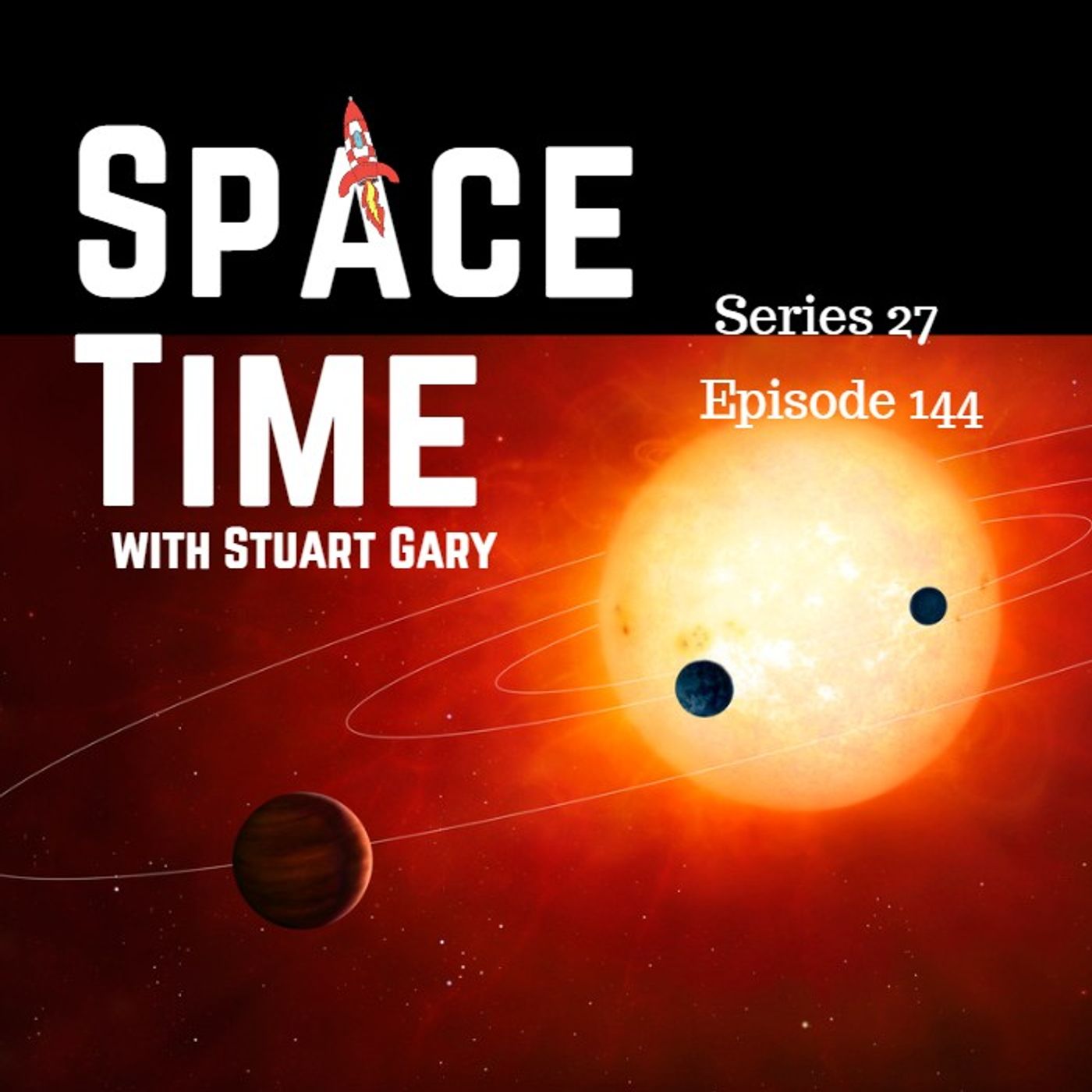
SpaceTime Series 27 Episode 144
*Young Exoplanet Challenges Planet Formation Theories
Astronomers have discovered an exoplanet, Taade 1b, that is just 3 million years old, challenging our current understanding of the speed at which planets form. This young planet, orbiting its star every seven Earth days, offers a unique glimpse into the early stages of planetary formation. The study, led by Madison Barber from the University of North Carolina, highlights the surprising rapidity of Taade 1b's formation compared to Earth's estimated 10 to 20 million-year formation period. The discovery provides new insights into the differences between our solar system and those hosting close-in giant planets like Taade 1b.
*Photon Shape Revealed by New Quantum Theory
A groundbreaking theory has allowed scientists to define the precise shape of a photon for the first time. Reported in Physical Review Letters, this research explores how photons, as particles of light, interact with matter at the quantum level. The study reveals that photons have a spherical shape with varying light levels, providing new insights into their dual wave-particle nature. This advance opens up new research avenues in quantum physics and nanophotonic technologies, potentially revolutionising communication, pathogen detection, and chemical reaction control.
*NASA's Swift Space Telescope: 20 Years of Discovery
NASA's Swift Space Telescope, dedicated to studying gamma-ray bursts, celebrates its 20th year in Space. Originally launched to solve the mystery of gamma-ray bursts, Swift has played a crucial role in identifying the origins of these powerful cosmic explosions. The observatory's rapid response capabilities have enabled significant discoveries beyond gamma-ray bursts, contributing to multi-messenger astronomy and enhancing our understanding of the universe.
The Science Robert
New research warns that combining blood-thinning drugs with non-steroidal anti-inflammatory painkillers like ibuprofen doubles the risk of internal bleeding. A study on the DNA history of ancient aurochs reveals complex ancestry for modern cattle. Scientists discover that the boundaries between solid and liquid metals are more fluid than previously thought, with implications for metal alloy applications. Psychologists explore the human brain's predisposition to believe in the supernatural, highlighting pattern recognition and expectation effects.
www.spacetimewithstuartgary.com
www.bitesz.com
🌏 Get Our Exclusive NordVPN deal here ➼ www.bitesz.com/nordvpn. Enjoy incredible discounts and bonuses! Plus, it’s risk-free with Nord’s 30-day money-back guarantee! ✌
Check out our newest sponsor - Old Glory - Iconic Music and Sports Merch and now with official NASA merch. Well worth a look....
Become a supporter of this Podcast for as little as $3 per month and access commercial-free episodes plus bonuses: https://www.spreaker.com/podcast/spacetime-with-stuart-gary--2458531/support
For more support options, visit our supporters page: Click Here
00:00 A new discovery challenges our current understanding of how planets are formed
00:26 Astronomers have discovered an exoplanet that's just 3 million years old
03:48 New theory explains how light and matter interact at the quantum level
06:55 NASA's Swift Space Telescope helps astronomers identify gamma ray bursts
16:01 People on blood thinners double risk of internal bleed when taking non steroidal anti inflammatories
18:24 Psychologists say the human brain is pre wired to believe in the supernatural
✍️ Episode References
University of North Carolina at Chapel Hill
[https://www.unc.edu](https://www.unc.edu)
NASA TV Mission
[https://tess.mit.edu](https://tess.mit.edu)
University of Birmingham
[https://www.birmingham.ac.uk](https://www.birmingham.ac.uk)
NASA Goddard Space Flight Centre
[https://www.nasa.gov/goddard](https://www.nasa.gov/goddard)
Physical Review Letters
[https://journals.aps.org/prl](https://journals.aps.org/prl)
Nature Journal
[https://www.nature.com](https://www.nature.com)
Australian Sceptics
[https://www.skeptics.com.au](https://www.skeptics.com.au)
*Young Exoplanet Challenges Planet Formation Theories
Astronomers have discovered an exoplanet, Taade 1b, that is just 3 million years old, challenging our current understanding of the speed at which planets form. This young planet, orbiting its star every seven Earth days, offers a unique glimpse into the early stages of planetary formation. The study, led by Madison Barber from the University of North Carolina, highlights the surprising rapidity of Taade 1b's formation compared to Earth's estimated 10 to 20 million-year formation period. The discovery provides new insights into the differences between our solar system and those hosting close-in giant planets like Taade 1b.
*Photon Shape Revealed by New Quantum Theory
A groundbreaking theory has allowed scientists to define the precise shape of a photon for the first time. Reported in Physical Review Letters, this research explores how photons, as particles of light, interact with matter at the quantum level. The study reveals that photons have a spherical shape with varying light levels, providing new insights into their dual wave-particle nature. This advance opens up new research avenues in quantum physics and nanophotonic technologies, potentially revolutionising communication, pathogen detection, and chemical reaction control.
*NASA's Swift Space Telescope: 20 Years of Discovery
NASA's Swift Space Telescope, dedicated to studying gamma-ray bursts, celebrates its 20th year in Space. Originally launched to solve the mystery of gamma-ray bursts, Swift has played a crucial role in identifying the origins of these powerful cosmic explosions. The observatory's rapid response capabilities have enabled significant discoveries beyond gamma-ray bursts, contributing to multi-messenger astronomy and enhancing our understanding of the universe.
The Science Robert
New research warns that combining blood-thinning drugs with non-steroidal anti-inflammatory painkillers like ibuprofen doubles the risk of internal bleeding. A study on the DNA history of ancient aurochs reveals complex ancestry for modern cattle. Scientists discover that the boundaries between solid and liquid metals are more fluid than previously thought, with implications for metal alloy applications. Psychologists explore the human brain's predisposition to believe in the supernatural, highlighting pattern recognition and expectation effects.
www.spacetimewithstuartgary.com
www.bitesz.com
🌏 Get Our Exclusive NordVPN deal here ➼ www.bitesz.com/nordvpn. Enjoy incredible discounts and bonuses! Plus, it’s risk-free with Nord’s 30-day money-back guarantee! ✌
Check out our newest sponsor - Old Glory - Iconic Music and Sports Merch and now with official NASA merch. Well worth a look....
Become a supporter of this Podcast for as little as $3 per month and access commercial-free episodes plus bonuses: https://www.spreaker.com/podcast/spacetime-with-stuart-gary--2458531/support
For more support options, visit our supporters page: Click Here
00:00 A new discovery challenges our current understanding of how planets are formed
00:26 Astronomers have discovered an exoplanet that's just 3 million years old
03:48 New theory explains how light and matter interact at the quantum level
06:55 NASA's Swift Space Telescope helps astronomers identify gamma ray bursts
16:01 People on blood thinners double risk of internal bleed when taking non steroidal anti inflammatories
18:24 Psychologists say the human brain is pre wired to believe in the supernatural
✍️ Episode References
University of North Carolina at Chapel Hill
[https://www.unc.edu](https://www.unc.edu)
NASA TV Mission
[https://tess.mit.edu](https://tess.mit.edu)
University of Birmingham
[https://www.birmingham.ac.uk](https://www.birmingham.ac.uk)
NASA Goddard Space Flight Centre
[https://www.nasa.gov/goddard](https://www.nasa.gov/goddard)
Physical Review Letters
[https://journals.aps.org/prl](https://journals.aps.org/prl)
Nature Journal
[https://www.nature.com](https://www.nature.com)
Australian Sceptics
[https://www.skeptics.com.au](https://www.skeptics.com.au)
Get every episode summarized
Each time SpaceTime with Stuart Gary publishes, we email you a written briefing from the transcript — the topics, who appeared, and any specific claims, with the ad reads skipped.
Email me new episodesFree for 3 shows. No card needed.
Hosts & guests
No transcript yet
This episode has not been transcribed. Request it and it moves to the front of the queue.
More episodes
More from SpaceTime with Stuart Gary

Comet Births and Neptune's Secrets
SpaceTime with Stuart Gary
Sep 11, 202622:27completed
Molten Planets and Solar Storms: Unveiling Cosmic Wonders
SpaceTime with Stuart Gary
Sep 9, 202634:16completed

Dark Matter Signals and Lunar Origins: Exploring the Universe's Mysteries
SpaceTime with Stuart Gary
Sep 8, 202625:39pending

Discovering Blazars and SpaceX's New Spaceport
SpaceTime with Stuart Gary
Sep 4, 202618:54pending