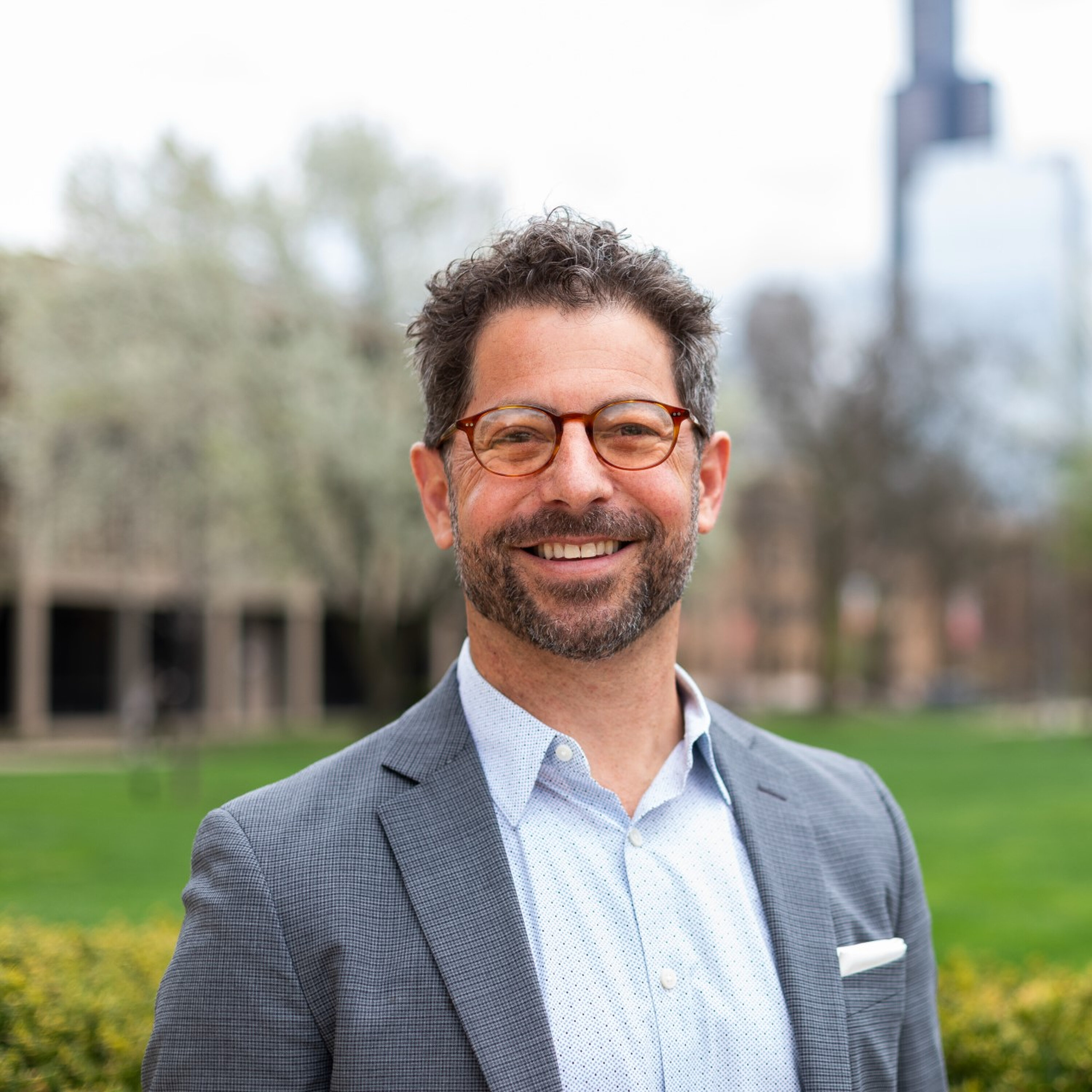
Prof. Kevin Schultz: WCPT 820 Interview
Get every episode summarized
Each time Chew's Views with Richard Chew (Featured Interviews) publishes, we email you a written briefing from the transcript — the topics, who appeared, and any specific claims, with the ad reads skipped.
Email me new episodesFree for 3 shows. No card needed.
About this episode
“We had earlier in the show, Chancellor Michael Bennett on with us and shout out to him, but also our other professor, Professor Yorodog is Professor Kevin Schultz, Wardwin and his story and then Professor at the University of Illinois at Chicago.”From the transcript
Richard Chew is joined by Kevin Schultz, professor of history at UIC and author of “Why Everyone Hates White Liberals (Including White Liberals): A History. The discussion focused on political engagement, resistance to authoritarianism, and threats to democracy and press freedom.
Here are a few key points from the conversation:
- Schultz described energized students at UIC; protests led the College of Business to disinvite ICE from a job fair.
- He discussed growing public opposition to Trump, including protests at Medinah Country Club's 2026 President’s Cup and potential shifts in congressional and state elections.
- Schultz and Chew argued that preserving democracy requires sustained public participation rather than assuming democratic institutions will protect themselves.
- Schultz connected current activism to earlier American protest movements, including trucker strikes during the 1970s energy crisis.
- He reviewed historical conflicts over press freedom, from the Alien and Sedition Acts of 1798 to the killing of journalist and abolitionist Elijah Lovejoy to Daniel Ellsberg's leak of the top-secret Pentagon Papers during the Vietnam War.
Catch "Chew's Views with Richard Chew” weekdays from 6:00 to 8:00 a.m. Central on WCPT (heartlandsignal.com/programs/chews-views).
Follow us:
Website: https://heartlandsignal.com
WCPT Facebook: https://www.facebook.com/WCPT820
Heartland Signal Facebook: https://www.facebook.com/HeartlandSignal
Tiktok: https://www.tiktok.com/@heartlandsignal
Heartland Signal X: https://x.com/HeartlandSignal
WCPT 820 X: https://x.com/WCPT820
Instagram: https://www.instagram.com/heartlandsignal
Threads: threads.com/@heartlandsignal
YouTube: https://www.youtube.com/@heartlandsignal
See omnystudio.com/listener for privacy information.
Get every episode summarized
Each time Chew's Views with Richard Chew (Featured Interviews) publishes, we email you a written briefing from the transcript — the topics, who appeared, and any specific claims, with the ad reads skipped.
Email me new episodesFree for 3 shows. No card needed.
Hosts & guests
Transcript ready
440 searchable segments. Every word is indexed and playable.
Full transcript
Chew's Views with Richard Chew (Featured Interviews) — Prof. Kevin Schultz: WCPT 820 Interview. Machine-transcribed; use the interactive transcript above to jump the player to any line.
We had earlier in the show, Chancellor Michael Bennett on with us and shout out to him, but also our other professor, Professor Yorodog is Professor Kevin Schultz, Wardwin and his story and then Professor at the University of Illinois at Chicago. He runs stuff, y'all, when it comes to history and studies and all that good, all that good stuff. I like to give him his flowers because my relationship with him has improved my understanding of a lot of things, but definitely just a good partnership. And I'm so glad to have Professor Schultz back with us this morning. Good morning, Doc. How you doing? I'm doing well. Good morning, Richard. I'm glad to be back. And another day kicking, another day fighting. That's right. That's right. Get a stand up to the bully. Get a stand up to the bully. So it's interesting. You've been back in class now for about what, a month, roughly 30 days? Is that about right? Yep. Exactly right. We're kind of giving us the update on what's happening and getting back into the flow. But how are your students feeling in this new semester and now that we've kind of officially
gotten in fall? Are you feeling good about the classes and the folks that you're able to impact right now? Yeah, I would say the students are pretty energized when it comes to political engagement. You know, they're back into it for school. They're putting their heads down. They spend the time in the library reading books, fingers crossed, trying to fend off the AI and moving the boundary of what's acceptable and not acceptable. But I will say for the most part, it's kind of an exciting moment. And also, it's fun to watch these young kids who have been fighting most of them, especially UIC fighting for big political change, fighting to create a world that they want to live in and prosper in and running into the frustrations of how far. In my students case, I'll just be blunt, how far to the radical left do I run? And how can I work within this system in order to make the changes that we need? Where is that happy middle, which I think a lot of people on the left are navigating right now? The big news that UIC this week, I'm sure you saw it, Richard, was our college of business,
to their credit was having a job fair for their students. So let's get these students working and out contributing to society in the best ways possible. But one of the people who had signed up to work at the job fair was the Border Patrol, the office of American Border Patrol, including ICE. And you know, where a Hispanic serving institution in the Latino population has been, of course, targeted by ICE. First loudly, you know, in the first year of Trump 2.0, but maybe most of the listeners don't know that for the last year it's been quiet, just as consistent, but much quieter. But our students marched down the campus, they protested this to the point where the college of business decided to disinvite ICE from the job fair. So this is sort of just an indication, a win, but an indication that people are excited, people are motivated, people are eager to see some transformation. And you know me, I mean, I try and not play my political cards too directly even on Chicago's progressive radio. But I do think there is this sense that the authoritarian cards have been displayed.
And I think people are ready, people that were in it are fleeing that ship and people who are protesting it. Like you said in the beginning of this segment, you got to stand up to the bullies. And I think people are increasingly eager to stand up to the bully. It's proving itself time and time again. And it's happening in different ways. And I think that sometimes, you know, the lack of coverage with corporate media, whether it be local or, you know, national media on issues like this in terms of what went down at UIC or depending on what you look at it, what didn't go down is a national story because it's people pushing back against something that we've all been concerned about for a long, long time. And that's authoritarianism in our country. And safety of people who are our family, our broad non-blood related family, depending on how you look at it from an anthropological standpoint. But that being said, we are pushing back. We are fighting back against the bully. And I'm all forward. I am all forward. It's like, yes, that and more because the more that happens, it allows people to gravitate
toward it. I'll cite you something that people might not give a darn about, but I think it's another good example of it. And then we'll get into the thing I want to really talk to you about. And that is right now, for those who are sports fans or not, what's going on here in Chicago sub-subsurbs is the president's golf tournament. Every other year, one year that's a rider cup, the next year it's a president's cup. This year, the president's cup is being played at Medina Golf and Country Club out in the near West suburbs of Medina. And there are people that are already out that have been lined up on the roads leading to the golf course, protesting Donald Trump's appearance at the tournament. That's a golf tournament. Not people don't give a damn about golf, but they're showing up to protest this dude who's in the White House at the namesake event, the president's cup. That's pushing back against the bully. That's standing up against the bully just in. So I'm excited like you, Professor, with the energy that's out there from folks who say
no, I'm done. I've had enough. One of the things that I've noticed is that regardless of your political affiliation or what policies you want to see in place, Americans very broadly speaking, 70% plus 80%. They really love living in a democracy for all its flaws. And I think Trump 2.0 has played its cards and it showed itself as an enemy that is willing to curb democracy. And I think even those who are sort of loosely affiliated with the MAGA movement, they might have not loved a lot of its most sort of vociferous expressions or some of the most, the attacks on some of the minoritized people in American life. But they went along with it because of the tax breaks or because of their hatred of liberals, which is something that I wrote a whole book about. And now I think those people are bleeding from the movement because he is so eagerly, well, two things. I think he's so directly challenging democracy. And I think the corruption is becoming so visible and so hard to ignore that I think people
who sort of passively supported the Republican Party under Trump have now left that. And that's why I think you see these polls that are just demonstrating how unhappy Americans are. His approval rating is at 32% and some of the polls that you read in the 30s and all the polls no matter where they come from, which are historically low. And then who knows what's going to happen with the midterms, but it looks like there's going to be such a tremendous change if Americans show up and are excited to vote in the ways that they're saying they're going to vote, that I think even his willingness and ability and desire to tamper with the electoral system is going to be hampered and his ability to actually do those kinds of changes is going to be less successful because theoretically, I mean, they're saying what 90% chance that the House flips to the Democratic Party, if those numbers are true and who knows if they are, but if they are true, that's such a big change that he won't be able to sort of mess with the levers of democracy. And it's a movement that I come back to the word momentum.
And the momentum tends to what's how do I want to say momentum is like a snowball. It just gains speed if it's managed properly. And I think right now the momentum in these next 50 days is saying those numbers, let's say it's 90%, let's say it's 60%, the House and Senate, but it's also the momentum in the states. The states are showing a tremendous amount of we are tired and we know our state legislators in certain cases haven't done what they should be doing. So we need to see some change there. That to me is the other part. The states have really leaned in with the. And in shopping places too. I know. If you asked me for the last 30 years, if I ever thought Texas would elect the Democratic Senator, what would have said you were crazy? Well, we'd be really having a serious, not a not a hopeful conversation about it. You know, the past couple of cycles, it's been hopeful that, you know, we might, you know, things just work out. Now it's like, this is going to happen.
Well, don't say that. I know. I know. I know. And this could happen. And one of the things that I want a little credit for Richard is I've been saying, you know, I'm an optimist and history has taught me that this country has been through a lot of challenges and it's been to a lot, but not broken and hopeful and I'm optimistic that there is this bend that we're seeing, but not broken. And but I have also said that it's going to be a slog. It's going to take some time and it's going to be a slug. We're going to have to fight in order to preserve the institutions with democracy. And I think like you were saying, going out to protest the president's rider cup and to take the microphones away from him like the news, the press pool did in the White House when he tried to bully them. I think there is this sensibility that if we do fight back that even though it's still going to take some time, it's still going to take an election cycle or two, it's worth it to make this lug. I agree with you a thousand percent. The fact that people are showing up at the at the president's cup, a golf tournament
that some people could give it, you know, what about to protest him being here says that to your point that people know that there's a responsibility that we all have in this preserving and growing democracy, but it's going to take some work. And that's where I think a lot of folks may have. And historically, I mean, you know this, folks have gotten comfortable and that's kind of part of the humankind. We work hard for something. We, you know, we enjoy it. We get comfortable with it. And then we've got to tend the garden. And I think that that's probably if there's a simple thing that we all can plug into and not feel like we're being preached to or pointed fingers at is that we have gotten comfortable which we should because we work hard to get to that point. But we also have to tend the garden. And right now that garden tending is what I see a lot. That's my, those are my words. What I see a lot of people recognizing. Yeah, you know what? I got a tend to this garden and maybe once we get it back to where it was better than it is now because we didn't tend it. Then we can start to put some things in place so we never go back in that space again.
I'm hopeful in that regard because I know that internally a lot of people are feeling like, yeah, I got, I got some work to do. Does that make sense? Yeah. And let me add a little history to that because I think you sort of are making an individual choice to stay home and tend to your comfortable garden and make sure you protect what you have, which I think is right. It's a basic sort of condition that we have enjoyed and been able to enjoy. Many of us, not all of us. But I do want to say that in the last 50 years, the success of late capitalism, late stage capitalism or whatever we want to call it has created a culture of I deserve this and I'm entitled to this. And I have a lot of problems with this on a psychological basis. But one of the things that it's done is it's limited awareness of the history of American radical protest. Yeah. One easy way to think about it is during the Vietnam War, we had, you know, an open call for soldiers,
we had a draft and the American people could voice their opposition very, very publicly. And one of the lessons that the powers that be learned from that was, okay, let's make our military privatized. Let's recruit. Let's not have an open draft. So then we can get our military to do things without it being so public so that we'll lol the public into what's going on because the public has no skin in the game. I think back to the 1960s, 1970s, a lot of those protests, you know, sort of famously and mythologized in American history. But even in times when there was a spike in gas prices in 1973, one of the things that the truckers did was they drove on interstates across the country. This is a nationwide strike. They parked their semi trucks on the interstates and they stopped traffic across the United States of America. I mean, there was this sense of radical protest. I'm sorry you're uncomfortable, America, but you need to hear my plight. And I think in the last 50 years, corporations and politicians have been happier to keep
us happy, happy to keep us tending our garden. And I think we might be waking up from that and recognizing the importance of some more radical forms of protest. I don't think we're there yet. No, we're not. But I do think there is this sense that we do need to wake up to that radical history. We have 250 years history of it. So I'm glad to see it coming back. Yeah, and I am with you on that 1,000%. I remember that I was a kid, but I was aware enough of what was going on when the truckers did that. And my father helped me understand the importance of that type of protesting to get people's attention. And there's a baby version of it that's that's that's that's eaking into the system now with some truckers in America. Let's take a quick break, Professor. When we come back, I do want to talk about this, this, this media band because I know that you and I've got some thoughts about that. The number is 7737639278. I'm Richard Chu talking with Professor Kevin Schultz, author of why everyone hates white liberals, including white liberals. This is Chu's views and we'll be right back.
All right, guys, welcome back to Chu's views. If you're just tuning in, as our last little segment today, we're talking with Professor Kevin Schultz from the University of Illinois at Chicago's history department. As I say, he runs stuff over there and we're we're better for it as a result of him being charged with that department. Professor Schultz, we've got this, it's been lifted, but we had a moment where the media was told, no, you can't be here. You can't hang out here at the White House and the judge got involved and said, not, not, not, not right now under these circumstances. But in the broader context, let's talk about this a little bit as it relates to, you know, banning books, banning messages, banning thinking, and now, you know, banning the press from being a part of our ecosystem when it comes to the White House. Yeah, I mean, this was the third time that he tried to ban the press in a variety of
ways and he's lost in the courts every single time. But I think, you know, so that's a suggestion that maybe he's not necessarily honestly trying to ban the press, but maybe doing it to increase the press and to get more attention and maybe send a political message to the MAGA crowd that he's going to take down these organizations that he sees as enemies. But look, there's a reason he keeps losing in the press. And there's also a reason that he cites national security when he tries to do this. So the historian in me knows that the First Amendment of the US Constitution, passed in 1791, had five protections in it. And, you know, you might remember this from your high school history class or went way back in the day, right? Freedom of religion, freedom of speech, freedom of press, and then everybody always forgets the last two, freedom of peaceable assembly, and the right to petition the government, right? But that doesn't strong. And we will not create any, Congress will not create any laws that abridged those five
basic tenants. Look at you now showing off. Yeah, I get when I get off when I get home from school, birthday and reach you were like, because of what you learned today. So I had to be ready to die. This is fantastic. I love it. But almost immediately in our history, there were presidents and governments that tried to limit the power of the press to criticize the government to expose national secrets. And most frequently these were done during wartime when exposing some information might put our troops at risk. And so there should be some limitations on the press to out whatever news it is that they have. But, obviously, very quickly, this became a political tool and the courts have consistently pushed back against the executive branch, the president that have done this. This started in John Adams, the second president of the United States, in during the quasi-war he had with France when they were impressing American sailors. And he was being exposed by a very partisan.
This is the birth of the partisan press in America. These Jeffersonian newspapers were slamming John Adams for being a wimp and for not standing up for American soldiers. And so he passed the Alien and Sedition Acts of 1798, which actually went about imprisoning more than 25 newspaper editors and basically just for partisan hakeling. And the American people saw it for what it was. And it was one of the things that made John Adams so unpopular that he got tossed out a office a year later. And then Thomas Jefferson became president and he left these laws expire. And he said, you know, I am now the president who's going to stand up for free speech. And guess what? Eight years later, he was exhausted by the free speech, free press, punishing him, but he never pushed back, honestly. During other times of war, we've had Abraham Lincoln try and silence newspapers that were talking about troop movements of the Union troops because he thought they were putting Americans at danger.
And this was not something that he did super aggressively. And a lot of the times it was the generals in the Union Army that put down and quieted the local newspapers. And now he's been, you know, sort of imagined by some people to be this person who is limiting the freedom of the press. He allowed them all to have their freedom after the war was ending. He always planned to do it. But is this a legitimate use for an executive to quiet the press? Is it not? Another sort of signature case that came about, of course, which you and I have talked about are the Watergate papers, which was a secret study commissioned in the 1960s and 1970s that was talking about how the US government knew that it was losing the Vietnam War and was new that it was keeping secrets about the Vietnam War from the press and from the American people in order to keep the image that the United States was winning that war. Daniel Ellsberg, who just died a couple of years ago, he leaked this report out and the New York Times in Washington Post and a few other newspapers published it.
And the Nixon administration sued them in the famous cases. The New York Times versus Richard Nixon. And the Supreme Court said, no way. They're allowed to have this information if they're not endangering the lives of the American population, just because it's not popular to the press. So we have this extensive tradition of the Supreme Court and the court lower courts protecting the freedom of the press when it's not deliberately endangering the lives of Americans. And I think this case was relatively easy for the United States, the courts to recognize as it not being a danger. I will say one thing that I've noticed recently in the last three to four months is that Donald Trump is increasingly using the language of national security to justify the destruction of the White House, to justify his triumphal arch that he wants to build and now to justify keeping CNN and a handful of other sort of press outlets from having access. He's trying to use this as an argument.
And I think one of the interesting things that the court decision, I think it was yesterday, came down is that that argument doesn't really carry water. Yeah. And I won't say concern. I'm mindful. I'm paying attention to that. Like you just said, it's been used when this whole thing around China and they're tapping into our technologies. And I think we're headed with that use of the language. It socializes so that it's something that becomes familiar for one reason or one. Yeah, but a primary reason. And that's to in the next sometime in the next two to three weeks, maybe with the last week of October, there is a use of it again as it relates to the midterm elections. It's not an accident that it was socialized around China. It's not an accident. It was socialized this summer after their convention. And now again, with regard to the press that in the interest of national security, then fill in the blanks. I've been saying this for a long time.
I know you have two people. Please pay attention because that's coming. If it doesn't come, if that's not used, I will be shocked. I won't be shocked if it's used. I'll be shocked if it's not used as we get closer to the midterm elections. And the interest of national security, fill in the blanks. We're going to do this or we believe this. Yada, yada, yada. What are your thoughts there, professor? I think you're exactly right. I mean, I think I'm not even guessing. You know, we've seen it happen already. He's building this argument. And he's done it before. He did it in Trump 1.0. He's not the only president to do it. Let's be fair. Right. Other presidents have used national security. Eisenhower used national security to get funds to build the interstate road system. I-80, I-90. Those were done so that we can flee our cities in the advent of nuclear war. I mean, so it was done. The money was sequestered as a way of talking about national security. So he's not alone in this. I think he might be alone in that he is potentially setting us up to use the language of national
security to affect the outcome of an election. But I do think, and again, this is me being an optimist and also using my eyes to see what's happened not only recently with the courts, but also looking back through history. I got to use my last few minutes to tell one great Illinois story about freedom of-freedom of the press. And it goes back to slave times. It's in 1837. A guy named Elijah Lovejoy, who I bet you've heard of. He was in Missouri and he was an editor of a local newspaper. And he was touched by God during the second grade awakening. And he with-with the fervency of a convert became an abolitionist who hated slavery to his core. And he started, he went to Missouri, which was a fraught place in the story of slavery at the time. And he published an anti-slavery track. Something that sort of parallels our time. Immediately, as soon as he started publishing this press, there were death threats to him and not only him and his family. And I'm imagining today's social media stars when you get that comment in your section
that's a death threat and it freaks you out. So he picked up and left St. Louis and moved across the border to Alton, Illinois. No, Illinois, yeah. Right? We're Illinois guys here. So he moved out to Illinois. He wanted those federal protections. He knew Illinois was an abolitionist state. But sure enough, the pro-slavery voices came in the middle of the night and they actually destroyed his press. This is back in the days of the printing press. We're talking freedom of the press. This can't- metaphor can't be hit any harder on the nail here. They destroyed his press, but Elijah Lovejoy would not be put down. He ordered a second printing press to come down. And the mistrience and the anti-in the pro-slavery bunch met the press at the docks of the Mississippi River and dumped the press into the Mississippi River. He would not be stopped though. He ordered a third press and it came in the middle of the night and he brought it to his warehouse. The pro-slavery forces went to the warehouse. They got ladders. They set the warehouse on fire. He came out with a gun. That was enough for them to see that here was Elijah Lovejoy ready to shoot them and
they shot him dead in his tracks for trying to print the abolitionist news and the story of the horrors of slavery. Elijah Lovejoy has now since become a hero to the free press movement, starting in Illinois, not for great reasons. We don't want to have our heroes like this. But I do want to say it touches into this deep tradition of people being able to speak their truth, being able to publish what they want to publish so long it is grounded in fact. And I think that that tradition still stands strong in America and I think the courts have upheld it. What a great history lesson man. You got once again you do it to us. You bring us down this path and we're all better enlightened. Professor Kevin Schultz from the University of Illinois at Chicago, the man that runs stuff over there in the history department. That's my new label for you. It's great to see you. I'm glad you're well and I look forward to seeing you again in a couple of weeks, okay? Thanks for having me, Richard. Good to see you as always. All right. Talk to you soon.
More episodes
More from Chew's Views with Richard Chew (Featured Interviews)

Prof. Mike Bennett: WCPT 820 Interview
Chew's Views with Richard Chew (Featured Interviews)

Donna Miller: WCPT 820 Candidate Interview
Chew's Views with Richard Chew (Featured Interviews)

Jan Maino: WCPT 820 Candidate Interview
Chew's Views with Richard Chew (Featured Interviews)

WCPT 820 Interview: Jessica Hawk (MyTeacherFace)
Chew's Views with Richard Chew (Featured Interviews)