Get every episode summarized
Each time Storytime for Kids publishes, we email you a written briefing from the transcript — the topics, who appeared, and any specific claims, with the ad reads skipped.
Email me new episodesFree for 3 shows. No card needed.
About this episode
“At Verbo, we understand that even the best of plans sometimes need a little support, so we plan for the plot twists. Every booking is automatically backed by our Verbo care guarantee, giving you confidence from the very start.”From the transcript
You can listen and download our episodes for free on more than 10 different platforms:
https://linktr.ee/storytime_for_kids
Produced by:
https://www.podcaistudio.com/
Get every episode summarized
Each time Storytime for Kids publishes, we email you a written briefing from the transcript — the topics, who appeared, and any specific claims, with the ad reads skipped.
Email me new episodesFree for 3 shows. No card needed.
Hosts & guests
Transcript ready
164 searchable segments. Every word is indexed and playable.
Full transcript
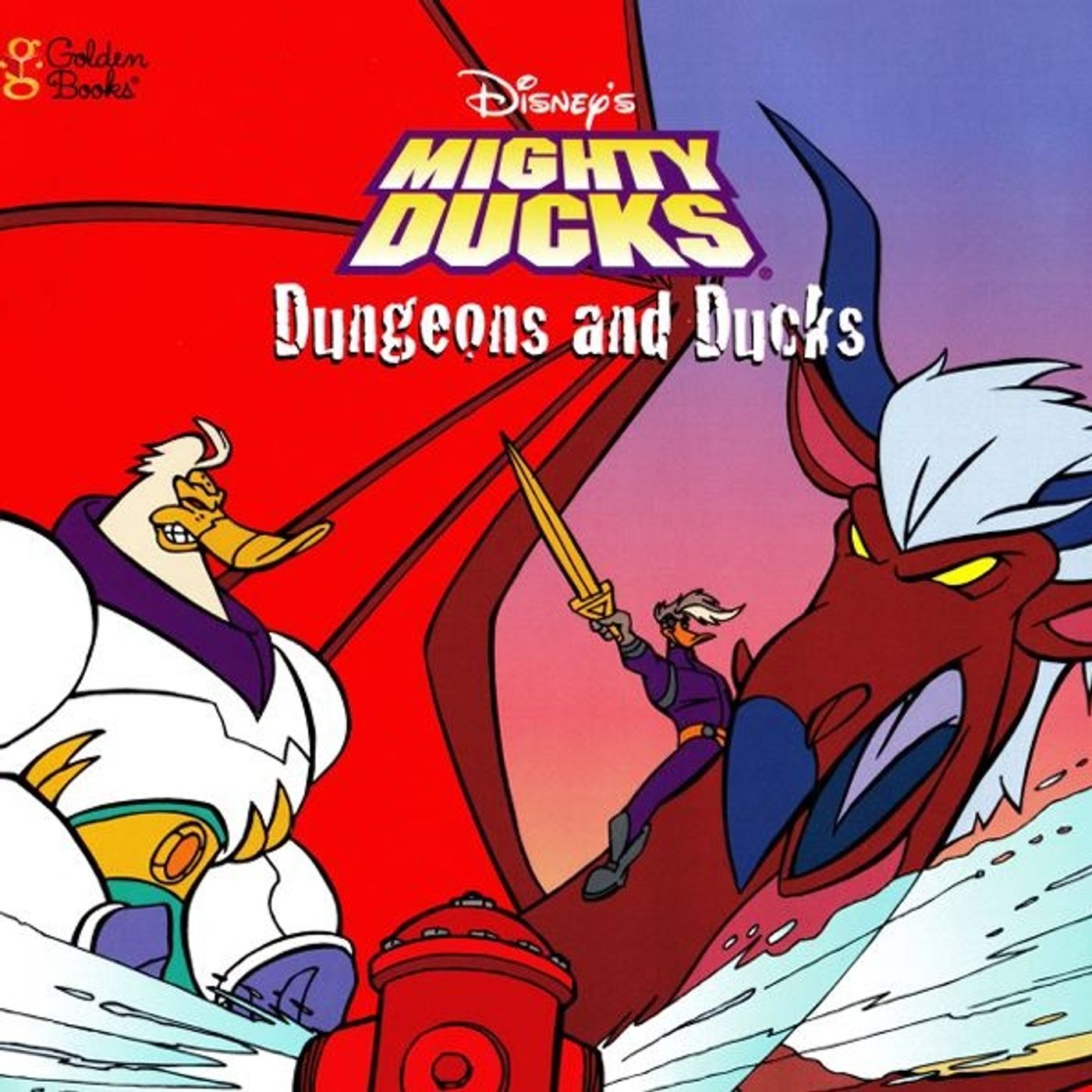
Storytime for Kids — Mighty Ducks: Dungeons and Ducks. Machine-transcribed; use the interactive transcript above to jump the player to any line.
At Verbo, we understand that even the best of plans sometimes need a little support, so we plan for the plot twists. Every booking is automatically backed by our Verbo care guarantee, giving you confidence from the very start. Whenever you need help, it's ready. Before you stay, through the moments in between, and after your trip. Because a great trip starts with peace of mind, and maybe a good playlist, but we've got the peace of mind part covered. Toyota's easy choice sales event is on. Whether you're looking for the performance of a camera, the versatility of a RAV4, the efficiency of a Corolla, or all electric driving in the BZ. There's a Toyota that's just right for you. And with great deals across the lineup, now's the time to find yours. But hurry, these deals won't last long. Toyota's easy choice sales event end soon. We make it easy. Toyota, let's go places. Meet the Red Bull Dragonberry Emergizer. It's one of the many new drinks out now.
Who knew ice cold drinks could be so fire? Try them all only at McDonald's. Welcome to this explainer. Today, we're diving into what is arguably one of the most delightfully absurd genre mashups in all of 90's animation history. If you're a fan of animated storytelling, you already know the 90's were an absolute golden era for taking huge wild creative swings. But we're specifically looking at how one show took its core premise and literally flipped it on its head by chucking its characters into a totally foreign universe. So grab your character sheets and lace up those skates because we are breaking down a classic thematic trope. To kick off this campaign, we've got to ask ourselves a pretty fundamental question. What happens when sci-fi hockey players enter a fantasy dungeon? Honestly, it sounds like a punchline, right? But it's actually a brilliant storytelling device. Think about it. How can two vastly different worlds, the high-tech, fast-paced arena of futuristic sports
and the slow, methodical, magic-driven world of high fantasy, successfully collide? Well, the answer is that this collision isn't just for a cheap laugh. It actively strips away the characters' usual tools and comforts to reveal some much deeper character truths. This brings us to the tabletop crossover episode, a storytelling device where characters from an established universe are forced to navigate the rules, tropes, and mechanics of a role-playing game. This definition gives us the exact analytical lens we need to understand how the writers built this crazy adventure. It's a trope that forces characters to navigate rigid, often unforgiving RPG mechanics. It is a literal game changer. They aren't just visiting a new location, they're bound by an entirely new physics engine, so to speak. Understanding this is absolutely crucial to unlocking the episode's whole narrative structure. Here is our campaign map for today. We're going to cover, one, a wild genre mashup, two, adapting hockey to high fantasy, three, the team is RPG classes, four, rules of the game master,
and five, a lasting pop culture legacy. Let's jump into section one, a wild genre mashup. The real brilliance here lies in how seamlessly it blends 90s action sports with traditional high fantasy tropes. Why does that matter to us? Because it forces the characters to completely abandon their familiar universe rules. Their tech doesn't work, their arenas are gone. This creates immediate, super engaging tension through that genre clashing. When sci-fi rules just suddenly stop working and magic takes over, we, the audience, are just as disoriented as the characters. It instantly hooks our attention and dramatically raises the stakes. Moving on to section two, adapting hockey to high fantasy. Talk about a brilliant juxtaposition. On one side, in their comfort zone, you've got sci-fi sports mechanics, hockey pucks, high tech skates, blasters, and intricate passing plays, but then bam! Suddenly, they're up against high fantasy mechanics like broad swords, magic spells, hidden dungeon traps and close quarters melee combat.
This stark contrast perfectly highlights the massive learning curve the team faces. I mean, how do you use a passing play to defeat a wizard? That is exactly the puzzle the narrative has to solve. And the solution? Sports strategy becomes dungeon survival. The team doesn't suddenly learn how to cast fireballs or swing enchanted broad swords. That would completely betray who they are. Instead, they survive by translating what they already know. They apply ice hockey mechanics, defensive formations and high speed coordination to outmaneuver these fantasy threats. A coordinated power play maneuver literally becomes an offensive strike against the dungeon monster. It is incredibly satisfying to watch because it validates their original skills in a completely wild new context. That brings us to section three, the team as RPG classes. When you break it down like a character sheep, it's actually amazing how neatly this maps out. The captain, acting as the strategic and moral leader, naturally fits the paladin class. The enforcer, the heavy hitter on the ice, is essentially just a barbarian in disguise. And the agile skater, who relies on speed
and stealth the bypass defenders, is your classic rogue. It turns out a well-balanced sports team is built on the exact same foundation as a well-balanced adventuring party. Everyone has a highly specialized role to play. But despite those highly specialized individual classes, there is only one number that truly matters. One, they share exactly one unified team goal. Whether they're trying to score a goal in a championship game or take down a dragon in a dark cave, they absolutely cannot succeed unless they work as a singular unit. This brilliantly proves the team sports and adventuring parties rely on the exact same cooperative logic to get the win. All right, let's look at section four. Rules of the Game Master. The villain forces the ducks into a very strict three-step procedural format. Enter the realm, survive, turn-based dungeon challenges, and face the final boss fight. This structure perfectly mimics the step-by-step turn-based pacing of an actual tabletop campaign. The heroes are literally trapped inside a game, entirely subject to the whims and the structured obstacles
designed by the Game Master. What you should really take away from this is that playing by the Game Master's rules will only lead to defeat, because the game is totally rigged against them. Victory requires our heroes to actively subvert the Game Master's expectations. They have to outsmart the rigid, predictable rules of high fantasy by bringing in the chaotic, fast-paced, unpredictable logic of a sci-fi hockey game. They literally break the fantasy system by introducing a variable the Game Master could never, ever have accounted for. Finally, we arrive at section five, a lasting pop culture legacy. I think this quote really hits the nail on the head. Sometimes the greatest victories require playing a completely different game. This sentiment perfectly captures the self-aware charm of the episode. It highlights a core storytelling truth. Forcing characters out of their normal genre doesn't weaken them. It reveals their true strengths and adaptability. It proves that a good character can thrive anywhere,
as long as they stay true to who they are. To wrap up this explainer, I want you to think about the ongoing cultural legacy of this kind of crossover. Have you noticed how your favorite modern shows still use tabletop tropes to test their characters in completely new ways? From live-action sitcoms to modern animated epics, The Dungeons & Dragons episode has become a staple, almost a right of passage for TV shows to stretch their creative muscles. So the next time a show traps its heroes in a game, ask yourself, are they just rolling dice, or are they revealing who they truly are? Thanks so much for joining me on this campaign.
More episodes


