Get every episode summarized
Each time Code Switch publishes, we email you a written briefing from the transcript — the topics, who appeared, and any specific claims, with the ad reads skipped.
Email me new episodesFree for 3 shows. No card needed.
About this episode
Code Switch is made possible by:
“This message comes from Charles Schwab with their original podcast, Choisology. Choisology is a show about the psychology and economics behind people's decisions. I'm a dance educator in the Philadelphia Public School System.”From the transcript
Support public media with NPR+ and enjoy perks for over 25 podcasts like this one. This show’s perks include sponsor-free listening. Learn more at plus.npr.org.
See pcm.adswizz.com for information about our collection and use of personal data for sponsorship and to manage your podcast sponsorship preferences.
NPR Privacy Policy
Get every episode summarized
Each time Code Switch publishes, we email you a written briefing from the transcript — the topics, who appeared, and any specific claims, with the ad reads skipped.
Email me new episodesFree for 3 shows. No card needed.
Hosts & guests

Transcript ready
769 searchable segments. Every word is indexed and playable.
Full transcript
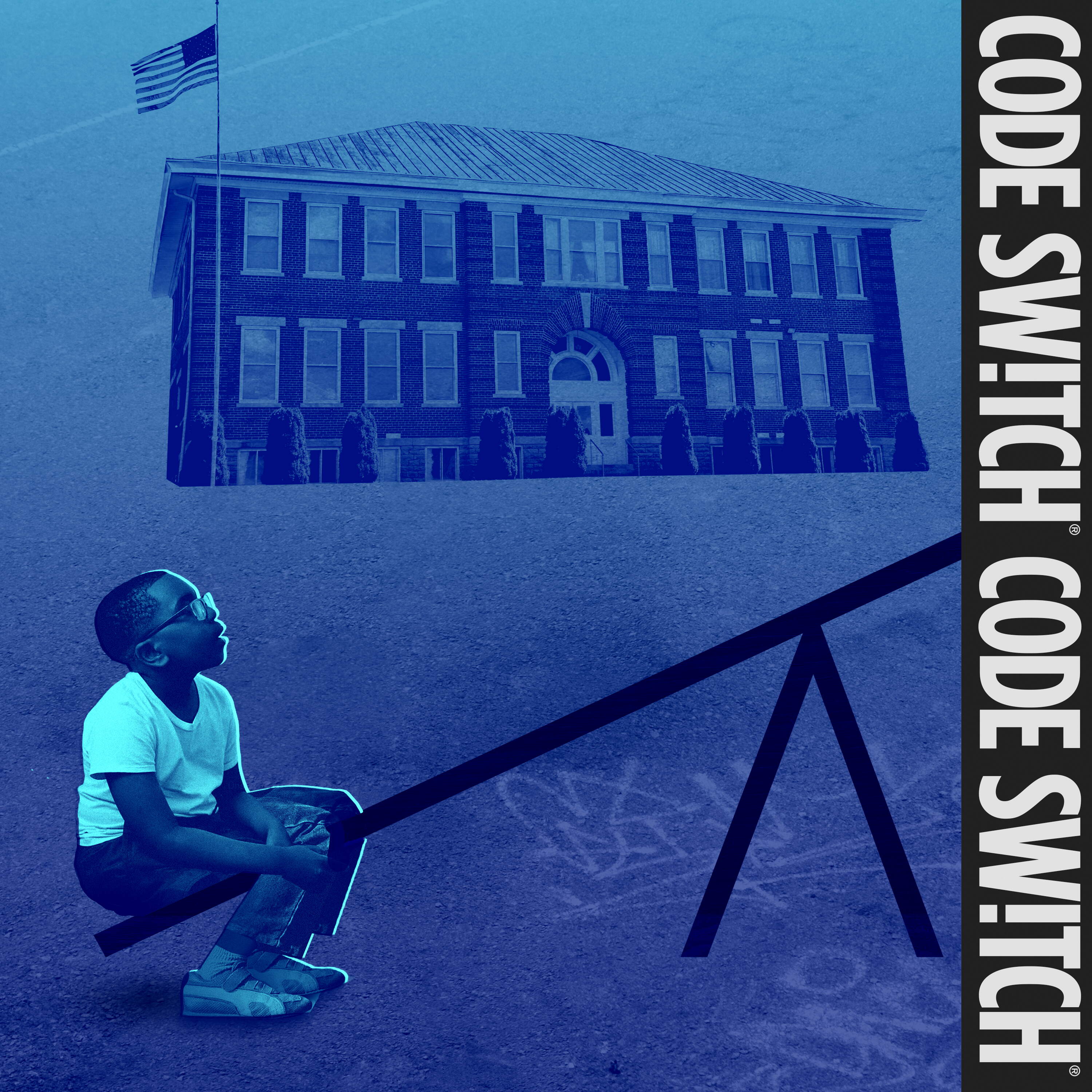
Code Switch — Let’s stop pretending we desegregated schools. Machine-transcribed; use the interactive transcript above to jump the player to any line.
This message comes from Charles Schwab with their original podcast, Choisology. Choisology is a show about the psychology and economics behind people's decisions. Download the latest episode and subscribe at Schwab.com slash podcast. And what it is you do. Don't be weird. My name is Stephanie Dendi. I am teaching artists. I'm a dance educator in the Philadelphia Public School System. I'm also the choreographer for the Philadelphia University of New Zealand. And I teach at several studio, so-called studio, so-called W. And you are my twin sister. Yeah. Relive it to the conversation. If you just got to sit out for it.
Stephanie and I grew up in the same house in Philly. Obviously, we went to the same public schools. The con were a lot of kids up here. And we were some of those poor kids back in the day. We both turned out okay, I mean I'm biased, I mean, but of course I see that. But today, our own kids are growing up with more resources than we had. And we are making very different choices for the kinds of educations we want for them. Steph's daughter, my niece, is 12 years old, which is wild for me to think about. But my sister decided really early on that she was going to send her daughter to private school. My son is about to turn five. And my wife and I decided to send him to the Title I school right down the street. Title I, if you don't know means, a large number of the school students live below the poverty line. These days, that's most public schools in the United States.
My sister teaches in one of those Title I schools the same small selective arts high school that she graduated from and that she loves. And she said the kids there and the school both need so much, so much so that she could see her daughter getting swallowed up by it if she ever went there. But her daughter, who is a dancer, wants to go to that school. I do get like the side eye when you know, people find out that she wants to come to my school and I'm like, oh absolutely not. So my sister and I talk about family stuff all the time, but somehow I just never asked her why she sent her daughter to private school because we're public school kids, right? I didn't really know that black people really go to private schools and sell them with the house. That's all you know, like we didn't really know a lot of kids there when she's in private schools. Stephanie knew her daughter well enough to know that she probably wasn't going to do well in big classes.
This is why I looked at private schools because they have smaller classrooms. Now there are some neighborhood schools that are smaller, that are good, but of course they're good because they're in certain neighborhoods. They were just to buy. Steph, as it happens, was zoned out of those schools nearby with the best reputations. Schools that just happen to be much wider than the rest of the city's public school system. So I just sent her daughter to the local traditional public elementary and middle school we went to growing up because they got closed down because of low attendance. And so she felt like she didn't really have a public option. So she chose private school and obviously she was going to figure out the money part of it, but she decided to look at some of the very expensive schools and the old money suburbs right on the edge of the city. And she knew after she went to those schools that those would not be a good fit. So she went to pre-paid class and it was like 12, 15 kids, one Asian girl, everyone else was white and I was like,
right. Absolutely not. So you'd have been tracking all across the city, which is daughter, to drop her to a classroom, which is the only like child. Right. Step, eventually, settled on a private school that wasn't too far away. It was full of up and middle class families, but it was really small, like 15 kids and he's great. They even offer financial aid and bonus. They actually had some black teachers and some black families. So that's where Steph and her daughter landed. And I wanted to get into this war because like a lot of people over the last week or so, I've been mulling over Nicole Hannah Jones's blockbuster story in the New York Times. So if you haven't seen it, in that piece, she very candidly reckons with the choices she and her husband made 10 years ago to send their daughter, Naja, to the poor, underfunded, mostly black school and their broken neighborhood, right.
Nicole Hannah Jones is a MacArthur Genius Grant winner, a star reporter at the New York Times, a journalism professor at the Howard University, people like her, rich or upper middle class with resources and connections. They don't send their kids to schools like that. And that was kind of the point, right. They hoped that they could bring their influence, their connections to maybe move the needle for the other black kids at that neglected school who didn't have the things that her daughter had. And of course, a lot of people had feelings about that choice, not the least of whom was their daughter. Nicole Hannah Jones and her now 16 year old daughter argued about that choice on an episode of this American life. Everyone's not sure, not sure, kid. That's right. You can't say that everyone doesn't want to be saved. That's what you think, though. You think like other kids don't want better? I'm not saying that I want to better. All the kids in my school want that one and better wanted better.
There's no benefit that came out of you putting me in those schools. There's no benefit at all. Now, Naja is 16, so you know what I mean. Resented her parents. That's like part of the deal, right. That's to be expected. But my sister Stephanie told me she saw that part of it coming. Five minutes into me reading that piece. I was like, this is going to be a disaster. Like, in my mind, I'm like, how didn't she realize that this was not going to work out? So yes, I understand your mission. But what happens when once your child leaves the school? Is the work still being done? Like I kind of understood her. But being on the other side of it knowing what her daughter was experiencing. Saying that they're not getting homework. A child saying that, you know, like the chaos. I would never want to put my child in an invite. But you know, like, I would never do that.
Because what am I doing for my kids? Like, I understand the work. But what am I doing for my child? The cold handed Jones's daughter was asking for a better education at schools that were predominantly white. Which is kind of what my sister chose for my niece. Because I'm thinking I'm making a good decision. Like, yes, she's in this predominantly white school. There's enough black people for me and for her, what I'm thinking. But I also want to make sure that, you know, she's getting what she needs and doesn't feel any type of way. Because her friends go to these, you know, black schools and they're doing this. Talking about this and talking about that. And I'm like, am I doing the right thing? Like, almost every black parent I know has asked themselves some version of that question about their child's education at some point. The cold handed Jones laid out her choice to be scrutinized in the pages of the New York Times. But what our piece underlined to me is that there are no good choices.
Like, my sister went private. My child is in a public school. But if you maneuver to send your child to a so-called good school, you will have to help steal them to navigate the skepticism. If not outright hostility, they are likely to face there. Send your child to a neighborhood school and you do that knowing that their school was going to deal with all the downstream effects of neglect and divestment from black neighborhoods. There's just no conveyor belt of formal education that you can just plop your black child onto. And assume they're going to turn out okay on other end. But we are 70 years out from Brown V Board of Education. And black parents are still trying to navigate the failures of our public school system. Because, and let's not get it twisted, we never really desegregated public schools, which is what Brown was supposed to do. And so we're left with this situation when we're all coming up with these individual workarounds for our kids.
And we won't even know everything that came with that choice until much later when our kids are good and grown. I mean, at this 50 years ago, and I'm still mad at my mother about that year, like why would you send me to the ghetto school? Nolee where Rooks knows all about this. She's a professor at Brown who wrote the book Integrated, How American Schools Failed Black Children. But before Nolee where studied the long tail of failed desegregation, she lived it. Stay tuned for the following announcements and messages from our sponsors. This message comes from Midi Health. Most women never get real answers about their hormonal health. Midi is changing that with virtual care covered by most major insurances. Understand your hormones. Visit joinmiddi.com to book your first visit today. This message comes from Synchrony Bank, who can help you get your do-nothing savings off the couch and working hard. No more sleeping late and needing all the chips. Time to start earning your keep in a big way,
with their high yield savings account that has a great rate, easy access to your funds, and no monthly fees or minimum balance requirements. Put your lazy savings to work. Go to Synchrony.com slash NPR. Remember FDIC. This message comes from LinkedIn ads. Ever invest in something that seemed incredible at first, but didn't live up to the hype? For marketers, that's impressions. When ads don't create revenue, that's a tough conversation with the CFO. Instead, invest in results your CFO will love. LinkedIn ads generate the highest row ads of all major ad networks, so advertise on LinkedIn. Spend $250 and get a $250 credit. Just go to LinkedIn.com slash NPR. Terms and Conditions Apply. My mother sent me to a high poverty, majority black school, and sixth grade in San Francisco. They got divorced when I was five, and the custody arrangement was, I would spend one year in Florida with my father and that set of grandparents,
and the next year in San Francisco with my mother. So you were toggling back and forth from the west to the south of the oh wow. I learned comprehensively all kinds of ways to be a black American, because I would tell you folks will say like black folks in the diaspora war. I'm like black people in the US are not all the same. Absolutely, a thousand percent, a thousand percent. I did not grow up in a static kind of understanding of who black people were. The year that I was in the fifth grade in Florida, I integrated a predominantly white school. Florida took to the 1970s to actually let black children in their schools after Brownfield board. Florida dragged their feet until into the 70s, so 1972. And that was you? On a bus with black kids on the bus. Yes. The clan was a big mover in Florida for why there wasn't integrated, like unabashedly. Like they were out there saying, you know, good clan people, you can't let this happen. By the time by 1972, the clan had stood down.
So when I, my year in the fifth grade, integrating the predominantly white school, public school, was completely uneven. I was the only black child, but there were no pickets, police and national guard were not necessary. I had that long bus ride that everybody I know, black and higher education, who's from the US, has this experience. Like we all got bus to white school, which is what many of us were engifted in talented programs. The path looked the same. But yes, I was the black child. I had my fifth grade picture of me with the Afro and the bunch of white kids. Sixth grade back in San Francisco, we lived on Paturral Hill, which at the time was the hood. It is not now. We lived across the street from public housing. They've turned it into fancy condos now at the time, which is real regular. That's very regular. And the neighborhood school, because my mother had gone to school in San Francisco. And she just didn't want a bunch of drama about where to send me to school. And she actually thought, it's a neighborhood school. I went to public school, was the big deal.
And she had no way understood the disruptions and declines, much of which had to do with the way that out in California they resisted integration. A lot of the methods that in San Francisco, they came up with for how we don't actually want to redraw district minds, to do the things we know work. We just want to figure out how to have them be somewhere. So it seems like you had in your middle school years, you were having these two parallel experiences of resistance to integration of schools. Yes. I mean, this 50 years ago, and I'm still mad at my mother about that year. Like, why would you still get a goal? Oh, man. Like, here I was a big reader. I had no one had ever, I had never had a teacher tell me I was dumb, ever. That year taught me how to brawl. This is one thing I can tell you. And that is nothing I'm proud of. That was just straight survival.
It's the kind of dysfunction I was in. We didn't have teachers, constant substitutes, constant people letting you know they don't think you're good enough. They're all white. We're all black. We didn't have honors, anything. I can tell you we were angry. You knew you weren't getting what you were supposed to have. Did you and your mom ever talk about this? My mother, my mother basically believes you are a college professor who is taught at three Ivy League institutions. And none of that was that bad. What do you say to that pushback? That is true, but I'm telling you about my inner world reality. I'm telling you who I had to become. I'm telling you the purse, the persona that I had to create that was in no one's best interest, that was like leading down a path. I'm telling you what this did to me as a human being, not my intellect, but intellect. You know, they took me out, put me somewhere else, got me some extra academic help. I was only a year. Right. But I was behind me.
What I lost in that year wasn't nothing. We just had the ability to make me catch up. But she really didn't know the school was that bad. And she did not understand the dysfunction and the aftermath of that. This is the right at the beginning when policing and juvenile justice, where dealing with community problems in 1970s, where you start to criminalize schools in education. So you're starting to have police in the schools. You're starting to have these task force that are keeping lists of children who are doing things. The schools are reporting out in fractions to the criminal justice system. She didn't know that it was just being built. But it was being built. And at the moment that I'm in a school that is targeted by all of these kinds of policies. But I mean, obviously, I'm fine. Obviously, I'm fine. Just a little cranky about it. I mean, it's fascinating.
You said that because like you said, at that time, a lot of the things that we're talking about in the colds piece, right, that you've written about, those things are just becoming entrenched, right? This sort of like post-brown failed experiment with equitable allocation of money to schools, right? I mean, you would have been learning that in real time that that wasn't working out. Now we are 70 years hence, basically, and dealing with this sort of entrenched inability to reckon with that. I mean, think about this. You go from Brown v. Board, the nation has said, the Supreme Court has said, this is illegal. This is unconstitutional. It just doesn't get more illegal than that. So obviously, we're going to prevail. And the story of what happens between 1954 and 1974, like just to make it a nice 20 years,
is a ferocious assault on the access of black people to public education. They take the whole thing off the table. It's not even, you can't even go and integrate these schools that you've seen. A lot of the schools that we know were integrated, they had to call out, you know, military, and they had to, a lot of those schools, the year after those black children enter over the next couple of years, those are black schools now, because the white people just left, and went somewhere else, and then commenced from the suburbs, or wherever else they meant to fighting access for black children. So you go from that, like we're just sort of like, yes, now we're integrated, but everywhere you look, there are pitched battles going on. Where folks are like, yeah, not here. Well, they'll let them do it. And then Daniel Patrick Moynihan, mid 60, says, you know the issue at the level of policy is black people and black families.
It's black families that are dysfunctional. It's cultural dysfunction, yeah, exactly. And we need to address that. So this idea of, we go from integration, like we're marching, everybody marching with King, and we're, you know, yay, they're good Marshall, and we have overcome to the implementation where we're seeing scenes like up in Boston, where people are literally grabbing an American flag and using it to attack people who are standing there, saying the Supreme Court has said that we are now no longer having this unequal education. The response there that you're seeing all over TV is take this flag, I will be true. Parents around school saying, absolutely not scream and hollering all over in ways big and small. They were reminded my grandfather. My grandfather was a teacher in the segregated South.
That was my grandmother. He was a principal. He was a president in the BCP in Clearwater, Florida, about a decade before Brown v. Board. And he fought for integration, you know, that feeling of inequality thing. They were kind of like unlike in Kansas, in Topeka, Kansas, where Brown v. Board was the name, say, Topeka had separate in equal schools. The black schools were funded exactly the same to the dollar. The way the way people were there were kind of like, we gonna make them equal, leave us alone. There will be no books that are different. The buildings were the same. Like all of it was completely equal. But in the school that my grandparents taught at, that wasn't the case. What you were getting was just the leftovers, the scrape by the least of. And so he fought for it for those reasons, but he told my mother once, he said, you know, my mother told me, said, you know, daughter, I fear they're not gonna love our children over there.
I'm fighting for this. I think it might be right, but I fear they're not gonna love our children. So even in the midst of his battle for an integrated education, how you will feel and how important it is, he was not at the time kind of like they should suck it up, let's sacrifice the kids. I've seen people online kind of going, that's what we need. But this is happening outside of a movement. This is happening outside of an organized resistance. So the idea that you just take children and put them in these situations and then things got better. It never happened. It just never happened. It has to do with the way we tell history though, that some I can see online believe. They're like, yes, with, I mean, Ruby Bridges was the exact same situation as was Naila in PS307.
Yeah, Nicole Hannah Jones is daughter. Right, one is a part of a legal case. One is part of a political discourse that at the highest levels of government is being debated and that there are black churches, black community members, black organizations. You never see them. You only ever see Ruby Bridges and the federal marshals. This has become the kind of iconic thing. And what we know about Ruby Bridges is why people in New Orleans, instead of even letting the girl come in the school, she sat in a classroom for a year by herself with her teacher. It was just her and her teacher, because they would not even allow anyone to be with her. But every single day that child came to school and went home from school, her mother was walking with her. You will work hard to find an image of that. Like they've managed to only shoot her when she's alone with these officers around her. And there's something about that that I think ingrained in us
that she was on behalf of the black community by herself, striking a blow for black freedom. She was part of an entire political strategy that I think at this point were being asked, but did it make sense? Was that the strategy that we should have gone with? I mean, it's funny listening to you talk about what your grandfather said about, like, I don't think they're gonna love our babies over there. And just contrasting that with the response and the coals piece, which is like she sending her child to a black school in her neighborhood or a coast to her neighborhood. So much of the responses, she has a responsibility to not send her child to that school and that she should send her child somewhere else. And I think implicitly that is that it may not love our babies over there, but dot, dot, dot, right? But like she will get a better education over there
and that one of the reactions that I saw a lot that was fascinating to me was how many black folks were saying things like, I want equal schools, I want better schools too, but I'm not trying to use my child as some sort of social experiment to make some kind of political point. And what jumped out to me about that is that that is almost verbatim, the language that white liberal parents have used to resist sending their kids to urban poor schools in the cities they live in. I mean, you hear like that specific framing all the time. And I wonder, do you feel like that logic is substantially different when it is coming out of a black parents mouth than when it was coming out of a black... You know, what this made me think about because I was a founding board member of an organization called Integrated Schools. It was at the time it was really let's get white parents to get their kids in high poverty schools with a lot of the rationale that I've heard Nicole talk about and that she writes about. If you bring people with contacts, with money,
connections who are going to advocate in different ways who have the social capital, as well as maybe the free time to do blah, blah, blah. You can move the needle on these schools. But when they left, things always went back to a way that they were. I've not heard. This doesn't mean it does not exist. I've not heard of an effort like this, actually materially benefit the school long term. What was interesting about this to me is, I do wonder if it is the same thing. I don't know the answer here, but if it's the same thing, given the structure of anti-blackness that kind of pervades the universe, to have racial integration. Or is there something different about having wealthy black people in our school? I don't know. I think what happens today around schooling and education
is parents, black parents in particular, really, you have to make choices about what it is you're most interested in. I think the questions are no longer just about your test score. I think that they're about what kind of child you want to have. But I think a bare minimum for most of us is, you need teachers who are capable of imparting knowledge to your child sufficiently well, that they know the basics of what people think they're supposed to know at their grade level. What you're choosing between is having your child grow up around people in a majority environment, where teachers and principals and classmates and the kids above you and below you are majority, something that you consider your community. And the belief, a longstanding belief, a pre-desegregation era belief,
that schools are in point there to actually make sure that your child has a sense of self-worth, with MLK called somebody-ness out in the world, and that because so often you understand that the world may not be about the business of your child, your black child's emotional, spiritual, and physical health and well-being before two plus two equals four. The other one, this split, unfortunately, is that you're in a predominantly white school. You'll be a only lonely. My son was a only lonely for most of his life. He's one of the few black men, certainly, in the honors and AP classes, few black students, in Princeton, New Jersey, where he grew up. And he had to navigate a world where people didn't look like him, where he had one teacher in private school,
at elementary school, he had a black teacher. But by the time he got to middle school through high school, he had a black teacher. He was, again, he was in a higher performing parts of the private school. There were no other black kids. So yeah, it is a constant thing about how do you make sure your kids are whole. How do you make sure that they are fundamentally whole safe and happy, primarily? Absolutely. But I mean, it's like, community is not this little abstract thing. Right? It's the thing we do. It is like, and it's held up by institutions. If our kids aren't going to school together, right? If they're not walking the same streets, and the stuff we're talking about, this identity stuff, is just abstract and it's not real. Community is the crossing guard, and the teacher, and the school down the street, and the mosque, and the church, and all those things. And if we just say, I'm opting out of the school down the street, because if we just can see that that's not a thing that we...
Because they will destroy my child. Like people who are there believe, these are my options. And I want to validate that. And also... It's destructive. We got to hold the law. Right? Like it's like, if we can see that, we will find ourselves having to rebuild all those things, right? Yes, but this is what's happening, no? Like we're actually, again, a clear-eyed look at what public education is for... If nothing else, this is what I think Nicole's... I think Nicole's essay did a lot of things, so not just if nothing else. But one of the things that it does is make clear that our vision of public schools and public education and the reality of their impact are not always the same. Like that's the... Now what we do about that is I think the call for the peace.
Like what now what's supposed to happen? But your idea... Yes, that's why my mother sent me to the middle school at Paturral Hill. This was a community that we lived in. And she wanted me to understand myself as a part of a black community. And this is the one we lived... And had since I was born. Like it was not like we just moved there at this time. And if you're not going to be a part of the fabric of the community, then it's not what is it? What is that? Like just in place, that's a hotel. That's part of why she sent me there. But by the time I got to putting my kid in a school, that terrain was different still. And we didn't understand it. And the fact that we... We were fantasizing, we're trying to hold on to that idea of community. But you said that middle school is this hinge point, right? It's the time in education, a child's education,
where things can go either way, right? We started off at Public Schools in Princeton, so elementary school was fine. I mean, the first grade, he was like writing little paper, little essays and stuff. They were having... Like it was all... We was fairy land. Fairy land. And the reason I started writing about education, I was writing about black women and popular culture. Like I was a scholar of black women before my son went to middle school. And I realized I did not understand the terrain. So what happens in middle school? And we didn't know we needed to be on these people before the boy got there. Here are the things we didn't understand. They put him in the remedial class. And he had always scored hide, always been this little A student, always been like, I like that. I go to parent teacher conference. And I was saying to the teacher, you know, to my coming home, he had my son's name, Jolani. He seems to be bored. Like he's talking about how you do sheets all day. And there's candy, though, and your movies.
And you know, he's there with some of his friends. He was thrilled because he was like, I'm in with all the black kids. I've never had this many black kids before. And then talking to the teacher, she was like, oh yeah, he's in the class that would have made it impossible for him. Like because the tracking started then in sixth grade, he would not have been able to take calculus and physics, the math and science courses that are required for the more competitive schools. We didn't know at, you know, 12, if he was going to a competitive school, if he was going to be a janitor, like we had no real idea what he is, where his life was going to, going to hit. But we wanted him to have options. And so we were like, well, you're taking options off the table here. It turned into a big fight. Then we were in the grocery store. And a teacher he had had in elementary, who ended up moving up to the middle school, said, you know, I couldn't lose my job for telling you this. But I want you to know you have got to get Jolani out of that school
or you will lose him. And we were like, what are you talking about? Crazy lady in that grocery aisle. Like, what do you mean, lose him? You don't know, I hear how they talk about him. And then we found there had been some incident where he was accused of plagiarizing a paper, but his college professor parents were accused of having written the paper for the 12 year old. Wow. And the teacher made him in class write another essay. And the second essay he wrote, while the teacher was looking at him, was better than the first one. And so she had to pass him. We never heard this now. Nobody told us our child is being accused of plagiarism, that there are people, like no one told us any of this. But she said, but the teacher and other teachers now feel like he needs to be brought down a notch. Oh wow. Like he's arrogant. That you all think too highly of. She was like the way that they talk about him.
And I hear, and I've known, he should know him since he was in kindergarten. She was like, I don't know how he survives. That kind of animosity. You have to get him out of here. So we literally moved to having an earth. We didn't have a lot of money and figured out how to get him in a private school because somebody who knew him and seemed to care about him was telling us that there was no other option. We were unprepared for the ferocity of the fight we were required to bring to make sure that he was academically and emotionally whole when he graduated from high school. But that fight that we waged meant that he went to a high performer, he went to Amherst College and actually could handle it. And came out with, I mean he came out of high school even though they weren't in his AP honors classes, all of his friend, really. He had a black friend group. He managed with, they were like 10 black kids at that school, eight of them were at our house regularly.
And he told us later he would basically share with his black friend a lot of what we were constantly telling him that he was acting like he wasn't listening to. But he was sharing it with others like you do this for your future. And so they all would tell us later part of how we were able to understand some of those racial dynamics that were neat and harsh were as much as we talked to him about what it takes when you when your parents put you in a place where you don't think that people they're going to love you. I wonder what I thought, so I know that in your, the calculus that you use, when you're thinking about like you said that literacy is the thing that you were like zero in on as like what is this is the thing that will tell you if a school is good or not like this like how the school is performing. And actually had never looked at, I looked at a lot of stuff from my, my child's school, my child's school right in her house in the neighborhood.
Neither me and my wife are from DC originally so we were like you won't be from DC, you're going to have to... DC is some DC's schools, no? It does. It does. And you know when we had our, when we had our son, the school down the street had just went to this giant renovation like capital investment project. So it was like brand new, I mean the school has been around for a long time, but brand new school, it's brought to a new library. So do you mind if I just like I haven't looked at the numbers for my son's school but I actually want to look them at, look, look them up with the right here as I'm talking to you. I'm looking at the US news and I want to say the name of the school. Eighth the one student teacher ratio, the math proficiency is 12%. The reading proficiency is 17%. What I would say is just as a way for context is that the school is according to this is, it's about 90% black and Latino and 52% of the students, more than half the students don't speak English or outside of the house. So obviously that's putting some downward pressure on those literacy numbers. But when I, when I sell those numbers to you, like what, what is your like honest first
reaction to that? One of my, I'm on a soapbox about this. I will try to stay calm here. Okay. But the, the crisis in black education for me is how unaware most black people are of how little we're able to read. There was one time I was trying to make this argument. I don't, I don't think I quite got there, but that literacy levels pre-brown be, be bored, we're higher than they are today. I couldn't quite get there definitively with the numbers that best data we have for enslaved black people during the anti-bellum period. All in more than 17% of black people were literate. That, wow. I do know that. All in. Yes. So reading even more than math, I mean math we talk about, you know, for certain kinds of careers, democracy, I mean the assault on reading has been key for keeping black children
out of school since before brown V-Board, the assault on teaching. As a nation, a reading numbers for just the US are horrendous. Yeah. But when you start looking at black kids in schools, the black kids go to, how is it not a crisis? How is the fact your child goes to a school where they're only 17% in the proficiency? It must have been very young in the pre-kindergarten classes. You could teach him how to read at that level at home. You could teach him cat. But this is what happens overall. It seems to me in educational spaces for black kids early on, we don't get the foundation no knowledge. You can build on, you can do different things if you know the basics. I don't believe that test scores tell you the whole story. Much like polling. I think that test scores get it right sometimes. They don't get it right other time.
But how far we are from any kind of thing that those pre-brown V-Board of education schools would have considered sufficient for the education of black children, how far we are from that. I know what my grandparents expected of black children. I know it. What we expect and what we are giving and what that means for democracy, for citizenship, for those feelings of self-worth. Your somebody is. I'm not sure that we have done, I know we have not done right. And that's what I want to ask you. My sister made a choice for her daughter. It's different than the choice I make for my son. Which is different than the choice you made for your son. And it feels like all of us are just trying to cobble together something. You wrote that integration was a cure of a killing kind. And we obviously can't have individuated solutions to these big systemic problems. And there's been massive resistance of pun intended. I actually believe the thing we have not tried. I can't believe I'm going to say this, but I do believe it is actually separate but equal in this nation.
There have been precious few districts that have taken separate but equal seriously. Like it actually been like, we're going to give you the money that you need to do this. Same dollars. And you would also have to you still have all the neighborhood effects right. You still have all the effects of you know, entrenched property outside of the schools. But the models that we have of success, the models that I know of success at scale for teaching black kids. We have things like the Panther schools, which again, 1970s Oakland is not, you know, 2026, whatever. But their whole model was take the kids from the projects. Get them where they need to go. We want, I mean, they there were no class diversity amongst the children who were in that school. And and graduates write dissertation singing from the rooftops, how they were able to thrive in that all black environment. That was unapologetically black in that kind of way.
And and radical and teaching them history like all that. So for these things that have happened in the past, where you're educating poor black kids and middle class kids and making them say and that the kids get on on the other side and say, that is the reason I am saying. The models that that I know in the in the school day, it would be could be different every day depending on who needed what they often had older kids teach the younger one. It wasn't always teacher centric. They were teaching community by your responsibility to others that once if a student master something you got your time stable on lock, then it is your responsibility to teach these three students. You teach them how to get that as a way of making the teacher be able to be freed up some kind of and do some other. And also like it makes the response it makes the learning a collective responsibility, right? Like we're all. It's a collective. You're learning next to you sit next to me in class you learning your long division or algebra, whatever that's.
It's not the one who's not almost almost right where you're like we're all in this together. But I also think for too long we have not looked at what has worked. We've been looking at what works at scale. We have not looked at just what works what moves the needle and has kids feel good about going to school and actually gaining knowledge at the end. There are tons of my, again granddaughter of black southern school of teachers, tons of models for doing it. They're just not a part of it schools. They're not a part of it reform circles. They're not part of policy circles. The people who think about what education is who it's for how it should be structured. At least when I'm in rooms with them, which is not like every day, but when I'm in rooms with them is clear. They know nothing about what black educators can tell you work in these situations.
Zero. They actually believe that pre-brown V board, there were no black teachers. There were no black schools. There were no accomplished black people. For the people who I'm around when they want to talk about education, it's so wrong-headed, it's no wonder that they've gotten so much wrong. Nileer Rooks is a professor of Africana Studies at Brown University and she's the author of Integrated, How American Schools Fill the Black Children. Thank you, Nileer. Thank you. That is our show. You can follow us on Instagram at mpr code switch. That's all one word. This episode you're listening to was produced by Christine Nacala. It was edited by Courtney Stein. And we've been remiss if we did not shout out the rest of the code switch massive, right? That Xavier Lopez, Jess Cung, Kayla Ledmore, Leah Denella, Daya Mortada, B.A. Parker, Barton Gurdwood, Yelandex and Gwynne, Jasmine Romero, and Maya Dangerfield. As for me, I'm Gene Debbie. Be easy-all.
Stay tuned for the following announcements and messages from our sponsors. Support for NPR and the following message come from Random House Children's Books. From Best Selling Author, Erin A. Craig, a new novel tells the story of Andrew Lloyd Webber's Phantom of the Opera through the eyes of Christine Dye. Our strange duet, Everywhere Books and Audio Books are sold. This message comes from DataIQ Agent Management. Most enterprises can't count their AI agents, let alone manage them. DataIQ Agent Management lets you do both from a single view. Visit dataIQ.com to learn more.
More episodes
More from Code Switch

The Lindsay Clancy case and the women we make into monsters
Code Switch

Chris Brown won't get cancelled. This is why.
Code Switch

Do voters want woke?
Code Switch

Is Cuba Trump's next real estate project?
Code Switch