Get every episode summarized
Each time The SME Stream publishes, we email you a written briefing from the transcript — the topics, who appeared, and any specific claims, with the ad reads skipped.
Email me new episodesFree for 3 shows. No card needed.
About this episode
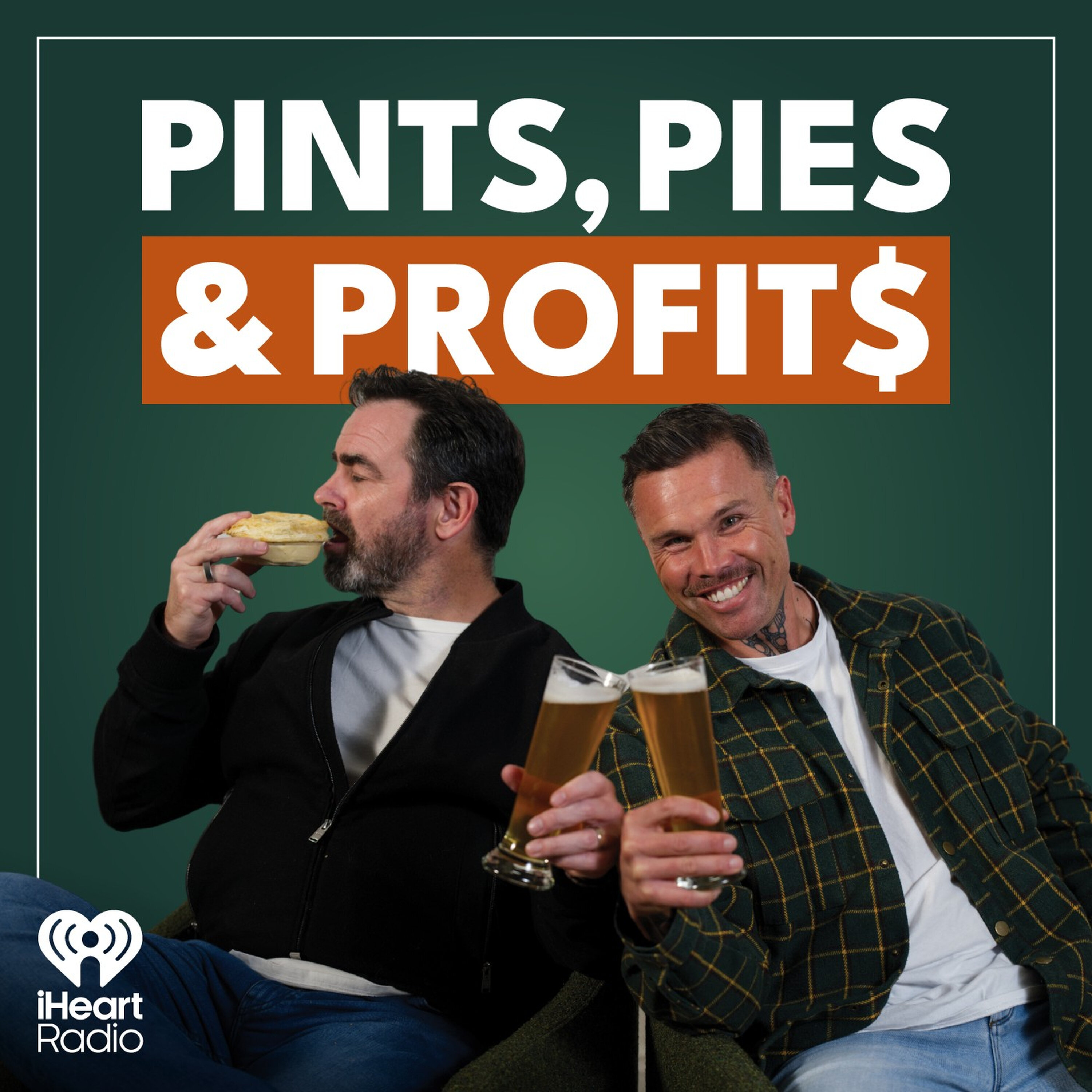
“I just got to remember what the fuck we're doing here now, eh? Well then I'll talk to you at the final, no my hockey mic, the Puna Pahua or the podcast, Nay, Pints, Pies and Prophets.”From the transcript
A practical, framework-heavy episode on how owners actually get better at running their business — and how to know what kind of help you need next.
-You'll learn: the 70-20-10 rule for learning (on-the-job, coached, and formal/theory);
-How to spot your business's natural bias across Product, Customer and Finance;
-The real difference between a mentor and a coach;
-Why looking outside your own industry for advice often pays off more;
-and why "strong opinions, loosely held" beats either stubbornness or indecision.
Beer: Brew Moon The Wolf APA (5.8%) & Garage Project Party and Bullshit Hazy IPA (6.2%)
Pie: Kel's Bakery, Amberley — Pork, Apple Sauce & Cheese
Liked this one? Make sure you catch the next episode - hit subscribe and check us out here:
Want an in-person 6 day business program that gives you a tried and tested playbook to grow? Check out: Business Growth School
Want better content? Check out: Blacklime
The company that uncomplicates business growth. Check out: Point 16
Get to know us! Mike Burke & Scott Douglas
See omnystudio.com/listener for privacy information.
Get every episode summarized
Each time The SME Stream publishes, we email you a written briefing from the transcript — the topics, who appeared, and any specific claims, with the ad reads skipped.
Email me new episodesFree for 3 shows. No card needed.
Hosts & guests
Transcript ready
507 searchable segments. Every word is indexed and playable.
Full transcript
The SME Stream — Learning to be a better business operator. Machine-transcribed; use the interactive transcript above to jump the player to any line.
I just got to remember what the fuck we're doing here now, eh? Well then I'll talk to you at the final, no my hockey mic, the Puna Pahua or the podcast, Nay, Pints, Pies and Prophets. We are your host, Scott and Mike. This is a podcast where we drink a craft beer, we eat nice pies and we talk about business in a pretty chilled out manner. In today's topic, or sorry, fourth today's topic, we have learning how to become a better business operator and learning how to do business better. Jock very, very broad, very, very vague, but we're going to dive into one part of this business. I can't wait for the day. We have every real stuff. Yeah, well, yeah, I'll get there. It's always a learning thing to say our state of process here. All trucks first, we get tired of you. So let's first of all, before we go into our subject of today, let's talk about our beers and pies. I have some friends down in Ambley, 45 minutes at a Christchurch. They came up recently and I thought, hey, look, bring some of
you wears along. So they have brought us a pork belly and apple pie from Kels bakery. Yum yum. The saying goes, if there's lots of truckers at a park outside the bakery, it's probably pretty fucking good. So that's what we have for our pie from Kels bakery and their local brewery, sorry, their local brewery, which is brewer moon. We have a beer from then called the Wolf, which is a American paylale coming in at 5.8%. And just in case we're still talking, while we are doing this podcast and it was finally spicy, partly likely. Well, if you need a second one. Because I listen a lot more and you do all the talking. We have a beer from Garage Project called Party and Bullshit, which is an East Coast hazy IPA coming in at six percent. So we'll drink those beers and eat those pies while we talk about the subject again, which is learning how to become a better business operator, learning how to do business better as well. So for context, lots of people out there are figuring it out as they go. Lots of business owners. Some people don't,
but a lot of people do. And perhaps they're nailing it. Perhaps they're learning from their mistakes. It works sometimes, but it can be a slow process. So if somebody actually wants to speed things up without cutting corners, but they want to get there a little bit quicker, what should they be doing? So let's jump into the basics. Oh, thank you, bro. Here's to ask that everybody listening. But yeah, how do you become better at doing business, bro? Now, I know you mentioned before, there's a bit of a process when you talk about, is it the Vendoy Graham? Yeah, let's go to the next question. Just before we go in, can I warn you, those pies are fucking hot. So make sure you blow on them. Let it sit for a little bit. Well, should we just give it a bit of a sunroof? Because as soon as you said, pork and apple pie, I do have to serve. Oh, look at that. It's steaming. I've opened it up and looks amazing. Get to far, no? Lovely. I'm just going to let that air out a little bit. Yeah, bro. So somebody wants to become a better business operator. I know this is a loaded question,
but take us on a bit of a journey. I think there's truth. Well, there's lots of things we can talk about. I think we'll look at this in two different lines. So one is, I mean, if you want to get better at anything, do it. Well, you know, that's a podcast thing. It's a bit of a twist. It's a bit of a twist. I mean, the conversation I have with my kids all the time is how do you get good at something? You practice. Mm-hmm. You know, and because when my kids were quite young and you would do the whole, who's going to be better at this? Who's going to get to bed faster? You know, turn everything into a competition. Now, of a sudden, some of you know, one of them didn't want to start if they didn't know they were definitely going to win. So changing it to the concept of enjoy the journey, not just the destination. Yep. So it's about the process, not the outcome?
What 100%? And, Doug, I will go into, uh, sort of like the actual things that you can focus, but I think actually hearing the framing of your question, I think it's actually really, really important. The best way to learn, the best way to get good is turn up every day. Uh, I, I will come back to this. So please do write this down. Um, you're not writing. Well, you can't, you know, get a little bit terrible. I do know, you know, I have a funny feeling. I'm going to ask that one of these questions later. But if you want to get good at something on anything, take the 70, 20, 10 approach. So, so what is the 70, 20, 10? How can you apply that in business? But if we take something close, you know, like we, we both live near the water, take surfing, for example, 70, 20, 10, if you're going to learn, so 70% of how you learn should be on the task, right? As far as surfing goes, you should like, if you want to get better at surfing, get in the fucking water. Yep. Grab your surfboard, jump on the waves and just get out there.
20% it's been 20% of your time surfing with better surfers. And surf with better surfers that you can ask them questions or they can give you feedback. It's that sort of on the, on the job coaching, those little hay, you just need to bring your front foot forward a little bit faster. Yeah. Yeah. Yeah. That sort of insitu stuff. And then 10% through the theory, you know, read the book. You know, that's the sit, you know, get on the beach, do you know, have a look, talk to someone, figure some of the techniques out before you get out there. So, 70, 20, 10, 10% of it, learn the theory, 20% of it is on the job coaching and 70% of just fast. Just get in the arena. Yeah, totally. So, when it comes to business, and you want to get, you want to become a greater operator, take that 70, 20, 10 approach, run your business, just start, just do it. Right. But make sure you're spend 20% of your time or try and find enough time to share that or a co-experience that with other people who are more experienced
than you in their specific discipline and learn from that and make those adjustments. And then 10% invest in your theory, invest in your learning capabilities. Really quickly, that 20% when you're surrounding yourself around people that are maybe, I'm going to use the surfing analogy. Yeah. So, I'm a bit of surfers that can give you a bit of the coaching, give you some stuff in situ, where are you going to find those people? And let's just say you're an operator that's running your business and you're not surrounded by lots of other people, you're not an incubator, you're not in something like Brent Auckland, where do you go to find those people? Easily accessible. Yeah. Well, so, I'm going to give you an answer now and then you're going to ask me that, appreciate a little bit later on as well, because you'll know why. I think there's two places that you can get them. So, one is, you probably, like when you look at business, there's the generic, there's the general approach to business. So, a lot of business people are really good at sort of strategy or overarching, that sort of quote unquote entrepreneur.
And so, to find the people there, I'd be looking at business mentors in Zed, you know, going to your Chamber of Commerce, who will have business coaches around. I mean, give Google a good search and get a business coach, because sometimes you're not, like from a, from when you're looking for a coach or a coach more than a mentor, a coach will keep you accountable. And a coach doesn't need to be a specialist wisdom, you know, like or like a deep subject matter expert. That it could just be someone who says, what are you going to do next month? And then then the same person that comes back to your month later, so you do it. So, that accountability link in that chain. Yeah, that's fucking huge, right? And that's your 20%, you know, that's of the 70-2010. That's definitely someone who's not giving you the shit on the beach, they're giving you the shit on the water. Hey, I thought you said you're going to pop your leg quick faster. Yeah, I thought you said you're going to lean on your back foot, but more. So, you know, that's all those places. And I think from, and then on the other end of the spectrum, you know, the specialists,
you know, one, you got to understand where your bias is, and we'll talk about that in a second, but you know, what are you amazing at? What are you, the specialist, in your business? And we're are the specialist gaps. And you can get that through, you know, going to an accounting firm, you know, you can deal with a lawyer dealing with a marketing agency, whatever it is. Or you can just hire really well, you know. So, don't just think that you need to pay someone who's, you know, quite unquote, hire up the food chain, then you're on your, you know, bullshit understanding of where the business spectrum is. But sometimes, you know, if you hire and hire really well, and you're hiring people who have got, you know, specific experience or specific skill sets that you don't have, rely on them too. So, hang on, I just wanted to define this because this is a little bit different than the 70, 2010, right? No, I think it's about where you get your 20, and as where you get your team. So, okay, sorry. So, I think it's around, if you want one person or one surfing buddy that you
want to sit on the beach with and talk about what you can do that day, and then go out in the waves with and give you some sort of coaching techniques, I think there's some specific ways about going about that. Gotcha. Yeah. Versus, you know, surfing with a group of 20 people, and each one of them have got their much better than you at a very specific part of surfing. Yeah. Some are really good at just getting wave after wave after wave, so I'm going to do the bigger waves better. Yeah, you see some knowledge. Yeah. So, I think you can find it anywhere. And so, like, you know, so when you say you find it anywhere, would that be coaching? Would it be business growth schools? Would it be mentors? Is that what you mean by like finding that in multiple places? Yeah, yeah, 100%. I've got to go to YouTube, right? Hey, listen to an amazing podcast, where a couple of boys drink beer and eat pie. I think. F*** have heard about that. One really valuable A. Yeah, yeah. Really valuable. Is it a shame that we're the only two that have heard about it so far? So far. So, I think there's that, no, I think I don't think there's one pot of gold at the end
of the rainbow. I think, you know, the treasures scattered everywhere, and you've got to kind of dig through the shit. Are we doing like an allergy Monday? Look at the boy. Yeah, yeah, no, no, no. So, uh, we'll figure out every shit in an allergy repository can. And we can do it. Okay, so let's come back to it. I think, uh, you can go anywhere for it. And I think the big thing is to know that you want to spend time with somebody else that knows more than you do, but that could be about a very specified, um, uh, specialist skillset or in the spectrum of business, or it could be someone a little bit more general that you just, that has managed for you that, you know, that you respect, you know, there are a couple of questions you want to ask yourself before seeking out these people. So, yeah, and what I'm thinking about is a person that hasn't gone down this route before. They haven't gone to a business growth school. They haven't gone to a mentor. They haven't got any coaching. Sure. What do they need to ask themselves? And then what do they need to ask these
people to make sure that they're the right fit for them? Yeah, good. For the particular thing that they're trying to get. So there's, there's two things that they want to go down is, uh, they want to ask themselves, what kind of company do they have right now? And what kind of company do they want in the future? That's probably the first thing. Yep, so you beacon? Yep, you know, uh, so, you know, uh, your business that's just starting and you want to be worth a billion dollars, right? That's going to have, that's going to need different types of help. Then I've got a business I've been running it for 10 years. It's turning 18 million dollars a year and it makes an 8% profit. And what I would love is a business that turns over 25 million a year, but does 15% even that's going to have different things. So one is know where you are and know where you want to be, know what you want. I don't know how to ask for it. So I think that that's the other one. The other end of the spectrum is knowing what kind of, what kind of business you're running right now. And where the bias that you, like what's your skill set? So what do you strong in? But where are the
gaps in business? And like, as you know, business isn't one dimensional. There's three dimensions of business as we can most eloquently or simply put it. Don't you know, each business is far more complicated, but business and it's most simplest form just as three things. Have a product or a service that customers know about and want to pay for. And they pay for it at a price that exceeds your cost. So have a product or a service, have customers to buy that product or a service, and do do so at a profit. When you have all three, you have a business. So if we look at that, we'd say product, customer, finance, you can imagine that in the three circle, Venn diagram, whether or not, emerging together. And then the overlap is business, because I think if you just have a product, customers are buying it, but you're not making a profit, you don't have a business, you've got a charity. And if you've got a product or a service, but no one knows about what you're
doing, you don't have a business or a charity, you have a hobby. Right. And so the concept is that PCF for product customer finance is you need all three. But the second principle for us is that every business we've ever dealt with, every business we've ever done a case study on, has a bias. You're either really good at one of those areas. You're okay or get by on a second and you fucking rubbish at a third. And it's not that's not a... When you say rubbish at a third, does that mean you're just... You're shit relative to how good you are at the other two or the other one. Which is the one you're obviously the one you're probably going to pay the least attention to? Yeah, it's the one you don't know enough about. Well, you don't appreciate or you neglect. And typically for most small medium-sized businesses, it's finance. The only company I know who... Well, there's lots of companies that prioritize finance over product customer. But the obvious
one is banks. You know, banks they know how to make fucking profit. Right. They most banks, especially in New Zealand. Oh, come on. I mean, they're pretty hard up at the moment. They've really struggled in the last couple of years. It's not too harsh on them, bro. Come on now. Yeah, they're revenue declining. Were they revenue staying stagnant while they're profit screaming out? Imagine if you'd lost a couple of billion in profit every year, you'd be pretty upset too. I mean, did they lose a couple of billion in profit? I don't know. I'm just making shit up there. No, they lost a couple of billion in profit. That's what I've got. Ever since 2019, all of the major banks have grown in profit, like by a 20, 30% a year. So now, what they do and what they focus on with their biases is they know how their money works. They know how to track margin. They know how to track a return on equity. They know how to track rocky, you know, revenue over cost and cut. They know they have acronyms upon acronyms upon acronyms
around how to make money. Let's use them as an example then. Yeah, but then they have a, but then you look at what they do. Okay, not very well. They have okay products. So if you want to buy a house, they have a product for that. If you have a business, then you may or may not, they may or may not have a product for that. If you need to spend money and have a car, like they have a product for that. So the thing is, is all the banks, all their products are a look the same. They feel the same. They're just dressed up a little bit differently, but they just have the same thing. But their customer experience is rubbish. So if we look at that, Venn diagram again, product, customer finance, banks, will you say all banks will throw up a pair of buyers of finance. Great, so the great finance, that's their product. Sure with their customer. Right. Unless you've got a personal banker. Now, flip that round to say a kitchen business, hypothetically. Most kitchen
businesses, they've gone into business because they love cabinetry, you know, to build a kitchen, you've got to be millimeter perfect. They are probably a product bias company, and they care more about catchings than anyone else in their area. They're going to care about like, making sure that you've got the right value for money, like you putting tokens over top of race flooring, like, you know, is everything watertight. They're going to care about things that you would never even consider. Then they might go, oh, who is our customer and what do they do? And so they might design their business around, they care and spend more of their time around their product, they design it to a customer, and then profit or finance is just what happens is an outcome. So it's not really managed as well as the other parts. Not, yeah, yeah, it's neglected. And that's not to say that I'm picking on a kitchen company, like I'd pick on a bank, it's more just that every business has a
bias, every business. And basically around the either the owner or the management team or the or the people in charge, they care more about one of those areas than the in the air. So and if you want to grow, or if you're at a float right, we're currently at this level and we want to grow by 10, 15%. You'll know it's a bias because it's like, right, we've got two. Have a better product to offer. We've got to be better than our competition with this product. We've got to innovate here or you might be a business that goes, we just need more customers. How are we going to market this better? So it's almost in your language that you're using, are you putting it out? I mean, how do we go deeper with the customers we have? How can we get our same product, but into the hands of more and more different people? Whereas if you're a finance
business, you don't give a fuck about the other two, you're just like, well, what can we, how can we change our price? How can we do a bundle package? You're just caring about the margins? Now, the reason why I talk about the bias is because like every business has a bias. It's just that's not a past fail thing. That's just what it is. How can you get that to a business operator is to appreciate, I think that's just the first thing, it's just to appreciate that there are three dimensions to your business. And if you want to be a better operator, it's not about you need to become a specialist in the two areas that you're not great at. But fucking find someone who is. Sure. Okay. I just want to recap that because it was quite a lot in that. So we were talking about the and you want to give me a chance. Yeah, why won't you have a bit of that? It's really tasty. Can I just let everybody know he's taken off his mic? You know, it's getting good when he's spilling pork all over his bed. So we've got that, let's imagine that Ben diagram for everybody
that's not watching, but they're listening. There's the three circles. You've got your product, your customer and your finance. You're going to be better at one of those. You're going to have bias. There's going to be one that you are probably okay at. And then there's one that maybe just trails behind it's an outcome of what you're doing from the other two. You've got, you've identified that. You start to identify that and you go, great, I want to take it to the next level. Now I'm sitting there dealing with coaching, mentoring, business growth schools, whatever that may be. What other questions now that I am going to ask those people to make sure they're the right fit for me. I've identified that I'm good at one area. I'm not so, I'm okay at the next one. And probably pour on the third one. I understand it. Now I'm looking outwards. What do I need to ask them? Yeah, cool. Yeah, okay, great. Because there's three different things I mentor and I look at as like an ongoing thing. Coaching is the accountability side and then business growth school. You're kind of a bit more intensive learning. Yeah, okay. So let's come back to some of the things we've
already talked about. Do you want it to be part of your 70? Do you want it to be part of your 20? Do you want it to be 10? Right, I'm going all meter on you now, eh? Yeah, I'm the fuck man, there's, I've heard the numbers before, but it now it's cooking. I'm going to do the beer. So in the 7E, it's on the job, 20, it's being coached and 10, you're learning something in the classroom. Gotcha. Yeah. So if you want it as part of every day, hire the person or and hire them as an employee or hire them as a supplier. If it's the 20, you know, if it's the 20 that you want, then start googling coaches, mentors, you know, like is it a finance mentor that you want or, you know, a generalist business coach or a high growth business coach or whatever? And if it's, it's like, no, I just want to learn this once and I want to know what I want to learn in the classroom, then just Google Business Growth School will come to one of our courses and
we'll be fine or, you know, go to a waste house or, you know, go and, you know, go do a night class or whatever or go to YouTube, think of it skillshare, all these places that teach you, you know, new skills and go deep on that. So you identify which one of those three you want? Yeah, I think there's, one thing is, no, is it PCF? Like is it the product customer finance? I've got what's your bias, but also, you know, do you want it every day? Do you want it once, do you want it once a month? Or do you just want to learn it once and then deploy it? You know, so do you want it as a 70 as a 20 or a 10? So if we go, let's move past the 70 because that would be somebody you'd already embed into your business. Yep. And we go, you could, yeah. And we go the 2010. Yep. There's so many different mentors, there's so many different coaches. There's actually quite a few business skills out there. How do you choose the right one? How do you choose the right one? How do you define what's the best? So say, for example, okay, I go to a, I want to use, I'm going to use a kitchen place here,
because you've bought our kitchens before and I'm identifying which one I want. Let's say I have a rental property that that I know is going to have maybe not high-tune over people, but let's just say the people that are going to be in there. Let's just say 10 years, those people are going to be renting now. I want a kitchen that's going to be hard-wearing. I don't need anything to flash. I want something that's going to be easier to replace different breaks or I want parts available. That will then determine where I get my kitchen from. I'm not going to go to the most bespoke o-teak flash kitchen place. I'm going to go somewhere where I know I can get all of those parts. When I need them, repairs are going to be cheap. It's going to be hard-wearing. It's going to be great for my rental property. Now we apply that back to your business grocery stores. You keep mentoring or coaching. What am I going to know? What are the questions I'm going to need to ask them to define whether they're right for me? Yeah, great. So, yeah, I think know what you want and then how would you describe that? I think, I think this way AI and especially
generative in general optimization we talked about search before. I think actually going in and saying this is the company I am, this is the gaps that I have and this is the company that I want. What should I be looking for? I think, but also to answer the question on what I think you look for. So, know the kind of thing that you want to be learning or the kind of person that you want to be working with. I think if you can be really prescriptive of the outcome that you want, that'll make it good. You know that you want to catch in for 15 years and you want it to be robust. The words that you're going to throw into a search engine or that you're going to ask whether it be your network or Google or your AI of choice is going to be a who is reliable, cost-effective, easy to deal with in my area. And it's going to spit back some things versus, you know, if,
and so bringing this back to business coaching or business mentoring, I think knowing, hey, you know, I want something that's practical, not theory or the other way. I want to walk through. I want, I need to know this in the next four days. So, who's available now? What's quick and easy? You know, or you start asking, you make like, hey, what have you done? Where could you, where would you go? I think it's, do I need to have the same industry? If I'm a builder, do I need to have a chat to somebody that did building before? Or can I talk to somebody else that was in a completely different industry? No, in fact, yeah, if you're biased that you've been neglecting is how to build a better house. Then yeah, you know, you should probably join the board. But if it's fine, I've got, oh, but if it's fine, it's yeah, but maybe you talk to your accountant or and know someone there, like, who do you know? If it's more just general business, yeah, talk to people in your industry, talk to, I also think that if you are a specialist, like if you know your product really fucking well, and actually asking or looking for someone that's not in
your industry is actually really powerful because they're not going to have the same bias. When I'm sitting there not going to do all the same things that the last 40 people have done for the last 30 years, you know, having someone who's going to look at your industry with fresh eyes and go, why do you do time and materials? Why don't you do a retainer base? Why don't you do a, you know, fixed cost. Like, and it might actually challenge all of the things that you just took for granted before. So yeah, I actually think looking outside your industry, especially if you know your industry quite well, looking outside your industry to become a better business operator, is one of the best things that you could do because you'll look back into your industry with fresh eyes, you'll remove all the bias that you've had in the past. And also, you're probably learning from some of your around business that you've never thought of before. Yeah, no, what you want to know how to ask for it, like, you know, do you want something where you're
sitting in a classroom learning a whole bunch of stuff? Or do you not actually know what you want, but you want someone to just chat to? Yeah, that's a really good point. And then if you don't know what you want, but you know, you need something. Yeah. And then if you're going to go down that road, then I would worry, like, see these are important. Yes, you want to make sure that someone knows more than you do what, you know, you're hiring, quote unquote, hiring a skillset that you don't have access to. But I would also focus quite a lot on the values of that company or that person. Yeah, yeah. So how do they do? How do they treat other people? You know, how flexible are they with, you know, their engagement with you and how much flexibility do you need? It's almost like an interview with them, isn't it? To make sure they can fit really well. I mean, the good thing is you're not hiring them on employment. So, you know, I would just be quite flexible in the original engagement. Just go from, you know, tread like a, in fact, the I sat like a date, hey, let's have a coffee,
let's have a cat. But there's going to be a level of investment there, right? Like, you're going to hire them to give you information that you're going to apply to what you're doing. I reckon, I mean, I could be out, I could be talking to our school here, but I reckon if you're meeting someone for the first time to see if it's a good fit and you're looking for a mentor or a coach and they're going to fucking charge you for that. For act swipe left, go to the next one. Right? Like swipe left is a not one. They're not take it a say like you haven't used to, but not hang on not a fuck off use tender mate. I'm just trying to remember which way. Yeah, you're saying no. Okay, yeah, yeah, yeah, yeah. Hey, there could be other people out there that don't use tender. Yeah, try to fit. Yeah, yeah, yeah, yeah. All right, voices for the masses, bro, for the masses, for the masses. People will just think of this. Yeah, okay. So the, so the point that I'm trying to make is I think, yeah, and it's the same fuck a good mentor or a good coach. They've got limited time too. Right? They don't want to be dealing with a dickhead. So I think, yeah, having a half hour coffee like are you getting a vibe? Are your values aligned? Do they know things that you don't know, but you want to get access to?
Yeah, one time. And don't, you know, so there's free resources on this. So business mentors, New Zealand, if you remember, if you're a local Chamber of Commerce, I know I mentioned this earlier. Um, they have, um, halls of people and access to lots of people. Some of them are retired, you know, and so they want to give back to their community. And they've, in fact, they've got a generation worth of knowledge and it was super, super valuable. I was going to say that about the, or ask that more about the free thing. Like, why would people do it for free? I always think when it's free, it's not going to be as valuable, but yes, typically you get one of two types of people. So, uh, on the free spectrum, you're going to get people, again, who have retired, who don't need the money, uh, but they want to give back to their community. And, uh, like, you know, try not overgeneralise, but it's people that have either done a lot more time. They're probably retired.
I mean, should they could be retired at 55 or they could be retired at 75, but they're giving their time back, uh, to help the community. And some are probably on the other end of the spectrum. They're probably, they're trying to get experience, or, you know, put some hours on the belt themselves. So, they might be a specialist in marketing or a specialist in finance. They might have had 10 years experience, but they want to start, I mean, that's, that's how I, I did it when I started at point 16 12 years ago. So, I was at professional collection, professionally, um, mentoring business owners, but I also signed up and got accredited as a business news, New Zealand mentor. Um, and the way I looked at it was I wanted to make sure that I was spending, I think, five percent of my time doing pro bono work, uh, giving it back to people. Uh, it was, but it was also another way for me to get time on the talks, you know, so, yep, yeah, I found a lot of
people who, uh, have worked in a corporate environment who might are thinking about going out of their own or want to give back, but they can't justify charging a fee, you know, so they're, they're on the starting journey. So, you do, you do get both ends of the spectrum. So, um, what I picked out of that then is that, let's just say you've, I'm going to go through it again. Yeah, we're going to listen, but you've identified where you buy us is. Yep. Um, you also asked a question about where you are now, where you want to go. Yep. Knowing what you're going to want out of the person that you're speaking with. And then if I liken it to dating, you have to know a bit about yourself and what you want so that when you have a chat to the person in front of you, okay, the date. Yep. You're going to know what works best. Yeah. Okay. I mean, you don't need to know where you are. You don't need to know where you're going. Is it just going to get just more efficient if you do. Gotcha. Uh, you know, and so I mean, that's like in a relationship,
right? Like, you know, people claim they know what they want in a partner, but really when they get it, you know, when you get it, do you really want? So, I think, I think, yeah, no, where you are. So that's PCF. What's your bias? Uh, what kind of business, what are you good at? And what kind of business do you want? And how can you articulate that? And then go find the person that fills that gap or the course that fills that gap? Yep. Would the staff that fills that gap? But if you don't know, don't fuck around, ask as well. Because the other thing that you might find is when you are speaking to these people and you're having these quote-unquote free coffees, seeing if people have a fit with you, you might actually be learning a lot more about where you exactly are and what you want. By having the conversation, somebody identifying the things that you're not too sure of. Yeah, especially if you're having a chat with someone who's been around the block tour three times, they're probably going to ask you some questions that you haven't asked yourself. Yeah. Or they might give
you some free advice as to how can I make that better. But don't wait. I think that's probably a key exclamation mark. If you know you've got to get, if you know your business should be growing faster, easier and less stressfully, don't fucking wait until you know all the answers. Just go like, you know, go find. Last one question. Be curious. Be curious. You know, jump on Google, jump on YouTube. There's a lot of free resources out there. If it's free online, don't take it as gospel, but see that as you know, you're sort of peeling the fucking things of the onion and find someone locally. There are so many people out there who are keen to help and keen to offer their time either for free, for a small fee or are professionals and it is their job. So just depending, you know, what kind that you can afford and what kind of resource that you're after. Just go and ask for help. There's Eric Schmidt,
who is the old CEO of Google. Back in the day, while he was the CEO of Google, he had a business coach. And he's got this famous quote around, I saw all the best actors in the world had a coach, all the best musicians in the world had a coach, all the best athletes in the world had a coach. I love this. I want to be a good business person or one of the best business people on the planet. Why don't I have a coach? So I mean, if it was good enough that Google CEO don't be afraid. Like there's a lot more amazing business people who have a mentor or a suite of mentors. I think it's, I go back to the team sport. Even when you look at, if I bring this back to sports, if you bring it back to an individual that does a sport and we look at that person and go, fuck, they're amazing. Look at all of the people that are around them or
behind them. They are never in isolation. And that just goes to show you that while we look at team sports is going, hey, look, maybe there's nine, nine people on the field, 10 people on the field. That is only a small proportion of the amount of people that are actually part of that team. Just like the person's big stuff. It's a tip of the iceberg. Get in the same with business, the same with relationships, the same with sports. It's a team thing. So I really totally go out and find somebody that can help you be better than what you were before because they're going to fill in the gaps that you didn't know. And you're going to become a better operator because of it. On the back of that, mentoring versus coaching. Differences? Do they have, are they both as valuable or do you just mix them up and it doesn't matter? Yeah. I mean, actually, I don't know. I mean, it's a great question. I think what's the difference between mentoring and coaching? We're just different names to the same thing. Yeah, probably. I think a business coach,
you probably have one business coach, but you might have multiple mentors. Right? So, and, you know, or I think it's hyper personal. I'm sorry, I'm thinking on the fly here. I've been a mentor to business leaders, but in hindsight, the people that would call me a mentor probably have tour three. You know, they might come to me for strategy or leadership or you know, bouncing around in a bit of creative ideas, whereas, you know, they might have a mentor who's a specialist in their industry or a mentor who, you know, like, especially like woman and leadership who I can't, you know, obviously, I empathise with, but I can't, you know, help. A business coach, I'm probably like, I think business coach, there's a lot more structure, you know, like a mentor to someone you can call up whenever, you know, grab a quick coffee,
you're probably not paying for a mentor. A mentor is probably like that is definitely like we're doing it. Again, I'm talking just about my, my, my, it's like, different way you can see it, a mentor is perhaps on a bit more. Yeah, who wants to, you know, take you under their wing and help you out and, where's a business coach is probably a bit more of a professional relationship. The coach is probably better at asking you lots of questions, bringing the best out of you, giving you some feedback to go. He's had a, you know, get there faster or get there more efficiently or, you know, give you some advice. I mean, a really good coach knows how to ask questions for 45 minutes and then give insight in the last 15 minutes. Yeah, Nate, that's a really, really, the way of identifying the both of them, too, I quite like that. But you could have both, like, you know, it's not exclusive. Yeah, great. And that's a really good thing to point out, like you don't have to go down one route and that's it. There's, there's so many different ways to skin a cat. Is there, you're coming out of the analogy. Yeah, fuck it's in me man. I'll be
sure to sheet me times a skin. I'm going to be in a half down and I'm like, where are we going? Oh, you're just warming up. Is there, yeah, I am warming up team. Finish your pie. When you were doing all of the talking, yeah, I've actually identified this to the podcast, as you talk a lot and I just seem to stuff my face earlier on. Yeah. So, thanks, thanks for that. One of these I'm going to ask the question man. You said that so many times, you know, we're 14 apps down and you haven't done it yet. So, hey, that's on you bro. It's a nice coaching. I'm a fucker. Is there a clear pathway for business? Now, I asked this one, oh, I can see the face. You just, oh, yeah, it's, I asked this one because I remember many, many moons ago going through university, what I wanted was a pathway. If I want to be a business owner, what do I need to learn? Like, what are the steps I follow? What are the boxes that I take to become a business owner? That was what I was wanting at the time. I ended up doing part of a B-com. My economics teacher pulled me aside and said, hey, I love the way you're inquisitive
because I'm always like, oh, that was fucking asking questions. I'm that idiot in the lecture theatre. And he had told me, keep learning, but I don't think you're going to get what you want here. It's okay, I can see the way your brain works. Fantastic that he could identify that after the second semester that I was there in that year. And it was really good. And he was like, hey, stay here if you want, but actually, I think what you want is more directed towards business. He said, you don't want this. We're not training people how to be business operators. We're training people how to be employees. Now, I'm not saying that those people don't operate businesses later on, but going back to my question, is there a pathway that you can follow? Is somebody that wants to get into business? Yeah, is there a pathway that they can actually follow to sit there and go, this is actually what I need to do? Or is it just one of those things you just have to do? I'm trying. So, yes, I think there is a pathway, but it's not prescriptive. It's not
like if you do A, then B, then C, then D, you're going to make a million dollars. I don't think it's that prescriptive. I mean, in another analogy, you can have a plan and the plan works really well until you punch in the face. Yeah, Mike Tyson, thank you. And then so, in business, as soon as you open the doors, as soon as you have finished a budget, it's wrong. As soon as you open the doors and start dealing with customers, someone's got a complaint. So, I think you can have a pathway, but it should be a strong opinion loosely held. It should be like do the plan, but know the plan needs adjustment. And the further you go down, the more specific your needs might be away from that path. Do you need the path? No, you can literally just put a website up, start, like, articulating what people can buy from you and at what price and just go and then just adjust based on the feedback you're getting in market. So, you said no.
I just want to go back to it. I want to go back to the comment you made about, was it strong opinions loosely held? Oh, yeah, I knew you. And I saw it like this. I read it and one of the books that you gave me. And I remember going through a few times, I was like, fuck, this is a gem. Strongly opinionated, loosely held. Define that in very layman's terms for people that are listening. Yeah, confident humility. So, have conviction with a path like be strong-willed and go, like, just, hey, fucking naively, I'm going to go and do this. This is my plan. But as soon as something comes about, that that should challenge your thinking. Be curious to do it. Don't dismiss it. So, why have, or because it might, like, your conviction to something might be off by 10 degrees. And then if you don't adjust, like, your, we know, okay. So, we all
make decisions based, well, not all of us, but a lot of us make decisions based on the information we have available to us now. So, in business, be, be really confident with that decision you make. And if all of the data that you have currently means that there is a good commercial outcome, that customers are going to really love through this. Go, go, go, go, go. And fuck the naysayers. Fuck people telling you, no, just get a job. No, that's really risky. No, no, have that strong opinion. But as soon as the data starts coming in, be open. Like, don't just dismiss data that you don't like. Oh, I like that. Well, that's so good, because you can be very picky and choose you. And actually, you're not like attention to the things that need attention. Yeah. And so, you do have to ask the question is, like, is this data point an outlier, you know, piece of data? You know, so you might skip two or three of them that come through because you've got such a
stronger, but is it a blipper or a trend? Bang on. But as soon as it starts coming back, you know, I hold on. Do I have my conviction is my conviction from the right place, but it's poorly executed. So do I need to make an adjustment? So have a strong opinion, but hold it loosely. And be open to have that strong opinion become stronger with a different opinion based on feedback. And I guess that's where you have to be very humble. Yeah, well, that's where I was. Take the confidence humility comes through, or, you know, I think, you know, naivety is a superpower of a business person. You know, if you knew everything that could go wrong, most people wouldn't start it. So having that naivety, yeah, totally. So having that naivety is as big a superpower, but picking shit up along the way that can help you make less naivety decisions is going to be really important. So, yeah, so be extremely confident,
but bring humility with you that you are not the complete or the finished product today. Know that the pro, like, know that you will be a better business person in a year or in 10 years time. And so that doesn't say that you're not a good business, like you could be a great business person now, but that you're going to be a better business person. And if you know that and appreciate that, you will attack business with a confident humility. And that's where a good mentor or a good coach that you trust and believe in makes all the difference. It makes a lot of difference, right? Because you're not going to have selective bias and yet, you know, you're not going to convince yourself that the good things are right and the bad things are wrong. You're going to have someone that you trust that's going to be able to look you in the eye and go, hey, this is right, but I think that's kind of fact. So almost having that soundboard, a little bit of experience, with a bit of clarity that's not involved in what you're doing directly makes a bit different emotionally attached. Yeah, yeah.
You know, they're, they're, they're removed. Yeah, totally. And, you know, they're going to make calls that you probably couldn't make with your loan so that you can't see the word for the trees. So where does somebody go then to find out more of the information if they want coaching or their mentors? I remember you were saying that you can Google, you can jump on AI. Let's say that they have identified their bias. We have company that's operating that identified their bias. There's a few things that they want to polish up. Where do they go to? Yeah, they can hang about some of this stuff here. Okay, let's even go back. We've got so many different business schools that we can go to. We do. So I think let's take, even if you don't know what your bias is, we don't know what type of, like if you know that you're good at business, you've got something there, but you know something's missing and you don't know what it is. You don't know what your bias is, you don't know what your goal should be. You just know that you should be making a bit more money. You should be making customers a little bit happier and you should be less stressed. That's where business
school comes in. So business school was created. Business school, yeah. Business school. Sorry, yeah. So point sixteen business school. So that was created with two things. One is because I knew, like how can you get that sort of become MBA level confidence of how to run a business, or without having to invest three years doing it. So it's a six day course spread over two months, and you learn every year of business, you're just not learning at a specialist level. So you're going to learn everything you're going to understand where your bias is, where it isn't. You're going to be able to articulate clearly what kind of business you want to be running in six months or six years, and you're going to know the three things you need to do to get it. Yeah, nice. And it's going to be from playbooks that have already worked. They've been proven. Yeah, this is our flagrant now. This is an out of a textbook. This is our playbook that we have that we give to our
200 clients and the seven businesses that we own or the 11 businesses we have in our portfolio. So this is this is practical, actual things that have been tested in the last 12 years. Love that. Well, for anybody other that's listening that wants to get better at business, be a better business operator and is thinking about that sort of stuff. Check out point 16's business grow school. Yep. Through that come have some beers, come eat some pies with us, share a bit of your vocabulary and stories. But until next time, hey, cool now.
More episodes
More from The SME Stream

Barry Soper: Newstalk ZB senior political correspondent on NZ First's bid to cut...
The SME Stream

Is the stock market getting expensive? Wealth Watch with Generate - Thu 24 Sep
The SME Stream

Kerre Woodham: Time is running out for businesses that run on gas
The SME Stream

Personal Finance: Investing in a rising interest-rate environment - Thu 24 Sep
The SME Stream