Get every episode summarized
Each time Let's Talk Religion publishes, we email you a written briefing from the transcript — the topics, who appeared, and any specific claims, with the ad reads skipped.
Email me new episodesFree for 3 shows. No card needed.
About this episode
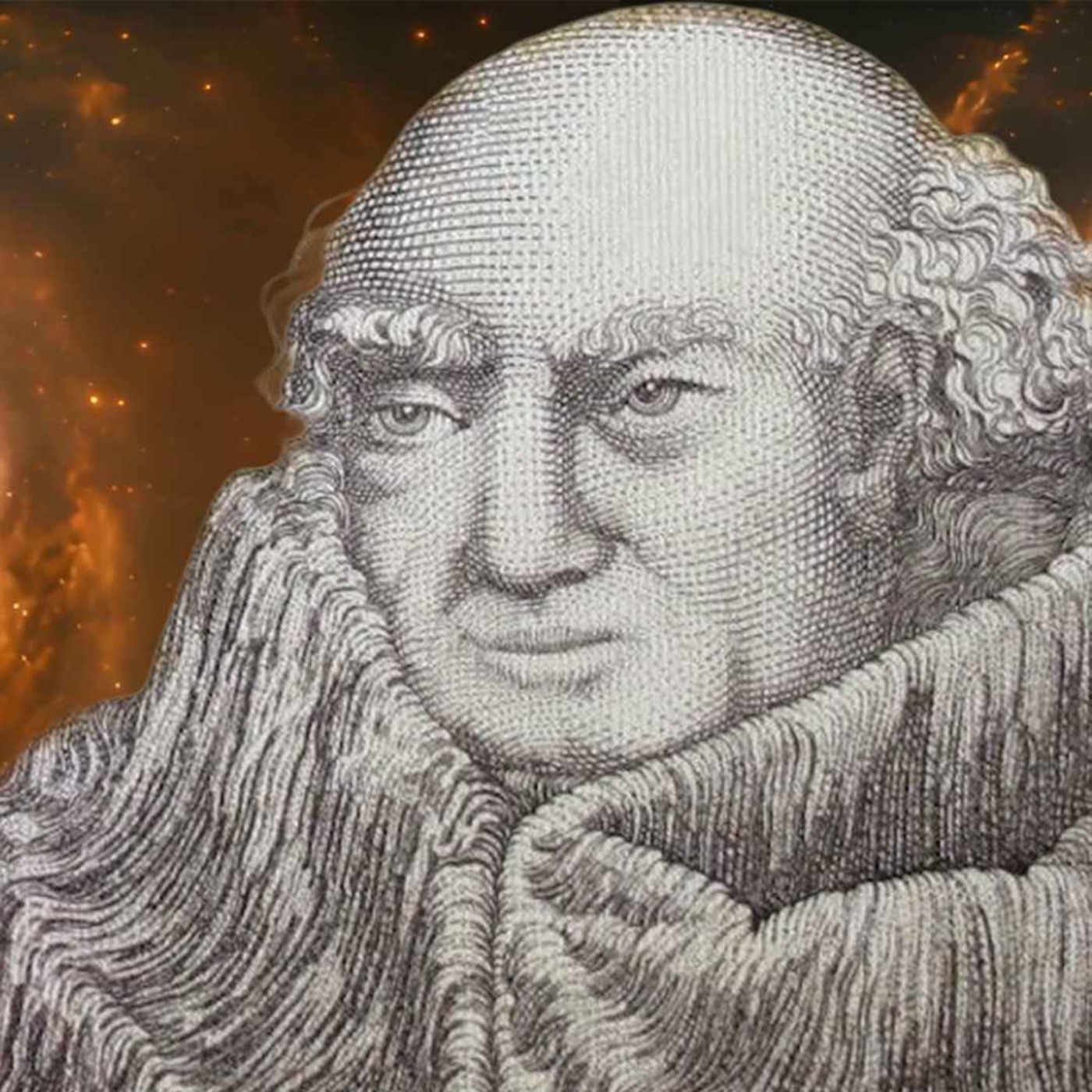
John Scotus Eriugena was one of the most radical thinkers of the early Middle Ages — a philosopher who fused eastern and western Christian theology with Neoplatonism to create a vision of God, nature, and creation centuries that is breathtaking and unique. In this episode, we explore his masterwork Periphyseon (On the Division of Nature), his controversial ideas on negative theology, and why the Church eventually condemned his work as heretical.
Find me and my music here:
https://linktr.ee/filipholm
Support Let's Talk Religion on Patreon:
https://www.patreon.com/letstalkreligion
Or through a one-time donation:
https://paypal.me/talkreligiondonate
Sources/Recommended Reading:
Carabine, Deirdre (2000). "John Scottus Eriugena". Oxford University Press USA.
Laird, Martin (2004). "Gregory of Nyssa and the grasp of faith: union, knowledge and divine presence". Oxford University Press.
Luibheid, Colm (Translated by) (1987). "Pseudo-Dionysius: The Complete Works". Classics of Western Spirituality. Paulist Press International.
McGinn, Bernard. "The Presence of God" Series, in several volumes. Perhaps the best and most comprehensive introduction to Christian mysticism. Published by Crossroad Publishing Co.
Sheldon-Williams, I.P. & John J. O'Meara (translated and edited by) (2025). "Periphyseon: The Division of Nature". Dumbarton Oaks Research Library & Collection. (This is the translation used for the Periphyseon except when noted).
Hosted on Acast. See acast.com/privacy for more information.
Get every episode summarized
Each time Let's Talk Religion publishes, we email you a written briefing from the transcript — the topics, who appeared, and any specific claims, with the ad reads skipped.
Email me new episodesFree for 3 shows. No card needed.
Hosts & guests
No transcript yet
This episode has not been transcribed. Request it and it moves to the front of the queue.
More episodes
More from Let's Talk Religion

The House of Wisdom (Bayt al-Hikma) in Baghdad
Let's Talk Religion

Women in the Life and Thought of Ibn Arabi
Let's Talk Religion

The Talmud Explained (w. Zevi Slavin)
Let's Talk Religion

Porphyry On The Cave of the Nymphs in Homer's Odyssey
Let's Talk Religion