Get every episode summarized
Each time The NPR Politics Podcast publishes, we email you a written briefing from the transcript — the topics, who appeared, and any specific claims, with the ad reads skipped.
Email me new episodesFree for 3 shows. No card needed.
About this episode
The NPR Politics Podcast is made possible by:
“This message comes from DataIQ Agent Management. Most enterprises can't count their AI agents, let alone manage them. DataIQ Agent Management lets you do both from a single view. It is a good time to be a spy in America.”From the transcript
Then, we take listener questions about the midterms, and talk about the things from the week we can't stop thinking about in Can't Let It Go.
This episode: voting correspondent Miles Parks, justice correspondent Ryan Lucas, senior national political correspondent Mara Liasson, and senior political editor and correspondent Domenico Montanaro.
This podcast was produced and edited by Casey Morell and Bria Suggs.
Our executive producer is Muthoni Muturi.
Support public media with NPR+ and enjoy perks for over 25 podcasts like this one. This show’s perks include bonus episodes and sponsor-free listening. Learn more at plus.npr.org.
See pcm.adswizz.com for information about our collection and use of personal data for sponsorship and to manage your podcast sponsorship preferences.
NPR Privacy Policy
Get every episode summarized
Each time The NPR Politics Podcast publishes, we email you a written briefing from the transcript — the topics, who appeared, and any specific claims, with the ad reads skipped.
Email me new episodesFree for 3 shows. No card needed.
Hosts & guests

Transcript ready
343 searchable segments. Every word is indexed and playable.
Full transcript
The NPR Politics Podcast — It's a great time to spy on America. Machine-transcribed; use the interactive transcript above to jump the player to any line.
This message comes from DataIQ Agent Management. Most enterprises can't count their AI agents, let alone manage them. DataIQ Agent Management lets you do both from a single view. Visit dataIQ.com to learn more. It is a good time to be a spy in America. There are a lot fewer people trying to break your cover. NPR has new reporting showing a huge drop in the number of people doing counter intelligence work at the FBI. We're going to talk about what that means and also answer a few of your midterm questions in our weekly roundup. It's the NPR Politics Podcast. I'm Miles Parks. I cover voting. I'm Ryan Lucas. I cover the Justice Department. And I'm Mara Lyson. Senior National Political Correspondent. And Ryan, you have this new reporting that I was just mentioning about this drop of counterintelligence people power at the FBI. I want to go and start with the basics here. Talking about what exactly counterintelligence is and why it matters.
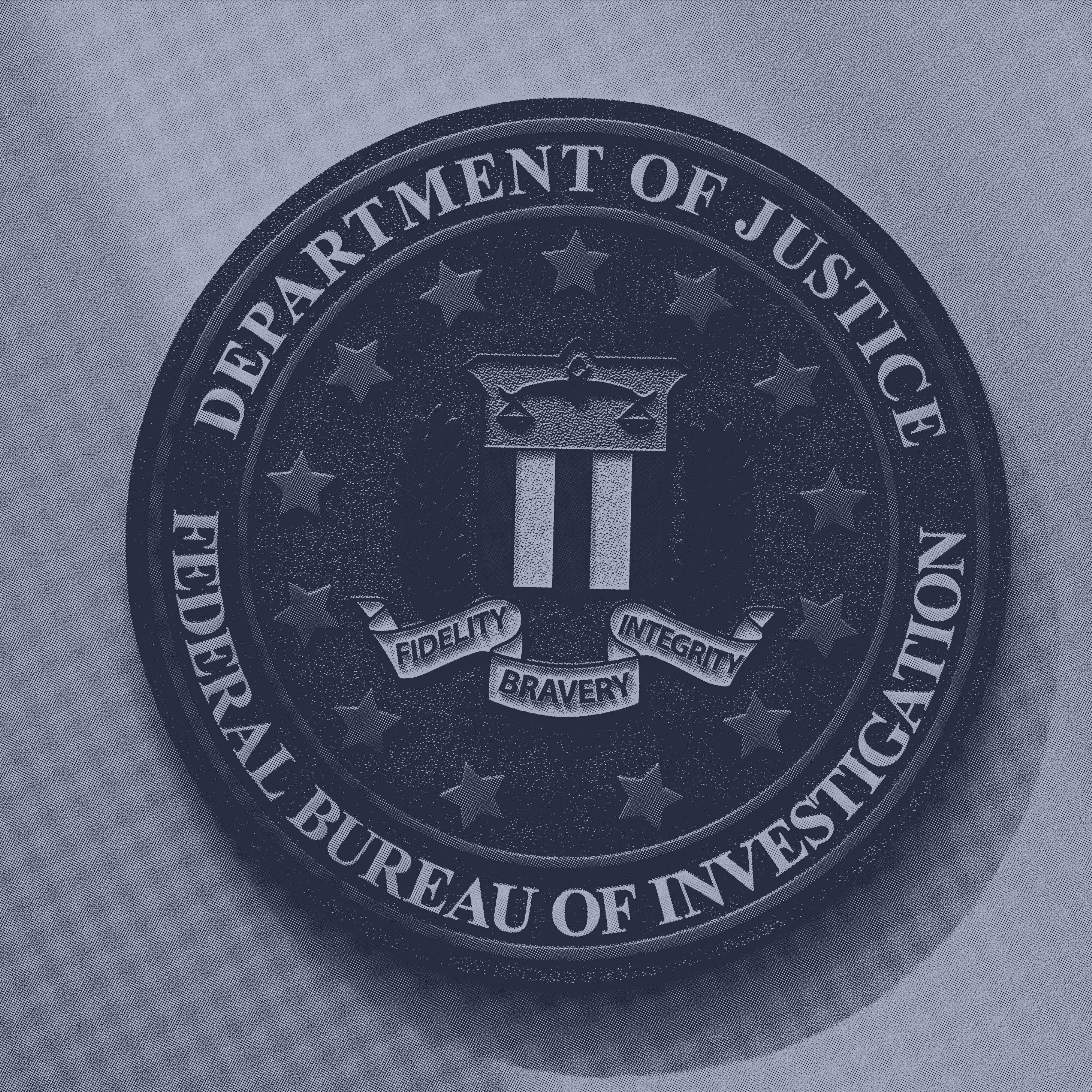
So look, what I was looking at are FBI's counterintelligence squads. These are the people who hunt, track, ferret out, foreign spies in the United States trying to steal US government secrets. So that's what the administration plans to do, military secrets, but also economic secrets, trade secrets. So cutting edge research that American companies and universities are doing. Kind of top edge technology. These are the sorts of things that the FBI is trying to stop foreign actors, whether they be foreign spies or things called nontraditional collectors, whether they be researchers, trying to steal the intellectual property of the United States. Got it. And we've talked a lot on this show the last couple years about the sort of hollowing out of different aspects of the federal government. Can you give me a sense of scale here in terms of the amount of people that used to or have traditionally worked on counterintelligence work versus what's happening now? So let's just say the FBI does not publish these numbers. These are not widely known. But what I can tell you is I spoke to four people familiar with the matter.
They all spoke on condition of anonymity out of fear of retribution. And what they told me is that across the country, the FBI's counterintelligence squads are down 40 to 50% in many field offices. So if a squad normally has 12 people, there it may be six or seven people. I'm also told that in a number of field offices, the number of squads doing this work has been reduced by half. One person who I spoke with said that this is a terrifying situation because the number of threats that the US is facing, that the FBI has to counter in this is growing and the FBI has to address those with less and less. Now I did reach out to the FBI for comment about this story. A spokesperson said that the FBI has a robust counterintelligence mission. And the spokesperson also said anonymous sources criticizing the bureau's capabilities are quote disconnected from reality. Ryan, why is the administration cutting the workforce for counterintelligence?
So it's a good question and it's actually really interesting because I was told that this isn't an intentional move by FBI director cash betel to do less counter intelligence work. Instead, it's a it's a consequence of Patel prioritizing other things in particular violent crime and immigration enforcement. Those of course are two top issues for president Trump. I'm told that Patel has made clear to the FBI that resources need to go to those issues and so in field offices across the country. People in charge of those field offices are throwing resources at those problems and that has meant pulling agents and analysts off of counter intelligence work and putting them on violent crime and immigration. There is another thing at play here, though, and that is there's the general turmoil that we've seen over the past 18 months under cash betel at the FBI people have been fired. In fact, the FBI has lost more than 1,500 special agents under this administration. That is a huge number.
Those people, of course, are taking their experience, their knowledge with them. These departures hit particularly hard encounter intelligence because I was told counter intelligence is especially hard complex work. These cases take years to build, sources take years to build, and this isn't something that you can just drop a new agent into and suddenly they're going to be doing the exact same thing that a 20 year veteran would be. When you kind of alluded to this idea a second ago too, the time that this is happening is interesting because this is not exactly the chillest moment in terms of America's place in the global order. I mean, we are at war right now and I don't know how does that play into all of this. It's certainly a huge concern for national security folks why I spoke with. I mean, the bottom line, these cuts are not good for national security for the United States. As you said, there is a war that war with the Rhonda still very much going on. Broadly speaking, there's also a lot of other adversaries who want to get their hands on American secrets. China is stealing US trade secrets in particular all the time.
There's a relentless campaign that for years former FBI director Chris for a couple years ago said the FBI has more than 2000 economic espionage cases tied to China alone ongoing at one time. So that gives you a scale of just the China problem specifically. Can you say something like it's they'd have like a new case every 12 hours, basically every 12 hours. That's right. Oh my goodness. Russia, of course, is also a very formidable adversary in this field. They still have very capable intelligence services. And what's interesting to me here is is it's really hard to know when the FBI is falling short in this realm. It's a very shadowy cloaking dagger world of of spy V spy counterintelligence. This isn't like let's say counter terrorism where if the FBI misses something a terrorist plot goes forward something explodes people are killed.
We all know about it. It's clear that a failure happened. And the counter intelligence world. These are silent threats. They are quiet. And that makes it really hard to know when a foreign spy is picking the US pocket. And if nobody knows about it, it means that those foreign spies just to keep on stealing American secrets. And nobody is any the wiser. Mara, how do you read all this? I mean, do you think there will be blowback politically to any of this? Well, I don't think there'll be much political impact in the short term. But I do think the fact that this work does occur in the shadows is why Ryan's reporting is so important. But it's also part and parcel of the Trump administration's approach to national security writ large. Hollowing out national security assets at home in abroad. We see it in terms of the attrition and agencies. We see him pulling back US assets in our allied countries. But every one of these decisions is a trade off. And what I wonder is if he is shifting resources to immigration, which is a top priority of his, is he also while he makes the
labor force smaller, the border more secure, all those things happen. But the trade off is at the same time he's making America less safe because he's pulling these assets out of counter intelligence. Can you give thoughts on that, Ryan? I mean, you mentioned that there's not the same sort of impact as pulling back on counter terrorism work in the sense that there will be a literal impact in the short or medium term potentially. But what are, I guess, in the longer term, what is the impact of some of these pullbacks? I mean, I think what people in the counter intelligence world and the national security world would tell you is that for a long time the US has been struggling to keep in particular, it's cutting edge technology, research, intellectual property safe from foreign actors in particular that the Chinese trying to steal it. We've seen a lot of cases with a China angle charged by the Justice Department and the FBI over the past 10 years.
But people who I spoke with say that's just a sliver of what's going on. And so if this sorts of cutting edge technology is not kept safe, people say, ultimately China's goal, if you want to focus just on China, is to leapfrog the US and be the preeminent power in the world. And being able to steal that sort of technology, furthers China in that goal. Do we have any sense on whether this is also just going to lead to foreign adversaries being more willing to try to spy on American assets? I mean, it's kind of the obvious incentive structure that if there's fewer people looking for it, then maybe people would feel more and bold in to try to do it. So it's an interesting question. I mean, the US is always a top target for foreign intelligence services because the United States is the preeminent power in the world right now. But a specific example of what counterintelligence squads do is also something called transnational repression that would be foreign governments trying to intimidate or in some cases kill dissidents critics in the United States.
And we have seen a number of cases in recent years of Iran trying to do that. But just in the past couple of weeks, the Justice Department brought a case against five suspected Russian operatives. And they are accused of trying to plot the assassination of a dissident here in Washington, DC. And that is a big step for the Russians to take to do in the United States because traditionally it's something that they've shied away from. All right. Well, Ryan, thank you so much for joining us and for bringing us this exclusive reporting. Thanks for having me. Time for a quick break. When we come back, some of your midterms questions. Stay tuned for the following announcements and messages from our sponsors. This message comes from DataIQ agent management. Most enterprises can count every device, every login and every contractor. Almost none can count their AI agents. Take control of your agent workforce with one view across every platform and tool, showing what's driving revenue, what's drifted and who signed off on it. Visit dataIQ.com. That's dataIQ.com.
This message comes from IXL. With IXL, you get personalized online learning and teaching solutions that help improve achievement, empower teachers and track progress. This one platform for K-12 helps teachers accomplish what normally would require dozens of other tools. Educators can see how their school is performing in real time to make better instructional decisions. IXL is used in 96 of the top 100 school districts. Learn more at IXL.com slash NPR. Support for NPR and the following message come from Washington Wise. Policy decisions in Washington can influence markets and your portfolio. But which developments matter most? Listen to Washington Wise, an original podcast from Charles Schwab. Host Mike Townsend, Charles Schwab's managing director for legislative and regulatory affairs. Takes a nonpartisan look at the latest news from Washington and how it may affect the economy and investing. Download the latest episode and follow at Schwab.com slash Washington Wise or wherever you listen.
And we're back. And a note here before we go on, we're recording this just a couple hours before you hear it. Because the news is always changing so fast, we try to get episodes out to you guys as quickly as possible. And the best way to make sure you hear those episodes right when they're available is for you to follow our podcast wherever you listen. On Apple, that means looking for a big plus sign on our show page and on Spotify and on the MPR app, there's a big follow button that you can hit. Do that and make sure you're always up to date with the MPR politics podcast. Now it is time to go to our listener mailbag and answer some questions about the midterms. To do that, we're bringing MPR senior political editor and correspondent Dominico Montenaro. Hi, Dominico. Hey. Thanks for joining us. You know all of the things. So I am excited to pop quiz you. And I'm going to start with a question we got from Adam in Florence, Kentucky. I was wondering how much the dollars really matter when it comes to TV ads given the fact that people of my generation don't watch cable TV. And there's so many options in order to pay a subscription fee to not have ads.
Who is really seeing those ads and how valuable are those? I love this question. Dominico, why don't you go first and I want to hear Mars thoughts too? Well, look, TV ads still matter. And it's not just cable TV, right? I mean, they're able to put these ads anywhere that you look, whatever screen you're on, these campaigns can find you digital satellite streaming. That's spending on all of that is way up over the last couple of election cycles. So even if you're paying a subscription, you know, to not get ads, if you're on your phone at some point, you're probably going to see some kind of ad, whether it's targeted Instagram, real or it's some kind of pop up banner, whatever it is, the campaigns have done a lot of work to figure out exactly who you are, exactly where you'll go and how you'll probably vote. Yeah, seems like the only way you can avoid this is to throw your phone out the window. Even then there's billboards and newspaper. I don't know. It does seem pretty hard to avoid all of that. I love Miles's idea of billboards or the new, the modern.
When I said newspapers, that was the one where I was like, I still get the newspaper on Sunday, but I am, I fear I am alone in that. No, you are certainly not. But I'll tell you something, the amount of money that's being spent in this election, which is breaking all records everywhere. There is a point, at least on television, where there's just no more time to buy. And that is really the only limit on political advertising is that on broadcast TV, you've only got 24 hours in a day. There's an argument that all the spending maybe matters less nowadays because we're reaching maybe and maybe at a saturation point. Plus Trump has like a 99% name ID. So it's pretty tough to find someone who's able to be swayed one way or another on him. It may make more of a difference and certainly more important in open congressional district races where people are less known and they need that money behind them. Yeah, and can we just say one more thing about the content of these ads? The vast majority of ads in this cycle right now are negative ads, attack ads because the candidates know that at a time when both parties are unpopular,
the best way to get someone to the polls is to make them scared or angry if your opponent gets elected. And people are motivated by negative partisanship. They go into the voting booth to cast their ballot, trying to stop someone from getting into office, not because they're thrilled with the person they're voting for. Yeah, I mean, the last thing I'll say is also I'm really curious about this new frontier of influencers because to the point of the question, and to what you said more about there only being 24 hours a day on cable television is people are so indated in these swing states. I think people are trying to figure out new ways to reach these people. And I think this idea of paying influencers to potentially make content that is in favor of your political issue or of your candidate in some way. I think that's also a really interesting idea that we're just starting to scratch the surface because it's pretty unregulated at this point on how much how prevalent that is and how that's impacting all of this. All right, Miles, there's a question for you here as our voting correspondent that a lot of people send in. Let's say a candidate wins a congressional race. It could be a narrow win a big win. Any way you look at it, they won, but they get to Washington and somebody here can test their election and tries to prevent them from taking their seat in Congress. Oh boy, what happens then?
Yeah, I mean, really since 2020, right, I think there are a lot of the media coverage every election cycle kind of focuses on the all the different aspects that are potentially vulnerable to interference. And so I think it's helpful to sort of take each one of those one by one, especially in the midterm year what we're talking about is interfering in the seating of Congress, either in the seating of a new house or in a potential Senate race, right? And so the way elections work states and local governments run their elections, those elections happen, people vote and they're certified at the local or state level. There's been fear since 2020 and we've seen some cases pressure on some of those local officials to not certify or to delay certification. Some of those cases, that has never really come to pass at the state level, but it's still going to be something we're washing this cycle. Once those results are certified on the house level, the clerk of the house is really the kind of key player when it comes to the new Congress because the house that's currently in power right now ceases to exist at noon on January 3rd, and then it's the clerk's job to basically call the order, take those election results, make a list of all the people who were elected, known as the members of elect, those people meet to elect a new speaker of the house who then is in charge of seating the new Congress.
And so there's a bunch of different theories on ways that process could potentially be interfered with centering on the idea of could Mike Johnson or could Republicans, if they did want to overturn a potential democratic victory in the house, could they replace the current clerk with a more politically friendly clerk who is willing to interfere in the results? I will say the election experts I talked to, the election law experts I talked to are very skeptical that this would work, and even that it would happen at all because it would take people frankly breaking the law. The clerk's job is ministerial. And so there would be immediate lawsuits and a lot of people would be putting their political livelihoods at risk to potentially make a scenario like this happen. But with all doomsday scenarios, I cannot say because so much of the American election system relies on norms, a lot of it is defined by laws, but a lot of it also relies on norms. It's hard to say with certainty, yes, this will not happen, or yes, this will not work, but it is more, I would be willing to bet my salary on the idea of a new Congress being seated in January.
All right, well, I think that's a good place for me to stop talking and get to another listener question. This one I think would be good for Dominico as our master of polling. It's from Mary Lee in Bluffton, South Carolina. She wrote in to ask about polling. She asks, how is it done and who is responding? Land lines are obsolete, and the people answering a land line would not be very representative of the electorate anyway. The cell phone barrage of texts and spam calls regarding elections are such an annoyance, and I don't know anyone responding to them, prefer that these messages will only multiply. What do you make of this, Dominico? Well, Mary Lee identifies a critical problem in polling, and that's response rates. The fact is response rates have been falling since the 1980s and 1990s when you would get, if you were a pollster, about 30 plus percent of people who you called or reached out to to take your survey. That's just not the case anymore. Now it's less than 5 percent, even lower than that, actually. So it's been really, really difficult, and that is to the point of the fact that people aren't really using land lines anymore, but really in the past decade, there's been a revolution in polling as to how it's conducted.
It's no longer just land lines with live callers, calling people, its cell phones, its text message, its online, its opt-in, its panels. They're doing everything they possibly can to try to find people where they are. Some polls aren't doing multi-modalities. Some polls are only doing online, and those have their limitations. So when you're trying to look for a good poll, look for ones that are doing multiple modalities on where they're going, who they're trying to reach, how they try to get them. Now, look, if they say that they're reached 1,000 people, they still reached 1,000 people. It just probably took them a lot longer and a lot more resources and a lot more money to go and find those. Now, what we are seeing is a proliferation of AI polls and a lot of frankly junk polls that have popped up during this past election cycle that people should be skeptical of. So trust those good quality polls and look at the trends over time. That's always my advice on that. Yeah, and what we always say about polls is they're a snapshot, they're not a prediction, they tell you what the race looks like at that moment in time.
Also, we get a lot of questions, why should we pay attention to polls since they're always wrong? They're not always wrong, and some of them as Domenico just said are very high quality polls. But one thing for people to remember, every single poll starts with an assumption, and the assumption is the model. They can't poll the entire electorate. They're only going to take a little slice like 500 or a thousand people, and they have to decide in advance what they think the electorate is going to look like, how, what percentage of it is going to be older, younger, wider, African-American. And once they do that, then they adjust their sample accordingly. Sometimes those models are way off. A lot of times they wait to the census, and the census doesn't necessarily mean what the electorate, the share of the electorate is going to be, and then we start getting into things like likely voter models. Those are all the secret proprietary sauce within a lot of the polling. It's very, very hard to do. Even the best pollsters aren't able to really nail that all the time. And I, you know, look, I've said this before, I think it's going to be my mantra for the rest of this campaign, and maybe into next next cycle.
Horse race polling is not really the thing that I even look at the most. I talk a lot about polling, but the way I look at horse race polling is, it's not wrong, but there's a margin of error. So you got to think if it's a two, three point race, and a wound up being a two, three point race in the other direction, that wasn't wrong. It was just what the margin of error was. That's what I was going to say is I feel like all of this usually relies on just not thinking, and I'm guilty of it too, that just forgetting that sort of two and a half or three percent margin of error is a big part of understanding polls. Yeah, it's a fuzzy range. It's not meant to be with such specificity, and that means it's really, really difficult for people when these elections are all close to tell what those things mean. So you got to look at how is the middle moved over time, and look, I think as far as horse race polling goes, it's like the sprinkles on top of the ice cream. I like sprinkles on ice cream, but if you just eat the sprinkles, you get a mouth full of wax. The good stuff is underneath. It's in the ice cream. All right, we can leave it there. I want everyone, all the listeners to keep their questions coming. We're really enjoying answering them. Record a voice memo with your name, where you're calling from, and send it to mprpolitics at mpr.org.
Again, that's mprpolitics at mpr.org. We may use it in an upcoming episode. Time for one more break, then can't let it go. Stay tuned for the following announcements and messages from our sponsors. This message comes from DataIQ agent management. Most enterprises can count every device, every login, and every contractor. Almost none can count their AI agents. Take control of your agent workforce with one view across every platform and tool, showing what's driving revenue, what's drifted, and who signed off on it. Visit dataIQ.com. That's dataIQ.com. This message comes from IXL. IXL's level-up diagnostic gives immediate benchmark results, along with personalized action plans that link directly to IXL's skill practice. More at IXL.com slash NPR. Support for NPR and the following message come from Washington Wise. Washington Wise from Charles Schwab takes a nonpartisan look at policy developments and how they may affect the market and investing.
Listen at Schwab.com slash Washington Wise. And we're back, and it is time once again for Can't Let It Go. It's the part of the show where we talk about the things from the week that we just cannot stop thinking about politics or otherwise. Mora, why don't you get us started? Well, My Can't Let It Go is an honor of Ryan Lucas, who did that incredible reporting about moving around FBI assets, national security assets. This is a different kind of national security asset. It's a story that was reported on the AP. A former senior CIA official pleaded guilty Tuesday to a charge that he had abused his position, used government funds to enrich himself by acquiring, among other things, hundreds of gold bars worth over $40 million. Investigators searched his home. They seized about 300 of these gold bars in addition to $2 million in cash, about 35 luxury watches. But the thing that I found so compelling about this story is that the CIA agent, whose name is David Rush, is lawyer said that the gold bars was basically a non-issue and quote nothing more than a sensational tidbit.
And I want to say that today we are celebrating sensational tidbits, which is another way of saying something you just can't let go. I do feel like gold bars are the standard for some sort of like national security issue or any sort of scandal that I've never really, I don't think I've encountered a gold bar in my own personal life. It's so retro, mine wasn't a crypto. It's like nefarious corruption. This sounds like an old fashioned movie. Exactly. Somebody would cut that and be like, no, you have to do something different. I'm not saying everyone with a gold bars a criminal, but if you see somebody with a gold bar, I mean, you've got to ask some questions. Words a little by. Miles, what can't you let go of? The thing I cannot let go of is so all week, multiple people have asked me are kind of commented on my physical appearance doing giving me the you look tired thing, which, you know, I'm an elections reporter. And we're a couple of weeks from the election. And so you would think that that the answer would be, well, voting has just begun in many states.
And I have just been working so hard to cover democracy. When in reality, let's play off baseball. Man, it is killing me. Every year that my team is, should not be killing you. It is your team is doing well. I know I'm very happy about it. But honestly, it is like a second job in the sense that I basically work all day. I get my baby to bed. And then for hours and hours a week, I'm like watching a very stressful event. My Tampa Bay raise just made it to the American League Championship series. And I will note that the two times in my adult life that this has happened are election years when I've been a voting correspondent in 2020 and now in 2026. And I just don't think they're thinking about my sanity when they're deciding when to be good. So are you saying that you need to move to other countries in off years in the United States that you can cover voting in other countries so that the raise do well in all of the years? I guess I would just say I just wish they would just do well in the off election years. Like next year would be an awesome world series year. Dude, beggars can't be choosers. I'm a meds fan.
I don't even want to hear it. Well, can't you like Obedo Minico? For me, it's going to the grocery store. Okay. And it's not even prices, right? Prices are annoying. But when prices are high, you also just want to get out of the store. Right? I mean, being in there forever is really annoying. And one of my big pet peeves is being able to find stuff in grocery aisle sections when it's like nothing is marked very well. You know, they have these like vague things that you see above the, and you're like, where, but where is the, where are the olives? Shouldn't they be with the condiments? No, they're not. They're in something else. And then I'm walking all over the store. I can't find it. I'm just like, I just wish there was like an app or an easy way to show me where to find it. You know, see, I think after the reason that you're having this problem is that we've all become desensitized to like understanding the world around us. And that actually, that's my opinion here is like, don't you think like part of, do you think grocery stores were really better designed 20 years ago? Or do you think we've just gotten worse at like figure out like natural clues on how to find stuff?
You can, you can take that sub tweet of me onto a different podcast because it's not even what my can't let it go is. Oh, sorry. My can't let it go is the fact that I walked into another unnamed grocery store that had a QR code up so that you could find anything in the store. And I used it. I looked at it immediately. I was able to speaking of being tired, find the baby formula that we needed and we're running out of very quickly because there's nothing like over overwhelming. Then walking into a store that's lots of lights and lots of aisles and you're just like, I just need this one thing. Where is it? And it was like, I'll be 13. I went to be 13 and there it was. There was a database that I could search. It came up right away. It was exactly right. It was geolocated to my store. And I know that other stores will say that they have ways to do this. All of it's clunky. This one store. It worked really well. And I just was like, oh, this is the future. Like, please, like use this to help you.
That's what I was going to say. Me and Mara are both like, so you want normally you would just ask an employee. Are you saying like you want lower employment at grocery stores? Hmm. I'm not talking about that. I'm just saying you can't always find a person to do it. Let that person have. I always feel like I'm not trying to make people unemployed. I want them to be more focused on the things that they were doing beforehand. I always feel bad asking a grocery store employee where something is because they were always doing something else. That's true. They're always like, they're stocking and they're not answering your question. They're able to stock this thing. They're like doing other things are organizing. Like, if I'm not annoying them about where the heck this, the rice cups are. And then I come back to the same guy who poor guy was now in a flow doing something else. I'm distracting him again. Like, maybe he's not going to get home in time. Because I was an incompetent person who couldn't find it. So anyway, point is this will make everything more efficient.
I want to know where stuff is easily categorically. And look, I don't know if it's because we want stuff right away and quickly. Or if it's because I have a four and a half month old when sleep is also, you know, a little harder to come by. And I got other stuff to do. I feel like you can get out of the store. You came into this can't let it go. And I'm just trying to pick it apart every hour. That's fine. You're doing it. You know. All right. Sorry to minico. Sending you love. I believe the audience will agree. I think they probably, well, I'm curious. All right. We can leave it there for today. Our executive producer is Bethony Maturi. Casey Morelle edits the podcast. Our producer is Breeus Suggs. Special thanks to Dana Farrington. I'm Miles Parks. I cover voting. I'm Dominica Montenore, Senior Political Editor and Correspondent. I'm Mara Laiasson, Senior National Political Correspondent. And thank you for listening to the MPR Politics podcast. Stay tuned for the following announcements and messages from our sponsors. This message comes from Mint Mobile. If you're tired of spending hundreds on big wireless bills, bogus fees and free perks,
Mint Mobile is for you. Shop plans at MintMobile.com slash switch. Taxes and fees extra. See Mint Mobile for details. I'm going to go ahead and do a quick review of this. I'm going to go ahead and do a quick review of this. I'm going to go ahead and do a quick review of this. This message comes from Edison Electric Institute. As a new season starts, America's electric companies are working behind the scenes to deliver reliable energy for the moments that matter most. America's electric companies powering the energy of every day.
More episodes
More from The NPR Politics Podcast

AI chatbots: the new voter guides?
The NPR Politics Podcast

Why the GOP Is now worried about Ohio
The NPR Politics Podcast

What does the U.S. withdrawal from Iraq mean for the region? | Sources & Methods
The NPR Politics Podcast

What is the Protect College Sports Act?
The NPR Politics Podcast