Get every episode summarized
Each time What Next | Daily News and Analysis publishes, we email you a written briefing from the transcript — the topics, who appeared, and any specific claims, with the ad reads skipped.
Email me new episodesFree for 3 shows. No card needed.
About this episode
What Next | Daily News and Analysis is made possible by:
“There are moments that reveal who we are and who were meant to become. For those born to lead, such moments call for a vehicle of equal distinction.”From the transcript
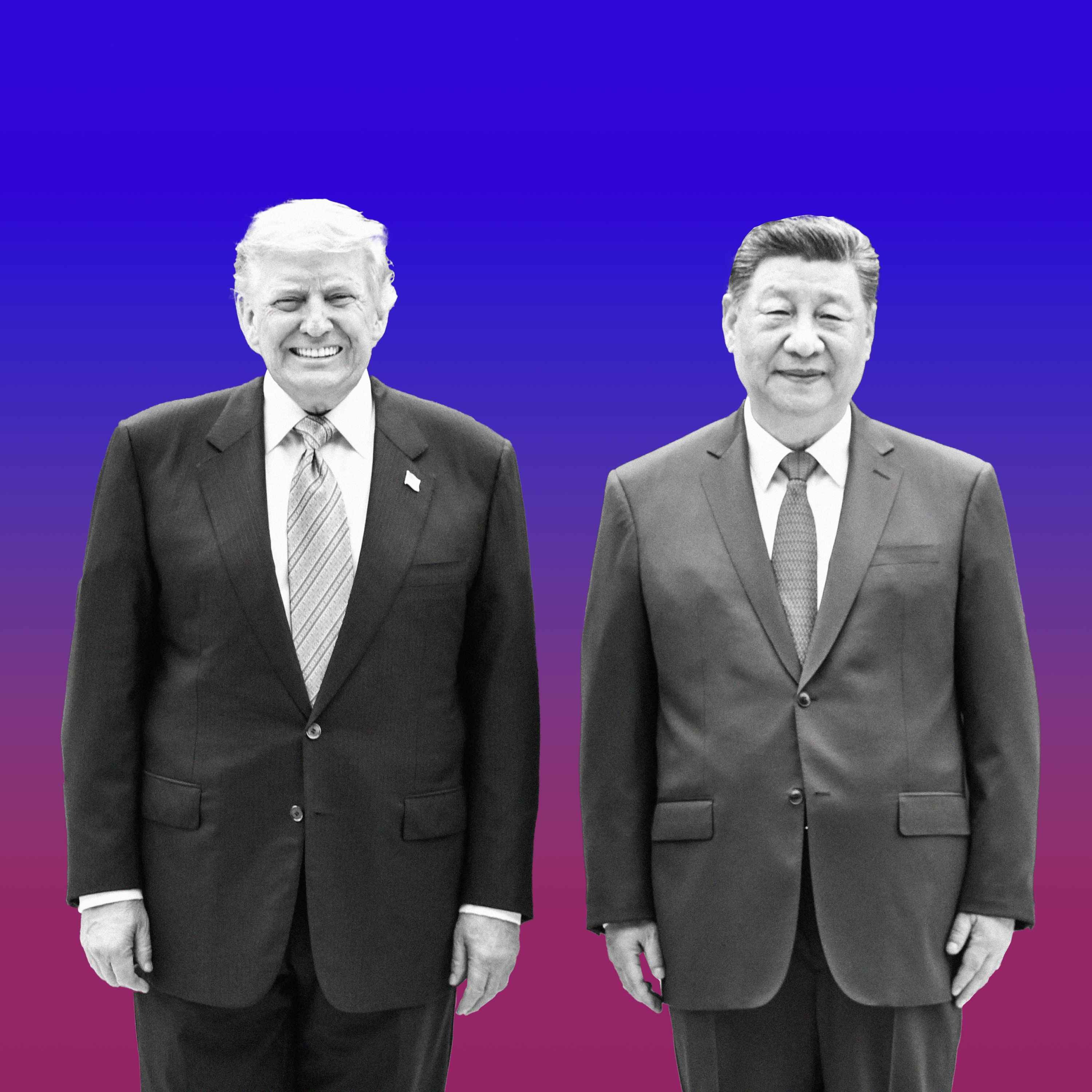
Artificial intelligence is pitched as a potential economic powerhouse—and also a potential bringer of the apocalypse. Can two economic and military rivals cooperate enough to fulfill the former (and former only)?
Guest: Scott Singer, fellow and co-director of the China AI Initiative at the Carnegie Endowment for International Peace.
Want more What Next TBD? Subscribe to Slate Plus to access ad-free listening to the whole What Next family and across all your favorite Slate podcasts. Subscribe today on Apple Podcasts by clicking “Try Free” at the top of our show page. Sign up now at slate.com/whatnextplus to get access wherever you listen.
Podcast production by Evan Campbell, Madeline Thames-Ducharme and Patrick Fort.
Paige Osburn is the senior supervising producer of What Next and What Next TBD.
Hosted on Acast. See acast.com/privacy for more information.
Get every episode summarized
Each time What Next | Daily News and Analysis publishes, we email you a written briefing from the transcript — the topics, who appeared, and any specific claims, with the ad reads skipped.
Email me new episodesFree for 3 shows. No card needed.
Hosts & guests
Transcript ready
426 searchable segments. Every word is indexed and playable.
Full transcript
What Next | Daily News and Analysis — Is the A.I. Race Real?. Machine-transcribed; use the interactive transcript above to jump the player to any line.
There are moments that reveal who we are and who were meant to become. For those born to lead, such moments call for a vehicle of equal distinction. Dynamic by design, uncompromising and execution, the Range Rover Sport was engineered for those rare individuals who demand the world and possess the conviction to claim it. When your time to lead arrives, you need a vehicle that rises to meet it. The Range Rover Sport, exclusive offers available now. Explore further at RangeRover.com. Everyone is Chris Kalebau here, host of the Side Hustle School Podcast. This episode is powered by AT&T Business. In my early days, I did some of my best work in parked cars or coffee shops. But when I landed my first big contract, I realized I couldn't bet my future on a public connection that cuts out if someone turns on a blender. As a small business owner, you're already wearing at least 10 hats. You shouldn't have to be your own IT department as well. That's why I rely on AT&T Business. They keep your connectivity reliable, so you have one less thing to worry about.
Powered by AT&T Business, built to work. Get AT&T Business at business.att.com. Hey guys, it's Lizzie. Lately, we've done a lot of stories about AI. AI Dumaers, AI Policy, AI Agents. What's this message? This is not from AI. It is just from me. The human journalist who hosts this show. Honestly, it is a pretty brutal time to do this work. We just watched the Trump administration try to kick our colleagues out of the White House. It can feel like reporters are swimming in dangerous water with increasingly few life modes. So if you like what we do and you want to help us stick around, the best thing you can do is join Slate Plus. For the next month, we've got a deal. 50% off on Slate Plus memberships, which is just 59 bucks for the year. You get all your Slate shows ad free. Plus, Mary and I go off the record in a special segment every Friday.
TPD listeners, if you want to do this, go to Slate.com. Slash TPD Plus to sign up and use the promo code TPD50. Real journalism with real humans behind it. Every time we do a show about AI, there is this one line that comes up. It is about, and I'm quoting, winning the AI race with China. Politicians love to say it, sometimes analysts do too. So since Xi Jinping is in Washington meeting with Trump, I wanted to ask an expert if the whole AI race framing is even useful. I think it offers some useful insight, since it also is sufficient others. Scott Singer co-directs the China AI Initiative at the Carnegie Endowment for International Peace. I think what is true is that the US and China are both developing in technology
that they see as central to their economy and central to their strategy. This is a technology that is being deployed throughout the military and defense systems. And so in that sense, this is going to be really important to both countries' futures. But geopolitics is not a track meat. This tech is complicated as is this diplomatic relationship. You know, when you're running a race, it's not always, you know, there's a clear M line. You're running a certain distance. It's not totally clear where we're going here. And I think also a race implies that there's competition only. There's no need to cooperate. In previous technology cases, we've managed competition while also cooperating. There is going to need to be cooperation. That is now abundantly clear. And the real question is how you draw the lines. Where are we competing and how are we cooperating at the same time?
Today on the show, a better way to think about the US-China relationship when it comes to AI. Plus, a few key things Scott is watching for in this summit. I'm Lizzie O'Leary and this is what next TBD, a show about technology, power, and how the future will be determined. Stick around. Starting your own business is never easy. Starting your own podcast, that seems easy, but actually there are a ton of landmines to step on along the way. Finding producers, selling ads, and connecting to Wi-Fi. Oh, does that sound straightforward? It's not. I'm talking about sitting in coffeehouses for hours after buying one stone. I'm talking about sitting in hotel lobbies and pretending your backpack is luggage. It's torture. I spent so much time making my home office look professional, but my connection didn't get the memo. The last thing you want during a major interview is for your guests' voice to turn into a stutter.
When you're bandwidth can't keep up with your ambition, your home office starts feeling like an amateur operation pretty fast. And for a podcast, the internet is key, because the internet is how we talk to almost everyone. And no matter the guest, a laggy connection can ruin an exclusive interview. Great connectivity isn't a bonus. It's the whole game. An AT&T business is here to help. They've got the tools, team, and expertise you need for a stable network you can rely on. And when you can rely on the network, you can get back to thinking about the more important stuff, like nabbing that great guest and getting back to work. AT&T Business. Built to work. Get AT&T Business at business.att.com. Harvard Business School Executive Education delivers breakthrough learning for leaders. Stimulating classes led by faculty at the forefront of their fields. Topics that will define the future of business, discussions that transform perspectives and ways of thinking,
and access to the brightest business minds on the planet. Learn more at hbs.me-breakthrough. That's hbs.me-breakthrough. Hey, it's Paige Dusorbo from Gagley Squad. Everyone is always looking for a new way to make some extra cash, but sometimes the easiest place to start is your own closet, with a little help from D-Pop. Think about how many clothes you have that you love, but you just don't wear anymore. On D-Pop, it's quick and easy to list those pieces. There's no selling fees, and suddenly those clothes have a chance to find someone who actually wants them. And the best part, you're making room for whatever you're into next. Make money on D-Pop with no selling fees, and find what you want for less. This message is brought to you by D-Pop. Let's back up a little bit, because I think it might be really helpful to listeners to lay out the sort of different approaches to AI and AI governance that the US and China are taking. Here in the US, we have a couple of big companies,
the Frontier Labs, I'm using those words and quotes, then also Google, Microsoft, whatever you on is doing at XAI. How would you describe the basic outlines of the Chinese AI industry in contrast to that? Well, I think in both ecosystems, you have Frontier companies, and you have a number of groups that are building applications. You have groups that are focused more on different types of deployment. In China, we're now familiar with many of the Frontier AI companies, companies like DeepSeek, Alibaba, Moonshot. It's a mix of these new startups along with some of the biggest tech companies in China, bite-dance. I'm as another example of these really big companies that have large Frontier AI models that they're developing. And so the ecosystems actually look with parallel structure. I think the market in the US has consolidated to some extent a bit quicker
than it has in China. So there are fewer companies in the US? There are fewer companies in the US. And if you look at who's really pushing the capabilities when it comes to Frontier development right now, I think it's really anthropic and open AI. And there are other exciting developments coming out of Google, XAI, and Meta. But when you start thinking about who is seeing new types of capabilities and new types of risks, it's really increasingly two companies. I think it might be worth breaking down how the models are different. China has open-weight models. Some, I believe, open-source models, can you explain the difference and why you think that is important to make these distinctions? So both the US and China have what we call open-weight and close-weight models. So both countries have both. The leading models in the US have tended to be close. That means that when you make a request to an LLM or to the AI,
it's eventually going back to the company. You can't just download the weights or the parameters that are part of the model just off the internet. Open-weight models are much more flexible. You download them from the internet and you can play with them. You can adjust them. You can fine-tune them. You can tune the numbers, as it were. Exactly. And so the benefit of this is that this on the one hand is super useful for startups, innovation. It also creates some challenges for risk management. China has the world's leading open-weight models. The US has open-weight models as well. But I think that it does create novel governance challenges. Some of the ways that we safeguard LLMs and make sure that you can't just take off the safeguards. Some of this is a bit easier with closed models. It's not to say that open is bad or closes, go to our vice versa. It's just to say that there's different challenges. And when it comes to China,
China actually just fell into this comparative advantage of open-weight models. These models are more cost-effective, they're cheaper to produce, and they require a lot less hardware. And so China, because of expert controls that the US imposed, operates in a very constrained environment when it comes to the amount of compute that they have. And so it's the natural policy prescription that would follow if you're operating an environment where you don't have that much hardware. So it really follows from the export restrictions and from basically the fact that the US is saying this is the kind of compute you can have. Therefore, these are downstream the models that that necessarily produces. Yeah, I think that China is now considering what they close some of their models at a company level that might be ultimately more profitable. But if you're thinking about global competitiveness and how you get market share, I think that there has been a way for China to use open-weight models.
And when you look at some of the companies in Silicon Valley, startups are using Chinese models here. And so I think that there is some truth to it. And on the other hand, there are both safety concerns and also profit concerns. And so I think that ultimately China may move more towards close source. I think that's a distinctive possibility. But it won't necessarily be because of these broader geopolitical currents. I'd like to talk a little bit about humorism. The American news cycle over the past few weeks has obviously been full of, you know, Dario Amade right this essay pacing the frontier about kind of pausing AI development, certainly at kind of the bleeding edge. And I wanted to ask you how American doomurism is, whether AI doom even enters the chat in a Chinese context? I think that the fields of AI have sort of different origin stories in the US and China.
I think for many of the people who are a part of really growing the field, this idea that AI could fundamentally transform humanity and pose serious catastrophic risks was central to the project of building general purpose artificial intelligence. In China, you see concerns about loss of control, which is, you know, a term that in the West has tended to mean rogue AI that perhaps leads to human extinction. In China, the understanding of loss of control has varied. In different contexts, it could mean loss of control for the developer or employer. It could mean loss of control for the party without they're able to have regime stability. And there's also loss of control for human extinction. It gets used in these different contexts. In general, I would say that the existential concerns have been much more prominent in the West.
And that's not to say that China is not beginning to consider it, but it really hasn't been part of how they see most of the risks. If you look, for example, at one of the key policy documents that's produced in China, AI safety governance framework, they just recently produced the third version of this. They talk about AI escaping human control, but it's really captured like a much broader range of risks that are largely tied to how AI actually impacts society already. China's main concerns when it comes to AI are, I think, first and foremost its ability to control its information environment. Do the outputs of LLM's comply with what the party would like it to say? Definitely not about human extinction very much about in the same way that China has sought to control the content of the internet, we call censorship. It's similar with LLM's. And then these concerns have expanded.
Concerns about agiarrad content and deepfakes. Concerns about how AI is impacting the labor market. How AI is impacting relationships. And all of these are grounded in things that the party sees is already happening in very real to the experience of everyday people. That's so interesting because obviously many of those issues, less the party messaging obviously, but the jobs concerns, the relationship concerns, those are happening here in the US, but policymakers seem much more focused on this sort of existential risk question. I think that there's definitely parallel conversations in some ways. Like, I think there's an emerging conversation on child safety, for example. Both the US and China don't want AI to disrupt their children's development and their concern about education. We think about AI and companions, for example, I think an interesting thing to watch in the spaces, actually the dialogue with you, it's happening in China and what's happening in California, where some of the most progressive and forward policies have come out, where you see in California,
similar laws and actually China's human like AI regulation gives reference to it happening California as one of the key motivators. China is a stewed reader of the Western and American Internet. And so when there are ideas that they think could be usefully put into their own system, they'll take it and then put it within their own context. That's a super common playbook. And I think it actually helps keep the world together to some extent when it comes to coming up with approaches to managing the benefits and the risks of the technology. I think it's really worth drilling in for a second and looking at the various attitudes around AI. I mean, it's so interesting to me that here in the US, Americans are skeptical. Polling is very anti-data center. Obviously, China has the state media fueling opinions to some degree, but it seems that it is a very different conversation there. I think the attitude towards AI and China is complicated. I think that at a sort of government and party level AI, you've seen as another
technology that is going to fuel economic growth. China cares enormously about its economic potential, and AI is the next tool like the Internet that's going to bring growth to the country. And so there's been very strong encouragement to adopt AI. China in, you know, last year around this time put out its AI plus strategy. The idea is to embed AI across society into critical sectors, and that's going to turbocharge economic growth. But I think the story is a bit more complicated on the ground when you go beneath these policies, because I think that there is also a fear in China of what happens if you fall behind. And you're not using AI. And so I think that you see this really intense discussion of AI and individual adoption in part because there's a fear of what happens if you're slow. And so I think in both the US, there are people that are very excited with the technology. And there's also what are concerned. And this is actually something that shares
and unites the two, but manifests in different ways with different cultures and values. I mean, I remember in 2016 reading Internet Plus, you know, I had a master student who was writing a big story on kind of AI implementation in different towns in China. This seems like something that has been really thought through a policy level by the party for a long time. I think it's a similar playbook. And I think the idea here, it's the same playbook as the Internet as you reference. The government sends a signal to local governments and to the rest of the society and says, this is super important. Figure out how to do this well. And local governments basically pioneer different approaches to figure out, okay, how do we embed AI into these critical infrastructures into government, into healthcare, into transportation in these priority areas? And where there are good approaches, they can become national approaches. And so there's this really interesting national local interaction where I think that we sometimes have this perception of
China where things are really top-down, Xi Jinping says everything, but actually there's this really dynamic interplay in a ton of experimentation. And sometimes the approaches fail. And sometimes there's just excessive competition. And this is a problem that the system deals with. But again, sometimes you have good approaches and it allows you to always get good choices. Is there anything better than your team bringing home a W? How about a personal W for your health? If you're 45 or older at an average risk, it's time to screen for colon cancer. Now the number one cancer killer of people under 50 in the US. It's easy to put off when screening feels like a hassle, but cologuard plus makes it simple. It's not invasive, requires no prep can be completed at home in about 15 minutes and is 95% effective. Talk to your healthcare provider or request cologuard plus online Rx only. Mod.com is changing the way people battle excessive fatigue. Ever hit a wall
in the middle of the day and the third coffee just doesn't do it anymore. Here's what's actually happening. Coffee only briefly blocks a denocene, the chemical that tires you out. When it stops working, your system is flooded and you crash. Mod.com is a prescription treatment that works in a completely different way. Mod.com works by stimulating multiple receptors in the brain associated with wakefulness, including dopamine, serotonin, noripinephrine, histamine, glutamate, and erexin. It's a more complete solution that gives you 10 to 12 hours of steady focus and energy. To learn more, go to mod.com. Fill out your intake form, meet with a license provider, and if approved, modeler ships straight to your door. Go to mod.com to get started. That's m-o-d dot com. Let's talk about these meetings and the different goals that each country has here.
What does China want from these negotiations? At a foundational level, China wants to be at the table. I mean, they got the big fancy welcome, right? And I think that that matters. The story from China's perspective in international relations for so long has been about its rise, and it's desire to be seen as a peer. It's desire to be on the world stage in the same way that the US is. And so this idea that two great countries, two powerful countries are going to have serious conversations about AI that no one else is going to be a part of. I think that's a dream status positioning for China. And so at a baseline, I think that they definitely really want that in the pump from circumstance that the White House is going to demonstrate. It's definitely going to elevate that. I think in terms of where they want the discussions to go, I think that there's a lot more ambiguity. Their main priority at least for now is to continue developing the technology. I think that there could be some openness to learning from the US approaches and
exchanging elements of a nonsense of information. But I don't think that there's really a clear agenda. And I think it's an open question of when the two sides see these risks in fundamentally different ways. Where can they agree? Are they going to adapt their domestic governance approaches fast enough to deal with the challenges at hand? Well, that's certainly one of the things it's preoccupying Washington, right? Is this question about what the domestic governance could look like? And you have President Trump essentially saying, like, man, we don't need one. But that will not be what happens in practice behind closed doors, right? Like obviously these two governments are talking. And so I wonder, like, will they come away with any tacit agreements that were made kind of quietly on the sidelines, even if there's no big headline? I think that it's definitely worth keeping in mind that diplomacy has both public performance and also private elements to it. At the same time, these two countries are really only now building diplomatic muscle again. They are not, especially in
AI, which is a new area. They don't have experience negotiating with each other. And the first dialogues on AI safety and AI risk management, which were in 2024, didn't go well. The two sides brought different types of people. The US side brought people that were more technical and focused on AI safety. The Chinese side wanted to have a more diplomatic conversation around a wider set of issues in US underlations. It's not to point fingers or say that one side was right or wrong, but it is to say that the conversation didn't take off. And so we're now in a position in 2026, where we're watching the risks play out their material. We have evidence of it happening in the US. We know that China has similar models that are designed similarly with similar capabilities. And so these problems are going to be very real for both countries. And the question then is, how do you manage that? And I don't think it was a clear answer yet. Well, and the past few weeks have seemed kind of chilly, right? You have the Trump administration
saying Chinese companies are stealing intellectual property and then Beijing sort of saying, you are following a Cold War playbook. Where does that leave things now? I mean, the Treasury Secretary just talked to Chinese representatives over the weekend. How would you describe the tenor of this relationship about AI right now? I think the real question is, can there be some sort of insulation of the AI safety and risk management conversation from the broader ebbs and flows of the US-China relationship? I think we are beginning to see the early stages of a permanent channel, which is excellent news. I think a really good channel would be one where you have Trump and C meeting regularly, which they are. But then you have political backing with high level principles. Secretary Besan and Vice Premier Hough would be a very critical channel here. And then ideally where this goes is you have genuine working level technical level exchanges
that are happening in between meetings. And so I don't think that this groundwork has been totally laid yet. It's not clear how this channel is going to function, how much it's going to be empowered, what exactly are we going to talk about, how often are they going to meet? But it's beginning and that's really good news for everyone. Let's talk about chips. They are so central to this relationship. What role do the current controls play? So export controls have been really central to US policy across both Trump one, Biden and Trump two. AI has sort of three core components. There's the data. There are algorithms and parameters and there's hardware and compute. And when it comes to controlling the technology and thinking about governance levers that can actually shape the development, export controls have been really central to that. They're the one thing that you can really actually govern. And so the US has a massive advantage in advanced AI chips. They control
the entire supply chain, which runs through the Netherlands, Taiwan, other countries and entities that are seen as friendly. And so given that this has really played a central role to how the US proceeds say, a policy, this has disrupted previous conversations about AI and US general relations. But an interesting thing to note about this one is that actually in the conversations over the weekend, it was reported that export controls were not discussed. And I think that that is really welcome news. I think that the two sides can discuss that, but this is not an AI safety issue. That is a broader question, the US general relationship. And really what the two sides seem to do now is have a channel that is really about the most serious risks and leave the other issues to the side. A lot of people have been using the Cold War analogy, right? That this is sort of like nuclear weapons negotiation. And what I find so interesting in that analogy is that it can mean different things in different contexts, right? It could mean this is important. Let's
reach a framework or it could mean the US is trying to hold us back from getting the best technology. I wonder if you think the Cold War comparison is useful. I think it offers some insights and also has blind spots. The Cold War was definitely an area of bipolarity where you had two countries with different ideological underpinnings and different economic structures that were competing. And in that sense, the Cold War is definitely real. And we don't have at least between the great powers pot conflict. And so to that extent, we have rivalry. We have technologies that are driving sources of political and economic power. And that is quite relevant. On the other hand, I think the Cold War analogy comes up short. We have two of the most integrated economies in history. There is a ton of integration and collaboration. And I think when it comes to the technologies that define the Cold War, especially nuclear weapons, there are some elements that I think are useful
analogies, thinking for example, about like a hotline. Part of the way that the US and Soviet Union managed that relationship was having clear communication lines that were used in the event of a crisis or emergency. And I think that those ideas definitely shape what might be important in AI. But when it comes to, for example, arms control, we don't know what the AI equivalent of building a nuclear bomb looks like. We don't really know where we're going or what the solution is when we talk about paws slow down or pacing. Aside from like a permanent pause, those are not actually end states. They're essentially buying time to figure out what should happen next. And so this is a much more dynamic technology whose end state is just really difficult to know. Well, I noticed, you know, in this piece that you wrote in April for foreign policy, you talked about starting with small things that like maybe the idea is not some gargantuan treaty, but like let's find a couple places of agreement. The core message that I would offer to both countries is let diplomacy play its
course. There's a lot of people that are calling for international treaties or grand bargains in AI right now. I think that they're reasonably nervous about where the technology is going and recognize that when you have technology is being developed across borders that it requires international coordination. And I'm sympathetic to the need for cross border coordination. That is definitely going to be important. But if we want to achieve the goals of managing this relationship appropriately and developing the technology safely, the thing that really matters is getting things done in a step-by-step manner that actually allows us to have flexibility and options and that doesn't lock us into approaches that are going to be ineffective in the long term. There are clear things that the US and China can do together that are in their own self-interest that can make each country safer. And so talking about what these approaches look like without revealing the sensitive details that are core to IP or Nash security is I think going to be a really important and pragmatic next step.
When there is a big kind of diplomatic meeting, people who follow different issues closely look for certain signals, right? And I'm wondering what will be clues to you that either there is progress in some kind of substantive work or that things have gone off the rails. Like what are the little signals you're watching for? The first is going to be the leader level statement. Do we have some messaging in the leader level statement that says the US and China are going to do more on these risks? Whether it's catastrophic concerns or societal impacts of some sort, do we see some evidence that is beyond the US and China care about AI? Do we see something a bit more meaty? Regardless of which direction it goes, that would be the first thing that I would look for. The second thing is do we have more details on a potential permanent channel? The fact that this meeting between Secretary Vessen and Vice Premier Hough happened over the weekend is excellent news.
Like that is a big good victory. Now are they going to meet in November at APEC for example? Are they going to be at another time in the near future? What does the next meeting look like? Is there going to be a channel? How is it going to be designed? And the third, which would be I think an exceptional outcome and I think relatively unlikely, is do you have substantive agreements in core areas of concern? For example, a more robust channel for information sharing, some agreement to talk about testing and evaluation. I think that would be very ambitious, given that the diplomacy has only begun to occur. But if we saw evidence of that, that would mean that the talks had really matured exceptionally and unexpectedly rapidly. Scott Singer, thank you so much for coming on. I appreciate it. Thanks for having me. Scott Singer is the co-director of the China AI Initiative at the Carnegie Endowment for International Peace. And that is it for our show today. What next TBD is produced by Evan Campbell, Madeline Thames-Dushar, Patrick Fort and Micah Phillips. Paige Osborne is the senior supervising
producer for What Next and What Next TBD. Mia Lowe Bell is the executive producer of podcasts here at Slate and Ben Richmond is the senior director of podcast operations. I am Lizzie O'Leary, you can find me on Blue Sky at at Lizzie O'Reilly. Thanks so much for listening. Talk to you soon. Hey everyone, it's Chris Kalebo here, host of the Side Hustle School podcast. This episode is powered by AT&T Business. In my early days, I did some of my best work in parked cars or coffee shops. But when I landed my first big contract, I realized I couldn't bet my future on a public connection that cuts out if someone turns on a blender. As a small business owner, you're already wearing at least 10 hats. You shouldn't have to be your own IT department as well. That's why I rely on AT&T Business. They keep your connectivity reliable, so you have one less thing to worry about. Powered by AT&T Business, built to work. Get AT&T Business at business.att.com.
There are moments that reveal who we are and who were meant to become. For those born to lead, such moments call for a vehicle of equal distinction. Dynamic by design, uncompromising in execution, the Range Rover Sport was engineered for those rare individuals who demand the world and possess the conviction to claim it. When your time to lead arrives, you need a vehicle that rises to meet it. The Range Rover Sport, exclusive offers available now. Explore further at RangeRover.com.
More episodes
More from What Next | Daily News and Analysis

The Cheap Money Era Isn't Coming Back
What Next | Daily News and Analysis

A Hit of Democratic Hopium
What Next | Daily News and Analysis

The Knockdown Dragout Fight for Max Miller's House Seat
What Next | Daily News and Analysis

Off the Record: Draining the Press Pool
What Next | Daily News and Analysis