Get every episode summarized
Each time Metabolic Mind publishes, we email you a written briefing from the transcript — the topics, who appeared, and any specific claims, with the ad reads skipped.
Email me new episodesFree for 3 shows. No card needed.
About this episode
“RFK wants to remove the cap on saturated fat so we can all eat more pizza and ice cream, right? I wish I was making that up, but the Wall Street Journal actually ran an article pretty much claiming exactly that.”From the transcript
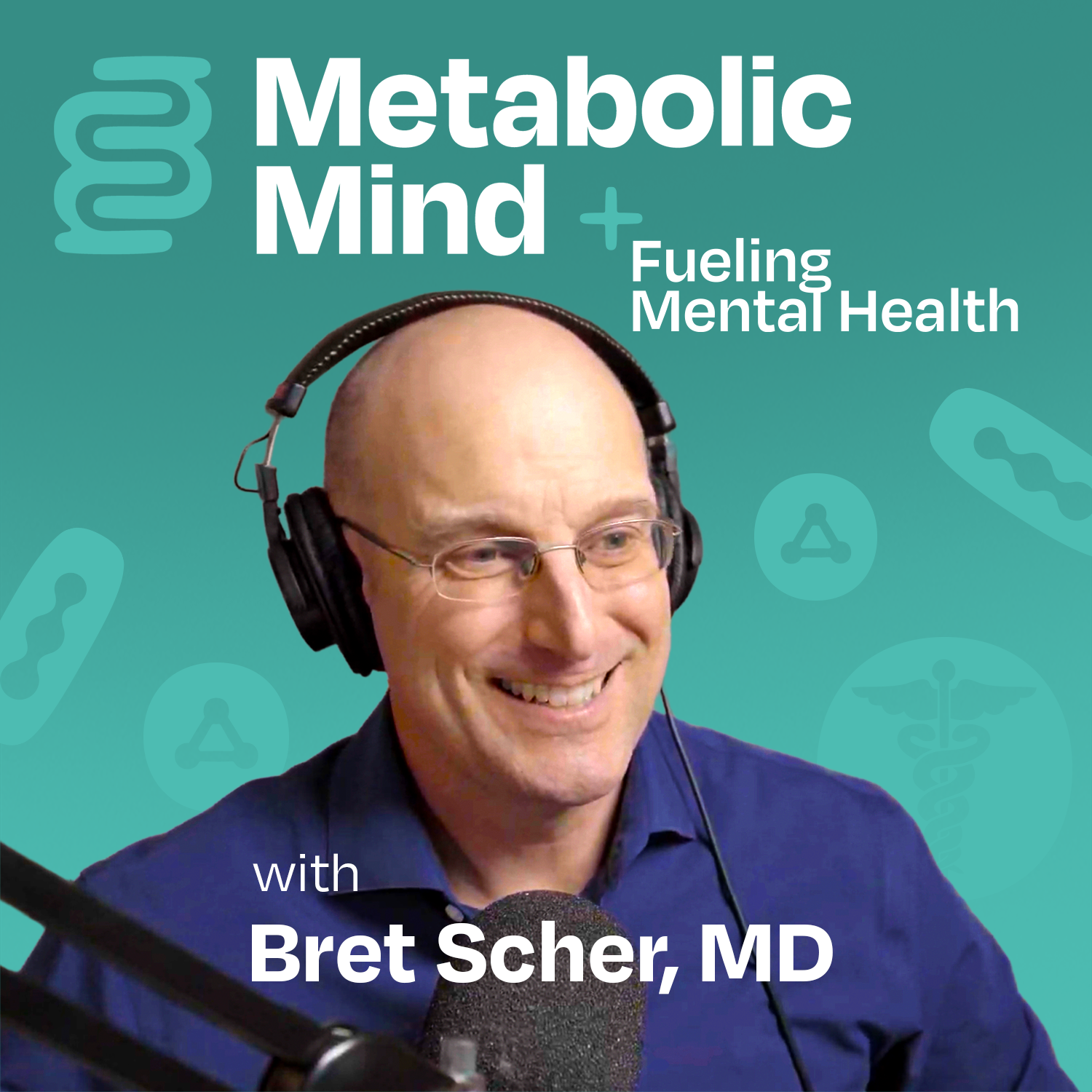
Is saturated fat really the villain it’s been made out to be? Or has decades of poor research and dietary policy misled us?
In this video, Dr. Bret Scher dives into the controversy surrounding RFK Jr.'s call to remove the cap on saturated fat, and the Wall Street Journal’s misleading take on it.
We explore:
✅ Why saturated fat doesn’t just mean pizza and ice cream
✅ The science behind whole foods vs. processed foods
✅ How carbs, fats, and metabolic health interact
✅ What the evidence really says about saturated fat and heart disease
✅ Why individualized, whole-food diets matter
Removing the cap on saturated fat isn’t about giving fat a health halo, it's about making room for nutrient-dense, metabolically supportive diets.
👉Subscribe to Metabolic Mind for more real conversations about metabolic health, metabolic psychiatry, and mental health: https://www.youtube.com/@metabolicmind.
#MetabolicMind #KetogenicTherapy #FoodAsMedicine #SaturatedFat
Expert Featured:
Dr. Bret Scher
- Baszucki Group Medical Director
- https://x.com/bschermd
Free CME Clinician Trainings:
Are you a clinician who would like to learn more about the science behind these therapies and how to implement them in practice? Earn CME with our growing library of courses from some of the top experts in the field including Dr. Chris Palmer, Dr. Georgia Ede, Dr. Matthew Bernstein and Dr. Bret Scher with more coming soon.
Our courses have been made FREE by grants from Baszucki Group, so we can spread these powerful therapies as widely as possible. Earn CME/CNE credits:
Follow our channel for more information and education from Bret Scher, MD, FACC, including interviews with leading experts in Metabolic Psychiatry.
Learn more about metabolic psychiatry and find helpful resources at https://metabolicmind.org/
About us:
Metabolic Mind is a non-profit initiative of Baszucki Group working to transform the study and treatment of mental disorders by exploring the connection between metabolism and brain health. We leverage the science of metabolic psychiatry and personal stories to offer education, community, and hope to people struggling with mental health challenges and those who care for them.
Our channel is for informational purposes only. We are not providing individual or group medical or healthcare advice nor establishing a provider-patient relationship. Many of the interventions we discuss can have dramatic or potentially dangerous effects if done without proper supervision. Consult your healthcare provider before changing your lifestyle or medications.
Get every episode summarized
Each time Metabolic Mind publishes, we email you a written briefing from the transcript — the topics, who appeared, and any specific claims, with the ad reads skipped.
Email me new episodesFree for 3 shows. No card needed.
Know when RFK Jr. turns up
Follow RFK Jr. and once a week we email you every new episode they appeared on — including guest spots the show notes never mention, because we read the transcript.
Follow RFK Jr.Free. Pick your own day and time.
Hosts & guests


Transcript ready
197 searchable segments. Every word is indexed and playable.
Full transcript
Metabolic Mind — Is RFK Right About Saturated Fat? Here's the Truth. Machine-transcribed; use the interactive transcript above to jump the player to any line.
This is Metabolic Mind Bite Size. I'm Dr. Brett Sher. You've probably seen the headlines. RFK wants to remove the cap on saturated fat so we can all eat more pizza and ice cream, right? I wish I was making that up, but the Wall Street Journal actually ran an article pretty much claiming exactly that. I'm sure it worked for clicks, but it's a gross misrepresentation of the debate and the discussion around saturated fat. I mean, for decades, we've been told to limit saturated fat, trim the steak or don't eat the steak, avoid full fat dairy, and buy everything labeled low fat. But what if that restriction was unnecessary and maybe even counterproductive? Who knows if it'll happen or not and what the government's going to recommend? But I for one would definitely encourage the removal of this arbitrary cap on saturated fat. Not to promote overconsumption or to give all saturated fat a health halo, but to allow people to construct an overall healthy diet that includes whole nutrient-desk foods that naturally contain saturated fat. There isn't one healthy diet for everyone. We have to realize that and people deserve
to be able to construct the version of a diet that works best for them without misguided and arbitrary limits on macronutrients. Removing the cap on saturated fat is a step in that direction. So here's the first thing we need to understand. Saturated fat isn't one thing. It's a group of fatty acids found in varying amounts of different foods. And for example, the fat in an average steak is only about 45% saturated and 55% unsaturated. And that surprises a lot of people because it's often portrayed that steak is all saturated fat, right? It's not. And even the heart healthy salmon, Mediterranean based heart healthy salmon, it's got 20% saturated fat, right? So it's got some. Now this tells us something important, right? Foods aren't isolated nutrients. They're complex food matrices. Their health effect depends on the whole food and the whole diet for that matter and not just one nutrient. That's why our focus should remain on whole minimally processed foods. Meat, poultry, fish, eggs, and dairy as close to their natural forms as possible.
Yet what are the most common sources of saturated fat in our diets? There are sandwiches, baked goods, pizza, even ice cream and pastries. So is the problem here that saturated fat or the fat combined with the refined carbs and sugars? It means well established that this high carb high fat combination is a health disaster driving over eating, metabolic dysfunction and a host of medical complications. So remember removing the cap on saturated fat wouldn't mean we should eat more fat and more carbs. When you increase food with dietary fat in it, especially from whole food sources, it's essential to reduce something else. And the best candidate is carbohydrates, particularly the refined ones. You see when both carbs and fat are high, your body will always burn the carbs first and the fat you eat gets stored, not used. But when carbs are lowered and your metabolic health improves, your metabolism can shift and your body can start to burn the fat for energy. And this is the foundation of metabolic flexibility and better long term metabolic health. What if mental health treatment looked completely different?
I'm Dr. Brett Schur, host of metabolic mind, a show where we dive into the cutting edge science connecting your brain and your body. Did you know that your metabolism could hold the key to better mental health? From bipolar disorder and depression to schizophrenia, researchers and doctors are exploring powerful new treatments that go beyond medication. Like ketogenic therapy. Whether you're struggling yourself or supporting someone who is, metabolic mind brings you real stories, expert insights and the hope of a new path forward. Find metabolic mind on YouTube or anywhere you listen to podcasts because what fuels your body, fuels your mental health. So lifting the restriction on saturated fat would also open the door to discussing low carb and ketogenic diets as legitimate therapeutic options for people with various metabolic dysfunction, diabetes and fatty liver disease, insulin resistance and even mental illnesses. Of course, ketogenic diets don't have to be high in saturated fat. That's really important to recognize. You can eat a vegetarian keto diet,
a Mediterranean keto diet, even a vegan keto diet. But some people do eat saturated fats on their keto diet. When properly designed with real nutrient-desk foods, these low carb diets full of saturated fats can improve insulin sensitivity. Lower triglystides support sustainable weight management and improved body composition. So with all that though, you might be wondering, yeah, but what about heart disease, right? I've heard saturated fats are walking heart attack. It's gonna give you heart disease. Well, most of the data linking saturated fat to heart disease comes from observational studies. And there are plenty of contradictory evidence to that. But remember, the observational studies are low quality evidence that suffer from healthy user bias with confounding variables, very low effect size, poor dietary recall, and so much more. Just an example, many studies find that people eating more saturated fat also smoke more, exercise less, and are less likely to take a moldy argument. They're simply less healthy and less health conscious. They just happen to eat more saturated fat. They aren't less healthy because they eat more saturated fats. It's a circle of the argument that doesn't work.
But more of our most of these studies don't separate whole food sources like unprocessed meat and poultry and dairy from processed foods such as pizza, lasagna, and pastries. And that's a problem because if the study doesn't differentiate between them, your body certainly will, though. So when researchers do make that distinction, they try to separate those foods, then there are studies showing no increased risk from unprocessed red meat, full fat dairy, or even dark chocolate. And finally, it's true that eating more saturated fat containing foods can raise LDL cholesterol in some people. In a caulkern review of randomized trials, reported a very small increased risk of heart disease for those whose LDL went up after eating more saturated fat. But remember, this happened to some people not all. So why should everyone limit their saturated fat when only some will see an increase in their LDL? That just doesn't make sense. But even then, heart disease is multifactorial. There are plenty of studies looking at low carb diets that include saturated fat, demonstrating no rise in the LDL or even a small rise with a reduction in calculated cardiac risk.
We lose that nuance if we have a blanket reduction in saturated fat and assume everybody's LDL goes up and everybody's heart disease risk goes up, but that's not the case. So if a diet that includes foods containing saturated fat, helps someone improve their insulin sensitivity and lower their inflammation and improves all aspects of metabolic health, the net benefit is going to be dramatically beneficial for overall cardiac health. That's something that goes against commonly held beliefs and isn't discussed enough. And lastly and importantly, LDL can be monitored, right? We can test for it. And the diet can always be adopted and altered if that's appropriate. So when we talk about saturated fat, let's stop isolating a single nutrient and let's not pretend it means it's okay to eat more ice cream and pizza. That's disingenuous and purposely misleading. Instead, let's emphasize whole foods, dietary contacts and metabolic health and metabolic balance. And let's not portray saturated fat foods as a walking heart attack, another disingenuous statement. By removing this arbitrary restriction on saturated fat,
we can empower people to eat in a way that they enjoy and can sustain, which also supports long-term health. So whatever the government does, whether they address it or not, I think we as individuals can all take charge of our own diet, our own health and realize these important nuances around saturated fat. So what do you think? Do you agree? Should we remove restrictions on saturated fat? Leave us a comment and let us know what you think. And if this was helpful, please like and subscribe. I thank you for watching, I'm Dr. Brett Schirm. And we'll see you here next time at Metabolic Mind, a nonprofit initiative of Suzuki Group.
More episodes
More from Metabolic Mind
BITESIZE: Two LDL Trials. Two Different Results.
Metabolic Mind
Vegan Keto and Bipolar Disorder: Dyane Harwood’s Story
Metabolic Mind
Q&A: Why Protein Shakes Leave You Hungry, Fasting, Basal Metabolic Rate & More
Metabolic Mind
BITESIZE: Cholesterol Results Explained: Beyond the LDL Number
Metabolic Mind