Get every episode summarized
Each time Legacy publishes, we email you a written briefing from the transcript — the topics, who appeared, and any specific claims, with the ad reads skipped.
Email me new episodesFree for 3 shows. No card needed.
About this episode
“There's a version of Fall that's yours alone. Pura Paris Smart Technology with fragrance built for the season, so every room feels like exactly where you want to be.”From the transcript
Who taught you that the Mongols only destroyed things?
What if the empire that sacked Baghdad also invented blue and white porcelain, elected its leaders, and let the Khan's first wife decide on war?
And why do the Mongols still have a worse reputation than any other empire in history — including the ones that lasted longer and killed more?
In this Legacy Inbox episode, Peter is joined by Marie Favereau, one of the world's leading historians of the Mongol Empire, whose work has done more than anyone's to dismantle the story of a bloodthirsty wave that destroyed everything in front of it.
A small group of nomads from what is now Mongolia — probably fewer than a million people — reached Central Europe within sixty years. They did it partly by fighting in winter, when everyone else went home, and by bringing their families and their herds with them so they never had to depend on the villages they passed through. Then they stopped conquering and started building: cities, workshops, tax systems, religious debates at court, and a trade network running from Korea to the Mediterranean. Marie Favereau is co-curator of Genghis Khan: How the Mongols Changed the World, at the Royal Armouries in Leeds until 1 November — almost 250 objects out of Mongolia, most of which have never left the country before.
Join Legacy Plus for bonus episodes, early access, Q&A's, fewer adverts and more.
legacy.supportingcast.fm
[0:00] Peter introduces Marie Favereau, and the 248 objects that have just landed in Leeds
[5:48] Ridden, eaten, milked, worn — why everything starts with the horse
[9:47] Khans are elected, can be deposed, and the senior wife decides on trade, diplomacy and war
[13:22] "If you just build your empire on the family, you have a dead-born empire"
[16:44] Blue and white porcelain turns out to be a Mongol invention
[36:12] Why the Mongols get a worse press than any empire that came after them
Genghis Khan: How the Mongols Changed the World runs at the Royal Armouries Museum, Leeds, until 1 November 2026. Adults £9, concessions £7, under-16s free. Co-curated by Marie Favereau and Natasha Bennett.
royalarmouries.org/leeds/whats-on/genghis-khan
Marie Favereau's book The Horde: How the Mongols Changed the World is published by Harvard University Press.
Stay connected with Legacy:
Instagram: @originallegacypodcast
TikTok: @legacy_productions
Explore more from Peter and Afua — essays, sources, and ideas:
Substack: peterfrankopan.substack.com | afuahirsch.substack.com
Join Legacy+ for bonus episodes, early access, Q&A's, fewer adverts and more.
legacy.supportingcast.fm
Stay connected with Legacy:
Instagram: @originallegacypodcast
TikTok: @legacy_productions
Explore more from Peter and Afua — essays, sources, and ideas: Substack: peterfrankopan.substack.com | afuahirsch.substack.com
Hosted on Acast. See acast.com/privacy for more information.
Get every episode summarized
Each time Legacy publishes, we email you a written briefing from the transcript — the topics, who appeared, and any specific claims, with the ad reads skipped.
Email me new episodesFree for 3 shows. No card needed.
Transcript ready
881 searchable segments. Every word is indexed and playable.
Full transcript
Legacy — Inbox: Genghis Khan and the Empire We Got Wrong | Marie Favereau. Machine-transcribed; use the interactive transcript above to jump the player to any line.
There's a version of Fall that's yours alone. Pura Paris Smart Technology with fragrance built for the season, so every room feels like exactly where you want to be. Explore Sense of Place at Pura.com. Hi, it's Peter Frankaban here. Today, I'm delighted that we're joined by one of the world leading historians of the Mongol Empire, Professor Marie Favreau, who's an old friend of mine. Marie teaches medieval history at Paris Norddeath, University NS held research positions at Oxford, Princeton and Layden. She's the author of the acclaimed book The Horde, How the Mongols Change the World, which is a spectacularly good book. And has done more than any other recent work I know to overturn the old stereotypes of the Mongols as little more than destructive conquerors. And instead, her book shows how Mongols built one of the world's great and most dynamic and interconnected empires. I wanted to talk to Marie about a new show of the Royal Armories in Leeds that she's curated,
which is on Chinggis Khan and the Mongol world. And rather than simply telling the story of conquest, the exhibition explores the people, the ideas, technologies and global connections that transformed Eurasia in the 13th and 14th centuries. So today, we're going to talk about how to separate myth from reality, to think about the legacies of the Mongols, why they're understood in the way that they are, and ask what made them so extraordinary and why their story still matters today. And if you are a legacy fan, which I hope you are, Afro and I did four parts on Chinggis Khan a couple of years ago. So you can dig that out of our archive to have a listen to that too. But you're going to enjoy the conversation. Marie is absolutely world-classes of scholar, fascinating and interesting. Hope you're going to enjoy this episode. Marie, it's such a pleasure that you join us. And so grateful. There's no one else in the world I'd rather talk to about Mongols. But I'd like to start with your exhibition in Leeds at the Royal Armory.
Tell me a bit about the exhibition, how you got involved, what you're trying to do there. Yes, thank you so much. First of all, I'm so glad and honored to be here and to share with you my excitement about this exhibition. First time in the UK, all those objects, 250 objects coming from Mongolia. Most of them for the first time also. Mongolia is a young country. They have new museums and they have wonderful collections. Most of these collections come from 13, 14 centuries and they come directly from excavations. So this is also like research alive that we can see here for the first time. So in Royal Armory's Leeds Museum and the topic is the Mongol Empire. Of course, the topic is a conquest led by Jenghis Khan and his family. But it's also about what we call Mongol exchange and the trade and all the diplomatic relationships they build up during their time when it was like what we say the Mongol moment or the Mongol Empire.
So that's really like the core topic. Tell us a bit about that Marie because not everybody will know the Mongols as you do backwards. Just do the initial start point from I guess the late 12th century introduces us to the Mongols and to Jenghis Khan and just paint that picture of expansion and how a small tribe from inner Asia manages to create this extraordinary empire. Yeah, at the beginning, of course, it's an of 12th century but at the same time, our idea was to show to the people how the build of this empire because we always get this question. Well, it's a small tribe, like a few thousand people in what is Mongolia today. They come out of the step and they build up sophisticated states, you know, how come. And we wanted to show that they were previous empires before Mongols. The most famous one probably is a Turk empire coming really also from Mongolia but also they were the Xiongnu who knew empire before.
So there were a series of nomadic empires before the Mongols and those empires helped. They were like, you know, the ground, they built some sort of administrative practice and they were there before. So we wanted to show that in the beginning of the exhibition. So people would really understand that the Mongols are not coming from nowhere although they did more than the others where the build is like much bigger. The scale is as nothing to be compared with the Turks before the Hunu. So that's the beginning. And in the exhibit also we really want to show what was the life of Tenghis Khan. So as a person, you know, as a young nomad but we also show some previous objects from the past. Up to I think the oldest maybe is from the two century before common era. So you see the deep history, right? And so what is it about these?
I mean, as you know, very interested in these step empires, the nomadic peoples and they do two things. They can either create their own empires. As Xiongnu you mentioned, the Turk, Eastern Western, the Mongols and so on. But before we go into the Mongols themselves, they also provoke other empires to be built in response. So we can understand sedentary empires of Persia, of the Chinese different states because of the pressure. What is it about these nomadic peoples that makes them so adept at creating empires? What is the source of their power, of their wealth? How do they react? Because you're right in talking about this continuation. But just again, not everybody understands it because I'll definitely ask you about why the Mongols have this terrible reputation because you've worked on so much to correct that. But what is it about this nomadic world that is so important in the glue of understanding empire? Well, this is really an important question and there's still some a bit of an answered question.
But I would say that, of course, horses, horses, this is key. So we really have a lot of important sections showing how men and women sort of learn how to use horsepower in different ways, because they, of course, we know they use ride horses, but also the eats horse meat, but also the drink, horse milk, but also they use the horse skin. The horse is really, it's part of the story. You cannot imagine all those empires starting from the Hun, without the horses and their power and the mobility it gives to the nomads. Also, I think they are coming from the Norse and part of the world. So it was very interesting. You say you compare with all those other empires. Also, of course, we think China, we think Persia, South, hot, you know, very different areas. So Mongols and before them,
all those set nomads, they know harsh winters. And actually during harsh winters, they leave the camp, they leave their area, because it gives them more energy to just to move. And also, they have to survive, and they have to survive with the horses and the other animals they raise. They have camels, they have goats and sheep as well. And so this winter mobility is very specific. And you can find it from, you know, in Siberia as well, from really Saka periods that you know very well, Skician also, period. So I think that's also an important aspect. The last thing is we were talking about a few people, few thousands. We don't know how many Mongols they were, like in the 12th century, but certainly less than a medium. And even less if you think about earlier periods. So they are also very, they have a very interesting flexible social structure that help them to integrate into themselves, into their own societies, other people.
So people who would be prisoners, but people also would be allies, people would be, that we would call slaves, actually they would integrate them into their own. And that would help them to be stronger socially speaking. And that's also this social flexibility, this adaptability also, so quite specific to them. It's kind of openness in a way, although it's harsh for people who are forced to be integrated, right? So, but that's keep... So you use that word a few times about flexibility. What about, tell us about the sort of social structure of the Mongols in particular, but also other different nomadic groups, because of course, the name of Chinggis Khan is more or less the only Mongol name that anybody knows. The names of other Mongol leaders, whether of Chinggis Khan's descendants. It's true if you're from Central Asia or in Iran or South Asia, you'll know this, but here in Europe, it's only Chinggis Khan. So most people's assumption would be you have one super charismatic leader.
But how does flexibility work within leadership group? How do leaders function in this kind of flexible group where you're adding members to the tribal constellation and so on? How important is the character of the leader? Yeah, you're right. This is important, this notion of leadership, that also it's something that's sort of capture all the lights for us in Europe. When we think about these big nomadic empires, we think about the Khan, so the king, the emperor, and Chinggis Khan is Chinggis Khan. We can say also it's like the universal emperor, we try it's a title. So, but his first name is Timur Jin, and it means actually something completely different, something someone who would work with Iran, maybe blacksmith with Timur Jin. So it gives you both sides of the story. So actually, these nomadic society, even though they have leaders, they elect these leaders. These leaders also cannot give the power
to their firstborn son. So easily, it's a lot of work for them, politically speaking, to do that. And it happens rarely. And actually, Timur Jin and Chinggis Khan was not in power when he was a young boy. He father died when he was like 11, 12, and then after that, he really had to fight to be unknowledged as a ruler, as a Khan. So this leadership can be contested and it can be also politically complicated. It's not that easy. And also, they don't have a total power on their subjects, which is also something I hear sometime, but no. The woman also are very important. It's something we show in the exhibition in Leeds, but the wife and the mother of the Khan of the leader are extremely important. So the Khan can have several works. There's no limit. In other cultures, it's diplomacy. You marry it because you want to integrate other people. It doesn't mean real marriage in a way.
But there's a first wife. I print like a number one. And this one, since the one was going to give birth to the hairs of the, you know, the next leaders. And this primary wife, she has a lot of power, too. And she decided on a lot of things in terms of trade, diplomacy, war, she can go on the battlefield, or she can stay behind to protect the army or the families. So there's something very collective in the society. And it's not only about the leader and the leader really need to prove that he's able. So they don't really have two young leaders. They don't have child like on the throne. This doesn't work for them. They really want to have a military chief. But if the leader become, you know, become a bit old, also it can be discussed and it can be a problem. Because they want someone very effective, you know, able physically to, you know, run the state.
And then, of course, with the, I mentioned the wives, but also you have all the elite families around the hand. So it's like this. There are councils and big assemblies. We call them Kuhil Thai, you know. And so it's basic assembly. They are very important because once, twice a year, they all gathered together those nomadic families and they took decision. We know war, as I mentioned, but it can be peace, but it can be also tax organization, sensors. A lot of things are being, they have been decided during those big assemblies. But so, Marisa, because your exhibition makes an important point of saying there's the expansion pulse, which is synonymous for sure in the West with ultraviolence. But again, as your work has shown, violence uses a threat as different to implementation. But one of the things that's misunderstood and not really thought about with the Mongols is how sophisticated the society is from a structural point of view. I'm minister to point of view. I mean, just now listening to you talk about the structure within the tribe, I mean, maybe meritocratic is too strong a word.
But you know, there's a constant look for talent in these nomadic organizations. You need to find people who are able to bring the support of the group with them. So having a silver spoon born and you put in your mouth is not enough. It's not enough to be a, yeah, tell us a bit about that. Exactly. That's very important. And then even Jingu's hand in the sources, it said that if you just build your empire on the family, you have a deadborn empire. It's not going to work. You need talents. And to find the talents, you need to look outside. You need to look for new subjects. And what the Mongols did is each time they were not new subject like in China, in Tanghue, to Central Asian people, they would use them for what they are good at. So my example often is like on merchants. Merchants can be excellent administrators because they know how to count. Because usually they work a lot like businessmen. They speak several languages. Often they know how to write.
And they know how to deal with different cultures. So they would be integrated into the administration. But they will, if we speak about military aspects, of course, they needed engineers to break city walls because Mongols are excellent, or men, archers. But in the beginning, they didn't know how to take big cities like in Central Asia. Think about some kind. Of course, we can think about China, all those big world cities. So they used engineers, Tanghue engineers, Central Asian engineers to help them to attack so cities as well, they were part of the armies. And also, they were all, rather interesting when you look at literacy and religion. So Mongols, although they were nomads, they were interested in developing literacy and also developing literature. And they liked manuscript a lot. And they also were interested in religious debates. And same story. When they go somewhere, they include into their own social intellectual circles,
Central Asian, Muslims, Jewish Christians, of course, Buddhist Taoists, monks, we could make this alive, you know? And this is also very specific to the empire, I think, even more than the previous nomadic empires. And we have very good sources on that. Some rooms are for gathering. Some are for slowing down. Pura lets your home smell like both. Fine fragrance paired with real technology, tailored to every room you live in. This fall, discover what your home could smell like. Explore a sense of place at pure.com. Real talent is defined by what people can do, not where they learn to do it. So by stopping at the education section of a resume, you might throw away the perfect chire. Skills first hiring helps you see talent others miss. Like more than 70 million stars, skilled through alternative routes, let their story unfold and gain a competitive advantage
because hiring managers who start with skills are 60% more likely to find it successful higher, higher skills first. Learn why at tetherpapershealing.org brought to you by Opportunity at Work and the Add Council. What about the role of luxury objects and textiles? I mean, you mentioned that the functional jobs that Mongols are looking to attract all the nomadic empires it expands, or the constellation. But there's a lot of references to artisans, to architects, to people who make nice things, and your exhibition shows some of the beautiful objects. Where does that fit particularly along with things like silk? I mean, introduce, I think, to the importance that commodities play along these networks, whether it's nomadic, within nomadic empires, or just through exchanges through sedentary states, too. Yeah, this is really key, too. The craftmen, also, they had specific statutes in the Mongol Empire, a Mongol appreciated, like, luxurious product.
They wanted themselves to produce them, to export or to use for themselves. And, of course, in different parts of China and also Iran and Central Asia, they were a very skilled craftman. We mentioned silk and textiles, but they were also ceramics, beautiful ceramics, and maybe the most famous, which appeared during Mongol period is what we call the blue and white porcelain, which is like a Mongol Empire creation, in a way, because they put together this, you know, central Asian and Chinese knowledge and they forced them to produce new objects. And they did the same with textiles, because Mongol robes, with silk robes, we call them also a golden, thread silk, developed a lot under the Mongols. And they put a lot of effort and also a money, actually, to create workshops where craftmen could work peacefully for,
for themselves, for their own prestige, but also for trade. And that's also something we wanted to show in the exhibition is the circulation of the luxurious object during the Mongol period. Some produced inside the empire, some from outside, and like re-crafts in the Mongol empire for the Mongol taste. So that's also something people are not used to know, because they have this image of the poor nomad, or let's say there's a rough nomad, you know, which is living on his horse, but you can show also the court nomads. And that's something on another dimension, I'd say. And what about nomads themselves, Mary, because we now know, we understand this much better than we did 30, 40, 50 years ago. The idea that nomad societies are always on the move. You know, there are cities in important and big cities. How's the connection work between the moving around and the court, which you already mentioned? And also just maybe start us when you talk about the production of elite goods.
Is that what just all empires do? You know, the British empire, the Roman empire? That's what happens if you're successful and you've got a lot of money, you want the nice things in life. And so the Mongol tradition of blending and creating new ideas. So tell us about that, about how you see elite goods within any form of empire, but then about cities and towns within the Mongol world. Yeah, I absolutely, it's very important to understand that. That's why we can keep the word empire for the Mongols. It means we can compare with other empires. We can compare with the Roman empire. We can compare with the Ottoman empire. Why not with the Abbasid certainly, with Britain, Great Britain. We can compare with any empires. It's interesting to see how they develop their own system. Yes, they do want to see themselves like possessing the most beautiful objects because it shows you on the top of the world, and you want to show at court when you receive foreign ambassadors. How many of the world you possess in a way through those objects or beautiful animals as well?
You know, the most beautiful horses, most beautiful camels and so on, or exotic animals, like monkeys and elephants. But otherwise, the specificity, I would say, is like the move. They're not always on the move, though. They move with the seasons, which is also common in, as you perfectly know, for earlier period, people court would move if it's called, you go where it's, you know, this better time. So in the case of the Mongol, when it's too cold, they would go south or they would go down in the valley to protect themselves again, the winds. And if it's very hot or something that we forgot, but if you go to the step to the, you think about it, mosquitoes, horrible flies, you know, at some season. You have to move from some areas to other areas where you can skip them. So they will move according to the weather conditions. They will move also not to exhaust the land because they are moving with the herds, with the animals.
They have, as I said, horses and camels, goats and sheep, but they also have yaks and they also have birds. They have a lot of prey birds. So that makes it very different from, I think, western courts because the western court, when they move, they don't move with everything. It's not like the king is going to move, king of friends is going to move with all the animals, the families and the administrations. That's one point. But you mentioned cities. So that's also something we wanted to show to people. So Mongols are not against cities. Of yes, indeed, they raid them and make big conquests. But then after that, they're points because it's an empire. They want this subject not to be slaves, you know, but to be tax payers. So they start also building cities and building their own cities. The most famous one is Caracohum in Mongolia today. Santra Mongolia. You can visit some of the old monuments, but most of them are from later periods.
It's really thanks to the archaeologists that we can, like, we discover how big the cities were and how large they were. And in the exhibition, we worked on the three-dimensional recreation of Caracohum, for instance, with the archaeologists, tried to show why their audience, how those cities look like in the past, because they all disappeared, the Mongol cities. But then finally, the very specific thing is the Han and the court and the Numa. They don't live in the cities. They invest in it, they build or make people craftmen build beautiful monuments and temples, Buddhist temples, churches, mosque, but they don't live in the cities. They live outside in the outskirts or in the step. And they do their political meeting outside always. And that's very, very special. Marie, tell me about some of the objects in this exhibition. I mean, in particular, the saddle, the composite bow,
and explain and use those, maybe, to tell us how the empire managed to build so quickly. I mean, you mentioned the horse and how important it is, but just the speed at which the Mongols go from the 1180s, small constellation, you, I'm sure, would have bet that the Mongols would conquer the world. But unusual, they're not an important tribe. They're not particularly numerous. And yet by 1240, in 60 years, they're in central Europe. I mean, they've conquered almost everything in front of them. How are the Mongols able to do that so successfully? Well, I mean, they don't have particularly sophisticated weapons. They are very technical. Also horsemen, they know how to use those complex bows, OK, and arrows. And they have a lot of different type of arrows as well. They are mobile and quick. And they use also other weapons, of course. They use swords. They use a mass. You call that like the mass, right? Yeah, yeah, the base, base, the base.
Yeah, exactly. The fear as well. Yeah. And you know, I also working in the Royal Armoury's Museum with the wonderful greater teams there. I went to a section of the museum where they do have actually Mongol or, you know, 14th century weapons, which are not coming from Mongolia, they're both for their own collections. When you see the mass, you see also helmets, special helmets. So also, they have leader protections. So a lot of things to protect themselves from the cold and from the on the battlefield to be efficient on the battlefields. This you can see also a development of sub-sup, kind of, personal and bomb. We call them like ceramic, you know, in which you put some powder and that you sound, it's like a bomb or grenade. So they have a lot of things that you can use, but what we know now also is why they were, they make the difference. It's because so number one, they do war during winters.
Which in many countries in the West is like, no, winter would you stay home, you know, why, how come you make war during winters? Also, they are very loyal to their captain. So when you look at the two men, the Mongol platoon, actually, how it's, how it has been shaped, you know, it's a small group of people dedicated to their own, like, commandants or leaders. And that's also a super efficient in terms of communication, although they are all small groups, mobile, but also they come with their families. So when they come to the West, when they come up to, you know, Eastern Europe, they came with the, with camps and families. So they have their own logistics. It means that they don't have to rely necessarily on villages to get foods and water. They will do it, but they can't survive without it, because they have their own nomadic way of life that they take with themselves. Actually, it's a little bit like they took their home with themselves. And that can be shocking from our perspective of a war,
which would be a total war, but for them, when they have its moments, they have those fights, they go with families. And that's why also we know that women were completely parts of the system and explain how they surprised everybody on the battlefield and how they went so quickly up, well, on one side to China, Korea, on the other side to Eastern Europe. But then they had to transform into an empire. That's that's a conquest, but conquest has to stop at some point. Violence has to stop and something else needs to go out of it. But on that, Marie, I mean, there's a series of, as you know, that lots of factors and there doesn't have to be to choose one, but there's there's an environmental factor about unusual weather events that creates pasture for horses. There's the character of Chinggis Khan and his unique ability to unite people. There's the fact that the Mongols are stepping into a world that perhaps both in the East and West that is well timed. But what is it about this timing of late 1100s, early 1200s,
that makes the Mongols do something very unusual? I mean, there are these other empires, you mentioned. But what is it that makes the timing so effective for the expansion like this? Yeah, of course, there's geopolitics in environments. So of course, about environment, we still are working on getting more data for the period. We're learning that they were more forest in Mongolia and in Sarra than today. So it's just still new research, but it was clearly very cold. And this cold also explained how many rivers were frozen, actually, and how the Mongols used that to cross or a razor, because when you have a huge river like Irthus River and you have to go with the horses and everything and swim, it's a lot of logistics. But when it's frozen, it's a road. It's ideal. So they used that also probably, they're in good physical shapes,
because they eat a lot of meat. So and they have the system of keeping the meat for the winter to be able to be strong enough to be strong warriors. And they are described as very strong and very resilient people. And finally, also, of course, they stop in some areas. We know they stop in India. They couldn't really make the conquest of India. They stop in Eastern Europe. And they are certainly also like problems for the herd. Like the nomadic life had to stop somewhere, you know? You cannot be a nomad everywhere. If you were raised huge herds of horses and, as I said, the other animals. So that's also explained that the core, which is a very large core of the empire, is the grassland, a region grasslands. And when it stops, when they need more, you know, better conditions for the animals, because they remain nomads and they remain herders. So that's one thing.
The other thing is, as you said, the geopolitics. The thing in Central Asia is that you have Muslim powers who are confronting themselves. They, you have the abyss that everybody's heard of, I guess, in around Baghdad. The abyss that kind of weak at that time. And they are in a very strong opposition to the, where we call the Chorizan Shasultan of Choriz. So in Central Asia power, Muslim power. They don't help each other at all. So you have those fight among Muslim powers in Central Asia, up to Iraq, and then after that up to Egypt, that show not a unified front against the Mongols, but showed rather people who are happy to see Mongols, creating problems to their neighbors. They don't see that they are coming for them after. But, you know, they just see, okay, my, you know, this other Sultan is gonna have hard time. It's good for me. So that's a game played by the Chorizan people
in Central Asia, played by the Chorizan people before also. And then even Abbasid was, they were, they didn't move up to a very late point. And that also clearly was a mistake. If you think about, you know, the future, what's gonna, what would happen, you know, with the Mongol going up to Baghdad, killing the caliph and getting rid of the Abbasids. So that's something really huge. And when you look at the Christians, of course, from Christian side, if you put aside historians, what Christian leaving from the long time ago, as you know, in Central Asia, up to China, but if you look at the Western, a Christian, then you know that they were more focused on the Crusades, still, and some Christian in Armenia, specifically in Georgia, in Caucasus, try to tell them, we have another problem, you know, maybe we should switch the Crusades, you know, to talk about Mongols, or try to speak with them,
to see if they can be Christianized or, you know, but the problem is not where we saw, it was before. And I think also that that was a kind of a mistake. It's always easier, of course, when you look at history afterwards, but at that time it was clearly a mistake to stick to the Crusades, and instead of seeing that the Mongols would be, was becoming the real threat, you know. What does fall smell like at your house? Warm cashmere, crisp apple, something like a pumpkin patch, a golden hour? Puras' whole home setting lets you build a different scent story for every room, controlled entirely from your phone. This is Puras' new era of fragrance. Explore a sense of place at pura.com. MUSIC I'm very worried about the legacies of the Mongols.
I mean, there's a long and surprising connection between the Mongols sending em boys to England, in fact, and conversations in England about alliance who's in the context of the Crusade, but also fashion and fabrics and, you know, order of the shiver with the night, the guard of the oldest shival order in Europe has a very strong Mongol content. And what, how do we understand it? I mean, it's, you know, when you have a show in Leeds, it's not the most obvious place because the Mongols never made it that far. But why, tell us a bit about the consequence of, why do the Mongols become so famous in British and European history? Why Chinggis Khan? And what are some of those connections that we can see in the world's looking back from today? Well, certainly some objects were important because Mongols export as we said textiles. So in France, for instance, we discover in church in like Mongol textiles, beautiful silk textiles from the certain 14th century.
So ceramics was blue and white going everywhere. So this is kind of soft power. But also, of course, the impressed the style, the horsemen. I mean, in Europe, we're still thinking whole about chivalry and horsemen are so important. You see, they are so proud on their horses and they have those beautiful clothes made of very colorful with the, you know, the special helmet and very often it's just a hat and the archers. Also, I think in Europe, we main, like, connected to nobility. This idea that you own horse and you have bow and arrow, it's like something that that have been appreciated in Europe as a beautiful image of a noble man. But also for women, we think that Mongol women had special headdress. We call them Bokta and we can show one in the exhibit, which is very rare and actually thought they were very high
and the structure is light woods inside and it beach bark often. And it's covered with silk, with very beautiful red silk and then you can have also juries and pearls all around if you're a rich woman of the elite. And those headdress impressed a lot also in the west. They were very interested and some people even think that also the fashion change in the west because of these Mongol, you know, headdress and style of clothing. But one of the questions we worked on is how in the west is so that? Because of, we know about Marco Polo, they've been some travelers and merchants going to, even to China during Mongol period. But then for the normal people, how did they know? So we, the big embassies sent to the west by the Mongols and several sent to Italy to Rome for discussing with the Pope. But also some in thousands of friends were the met the king of England actually as well.
And then the written new is huge. You have to imagine 200% minimum with the ambassador, with the Mongol ambassador. And drawers, people from the streets, anyone could see them, their face, their clothes, their style. And it was for the first time they'd see Asian faces. And that's why in Italian paintings, especially from Siena in 14th century use, in the new painting, Asian faces. And we can collect all this. Now if you go to any museum, you look at the Italian painting from the 14th century. And you can see in many cases, or also Mongol dress, this famous silk with dragons. And this is the beginning of a real encounter between east and the far east and far west, let's say. And that's also up and up doors, doors for imagination. And we know also those for more than that,
because we also think that Christopher Columbus was inspired by Marco Polo and traders start to think, yeah, we can do business with the far east. So we know that the early modern period completely grounded into this Mongol era. But also I like the idea that people for first time met each other. So new faces, new styles, and that was also part of the object. We wanted to show doing this exhibition in needs. But we like, I mentioned, exhibitions like this are so important to show the reality of life amongst the things that I love about it is the focus on women, the focus on luxury goods, the focus on administration, and to show how things actually work, rather than a sort of bloodthirsty way that destroys everything in front of it. But just I think it's a kind of final question. The legacy that the Mongols have, the position they have in the ideologies, the histories of Western Europe, of Russia, of Iran, the Middle East, and even of China's is so negative, probably more negative than other empires.
Why is that? All empires behave in roughly similar kinds of ways of expansion. There's exploitation, there's resource conquest, all these things that we're familiar with. What is it about the Mongols that makes them have this special place that requires the kind of work that you do to be the corrective? What is it about the Mongols that has made them so notorious? In ways that it's partly, I suppose, understandable, but in lots of ways to historian surprising. Yeah, I mean, we, we, we, we call it, try to understand that too. I mean, it's clear that during the, after 16th century, especially in, during 1819 century, the image of the Mongol became really bad because it's the time of colonial empires also in the world, and we don't like nomads because nomads seem as unpredictable and not difficult to control and to put under control. So if you look at just France, you know, we want nomads to settle down. If you look at the French Empire, for instance, but it's the same with the other empires.
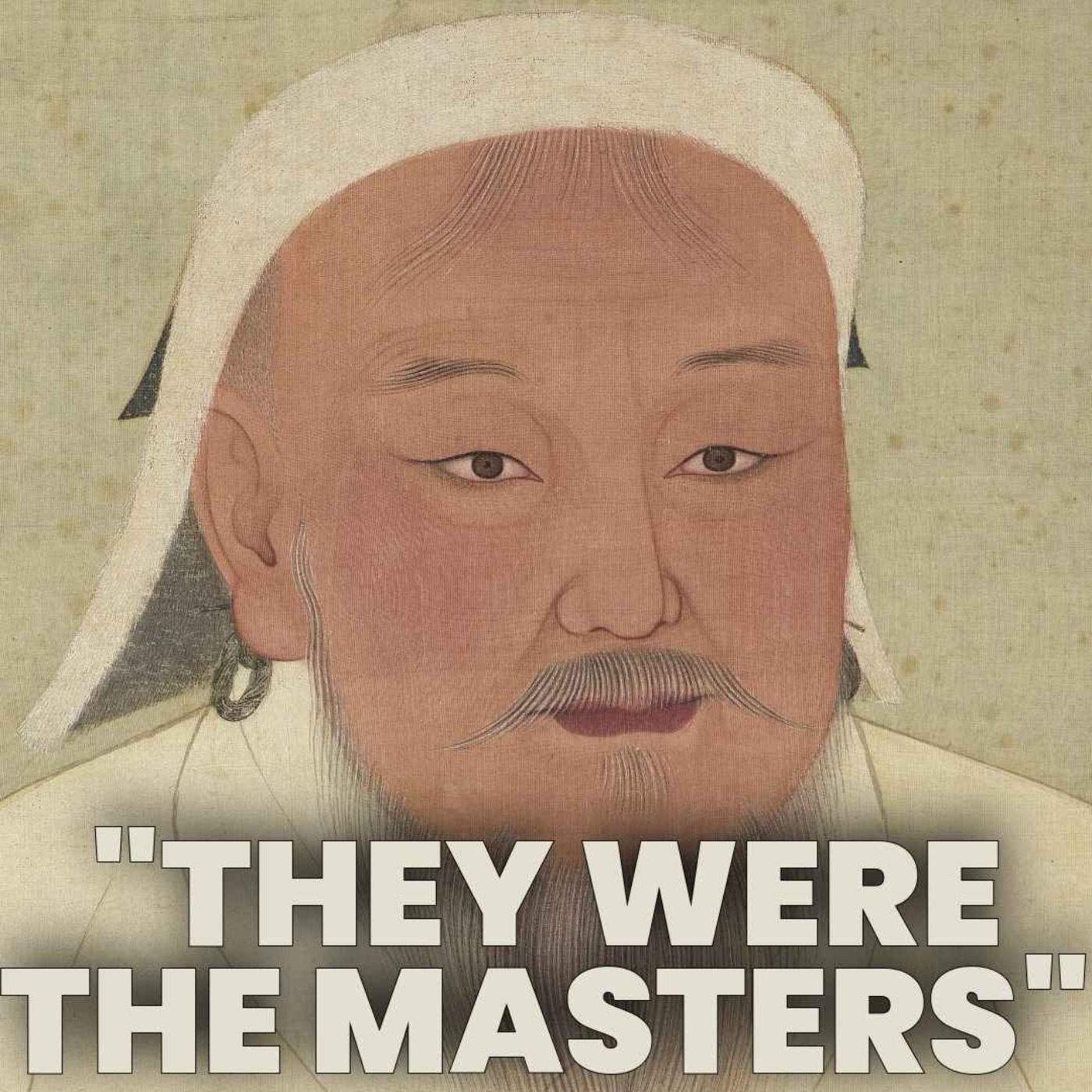
They want Russian Empire, certainly. They try to settle down all the Kazakh people killing so many of them by doing so. The other thing is, of course, when you look at Mongolia today, and when you look at the Mongol Empire, you see there's a big difference, right? In terms of size. And it means that for Iran or Russia, Central Asia, even Eastern Europe, there was a time in Russia, certainly even more. Yeah, there was a time when they were under the Mongol domination. And in national history, this is not well accepted because it means that these people were seen at some point as poor nomads, just poor warriors producing nothing, but they were the masters. And that's something that is hard to swallow, to put it very simply and directly. And that's why also Mongols get this bad image that was maintained and developed in many countries. And I would say that now historians try to show a balance.
Of course, Mongols were warriors, and it's part of history that they were very, when you can see very violent moments, and we show that clearly. But also, it's not only about that. Because otherwise, you cannot really understand how people accepted even the Mongol power so well and accepted to be part of it. And so we had to give a full picture. I mean, and that is a balanced one, to be also out of honesty for the public, and to make them understand that it was much more interesting and complicated than what we, the idea we had of these barbarians. And also, I think maybe it's good also for Mongol people themselves, because they rediscover their own history. Because having been submitted to the menchews or basically to China, and then after to the Russia, for a long time, they lost the memory of their past. And if you go to school in Mongolia in maybe 30 years ago and look at school books, you would never see anything positive
about nomads, herders, or anything at all, about Mongol Empire. And Jenghis Khan was often seen as a dangerous figure. So of course, for them, now it's important to rediscover their past. And then they can also participate in this big scholarly debates about what the Mongol brought to humanity, in terms of science and culture and arts. Marie, look, it's been such a pleasure to talk to you. I'm a huge fan of the work that you've been doing and that you do. It's such inspiration to all of us seeing how in Asia and these have a structure of empires actually works, rather than in theory. I remember one of the first things I learned about the Mongols about 35 years ago, I had a very lovely supervisor who told me that the great problem the Mongols had is that although they collected artists, artisans, fancy goods, ceramics, silks, they didn't pay historians to write their histories for them. And that's the reason why we don't understand them so well. That's the reason there isn't a legacy to protect.
So it's a few hundred years late, but I'd like to think that Chinggis Khan, his descendants would be very proud of the work that you do. But I strongly recommend everybody listening to go and visit Genghis Khan, how the Mongols change the world, that Marie is the lead curator for the Royal Armories in Leeds. It's only nine pounds, which is basically a sandwich, cup of coffee, and chocolate bar. It's caused nothing to see these 250 objects that have been brought to us for the first time, almost all of these objects. It's a spectacular show, huge congratulations, Marie. And thank you for joining us to share your insights and expertise. We'd love you to come back and talk to us again about the Mongols and about your work. There's so much more to say, but thanks for joining us. Thank you so much. Thank you. It was a pleasure.
More episodes
More from Legacy

Inbox: Yesteryear | Waking Up in 1855 | Book Club
Legacy

9/11: 25 Years On | The Forever War | 2
Legacy

9/11: 25 Years On | The World That Made 9/11 | 1
Legacy

Inbox: Lindsey Graham and the Price of a Seat at the Table
Legacy