Get every episode summarized
Each time Throughline publishes, we email you a written briefing from the transcript — the topics, who appeared, and any specific claims, with the ad reads skipped.
Email me new episodesFree for 3 shows. No card needed.
About this episode
Throughline is made possible by:
“This message comes from Capella University. Capella University's Flex Path Learning Format lets you earn your degree at your pace without putting life on pause. The shadow of a pine leaf dances lazily over a footprint in the dirt.”From the transcript
Guests:
David Sepkoski, Thomas M. Siebel Chair in History of Science at the University of Illinois and author of Catastrophic Thinking: Extinction and the Value of Diversity.
Owen Brian Toon, professor of atmospheric and oceanic sciences at the University of Colorado Boulder.
Alec Nevala-Lee, novelist, critic, and biographer and author of the forthcoming book Collisions: A Physicist's Journey from Hiroshima to the Death of the Dinosaurs.
Ann Druyan, co-writer and co-creator of the television series Cosmos: A Personal Voyage.
Andrew Revkin, science and environmental journalist.
Support public media with NPR+ and enjoy perks for over 25 podcasts like this one. This show’s perks include sponsor-free listening. Learn more at plus.npr.org.
See pcm.adswizz.com for information about our collection and use of personal data for sponsorship and to manage your podcast sponsorship preferences.
NPR Privacy Policy
Get every episode summarized
Each time Throughline publishes, we email you a written briefing from the transcript — the topics, who appeared, and any specific claims, with the ad reads skipped.
Email me new episodesFree for 3 shows. No card needed.
Hosts & guests

Transcript ready
731 searchable segments. Every word is indexed and playable.
Full transcript
Throughline — How To Avoid The End of the World. Machine-transcribed; use the interactive transcript above to jump the player to any line.
This message comes from Capella University. That spark you feel? That's your drive for more. Capella University's Flex Path Learning Format lets you earn your degree at your pace without putting life on pause. Learn more at Capella.edu. Planet Earth. 66 million years ago. The moment just before the end. The wind tickles the patch of ferns. The shadow of a pine leaf dances lazily over a footprint in the dirt. Somewhere nearby, a lumbering beast stops mid-stripe. It's a hulking mass of a creature, three horns, teeth like sheep. The wind tickles the patch of ferns. The shadow of a pine leaf dances lazily over a footprint in the dirt. Three horns, teeth like shears.
And it swings its head down in a low arc. Listening. Then suddenly. A flash of light. Thousands of times more blinding than the sun. An asteroid. The size of Mount Everest. Enters the Earth's atmosphere. Moving incredibly fast. Ken times faster than the fastest bullet from a rifle. In the blink of an eye. This asteroid will crash into Earth's surface on the edge of the ocean, with an impact equivalent of 5,000 times. The combined destructiveness of the entire nuclear arsenal at the height of the Cold War. It burrows into the Earth 20 miles deep. Everything within 90 miles. Every living thing is instantly vaporized.
But this is just the beginning of the end. A giant fireball. All of the rock and dust and gas. Climes back up. And up and up. All the way into space. And bursts. Burst through the atmosphere. Has the Earth below shakes violently. Magnitude 12 or 13. Rippling the entire crust of the Earth. Triggering unimaginably high tsunamis. The real bummer was all of that material that got ejected into space. Begin to fall back. Millions of tiny specks, each the size of a grain of sand, re-enter the atmosphere and catch fire again. This is like an uncountable number of shooting stars coming into the sky above you, keating the air and the rock.
A sea of lava descending from the heavens, unleashing hell on Earth. If you want to see it, open up your oven, turn the brailleuron, and look at the glow bar. In this case, the whole sky is glowing. There are no shadows, so you're not going to get away from it. Swaths of life. The culmination of millions of years of evolution, wilt under the broiler of asteroid debris. Forests catch fire. The air teams with ash and smoke. And then. Comes winter. The soot that stayed in the atmosphere, blocked out the sun. Blocked out the sun. The amount of light that would get through would be 100 millions of the amount of light we normally see. It effectively turned day and tonight, temperatures fell below freezing over all the land. No light meant no food. Plants can't photosynthesize. The food changed in the ocean probably collapsed.
To say that this was a challenging environment, you know, for life to survive and continue to evolve, would be an understatement. It was the end of a world. And the beginning of another. Here at Thru Line, we've been finding ourselves thinking about the end of the world a lot lately, what that might look and feel like. Partly because we now live in a world with almost daily reminders of how fragile life is, climate change, nuclear weapons, and AI. We've heard people inside AI companies sounding the alarm that we could be barreling towards our own destruction. And just last week, while he was speaking at the United Nations, President Trump asked whether the United States would reach a deal with Iran to end the conflict
or whether he should quote, annihilate them. And I raised a question, was President Trump threatening to use nuclear weapons? It kind of feels like one way or another, or engineering the asteroid that might destroy us one day. So we wanted to revisit this episode. What do dinosaurs have to do with any of that? Well, it turns out that for most of human history, no one had a clue that dinosaurs had walked to Earth before us, or that they disappeared in a sudden flash. But there was a moment in the not so distant past when we learned what caused their extinction, and that discovery may have helped save humans from the same fate. That moment is where we'll be taking you in this episode. I'm Rondabdir Fattah. And I'm Ramteen Arablui. You're listening to Thurline from NPR. Today we're traveling deep inside the Earth's layers, up above the clouds as the first nuclear weapon is dropped,
and all the way to Vakasmos. Sometimes we can avoid the worst fate that we can imagine. Yes, hello. My name is Janis Beck. I live in Yvokuni, Japan. Thurline is one of the best. It cannot be this. I wait each week for a new episode and I'm never disappointed. Keep on doing it, please. Thank you so much. Bye-bye. This message comes from Wise, the smart way to manage your money around the world.
With Wise, you can send, spend, and receive money in over 40 currencies at the mid-market rate. Learn more at Wise.com, T's and C's apply. This message comes from Lisa, and they're lined up of beautifully crafted mattresses tailored to how you sleep. Each mattress is made with eco-friendly materials and designed with specific sleep positions and fuel preferences in mind. Visit to Lisa.com for up to 30% off mattresses, plus get an extra $50 off with promo code NPR. That's leesa.com promo code NPR for up to 30% off mattresses, plus an extra $50 off. This message comes from Cornerpiece, a new podcast from Ted. The new show explores the questions that keeps you up at night. Are my friends mad at me? Should I keep splitting the bill? Is romance dead? Starts small on life's biggest questions. Find Cornerpiece wherever you listen. Part 1. 45,000 miles per hour.
It was 1977. A geologist named Walter Alvarez was spending a summer in Gubio, a town in Italy about halfway between Venice and Rome. It sits in a valley alongside a mountain, formed by a fault line. And what was once an ancient sea floor became exposed over time. So you can actually see inside the earth and look at millions of years of the planet's history. So you can think of like a layer cake. This is David Sapkowski. He's a historian of science at the University of Illinois or Banner Champagne, an author of the book, Catastrophic Thinking. His dad, Jack Sapkowski, was a prominent paleontologist around this time. The layer cake going from the top being the most recent layers of the history of life all the way down to the earliest ones. Try to picture it. A swirl of colors, rusty orange, dull brown, chalk white with fossilized creatures sprinkled throughout. Each layer is a different thickness.
And Walter Alvarez was focused on one layer in particular, the KT Boundary. The KT Boundary has been well studied around the world. It's striking, a very thin layer of clay, much thinner than the others around it, with a distinctive dark, ashy color, kind of like coal. Below the KT Boundary is the crititious layer, marking the age of dinosaurs. It's filled with shards of dinosaur bones and teeth, the outline of their footprints. And above the KT Boundary is the tertiary layer. Marking the age of mammals. In that one, you won't see many dinosaur fossils. In fact, none. None. None. Given that paleontologists had already figured out that the dinosaurs went extinct many millions of years ago, between the crititious and tertiary layers. They didn't know how it happened or the amount of time it took, but they assumed... Natural selection was a really gradual process.
The Darwinian view of the world, that over time, the strongest and brightest species went out. As a geologist, Walter wasn't really interested in dinosaurs. He was just trying to measure how long it had taken these layers of sediment to form. This would be a big breakthrough, if you could figure it out. But nothing had worked so far. Until. One day, his father calls up with an idea that has just occurred to him. We'll get to that idea in a bit. But first, we need to take you on a little detour to learn more about Walter's father, Louis Alvarez. We promise it's going to be worth it. See, Louis Alvarez wasn't just some guy with an idea. He was a Nobel Prize-winning physicist. The most Walter that ever said to me on the record was that he and his father were not close. You know, that's an exact quote. By the way, this is Alec Navalloli.
I am a novelist, critic, and biographer. His upcoming biography is about Louis Alvarez. And he says Walter and Louis weren't close because from the time Walter was born in 1940. His father was occupied elsewhere. It was the middle of World War II. American scientists were racing to build an atomic bomb before the Germans did. Louis, a young, up-and-coming physicist, gets involved and helps the American team figure out the missing link to actually make the bomb denny. And when the order comes down to use the bomb on Hiroshima, he volunteers to be on the plane. Following closely behind the Inolike, as it unleashed for the first time in history, the power of a nuclear weapon onto a city of 350,000 people. When the bomb was off, there was a flash of white light on the surface of the planet. The bomb was on the surface of the planet. The bomb was on the surface of the planet.
When the bomb was off, there was a flash of white light that comes from the cockpit. And so at that moment, he knows the bomb has gone off. The tarplain bounds upward when it's shockwave from the bomb. It's the plane. So they feel it. They feel that shockwave, even from the air. And you can see the mushroom cloud. But when he looks down, he thinks that they've missed. It's so empty that he thinks that they missed entirely. Peering out the plane window at the devastation, robbed by a bomb they'd named Little Boy. The gravity of what just happened begins to dawn on Louis. And then his mind turns to his own little boy, Walter, who was four years old at this point. Louis pulls out a pen and paper and begins writing him a letter. Dear Walter.
This is the first grown-up letter I've ever written to you. And it was really for you to read when you were older. During the last few hours, I've been thinking of you and your mother and our little sister Jean, who was tough to take off on this flight not knowing whether I would ever see any of you again. It's partially an account of what happened that day. But he's also trying to like get his thoughts together about what it means to use this bomb. A single plane disguised as a friendly transport could now wipe out a city. Because he's trying to, in some ways, justify it to himself. What regrets I have, this is kind of like the paragraph that I come back to a lot. What regrets I have about being a party, to killing and maiming thousands of Japanese civilians this morning, are tempered with the hope that this terrible weapon we have created may bring me countries of the world together and prevent further wars. Alfred Nobel thought his invention of high explosives.
Dynamite, you know, Nobel's invention. Would have that effect by making wars too terrible. But unfortunately, it had just the opposite reaction. He believes on some level that the atomic bomb is just so destructive that it's going to force the world to approach things differently. Our new destructive force is so many thousands of times worse that it may realize Nobel's dream. The dream of ending all war. Walter did not read it until much later. Over the next few decades, Louis threw himself into work. He did wild things like search for hidden chambers in the pyramids and investigate the assassination of JFK. Louis had this kind of superpower for finding things others had missed, all using physics, a tool that had brought humans closer than ever to playing God. So we are just passively observing nature. We are actively making things happen.
Meanwhile, his relationship with his son grew more distant. But eventually... Walter did read that letter. Dear Walter. Okay, detour over. Let's get back to Goobio. By this point, father and son are on better terms. Walter is feeling stuck in his research and Louis, hoping to help him out, gives Walter a call. His idea has just occurred to him. He's staring at this gift Walter had given him. A chunk of rock from Goobio, which shows the KT boundary. Which he'd never seen before. He thinks it's one of the most exciting things he's ever seen. Why is it so thin? What's up with that color? And why did the dinosaur era fossils just disappear? For Louis, it was a revelation. It's almost an emotional reaction. The KT boundary visible at Goobio wasn't a secret. Plenty of geologists and paleontologists had seen it.
But Louis had an idea using some tools from his universe. But Louis, in his physics work, had developed the ability to measure very trace amounts of rare elements in samples. Rare meaning there's not much of it on Earth. So if you find the same amount of it in a layer in different parts of the world... ...you're pretty sure that they must have gotten formed at the same time. And you can figure out how long that layer took to form. So then the question was, which rare element to choose? They went with one called iridium. Which besides tiny trace elements at the planet's core... ...doesn't naturally occur on Earth. Where can you find it? It tends to be found more in meteorites and asteroids. What happens is that they find a rhodium... ...like too much of it. Sometimes as much as they are expecting. That's way more than they were expecting. Way more than seemed possible even. Which makes them think, shoot, we messed up.
You know, figure that maybe there had been contamination in the sample... ...or, you know, some other explanation. They run more tests with samples from different parts of the world... ...and after a couple of years. In 1980, concluded the only place it could have come from was a very large asteroid. A very large asteroid. They had stumbled across the answer to a question they hadn't even been asking. What happened to the dinosaurs? Louis couldn't wait to tell the world their theory. And Walter knows better, right? He knows that they're going to be very skeptical. Soon after, in June 1980, they published the paper with their findings. A very long paper in the journal Science. And to sum up a very long paper, they theorized that an asteroid found its way into the Earth's atmosphere... ...and then boom, goodby dinosaurs.
Some paleontologists were immediately skeptical. Reminds them of stuff like the flood narrative. Sounds religious, sounds biblical. Yeah, to them it sounds like crackpot science. But Louis had witnessed the atomic bomb level of city in an instant. So imagining an asteroid with more than a billion times that power, leveling the world, wasn't that wild to him. Sure, it might feel apocalyptic in the way that something like Noah's Ark does. But this was different. We can think of the extinction of the dinosaurs as an apocalypse... ...because it is a revelation to us. Not necessarily a scriptural one, but a no less profound revelation of how violent and unpredictable nature can actually be. Even people who have some religious sensibility, I think, would see this new story as undermining human significance.
And even if you had doubts about what came to be known as the Alvarez hypothesis, it was hard to deny that it was a really good story. We can kind of vividly imagine this horrific final moment. Those individual dinosaurs looking up at that bright flash in the sky. A new consciousness is developing which sees the Earth as a single organism, and recognizes that an organism at war with itself is doomed. Coming up, some scientists begin to connect that bright flash in the sky that wiped out the dinosaurs, to a bright flash that could wipe out all of humanity. We are one planet. I am Paul Ekloth from Petloomak, California.
You're listening to ThruLine from NPR. Stay tuned for the following announcements and messages from our sponsors. This message comes from Wealthfront. Earn a high APY on all your cash in a Wealthfront cash account. Some more juggling between checking and savings, just one account that delivers the best of both, and makes every dollar work harder. Get started at Wealthfront.com. Cash account offered by Wealthfront Brokage LLC, member Phynera SIPC, not a bank. Funds are swept to program banks where they earn the variable APY. We the people make a free press possible. Together we hold power to account with reporting for the public, funded by the public. Thanks all of us to protect the future of public media. Make your gift now at donate.npr.org. This week on Weight Weight Don't Tell Me, we talk with our panel, Josh Goblin and Dulce Sloan, and Faith Saley about the journalists who were banned this week from the White House. You think they were really sad or is it one of them days? It was like a snow day as a kid.
Yeah. They were probably just forgetting what stale, big Mac smells like. Don't miss our full conversation and the rest of our games. Listen to the Weight Weight Don't Tell Me podcast on the NPR app or wherever you get your podcasts. Part 2. It's the end of the world as we know it. Not yet. Whatever happened to the dinosaurs, that's one of the great mysteries of archaeology. By the early 1980s, Louis and Walter Alvarez's dinosaur hypothesis was starting to get attention in local papers on TV and radio. Alvarez said that an asteroid crashed into the earth and wiped out the dinosaurs. But there was still some things Louis and Walter Alvarez didn't know, potential flaws in their hypothesis. For one, where was the crater that this massive asteroid supposedly left behind? And was the environment really inhospitable enough to kill off all the dinosaurs?
Even the ones way outside the impact zone on different continents and different hemispheres? They needed more information, more evidence, and more scientists across disciplines were getting involved. So we knew about the Alvarez discovery before it was published. Enter Brian Tune. At the time I lived in the San Francisco Bay area and worked at NASA Ames. We were working on the earth's atmosphere and climates. Brian had grown up in the shadow of the Cold War. He's got me and got there. And by the time he was at NASA in the early 80s. There were 70,000 nuclear weapons on the planet. Most of those weapons were part of the Soviet or US arsenals, and they were pointed at each other. 70,000 nuclear weapons. So when he came across the Alvarez hypothesis about a single asteroid strike wiping out the dinosaurs,
his mind immediately went to that. Because this asteroid strike, which had the estimated energy of tens of millions of nuclear weapons, would have produced a massive fireball, a fireball which would likely have risen hundreds of kilometers above the surface of the earth. Then Brian called up a friend of his, who worked for a company called R&D Associates, which did research for the Pentagon and Department of Energy and had already done modeling of nuclear explosions. So anyway, Brian asked his friend if hypothetically, a nuclear weapon went off, is there a way to calculate how much dust it would kick up? He said, well, yeah, I know how much dust would be raised by a nuclear weapon. But what if all of them went off? How much dust would be raised then? Let me go think about that. So he went out. R&D numbers. Tens of thousands of weapons go off. And concluded. They're going to put enough dust into the upper atmosphere to cause a big climate problem.
And then there were the fires. A nuclear blast emits enough light to ignite flammable materials in cities and forests, pumping even more smoke into the atmosphere. And so we heard about their idea of smoke. And we thought, oh my gosh, we didn't think of the smoke. So we put the fires into the model in urban areas. Computer models were a relatively new thing at this time. Simulations of reality that were helping scientists like Brian test out theories in a virtual world. And so we discovered that there might be a prolonged period where there would be so much smoke in the atmosphere that it would cause temperatures below freezing over the lands. A long winter. In October 1981, Brian took the model he and some colleagues had made to a conference organized exclusively to discuss and test Louis and Walter Overezz's hypothesis.
But for Brian, this wasn't just about dinosaurs or the past anymore. It could be the key to humanity's future to avoiding our own potential end. This was a big idea. And they wanted one of the most well-known scientific thinkers of the time on the case. Carl Sagan. The cosmos is also within us. We're made of star stuff. Yes, that Carl Sagan. The journey for each of us begins here. We're going to explore the cosmos in a ship of the imagination. Carl Sagan was in people's living rooms talking about the wonders of the universe. Drone by the music of cosmic harmonies. It can take us anywhere in space and time. Carl was an astronomer, turned bonafide celebrity, the so-called Showmen of Science by Time Magazine. His television show, Cosmos, A Personal Voyage, was the highest rated PBS program at the time, reaching over 500 million viewers worldwide.
He had almost kind of Mr. Rogers, like demeanor to him, almost gentle. Contemplating the stars. Organized collections of 10 billion, billion, billion atoms. Billions and billions, that was sort of his catchphrase. He was completely authentic. This is Andrewian, Chicoro and co-created Cosmos with Carl, and from the moment they'd met. I heard this laugh that was so thrilling, and it was the laugh of a person who had no fear. Her life would never be the same. There was no facade. There was no baloney. There was no presentation of self to impress. Carl Sagan was magnetic, and he was busy. He was on TV, he and Anne, his future wife were falling in love. Oh, and he was also Brian Tunes, PhD advisor.
You gave him an idea. He would respond to that idea, and you'd often come back with some related idea that you would have never thought of. A lot of them were not right, but he just threw ideas out right and left. He had this gift for not just kind of simplifying complex science, but making science feel personal and important to an everyday person. Why should we care about what happened 14 billion years ago, or even hundreds of millions of years ago, that was thinking about why science gives us insight into the big questions that matter about existence. And at that time, there was no bigger question than whether nuclear war between the US and the Soviet Union could end our existence altogether. So when Carl got Brian's call, he eagerly agreed to start working alongside Brian and the other scientists to answer that very question.
I'm pretty sure it was named nuclear winter in my living room. Nuclear winter. Those two words summed up everything the models showed, but not everyone was so excited about their research. The head of NASA Ames was so mad, it was like steam was coming out of his ears and his face was bright red. Said, I'm going to fire you and everybody and you're building a few working on this. Why was it seen as being so threatening? He was afraid Ronald Reagan would shut down NASA Ames to stop it. President Ronald Reagan wasn't a fan of any science that called for more government regulation. And he believed that the more nuclear weapons the US had, the less likely the Soviets would be to attack. But Carl talked to the head of NASA Ames and convinced him to let this research continue. For the scientists working on this, this wasn't about politics. It was about following where the science took them. And some of them, like Brian Tune, thought.
We thought that science people came up and said nuclear weapons got to kill most of the people on the planet, that the major political figures in politicians, the department of defense was, oh my gosh, this is an important thing. We should do something about it. We're just as naive as Louis Alvarez, who thought nuclear weapons would end wars. But Carl knew better. He didn't think a single scientific paper was going to be enough to get people's attention. Carl's pretty much a loose cannon. Here now reporting from Washington, Ted Cobble. November 20th, 1983. Ted Cobble, the host of Nightline. The most watched news program at the time. Was hosting a roundtable all about nuclear weapons. We are joined here in Washington by a live audience and a distinguished panel of guests. Carl Sagan was one of the guests, along with some of the country's most powerful people.
Former Secretary of State, Henry Kissinger. William F. Buckley, Jr., former Secretary of Defense Robert McNamara. Along with Paul Coste Survivor, a LEV cell. And former National Security Advisor, Brent Scowcroft. So it's like these people are talking. And you know, many, many millions of people stayed up and stayed tuned for this. Most Americans tuning into this roundtable would have just seen a made for TV movie called The Day After. Which debuted that night to an audience of 100 million viewers in the US. This is not an exercise. Major Reiner, we have a massive attack in the US nest at this time. Over 300 missiles and bound now. And it's billed as an authentic depiction of the aftermath of a nuclear war. And this is one of the first times that anybody's tried to actually realistically reproduce
what a nuclear war would look like. Hello? Is anybody there? Anybody at all? And a text appears on screen at the very end saying, the catastrophic events you've just witnessed are, in all likelihood, less severe than the destruction that would actually occur in the event of a full nuclear strike against the United States. And then, as soon as the day after credits end, Carl and the other roundtable guests appear, ready to discuss the film Everyone Just Saw. Henry Kissinger, not a fan. I think that this film presents a very simple-minded notion of the nuclear problem. Neither was William F. Buckley, Jr. The guy who wrote it says, I would like to see people starting to question the value of defending this country with a nuclear arsenal.
But say again. Say again turns to the camera and says, It's my unhappy duty to point out that the reality is much worse than what has been portrayed in this movie. And this new emerging reality has significant policy implications. The nuclear winter. The nuclear winter that will follow even a small nuclear war involves a pall of dust and smoke, which would reduce the temperatures, not just in the northern and mid-latitudes, but pretty much globally, to sub-freezing temperatures for months. There is a real possibility of the extinction of the human species from such a war. It was a mic drop moment. Imagine a room, a wash in gasoline. And there are two implacable enemies in that room. One of them has 9,000 matches. The other has 7,000 matches.
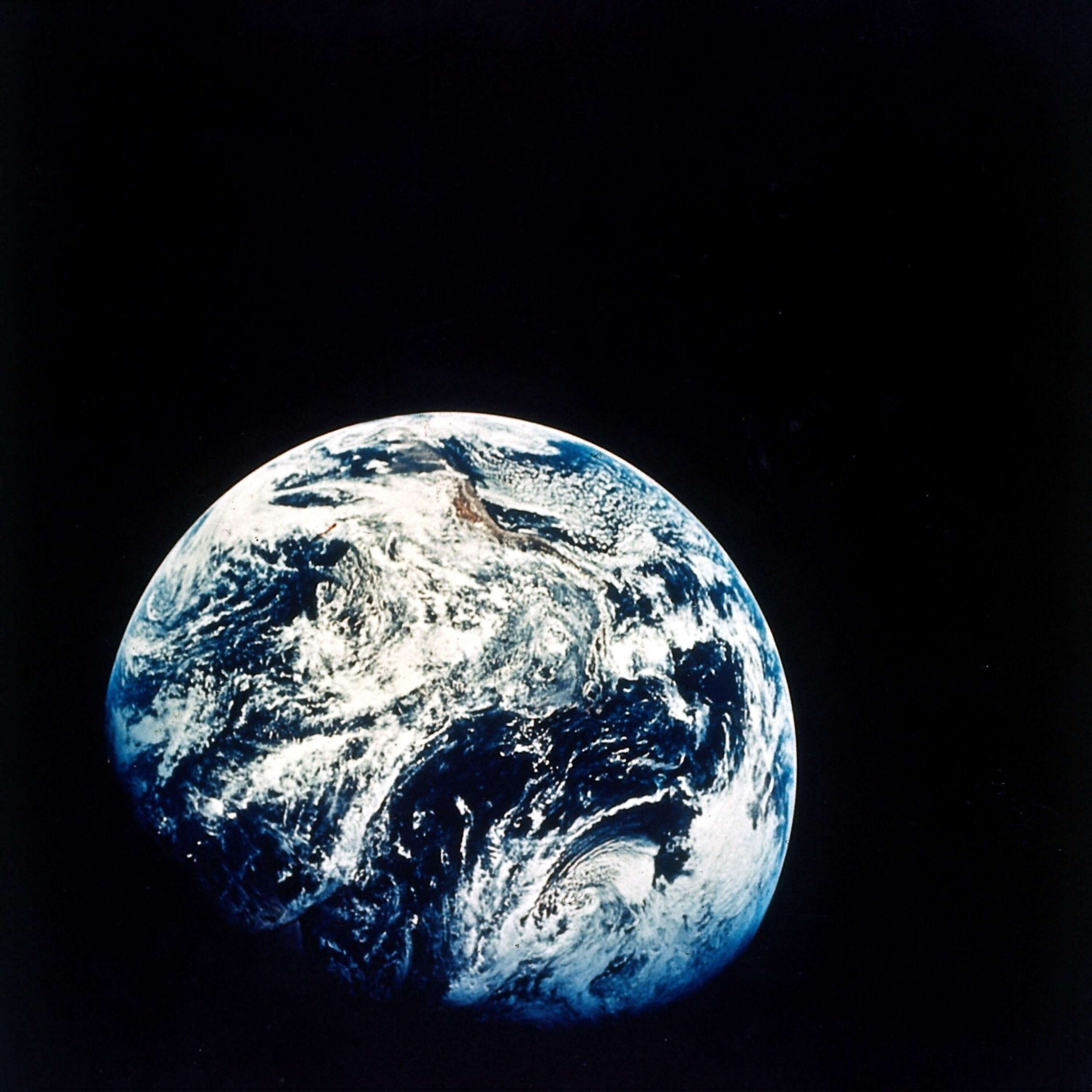
Each of them is concerned about who's ahead, who's stronger. Well, that's the kind of situation we are actually in. Soon after that roundtable, Carl, Brian Tune and the other scientists published their scientific paper on nuclear winter. But the message was already out there. And Carl and Anne made sure people outside of the scientific community kept talking about it. That same year, they wrote an article together explaining the theory in one of the most popular publications of the time, Parade Magazine. Because it was inserted in the Sunday papers across the nation. Which most people would have gotten delivered to their front doorstep. And that morning, when they opened up the paper, they would have seen a photo of planet earth, a light with nuclear flashes. And the words, would nuclear war be the end of the world? A special report by Carl Sagan. He was proud of the fact that the public would be getting this information at the same time as the scientific elite.
By the end of 1983, tens of millions of Americans had heard of nuclear winter. And as far as the average American was concerned, the messenger and man behind it all was Carl Sagan. People were used to having a shaman. It goes back 100,000 generations. You know, since we've been telling stories to each other at night and run the campfire. Coming up, Carl Sagan sets out to tell the story of nuclear winter to anyone who listened. And finds himself in a battle for the future of the human race. My name is Amanda. I'm calling from Portland, Maine. And I'm here listening to Sri Lai. Stay tuned for the following announcements and messages from our sponsors.
This message comes from Edward Jones, where they believe Rich means opening yourself to new possibilities. That's why your dedicated financial advisor meets you where you are, helping you move forward with confidence. Let's find your Rich, Edward Jones, member SIPC. This week on the MPR Politics Podcast, a vibe check on election security. With barely a month left until the midterms, we're talking about vote by mail, the possibility of ICE at polling stations, and what the Trump administration is doing in the name of preventing fraud, which we know is not a widespread problem. Plus, the latest on how voters are feeling about all of that. Listen now on the MPR Politics Podcast. Austin Tice is an American journalist who disappeared over a decade ago, while reporting in Syria. And for years, we've been searching for him. This looks like a secret passage. I'm just pushing the doors so you can get in. Come on, come on. Listen to Where is Austin Tice from MPR's embedded and BBC Radio 4 on the MPR app or wherever you get your podcasts.
Part 3. The Pale Blue Dot I'd remember it from a leaf. Carl would have a look on his face like he had something really great to tell me. And he said, I've been told that Gorbachev wants to know more about nuclear winter. Mikhail Gorbachev, the leader of the Soviet Union, America's enemy in the Cold War. And not long after, Carl and their young daughter found themselves on a plane to Moscow. There was a reception the day before. And Gorbachev was there. And so was our daughter who was wearing the most adorable outfit which made people confuse her with the Azerbaijanis Junior skating champion. The following day, Carl made his way to the Kremlin to meet with the Soviet Central Committee and Gorbachev.
A few hours went by. And then he came back from this meeting and could instantly tell it went well. He was completely energized. He started off talking about how the room looked, who was there, but mostly. Mostly, he was really talking about just how interested they were and how sober. How sober they were at this information. And out of the possibility that there could be a nuclear winter was a waking nightmare. It was 1986 when Carl got that invitation to meet with Gorbachev. He'd spent the years since the parade article on a campaign to warn the world of the existential threat of nuclear war. Going everywhere. Spreading the gospel of nuclear winter. We didn't have anybody to do PR. We didn't have anybody financing this.
It was personal. He hosted a TV special. For months, there would be a dark, cold, and deadly nuclear winter. No matter in what season the war might occur. Gave lectures around the country. Anything that involves the future is fundamentally threatened by the danger of nuclear war. Testified before Congress. One response by a senior practitioner was the following. He said, look, if you think that the mere prospect of the end of the world is enough to change thinking in Washington and Moscow, you clearly have not spent much time in those places. He even met with the Pope at the Vatican. We were in the Pope's personal apartments, briefing him on nuclear winter. Meanwhile, a symphony of media coverage continued to surround the idea. I just felt eager to be on the cutting edge of understanding. What's the world like? Why is it changing?
This is Andrew Revkin. He's a longtime science journalist who got his start back in the 80s covering nuclear winter. There were so many things happening in that period between the United States and the Soviet Union. There was this arms race. There was the economics. He's competing views of what the world economy should be. There was a technology race. Computers were advancing rapidly. And then each country had these client states that were actually killing each other. But for Carl, this competitive approach missed a bigger picture. This was about all of our futures. So people on the other side of the Iron Curtain needed to hear about nuclear winter too. For that, he needed the help of scientists inside the Soviet Union. To try to beat the drama of disarmament and that nuclear winter demonstrated that nuclear war was unwindable. And they did. Because they really, you know, anyone who knows anything about science real life is...
...that is a global enterprise. Eventually, nuclear winter theory began to gain traction in the Soviet Union. The way it felt to me at the time when I was reporting this, it seemed pretty clear that the Soviets saw an advantage in playing up the specter of nuclear winter. And as a counterweight to Ronald Reagan's Star Wars. Many of you seriously believe that a nuclear freeze would further the cause of peace. But a freeze now would make us less, not more secure, and would raise, not reduce, the risks of war. Around the same time, nuclear winter theory was bubbling up. President Ronald Reagan had announced a new idea of his own. The Strategic Defense Initiative, better known as Star Wars. Let me share with you a vision of the future which offers hope. Reagan proposed a high-tech space shield that would shoot down enemy nukes before they could strike the US.
In other words, Reagan was saying we could actually win a nuclear war, with the asterisk that the technology hadn't been developed yet. Still, that introduced a scary possibility. If destruction was no longer mutually assured, what would stop an invulnerable country from launching a nuclear attack? In a lot of peace activists, including many scientists, were alarmed by that. If we were so foolish as to go ahead with it, we would be far less safe than we are today. Carl Sagan was a vocal opponent of Star Wars. It is runestly expensive. It abrogates a large number of treaties that the United States has solemnly signed. In addition, it is likely to bring about nuclear war itself if the Soviets were to believe, as they say, that it is part of an American plan for a strike. Soviet leader Mikhail Gorbachev condemned the US Star Wars missile defense program, warning that it will increase the risk of accidental war.
Carl Sagan found himself in the middle of a delicate political chess match, which is how he ended up at the Kremlin explaining nuclear winter theory to Gorbachev. By the way, he and Anne were also invited to the White House three times to dine with Reagan. And we said no each time very politely, but no thank you, because this was when his administration was committing unspeakable atrocities in Central America. Ronald Reagan was the person who ripped Jimmy Carter's solar panels off the roof of the White House. His contempt for science and reality even now was just the headline always about him. We just didn't want to be complicit. And also acknowledges that while Carl and other scientists working on nuclear winter theory never let politics impact the science itself when it came to telling the story they did have a political agenda.
The entire human species was living in a hostage drama. And so yes, we had definite political feelings where parents. We have children. Is that political or is that biological? I don't know. I think it's biological. It's survival. And although they never met with him, it's clear Reagan was aware of nuclear winter. During one press conference in 1985, he mentioned a volcanic eruption from the 1800s, which had cooled the earth and produced famines. Then Reagan asked, quote, if one volcano can do that, what are we talking about with the whole nuclear exchange? The nuclear winter that scientists have been talking about? Since the original nuclear winter idea was proposed, several groups have tried to study the problem. And each has come up with a different computer model for the global effects of nuclear war.
I learned something about science through that period. New science often leads to more questions. And that was absolutely case for nuclear winter. I think that some people were worried in the scientific community about overstating the case. David Sopkowski again. Nuclear winter essentially exists in data and models. And models are highly imperfect simulations of how the road works. And this is I think part of the reason why some folks did resent Carl Sagan. I think they thought he was a showboat a little bit. He jumped the gun. Scientists are human beings and they realize they have the capacity to influence world events. The scientists who were involved with Sagan, they all were riding this wave. And journalists like me were riding the wave too. By the mid 1980s, a few scientists had begun rebranding the theory. Nuclear fall, a chill rather than the dramatic bitter cold hypothesize for a nuclear winter.
They argued it wouldn't lead to full extinction of the human race. But it would still be really bad. Anybody who needs to know the weather report after a nuclear war in order to be deterred is already crazy. But one scientist, Fred Singer, disagreed and said it could actually bring on a nuclear summer. What they've forgotten is that the smoke cloud also keeps in the heat. Singer was a prominent climate change skeptic. And it was later discovered that throughout his career he had been paid by oil and tobacco companies who had hired a handful of scientists to quell concerns about the impact these companies were having on the environment. Some historians call them merchants of doubt. Professional purveyors of uncertainty. People who have set out deliberately to confuse the public about science. Who would just frame the questions around overstatement and uncertainties being the real story on any issue.
And these voices got a lot of air time. We in the media were addicted to conflict and bait and so it's easy to build stories that kind of mischaracterized the uncertainty by making it a send them fight. At the same time, David Sapkowski says there was some truth to the claim that Carl Sagan and other scientists sounding the alarm about nuclear winter were making things sound as catastrophic as possible. Absolutely, they were fear mongering. They're presenting us with some of the more pessimistic models because they want us to wake up. I call it prophecy, not fear mongering. If something will happen that will destroy absolutely everything you care about. Even if that's a small possibility, especially human made possibility. We've engineered for ourselves what you have to do is found the alarm.
As many people as possible should have the ability to do something to averted. This goes back to Plato and Aristotle and what's called the noble lie where you're consciously not speaking the entire truth in service of the better outcome for society. Because you know it would be inconveniently complicated or contentious to lay out the entire issue. To prove that there really means to get everyone to accept it. And that's a matter of personal taste. And the more evidence you see, the more likely you are to believe it. Louis Alvarez, who had helped kickstart all of this with that dinosaur extinction theory, had some doubts about nuclear winter, though we made sure never to share them publicly. It was a means to achieving that long awaited peace he'd hoped nuclear weapons would bring.
He wrote in his memoir, the most encouraging feature of the nuclear winter scenario is that no one has been able to disprove it. It has had a very salutary effect on the thinking of military planners on both sides of the world. In Moscow, the hammer in sickle is lured for the last time and an era comes to an end. The war is over. Gorbachev said it best today, just moments before he resigned his post as the last president of the Soviet Union. If you have to go, you have to go. It's that time, he said. Both Gorbachev and Reagan wrote that the reason that they controlled nuclear weapons was because of this discovery of nuclear winter. And while there were economic and political realities that pushed the Soviet Union towards collapse.
I do think that it had a role in the, you know, quote unquote, fall of communism. Louis Alvarez died in 1988. He didn't see the end of the Cold War in 1991 or the discovery of the asteroid crater a year before that, which put to rest most doubts about the dinosaur extinction theory. Soon after the Cold War ended and remembers sitting in the audience of a talk given by the Soviet cosmonaut, Alexei Leonov. Who was the very first human average of walking space. He had also been in the room at the Kremlin several years earlier when Carl Sagan explained nuclear winter to Gorbachev. Alexei Leonov, he began his talk by saying, more to the effect of, there's someone in our audience who we owe more to than any other.
And that's Carl Sagan because when Carl Sagan came to debrief us on the nuclear winter after it was over and Dr. Sagan left the room. And Gorbachev said to us, well, it's over, isn't it? Carl Sagan died in 1996 with some questions still hanging over exactly how nuclear winter theory would play out in reality. While some more recent models suggest it could be better than he predicted, others show it might actually be even worse. The Earth is a very small stage in a vast cosmic arena. When someone tells you that's Earth. On it.
As Carl really said, everyone you ever loved. Everyone you know. Everyone you ever heard of. Every human being who ever was lived out their lives. That's it. That's the reality of our true circumstance in leaders. Think of the rivers of blood spilled by all those generals and emperors so that in glory and triumph they could become the momentary masters of a fraction of a dot. You see how nonsensical it is to divide that planet up and to be known to destroy it. To me, it underscores our responsibility to deal more kindly with one another and to preserve and cherish the pale blue dot. The only home we've ever known. And that's it for this week's show.
Coming up next week, we'll travel through the past four seasons of ceasefire with NPR's reporter on the ground in Gaza. Anna Spaba, who carries the dual burden of being both a resident trying to survive and a reporter trying to document reality. Make sure to tune in. Through line was created by me and Romteen at a bluie. This episode was produced by me and Romteen and. Lawrence will Julie Kayn, on your cyborg Casey minor, Cristina Kim, Devon Cadiama Sarah Wyman, Irene, no Gucci voice over work in this episode was done by Casey Herman. And thanks to indicator co-host and reporter Whalen Wong for letting her husband Alec Nvaloli use her home studio to record with us for this episode. Thanks also to Louis Kowski Amy Pedula, Jeanette Oaks, Keon Jury Starling, Johannes Dergi, Tony Kavin, Nadia Lansy, Edith Chapin and Colin Campbell. Fact checking for this episode was done by Kevin Vocal. This episode was mixed by Robert Rodriguez.
Music for this episode was composed by Romteen and his band Drop Electric, which includes. Navid Marvi, show Fujiwara. Ania Mizani. And finally, if you have an idea or like something you heard on the show, write us at throughline at npr.org. Or leave us a rating and review on Spotify or Apple podcasts like this one from Amy and Carl's Bad California. Amy writes, your show blows my mind every episode bringing a multi-sensory, immersive educational listening experience. I always feel a little smarter and more hopeful. Thank you for what you do. Thank you for writing an A.M.E. And if you're listening, thinking, I love this show too. We want to hear from you. Leave us a rating and review on Apple or Spotify. You might even hear us read it right here on the show. Thanks for listening.
Stay tuned for the following announcements and messages from our sponsors. This message comes from Wealth Run. Earn a high APY on all your cash in a Wealth Run cash account. No more juggling between checking and savings. Just one account that delivers the best of both and makes every dollar work harder. Get started at Wealth Run.com. Cash account offered by Wealth Run broker, Jell-L-C, member Fintra SIPC, not a bank. Funds are swept to program banks where they earn the variable APY. This fall, there are a lot of movies and TV shows on tap for you to see. And we're as excited for all of it to arrive as you are. On Pop Culture Happy Hour, we've got a guide to what's worth keeping on your radar. Listen via the NPR app or wherever you get your podcasts.
More episodes


