Get every episode summarized
Each time Question Everything publishes, we email you a written briefing from the transcript — the topics, who appeared, and any specific claims, with the ad reads skipped.
Email me new episodesFree for 3 shows. No card needed.
About this episode
“Before we get to the show, just a quick ask. Question everything has racked up six nominations for the Signal Awards, which highlight risk takers and daring creators and podcasting.”From the transcript
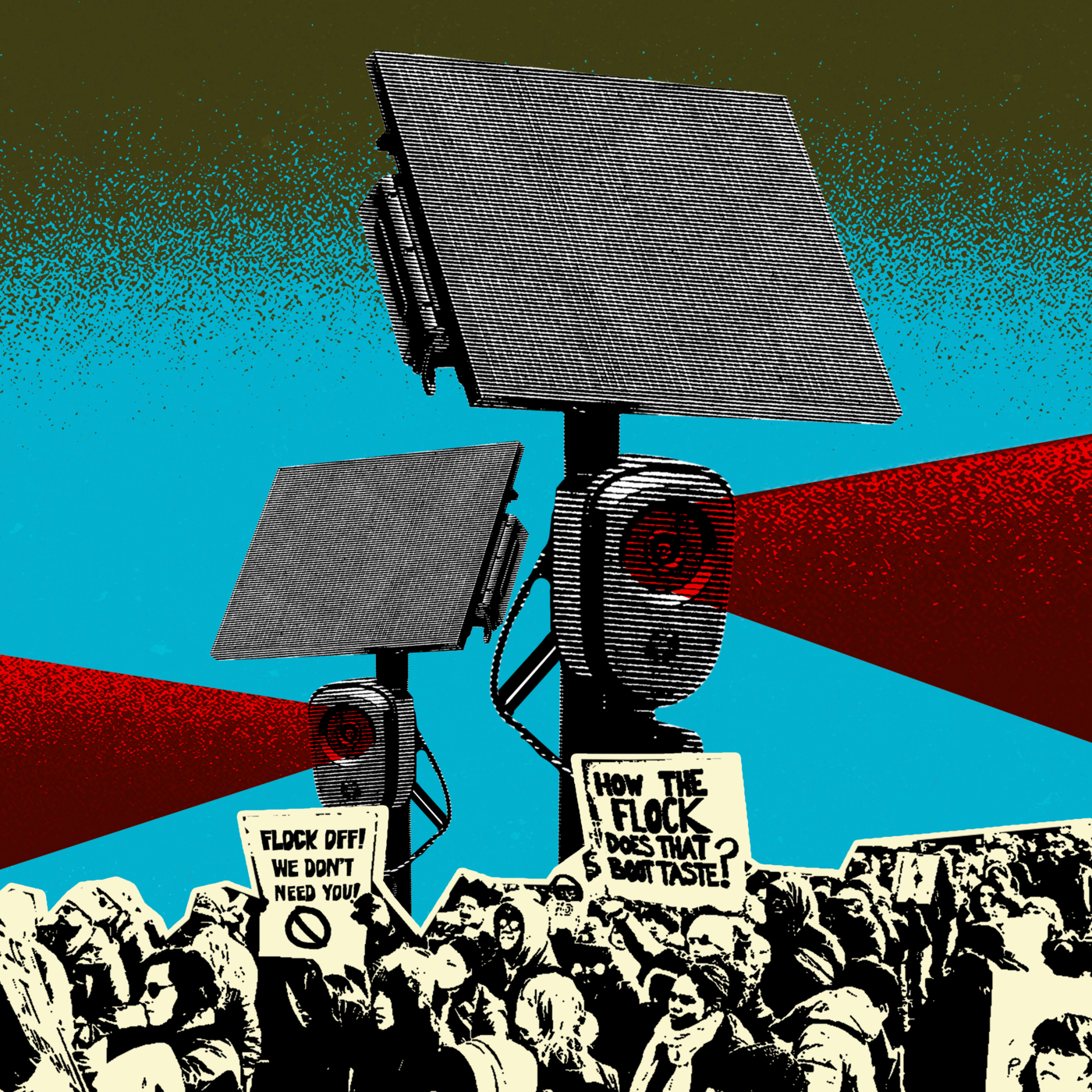
Flock Safety’s license plate cameras are in about 6,000 towns across the U.S. But lately, towns have been pulling out of their contracts after all sorts of creepy stories about cops using the cameras to spy on people in their personal lives.
But in Tewksbury, Mass., residents have a different concern: they can’t get Flock to tell them what their town originally agreed to. For months, residents and town officials have been asking the company a simple question, which the company will not answer. That sends two residents down a Kafkaesque rabbit hole to figure out what Flock might be hiding.
Question Everything has been nominated for six Signal Awards. To take home the win, we need you to vote for us by going to vote.signalaward.com. Enter Question Everything in the search bar, and start voting. Thanks!
Question Everything is a production of KCRW and Placement Theory. Follow us on Instagram: @questionverything.podcast. And don’t forget to sign up for our newsletter.
Guests:
- Dustin Weir, Tewksbury resident
- James Mackey, Tewksbury Select Board member
Get every episode summarized
Each time Question Everything publishes, we email you a written briefing from the transcript — the topics, who appeared, and any specific claims, with the ad reads skipped.
Email me new episodesFree for 3 shows. No card needed.
Hosts & guests
Transcript ready
603 searchable segments. Every word is indexed and playable.
Full transcript
Question Everything — Flock Won’t Answer This One Town’s Simple Question. Machine-transcribed; use the interactive transcript above to jump the player to any line.
Hey everybody, it's Brian. Before we get to the show, just a quick ask. Question everything has racked up six nominations for the Signal Awards, which highlight risk takers and daring creators and podcasting. Our peers in the industry listen to our work and nominated us, but to take on the win, we need a little help from you all. So just do me a favor and go to vote.signaloward.com and vote for us. Vote for question everything. We'll also put the link in our show notes. There are a ton of categories. It's kind of a voluminous website. So the easiest way to find us is to enter question everything into their search bar and then just click on our name in each category. Again, there are six incredibly and start voting. Thanks so much for listening and thanks so much for helping us out. At this time, we'll be the flock discussion public hearing. On a Tuesday night in June, representatives from the company Flock Safety have shown up
to a select board meeting in the town of Tuxbury, Massachusetts, just north of Boston. Flock makes surveillance cameras for police departments around the country. They're meant to take snapshots of license plates as cars pass by, which police can then run to self crimes, find stolen cars, track thieves, trace missing people. Tuxbury is one of about 6,000 towns in the US that have flock cameras. And while police rave about them for fighting crime, as Tuxbury's police chief did at the select board meeting, you know, I think personally this is the best tool I've seen in 26 years of law enforcement. Flock is nevertheless finding itself in a lot of hot water lately. They've been all over the news and were even the subject of a congressional hearing the other week because all sorts of awful stories have been coming out about police using the cameras to spy on people in their lives. A cop in Florida allegedly tracked his estranged wife on the cameras more than 700 times. An officer in Wisconsin reportedly used them
to see if his ex had visited an abortion clinic. And sheriff's deputies in Georgia were arrested for allegedly stalking people with flock cameras. It's very unnerving, big brother stuff. Vigilantes and creepy masks have started tearing flock cameras down in some areas. And there's been public outcry in towns and cities across the country. More than 90 of them have canceled their contracts to flock in recent months. All of that led people in Tuxbury to start asking questions about how the cameras were being used in their town. There weren't any charges of the police they're misusing the cameras, but residents were still wary. So at this meeting in June, the company sent somebody to try and quell concerns. Could you just give your name and your organization? My name is Trevor Chandler. I am the senior director of Public Affairs for Flock. Usually Tuxbury's select board meetings are pretty empty. But for this one, maybe 50 people have shown up. They had to set up extra chairs. And things are a bit tense. We'll keep it very brief, because your questions are the most important things that I want
to emphasize going into this conversation. Number one, flock does not sell data. Second, excuse me. Not even a minute into the flock reps remarks. There's an outburst. Someone in the audience shouts at him. You can't make it out in the recording, but someone who was there said the person yelled, at the flock rep, you're lying. Other people are holding signs that say flock lies. The chair of the select board tells everyone to settle down. There'll be the last time that anyone in the audience is going to be allowed to speak out like this. Again, we are here, and we're going to be civil. If not, we will have you removed. And then, during the public comment portion of the meeting, a 40-something guy with a cleanly shaved head and a long salt and pepper beard walks to the mic. He's wearing a white t-shirt printed like a piece of needle point with a wreath of flowers around the words, don't argue with strangers online. My name's Dustin Weir. Dustin Weir. He's a big guy, six foot six, 325 pounds. The podium barely comes up to his belt.
This isn't quite as high as it is in that town meeting. I mean, the risers. I want to start by being clear about why we're here. Dustin is a major reason flocks rep was cajoled into coming to this meeting. For months, he's been asking flock for one thing, a single document. He's asked in writing more than once, so as the town manager, even the police chief, Dustin still hasn't gotten the document. And now, he's going to finally confront someone from flock face to face about it in front of his neighbors. He stares right at the flock rep. So I have one direct question for flock representative tonight. I'm going to tell you the story of how Dustin got to this moment, looking a flock guy in the eye. What his question was, and what came of him asking it? It's a question so basic, flocks should be able to answer it immediately. But for some reason, they won't. Dustin says they're hiding something from him. Here's who I can explicitly tell you I don't trust. And that's flock. From placement theory in KCREW, this is question everything.
I'm Brian Reed. We investigate how the truth gets buried, distorted, and denied, and the ways people are fighting to make it matter again. Today on the show, one man tries to get flock to respond to a very simple question, a Kafka-esque tale about a technology that affects the privacy of millions of Americans. Stick around. Dustin recently stopped by one of his favorite spots in Tuxbury. This is the fish and hole. A dirt road comes down through the trees and runs right into a small pond where there's a boat launch. A couple picnic tables around the grass. A man is out in the water, kayaking. I'm wearing my daughter out here. She loves fish and she's a huge fan. His daughter's nine. He also has a 13-year-old son. Dustin didn't grow up here. He moved to Boston for college about 20 years ago, and has lived in Tuxbury for about 10 years, which makes him something of an outsider. Lots of people here are born and raised, he says.
Dustin has a mechanical engineering degree and a master's in plastics. For any of you fans of the movie that graduate with Dustin Hoffman, this Dustin really does work in plastics. He's a pretty observing guy. Actually, this is where I was driving by when I first noticed him. Where he first noticed the flock cameras at this fishing hole. He was in the car with his kids, but a year ago. And I looked up and saw this black hole with the camera in a solar panel. There go the geese. The flock camera is right on the corner of the dirt lot, pointing at the road you take to get in. Dustin remembers being like, is that a surveillance camera? You know, it stands out to me as being a piece of surveillance near a public place that I like to go and enjoy. So, you know, the question that kind of popped into my head that got it all rolling is like, why does the Tuxbury police department need to know when I'm going fishing? You know? Dustin didn't like the idea that these cameras
could be watching his every move around town. So he started doing some research. You know, learning more about them, learning about the concern that a lot of people have over them. He wanted to know exactly what kind of information these cameras were capturing. So one day, after dropping his kids at school, he drove by the camera here at the pond and noted the time between 7.35 and 7.45 in the morning. Then he sent the police department a public records request asking for the image the camera captured at that time. Do you have that email? Basically, they sent me a picture from the flat camera. It's got the address. It's got the time stamp. It's got my plate and it's got a picture of the back of my car. So that was his first question answered in about a day. What are these cameras collecting about him? He also found out from town records that flock had 20 cameras in town, but didn't know where they were. I took a weekend to drive around and I'm sure it's no secret. I'm sure I'm on camera doing it. To the places where I thought they would be.
And in most cases, it was confirmed correct. Because they sort of saw their pattern, right? They ring the town there was pretty much one relatively close to every single border. Dustin figures over the past two years, driving his kids to school, hockey practice, commuting for work. Tuxbury has taken probably 4,000 photos of his two cars. Dustin did some online soothing to figure out how the cameras work and what happens to the photos they take. I believe their motion activated. There's an infrared ring on them. So they at night, they'll shine infrared light that you can't see with your naked eye, but it illuminates your plate. So they can take a good picture at night. But there's no flash or anything like that. It sends that image back to flock headquarters. Then it does optical character recognition to identify your plate. And then it runs that plate number against their hot list. A hot list is a list of plates the police are looking for. Stolen cars, amber alerts, people with warrants.
Police can look for any plates they need to find. If your plate matches one, officers get an alert in seconds. If it doesn't, nothing happens. But the picture doesn't stay in Tuxbury. It goes to flock. And that's the thing that really bothered Dustin. The fact that flock cameras are networked. If your town turns on their sharing feature, police departments in other towns, in other states, can search the images your towns cameras collect. And the cops can do all of this without a warrant. There's this open source website that tries to track which cities have cameras like this and which other cities and towns have access to the data on them. It's called deflock. And if you go on there and look at certain towns, it's scary to see the massive web of connections across the US map. To look at some random mid-sized city in Iowa and see how many thousands of other police departments can access their residence data, Dustin did not like it. If the Tuxbury PD has speed cameras,
I have a direct influence on who the Tuxbury PD is. So I vote for the councils and then take it up a step further. Maybe it's a state camera on a highly or something like that. Well, I still have sort of democratic agency there where I can raise my voice to the elected officials. I have a vote. Same thing applies at the federal level. But what I don't have is input into local municipalities that have nothing to do with Tuxbury. Pick any town, a random town. Like if they have a flock camera contract, that local PD, they have access to all of our data. But I have no democratic agency in that organization. So I can't like if people start to abuse it elsewhere. I can't vote them out. I can't raise my voice. Massachusetts abortion is legal, right? And abortion is legal in part because I have a democratic voice
and I support a woman's right to choose. So at one point is my daughter going to be passing through the Panhandle of Texas to go to school. And if she does, are they going to find out she happened to be pregnant at that point? In this theoretical, if police in Texas get a report that she got an abortion, could they use flock to tracker, even out of state? Are they going to try and enforce those laws outside of their jurisdiction? And I didn't want to turn this into a whole abortion debate. But you have like there's at least an instance that's documented for police in Texas used flock cameras to track down a woman they suspected of having an abortion, right? Exactly. And they called it a missing person case. So the next thing Dustin wanted to know is where does the data collected by flock cameras in Tuxbury go?
Who has access to it besides the Tuxbury PD and who gets to decide that? And he figured there was an obvious place to look that up. The contract, the signed agreement between flock and his town. Dustin asked the town manager for it and he gave it right over. That told me absolutely nothing. What do you mean it's a contract between the town? Yes. And flock. It has a signature on it. It has a cover page. It has a listing of the prices of the different levels of service and different options. And it has a link to flock's website. You know how most contracts have like, you know, terms, lots of clauses with legal language? This document was not like that. It was closer to an invoice. It shows the town agreed to pay flock just over $250,000 for five years for using its cameras. And then where the term should be, just a single hyperlink that directs you to flock's terms of service.
Wait a minute. Yep. So it's not like a custom contract or even really like a full normal contract between the town of Tuxbury and flock. Correct. It's like a terms of service the way I agree to a terms of service when I sign up for a Facebook account. Yes. That's basically what we did. We just said, yep, whatever you want, whatever you want to post to your website is fine with us. And we signed the contract. Wait, extrapolate that out. That meant that means basically what it means is that we are locked into a contract with flock safety that has a specified term and a specified amount. And the details of those terms can be changed by flock safety at any point for basically any reason by just updating their website. Dustin couldn't believe it. He clicked on the link for the terms of service. I don't even think that that original URL is correct. I think you have to like put in another backslash or something. He read the terms of service, but he realized the current website
might not have any relation to the terms the town originally agreed to. It had been years since Tuxbury had hired flock, who knows how often the website had changed. So Dustin asked the company for the terms that were in effect the day Tuxbury signed the contract. That was December 22nd, 2023. Flock wrote back. The terms that govern the Tuxbury contract are the most recent terms of service and pointed to the same link. So Dustin thought, fine, I'll look up the old version myself. He figured the internet archive, the wayback machine should have it. That site takes snapshots of web pages to create a historical record across the internet. There was just one problem. They blocked the wayback machine from capturing their website. The message read, sorry, this URL has been excluded from the wayback machine, which left Dustin with his very basic question still unanswered. What does our contract say? What did our contract say? You know, every day between when we signed it and today.
Like if I want to go back and sue the town in February 14th, 2025, what were the terms? What were the obligations of the two parties at that point in time? Between each other. I know clue. And there's no way to figure that out as soon as I can tell, because flock has not produced the contract. So your town's lawyers let this happen. I don't think my town's lawyers thought that hard about it, which is another way of saying they let it happen, right? It's another way of saying they let it happen. That's a yes to my question. Dustin's very deferential to his town officials. He doesn't blame them or the police for the situation with flock. The town attorney didn't respond to us, by the way. But since he wasn't getting answers from the company, Dustin did start asking questions of the Tuxbury Select Board at their meetings, raising these issues in public. After doing that at one meeting in April, Dustin says one of the five board members came up to him.
James Mackie came up and said, Hey, I'm working on this. Maybe I could tell you what I've got going on or maybe I'd be able to answer some of your questions. And that's how we kind of got started communicating. James Mackie had been looking into the cameras too. He's a fourth generation Tuxbury in, who ran for the Select Board in 2021 because as a retired army guy, he wanted to keep doing public service. James says he initially got curious about flock because he was hearing so much about the controversies they were causing in other towns in the news. I didn't know if we had flock. So started asking some questions found out we did have flock. James's day job is running a cyber security company. He worked in cyber operations in the army. So he's uniquely qualified to read through the contract for a surveillance camera company and figure out what they're doing with the data. The main thing that worried him about flock had to do with something called open-source intelligence. Flux software can take the data it captures from your license plate and combine it with other
information about you. Info from internal police records, from court records, but also just other stuff it finds online about you. So your Yelp reviews, what you're posting on Reddit, what you're doing on social media, things like that. With the advent of AI, it's terrifyingly easy to comb through data that previously wasn't a value, right? Nobody's going to look through a million still photographs that are taken until you introduce AI. Now with AI being able to look through those photographs almost instantaneously and find what you're looking for and identify patterns of people, identify patterns of travel, identify who's in vehicles, identify bumper stickers that may be political or religious. In a way like the volume of data collection previously up to this point, almost was a protection against it being misused because it was so voluminous and now that's no longer the case. In fact, it's like suddenly more dangerous because of AI. 100%.
This is a category of information that's so new, the learnings of AI models. James says there isn't a name for it. There's not really an industry term yet like we have HIPAA data for health, medical records, etc. But there is nothing for this new class of data that's been emerging recently. So James as a cybersecurity professional who works with this type of data recently made up a term aggregate surveillance information, which is that data being combined from disparate sources to be able to identify people's behaviors, patterns, etc. He didn't expect his new term to be in Tuxbury's contract with Flock, but he wanted to see what the contract did say about what Flock was allowed to do with Tuxbury residents data, his constituents. What data privacy protections do we have in place? How is this contract being managed? What is the contract? And I was expecting to receive answers to those questions. So just like Dustin, James had also independently asked the
town for the contract. Something he, a tech wizard, refers to as the master services agreement. His request went to the town manager who went to Flock and what came back was the first response I got to questions was in order form and some blog posts. And I was like, okay, well, this isn't what I was looking for. Like, where is the master services agreement? Like, where is the legal contractual language that protects our residents, protects our data, defines how things are handled, etc. This is the same document Dustin had seen and it had the same link pointing to the same current terms of service. What did you think when you saw like, this is our agreement. It's like just this kind of terms of service thing. There's no actual contract written specifically for our town that we negotiated and agreed to that we can refer to. And not only that, but like the company can just change these terms of service at any point. I was very concerned. Like, wait a minute, what are the terms that were enforced when we signed?
James asked to see the terms of service from the date his town had signed the order form. And also like with Dustin, flock wouldn't provide them just a link to the current terms of service. And reading through what he found at that link raised some worries. Well, flock is publicly saying and the marketing material was repeating that you own your data. Well, a master service agreement would define what data, what specific data do we own? What does flock on that was missing? It did not leave me with a warm fuzzy feeling. It did not inspire confidence in the organization. It did not inspire faith that what statements they were making such as you own your data, were factual or could be trusted. A picture of my license plate, a single point in time picture is not a concern. Not all like it. Nobody likes to be photographed. They want to be privacy when they're going about their business. But if you then have photographs everywhere across the country where I pass a flock camera, at that point it's very easy to ask for pattern recognition.
So hey, what grocery store, what doctor's office, what church does James Mackie go to? How often does James Mackie go into the city of Boston? Who does he frequently travel with? Who's in his car? And once that data is collected, it's very difficult to control who accesses it, what they do with it, etc. James desperately wanted to ask flock questions about this. Who's accessing our data? What are you doing with it? And finally, he was able to get the company on the phone. It didn't go great. That's after a quick break. In March, after urging from James Mackie, the select board member, flock agreed to have a phone call. With representatives from Tuxbury, the town scheduled a video call with the police chief, the town manager, James and two people from flock. James was expecting to ask technical questions about the types of data
the cameras collect, how it's stored and managed, and what legal terms govern it. The cameras are sold as license plate readers only. But do they ever capture other things? Driver's faces is the data stored on the cameras, on the cloud? Is it encrypted? Is some of it encrypted? How long is it stored before being deleted? All that stuff should be clear in James's experience in any agreement between a town and a tech company. But it wasn't, given the weird, shifting terms of service situation between Tuxbury and flock. But when he got on this video call, James says they sent people who weren't equipped to answer his questions. A sales rep and a PR person. Do you think flock didn't expect to encounter someone like you in their dealings with local municipal governments? This is your profession. You're a data expert. This is your business. They met their match. I did repeatedly ask for a technical person who would be able to engage at the level I was looking
for, explicitly asked that someone from legal who can give binding answers provide the responses so that we were getting binding answers and not links to blog posts and marketing material. I just don't think that was taken seriously. On the call, James asked, do the flock cameras ever photograph drivers faces? How about a pedestrian on a nearby sidewalk? How about motorcycle drivers? Do you get their faces? I explicitly asked the question. If people are captured, flock essentially said no. And chief Columbus, our police chief had to jump in and say, well, people can be captured. It's not the intent. But you know, you might have two cars go in the opposite direction. You may have somebody in the background who is captured. So people are being captured. So your police chief who uses the photos that are gotten on these cameras basically caught the flock representative in a lie. I think he rightfully framed it as a correction. He goes in the interest of making sure that we're disclosing everything here and being honest. People are captured and can be captured
in these photographs. Right now, flocks website says its cameras capture, quote, vehicles not people. Recently, a group of hackers broke into a flock camera to see what data was on there and then gave what they found to the tech outlets for a foreign media and wired to independently analyze. Much of the data was encrypted. But some of it wasn't. And for a foreign wired's analysis showed, quote, software running on the device explicitly detects people as well as vehicles, license plates and bicycles. The news outlets didn't see any evidence of facial recognition technology being used on the camera. After their call with flock, the town of Tuxbury sent the company a list of written questions. One of them asked flock to identify every material change made to the terms of service since 2021. Because flock kept changing them and updating them on their website, Tuxbury wanted to know what those changes were. Flock responded. I asked James to read their answer to me and he said he wanted to pull it up on his computer so he could quote it accurately.
They wrote N.A. I just find this very funny that you had to pull up the exact quote of their response and it was N slash A. To be clear, they didn't even take the time to spell out not applicable. It was N slash A. Okay. I mean, that, I don't know, part of my language, but that's kind of a fuck you to your question. Honestly, that's how the entire process felt. A number of the questions were responded with links, not even an answer. So there's a multi-part question that gets a link. There's questions where we asked about the flock platform access controls and how something works. We were getting things like see this page on our website. You can go find the answer yourself. This is a company that town is paying $250,000 to their customers. James had had enough. After that, call multiple emails, the two formal written requests for information that were sent of not getting anywhere over, I think it was four months, five months at that point. I told
the town manager like, I'm done engaging with flock. Instead, he decided to document everything in one massive report for the town's select board. 109 pages altogether and then he pushed for a formal board meeting about flock. Dustin, who'd also been trying to get answers from flock and was also speaking at the board meetings, was pushing for the same. One thing I want to believe on before we get to the question specifically. And that's how two flock representatives, once again a sales rep and a PR person, ended up coming to the Tuxbury select board that Tuesday night in June. This tool, the flock LPR tool that this town uses, it is the most transparent law enforcement tool in the country. There is no, it wasn't exactly what James and Dustin have been wanting. They asked for a more formal board discussion about flock rather than a PR person trying to spin the company to residents, but they took what they could get. The flock guy who did a lot of the talking from public affairs was named Trevor Chandler. Dustin says he was a pro. Very well spoken,
well put together. If I needed to hire somebody to do his job, but be at the top of the list. After that early outburst where somebody in the audience calls him a liar, Chandler brushes it off and then on his own goes right to the issue Dustin and James have been pestering flock about for months. I know there have been questions about flock's terms of service and conditions. It's very important to note that the changes and updates to that have been about streamlining the language. Guys, you'll probably notice when you click accept on your iPhone terms and conditions, those seem to get longer and longer and longer. We actually shortened ours. We made it simpler so that our customers could have a clarity. Nothing has changed in ownership of the data. So according to flock, the company changed the terms to make it easier for their clients to understand them and nothing that matters is different. A hard explanation for James and Dustin to swallow. When it's the boards turn to speak, James starts off pretty heated. We actually requested in our last request for information that somebody who could give binding
answers on behalf of flock responded to those questions. That didn't happen. So I will ask tonight are you gentlemen able to give binding answers on behalf of flock? I'm not our legal counsel. Our legal counsel gives binding answers masterfully done. And then back through the looking glass. So we've asked repeatedly for the terms and conditions that we signed on December 22, 2023. Do we have the ability to get the history of the changes that have been made? The terms and conditions that are applicable to the contract are those that are currently published on the website. There may be an archived version of the website that it would be accessible on, but we traditionally don't publicly make available every single version of our terms and conditions. So there's actually not an archived version at least publicly because flock as a corporation went through the process to have them sell for move from in an archive.
So those prior terms cannot be looked up because that was the first thing I tried to do when I went to look for them again. I would love to be able to take your word for it, but I'm big on show me the proof. And then it was time for Dustin to come to the mic. This isn't quite as high as it is at town waiting. I mean the the risers. By now I imagine you can guess what Dustin's simple question was to the flock rep. Same as James's question, same as the town's question, same as the question Dustin had been asking flock again and again for months. Except now Dustin got to do it while looking a flock flock straight in the eye. I have one direct question for flock representative tonight. Will you commit right now in front of the board to producing the complete terms and conditions as they existed on December 22nd 2023 when we signed our contract and all subsequent revisions within seven days to this board? I can check with our legal team on that.
You can hear the audience laughing at the flock rep's response. Maybe he checked with the legal team. Maybe he didn't. No one knows because two weeks later Dustin emailed Trevor Chandler copying the town manager and the police chief saying, hey you've had a week or two to work on this. You said you were going to go ask your lawyers for an answer to my question and I got no response. He never got back to you. So you guys have still not been given the contract that the town signed. To my understanding, we have not. My team and I repeatedly asked flock to talk to us to answer our questions. We also asked the guy who went to Tuxbury, Trevor Chandler to talk to us. Nobody ever responded. I asked James, why do you think flock wouldn't give you the original terms of service the town agreed to? I don't understand. Why not just give that to you? It's a great question. My only assumption and to be clear this is an assumption is that they
changed materially from what we signed to what is there now because otherwise if there was no changes, why would you not provide it? Back at the Select Board meeting, after more than two hours of discussion, James made a motion. We don't know how many times agencies pulled data. We don't know the controls on those data once it is pulled. There is entirely too many open questions to allow this sort of passive surveillance to continue. I personally am in favor of the third party assessment and I would actually recommend and I'm going to apologize to the chief and the PD that we cease use of this platform until that assessment is done. I will make that in the form of motion. Okay, we have a motion on the floor to see issues. Do we have a second? Okay, seeing none? I didn't expect that to pass. Nobody seconded it. It never even got to a vote. Which I found surprising. James told me he hasn't run into anyone in town who seems opposed to
him trying to take flock to task and towns all over the country conservative, liberal, in between have been canceling their contracts with flock. Lots in Massachusetts too. So why not Tuxbury? Where flock has given them such a run around? James says he doesn't really know why his fellow Select Board members aren't receptive to him pushing on flock. We reached out to a couple of them but they didn't respond to us. Of course, the police chief says the cameras are the best crime stopping tool he's used in his whole career. So that might be affecting their thinking. It might also be that James, the one who's raising these questions about flock, has clearly pissed off his fellow Select Board members. Earlier this year, he accused three of them of violating open meeting laws. They denied the allegations. In a recent meeting just the other week, you could get a flavor of the dynamic between the board members when James brought up flock. If you go back and read the transcripts of the last three meetings where flock was discussed, I'm going to reuse the word knife fight on what I've had to do to get any sort of traction
across this entire topic. And another member said, James, please don't, I hope you don't take this wrong way. I know you feel like you're on an island, but to be quite frank, you continuously put yourself on that island with some of the things that you do in these meetings at times. So not for nothing, but those are your choices. And again, your identity, your responsible for yourself, you make those choices. It's my choice to be told no when I ask for something we put on agenda. It's my choice to be told no when I request a meeting. I'm trying to work together like what do we need to do? We want to see if you impose the resistance to James's effort to get rid of flock might have less to do with flock and more to do with how other Select Board members feel about James. Anyway, James's next move was to go around the Select Board. In Massachusetts, towns like Tuxbury have something called open town meeting where any registered voter can show up and vote directly on local laws. So James decided to take the surveillance
camera issue to the people. He drafted up two proposals about the technology, they're known as warrant articles. One of them would require public approval before any quote-unquote surveillance technology is bought by the town of Tuxbury. There'd be no more agreeing to terms a company can rewrite whenever it wants and the town would own all the data and prevent it from being used to train AI models. The other article, if approved, would cover the cameras the town already has. It would allow them to essentially do one thing. Check a plate against a list of specific vehicles police are looking for. No hit and the picture has to be destroyed within three minutes. Neither of James's articles mentioned flock by name. They'd apply to any vendor supplying this type of technology to Tuxbury. If there were to pass, James says, flock would need to comply with the requirements or we would need to end the contract. James needed 100 signatures to get each of these on the agenda for the town meeting. We got that in a single outing. We went to the town farmers
market and got our signatures in a few hours. They were scheduled for a vote next week on October 6th. And then on Friday night, just a few days ago, Dustin got a text from a reporter in Boston. The Tuxbury police posted on their Facebook account that they were ending their relationship with flock. Signed by the chief, the statement said that after several months of conversations with residents, quote, it has become clear that this technology does not have the community support needed to continue its use. Although it has tremendous value in helping us investigate serious crimes, we believe stopping its use is the right decision until the Massachusetts legislature or the courts establish clearer guardrails. That's good. It's good progress. I've got to think he's going to be looking for something, you know, an effective tool. And I'm sure next time around, he's going to be really paying closer attention to not just the sales pitch, but the privacy implications for
the innocent people in town. It's a good win. Thinking about the democratic angle of this. He's a really good feeling. I feel like there's there's a big success for people's ability to control how they're ruled. And, you know, now I'm getting a little sassy, but it's good stuff. It's good stuff. But if you think Dustin's response is a little muted after the months of fighting, it's because he's already thinking about what's next. James Mackeys, two proposals are still on the agenda for next week's town meeting. They're proposals that are still important because if passed, they could help the town avoid getting into another situation like they did with flock, entering a relationship where they don't know what they've agreed to. Again, the proposals apply to any vendor of surveillance technology and running that town meeting next week, where Tuxbury residents will vote on this. We'll be the person they've elected as the town moderator. I've got the gavel and I try and just keep the discussion under control. Yep, it's Dustin. He's the moderator. He oversees the town meeting. He helps his neighbors debate
proposals and reach decisions. You do have a very calming presence. So that's what you do is the moderator. You keep everybody kind of, you know, communicating and civil. That's the idea. Yeah, yeah, that's the hope. Okay. I'm also quite large. I'm six six and about three twenty five. Okay. So how's that relevant to your role as moderator? If the calmness doesn't work, I can sort of step it up on edge. Got it. Do you ever have to? No, not really. On Tuesday, as Tuxbury residents weigh in on what a post-floc future will look like for their town, Dustin will be there quietly savoring the win while he runs his town's democratic process, calling on people, keeping it civil and helping to count the votes. Thanks. Thanks as always for listening to question everything. Please rate and review our show highly on whatever
app you listen to us on. Share us with a friend and follow us on Instagram at question everything. Dot podcast. Today's show was produced by Kevin Sullivan and Sam Egan and edited by Neil Drumming. We first heard about Dustin's story in the Boston Globe. Thanks to producer Patrick McNeumee King. Robin Simeon and I are the executive producers of question everything. Our team also includes producers Tracy Hunt and Zach St. Louis, contributing editor Jen Kinney and associate producer Kevin Sheppard. This episode was fact checked by Anika Robbins and Marisa Robertson Texter, mixing and sound designed by Brendan Baker. Our music is by Matt Mcginley. Every quong runs our social media. Our partners at KCW include Arnie Cypill, Taisillage Amera, Natalie Hill and Jennifer Farrow. See you next week.
More episodes
More from Question Everything

Wait, Did Zuckerberg Get Off Easy?
Question Everything

Introducing: Reaching Out
Question Everything

The Curious Case of the Fake Florida Newsroom
Question Everything

A Pitch for Why Journalists Need to Fight
Question Everything