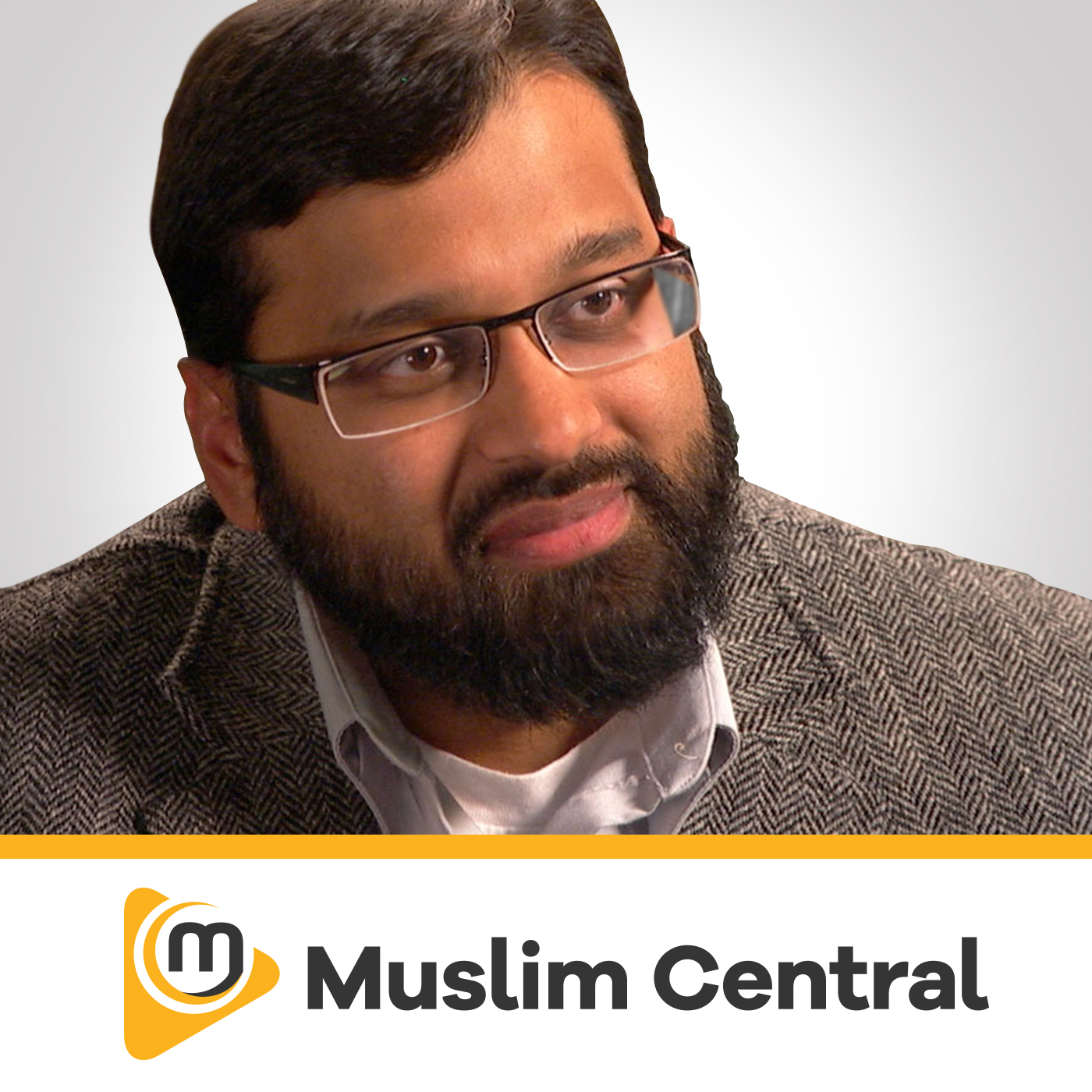
Get every episode summarized
Each time Yasir Qadhi publishes, we email you a written briefing from the transcript — the topics, who appeared, and any specific claims, with the ad reads skipped.
Email me new episodesFree for 3 shows. No card needed.
About this episode
Yasir Qadhi is made possible by:
“Today, topic that is financial literacy from a Islamic perspective. The money that you own is not your money. Allah will ask us where we got our money. And Allah, Subhanahu Wa Ta'ala, will then ask us how we spent our money.”From the transcript
Get every episode summarized
Each time Yasir Qadhi publishes, we email you a written briefing from the transcript — the topics, who appeared, and any specific claims, with the ad reads skipped.
Email me new episodesFree for 3 shows. No card needed.
Hosts & guests
Transcript ready
907 searchable segments. Every word is indexed and playable.
Full transcript
Yasir Qadhi — Financial Literacy From An Islamic Perspective. Machine-transcribed; use the interactive transcript above to jump the player to any line.
This audio is brought to you by Muslim Central. Today, topic that is financial literacy from a Islamic perspective. The money that you own is not your money. Allah is the money. Allah will ask us where we got our money. And Allah, Subhanahu Wa Ta'ala, will then ask us how we spent our money. Why would you not want money if you're a good person? You don't need to be wealthy to benefit the Ummah, but you do need to be financially independent and disciplined. Whoever does this, you are waging war against Allah in His Messenger. I want you to start thinking about financial independence from now. Every single young man or woman can retire as a multi-millionaire if they invest. If you really want to benefit the Ummah, we need you to be good Muslims, strong in your faith, and we need you to have money. Five concepts you should be aware of, that Islam forbids. Bismillahirrahmanirrahim. Assalamu ala Rasulillahirrahim. Wa sallamu ala Rasulillahirrahim. Ma bad. So today, inshaAllah, we are doing a separate class. It's of course related to your age group, but it is not a part of our regular series.
We're doing one-off series as you're aware, educating you about various topics that I believe are important. Sometimes I will be giving them, sometimes we'll have guest speakers. Today, it's a topic that I believe is extremely important, and that is financial literacy from a Muslim perspective, from a Islamic perspective. By the way, I gave a comment a few months ago about advising all of you to invest. I said that's an investment, stocks, and mutual funds, and that clip went viral, and so many people were confused. Why is Sheikh talking about financial investments and stuff? That kind of surprised me. Of course, we want you to be successful in every single discipline, and we want, I want you, to be financially viable, successful, financially independent. That is a part and parcel of being productive civilizationally. And obviously, the information I'm going to convey today, obviously, it is not investment advice per se.
I'm not giving you specific stocks by and large, but it is generic knowledge that I found useful that I believe it is useful for all of you. And it is something that I want you to start thinking about after today's talk. So, let us begin. Realize that the country that we live in, it really is an amazing country in so many ways, financially and economically GDP-wise, the amenities given to us, but at the same time, at the same time, the vast majority of people in this country live paycheck to paycheck. Around 60% of people in this country, if a mini-disaster were to happen to them, of even a few thousand dollars, they would be bankrupt. They would have to get loans from their family and their friends. That is not a healthy state of living. And most of you are in college and university, and the average debt of graduates in this country is around 30 thousand dollars.
You begin your career already in the negative. That's the default of this country as a whole. And so, clearly, some education needs to be done, especially to our Muslim brothers and sisters in this regard. So today is going to be a quick, quick, quick crash course about some aspects that inshallah, I hope, will benefit you. So, let us begin with the Islamic reality of money. The money that you own is not your money. It is not your money. Allah Subhanahu wa Ta'ala says in the Qur'an, give from the money of Allah that He has given to you, wa a'atu hum min malillah al-ladya atakum. So, the money that you acquire that you own, you don't own it. You think you own it. Allah is the Maliq. And you are not the ultimate owner. What are you? You are a Mustafa, a trustee.
Read the Qur'an that Allah says, spend from the money Allah has made you managers over. You are managing the money of Allah. That's what Allah is saying. It's not your money. So, get rid of this notion of my money. That's what Karun said. This is my money. That's what the person of the two gardens says. This is my money. This is my garden. No. The Muslim understands. This is Allah's gift to me. Allah has entrusted it to me. It is an amana from Allah Subhanahu wa Ta'ala. And of the five questions on the day of judgment, two of them pertain to money. It's a very big responsibility. We have five questions we have to answer. Five questions that are going to cause us to pass the exam of life. Two of those five deal with money. Number one, where do you get it? Number two, what do you do with it? So, Allah will ask us where we got our money. And Allah Subhanahu wa Ta'ala will then ask us how we spent our money.
So, we need to flip the script in totality and understand that wealth and money is a privilege and a gift and a blessing and a trust. That Allah has given to us. Should we desire this trust by and large, yes, but with the right intentions? Understand, money is a test. And like all tests, if you have a massive bonus in the question and the exam, you have the potential to pass with high grades, you also have the potential to fail. So, like all tests, you need to be a little bit cautious. Understand that if you win, you win big, but if you lose, you lose big as well. So, should we desire money at some level, we all desire money. The very name of money in the Qur'an, in the Arabic language is Mala. And Mala means you are inclined towards it. That's the meaning of Mala. Mala means your heart goes towards it. Money is called, that which the heart is attracted to.
And Allah Subhanahu wa Ta'ala says, And Allah Subhanahu wa Ta'ala says, And Allah Subhanahu wa Ta'ala says, That in the Qur'an, that, Say if your money, your wealth, your family, your children, your possessions, your houses, are more beloved to you than Allah in His messenger and striving in His way, meaning you will love these things. Make sure you have a priority. Allah literally mentions your money and your gardens and the houses you live in. You're going to love them, make sure the love of Allah is more than that. And Allah, as the word, says in the Qur'an, Please, it has been made alluring to people, the desire of the opposite gender, the sexual desire. There's a very powerful desire. And, the massive amounts of wealth, gold and silver,
may the Abbiwalfiwab, it is alluring. You automatically desire it. So, at some level, we will desire money. Just understand that money is a test and a trial. The Prophet, as I said, hadith is in tirmiri. That every nation, every Ummah has been given a trial, and the trial that is predominantly of my Ummah, will be the trial of wealth and money. Every Ummah has one particular fitna that it is more going to be tested with. And the fitna of my Ummah is going to be money. So, money in and of itself, it is potentially neutral, but it is also potentially corruptive, and it is potentially salvational and cause you to enter jannah. But, the desire to have money and to be wealthy, and to spend of that money is completely halal. There is no sin there. You're all aware, some of the sahabah were very wealthy, some of the sahabah were the equivalents of multi-millionaires, and others were very poor. That's the reality. Some of the sahabah had so much wealth to give,
and because of their wealth, they gained the highest places of jannah. And the one hadith that I want you to especially ponder over is the hadith of Amr ibn Al-Alas, who converted to Islam. And the Prophet, as, was going to send him on a military expedition, and he was a new convert, and he said to him, that, inshallah, you're going to be successful, you will win over the enemy, and I pray that Allah will grant you a massive financial gain as well. So, Amr was a new Muslim two, three days old, and he felt a little bit like intimidated, or he felt a little bit insulted, just a little bit. He said, Ya Rasulullah, do you think I embraced Islam for money? Like, you're inciting me, you're incentivizing me. You're incentivizing me that, may this victory give you a lot of money, and he was a bit miffed. Ya Rasulullah, you think I accepted Islam because of money? That was my new year. This hadith is in Bukhari, what did the Prophet say? Memorize it, beautiful. Ya Amr, Nirmal Malw salih, the Rajul salih.
How beautiful is pure money for a good person? Like, why would you not want money if you're a good person? But if you're not a good person, then money is corruptive. Nirmal Malw salih, the Rajul salih. How beautiful is pure money? You have to be pure for a good person. If you're a good person, you can benefit the Ummah. You can do so much, and we see this reality in the world around us. So, Islamically speaking, understand, money is a gift and a blessing and a test from Allah. In and of itself, it does not indicate your status with Allah. Allah gives money to those whom He loves and to those whom He despises. Allah gives the dunya to the righteous and He gives it to the wicked and evil. The dunya means nothing when it comes to your status in the eyes of Allah. Sometimes, the most righteous person has no money. Sometimes, the most righteous person is a multimillionaire. Doesn't matter. But when you have money, your tests are different.
What do you do with that money? So, understand this, that money is a test from Allah, and it is not your money in the first place. Now, Islamic economics is an entire class. Today is not the time to do that. You all know that the biggest economic sin in Islam is Reba. Is Reba? Is Reba? And Reba has been explicitly made a major sin in the Quran. Today is not the time to go into a lot of detail about the types of Reba. I do want you to know that there is a massive controversy and discussion over the types of Reba, the categories of Reba and which Reba is which level of sin, because not all Reba is to the same level of sin. And the worst Reba and the Quranic Reba, without a doubt, is the Quran that Allah says that you are waging war against Allah. That category of Reba understands this point. It is the Reba of non-negotiated loans without a doubt that is the primary category of the Quranic Reba. What do I mean by this? Now, some have added other categories that's fine, but without a doubt, the primary category,
the context within which the Quran came down, the evidence from the Syirah and the Sunnah is very clear. The primary category that the Quran came down to forbid, and for which Allah said, whoever does this, you are waging war against Allah and His Messenger. Is the category of a default on the loan, and the Lendee is not able to pay back the Lender, and so the Lender on the spot after the Lendee cannot pay back, the Lender then finds, penalizes the Lendee for not having paid back. That is the Quranic Reba without a doubt. It is a loan that is given in good faith. Here's a $10,000 for six months. At the end of six months, the guy's business is failing, his crop hasn't grown, whatever, I'm so sorry brother, I can't pay you back. What? You can't pay me back? You have to pay me 15,000. That is the Quranic Reba. It is a loan that a person has defaulted, and the rich person takes advantage of the poor person's defaulting
because of circumstances beyond your control. That type of Reba without a doubt is one of the major sins of Islam, and whoever eats it is as if he's eating jihad, as Allah says, and it is as if he's waging war against Allah and His Messenger. And that is a Reba, a Nassia that interests on a delayed loan. Now, question here, I'm not going to get into it. What if it is pre-negotiated? What if you agreed to get into it? This is where there are two opinions on this issue. It's not as clear cut as the first one, and without a doubt, without a doubt, even if one would to consider it Reba, it does not have the same status as the first category. Understand, Reba has many categories, and not all of them are the same, because there's another type of Reba called Reba Al Fadal. There's two main types of Reba. You should know this basic stuff. It is really basic. So you should know it. I don't know, some of you might have heard of this. This is really basic, Fik 101. You should know there's two types of Reba in the Quran and in the Sunnah, Reba and Nassia.
And that is you default on a loan, so you pay back more. Now, there's two categories of this. On the spot, I.e., it was not negotiated, and you're being fined, you're being penalized, or you agree from the beginning. These are two categories. Most scholars say they're both under the Quranic Reba, and some scholars say the first is under the Quranic Reba, and the second has been prohibited by a Hadith, but it doesn't come under that level of sin. Understand, there's a diversity of opinion. That's all I'm going to say for now. The second category is Reba Al Fadal. And Reba Al Fadal only applies to certain types of items and merchandise, not all merchandise. Again, each mother has its own categories, certain types of commodities. You must swap them on spot with the same amount. That's called Reba Al Fadal. So dates is an example. If you want to have different types of dates, you swap one kilogram,
one kilogram for one kilogram. They use kilos over there. They don't use pounds over there. So you swap, you know, two kilos for two kilos. You're not supposed to swap different amounts. You swap them at the same time. This is called Reba Al Fadal. Now, the point here is that an Islamic system shans Reba. Why does it shan Reba? Because the Quran is very clear that one of the biggest problems of non-Muslims systems, as Allah says in the Quran, so that wealth doesn't just become transferred amongst the wealthy. And what Reba does is that it ensures that the rich stay rich and the poor stay poor. What Reba does, you become rich because you have money, not because you did something wise, not because you started a business, not because you invested. The mere fact of you having money, you sit back, and because you have a lot of wealth, you take advantage of the poor people, and you guaranteed I'm going to get more money back simply because I have money.
An Islamic system does not encourage you this. It has forbidden this type of Reba. So understand that we are living in a society where different types of Reba permeate through our entire life, and simply understand the Quranic Reba is the one I explained to you. Other types of Reba are not to that level, so when would they become permissible? When is the sin overlooked? When is it going to be makrū? That's where the scholars have differed and every council and every Mufti has their own views on this regard. But do understand almost all top notch scholars of Islamic economics do not just lump all types of Reba under the Quranic Reba. That's just nobody does that because once you understand Firqan, this is what respect, this is what the uncles do, they just lump everything together. No, it doesn't work that way. There are so many different types of business transactions, and not everyone comes under the Quranic Reba. So certain types of Reba are so exchanging dates. Nobody says Allah is going to curse you if you have one kilogram of poor quality with two kilograms of good.
That's not, Allah's curse is not going to come on that, right? That's just not to that level. So understand this is where we're not going to go there today. Maybe another day I'll talk about because the Firq Council of North America is currently discussing these issues. Maybe another day I'll give you a crash course about what the scholars say about mortgage, about we gave a fatwa, the student, the Firq Council of North America, which I'm a member of. We gave a fatwa that student loans are permissible with some conditions, right? And again, if the average, you know, with respect, the average uncle who has studied any Firqa, a staghfirullah, they're making halal wa l-allazmi, harem, no. Nobody says this once you actually study Firqa. As I said, there's so many categories, and with certain conditions, the lesser categories might become overlooked. The one category that can never ever be overlooked is you giving a loan for the sake of Allah, and then the person defaulting, and then you penalize that person. That there is no negotiable reality there that is always going to be the Quranic Reba. Understand this point. In any case, so understand our system of Islam does not allow Reba. Also, what else does it not allow?
Again, this is a quick crash course. I'm not going to go into a lot of detail, but five things you should be aware of, five concepts that Islam forbids. Of them is rarar. And rarar is an unreasonable amount of uncertainty. Rarar is an unreasonable amount of uncertainty, an excessive uncertainty. So, for example, for example, there's a famous show on TV where people who have storages, they don't pay the storage fee or whatever, and so the storage is auctioned off. You don't know what's inside the storage. And it's just a blind auction. In our religion, this is absolutely haram. You cannot buy something, you don't know what it is. If I were to sell you a mystery box, and I say something is inside this box, but I'm not going to tell you what it is. And it could be worth a mini fortune, it could be worth nothing. You have to just guess, no, that is not allowed.
So, an excessive amount of uncertainty, rarar, is not allowed in Islam. Now, again, for all of these, there's like 100 million discussions and the fine tuning, and you're going to have to understand the concept that excessive, a little amount of uncertainty, everybody knows that when you buy a used car, there's going to be some things that you understand, you cannot tell or whatnot. So, that's a little amount of uncertainty, but if you know there's a problem, and you conceal it, no, that's not allowed, right? So, rarar is an exorbitant amount of uncertainty. Another category that is Haram, or that should be Maseir, I think your slide isn't there on my slide. Maseir. Maseir is gambling. The yellow thing is Maseir, gambling. And gambling, gambling is basically getting money without any investment, without any merchandise, without any effort, it's simply the luck of the draw, where people pool their money together, and by absolute luck of the draw, dice, or picking something or whatever.
One person will get the most or all of it, and the rest will get nothing. This is also completely forbidden, and Allah says this is from the tactics of Shaitan. Also, another aspect that is Haram is of course Haram businesses, that is pretty obvious, Haram businesses, any business that is unethical, we cannot get involved in that. So, pornography, alcohol, gambling, selling pork, anything of this nature, that is obviously Haram, we cannot invest our money or operate businesses in any of those fields. So, Haram businesses. Also, when there is an amount of ambiguity in the contract, there's an element of jihad, that the contract is not clear what you're getting. And again, I'm just giving you some basic ideas, now is not the time to go into final detail, then that contract will be baltil, will be not acceptable. And one of the principles that you should be aware of, and this is very important, the Arabic is al-Run mu bil Ghormi, and that means no gain without risk,
no gain without risk. Any time you are guaranteed a profit, something is wrong, Islamically. Any time somebody says, if you invest in my business, guaranteed you will get 10% back. Something is fishy. And the Islamic principle al-Run mu bil Ghormi will apply, when you invest, when you start a business, when you own a fraction of a company, you must go up with the company going up, and you must go down if the company goes down. There must be risk. Obviously, your goal is to minimize the risk, that's halal, that's why you invest wisely. But in the end of the day, when the company fails, and you've invested in it, there must be a loss or else something is wrong with your transaction. There is no such thing in Islam as guaranteed 100% profit, unless there's something unethical. There's no such thing. You can't, because that's not a business then.
Every business has an element of possible drop, that's the whole point here. So when you are guaranteeing a profit, that guarantee must be at the double-triple loss of somebody else. And Islam doesn't allow that. You must share the return as you share the loss. Is that clear? You must share the profits, not proportionally. I mean, obviously, proportional to your investment. Yes, no doubt. If you invested 70%, somebody invested 20%, of course you're going to get 70%. Yes, but in the end of the day, if the company goes down, you will lose 70%. He will lose 20%. So al-Run mu, bil-Run mi. Understand this point as well. This is some basic stuff about Islamic finance. That's all we're going to do about Islamic finance. You want to do Islamic finance? Spend some time, courses. There's lots of books on this. This is just a quick crash course about some aspects of Islamic finance. From now on, I'm going to be speaking to you as your older brother or slash uncle, however you want to consider me inshaAllah, okay? Jaya, this was the purpose of me coming here. These slides and onwards.
I want you to start thinking about financial independence from now. I want you to start understanding that if you really want to benefit the Ummah, we need you to be good Muslims, strong in your iman, proud to be Muslim, and we need you to be talented at smart and charismatic, and we need you to have money. Wealth is civilizational strength. Wealth is civilizational strength. When you have wealth, you can move, you can shake, you can build, you can influence. When you have wealth, you can create, you can establish. So why shouldn't you aim to have wealth? And therefore, we want you to acquire wealth with the proper intention. How do you gain money? Well, there's many ways. There's many ways. The five primary ways in our community are the following. Number one, which is the most obvious which all of you are doing, salary.
And salaries are, by the way, you know it's really interesting. For the vast majority of mankind's history, there was no such thing as a salary. Most of mankind, for most of human history, did not have steady income. This is one of the perks of modernity. This is one of the biggest benefits of modernity. Where you have a salary that you negotiate, you know exactly how much you're going to get, and you can therefore have a fairly consistent lifestyle. That is a very, very, very modern development. For most of human history, it would be in spurts. You would get it at the nothing, then you would get something, nothing. You have to live off that, you know when the next ones are going to come, depending on what you're doing, you know, if your art is on, if you're crafty, or art is on, if you're craft maker, when you make something, then you sell it. You know, if you're, so imagine, this is a very different world now that we're living in, where we actually have a salary. And obviously, salaries have massive benefits of them.
Stability. Subhanallah, you know exactly what you're getting. There's real, tangible benefits, right? You know exactly what you're going to get every single month. But, even though salaries are really nice, one of the biggest negatives of salaries is that you are selling your time. And when you don't sell your time, you're not making money. Paid. You are getting paid for your 9-5 job. When you walk out of your office, no payment. The bulk of your life, you are not in office. So when you fall sick, when you need to take a medical leave, when you're pregnant, you're going to have a child, when you have to, there's no money coming. When you retire, there's no money coming. If you don't have a job, there's no money coming. Another negative is that generally speaking, salary employees, generally speaking, will never make it to a level of wealth in which they can influence or create
or do things at a massive scale. At best, you'll be upper middle class. You might get to the top 5%, but generally speaking, salary people never get to the top 1%, much less the top 0.1, much less the top 0.01. Because salaries are not meant to do that. Salaries are meant to be median value. Low, median, above average, a little bit above. And that hamdada, us immigrants and children of immigrants, buying large regrettate towards the upper side. That's great. The top 20%, the top 10%, but factually speaking, just being statistical here, if you have a salary, maybe after 40 years, you might just make it to the top 10%. When nothing wrong with that, you live a good life. But understand, if you want to create an institute, you want to finance something, you can't really do that. You're going to give your $100 checks here and there, which is fine. That's great. But understand, that's your compromise you're making. And if you want to break away from a median lifestyle,
if you want to break away from a average wealth, and there's nothing wrong with average wealth again, and frankly, hamdada, you have average wealth. Hamdada, in this country, being average, is your above average around the world here. But if you want to attain a level of wealth, that you can benefit others, you can build institutes, you can finance things that are going to benefit the Ummah, because that's our goal. The reason I'm teaching you all this is not so that you purchase multiple mentions, what's the fact that nobody benefits? How big is your bed? How is it so khilalabat? How large is it toilet going to be? It's the same size wherever you go, right? So, I mean, you have to be realistic here. Money, as you should all know, it doesn't buy happiness, what it buys this time. What money does is it allows you to do bigger projects. That's what money does. It frees you from the smaller issues that most people have to deal with, paying rent and whatnot. It frees you to do something big and grandiose if you have that level, right? And again, if not, then do whatever you can and allow a bless you. So, again, don't take this the wrong way.
A lot of blesses people in different things, and some people they don't have a lot of wealth, but a lot of blesses them in other things. But I'm saying, if you really want to get to the top 5%, the top 1%, generally speaking, salaries will not do that. So, what will? Well, lots of things, I'm going to tell you four other ways that are more common in our community. The most obvious one is investing. Investing in halal stocks, mutual funds and ETFs. This is the most obvious way to earn money 24-7. You know, my father, Allah, He sat me down when I was a teenager and He gave me a crash course on investing. And Allah, bless him for that, SubhanAllah. Took it to heart. I made my first investment when I was 16 years old. My first investment was my first stock, 16 years old. And He taught me some of the basics after that I went on my own and I did the... And Allah more after that, Hamdulillah. But He taught me the importance of financial independence.
He said to me that you need to stop working for your money and have your money work for you. If you're not earning money when you're sleeping, something is wrong. You need to free yourself so that you can give the Allah for the sake of Allah. That's what He told me. To live up to His own, He was a complete, He self-made person. I don't mind talking about Him in this manner. You know, His pastoi moved on so I can talk about Him in a Hamdulillah praiseworth Him under now. He came to this country, the standard story with barely $30 in his pocket. He came in 1962, started his salary. First salary was $0.92 an hour, right? Worked his way up and he retired at the age of 55. He retired and full time he gave that one till he passed away till he was not able to give that one. I'm taking care of the new Muslims and preaching and teaching. He retired because he says, I've spent enough time for the dunya. I want to spend time for the Ahrah. At the age of 55, he gave up everything and he went full time. And he never was very wealthy but I don't need money. I just need enough to pay the bills and I want to dedicate my dad with the sake of Allah.
That inspired me. Like, okay, then we need to stop working for money and have the money work for us. Not so that we can build mansions, but so that we can then spend time. For me, reading, writing, teaching, educating. That's the goal of money. Money is not just for you. Okay, buy a, how many suits you're going to wear? How many cars you're going to drive? Once you get to a level where alhamdulillah you're living a dignified life. Now money is meant so that you do something for the Ummah. That's the purpose of money. How are you going to get there? Salari is your backbone. But I'm teaching you today, the purpose of today's class is that you need to move beyond the backbone. And for most of you, the most effective manner to do that is going to be investing. And I'm going to get to this on the next slide. The third mechanism, which also my father taught me, real estate. When my father came back and tried to 55, what he did was he purchased a number of properties. And it will run down. He fixed them up. I helped him fix them up as a teenager.
That's what I would do. I would go to these houses and paint myself. That's what I did as a teenager. To help my father, to help pay our bills. Because that was his job. He didn't have a job. He retired at the age of 55, purchased some rundown houses. They were purposely dilapidated because we're going to fix them ourselves and then give them on rent. That's how he earned the money while he would give it that one. I would go as a teenager, mold the lawn on those other properties. I would go, I remember vividly, and I was frustrated because, come on, who wants to do that? But that's how we are earning money. That's how he paid for my tuition at university. Because that was his job. When I was a teenager, that was how the money came to the house. So real estate. And of course, when you buy property, you buy property. Obviously, all my father never got a mortgage on that. You buy property. What happens is you buy it, you get rent. And when you sell it, typically in 10-20 years, you've gotten all the money back. And now you're going to sell it for double the amount. So real estate is a great way to make money as well. But of course, there's headaches that come with all of these things.
With investment, you need to know your stuff. You need to be familiar with the reality of investment. Make sure it's halal. And there's risk. The stock market crashes. With real estate as well. I mean, somebody is going to call you up at 2 a.m. Hey, I got a leaky faucet. You're the homeowner. It's your job to fix, right? So understand each one of these has its issues. But if you are managing it properly or you subcontract out as a real estate, while you're sleeping, money's coming to your bank. Every single month. You know, your paycheck is going to come from that house. So understand this is how you're earning money. Now imagine if instead of just one, you have four or five or six houses. You're getting easily 10-15,000 a month from those houses. And you're not working the 24 hours, yet you're getting money from those houses. So again, start thinking along those lines. Real estate. Both investing and real estate are feasible for middle class. Both investing and real estate can start off from your salary. You save a few years, you get a bulk amount, and you invest or you do real estate.
That is feasible to do. The fourth and the fifth are high risk and high reward if you succeed. The fourth and the fifth, high risk, but high reward. But high risk also means most people don't get the high reward. And it requires a certain bravery and a certain skill set. And frankly, I didn't want to go there. It's not in my blood to do that. So I didn't go fully into that type of stuff. And that is open to business. I mean, what's happening in Silicon Valley? A number of Muslims have opened or created apps. And one out of every 10, one out of every 50 sells it for a few million dollars. One out of every 10, 20,000 sells it for a few billion. That's the reality of business. You create a product. You create something. You start buying and selling. And yes, there's a lot of red and there's baraka, but there's also massive risk. And that's a different skill set. Think about it. It's there.
You can also do this part time. I know so many people that they have their full-time job, nine to five, and they have business on the side, online business, whatever. I know a lot of people doing this as well. And the risks are a bit less there when you're not doing it full-time. You know, other people want to open a shop, open this and that. And let's think about that as well. And then the fifth is basically freelance gig or patent something. Do your own entire lifestyle. And again, all of these are fourth and fifth are much more riskier. And me personally, I don't really get into those because I'm a more cautious person when it comes to finances. So these are the five primary ways that us Muslims in this land typically earn money. And for me, personally, one, two, and three should be a part and parcel of your mindset. Especially one and two. This is a given. I encourage all of you to do one and two without a doubt. One, that's your backbone. That's how you flourish. And then start from two, as we will say here now. Okay? Now, be careful when the money starts rolling in.
Don't be this guy or that guy. Okay? You don't want to be Mr. Flasche, and you also don't want to be Mr. Stingy. The Quran explicitly forbids both of them. In very harsh manners. Allah Subhanahu Wa Ta'ala says that those who are extravagant are the brothers of the devil, literally, literally brothers of the devil. Iqwanah Shayal Tine. You want to show off with your flashy clothes, cars, houses, what not? Allah says, Allah does not love those who are extravagant. Allah does not love the extravagant. And the exact opposite, that Bukhul. Allah says, this is Shaitan, is the one telling you. Don't be stingy. If Allah's blessed you, spend on your family, spend on your friends, spend on Fukhara. Don't be stingy. Allah, as the Wa Jalla, literally says that don't extend your hand fully. And don't put it to your neck. Rather, be moderate. This is in Surat Al-Isra.
Don't extend your hand fully. And don't put it to your neck. But rather, give it in the middle. So, as your wealth increases, it is totally halal. To live within the bracket of wealth that you have. So, if you are just starting your first salary, it is not expected of you to go and splurge on a massive house or mansion. It is not normal to go and buy a car above your pay grade. It is not Islamic to be extravagant in your clothes and your lifestyle and your this and that. No, but a time will come maybe for some of you where, Alhamdulillah, you'll be making ten times what you made in your first year. And at that stage, the car you will buy will be reflective of your salary. Extravagants is relative. Extravagants is relative. The one who earns a million dollars a year, we expect that person to drive a car that reflects that. And it is not extravagant for that person. And the one who earns a hundred thousand,
we expect him or her to drive or car that reflects that. And the one who is a student and part-time job, we expect the car to reflect that. So extravagants is relative. And what might be extravagant for you? Would not be extravagant for your friend. What might be extravagant for you today? Will not be extravagant tomorrow. So understand, it's all relative. What does society consider the norm for a person at that level? If you live according to your means, it is completely halal. Allah says to Qarun, the richest person, that don't forget your share of this world. And your share will be proportional to your pay. The bigger your pay, the bigger your share. Don't forget the world that you have. Go ahead and enjoy your share of it. So be careful that you stay within your means. The middle, the tallyybatt, that Allah subhanahu wa ta'ala, mentions in the Qar'an. Also realize that one of the aspects of Islamic finance is of course the importance of Zaka and Sadaka.
And unfortunately, people don't teach you this. So that's why I'm teaching it to you. Zakat becomes a obligatory on you as soon as you become balir. And you have more than the Nisab, which frankly most of you do at this stage. Understand, Uncle Sam is not the same as Zakat. You might not have to pay Uncle Sam if you're not earning money. But if you own wealth, you have to pay Zakat. That's why I'm teaching this to you. If you own above the Nisab, and the Nisab is just a few thousand dollars. If your parents have gifted you over the years and you have a savings account or a checking account or an investment fund. And you have cash above the Nisab. Then you must give Zakat. Even if you're not earning and so Uncle Sam, you're not filing taxes for him. So understand, Zakat is separate from taxes. And Zakat is obligatory every lunar year, as you know, every lunar year, 2.5%. And so there's not the time to teach you about Zakat. But understand that most of you are required to pay Zakat right now,
even if you don't have jobs. Also, Zakat is paid on savings not income. So when the lunar year finishes, how much you have left? That's what you pay Zakat on. And you don't pay Zakat on the materials that you use. Your car is not Zakatable. Your house is not Zakatable. Your clothes are not Zakatable. What is Zakatable? Zakatable is your basic cash assets. That's what Zakat is paid on. Your savings in your wealth and some other categories that you can study in the books of Fyhr. And of course, beyond this, you must give Saddhaka, you should give Saddhaka as much as possible. Also, you should also give Zakatable Fyhr. At the time of Ramadan. Most of you, your parents give it for you, but ask. And also, if they are giving it for you, it's time you take charge of it. Say, hey, let me give my own Zakatable Fyhr. Zakatable Fyhr is like $13. You can pay Zakatable Fyhr. It's a nominal amount, but it is a regulatory. And it's on every single baler. Now, if your father says, I'm paying for you, excellent. But there's comes a point where you say, Dad, I can pay $13. That's my obligation now.
You start giving your Zakat on your own in Shalom, okay? A quick crash course on investments now. I said to you that investments are important. The three primary investments you should be aware of are stocks, mutual funds, and ETFs. Very quickly, a stock is investing in one company. You pick one company and you invest in it, okay? Apple stock. And Vidya is the big name right now, okay? You invest in one company, and you put your funds there. Of course, this has massive pros and cons. Each one has pros and cons. And the pro of a stock is that if the company goes up, your money goes up. It's very good, very easy. But of course, if that one company goes down, your money goes down as well. Mutual funds is basically a professionally managed portfolio of stocks. So mutual funds might have 5, 10, 15, 30, 50, 100 stocks. And there are many mutual funds.
Typically, there are sector related. So you'll have mutual funds for emerging technology. Mutual funds for healthcare. Mutual funds for, and you can get as specific as you want, right? So mutual funds, you have an expert or a team of experts. They're basically pooling your resources into many baskets. Your eggs are divided into many baskets. So mutual funds are generally safer, but the returns are also a little bit lower in this regard. But the risks are also less as well. So this is what you need to think of. What do you think of a mutual fund? You need to do your research about the various funds out there and figure out which mutual fund you're interested in. And then ETFs is something relatively new. ETFs basically, to put it really crudely. It is an ever-changing mutual fund. Let's put it really simplistic. Mutual funds have a bit of stability. They rarely change the stocks in them. ETFs, they constantly change stocks. They are upgrading the stocks almost daily. So it's a little bit more managed mutual funds. And it's the concept wise is very similar to mutual funds.
In and of themselves, stocks, mutual funds, ETFs, theoretically, or halal if the product is halal. What is haram is a bond. We don't invest in bonds. A bond is you lending your money to the government or to a company. And you are guaranteed that money back along with interest. Because there is interest, we don't do bonds by and large. There's something called Sukuk that is an Islamic equivalent of a bond which to the West of my knowledge is very rare in America if not even not possible. But Malaysia Qatar, they have things called Sukuk. We're not really because it's not common here. We can overlook that. For our purposes, stocks, mutual funds, and ETFs are what you should be looking at. Now, this slide is the most important one for me. And I need you to pay attention. This is why I am teaching you this entire module. It's not something I typically do as you know Islamic finance is not to or finance is not what I'm passionate about. But I am passionate that you become successful. And what you guys have, I don't have. And that is age. That is time.
Everyone of you now in your late teens early 20s. You have what nobody in their 40s and 50s have. And that is time is on your side. That is why I want you to pray is the Khara and start doing research. And if you're interested, then open your bank. You open your stock portfolio and start investing from now. Why? Because. Certain funds. So for example, and my saying this doesn't mean I'm endorsing that one for you. I have invested in amount of mutual funds, which is one of the halal ones from back in the 80s. When I was 16, that was my first one invested in it. I still have my initial investment in there. So I invested in amount of mutual funds, one of the most well known Islamic funds out there. Amana mutual funds over the last 30 years has had an average of 11.5 annual return income. Okay, that is amount of mutual funds. 11.5. If you opened an account today at the age of 20 and you invested only $500 every month in an amount of mutual fund,
$500 from now. By the time you get to 60 and I know for you, you think 60 is like Buddha old man. Guys, I'm in my early 50s. 60 is not that old. Okay. 60 you're still healthy driving. 60 you're fully cognizant. You can enjoy the world. 75 80s when you start becoming generally speaking. 60 you're still very much and that's why the process of them. Yani Allah blessed him to live until around 63 because he was still physically active. 60 is not that old. I know for you guys, you literally think, you know, yes, 60 is like complete great, great grandfather. No, 60 is still like I said, you have energy and vitality at the age of 60. From 20 to 60, if you were to invest only 500 a month in a mutual fund, that's Amana for example. You will end up with $4.7 million plus your initial investment over $5 million. Your investment would not even be a quarter of a million.
But because you have time on your side, your total aggregate accumulate would be $5 million. You know many financial analysts have said this and I will say the same thing. Every single young man or woman that has a job can retire as a multi-millionaire if they invest. Financial analysts have said this and I'm telling you the same thing. Every one of you, even if you have a minimal job, if you start from now, yesterday, if you start today, time is on your side. Your 500 today is not worth 50,000 at the age of 59. Your 500 today, if you put it into a mutual fund, will be worth more than 50,000 the year before your retire. And the simple example, suppose at the age of 40, you started investing not 500, 2000 a month.
You not double, not triple quadruple from 500. So you start investing at the age of 40, 2000 a month. You will gain a grand total of 1.85 million. Even though you're investing numerically more. But it's only 20 years because once you understand the compound benefit that happens. You understand compound benefit. You've taken enough algebra to know that. Once you understand the compound benefit that happens, that because your 11.5% is compounded in a halal manner. This isn't compound interest. This is compound investment. Because your $100 becomes $11.5 the next year. And then that 11 becomes compounded. You see for yourself statistically it's going to go until it reaches an enormous level because you started early.
I cannot stress this enough. The one lesson I need you to take away from today. Start doing your research now. And open a bank, another bank account. Open A, well you must need to have bank account. Open A investment account with any of the mainstream investments out there. Whether it's fidelity, whether it's Vanguard, your social security numbers, all you need. Open it today. Start taking lessons. Go to people you trust. And then start investing even if it's $50. Invest from today at this young age when you're 19, 2021. And you will thank me. And I shall be thankful to Allah at the time you're 60 because you were wise in this regard. Invest consistently. And in Shah Allah, you will see for yourself. You're going to have a massive nest egg that will help you for your children's education. For this financial calamities you will have it because you invest it at a young age. So I cannot stress this enough that what you have at this stage is something none of us has which is age is on your side.
Make sure you understand this point here. Now another thing that you need to be aware of. Look this up as well. Roth IRAs. I'm teaching you this stuff. This is something that you should learn. I wish, well, lie high school should teach you this stuff, but they don't. And so I'm giving you this stuff. So Roth IRAs. What is a Roth IRA? A Roth IRA is basically your secret weapon. The government gives you a massive perk in this country. If you are under the age of 50, you can contribute into a Roth IRA retirement account up to $7,500 of your earned income after having paid the taxes. And once it is in the Roth IRA, all of the growth will be non-taxable. Again, I cannot stress how important this is for your age. If you were to invest every year, $7,500, that's the max you can do until you're 50. By the way, they keep on changing every decade. So in a decade it might be $8,000 or $10,000, whatever.
So they keep on raising it every few years. But right now, in this year, it's $7,500. What Roth IRA does is that that $7,500 in 30 years, 40 years will become $50,000, $80,000. And if you invested in a regular mutual fund, you have to pay taxes on the gain. 20%, 25% is going to go from that gain. So suppose that went to $100,000, you're going to have to write a check to Uncle Sam for around $25,000 or $20,000. Why would you do that? When the Roth IRA is saying, when you put it in a special Roth IRA, when it goes as much as it goes, it's tax-free. When you reach $59,500, when you reach retirement age, that's because it's retirement. You have to wait until their retirement age. Once you reach that age, no taxes. How can you not take advantage of this? Yesterday, you should have started a Roth IRA. Yesterday, I'm telling you again, this is so important for your age, Democrats to understand. I cannot stress this enough, but there's one caveat. The $7,500 has to be from your earnings.
Okay, so you have to earn it and then transfer it over to the Roth IRA. So, by the way, also ask somebody how to have a Roth IRA because when you open a fidelity or a Vanguard, there's a special category of Roth IRA. You have to create that category because the government has to know that this is a special category. And then you have to invest in that category. I don't want to go into details here. But be careful because when you create a Roth IRA under the fidelity or Vanguard, you create another account. When you transfer money to that account, it's like a bank account. It's lying there. You need to transfer from the bank account in your Roth IRA to a mutual fund or a stock. You cannot just let it lying there in the fidelity or Vanguard Roth IRA. You understand this point here. It's literally like a bank account. So, when you transfer $7,500 and then you open up under that Roth IRA, I have a special account. You're going to transfer it from your main account in that to the Roth IRA.
It's going to be sitting there stagnant. Somebody I know didn't know this and they just kept on adding $7,500 to a stagnant bank account. It didn't gain any money. It just stayed exactly the same because it's just like a bank account there. So, understand once you have that, then you need to choose which stocks, which mutual funds, which ETFs. And you're allowed to buy and sell within that. So, you can sell a stock. But then that amount has to be purchased again. You get my point here. But I don't want to teach you all of that. But the point is you need to do your research when you get to that level here. So, on these two slides, invest from now. And if you have only $7,500, do the Roth IRA. If you have more than that to invest $10,000, put $7,500 in the RRA and $2,500 in something else. That is the most important thing. Then eventually, if you want to, you can start thinking about rental properties. Once you reach a certain amount, you're like, okay, now I can take this out from my investment here.
And then buy a rental property and then you have multiply your streams of income. You can do other things as well in this regard. Now, what makes a stock halal? We're finishing up here in Shalala. This is the second to last slide. What makes a stock halal? So, two main things. Again, this is a crash course. So, don't take this as the full course of Islamic finance. Two main things. Number one, that obviously the business has to be halal. We cannot invest in Budweiser. We cannot invest in companies that are doing Haram. And by and large, banking system is not something that we like. So, we would not like to invest in banking systems. Okay, so the business has to be halal. And then the second issue is the financial ratio, the interest bearing debt, the interest bearing cash, the receivables. What percentage of it is there that requires a bit of a technicality. So, the two main things. Number one, the business should be halal. And number two, the amount of debt and the amount of interest bearing cash that a company has.
Even if it is halal, it should be less than one third, less than 30%. Now, obviously you are not expected to have a crash course in Islamic finance before you invest. And so, what can you do? What can you do? You can follow the guidelines of what is called AOFI, AOFI. And AOFI has a detailed guidelines. You don't have to even read them. Understand, there are groups out there that take the guidelines of AOFI. AOFI is a scholarly body that is based in Malaysia and has branches in Qatar and Bahrain and all over the world where Islamic specialists and finance have released guidelines about what makes the stock halal, what makes the company halal. That's the guidelines that is the most normative in the Islamic finance world. Certain organizations take the AOFI guidelines and then tell you what is halal. And amongst them is, you know, a one-hand invest, amount of mutual funds. You know, other groups out here are also doing that.
And one simple example on the mutual funds list, you will find a mutual fund that is called SPUS. This is a mutual fund that is traded on the NASDAQ and on the Dow Index. You will find it on any mutual fund website. SPUS are the top 500 companies that meet AOFI's criteria. I have quite a lot to invest in SPUS. Whether you choose to do so or not, that's on you. But SPUS is one of those where the top 500 companies in America. Which one of those are AOFI friendly? That's SPUS. That is a mutual fund that has all 500 that are halal. So obviously not all of them are halal. So I think there's over 200 of them. You can look this up. But that's one mutual fund. SPUS is a mutual fund. And there's another one, halal, which is an ATF that basically has the Sharia compliant ones. And you have Amana. All of Amana funds are AOFI compliant and they are mutual funds.
So these are all mutual funds that are halal. If you have no knowledge of any stocks and whatnot, you can just choose these ones. Amana or SPUS. These are the main stream mostly friendly investments. And I encourage you if you're interested to literally look these up and if you feel comfortable, start doing this immediately. My first investment was 16 years old. That was when I made my first investment. Because that's the one that was there. Everybody knew it was halal back then. And that's what I did. I don't get a percentage from Mana. I'm telling you this by the way. Okay. So now here we conclude in Shalahu Ta'ala. Here's my ask of you. The project that I want you to do for yourselves. First and foremost, monitor your finances. Just track. Allah has blessed many of you, which is very different than my generation. Your parents are so wealthy that they don't really micromanage every dollar you spend. When I was growing up, I can assure you every dollar I had to be careful of. It's a different time.
I don't even know how to explain this to you. In the 80s, when I grew up, in the 80s, the average Muslim family was struggling paycheck to paycheck. We didn't have the level of wealth you guys see. We didn't have the massive massage. The brand new cars. If somebody, Uncle got a brand new car, was the talk of the whole, you know, the whole master of the Shalahu Ta'ala, he got this car. We were struggling because our parents came in the 70s, 80s with nothing. And it took them decades to get to that middle class. Alhamdulillah, your generation, your seeing had this one. Allah, you're seeing amazing things here. You have to understand the world was not like this when I was growing up here. So most of you have no clue how much money you have and spending. It just comes in and out because your mom's credit card, your dad's credit card. You just go and you change your tone. Baba, do this. Baba, do that. At Shateeq, Beir Tileilu, okay, no problem. We didn't get that luxury when I was growing up. Our dads didn't have, not that they didn't love us. They didn't have the money to give what your parents can give.
So first thing, start learning the value of money. And you're going to only do that by seeing what comes in and what comes out. Start tracking it. And then find out, figure out, what would my salary be once I leave my dad's nest? Once I have to have my own credit card and I'm paying my taxes, what would that actually be? Once you understand that, now move on to the second step, I say week two. In reality, you can do this tomorrow. Open a halal investment account. Opening doesn't mean you need any money. Just open it. Log on to any of these fidelity Vanguard or what's the third one, the three main ones. Log on to any of them. And then just create an account. Creating account requires zero dollars. Create an account. You just need your social security. Start reading, seeing what goes on. In this, how do you do this? Where do you do that? And then once you do that, figure out now where you want to invest, how you want to start doing that, and then start thinking of paying Zaka, start thinking of when you're going to pay Zaka, and then obviously start thinking of investing as well. Where you're going to invest, where should you invest? And also when you're doing all of this, ask yourself, what am I doing that is Haram that I need to eliminate?
What am I doing that is not ethical financially? Is Rafaq wise, buying wise, selling wise, something am I doing unethical? Start killing that because the time will come when Subhanallah, you will have the freedom to do a lot more. If you don't manage to control yourself from now, you're not going to control yourself at that stage. And last point on a spiritual level, constantly make dua to Allah to give you this halal, constantly make dua to Allah to bless you in your risk. The process and would make dua to Allah, Allah will buy you a Qlina fi risqina, Allah bless us in the risk that you have given us, you should always make dua to Allah for halal income, for blessed income, for income that will benefit you, and seek refuge in Allah from wealth that will corrupt you and understand. You don't need to be wealthy to benefit the Ummah, but you do need to be financially independent and disciplined. You don't have to get to the top 1%, but if you can't pay your rent, you can't benefit other people until you pay your rent, right?
If you're struggling, if your children are struggling, that's a burden on you that prevents and hinders you from contributing. I've said this before, I'll say it again, the purpose of money is not luxurious living, that's very narrow-minded. Yes, you're going to live a bit better, but talk to the people that have wealth after a while, you get bored of it. Talk to any rich person, they'll tell you that, for how long will you enjoy good food, for how long will you enjoy fine clothes after a while, that's not what satisfies you, that's not the purpose of money, the purpose of money, it frees you so that you don't have to worry about paying rent. You don't have to worry about the education of your kids, you can take your time and do something productive, create legacies, and if a love message would even more money, now with one check, you can change the course of an entire industry, create an entire Madrasa, if finance an entire Meschid, or if you're to that level, influence an entire electoral cycle, influence an entire genocide, as those people are doing, right? Money is what brings about that change, that's why I want you for the sake of Allah to be pious, to have good intentions, and yes, will Allah, he I want you to be wealthy, if it is Halal money and you're a righteous person, if you're not using Halal money or you're not righteous then no, we don't want it.
But Halal money and you have piety, we need you to be in the top point 1, point 0, 1% why so that you benefit the Ummah, and you're going to start by doing these things at the very beginning, start today, open up a investment, now start doing your research, start speaking to people that I've experienced, and then insha Allah your journey will begin, may Allah, as always, bless all of you in this regard.
More episodes
More from Yasir Qadhi
When Politics Enters the Masjid
Yasir Qadhi
Faith Vs Reason- What the Qur’an Actually Says
Yasir Qadhi
Balancing Faith With Rational Enquiry - The Quranic Encouragement To Thin
Yasir Qadhi
Earn On-Going Rewards | Donate
Yasir Qadhi